
How Brands Actually Grow with Byron Sharp
Byron Sharp on why the double jeopardy law means big brands win through more customers, not more loyalty, and why loyalty programs barely work.
 with Byron Sharp


Overview
In this episode of the Growth Manifesto podcast we’re speaking with Byron Sharp – author of the book How Brands Grow – about how brands actually grow (and it’s not what you think). If you want to understand why big brands have more loyalty than smaller brands (and what you can do to compete) then this episode is for you.
Key takeaways
- Sharp's double jeopardy law shows bigger brands have both more customers and slightly more loyal buyers, so reach drives growth, not loyalty.
- Growth comes from mental availability, being thought of at the moment of buying, and physical availability, how easy you are to find and buy from.
- Research in his book shows loyalty programs increase loyalty only a little, mostly because the people who join are already your customers.
- About 30 to 40% of Coca-Cola's annual sales volume comes from people who buy it only once, twice or three times a year.
- Sharp argues the brand-versus-performance debate is really mental availability versus physical availability, and a business needs both running at once.
Chapters
- Intro: mental and physical availability
- Why marketer intuition gets consumers wrong
- The double jeopardy law explained
- Defining mental and physical availability
- What physical availability looks like in practice
- Coca-Cola's low-frequency buyers and 30-40% of sales
- Why loyalty programs barely move loyalty
- Why the book found new life in ecommerce
- Brand versus performance is a false debate
About the guest
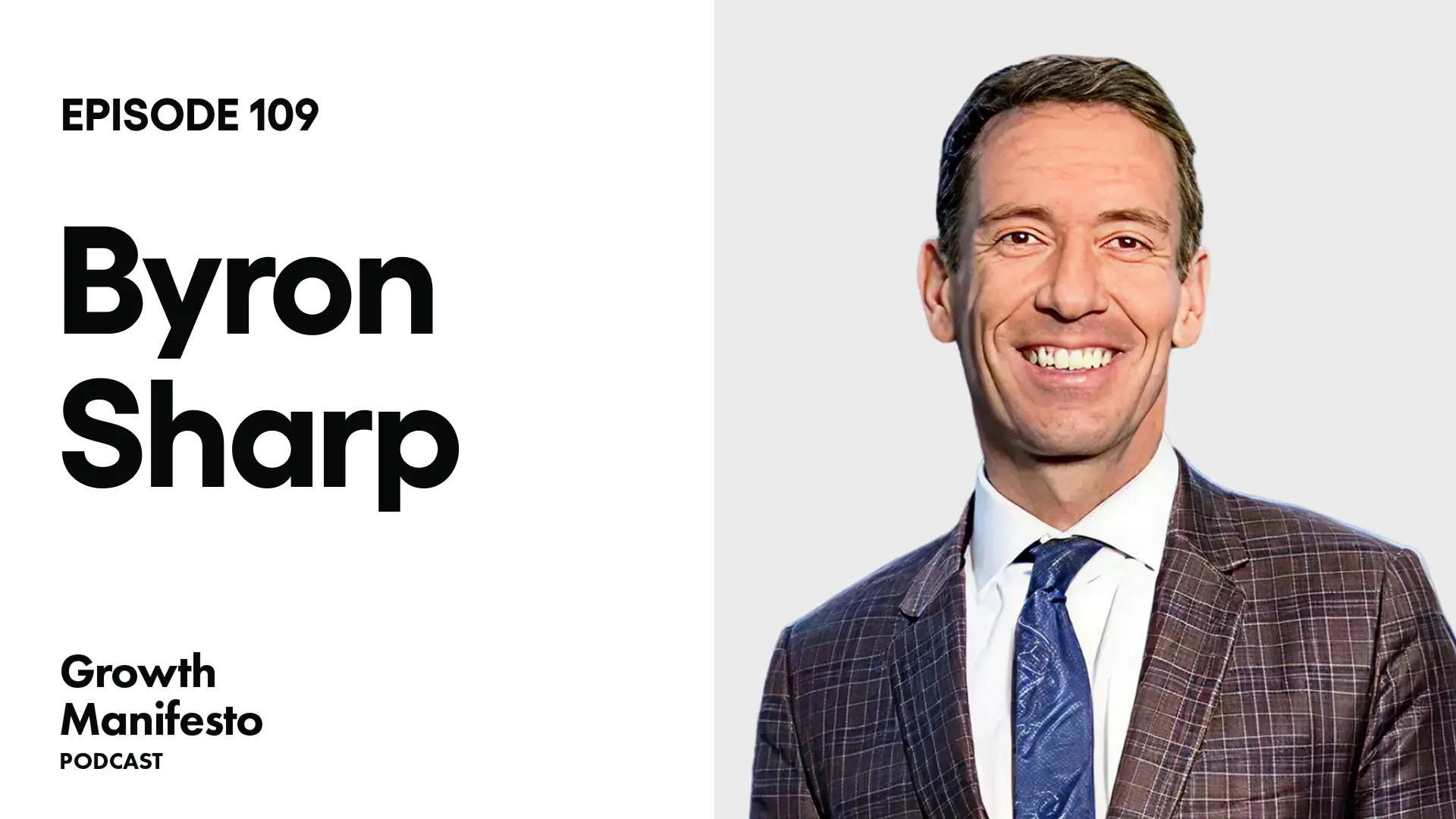
Byron Sharp
Byron Sharp is the author of the book How Brands Grow.
Transcript
Timestamps open the video at that point.
Byron SharpHow do you win? Lots more customers. Yeah, well, I need to improve my mental and physical availability. If I expand my mental and physical availability, I’ll get a bit more from my existing customer base. Yes, but the main thing you’ll get is lots more customers.
Alex CHey, this is Alex Cleanthous and today we’re talking with Byron Shop, who’s the author of the book Our Brands Grow. And in this episode, we talk about how to think about marketing in a world where marketers seem to have got it wrong. Performance and brand are conversations that have been going around for a while, but the conversation should probably move to mental availability and physical availability.
Alex CAnd that’s what we’re going to be talking about in this podcast with Byron Sharp in particular, he talks about how most important thing is rich and how loyalty isn’t what companies think it is. So if you want to grow, if you want to have more loyal customers, and if you want to understand how the big brands become big brands and why they seem to continue to last over time, then this episode is for you.
Alex CSo I hope you enjoy it and I’ll see you at the end, or I’ll catch you on the flip side. So I’m a marketer and I’ve been around lots of marketers. And marketers tend to have this way that they think that their gut feel means something, and that the kind of the things that they know and the things that they have experience and the people kind of who they know kind of represent how it is.
Alex CRight. And so what I found super interesting about your book, How Brands Grow, is that you actually gone and found some evidence based facts around how consumers make decisions and how loyalty works and how sales work and so on. So what did you find that was interesting? Compared to how kind of marketers think that things work?
Byron SharpOkay. Exactly. Answer your question. It’s quite normal that people use intuition and what feels good, but I that just doesn’t work for marketing because our brains are designed for, you know, survival out on the African savanna. And, and we’re very social. Right? So we love telling stories, and we’ve, you know, we’re absolutely we know how to communicate in more logic.
Byron Sharp1 to 1 may be, you know, may be a few more than that was marketers have this weird job of having to sell to, thousands if not millions, sometimes even billions of strangers. That that’s never happened in human evolution. Right? And, your brain just can’t handle that. Really? But you think you can, and that’s very misleading.
Byron SharpAlso, the sort of people that marketers, farmers typically are, well, sort of like in the 1% of human wealth, education, you know, they, they just, normal people, and they don’t hang out with normal people. So, it gives a very, biased, weird view of the world. But what the what what the book happens, Gary does is, show.
Byron SharpI mean, it’s famous for introducing or publicizing, and explaining some scientific laws and scientific laws, repeating patterns that occur in the real world. And they tend to be, every scientific law has been, like a bit mind bending. You know, almost every scientific discovery of any value is a bit weird until we wrap our heads around it.
Byron SharpAnd so the same. So, the most famous is the double jeopardy law, which is we call it, you know, it’s a law because it’s ubiquitous. It’s everywhere. Right? You know, from anywhere with this competitive brand choice, with the choosing between, following a football team, you know, which television programs get watched, which brands of laundry detergent get bored?
Byron SharpThis patent occurs, and it says that bigger brands, you know, more popular items are bought by more people or known by more people. And those people are slightly more loyal than the buyers, that if you buy a small brand, and that has really profound, you know, if you’re a CFO or a numbers based person, of course you immediately recognize weight on how many customers I have and then how much business each one gives me or how low they, that’s my sales.
Byron SharpAnd so this is describing your sales and saying your sales are made up of if you’re a big brand, a lot more customers who and you also get a little bit more from them. But the main driver of why you have so many more sales than the small brand is you have so many more customers. And that is really counterintuitive because it seems it feels right that you could have lots of what we call niche brands and marketing.
Byron SharpYou know, it’s small and it doesn’t have many customers, but those customers are really loyal. They like it so much. And yeah, well, if that happened, we wouldn’t get a double jeopardy law. We wouldn’t see it. I would see law, you know, you’d have you’d go, well, you know, the smallest brand in the category is the loyalty leader that.
Alex CSo the double jeopardy law, just for the listeners is that you get more loyalty, the more penetration. But the reverse is not the same, right.
Byron SharpSo this penetration, you get less spending.
Alex CBut what’s interesting is that brands think that if I’m smaller, I have more loyal customers. Yeah. Because the I’m more personal and more customized and so on. And so what your evidence has found is that that’s not the case at all. And so this concept of I’ll attract it was Seth Godin. Right. Like you find your first thousand customers, your first thousand, the true believers or whatever.
Alex CAnd that starts the brand off.
Alex CWell, it’s not exactly the same way round, right? Is the fact that you’re not going to get these little competitors from a thousand.
Byron SharpYeah. It’s, I mean, said God. And so there’s not a researcher. He doesn’t let data or evidence get in the way of a good story.
Alex CHow many people do you know that have done the research around this type of purchasing decisions, like as far as I know. So you’re the first person I’ve heard that’s actually kind of done anything that’s more kind of evidence based. And all the marketing books I’ve ever read, I don’t think there’s any evidence, any of them, fascinatingly, except for you all.
Alex CWhen was the first one? I actually read something. I was like, everything I thought was true was not true. Exactly. Like, so can I have a question? Right. How does it work if people got it so wrong? You know what I mean? Like if people like this thing where or is it just that there’s so many kind of failed brands that we don’t hear about and they just get kind of left to the dust?
Alex CAnd then the ones that we do hear about have figured this out. Where the more penetration, the more loyalty, the less penetration, the less loyalty. And this goes to the conversation which we often have is like, oh, should we keep advertising just to the same people that we already have in our email database, or should we like an email marketing and or that part an advertising is now for acquisition, like because this is a conversation I have with a lot of ecommerce brands and they often are speaking about, oh, well, we’ve already acquired them.
Alex CAnd the part about database and now because about email marketing and flows, it just seems to work. My perspective always, has always been you need to keep advertising to them because they’re going to forget you. An email marketing is maybe not that powerful. Is this on the right path? Is this incorrect? Like, I don’t mind if you just shut me down and say not.
Byron SharpNo, no, no. It’s, if, you know, I mean, it’s it’s like going back in time. It’s, you know, database marketing was a was a big thing at the turn of the century.
Alex CIt’s still big now, by the way. Like it seems to have, like, stopped for a bit because they thought the social media was going to happen. And then now, for some reason, email marketing is one of the top sources. Yeah. Lots of brands right now.
Byron SharpYeah. Well, even better than, you know, in the days of database marketing, they actually cost you a dollar. And instead of sending letters to people now, it’s sort of free. But, yeah, you’re up against an awful lot of clutter. Yeah. There’s nothing obviously, that is an asset to have a list of names and email addresses, but it’s not a growth strategy.
Byron SharpThe the value of that asset actually erodes over time. So you’ve got to reach beyond it.
Alex CBut because you talk about, the two con areas, that the brands need to think about is the mental and physical availability. Could you just expand on just what you mean by that? Because I think there’s all sorts to connect.
Byron SharpWell, yes. Well, the mental and physical availability is the story, the theory that that happens to fit with, the empirical norms that we, that we now know of, and previous theory, the previous dominant theory was a thing called segmentation targeting positioning, which was a sort of, it said that the way you compete, or at least you know, try to compete and be viable in marketing profits is to try to sort of run away from the competitors that you you try to find a bit of the market that you can set, hopefully better than they can.
Byron SharpAnd you position yourself into that, that segment, and this idea that, that, you know, if there are ten brands in a category, they’re all differentiated in a different way so that they’re all tied into a different segment. And, that’s not that’s not what the evidence shows at all. So you have to come up with a new explanation of how brands compete and why some are bigger than others.
Byron SharpAnd, it’s the bigger brands have more mental and physical availability, so they are easier to buy for more people. And those people buy multiple brands, but they’ll buy you sometimes. And, you will get the right amount of loyalty for your size. In line with the double jeopardy law. So the really big implication is that you, you know, reach is not optional if you want to grow your car, right, a growth plan that doesn’t acquire lots more customers expand the size of the customer base.
Byron SharpYou can’t grow without more customers.
Alex CShould brands continue advertising to customers who have purchased a couple times? So should you continue to advertise to people who have already acquired inside of your database? Oh yeah, there is a customer. But now you think the email marketing is going to fix everything.
Byron SharpLike, well, it’s nice that you’ve now got their email address and you can send them an email, but I have no idea whether that’s actually reaching any brains. So it helps to advertise as well.
Alex CWhat does mental availability mean?
Byron SharpIt’s a chance. It’s the chance that people think of you when they’re going into a buying situation, or that they notice you on the shelf, or they see you on screen. And that’s a really valuable asset, right? They should be talking to your CFO and saying, my job is to nurture that asset and make it more valuable. But my biggest job, of course, is to make sure it doesn’t erode.
Byron SharpAnd to do that, the cheapest way that I can do that is usually some is to tap into some sort of, what publicity? Publicity is a great way of doing it, but into some sort of broad reach, cheap media.
Alex CThat I can meta ads or something, or Facebook ads or whatever it is, or TikTok or.
Alex CWhatever. Outdoor. I mean, everything changes prices and trends, doesn’t it, these days, but it’s basically the key point is to get in front of people, right? And to stay in front of people.
Byron SharpAnd yeah, just I mean, to remind them that your brand still exists. I mean, a lot of a lot of advertising. It’s, you know, if we really boil it down, it’s job is to say hi, remember us, you know, you you bought a shirt from our shop, you know, three and a half years ago. It was a good fit.
Byron SharpDo you? Yeah. You could buy from us again. You know, we’re still here.
Alex CIt’s not the same as it. And so what I found interesting is that. And maybe it’s in your books, that maybe it was in some podcasts I listen to because I did some research ahead of time, obviously. And I thought some of the other podcasts, which I quite liked, was that, people have to have the brand in their head before they can say the brand on the shelf.
Alex CYeah, like the brand itself is going to be. So good. It looks amazing. The fonts, the color scheme, everything so amazing. It’s not that that does the work. That just helps you to recall the brand. Can you just expand on that? Because I found that really, really fascinating, by the way.
Byron SharpYeah. I think it is important to earn big best contribution to the world just to remind people that, people screen out stuff so much and it’s almost mind blowing and thinking like, why did we not notice this massive psychological thing of that? We screen out and, I think I think cancers because you don’t notice what you’re not noticing.
Byron SharpSo you think, oh, I went into the supermarket and I saw my stuff and I got out. What? You don’t. But but the really amazing thing is all the things you did not see.
Alex CAnd how many products are on the shelf, like there’s, like,
Byron Sharp30,000 and the typical supermarket.
Alex CYeah. And so nobody goes, oh, I just saw 30,000 products and I really like that logo from that 30,000. Right?
Byron SharpYeah, yeah. A typical household only buys 300 out of the 30,000 over a whole year.
Alex CSo then the goal of the marketer is to be in their mind when they’re walking down the aisle. Yeah. So so when they say they get it, they.
Byron SharpGo, they get a chance. Yeah. Because it’s often thought that the job of a monster is to make the pack, you know, stand out and leap out off the shelf. But it’s actually it’s just so, so difficult to do. I mean, every now and then, you know, you’re on Amazon or something and someone’s bought a display ad. So, you know, you see it.
Byron SharpAnd I happen to be in that category that you were really interested in. You see it. But the reality is we we, we zoom in on things that we already know. See, I knew the brand of microphone that you were using. I think you mentioned a couple and I couldn’t, you know, they just with the. Yeah. It’s so hard to it’s so hard to take in stuff that you don’t know.
Byron SharpAnd that’s why, I mean, so that’s why mental availability is really so valuable. Because once you have got it between people’s ears, it doesn’t ever really disappear. It gets harder to retrieve. And that’s why you do need to keep refreshing it, you know, saying, hi, we’re here. But but it has it can last for a very, very, very long time.
Byron SharpThat’s why brands just don’t fall out of the market.
Byron SharpI remember someone invents a better brand. It’s better it’s function, it tastes better, whatever. And it comes in. It does not stall in the market because the established brands have mental and physical availability advantages that are just massive. And that’s particularly true in B2B. You know, this is what, about four big accounting firms in the world? I betcha when we’re in retirement, they’ll still be for big accounting firms.
Alex CAnd and so that’s mental availability. And the second one,
Byron SharpThis is a physical event, physical availability.
Alex CRight. Yeah. So pool availability is about like.
Byron SharpIs it easy to buy from you, you know, are you in the store I shop in. Do you have the pack size I can fit in my car, you know, have I got the app on my phone? If someone hasn’t got the Uber app on their phone, their chance of ordering it over when they could order a taxi or anything is the zero, right?
Byron SharpSo that’s that’s physical availability.
Alex CSo for an e-commerce brand. Yeah. Who just sells online is just the fact that they can purchase the product fast and it comes fast. Is that enough of a physical availability or does it help to have like.
Alex CIn stores where people can see it, touch it, feel it? Like, how does that it? Oh, well, in my perspective.
Byron SharpThis is just all about the quality of of the physical availability, right? I mean, we have a brand here in Australia, Flight Center. I was just walk through on the mall and I noticed a big, you know, banner, new flight center, you know, coming, you know, soon. And it was all beautifully branded and things a successful brand.
Byron SharpBut they’re hugely online. Right. But they’re also they also have physical stores. That’s just, you know, that just gives them better physical availability. But look, it’s it’s little things like, you know, does does your website take PayPal or do you demand that people type in their credit card, you know, which is more physically available, one click with total Security or a real pain that I have to put my credit card in and hope that you don’t leak it to someone else.
Byron SharpSo they’re all these little things that we do as marketers. You know, do you take American Express? Will you deliver? Will the delivery be, you know, these are all physical available return policy.
Byron SharpBecause the policy experiencing it.
Alex CI was talking, to client and, and they were telling me a story about, like, this campaign they ran ages ago, and it was around, freight pickup and delivery for car service. And it kind of helped, the car dealership in the US make so much money that year because, because, it made it easy for them just to get a service done.
Alex CSo now I can just get it done. And so is that an example of.
Byron SharpYeah, it is. Absolutely.
Alex CIt’s making it really easy for the consumer to go. Yeah, yeah. Take it. Thanks. Bye. Yeah.
Byron SharpAbsolutely. And it’s quite astonishing isn’t it. How complacent some markets are. They’ll say things like oh we’re e-commerce brand. You know we know we’re on Amazon you know okay. And and what that’s the way you’re thinking stops. You should be thinking every day. How do I make it easier for people to buy me. Not something else.
Alex CSo there’s a concept called nudging. Is this part of the process where you’re kind of encouraging people to take something a little bit more of a step towards your brand or.
Byron SharpYeah, I suppose so. That’s that’s.
Byron SharpPsychology stuff. Yeah, it is, it is, it recognizes that we’re incredibly habitual. And, most of the time we don’t, you know, we don’t we don’t need something new. We don’t we don’t like changing our behavior. And so you have to fit in rather than saying to people, I like I often thought about Markham’s attitude problem. Monkeys have this, they tend to convert old problems into an attitude problem.
Byron SharpRight? So if you say we need to get more people, I don’t know. Recycling the cardboard. People get. Right. Let’s run an ad about the beauty of nature and get people to care more about the environment and say to them that recycling is about caring for the environment. Yeah, well, the it isn’t an attitude problem. They actually already do care about the environment.
Byron SharpIt’s just you haven’t made it easy for them to recycle the cardboard. So the whole nudge thing was about. Right. How could I do it? And so it was easy for people, a classic is, you know, if you go to a popular music festival or something like that and you’re like, oh, which bin does this go in?
Alex CAnd, I know that one very well.
Byron SharpIt’s not a really simple thing is to put on the bins, pictures or actual physical, you know, things of the different products that go into the bin ever. I can understand that color coding. Well, I have to remember the color and I went to different countries.
Alex CYellow I mean, what’s yeah, it’s red. It’s,
Byron SharpYou know, so that is. Yeah, it’s very much in line with the idea that, the consumers are habitual. They this is a very big world out there with so many things, and they just they just want to get on with their lives. So, this is why mental and physical availability, the the the mental. It’s not the total battle for a brand, right?
Byron SharpI mean, there’s product quality and making sure prices and the barrier and all these sorts of things. But in the long run, there’s no such thing as a big brand that has a mental and physical availability deficit.
Alex CThat’s true. And I like your example on flights and it because yes, probably the majority of their traffic and sales. Well, I would assume only because I’m an online marketer, it would be online. And yet having physical locations adds credibility, adds a place where people can go. Maybe there’s a whole segment of the market who doesn’t even kind of use the internet, right?
Alex CSo that’s part of that whole thing, which I can’t imagine as someone who’s on the line, someone who’s on the internet, but, I think this is where marketers have to get out of their own heads about how they shop and how they experience the world and understand that the world of every place.
Byron SharpYes. I was reading recently introduced a phone number for people who don’t have the app. You know, a phone number like, you know, like, taxi. It is amazing. Yeah, I know, so I, I’m going to I think some clever person at Uber suddenly went, you know, not everyone has a smartphone or, you know, like, or maybe the battery’s gone down and there’s a, a payphone, which is, you know, which are often they’re not payphones, they’re free.
Byron SharpRight. But they still can’t call a new because, we don’t have a phone number. Right. It would improve our physical availability to have a phone number as well. Yeah.
Alex CWhen I was in the US, I think was the first time, maybe 15, 20 years ago. It was the first time that I saw all the online companies advertising on billboards, and I was like. And I started talking to a few.
Byron SharpI’m old enough to remember the dotcom revolution. They advertised on billboards. Oh yeah.
Alex CYeah, that was after that had crashed and it had come back. So it’s like 15. That’s probably around like 2000s, maybe early 20 tens.
Alex CBut but I just remember that those advertising billboards on TV and these were just kind of websites only. And I started speaking to some marketers over there and they were saying, yeah, because they’re fully exhausted online. Every possible kind of section online has now just been, you know, kind of optimized. They have to go like expanding out because otherwise they’re limited in their market.
Alex CSo I found it. What are you opening that the online companies would go offline or into kind of above the line to expand the market. And I think it’s a it’s a simple example, right?
Byron SharpYeah. A lot of markets don’t think about the mental and physical. The and realize there’s quite a lot of separation between the two. Right. And so though they’re doing things online which they think are advertising but it’s not it’s it’s only going to it’s only catching the people who are like in the market now, and you’re not reaching the brains of people who the vast majority people who aren’t in the market now.
Byron SharpAnd so, yeah, billboards, mass advertising is the way to do that. Also, it’s a simple thing if someone’s not online, if they’re if they’re a like, you know, they’re a low user of social media or something like that, why is that? And the answer is because they’re probably out and about and being busy. So you think.
Byron SharpRight. What’s the medium that would be this is this thing called out.
Alex CTV particularly outdoor but.
Byron SharpParticularly radio and TV and outdoor. Yeah. It would be obvious fit for that. Yeah. You’ve got to reach. Right. I mean, reach is not optional unless you want to shrink or be small.
Alex CThe rich is not optional. I’ve got a few questions. Let me ask you this question first, though. You mentioned there in your book and podcast somewhere that I think it was McDonald’s or Coca-Cola, the like, but others hundreds of millions of orders a year. But it’s one time purchase. So it’s like this big chunk of their sales.
Alex CI’m not saying it’s all there’s no loyalty in there. But what a big part of this.
Byron SharpNo no no no no no no no no.
Byron SharpThere is loyalty. There is, there is loyalty. Yeah yeah. Loyalty is absolutely fundamental. Consumers. You know as I said that households two brands or anything 300 items out of 30,000. You like what they be. It’s because they keep going back. They buy. You know, I just asked my daughter to get milk from the shops until she got the same brand of milk.
Byron SharpYou know, it’s like that’s our brand of milk. You know, it’s consumers are loyal. Yeah. I wanted to show a thing, which is a particular statistical distribution that fits underpins the laws, like, double jeopardy. And, I chose the biggest brand I could think of, which is Coca-Cola. And, Yeah, it’s the biggest single group of Coca-Cola buyers.
Byron SharpThe in a year, people who bought them once and the next biggest is twice, and the next biggest is three. And by the time you doing once, twice three, you’ve you’ve covered something like 30, 40% of their sales volume. And that’s.
Alex CThat’s a really important point. I just want people just to reflect on right now that 30, 40% of the sales volume of Coca-Cola are from people who buy a maximum three times a year. I think I’ve had a Coke, because I drink Coke Zero because it’s like kind of, it’s by one thing I’ve got left. Right?
Alex CBut I have that much more frequently. What I’ve now kind of is probably one of the more kind of loyal customers. Right?
Byron SharpOh, yeah. You’re heavy. Yeah.
Alex CYou’re a heavy user. Yeah, yeah, yeah. The user. Right. But what’s interesting is that when brands think about marketing, I mean, let’s all the ones I talk to that focus on their top segments and their most loyal customers are focused on kind of loyalty kind of programs. But what you just mentioned is that this whole other section, which I going to buy from you kind of once or twice a year, but that can make up a very large proportion of your total revenue for that year.
Alex CSo how did brands start thinking about this again? Again, like is this is coming back just to the mental and physical availability and then just to get everything else almost.
Byron SharpYeah, I mean inReach is not optional. You know you can reach.
Alex CIs not optional and optional.
Byron SharpYou can’t write a growth plan that says we’re going to get more out of our existing customers. It’s like, well, your existing customers will buy you a little bit more if you want a whole lot more customers. And then you get the dichotomy almost.
Alex CMore customers. Yes. Because everyone would think, counterintuitively, that all the big brands have the worst kind of loyalty because they’re so big and they’re not. Yeah, because they’re impersonal. And all this just because.
Byron SharpThe market is using this sort of intuition and seeing everything as an attitude thing, whereas it’s, it’s not. So if you I mean, how do you win lots more customers. Yeah. Well, I need to improve my mental and physical availability, particularly amongst people who can’t I I’ve got to find ways to, to, to, you know, to reach people who it’s, you know, I need to expand like, more in the stores or in the South.
Byron SharpI don’t have any stores in the North. Right. Well, we should open some stores in the north. Right. And. Yeah. Right. Well, yeah, that would win a small customers that are winners like the northerners. But it’ll also win a few more sales from the Southerners because the Southerners sometimes drive in the North. And so, okay. So if I expand my mental and physical ability, I’ll get a bit more from my existing customer base.
Byron SharpYes, but the main thing you’ll get is lots more customers.
Alex COkay, I’m gonna ask you a controversial question. Well, I’m not sure if it’s controversial yet, but loyalty programs. If loyalty is a function of penetration.
Alex CWhat is a loyalty program for them?
Byron SharpCan it do? Yeah. Well, the research is pretty clear that they don’t do a lot.
Byron SharpYeah. In chapter 12 of how brands go, you can read all the. Well, you can read a very short summary of all the research. And it is basically do loyalty programs increase loyalty? And the answer is yes. A little bit. Yeah. But I mean the very title. Right. Loyalty programs and they don’t increase loyalty very much. No.
Byron SharpOh why is that. Well, it’s it’s a selection effect. The problem is, you know who’s going to join my loyalty program. Alright. Let me see. Who would I like to join my loyalty program. I’d really like people who we’re, very heavy buyers of the category, but we’re buying lots of other brands, and then they switch to me and they give me all their purchases.
Byron SharpYeah, yeah. Okay. Who’s going to join your loyalty program? The people who already buy from me. Yes. So you know that that even that heavy buyer who buys other brands is probably not going to join your loyalty program. Even though I could get a lot of points and stuff if they did, because they I don’t buy that brand.
Byron SharpOh, sorry. That’s even if they say that because of course they wouldn’t. They don’t even see the loyalty program. Right? I mean, I don’t know. I’m sure that South China Airlines has a loyalty program, if you ask, but I’m guessing, right, because I go, I’ve never flown them and not in my repertoire. So. Yeah, of course, I don’t belong to the loyalty program.
Byron SharpWho’s lost? Who’s the airline loyalty program to blow to Qantas? Why? Because I have to fly Condor. You know, it’s. I cannot avoid flying fonder. So of course, I joined the program because they give me all stuff. They give me stuff.
Alex CSo that’s that’s that’s super interesting because you think, like because that was going to be the first example, right. All right. So I fly with, with a particular airline. Yeah I just keep flying with them. But you know what if there’s no flights I’ll follow the other, I’ll jump on the other flight like straight away. Right.
Alex CI would just ten but but so but yeah.
Byron SharpPears have it have a bit of an effect but that not much. They’re not gonna you’re not going to like, you know, get on a way more expensive or inconvenient flight because you might get a few points, but not that stupid.
Alex CWhat? It’s so okay, so all these brands, the companies that have departments on a customer lifecycle and they have like, kind of like the loyalty specialist and like all these different things, what should they be doing them? Okay. Just to say, for example, if they’re listening right now, right then I’m like, God, what am I doing? I’ve picked the wrong job.
Alex CI just had bar and shop again and they said it again. Is there things they can do to like stop all this fluff that makes no difference in like how they’re saying, you know, hey, here’s my budget and this guy spend it on ads, for rich instead. Do you know what I mean? Like, is there anything that can be done?
Byron SharpUnfortunately, it’s really hard to get out of a loyalty program, right? It’s because there’s this psychological effect consumers do if they’ve got points or something, they’re theirs. And if you try to take them off them, they get they.
Byron SharpEven if they’re not using them. So, that is one of the problem. So I mean, the first thing you do is going to how how do I reduce the cost of this program? And ideally, how do I stop giving too much away to the people who are already my heavy loyalists? Right. So it’s a bit like.
Alex CYou can save money on the incentives. Yeah, that’s a big one.
Byron SharpMy local supermarket that they introduced like the loyalty program, you know, and I thought, this is nuts, right. You’ve got a this is a supermarket in a had a catchment area where there were no other supermarkets. I was thinking you’ve already got the people. So but yeah, I’m going to join. Right. And, Oh it took them less than a year and they started winding back the, you know, the value of the points.
Byron SharpI think they suddenly realized, all right, nothing happened to sales. And we just given a, a discount to everyone. Oh, wow. And so suddenly the points expired at the end of the year. And also so they were winding back the cost and that’s,
Alex CYeah. Yeah. No idea. But they’re also now they’re causing a bit of, of frustration with the brand because I didn’t have to introduce it. Now they’re taking it away and I never want to do it, but then take it away from me.
Byron SharpYeah. Kind of thing, you know. Exactly. But they did it in a way that was quite quiet, you know, reducing the value of the points. Most people then, you know, they won’t even say, you know, yes, I yeah, let me give you a different that. But but there’s a, there is something else to do. Not think in the same way that you think about growing a brand.
Byron SharpDo you think it was a how do I, how how can I make this loyalty program recruit people who are not already loyalists? So take away the most stupid. There was a department store here in Adelaide that launched Goldsborough in a head buy. You had to pay if you had to spend, like, an a month, $1,500 to be able to join the loyalty program.
Byron SharpSo the only people who were joining were, you know, heavy buyers or someone bought a a TV or a lounge or something that month that’s utterly stupid. Like, you want to make the barrier to joining, very low so that it reaches, you know, you what you want and very easy. So an occasional buyer is never really shocked that you’re still before they mostly shop.
Byron SharpThat’s in other department stores, but they just happened to come in today. You want to grab them, make it super easy. Get them under the laws of our get their email address, and then you’ve got a chance because that’s a valuable customer to you, not the customer who shops at you every month anyway.
Alex CUnderstand. So you going for loyalty program for the first time buyers who aren’t the loyal ones yet because you want them to become more loyal. But again, yeah, there’s a loyalty program. Probably not. So if you’re going to do it like what you just said before.
Byron SharpWell, I mean, yeah, ideally ideally they’re going to. Yeah I was in New York recently and I found this lovely, very cool, sort of Australian style, coffee shop and, and it was quite new. And I said to the owner here, look, I’m a marketing professor, so I give you I’ll give you some advice, right?
Byron SharpAnd partly just like, you know, make sure it’s really easy for people to see on the street that there’s a coffee shop here. But the other thing is, I said, don’t, don’t, don’t start a loyalty program because coffee shops, they the profitability is about a few hours in the day, the busy time. And, you know, this was a cool, funky coffee shop.
Byron SharpYou could sit down with the computer and things like that. But the reality is, the money they make is the people who come and quickly get a coffee and leave. Yeah. And so you don’t want to do anything that slows those people down. You don’t want people fumbling for their loyalty card. And can I if I need a stamp or something.
Byron SharpAnd you do not want that.
Alex CThat was going to be my other example. It’s funny that, like how you went there. I mean, obviously you’ve done lots of interviews this like this thing to say, you know, what’s coming next. But but, but okay, so the coffee is a good example, right? Because when you like your barista, you don’t care if it costs an extra $0.20.
Alex CYou don’t care if the 10th coffee’s free. It’s just extra niceness. But I’m going to come to you anyway. And if you make me want bad coffee, maybe I’ll let you have two. I’m done. I don’t care how. How many stamps I’ve got. Right. So it’s like, that’s the psychology.
Byron SharpThat’s also for the door for a store. You can almost draw a loyalty circle. You know who’s our most loyal customers? Well, the most loyal, you know, the people in the office upstairs and have, you know, but at least loyal are the ones five blocks away. Because I have to walk a long way here that they pass all the coffee shops on the way.
Alex CThat’s amazing. I sense that’s so, like, you know what’s interesting about this conversation, which I really like. It’s one of those counterintuitive things that when you hear it, it’s obvious. But no one ever thought it or said it or did the research about it. Yeah. And so what you’re just saying obviously makes sense.
Alex CBut you had to go and do the research to find out the thing that actually makes sense, because we’re all lying to ourselves about something that we think is true, but it’s actually not true.
Byron SharpYeah. It’s like, you know, I mean, was it Galileo or there were others, you know, who said, you know, actually, we made Nike, all these recordings of, you know, planets and, you know, stars will stars and things, you know, movements and day, length of day. This all fits with the idea that the if the earth is going around the sun, okay, not the sun going around the earth.
Byron SharpThat’s it. Actually, people didn’t like that, right? I mean, that was the funniest thing. Yeah. Unfortunately, he had some friends, so he only got house arrest, not burned at the stake, but but of course, afterwards people go, oh, yeah. Of course.
Alex CYeah. Okay. That’s a good. Wow. I think we’re getting faster at going, course we were wrong. I think in the past, maybe it was a bit more of a strong dogma going on, you know? Yeah.
Byron SharpYeah, I think you’re right. So a lot of people say to me, you know, really, you know, how brands guy who’s been having an impact on the marketing world for ten years now, and how come everything hasn’t changed? I might, I think that’s we’ve actually made pretty good progress, right? Yeah. In fact, I joke usually, you know, it took doctors 100 years to start washing their hands.
Alex CWell, see, you wrote this book, like, 15 years ago, right? And like, I think and I’ve been in marketing for much longer than that. I don’t think so. How many years? But let’s say, it’s been a while. It seemed to be making the circles around e-commerce the last few years. Again, it’s like kind of almost had a resurgence.
Byron SharpGood marketing by the Arenberg based institute? No. No, I don’t know. What?
Alex CMental availability and physical availability.
Byron SharpYeah. It is probably actually about that, that mass reach. But I will say it was a surprise to me that, when the book came out, because the book is has lots of examples like Coca-Cola and things. So I deliberately chose, you know, brands that readers would know about, but yeah, a lot of people in the, in the e-commerce and sort of, and database marketing world got it even maybe before some of the.
Byron SharpSome of it was. So I’m not sure what that is. The I mean, all of this is not reaching a lot of them, but those that did, they got it. And maybe it’s because they lived more in a more data world. And so they could read it and go, let’s have a look. Oh. Oh my. He’s right.
Alex CWell, it’s interesting, I think as well about your, concepts and thinking and studies and and all the evidence, is that in digital marketing for e-commerce, there’s this concept of top of funnel and middle of funnel and kind of bottom of funnel where like at the top of the funnel is like kind of mass market. And then it’s kind of as people start to engage with you, they go to the middle, and the bottom is where you convert them.
Alex CThat died many, many, many years ago. But that was how people thought about it. But I think how meta structures. Oh.
Byron SharpI’m not sure what what what what what was the middle of the funnel.
Alex CWas, I don’t know, the middle of the funnel is like, I haven’t heard of you, but now I’ve heard of you. I’m considering you.
Alex CIs like, I’m ready to buy something. Who can I buy it from? Kind of.
Byron SharpYeah, okay. Which is which? As I said, that’s the physical availability time, right? That’s the catching people that go I, I need I bought a new house that’s got a lawn. I need a lawn mower. Yeah, right.
Alex CSo that’s that, that’s Google ads. Let’s call that kind of Google ads place where everyone thinks that they’re a marketer. But all they’re doing is putting up an ad.
Byron SharpThat says lawnmowers 20% off or yeah.
Alex CThat’s it. And that doesn’t get your loyalty. Right. So this is where the Google ads I know.
Byron SharpBut but it but it’s still important right. You’re trying to catch the people who, you know, not for 99.9% of your life, you’re not interested in lawnmowers.
Alex CYeah, okay. That’s a good point. I think this is part of the. You just want more customers.
Byron SharpYou want you got to be you got to be there when when people go into that cycle. But it helps enormously if you’ve built some mental availability. So someone sees the Oklahoma ad and they go, oh yeah, I know that brand. Every salesperson in the world knows if they’re talking to someone and, you know, electronics store or something.
Byron SharpAnd I introduce something and someone says, oh, yeah, I’ve heard of that. That’s a buying signals. Yeah, yeah. We don’t we don’t lie. I mean, it’s if I, if I say like, I know you need a new microphone for your podcast, this is this, this brand you’ve heard of. And then this is totally unknown. One.
Byron SharpIt’s just not you got to be convinced by that unknown one.
Alex CSo what’s interesting for marketers is that especially for digital marketers anyway, so that’s what I’ll speak about. Because that’s my experience is, it’s so much easier just to market a big brand. Everything just works better, or the ads work better, like on my landing pages work. But, yeah, meta ads. I think I’m like a god because, like, look at my campaigns, right?
Alex CAnd then you get a brand that, like, like is like a startup, and I’ve never heard of it before. Everything is difficult. Nothing seems to work. Right?
Byron SharpYeah. And so because because you’re primarily pulling, purchase availability levers, right. You’re, primarily doing stuff that’s going to catch the people who, who are buying this week, and that’s like getting some shelf space in a store. And that’s really hard to convert that to sales. If if I’d walked past it doesn’t know who you are. So what do you say when you say a big brand?
Byron SharpYou mean, brand with mental?
Alex CA brand that we mean brand.
Byron SharpIt’s not mental availability. And you give me the task of rolling out a bit more physical availability. Wow, that stuff gets a great return, right?
Alex CI get it. So, Okay, like, I like moments. The. So cool. And I’m getting some right now, but it’s like the digital marketers always would judge the brand marketers. Right. But then they would love when there was a brand that they could just work with because it made everything easier. So there’s this weird batch out like.
Alex CThe brand marketers I respect the other digital marketer marketers between the brand marketers, but really because one’s got, well, they’re both kind of doing it both.
Byron SharpRight. It’s sort of the old, sales are not, you know, in a, in a, a Procter Gamble or something. It’s the whole sales team versus the marketing thing. Right. You know.
Byron SharpI think they say when we do everything we don’t, you know, don’t get those. But it’s kind of made it much easier knocking on the door of a store if you’ve got like, and I’ve heard of your brand.
Alex CI think maybe one of the reasons that your book, maybe it’s not just to do the rounds again, is the rules in meta change. And said before, top of the funnel, criminal funnel and cloud part of the funnel, you’d have them as separate campaigns, but then kind of meta changed how they target people and their ads. And maybe because I read your book too, right.
Alex CBut they essentially have everything in kind of one campaign. So there’s kind of one campaign has the rich as a retargeting as the loyalty part. It’s all in the one campaign.
Byron SharpOkay. So there’s a there’s.
Alex CYour book now, you know, trying.
Byron SharpTo do mental availability and physical availability.
Alex CYeah. Yeah. And I think maybe that has been a part of it because especially for ecommerce brands, these days, the brand and the performance is one and the same. Like you can’t just say, hey, advertising, you know, so it’s a lot more for 20% off. Yeah, you can, but it doesn’t really work. So now I have to do like some videos that show somebody using an ad to do.
Alex CYeah, yeah. The after testimonials I have to give them.
Byron SharpThe, the, the debate brand or performance. You can recast as saying what you’re really saying is the debate between mental availability or physical availability. And if you stop and think about it, that’s incredibly stupid, right? Because you like, should I do mental well-being? So I do physical, like you got to have both. You got to have both.
Alex CYeah. At the same time. At the same time.
Byron SharpWell, no. You okay? No. You don’t actually, you you need your physical availability always on that.
Alex COf course you have to be able to buy it. Yeah, yeah. To show. Yeah, yeah.
Byron SharpNow you should have your advertising actually spread out all the time. So it’s sort of the same. But if you, if you are worried about going brokers, that might not actually be a, you know, the mental availability is an investment that’s going to keep paying off for decades. But if you think you’re going to be broke in three months time, you know, then yeah, maybe, you know, you can you can turn it off for a while.
Byron SharpThat’s that’s the only difference. But if you turn up your physical availability, your sales just stop.
Alex CYeah, yeah, yeah. Okay. That’s a really, really, really good point. And then.
Byron SharpBut it is weird though, because people do. People still do physical availability like campaigns where they will, you know, do a burst of, you know, spending on Amazon for a display or something and then stopping, you know what? What that that’s like shutting the doors of the store. Why would why are you shutting the doors? It’s not advertising.
Byron SharpAdvertising. You can do that. I mean, you shouldn’t, but you can because it works through memory and the memories keep going. But if you shut the doors of the store, they shut themselves against someone else.
Alex CSo when you make something harder to buy by, by involving an option, a payment option or a platform option, but you’re just making it less available. So the goal, so just for the branded listening, if you’re, brand is accessible in more places. Yeah, it’s increasing the physical availability if you accept kind of more, forms of payment, that increases the physical, the physical availability.
Byron SharpYou like, you’d love to have mental availability going along with that, because that is just going to make that stuff for it better.
Byron SharpAnd you should be daily tweaking and you can do this. This is like, this is I think why the people in the, in the eco digital world that understand that they’re doing like, you know, about this all the time. They’re saying, you know, like so yeah, Google says, you know, buy this display ad and you go, well, I’ll, I’ll try it.
Byron SharpAnd, you know, because it’s physical availability, it’ll show up in sales immediately or not. And if it’s not, then I’m stopping doing it. It’s exactly the same way. I’m, you know, I’m sure that pretty much all if you own a coffee shop, you you start off by having very long hours, probably because you make it okay, but then you start to realize we don’t get, you know, like after 5:00, we don’t get any business.
Byron SharpIn fact, we hardly any business between 4 and 5. All right, well, we can close then between 4 and 5. And you start tweaking and learning what matters and what doesn’t matter so much.
Alex CIn that example, though, would it have been better to keep it open? Because now there’s more, of course. But like the.
Byron SharpAbility, of course, but it costs.
Byron SharpIt’s gonna cost you money.
Alex CAnd you, you’re right. How much you making back of it? Yeah.
Byron SharpYeah. I mean, it’s still, you know, some it’s interesting stores that that more likely to go for 24 hours are the ones that have got fantastic mental availability. Right. They’re big brands and McDonald’s and things. But others go, not it’s 24 hours. We can’t justify the, the costs.
Alex CBut there’s a max Brenner. I believe if they’re set up for for 24 hours, I’d have a line for 24 hours. Like, they seem to like all the chocolate and the sugar like, and the yo cheese and stuff. I they must have a lot of kind of mental availability because they’re always full no matter the spot, like. And they’ll open up and they’re full straight away.
Alex CThat’s mental availability. Right. And now they made it more accessible with the physical availability when they have a new store. Is that like an example of just like.
Byron SharpI, I think it’s I’m noticing a lot of yo, like, stores around me that, they’re not very busy.
Alex COh, okay. Cool. I must live in an area where everyone is sugar. And they love it. Okay. This is what a great conversation for the ecommerce brands listening and for all brands listening. Actually, it’s that combination of not thinking of performance versus brand. It’s mental availability.
Byron SharpBut because I’m a little bit of, well, yeah, can we get rid of all these terms that are the, the non marketers? I mean even marketers get confused as us marketers. Hi. But the non markets had no idea what we’re talking about. In a so a lot of you know funnels and ladders and and I didn’t I just a performance of brand and activation.
Byron SharpBut it’s not activating you know I mean it’s just I guess you know most of the time what you’re really talking about is, is, is catching the people who are about to buy. That’s how purchase availability and mental availability, which is usually hitting people who actually aren’t buying it all now, but they’re going to someday. And if we build that, it’s going to make the other one work, work really well.
Byron SharpAnd if you can just focus on that, it’s it’s also, much easier to sell to finance people you’re talking about to market based assets that are valuable and. Any marketer should be able to communicate that. Right. We’re supposed to be quite good at positioning. Let’s say. Do you think, you know, like how many classrooms, if Coca-Cola, all their factories burned down, do you think it would destroy the company?
Byron SharpValue much. Let’s know, what is the company value? Well, it’s the mental availability and the distribution. It will arrive. It’s the mental and physical availability. So my job is to nurture those assets for the company that that other the CEO can gets that right.
Alex CYou’re not saying that you shouldn’t track performance of each of the channels. Right. Because obviously there’s spending money and there has to be some kind of a return. But if I’m going for mental availability, am I still tracking it the same way that I’ve always no.
Byron SharpNo no no no no no no no. You know. Yeah. That’s a very good physical availability. You can see it in, you know, as you move it around today actual job and today’s sales. Yeah. Obviously physical mental availability. Not at all. In fact most of the mental availability is, was built, you know, five, ten years or, you know, like if you’re Coca-Cola.
Byron SharpOh my God, it was built, you know, 100 years ago, 100 years there. So you have to use other metrics to, to, to evaluate. Am I doing a good job right now?
Alex CWhat do you suggest to the metrics? The few metrics or the key ones to start for? I just start with.
Byron SharpI can I bet I can tell you from the MBBS Institute, right. We focus on a few simple metrics of mental availability, which are about things like how many people in the media are mentioning us, which we contract with. You can track that with like Google, right?
Alex CYeah, of course you can.
Byron SharpYes. Yeah. So and you can think of hundreds of other metrics that would be related to that. But the thing is, they’re all related to that. So why don’t we just track that one. Right. So how many times the people mentioning us in the media, and, and do.
Alex CYou correlate those numbers with the physical availability numbers kind of thing. Like is that something is there a way because like at some point you’re like, well, I’ll just buy all the ads everywhere and I can’t, right? Because I’m funny because I’m not clear at that point. So then as a brand, am I just going to where there’s the best chance of getting the most reach the smartest way and then stack on top of that?
Byron SharpYes, we I mean, we we do other things like LinkedIn, advertising and stuff. And yeah, we look at the reach metrics because reach is not optional. Yeah.
Alex CI’m going to totally doesn’t.
Alex CA lot of matter. I’ve never mentioned before because I’m like Rich who wants rates like I want conversions. But that’s different, right? So in meta you actually should have some campaigns just for rage because it’s going to get in front of.
Byron SharpYeah it depends. It depends obviously where your brand is. The biggest mobile is for for us we have how Brands Go Live, which is a executive development program. Hardly anyone in the world. It’s probably about 10 million senior executives in the world who will one day, you know, do a program like this either with us or, you know, we compete with the Harvards and stuff.
Byron SharpAnd so, you know, most of them don’t 99.9% don’t know we offer this. And, and, and 99.9% aren’t in the market today. I mean, they’re probably going to do 1 in 7 years time. So we’ve got to build mental availability. And so which box do we take on the LinkedIn thing? We take rates. Right. That’s all. We just reach it as soon as we stop paying for clicks or something.
Byron SharpAnd the cost of the reach goes skyrocketing up.
Byron SharpAnd we carefully control where that reaches going out because if if you just leave it to, the algorithms, then suddenly vast amounts of your money pour into, you know, Azerbaijan or something. Yeah, yeah.
Alex CNo way of saying that to, Wait, so when you’re targeting. Okay, let’s just, on that one, are you just going to the country level? Are you going to stay?
Alex CKnow it is. Country levels enough.
Byron SharpCountry level sometimes city and things. But that’s right. You just stop that bleed. Yeah. Understand it. But we’re not really trying to you know, we we know that the only graphic. So of all the people that come on however this guy probably the only common demographic is I have about 20 years marketing experience. So you’d go, right. Well, we should target people who, you know, that same year only have 20 years marketing experience.
Byron SharpBut but then you go, but wait on. People have had ten, 15 years experience. I going to have 20. So you’d want those as well. Right. So you need to reach is not optional.
Alex CFor your specific situation, which is similar just to ours. Right. Because it’s like, it’s a bit of basing this for our off acquisition of our clients. Does education fit in? That is that part of.
Alex COr is that enough physical. Is that hybrid between the two like like if you well.
Byron SharpIf someone if someone makes an inquiry then you know. But no but education’s yeah. Really important and B2B B2B is really particularly tough because the we just don’t have you know I’m talk about LinkedIn LinkedIn’s great you need you think but even it reach capacity to deliver reaches very limited because most people go on LinkedIn maybe probably the typical LinkedIn person link to you don’t say that’s but, you know, probably logs in about five times in their career.
Alex CCourse because that’s the long tail of the.
Byron SharpDistribution. Yeah. Most executives ago. Yeah. I’ve got a LinkedIn account. Yeah. And and when did you last got LinkedIn or when I set up the account.
Alex CAll right. Got it. Got it.
Byron SharpYeah. 0I0 no I went in because I got a promotion. So I went into LinkedIn and updated my CV. Okay. That’s right. And then you got other people who are on every single day. They’re so easy to reach. It’s so easy.
Alex CBar. And this has been fantastic. I’ve got so many more questions. But, for everyone else who’s listening, been by the book and and can you just talk through that executive kind of program? Because, yeah, we have a lot of, experience marketers in our database and kind of listen to this. And so maybe there’s some of, those old, a kind of more experienced people.
Alex CSo how does that work? And yes, how did.
Byron SharpYeah, it’s a 3 to 4 day program. It runs in Singapore and Bordeaux in Boston next year, you know, every year. But in those locations, it is it’s a premium. You know, event, where you get to, you know, like, you actually can spend days with me and Jenny Romanek and Justin Cohen and others. So you get to network with other people.
Byron SharpBut, you know, you can’t ask a book questions. You can’t like this that forces you to do exercises on, you know, your brand and others. And it’s, I mean, people love it.
Alex CIt’s. Yeah. So what is somebody going to get from attending? Yes. I say, for example, so they’ve heard this podcast and they’re like, oh my God, this guy’s amazing. I haven’t thought about that. My whole budgets are all messed up. Now I have to change everything. Right? So.
Byron SharpOh yeah, well, you go on. Okay. So you could say it’s sort of like it’s sort of like, you know, sort of like consulting on the, on the thing, but, I would say that because we have a lot of even CEOs who come and, I think the common thing is, they want to get to a level in the knowledge where they can, inspire others, where they can stand up and make a speech about this is the way we’re going as a company.
Byron SharpThis is the evidence, and they know how to do it. Right. So, you know, that is, you know, if you make a kid, you know, it’s like, you know, you’re learning something and there’s learning it to pass the exam and then forget you because learning it so that you’re more sort of familiar with it. But learning it to a level where you can explain it and teach it to others.
Byron SharpOh, that’s, that’s, that’s a, that’s a high level of understanding and, that’s the magic, I think, of how brands go live. It gets people up to sort of that sort of level.
Alex CAnd if you’ve heard things in this podcast that have been an eye opening in terms of how you think about your marketing budgets or your teams and so on, he then you should absolutely attend this event. Yeah.
Byron SharpIt’s great fun to, you know, and,
Alex CAnd the great locations. I was like, I’m like is where he likes to go on holidays. That’s what I thought. But I was like, that’s, that’s it’s but that’s great. And then I also highly recommend the book and I’ll put the link in, the show notes about how brands grow. It’s just like it’s expanding on all of these points.
Alex CIt’s excellent. And it just gets you thinking the different way in that we stopped thinking about what we thought was the case, which is not absolutely the case. And then we start thinking like this instead. And there’s a lot more examples and details and thinking. And so it’s highly recommended for every ecommerce brand for sure. But but then for every other brand, it’s just stuck saying why I never get more customers.
Alex CI’ve got the best service. I’ve got the best product. What’s the problem? Yeah, well, everything that we spoke about.
Byron SharpHow come I’m doing all these great things that get a great ROI and we’re still not growing?
Alex CYeah, yeah, yeah. So but thank you so much for coming on the podcast. Is there anywhere that anyone got? So, for example, if somebody kind of wants to, inquire about,
Byron SharpGo, go to their request, go to the MBBS, website if you just think you just Google Arabic Pass.
Alex CIt’s, Yeah, I’ll put in the show notes. Byron, thank you so much. Thank you. I do a lot of these, and it’s not often that I get so many moments in, in an interview, especially after all the research I’ve done with you, all the research. So thank you so much. I mean, this has been great.
Alex CAnd I’m sure this is going to be really helpful for our audience as well. So so thank you so much today.
Alex CBye bye. Thanks for listening to the Growth Manifesto podcast. If you enjoyed the episode, please give us a five star rating on iTunes. For more episodes, please visit Growth manifesto.com/podcast. And if you need help driving growth for your company, please get in touch with us at Web profits.io.