Crypto and financePersonal growth
How to be a winning trader
Jack Schwager, author of the Market Wizards series, explains why the best traders share flexibility, discipline and a strategy that is truly their own.
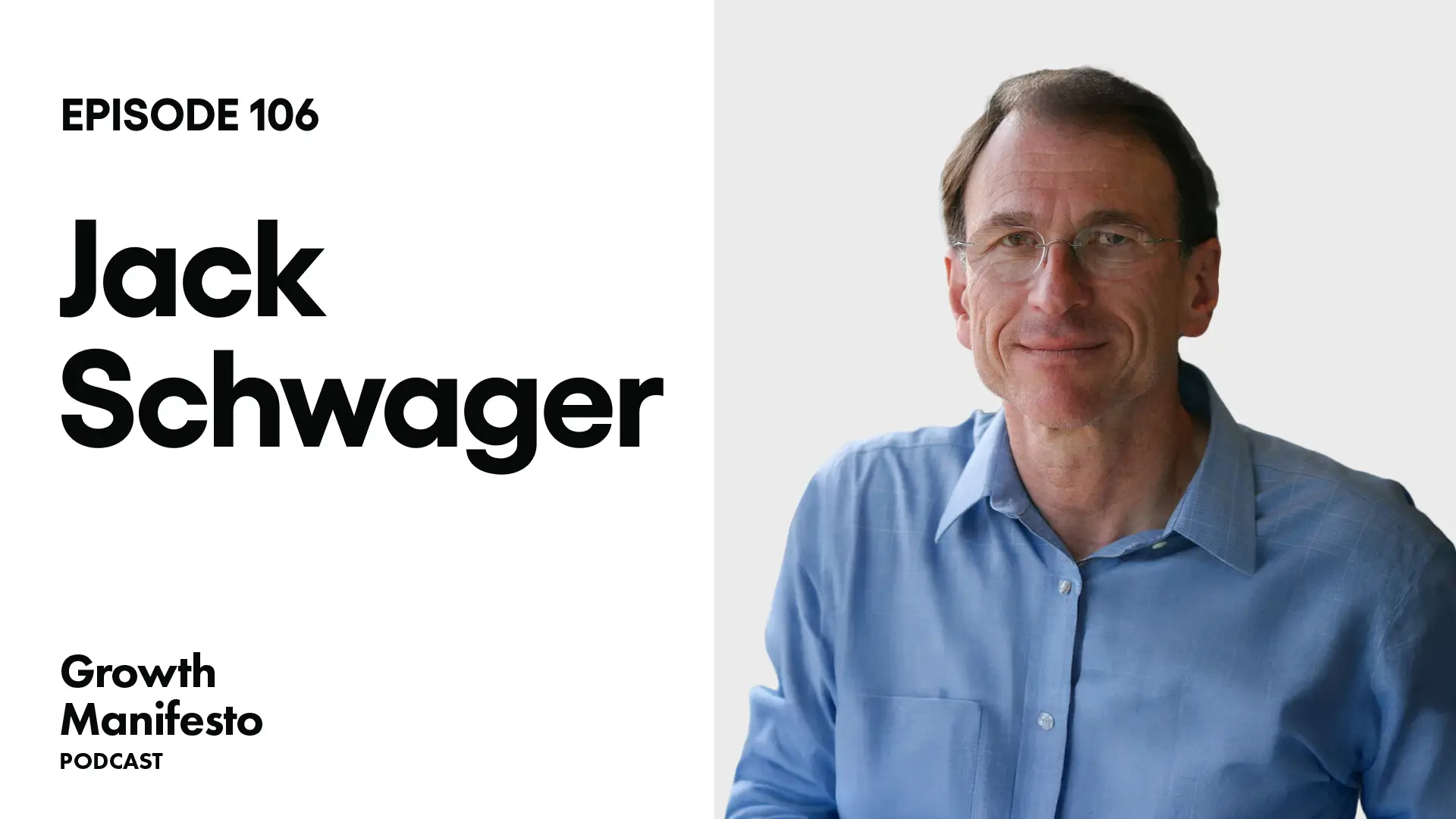
 with Jack Schwager


Overview
In this episode we speak with Patrick Gilbert – CEO at AdVenture Media and Author of Join or Die: Digital Advertising in the Age of Automation – about how AI is changing the agency game.
Key takeaways
- Bruce Kovner's rule - always know your exit before you get in - is the single line from Market Wizards that Jack Schwager lives by.
- Many of the most successful traders he interviewed blew up multiple times, including one who lost a $50,000 loan from his father twice before succeeding.
- Great traders share flexibility: strong opinions weakly held, so they abandon a view fast instead of hoping a losing position turns around.
- Learning to lose, not avoiding losses altogether, is one of the most important lessons in the Market Wizards interviews, since discipline beats picking winners.
- Copying someone else's trading system does not work; every successful trader eventually builds their own methodology that fits their personality and conviction.
Chapters
- Intro: making a strategy your own
- The origin of Market Wizards
- Common psychological traits of great traders
- Why so many top traders blew up first
- Deciding your exit before you get in
- Intuition as compressed subconscious experience
- FundSeeder: backing unknown traders worldwide
- Writing Market Wizards: The Next Generation
- Final advice: make the methodology your own
About the guest
Jack Schwager
Jack Schwager is the author of the Market Wizards series, a trading psychology expert, and co-founder and chief research officer at FundSeeder.
Transcript
Timestamps open the video at that point.
Jack SThere’s one trader in this book that says, I haven’t invented a single thing. Nothing I do is do. I haven’t invented a single thing. But what he’s done is he’s taken decent things before people and found out what works for him. So ultimately, you can learn from other people. You can take some other people, but ultimately you have to find things that you believe in that fit your personality.
Jack SYou got to make it your own. So don’t think that you could just go and buy a system or copy somebody else’s approach. And you have to be successful because you want to have that conviction. You won’t have their particular talents to make that strategy work. You’ve got to find your own, your own strategy, even if it’s learn from other people.
Jack SBut whatever you put together as your methodology has to be real.
Alex CThis is Alex Cleanthous, and today we’re talking with Jack Schwager is a legendary market historian. He’s a trading psychology expert, and he’s the author of the iconic Market Wizards series. Jack is also the co-founder and chief research officer at FundSeeder his portfolio manager at the ADM Investor Services and Diversified Strategies Fund and one of the most influential voices in modern trading.
Alex CIn this episode, we talk about what the best traders do differently. We talk about trading psychology. He shares some insights from his latest book that is going to be coming out in the next year. And we also talk with Jack about what he’s personally learned after decades of studying the top 1% of performance. I hope you enjoyed this episode, and make sure to subscribe to get the latest episodes as soon as they’re released.
Alex CNow let’s get into it. So, Jack, how did you get the idea for this book? Yeah, because this book called Market Wizards, I’ve been given this book from three separate people who are probably the most successful kind of people I know, and they have the most amount of wealth. And yet this is the book that they suggest that everyone should read.
Alex CAnd so how did you get the idea? Because it seems to have had a pretty big impact across the space.
Jack SYeah, it has. And I say this reluctantly because it sounds like I’m just blowing my own horn here, but I can’t tell you how many hedge fund managers and very successful traders, you know, have told me that either when they got into the business the book was given to them or or they gave it out to their trainees.
Jack SAnd so it’s it’s become kind of a sort of a Bible of some sort within the trading, within the I guess it’s what I call the successful trading community. And so the idea, yeah, everybody thinks that the market wizards that we’re talking to your audience, the first market wizards book to a number of them, but the first one that you’re referring to, I wrote in 1988.
Jack SSo we’re talking like 30, 37 years now. So, that, that book was not my first book, and people assume it was my first book was actually an analytical book, like a 750 800 page analytical book on the futures markets. And the book did well. So what it was, I didn’t write do mass sales because the book that that intense is just not intended for a big audience.
Jack SI was just trying to write the best book out there, futures analysis. Anyway, that did relatively well. And a few years later, I got approached by a publisher and they wanted me to do, do, a whole series of fundamental type analytical books, you know, sort of be the editor, chief writer, you know, one gold, one grains, whatever they want in each type of market.
Jack SAnd I had just a back up to do the original book was pre pre pieces. At least they were just an e-book I did. It was out of book and I had taken a sabbatical to do it, and it was an enormous chore and I just, I just no interest in doing that. So I don’t ever do another book.
Jack SI want to do something more mass audience. And, and I decided, I have no idea. I said, yeah, you know, at the time I was a director of Futures Research, which is a board full time job on its own, and that’s why I didn’t do it. But I had this idea that I knew some really great traders, and I thought it might be a fun idea to go around the country, interview like the best traders and, and see what differentiates them, sort of pick their brains.
Jack SAnd that was kind of the catalyst. I mean, I wanted to do the book, but in that time. So that book got done at nights and weekends. Other than the trips I took to interview the traders, which I kind of did some weekends, or I had a day off here, there and there. But the the bulk of the work, which is taking all these interviews and transforming it to a book that I did really, literally nights and weekends, I, I did spend some all nighters.
Jack SI did kind of spend my weekends doing this, and that’s how the first book came about. So I, I guess the origin is that I was prompted to do another book and I, I knew these great traders, and that was the idea.
Alex CSo you were the director of the futures, research. Right. And so you were already essentially kind of in the industry.
Alex CAnd then you started just following some books. And so the first book, it was like a like a more kind of technical book. And the second one, this was a more of a mass market book. In constructing the second book, how did that change how you invested and how you traded?
Jack SWell, I got it sort of have, you know, simultaneous I by that point had some experience of my own, and I don’t know how much of it was the influence of the book and, which was just the experience. But there was one there was one line I could think of back of one line with Bruce governor, of Caxton Corp. and, you know, I interviewed him back in the earlier days when he was trading of commodities clerk and he had one line.
Jack SWe said, I always know where I’m going to get out before I get it, which to me is probably my favorite line from all the market was the books I’ve read, and one which in one sense captures so much wisdom. So I kind of do live, you know, any trading I do, I live by that rule. So if I do an order, I put in a stop at the same time.
Jack SAnd there’s so many reasons why that’s a good idea. We can go into it if you want, but that that is like a good example of something that I can think of a direct line in the book and, and effects my trade never have been other instances. I remember, for example, Marty Schwartz saying in our interview, if you ever really worried about a trade, let’s say the market closes really strong and, on a Friday, you’re short to that type of situation.
Jack SBut if you ever really worried about the situation and then the market opens up, you know, typically this would be a over a weekend situation, but it could be overnight. And then the market opens up and the market lets you off the hook. To use his exact words, the market lets you off the hook. Don’t get out. And that has occurred a couple times.
Jack SYou know, it might be in the old trade where I remember like one instance, S&P was in some sort of broad range and I was selling into what I dissipated would be resistance. And, as I was, I was scaling in. I was almost totally and not completely. And the report came out and he was one of those unemployment reports that there was just nothing, nothing positive for the month, for the year.
Jack SYet, you know, usually they pull out well, is is one. But everything was about it was negative for the for the market and the market sold over I think. Oh yeah I got it. You know, and then sort of about a couple of hours before the closing stop, go down, started going up, kept on going up. It actually closed up on the day or something like that.
Jack SAnd I remember I said, you know, I remember feeling that in the water, this one to my son was over the weekend. I was talking to this traders out of that board. And Sunday night the market opens up and it opens up lower. And I swear, I think of for tonight. And I said, okay, I’m not going to do anything.
Jack SAnd sure enough, the market, the market, you know, kept on going down. So. Right. So the instances where things happen in the markets and I think back, things I got from the interviews, I mean, a bit of this, but those are a couple examples.
Alex CA big part of what you talk about is, well, the big thread seems to be psychology. Yeah. So there’s certain strategies, of course. Right. And everybody has kind of different strategies. But it does seem that the consistent a characteristic of these super successful traders is their psychology. And so what did you find in terms of the like the type of psychology that these kind of super successful, people had?
Jack SYes, they were are there are common traits in terms of psychological attitude and emotional makeup and all of that. One thing that’s common is that really successful traders seem to be much more immune from emotion. When things are going against them, then you or I, or most people would be. I remember Paul Tudor Jones and this he wasn’t speaking about himself.
Jack SHe was talking about Eli Tullis, who was a cotton merchant that was his mentor. And he would relay related our interview. This is one of the things that made a big impression in his life, in his career. And he talked about how he was only alive one day. And marketers really want to survive a terrible day. Lost billions or whatever.
Jack SAnd he had some guests in that afternoon. And also, you know, like you would never know the guy lost the tie that day. He just he was completely just normal. And that and that sort of made that impression. I mean, I find a lot of these traders, they could be these extreme situations and just are very cool and control.
Jack SAnd I think a lot of that is is inherent. It’s inbred. I’m doing with another book right now and one of the traders and maybe the best trader in this book I’m working on may be the best trader, the most successful trader I’ve ever interviewed. I’ll go that far. And he keep talking about, well, what made him, what makes it different.
Jack SAnd he mentioned a couple of things. You know, one was, you know, in terms of the ability of being intensely focused, which is another common trait, by the way, and one he said is he just has this. He’s just born with this thing of being extremely calm, like he doesn’t get fazed by anything. And he says it’s it’s just the way I was born, just my genes.
Jack SIt’s like he’s not saying it’s anything that he deserves or did, but, you know, it’s a trait people ask you are a great trait is born and made and and I think to some real extent they are born. They have the right psychological makeup or they have the right sort of intuitive sense to be able to pick up things that other people miss, but they have some traits that just make them unusually, suited to be traders.
Jack SAnd so those are a couple of things, like I said, you know, focus, emotional, emotional columnist. And there’s other things like the ability to be very disciplined. So it’s you have to you have to be rigorous. You can’t deviate from your what, you know, other right, the right actions and whatever your methodology is. And if you do, the market will usually get you.
Jack SSo have discipline even when it’s difficult to follow your rules. And even great traders don’t always manage to do that, but they do have a better ability to do that than most people. And one more. And that’s flexibility. Really good traders are able to change their, their, their mindset. On the time that they able to turn on a dime, which most people can’t, most people hope their position is going to work.
Jack SAnd if they’re really good, if they’re good traders and it’s not, and they realize that they’re in the wrong position, they’ll get out. But the really great traders can not only get out, but if they realize they’re wrong, they can flip the other way. And yeah, I don’t want take up the whole interview, answer this question.
Alex CBut, but this is a really good question because the psychology is the thing, because everyone has systems, everyone has strategies. There’s a, there’s so much software out there and the technical indicators and, and there’s all these different things and then but, but it’s all about the trading strategy. And the discipline is when things are not going your way.
Alex CRight? Which is so you said, something interesting, that the market’s never wrong. Except the opinions often are right. And so this is a thing where kind of the market has a way to show you what’s the truth. And it’s oftentimes not what the consensus thinks. Right. And so these successful kind of traders seem to be able to win, but everyone else is losing.
Alex CRight. And so how do you think that is or why do you think that they, can actually succeed? At times that the majority can’t and the majority are also experienced, like they have all of, the same information. It’s the same exact market. And yet some people can succeed in that market, and some and the majority just don’t.
Jack SYes. A part of it is what I started to say. The last question was, is flexibility is a be the ability to change their mind and not get hung up on hope, like a lot of other traders do. So, they, they may have an opinion or the best quote here. Peter Brandt, an unknown market wizard, has a line is his motto is sort of, strong opinions weakly held.
Jack SYou know, we w e k weekly. So what he’s saying, basically he has a strong opinion when he goes into the trade, but market doesn’t have to do much for him to abandon that opinion. So, you know, that’s the ability to, as he says to me to be a weak holder of your opinion is, is is a is a good trait because it allows really good traders to get out of positions before they do much damage.
Alex CYeah. And so was this something that you found, that was something that you didn’t expect. Yeah. It’s a some approach to some type of thinking. Or was it all kind of what you thought and it was just.
Alex CIf that were executed just better.
Jack SAnd I’ll tell you, the thing that was most unexpected, which kept on coming up to me in every book, multiple interviews. So you think you’re interviewing these guys who are really the, just far superior performance track records to even successful, you know, traders, and you figure, you know, well, they they probably were always okay with it, but so many, so many of them blew up not once, not twice or even three times, you know?
Jack SSo I was surprised how many these traders who were ultimately super successful, actually, not all of them, of course, but a fair minority of them. Had multiple multiple failures before they finally got it right. And in some cases, the stories are so extreme that you just think, gee, anybody else would have given up. You know, why the hell?
Jack SAnd I ask that any of the things you think that maybe you just weren’t cut out for this, you should, you know, you should give up. I mean, so so that that is what I surprising. And I mentioned that trader that the book I’m writing now is he actually that the that chapter will be called the fifth time was the chart because he literally blew up four times before he became enormously successful.
Alex CThat seems to be a common story for any, kind of self-made kind of successful person. Right? It seems to be the same in business, where your first business is not going to be the one. The third business is probably not even going to be the one. And so maybe the fourth or fifth one. And so same the same with trading.
Alex CBut for trading you lose a lot of money. And so every time that that is going to blow up and that can happen in business. But for these people who are succeeding at the highest levels, that probably have to crash pretty hard before they hit that highest level. And so what was the biggest amount of money? That was kind of just lost as a part of these experiences?
Alex CLet’s call them of luck?
Jack SWell, yeah. Well, the good thing is in these blow ups, usually the amounts are not large because they’re at the beginning of their careers. So it’s everything they have. But it’s a small you know, it’s not a huge amount.
Alex CIt’s funny though because it’s everything they have. And that still applies. It’s just a larger amount of money the more money that you have. But it’s still everything, you know. So it’s something to start again every time.
Jack SRight? In some cases it’s only, you know, like $5,000 multiple times. In some cases, like the trade I’m talking about for this book, in this case of a $50,000 chunk excuse borrowed from, you know, from his dad, you know, so. Wow. Yeah.
Alex CSo come on, dad, I just need one more. Okay? It’s 200 K. Trust me on the next one is going to be good. And then he probably came. Well, and then he’s come good, hasn’t he?
Jack SYeah, yeah. And then in his case, he got to the point with that one last time he promised himself. This is the last time my bar, you know, that’s my dad. And he lost that. But he was also.
Alex CThe last time he said, all right, this is going to be do. And then he lost that one too.
Alex CCame back again after that was the.
Jack S50 again. And, but he was what he was doing. He was he was making money. Making money. What do you get? The blowtorch. Right. But he was doing this deep research, and he’s posting it on this online trading community. And there was like a niche in that community of the best traders and I guess they talk among themselves.
Jack SAnd he mentioned why he’s not trading, you know, at one of the traders, just to say, you know, alone, your 50 year old alone, your $50,000 pay back whatever you want. No, you know, because he had gotten value out of the research and that was actually that was the one that made it.
Alex CWow. I don’t think we know his name, but I would just think thinking how much he made actually all of that.
Jack S50 what? Well, let’s that 50 for first of all, nobody will ever know his name except me in my code. I have a coauthor this book, George Goyle. Nobody will know his name because this is the first time, the only way he agreed to do it. He didn’t want the notoriety, and the only way he agreed to do it was to be anonymous.
Jack SOf course we verified his track record, said birth, but he wanted his name to be anonymous, and,
Alex COkay, so what did he turn that 50 K into then? This is anonymous right now.
Jack SAs of now, it’s about 500 million.
Alex CAnd what kind of a time frame like in like what.
Jack SYou actually about the me think, just under ten years. Under ten.
Alex CYears. Pretty good. That’s, that’s better than, you know, very good trading record. And and so his father has gotten his money back now, plus interest plus. Yeah, some. So, so let me ask you, you have been interviewing, successful traders since, like, the 80s, right? And so the first book was 1988. Oh, so I’m sorry.
Alex CThe second book was in 98, but the first kind of mass market book. Yeah, it was 1988, which is, was that 36 years? Is is that the right man? 36 years ago?
Jack SYeah. And so you’ve interviewed it was published in 89. I wrote it in 88, was published in 99.
Alex CSo you’ve interviewed a fair few people over that time. How much has stayed the same? How much has changed?
Jack SYou know, the markets have changed enormously, radically. But we both know that. Did you, I mean, the in fact, the changes have been so enormous. You’ve gone back in those days, back in the first model versus book, strategy in a lot of futures, traders were talking about trading bans, right? Those things virtually don’t exist anymore.
Jack SAnd we’ve gone all electronic trading at the time. I did the first book where I was talking to people whose careers predated, well, we had PCs in the in the 80s. They just became beginning early 80s, I guess was sort of the beginning it but they weren’t, you sold dealing situations with people that had, like, computers on their desk.
Jack SYou didn’t have choice. Yeah. Back in those days, we’re talking, you’d get a chart book once a week and that type of thing. It was a and forget about all it at the end of there’s no internet. Right. And so we’re talking largely pre PC, no internet. And you know, no electronic trading. So those are enormous.
Jack SThat and also that predates you had hedge funds kind of a very minor influence. We’ve gone from that now to supercomputers. I want multiple quant firms with several hundred, several hundred PhDs in math working for that or, or physics or, or, you know, astrophysics or whatever. No, that computer science, etc.. So we’ve gone from that world to, to this world.
Jack SAnd so there’s been enormous change. However, the people I interviewed, you wouldn’t know that the financial world has changed so much. So many things don’t really change. And amazingly, this book, for example, I’m working on now, as was the last book. We’re so low traders. Not not hedge funds. You’re just just guys on their own good trading from their home office or whatever.
Jack SAnd, you would think single traders like that would have no chance. How does a trader like that compete against a hedge fund with 200 points? Right. It just doesn’t seem possible. And not only are they competing, but they are like getting these track records that are just miles better than than what the these big firms are, too.
Jack SOf course, they have the advantage of starting small. And so not not having to trade billions is itself advantage of course. But still it’s I find that amazing that of all these changes we’ve seen, which would seem to argue against the individual trader having a chance, I’m finding three individual traders now that are as good, if not better, than I’ve ever felt before.
Alex CAnd are you finding that they’re approaching the data in a different kind of way than other people, or than other companies are? Because there’s an enormous amount of information available? So a solid trader these days has so much more information than anyone could have had in the 90s, even. Right. And so how much information is it and how much is its strategy and how much is a psychology?
Jack SThe strategy actually, in many cases are not terribly complex. I’m not complex. They’re they’re basic. So it might be a strategy like, waiting, you know, looking for stocks that have these enormous three or 4 or 5 day moves up, you know, and a lot of those stocks, they get these up moves and they collapse again. So so in an A for a couple of these few these traders at least part their it is one of their early strategies and sometimes a strategy.
Jack SThey still use is to going short into these really powerful rallies. But of course they’ve studied them. They studied thousands of these examples and, and have developed a sense of where to enter these trades and how to protect themselves and so forth. So it’s a trade that is very simple in terms of you could, you know, just explain what it is.
Jack SRight. It’s very simple. But to actually do it. So you’re going to go you’re going to go, sell a stock that’s up 500% the last few days. Yeah. So that’s a lot of people. Q now, many people could do.
Alex CThat’s the hard part, isn’t it? Yeah, that’s the thing is, when everybody’s going one direction for you to go the opposite, just when everything is going like it’s what. Yeah. So I think yeah that is, that does seem to be the conviction doesn’t it, is that they go against the market at the right time and they set up the right kind of settings just so they can basically exit points.
Jack SThat’s, something giving up example of them and some other traders, 1 or 1 trade in particular, think of sort of buying breakouts, but they’ve got it defined. It has to be a stock that has a really big up move on the opening. It’s a stock that has super high volume on that day. It has to be a it has to be a meaningful news.
Jack SSo he’s got you know these all these you know these rules that define what kind of breakout it is. Because if you buy every breakout, it’s not going to work because you get so many false breakouts. But these define which breakouts really to pay attention to. And you know, so the strategy is simple. But he’s to find a way to make that breakout strategy work.
Jack SEven though it’s not very complex and everybody kind of has to find their, their own patterns or their own strategies that that work for them.
Alex CAnd I guess for the person who you’re speaking about at 1050 kind of 500 mil.
Jack SThis is not great. I was thinking when I was giving you the breakout example that was an arbitrator, but, you know, still.
Alex COkay, but, I guess what’s interesting is that it’s like McDonald’s. You don’t need a lot. It’s just a simple system, a simple algorithm that just works for you. Right? And that can cost a lot to figure out, because to learn, you’re probably going to have to have some losses. But they stick with us, and they have the commitment that they believe still that it can work.
Alex CAnd and they just kind of continue at it.
Jack SYeah. And it’s almost I would add, it’s almost never it’s almost never. The initial strategy you start out with.
Alex CSo it’s almost never they.
Jack SThey not. Right. So so it’s it it seems like every almost everybody has to go through a process where they started Marcus. They start trying to do things. So whatever they start with usually doesn’t work. And and then they eventually figure out other things that do work.
Alex CIt sounds like the story of all successful people, who actually succeed, right? It’s like, they start with a plan. Plan files at the first step, and they have to kind of, adapt super quickly, constantly, all the time. And so it sounds like that is the common thing. So, let me ask you a question.
Alex CYeah. So if, so with all the information that you have now. Yes. If you had all this at the beginning of your, at the beginning of your career, at what would you have done differently, you know, because, because, you know, now there’s so much information which you have about kind of how can certain people have done certain things?
Alex CWhat would you have done a bit differently and had you known everything that, you know? Now.
Jack SThe main thing I would do, first of all, I started out personally fundamentally oriented because that was my background. I was originally a fundamental analyst, and and being a research director, a lot of it was for the fundamental. But I also stayed upwards not to become technical. So for me, I ended up finding out that we can go into it if you want.
Jack SBut for me personally, I have problems with the fundamental side. I found it very difficult to marry that with with risk control. So I ended up gravitating, working out of purely technical. So if I were starting out, I would start out with a technical person that would sort of technical support, financial. And the other thing. So the first few years when I was trading and trading was never I was never a trader.
Jack SI was always doing other stuff. Trading was nothing more than a side thing that I do. When I had time, I didn’t have any knowledge or, feel for or understanding of risk management and so that and just emphasizing risk management from the very beginning, would be something I would do. So the group, I said, always know where you get to go before you get in.
Jack SAnd having a stop in every type of a trade. I would do that from the very beginning. It took me a long time till I realized that’s what I should be doing. Having said that, I would point out that I’m not I am not a good trader myself. I, I just know stuff, and I trade, like I say, I don’t, I also really should say that one of the important things here is, you have to really have a passion for trading.
Jack SThat’s another thing that comes out. You really if you talk to these people, they are really passionate about trading. They they love the endeavor. They’re they almost live to trade, to use a phrase that they’ve come across. And I never had that feeling. So to me, I don’t have the particular right make, but I talked about the importance of being able to be calm and unemotional.
Jack SI’m not comment on emotion, but you have to be patient, patient to wait for the right trades, patient to stay with the right trades. Again, I’m impatient. I’m a very, by nature, an impatient person. A lot of my a lot of my inborn traits would not conducive to trading. And no, it’s I never did have that passion for trading.
Jack SYeah, I like the idea of being expert at it, but I do realize, hey, I’m not expert at it. This isn’t that I’m good at putting together. Let’s say I’m good at writing books and I feel I have a superior edge there. But I don’t feel that way about trading. So trading has never been my main thing. It’s ironic.
Jack SI write books about great traders. I write books that people tell me got them in the business and they made them successful. But for myself, it’s never been that path. But that’s because I’ve never seen trading as my life, my life goal or ambition. And because I recognize we, I think here’s an important thing. In general, I think people people say, follow your passion.
Jack SAnd that’s only half right. And for me, again, I didn’t have the passion for trading to begin with. But it’s not only enough to follow your passion, you actually have to find something that that you really like following your passion, but that you also have skill. You need both. So I think we all have different skills and talents, and if you stick to what you’re good at, you’ll be a lot happier than if you try to do something that you’re not, that you have no particular edge.
Jack SI have no particular edge as a trader, I just my edges. I know, I know a lot about trading and so maybe I could be that profitable. Where where I’d be a loser for sure if I didn’t have that knowledge. Because my natural instincts are terrible, but, but I’m not skilled at it. I don’t have that.
Jack SAnd I think to be happy, you should be doing something that your skill that. And in my case, I kind of felt books. I did a good I’m happy with those. Hey. Okay, fine. That’s that’s what I see. My mission. I don’t see my ambition to be a trader.
Alex CYeah. Fantastic. I mean, of course, I mean, today’s books have had a huge impact. I mean, the amount of of, people I know, I told them about this interview and they’re like, oh, my God, I got that book from three people I know, and I passed it on to three people. Someone said, like, obviously that’s having a fantastic impact.
Alex CI was going to ask in terms of the pathways, to success, how do people get control of their emotions? Is that something that is possible? Or if someone just can’t handle their emotions, just when the market is going against them and everything is going against the strategy and they just and they can’t handle it. Because I feel like emotion is the biggest challenge for traders, right.
Alex CAnd that’s the hardest part. So have you learned kind of anything about how to get past the emotion or how to train yourself to just be less emotional at the times that it matters?
Jack SYeah. I don’t know to what degree you could train so to be less emotional because that type of that sort of, part of your inner being, your particular makeup, that how you react to stress and stuff like that. I don’t know if you could really change that much, but what you can do is make it so that you don’t have to make decisions under stress.
Jack SAnd again, the best way you could do that is filing companies advice of deciding where to get out before you get in, because at that point, you’re totally objective. You don’t have any emotions because you don’t have a position. You know, emotions go for position, no position. You don’t have an emotional problem, right? Who cares? So, so as soon as you get into that position you’re going to, your emotions will kick in.
Jack SIf that’s what you’re your makeup is. And so if you kind of decide where to get out before you get in and put in the stop, you don’t have to worry about emotions because as long as you don’t pull yourself, you, you’ve you’ve now protected yourself. And no matter what happens, you’re even going to be right. You’re going to be out.
Jack SAnd so that’s so that’s the way I circumvent it. The way I deal with, with, emotions is to just always have, protection. On a position. The only exception is that if you are putting on a position not as a trade, but as, a long term investment, like an alternative. So few years ago, I decided I want to have some of my assets of gold just because I thought it might go up and on over the long term.
Jack SAnd instead of having some, you know that if that money cash that money. So I then so, you know, go, go up and down and then make a difference. I just kept on rolling over the futures contract. So that’s an example where you know, got out some five, five, six months ago and that’s, you know, so now I know it’s going up since that more.
Jack SBut that’s besides the point. I mean, I for the time I wanted I held that, but that was not that was not a trade. That was sort of an alternative way of holding assets. Without that, as an exception, I always will have the stock on any position, so I don’t have to have the emotional concern. I, I basically know what I can lose on the trade before I, before I put it on.
Alex CAnd then from an upside perspective, but like, are they very like specific on on kind of the exit or do they kind of just let it kind of run a bit more and adjust very quickly? On the upside, they seem to be successful kind of traders. Right. Because obviously, I was good to protect the downside. But how far are the letting the upside run?
Jack SYou know, I, I try to bring the stock into close to break even or break even as soon as I can. And and once I do that, then I don’t have to worry much about it because, well, the worst is going to be is could it be a scratch trade roughly. And so I try to do that if it goes my way as quickly as I can, you know, even the same day, sometimes a day or two.
Jack SIf it doesn’t, then I can’t, you know, but, when I can, I do that, and then I, I might have, like, an area, like I say, okay, if this is right, this is the first day. And let’s say if it’s a short position, this is the first area where I think is major support. And, for one thing, I’ll trim the stop down over time and, just to do it that way.
Jack SSo I, I don’t necessarily have, a position that I have, I’m going to hold until this point. I, I will just trade.
Alex CMaybe it stops. You mean.
Jack SYeah. That that’s the basic thing. And so I’ll never get it, the entire month because, I learned for myself that, again, if you’re trying to get down your boots, then you’re going to have to ride out some pretty violent swings against you, because very few trends, especially nowadays, go smooth. They, they the trends tend to be very choppy when they’re going.
Jack SSo I find it easier just to have a trailing stop and I get stopped out. Then I have the luxury of an okay, I can look to get in again. Yeah. You know, I’m, if it’s a short, I’m more of a rebound, so I don’t always get it a lot of times, obviously it’s a trade, but sometimes I do.
Jack SIt’s a lot easier to handle that because I don’t have to worry about giving back most of the profits. If the move is going in my direction for a bit. So I’ve kind of mentally adjusted to say, hey, I look at my goal, I know I don’t have the emotional, make to ride a whole movement.
Jack SI just don’t feel comfortable doing it that way. So I’m dealing with my own kind of personality here and saying, knowing that about myself, I may as well just try to get the swing and the, I’ll get stopped out well before the entire move is completed. But if I do, can, I might have a chance to get back in again.
Jack SSo it’s not like it’s over. And if I don’t get in, what I. At least I made money on the trade.
Alex CThe number one kind of rule is to preserve the capital. And the second one is just to increase the capital. Right. So is to not lose is number one. And also I think the the trading strategy, or the trading system needs to align as with how you work internally. Right. Like and I think that yes, it would be aligned.
Jack SNot use the words not lose because you’re going to lose. And I personally would lose three out of four times at least. So it’s not a question of losing but not losing much.
Alex CMuch. Yeah. It’s much the way of putting it, of course.
Jack SWhich is the key word. In fact, losing or learning to lose is probably one of the most important and main lessons that come out of the books is that you have to if you try to avoid losing, you’re going to lose. I mean, lose in a more major way. Learning to accept losses, that is just part of the game is an important, very important thing.
Alex CAnd to minimize it and to have the exits in there and the stops, and then just before you enter the trade, which most people fundamentally know, and yet you people actually follow through with, and then they FOMO in and out of trades and, and and that’s when live like, internally. Yeah. They’re all over the place, you know, and I’ve have a lot of friends like that that have lost a lot of money and then have integrated some systems like this where they’re like, and now they have like hundreds of indicators just to say, all right.
Alex CBecause the seller by now, you know, and so they’ve gone so far to have as much insight and then just follow the system. I actually had, some dinner the other night. And my friend was like, he had had made a lot of money and he lost a lot of money, and now he’s making a lot of money again.
Alex CAnd he’s like, I just can’t even select anything anymore. I just have, he said, I just have to follow my system because I don’t like I can’t. What’s the word he said? The trust of his own, like, emotions, like, is just not, like, strong enough. So it’s a lot of money, and he just has to follow his system now, and, it’s working, but I can see the conviction, and I just follow along with him.
Alex CRight? Because I know that he’s better than me, so. And, like, because, he has the passion, and so and he’s just basically in a kind of constantly. But the best kind of people I know right now, or the most successful kind of people have such kind of solid strategies and systems, and they have no emotion about the thing that they’re in.
Alex CAnd they will cut out like, like, like super quick, because that’s what the system says, you know. And so and he’s been kind of speaking to me saying, stop being so emotional, stop caring about that thing, what that thing or that thing and just have the system and just follow the system. And that’s the number one rule.
Alex CAnd like, I’m not that good. Have to try to, just to be clear. But like I’m trying to learn these things. And so but it’s certainly something that you need that system to avoid the psychology. The psychological hindrance. It’s going to be kind of the brain, which you have, you know, because I don’t think kind of the instincts are that kind of good under pressure.
Alex CYou know, I think for some there are and and so on that point, how many people across all the people kind of who you’ve interviewed have gone by instinct, you know, versus systems.
Jack SHow many have what has gone.
Alex CHave gone by instinct. Yeah. And today now just by kind of instinct instead of like advanced systems. It’s an and if there are none that’s great as well by the way. But if there are some that’s really interesting.
Jack SIt’s some it’s so obviously, well, most of the traders I interview, mostly people. These great records aren’t discretionary to some extent. They may have methodologies, but or even systems to some extent, but they’re still always discursive. You know, in all cases, but most cases, and, but so, so someone that I’ve come across traders who have just good natural, very good natural instincts, and that’s again that’s and then they trade and it depends on the trader.
Jack SSo not and I should say here that this this intuition like right. It’s nothing mysterious about it. What intuition and what we call it instincts or intuition. All that is, is kind of like subconscious experience. So they like, focus on the markets all day for years. And I’ve seen so many situations and, and when they get their intuition like saying, you know, something’s wrong here or whatever, it’s, it’s kicking in something in their, in their memories and whatever.
Jack SThey can explicitly say what it is or not. It doesn’t make a difference. It’s it is that that experience that stays on a subconscious level. So there’s nothing magical or mysterious about it. It really is part of experience. But it it comes out as an intuition. And some traders have that. And it’s important that for some trade it’s not.
Jack SIt’s really it’s really a matter of of the individual trader. It’s like I’ll give you a good example of that type of thing. So this is the first chapter of the first market with book. Michael Marcus. So he talks about one time he, he was, bullish on soybeans. And he had this, he had a very large position, but he didn’t have the maximum position allowed by the CFTC for a single trader.
Jack SSo, I don’t know what if he had a thousand contracts? I don’t know what he had, but he had a really large position, but not the maximum. And, a report came out that was really bullish on soybeans. And this is still what he’s doing. You know, they’re dealing with and we’re talking back now kind of the 80s.
Jack SBut we’re talking now about experience from the 70s. Right. So so as broker calls you know, calls, you know, really good news. You know, I mean, that’s like I mean, the market’s going to be a little bit up. And but Michael’s kicking. So because he doesn’t have the tax position. So he puts in the water at the market just in case A to trade up living up to the remaining number of contracts he has, you know, he could buy whatever it is, 300, 500 I remember.
Jack SSo, the market opens up limit up. And within 15 minutes he gets a call off the broker that he’s filled out his buddies order. And all of a sudden it it dawns on him this market was supposed to go limit up three days or four days, and I’m getting filled on the first day and instinctively calls. He does calls a broker, and he starts selling wildly.
Jack SHe starts dumping his whole positions, and in fact, he sells so much that he actually ends up that short that he kind of over he over sells. He doesn’t even he said the first time would be the first time that he could remember that it that an error made of money because he was so he was so wild to get to get out of a position.
Jack SHe was just selling hundreds of contracts and, and just oversold by, by error. And of course, the market crashed after that. But it was that instinct that, hey, this doesn’t smell right. I shouldn’t have gotten. He realized even though he had that order, he shouldn’t have gotten film. And so that’s a perfect example of of intuition.
Alex CAnd so but he went against his, his system or his strategy, which is they.
Alex CHim the rules that are kind of against the rules of everyone else. But then it worked in his way as well. Right? So that’s why a little variance. He was very.
Jack SBullish on beans. He had this very large position he wanted to. But he realized the market was telling him that something is good. Your your the position is wrong. Something something right. This action says that’s the wrong position. And he did, you know, instinctively and immediately, to get out of that position.
Alex CYeah. Fantastic. And, speak to me about fun theta. Yes, yes. What is fun? Because I thought that was a really interesting.
Jack SOkay. So yeah. So I did an insider, you know, so for the website is fun theater.com and fun for you and the CDC. The e r fun sitcom. So the idea was, hey, just like in my books, I find these people all over the world to read what may not be known. Maybe in some cases they don’t have access that they want to match money.
Jack SThey have no means of that because they don’t have the pedigree or whatever. They just happen to be very good traders. But the idea was there’s probably people all over the world, lots of people who are, not that there’s not that there’s a large percentage. Only a tiny percentage of traders would fall into the category. But there’s so many tens of millions traders globally that you only need a small fraction that are really good to make a difference.
Jack SAnd the idea there’s just probably a lot of traders out there that are really good at found their methodology, but don’t have access to capital. So, fancy is like two companies. One is technology, one is, one is investment side. The technology side provides three, metrics, performance metrics for for traders to, to get like analytics charts and on their performance stats on their performance.
Jack SAnd that’s free. And the idea there is you’re trying to get them to get on the platform so you can find them. And then the investment side of the company or part of the company is looking to identify trades that could then be used for a management product. And and so this year actually just very recently the first fund got started using traders off the platform essentially.
Jack SAnd so what it is, is it’s a way for people to get free analytics. But more importantly for those traders who would like the chance to manage assets if they are really good, it’s a way they could get access to that much capital without having, you know, going to Princeton necessarily, or, work for a hedge fund or know anybody or be in the right country.
Jack SI mean, it could be anywhere. So, a couple of these traders are, you know, Portugal or whatever, I don’t know, just places you would, you wouldn’t associate with with, having, you know, really good traders.
Alex CAnd, and so does that mean that a person like me, I can sign up and can invest in somebody fund who? I like the kind of track record. So this person’s, So, for example, who your interview athlete led his book. The name who you cannot say, that is that turn 50 came to 500 mil.
Alex CCan we follow that person or is that.
Alex CI mean, oh la la la, or are those the kind of people that are potentially a part of the platform, that we can have a look at the kind of there so.
Jack SThat’s like, say that type, you know, has no so much money is no, we’re not interested in managing anybody else’s assets. And in fact, at this point he’s made so much money, is looking to be doing other things and sort of investing in other things. And doing philanthropic work and stuff like that. So, it’s but it’s but.
Alex CThe thing is, those types of people in there that, just like, people. So mostly. Yes, like like in the beginning.
Jack SWell, they usually they may have a number of years, they may have lobby records as well, but essentially it’s not a platform for somebody to go on and invest in specific traders, but basically it’s a platform where Funcionar can take certain those traders and put them in in a multi trade or fund. People could invest in the multi trade or from the separately.
Alex COkay. And are there any kind of limitations on who can invest in those funds or is it just open.
Jack SYeah it’s it’s like any type of hedge fund. They’re, they’re you know sort of minimum capital requirements. And there, there are in line with normal regulations, whatever, whatever is required for people to invest in alternative investment.
Alex CSo that will be, we’ll put, the link in the show notes. So everyone I can access that, what’s the next book? Because, yes. What’s the next book called and when’s it going to be launching? And you already spoke about the one example of that book, from that guy who turned into 500 million.
Alex CBut who else are you interviewing? And what’s kind of this book about?
Jack SSo this book is focuses. We started to this is the first book I’m doing with a coauthor. As I said, someone named George called Paul. And, we started we ended up having too many, too many, traders that got it look like we were just getting too much text, given the chapters we were writing, given how much text that was, and then how many traders we’d interviewed that still, we’re not, you know, unwritten.
Jack SWe’re still still doing some interviews and so forth. But it became clear we couldn’t fit this all to one book. So the idea that was to split them in to do the solo traders in the first book and do the hedge funds and, managers in the next book. And so right now, so and this, this book is still being written, the way the publishing world works, not because it takes that long to get printed, but because they have to do these marketing programs.
Jack SAnd these things are like fashion for the major booksellers. They’ve got to provide the listeners, you know, the spring list. And yeah, the spring or summer list is like provided through the fall of the previous year type of thing, you know? So, so, there’s a long lag time before the book actually appears. And as I said, we’re not we’re just in the midst of writing it.
Jack SSo this book really won’t come out until next summer. And it’s a it’s like every other book in the series. It has market, which is a name. This one will be called Market Wizards the Next generation, basically. And the and it’s almost all the traders in the book are dioxide. So this is to me by far the youngest cohort of traders I’ve ever interviewed.
Jack SAnd so it’s basically, the focus is individual traders, almost all of them who are also young. Considering that we’re looking for traders with at least ten years track record, obviously they can’t be. There’s a limit to how young they could be. But like this will some of them in the 20s and even 30s, of course, is very young.
Jack SAnd, so I right now, the oldest one so far right now is 41, but this one we’re still interviewing who will break that bubble. But he’s got a really great record. So there may be one in there that’s like 50. But you know, basically the the focus is more on individual young traders in this book.
Alex CAnd so what are some highlights from this book already? By awesome. Okay. Insight. So something that you’ve learned from these interviews that you maybe haven’t seen before or something that was a fresh insight or something super interesting here.
Jack SThere’s probably a number of things. But from a personal standpoint, I guess doing these interviews, it’s made me personally focus more on shorter term charts because I see so many of these traders, even if they have a little bit of idea, are executing with the aid of shorter term charts. And so it’s it’s made me pay more attention to shorter charts as a way to add to positions with very close stops and stuff like that.
Jack SOh, well, not as extreme as some of these traders are down to to literally two minutes. Five.
Alex CYeah, that’s what I thought it was going to be last week.
Jack SI just can’t get to that level. And and I don’t want to watch the market like that. So for me, short is, one hour and 15 minutes. You know, those those two, you know, it’s really a way to just add to a position with a very close top. And so the the percentage, the percentage rate is very low, but I’m risking so little on these trades and I, I’m doing it and sort of saying, okay, here’s a formation.
Jack SIt looks like it really if it’s going to go here, it should just break down right now. And so I could go short there and have a stop really close to most times I get stopped that. But it’s such a small it’s a small but it’s a way up. So I mean, you can’t do that with daily charts to get it that close.
Jack SIt just you can’t do it. And I’ve used it mainly for myself as a way of adding on to positions where, you know, where, you know, maybe I’ll call three times as much as I would normally hold, because this is the second two thirds is put on or such a if it works, you know, like most times it won’t work, but do the occasional times it does.
Jack SI get to to this second, the second two thirds with really close stop. So, so basically the potential would be ten, 20 times of what I risk on, on those trade on those positions. So most eight out of ten times nine out of ten times I get stopped out. But but the times it works, it kind of makes up for that.
Alex CThe for these younger traders. Are there any specific kind of asset classes that seem to be kind of popping up kind of more these days than others?
Jack SNo, I mean, the trading well traders base, it’s again, it’s the same liquid markets as others. And so it’s typically equities. It’s always equities, futures. That is the focus of these books. So no, no difference there I guess what I’m surprised that is a few of these traders that made their initial, their initial success of the original building of wealth was a small on small caps, which is an area that I personally never looked to look at.
Jack SBut, and they but for them, they find the inefficiencies there.
Alex CYeah. Fantastic. Jack, this has been a great conversation. I’m just conscious of. We’re almost at time. How do people connect with you? And well, before that, if you could give us one piece of advice, just, to all the people who have read your books, who love your books, who buy your books for others, right.
Alex CLike the biggest thing which you’ve learned that can help the most amount of people who haven’t achieved that success just yet? Yes. What is the biggest piece of advice that before, the conversation is wrapped up?
Jack SOkay, without repeating, of course, the things we’ve talked about would fall to that category, right? Yeah, but that’s something that we haven’t talked about. I would say is don’t think that you could copy somebody else’s strategy, be successful. You could learn from somebody, you could learn from lots of people. You could pull certain things, you know, from different people.
Jack SBut ultimately, virtually every trader I interview has developed their own methodology. Now they’re their own. And in the in quotation marks, they’re all methodology may be 100% somebody other people’s methodologies. There’s one trader in this book that says, I haven’t invented a single thing as a definitive statement. Nothing I do is do I have an invented a single thing.
Jack SBut what he’s done is he’s taking different things, different people, and put it down. That what works for him. So ultimately, it’s a matter of you can learn from other people, you can take some other people, but ultimately you have to find things that you believe in that fit your personality, that you got to make it your own.
Jack SSo don’t think that you could just go and buy a system or copy somebody else’s approach in order to be successful, because you won’t have that conviction. You won’t have you won’t have their particular talents to make that strategy work. You’ve got to find your own, your own strategy, even if it’s learned from other people. But whatever you put together as your methodology has to be real.
Alex CThat’s a great piece of advice, and I think that’s an excellent, especially on that point around conviction. Right. Because you can follow someone else until it matters and until that size and then all of a sudden you’re just like, what do I do now? So I think that’s a great, a great, great, great piece of advice. How do people connect with you?
Alex CAnd yeah, let’s go there.
Jack SSo my own what? I have a website I did years ago, and I honestly don’t update. I just want to take this on updated, but there’s some stuff on there. And, and that’s just, jack swagger.com by then.com and on Twitter there are times I post a fair amount the times I don’t post at all. But, my Twitter handle is at my name, Jack swagger.
Alex CFantastic. So I highly recommend that this is something, that you follow, but also, just by the books, if you haven’t already. They’re fantastic books, and they give you the psychology and examples and all the thinking, and it’s going to be just a fantastic way. Like if you want to get kind of better at the psychology of trading and understanding how successful traders actually think and how they operate, highly recommended, that these books are purchased.
Alex CAnd like, I just can confirm that this is the number one book that the most successful people I know have sent to me and have given to me and have given to others. Right. So that does say something. Jack, thank you so much for coming on the podcast. This has been such a great conversation, and I really look forward to seeing that next book.
Alex CAnd hearing just more about the, that genius who made 59 to 500 million. But thank you so much for coming on the podcast today. Yeah. And we’ll talk soon.