Ecommerce and DTCLeadership and cultureEntrepreneurship
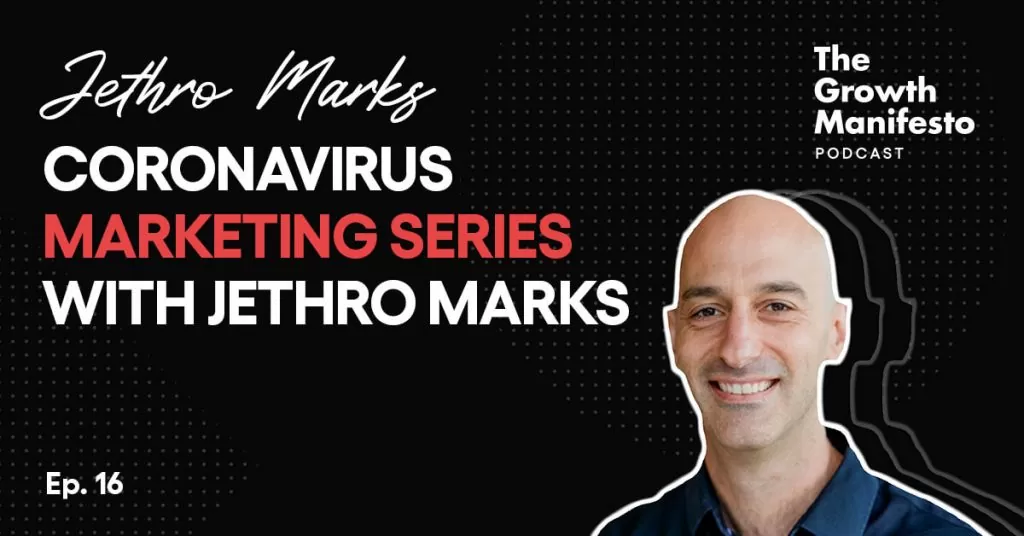
Coronavirus Marketing Series with Jethro Marks
Jethro Marks of The Nile explains how COVID-19 turned April into a second Christmas for his 32 million SKU e-commerce store and reshaped remote work.
 with Jethro Marks


Overview
In this episode we speak with Jethro Marks, Co-founder and Director at The Nile, one of Australia’s largest ecommerce stores.
SHOW NOTES
Key takeaways
- The Nile experienced a sudden demand surge like Christmas in April during COVID lockdowns, unlike its usually predictable annual peak.
- Puzzles became one of The Nile's best sellers overnight, exposing supply chains that had never been tested at that scale.
- Marks argues remote work should settle into a hybrid model, with office days used mainly for teamwork rather than daily attendance.
- He recommends new e-commerce entrants use Shopify, BigCommerce or Neto, since cloud tools now make starting a store far cheaper than in 2003.
- Marks says businesses that find and fill a genuinely new need right now, rather than trying to create demand, will be the ones that scale.
Chapters
About the guest
Transcript
Auto-generated from the episode audio, so expect the odd mis-heard word. Timestamps open the video at that point.
You're listening to the Coronavirus Marketing Series on the Growth Manifesto podcast, a Zoom video series brought to you by Web Profits, where we talk about how to drive business and marketing success through the COVID-19 pandemic. This episode is a discussion with Jethro Marks, co-founder and director at The Nile, one of Australia's largest e-commerce stores. So let's get into it. How's it going, Jethro? Good. How are you? Good, man. Good.
You know, just working from home and trying to be positive in a very challenging situation, yeah, to survive, as they say, and to thrive if possible, right? Like it's already quite challenging in terms of the world that we live in. So I'm trying to, as much as possible, stay positive. I'm trying to, as much as possible, to create, you know, to create like as much as I can across the board, especially in terms of marketing that we're doing. And so this podcast is an example of that.
We've been interviewing a lot of different professionals in the business space, the founders so far, because they're the ones that are having to make the biggest decisions and that are having to face the most challenging situation so far. And so, yeah, it's been very, very busy. it's been very very busy I think you hit on some great points there I think the one benefit just to kind of
take it from a positive to start with is that your ability to be able to get everybody at the moment must be very good because you know where everybody is everybody's at home it's just between Zoom calls right it's between Zoom calls it's like so are they on house party or are they on Zoom are they on LinkedIn are they on Messenger or WhatsApp or iMessage or FaceTime. The number of places that somebody is online these days is quite a lot. Actually, I find it quite hard sometimes to call my friends
because I'm in between their calls. You know what I mean? So I'm trying to get people at the time that they're available between their Zoom calls. And I've got some friends and family that have Zoom as well. And so they use that now for kind of the personal conversations as well. So it's a strange world, but yeah, like it is becoming a bit easier to get a hold of people. It is becoming a bit easier to create content quickly because you don't need as much of a production.
You know, like I think that like it's not only that people are forgiving right now in terms of the quality of production, but if it looks like you're not at home, that's a bit disrespectful, right? Like what, like, you know, so you probably shouldn't be there recording content right now. It's probably better to just be at home and make it okay for everybody to just be okay in being home. You know? You know that BBC clip of that guy, Robert, somebody rather who was the Korean analyst.
And then it was about a year ago. And then at some point his daughter walks in and there's like, cause he's obviously working from home. And it was a whole big viral sensation at the time. And I'm like, we're all the BBC guy now, right? the chances of my kids walking in here are pretty higher right now. Like there's no guarantee they're not going to get involved in the conversation. Exactly. I think every meeting I have, whether it be, you know, a client pitch or talking to suppliers or anybody, colleagues like that, that is just a given in how we operate in this, in this time and space. And I love the fact that everybody is forgiving about that because,
you know, I think there's the, the, the general etiquette within the business world that you have an expectation. Things are always going to be at a certain level. and now we're kind of just all people right you know things happen and you just have to accept that is what it is right yeah so there is um look i do think there's like a general um flattening not of the curve but yes of the curve as well right but a flattening of um or like like a it's like almost an equality almost of like like we're all at home right and so background shot
is the background shot you might go between some rooms but you're not changing your background anytime soon right like except if it's a virtual background on zoom right but you know i think everyone's just kind of kind of in this together i was actually having a conversation um the other day um and i was saying for the first time in a very long time i think ever like like in my lifetime we all have something in common right the whole world the whole lockdown has something in common
right and so now we can all relate we can all be there you know we understand the challenges and if you have children you understand what that means right now right like you've got there is like a um there's a there's just a shared experience right now you know and i think um it's interesting because yeah, forgiveness is high in, in, in production, you know, like this, um, style of content, right. Before, you know,
we put a lot of kind of effort into like the studio layout, right. With like cameras and the things and the lights and everything like that, just to show that kind of standard, you know, just to show that, Hey, this is our standard right and that that says a lot about you right like that standard right now that standard is gone right like that is not there so now your standard has to be the content the content has to be the standard and that's kind of that kind of equalizer that i tried to poorly explain before
bang on right right it's exactly right and i think um it's so funny i guess the the those individuals who've been operating out of, you know, perhaps less sophisticated premises. Yeah. Kind of now got a huge big up on everybody else because everybody's in the same position. If they take action, if they take action. But to your point, I think you're bang on right. I think now it comes down to the actual content itself because everyone, you know, you've got your brand and then what,
what you deliver is much more important in terms of what it actually is rather than the way it looks. Exactly. Right. There's a lot to that. I think there's a lot of, look, I'm trying to be positive about the whole thing as much as you are. I'm trying to think of all the positive spins are going to come off this. Because I think one thing is this is not going to last forever, right? This is in the grander scheme of things, this is a temporary blip and it's going to be a hassle for all of us. But at the end of it, we're all going to come out with this collective experience. This morning, I had a call with some guys in the States. And the discussion points to start with was, what does your lockdown actually look like?
So are shops open? Are they not open? Like, what is it? then I got into the call with some guys in the UK and it was the same thing it was like well what does your lockdown look like versus mine so we're all having this collective experience that looks kind of similar but not exactly the same but it is essentially the same thing and we're just talking around the gradations of it as opposed to you know when the bushfires were on I was getting calls of people like well what's it like or you know the yeah experiencing that and so that was a uniquely um Australian or even a new South Wales and Victorian thing um but now it's everybody we're on the boat together we're all in the boat together so just a quick intro yeah so today i'm speaking
jethro marx the the co-founder and the director at the nile yeah which and correct me if i'm wrong i basically has over 11 million skus so it's an online store that has over 11 million products is that right 32 million 32 million i've got the data wrong so it's basically increased three times since i saw a profile of you online because i was trying to find out actually um the size of the site plus also you've also now expanded in to providing
outsourced e-commerce support through a company that is called mercury retail is that right? That particular business we've rebranded as Sorthub. Sorthub? Sorthub, correct. As Sorthub. Let me try that again. I feel like I can edit it now, right? So just a quick intro. So today we're talking to Jethro Marks. He's the co-founder and the director at The Nile, which is one of Australia's largest e-commerce stores with over 32 million SKUs and also the founder of a company
called Sorthub, which basically helps e-commerce providers to expand their operations. Is that the best way to explain it? Correct. There are two parts to Sorthub. The one is we provide an end-to-end service for brands that want to sell direct to consumer. So typically a brand would be very good at marketing, would have a B2B supply chain, but won't necessarily have a direct relationship with the customer who buys their product. What we do is we provide literally the ability to go in a very short space of time to a fully fledged DTC online model,
direct to consumer, to be able to, we take care of the warehousing of the fulfillment, the customer service. We do all the bits in between that allow that brand to basically present that it is the brand selling. And from the consumer's point of view, they're dealing with the brand, but we do all the heavy lifting in between. So, welcome Jethro. I think we just had like a 10 minute chat before we even started um but there's what's interesting is that you're you seem to be one of the lucky ones right like i'm going to put it like a basically like in
inverted i commas that i've actually probably seen like an increase in performance since this whole thing started is that right yeah no we uh we have been exceptionally lucky in this regard we landed on the right side of this due to no no calculation of our own it's just we happen to be in the right place at the right time with some commodities that people want to buy can i just put on that point like so like because that's a um that's like such a simplification of
how you got to that point to be lucky because um for people who don't know um you founded this back in 2003 right so you're in business for 17 years to be at the right place at the right time and to be lucky enough to step in to this thing right um so there's a bit of persistence behind it right and there's a bit of effort to get to the point where you have like a list of 32 million skus that are available so that at a time like this you can see some growth now you know like i
like it's such a hard time across the world for so many organizations so it's so good to speak to somebody that's actually achieving some success right now and is scaling up and i think um you know fantastic on you um but how much has it actually increased like because these are the questions that everyone i'm sure is asking right because because i just before this i checked out the site i checked out the home page now we spoke i think the first time maybe two months ago right
and it was so hard to find a time to speak and we kept saying next week next week next week next week anyway so because we're now at home we're kind of free right um but before your home page was very different to what it is today like because i had a look at the home page before and it's all about stuck at home and it's all about kind of the board games and so on and you know the puzzles and stuff like that yeah so yeah how much has it actually kind of increased in the last six weeks
i i think the way to think about this is it's sort of christmas in april would be the way to to give a comp in terms of it for us is typically a april's typically quite a quiet month for us we're sort of there's no cyclical upswing there's no events going on there's nothing in all the commodities that we sell there's really nothing that's sort of driving sales it's just a base level sort of kind of quiet time of the year and this looks like a very strong christmas in april um you know it's a very strong christmas it's a very strong christmas yeah
because I can, yeah, because I see the charts free almost over Christmas, right? And it's like you get a whole year of sales like in the one month almost, right? Like it's like, it's okay. And then it's like, bang. And it's a strong Christmas. So it's a very good example of that. Is that right? I think so. That's the best. I've been thinking about ways to how to analogize this. And I think that's the best way to describe it. So it's sort of, there are two things to it.
I guess if you think about Christmas, it comes every year. We know when it's going to be, we prepare for it, we plan for it. You know, we start taking on new staff in October, training them up. We start building out all the capability that we need over that period of time where we're just getting ready for it because you know it's going to come. And every year it sort of kicks off and we don't know when the exact start date is going to be, but because at the moment it seems to be moving more and more into the earlier part of November. but you're pretty sure that by about the middle of November you're into it and you're going to
run till about the middle of December in the middle of December that gets to a point around the 15th where you have a bit of a cliff and then a lot of customers cease to think that they can get their product they can reliably get their product online delivered by Christmas and so we can talk about that that's an interesting challenge of what you're doing those last 10 days yeah um and uh so you basically get like a four-week window where you do a tremendous amount of business and then try and deliver everything you can by Christmas to make sure that you're not letting anybody down.
This time, it didn't happen that way. This sort of has kicked off in a way that we didn't see coming. So it was a little bit like comparable to us having woken up on the 29th of November and suddenly realized it's the 29th of November and having forgotten about the fact that there's this event that happens every year, which is a great problem to have. Like, I'm not diminishing the fact. we have definitely become one of the lucky few. And I do reiterate my point. This is entirely, we were lucky. Like I did not design anywhere. I certainly hadn't thought months in advance,
what will people need at home to keep them busy and occupied and to entertain their children or whatever. We just happened to be in the right place at the right time with the right product set. And I'm very thankful for it. But that is exactly what happened. So we've literally been playing catch up for the last few weeks to try and get on top of this, to be able to make sure that the expectations are being met because when you're caught flat-footed, which is what we were, and I'm not lying about it, we were absolutely unprepared. You've got to quickly traverse it. Now, we've gone through all the similar travails
that every other company has. We went remote on day one. We moved offices in two different countries remote immediately, which has presented its own challenges, but it's been very positive. Our warehousing has had to shift quite substantially in terms of the way they operate to make sure that we've got social distancing, multiple shifts. I think we're doing close to double the amount of hours in the warehouse than we've ever done before per week just to keep up with the demand, which is great. So twice the amount of hours in the warehouse just to keep up with the demand.
And that's basically like around the clock. Is that right? Is it 24-7 or is it? We're at two times eight. We're at 16 at the moment. 16. You can still use that last eight hours if necessary. but in my experience, night shifts aren't that productive unless they're very, you know, there's a lot of effort that is going to make it work. So we're trying to just keep it going as best as we can within the confines of the sort of 16, 17 hour day. And the team have really stepped up, like really impressed. We've had to scale up quickly, bring on some people and they've done a great job.
So, so far, look, it's working and we're getting on top of things, but it's challenging. Like I said, we're just very lucky to be in the right place at the right time. And yeah, thank you for sharing. And so with the social distancing in the warehouse, what does that then do to the productivity of the packing and, you know, the process overall? uh look it is more challenging i think the way we had it set up um was pretty good in that like
i can't exactly explain it in a way that would make sense but the the way that the desks and everything are laid out there is almost the correct amount of space between them so there wasn't a huge amount of infrastructural change we needed to make it was just around processes and making sure that the staff were um you know spaced correctly wearing masks wearing gloves at all time using sanitizer and just, you know, making sure that the protocols were baked in. I guess one of the, one of the key benefits this time around, you know, normally when you put a safety requirement in a lot of the time,
people don't necessarily know what's there for country, really see the direct application of why they need to do something. In this particular instance, everybody's bought in on day one because everybody is fully aware of the fact that if they need to do these things in order to stay safe. So that's been really great. And I think that's, that's helped. I don't know about you, but like within our remote workforce, the participation rate and the level of effort that people are putting in is really great from day one, which I didn't expect because it's one of these things that you're always quite fearful of. If I move to a remote environment, how do I maintain the cohesion of my staff? How do I make
sure I'm getting enough productivity out of everybody? And so that's always kind of been a deterrent for us to go into a fully remote environment. But it's one of these things, once you're thrown into it and everybody's bought into the idea and they'll like it, then why did I do this five years before? What do I actually need? What do I need offices for? It's really interesting that there's been a lot of conversation about the remote style of work, but it's always so challenging to take the step
or to take the plunge or to not have an office and kind of how would that be seen? And like there seems to be a certain status about having an office. you know it's like we'll have an office and it's basically this size and there's x amount of staff in that office and it just doesn't come across the same way through zoom like it does it just doesn't you know and so then again it levels the playing field kind of thing right where it doesn't matter how big or how small the office kind of has been in right it's about now it's about
the value it's about content and stuff like that but i do think yeah like it's given us a chance to try this out right and see how this works and to think well like is my expensive office space actually worth the value that it gets back you know like how important is it having people in the same office now i think it's very important but but then is it like cool so is it that important above and beyond the benefits of actually having everybody like on the remote
kind of um stance right instead right and so i think these conversations are now kind of happening right and i think you know because uh quite a lot of organizations are having um challenges economically right um and so and so um they're going to be looking at everything and i'm sure the office space like like rents they're at the top of the list right like of kind of some of the costs sometimes right i'm sure look for you with like all your warehouse spaces
i mean you need your warehouses but the offices you know what i mean um so i'll tell you why i land on this one because i think i think there's a middle ground and i think i like i like everybody or everybody in the same space because i think there's a dynamic that occurs when people are in the same space together that you can't there's just no replica you can't there's no technology i've seen yet that allows you to to breach the gap enough of what face-to-face really brings right okay but if we if we accept that that's kind of a the perfect outcome the remote working
i'm becoming quite fond of as well because i'm like well i've got some staff who travel up to an hour hour and a half to get to the office each day i'm like this gives them back two to three hours a day like that's huge right that's massive what they choose to do with it's up to them but i mean from a quality of life perspective i think that's enormous um i think the ability to organize your day if you as long as you can be productive means that as long as you're available when people want you to be available, then why not just organize yourself accordingly, like when you're going to look after your kids or whatever. So, you know, I'm running shift work as well. My wife
runs a business too. And so we run shifts morning and afternoon. Who's going to do the homeschooling? And then everybody works in the evening and we kind of all make it work. I'm not saying this is a perfect outcome, but it works. So I think the happy medium where it's going to end up is you end up with a partially remote working. So why should you be in the office five days a week? like come in a couple of days to spend time with your colleagues and the rest of the time work from remotely you know actually remote working interesting so that means essentially the systems need to be set up to be completely remote and it's optional to go into the office right like it
that's how it would have to be set up right um and then and then the office side of things would be there to really kind of establish that teamwork establish that bond and actually have the face-to-face time but your company like in that scenario would need to be able to run completely remote absolutely so um that's an interesting conversation you know because it's like now yeah sorry no i was gonna say my wife just worked for one of the big banks and uh they had
a hot disking environment for hundreds of people and she used to lament it was just like it was an unworkable solution for so many reasons mostly because they're under-resourced for the number of staff. Now I think about it, actually the model wasn't wrong. It was just premature. I think once, you know, if you have a hot-testing environment where it's fully kitted out for it, but then you are engaged, sorry, you have the ability to be fully remote and then you overlay it with that, you actually get the best of both worlds because you don't need to fully resource all the people because you've allowed people to work remotely. You've encouraged it, but at the
same time, they've got the capability to come in and spend time with teams or whoever it is in an office environment. So I think my gut feel is that to me seems to make more sense. Like, so what that means for us is we could have a smaller footprint and have people rotating in and out rather than having to have a footprint where everybody's there or there is capability for everybody there. I mean, I'm thinking about this now, like even before this all kicked off, there were a few weeks where there'd only be a couple of people in the office because everybody else was off doing other things. I'm like, well, why don't we just accommodate for that outcome
and make that the default solution? So to your point, fully remote capability, but with the view that they should or could operate face-to-face when necessary. Yeah, that's interesting. I mean, yeah, certainly the world is changing right now in terms of the consumer behaviors, yeah? Just from the business level and from the consumer level. But from the remote environment,
what are some of the things which you've done to ensure that productivity stayed high or stays high? Yeah, that's, that's become probably one of the central themes. I guess in the first couple of weeks, it wasn't a big deal because everybody was really excited. I guess now we're into week, whatever. It's Sunday, right? It's Sunday. It's Monday. It's Tuesday. It's interesting. Yeah. It tells them it's Tuesday and whatever. But I think whatever week is now, I feel like it's becoming, now we're getting to the point where you've got to kind of continue to engage to make sure that
people are uh are actually engaging with you that they're not just kind of allowing things to just slack off a bit um and i don't say that as a negative pejorative i think it's just a natural tendency if people aren't engaged they're going to this is it could be sitting in an office be the same thing so one of the things that i've taken is the idea that over communication is not a bad thing in this situation like just over communicate as much as possible so i'm for the first time ever I'm running weekly or fortnightly town halls, we're just addressing all the major issues from my perspective to the entire company. And that's the starting point. And then we just roll from
there. We're engaged. We're on Slack, Slack's our tool and everybody lives on there. Making sure that there are certain things that everybody does to engage on Slack, like check in in the morning. And I think one of the things it does is it's the same as when you walk into the office in the morning, like it just announces that I'm here and I'm now available to do whatever is necessary and to engage with you. Before that, you know, I'm asleep. I'm at work. Let's get started. And so, you know, we've got multiple offices
and we've got a couple offices in different countries. And so one of the things that I'm using this is for as an opportunity to try and reach some of those geographic gaps that have already existed because, you know, our North Sydney office talks to itself. Our offshore office talks to itself, but they don't necessarily talk to each other. And this is one of those opportunities where if we get this right, we actually get to level the playing field across the board and remove all the geographic constraints and just say, well, we're all part of the same company and we're all going to interact. And so what we're kicking off sort of is an opportunity to introduce one another to each other.
And so to have profiles popped up across Slack to say, well, this is so-and-so, and this is what he's interested in or she's interested in. And all of a sudden humanize it for everybody else who may have been aware there was a person somewhere in the business, but didn't know who they were or what they did. so that I we haven't we haven't seen the results of this yet but the gut feels is that this is probably going to be something to be quite good somebody explained to me the way that I like they said we've gone from having two offices to having 60 or 70 offices I'm like all right that actually makes sense right you think about it from like that context it's like okay we do so how do you
bring 70 different offices together to talk the same language and to address the same set of problems and ensure and support one another as you go and I think that's that becomes a really interesting uh challenge i tell you what's a challenge which we're um which we're working through um is that look when you have an office you can have quick conversations you can just go up to somebody and just talk to them about something just ask something when everybody's remote they're all meetings it's because it has to be a meeting because like it it's not like we
Zoom open 24-7 with everybody there. We can just go, hey, Jono, or hey, Sarah. You know what I mean? It's kind of like the amount of meetings has gone up significantly, right? So trying to find that balance where you're having the conversations and the communications happening, but there's also time to focus. And depending on kind of the type of organization that it is, um, you know, some organizations,
there needs to be like a lot of conversations happening sometimes and sometimes Slack is not enough. So some of the things that we're doing right now is trying to block out times, you know, just for meetings and outside of that, it's completely flexible. Yeah. And so now it's not, you know, we're, we're trying, um, to not have it be start at nine until half past five. It's like, no, you know, we meet like at this, look at these specific times and outside of those you do whatever you want yeah but you need to
perform you know and there's ways that we can kind of check performance right um but it's really kind of just saying well if we're going to be remote let's be remote like how kind of like completely remote now that's not for everybody right it's just that we just need to overlap on kind of some things right but apart from that kind of let's be flexible you know but it's certainly opening up kind of other challenges of kind of having like far too many meetings right like and before we
already had a lot of meetings before but now it's gone up right because we need to talk right because of kind of how the teams operate like like and sometimes slack's just not enough you know like you need the conversation totally i don't know what the i don't know what the silver bullet there is i think like there's a couple of things to that the one we were um some of our tech teams were looking at having recurrent um voice on all the time like a voice channel on all the time um that they would mute and then just you know they could drop in and out of so it kind of
emulates to some extent being able to turn to the guy to your left or the go to your right and just have a conversation quickly. I don't know if that's still being played around with. I thought about the idea of having recurrent video on all the time, but it might be seen to be a little bit intrusive. You know, I think there's a bigger challenge there that you're addressing, which I think is really interesting. So think about conferences. The thing I like about conferences, it's not necessarily the content that you go to see there. It's the fact that there are people
there who you would normally see once a year, once every six months. And when you had that, it would be a meeting, right? A meeting's a one hour event. It requires me or you to travel to one of the other offices or meet somewhere of a mutual agreement. And whether we've got 10 minutes of discussion or not, we're there for an hour. I don't know why, just seems to be the rule of the world. Like every meeting is an hour at least. In a conference environment, you have six, seven, eight, 10 minute conversations because you bump into the person and much more interesting stuff comes out of it
because it's totally unscripted. Right. It's the same issue you're just describing, but now it's in an office environment. So it's kind of like, how do you, if you can find a way to solve that problem, you could actually do away with conferences. Like if there's a way to do that online, like that to me would achieve the networking outcomes that you need. And I don't know the right way to do it. I think maybe part of it, to a point, maybe part of it is just having an informality to be able to just, you know, have those quick chats and just know that they're going to come through on a regular basis. But then to a point, maybe that's a bit disruptive.
So I don't know, maybe the, maybe the answer becomes like status settings, which says like either I'm here, I'm not here, or I'm ready to talk or leave me alone. I'm busy working on something. Yeah. It's interesting because that means then that, you know, we need people to change their behaviors. Right. And that's the hardest thing to change. Right. And I think, what we are being forced to do collectively as like as a global population is instantly change right um so i so like it's called the shock event right the shock event is like
you're at home now and you have to stay home that's it you can't do anything so at first like And I was, I think it was this week or last week, like I emailed about the five stages of grief. And there's this interesting chart that shows the process that somebody actually goes through. And it's very similar to what I think the population is going through right now is that shock event. And everyone's having to adapt right now.
It's really quite fascinating. But just to come back to the Nile. Now, how are you actually handling all of the demand? Because overnight, you've had to kind of step into like a second Christmas in April, right? And so now, like, you're probably not prepared for that, yeah?
So what have you had to do to keep up with the demand? I think there's a few things to do. I guess there's what we can do internally, and then there's what our supply chain is capable of. Internally, you know, it just means scaling up. So it was something that could, there was already a process in place for what to do. It just wasn't, hadn't been done. So we've just moved in that direction. I guess, you know, there's the addition of like remote working in the office environment has proven challenging because normally you would just put people in who would then get trained up in like a buddy like system.
And they would have a quick acceleration path to get them up to speed very quickly in terms of how to do it. Now, it's a bit more tricky because you've got to do training remotely. So that's proven kind of interesting. But it's opened up the door to then saying, well, there are other ways we can actually staff this up. Now we're in the remote environment. We don't have to have people in the office. Are there ways that we can, you know, there are other talent pools that we can drop into to bring people with better experience and who normally we wouldn't consider because they would insist on working in a remote environment. And there might be some great people up there. So we're working in that direction.
But in terms of the scale up, it's just the process was already there. It just had to be done and it just takes time. So we're kind of getting on top of that. The supply chain is more interesting because there's been an unprecedented amount of demand for product for which there wasn't that much demand ever. So a great example would be puzzles, right? I didn't even know we were in the puzzle business, but it turns out we are. We sell a lot of them. So like, I mean, we never- Has that become like your, the top one now? Like, has that become the top seller?
I mean, I can see your homepage. Like if I can tell from your homepage, your homepage says a lot by what's selling right now, you know? There's, what you see there is pretty much what's selling. I mean, they're, they're not part of the whole part of them. whole part of them. Once upon a time, they were a recurrent evergreen seller that would sell on Christmas time. And now there's just a lot more demand for product like that. But I guess the point I wanted to make was that the supply chain around some of their product is not as robust because it hasn't been tested to the same degree. The product lines that we sell
over Christmas and all throughout the year, we know how they respond. We know everyone's get up for it. And so the challenge has been acquiring inventory to be able to sell because there is the demand, but it's, you know, there's not necessarily the stock to manage it. And the other challenge that's come up is that for the first time ever, there is global demand for the same commodities at the same time. So everybody wants that particular puzzle. So you're fighting for stock out of the supply base that is also going to North America and to Europe and to wherever else it goes,
which then increases the cost of it and also decreases the amount of supply that you can get. So that is another interesting challenge that comes off the back of this. So you are spending a lot of your time at the moment trying to negotiate the right kind of like deals. Is that correct? Like I'm just trying to kind of have like a guess of what that would actually in hey all does that make sense yeah because because the stock's available you know you've
got thousands of orders you know if you could just close the gap it's going to be there is that how it works or is it something different no there are a few lines like that most of the product we're not uh we don't necessarily have a good supply base of at the moment like stuff that we're just trying to get into um with the with the the rest of it it's not so much that It's more about working with the suppliers to make sure that, you know, we have a good understanding of what inventory is actually available. So for us, if I can take this back a couple of steps, you know, you talked about the 32 million products.
Like, I mean, for us, it's a data play, right? We need to have very good insights into what product is available at different times because the supply goes in and out all the time across that product database. And I think what this is, is just an intensification of that because we know what's sitting in our warehouse. We don't always have enough visibility of what's sitting in our supplier's warehouse. We don't necessarily have enough visibility of what's sitting in their supplier's warehouse all the way up to the factory. So what we're doing now is not so much negotiating to try and just get stock lots of products in.
It's more around saying, okay, we've got this visibility. What else can we work with you guys to try and get some better insights into what's actually there that we can access so that when we do sell this product, that we have a relatively high level of certainty that we can actually get it for the customer. Yeah, sure. And I think one of the positives that's going to come off the back of this is two things. One for us is just that there's access to that data has always been quite difficult to get because I don't think a lot of traditional B2B companies have really thought about the importance of that.
It's just like, you know, if we can't supply today, we'll back order it, you'll get it when you get it. And that's always been quite difficult for us to explain that that doesn't work in the online environment where the customer has an expectation that if it's not met, they're not sitting around waiting for six weeks for the product. they'll just cancel the order and move on. So I think hopefully there'll be a lot more understanding of the way, how the data fits into all this and how it's important for us, which will be great because any improvements they can make in our supply base today will only benefit us down the road and our customers. The second thing is I think that there are a lot of retailers who haven't
necessarily prioritized online because it's just been the add on or whatever else it is for whom now, because their stores are either closed or not as well visited, are having to make it first and foremost. And that's not a benefit to us, but it's just a benefit to the overall industry. I think what it will do is it will galvanize the next sort of wave of online investment. And then subsequently, the customers will come. And I think people talked about it when Amazon turned up in Australia, this was going to be the Amazon effect. And obviously there was a wave of investment that did follow and a lot of projects
got greenlit and moved through. I think the coronavirus, the COVID effect is going to be that much greater. I think it will open the door to a lot of new consumers who haven't historically bought online, will now experience it, will enjoy it. And for those customers who have been online, will now just reinforce the fact that this is the way to shop. I use myself as a great anecdote here because I'm a terrible consumer. I can't stand shopping even though I'm a retailer. I don't particularly enjoy the experience shopping in general. I don't like going to stores, don't like doing it,
but just don't like it at all. But now I've become the consumer I've always wanted to target and have as a customer of mine. deliveries like I don't know if you but I have like three deliveries a day of every single form I'm buying everything online I don't want to leave the house so everything has to come to me and I can only assume that there are a lot more out there in a similar position and I think that behavior is not going to go away like personally I'm not stepping foot in any store in the near future even if it's free infrequently they used to I probably won't in the future because now I know it will come to me if I order it which kind of seems a strange thing to say to
someone doing what I do but it's just not something that I ever kind of did but now I am going to yeah I think um the COVID effect as you so nicely put it um has yeah um has really forced everything online you know like let's say for example like even outdoor advertising it's got no use right now really there's no because nobody should be outside anyone who is outside there's just a such a small percentage of people that are actually outside right now and so now everyone i think is
scrambling if they already haven't to ensure they have like a really uh solid um kind of experience online for customers right you know for consumers and so on but that's kind of like your secondary business right and so you seem to be in like a the the fortunate position that the main thing is doing well but then the secondary thing which is supporting kind of a commerce providers in terms of their infrastructure that would also i would assume just be in demand right now is that
right yeah so we're working with a number of brands to bring them online um and to have the capability to to talk and to sell to their consumers i think one of the the positives that has come off this is there's been a general frustration there's been a general growing frustration that they didn't have enough of a communication with their customer directly. I think given in certain categories like grocery, for example, just how like online got switched off for a while, like now it's kind of coming back online. Those products just weren't getting to
customers other than if they went to the supermarkets. I think that's amplified the frustration that a lot of these brand managers and brand owners have kind of felt. And certainly that's something that we want to assist them with because that's what we can and are aiming to do. But I think what it will do further is just reinforce the fact that these brands can sell online, can have a direct-to-consumer model, aren't necessarily going to experience the channel conflict that's probably prevented them up until now. And our anticipation is that that curve will go further up.
I mean, it's really worth diving, but I think it will just accelerate. I think on a more general level, I think what we're seeing is not so much a redefinition of a lot of behaviors. It's just about the amplification of processes and things that were already going on. So the trend was already moving online. It just has pushed that much harder to a point around the advertising. Although, sorry, on that point, I must just segue to say that if someone was advertising on any running trail anywhere in any of the major parts of Sydney, I think they'd do really well because I went out for a job this morning. I was astonished at how many people are out there just walking dogs and running.
As long as you're advertising something that's like supports people who like to exercise. There seems to be a lot more people out at the moment. Like I get that everyone's at home, but there just should be a lot more dog walkers and everything else. So I think there's a missed opportunity for getting some billboards on the Bayrun or anywhere else around where there's a large number of people. But I just think, and I think the remote working that we talked to earlier, I think these are trends that already were there. I think all that's happening is like it's just amplified it up and so we're going to see a lot more um
occur a lot faster uh you know the the analogy i think about because you mentioned like this is shock treatment uh how shock event it's a shock event and then the things happen yeah and then there's the process of what people go through so i kind of think this is a little bit like having a child for your first child like it's like you go through that experience where you had no idea what you were in for and then you have your first child and then for the first 12 weeks especially you go down this deep learning curve that you've never thought even existed let alone have to go where time stops completely and you don't know what day it is what time it is have you slept that much
recently you know it's all over the place right it's actually not a bad time to have had a child right now right because you have to be at home you know but so I'm sure there's going to be a lot of people and businesses out there that are now saying, wow, this e-commerce thing, this e-commerce thing is like, is big now, you know, and I'm going to get into it. Yes. Like to those people,
like what would you say is the best way to start? Because like you started now 17 years ago and now you have like a huge e-commerce a shop. But there's a lot of organizations that are going to be looking to start now. And this is also kind of the thing which you help them with as well, right? Like in terms of the second business, right? So like, could you share some advice to people that are now considering this strongly?
Absolutely. I think the first thing is the best day to have done this was yesterday and the next best day is today. So to get into it would be the first thing. And, you know, I think I reflect on this the other day when we started out, there was no cloud, there was no SAS, there was no Shopify. You know, at the time that we started, our options were Yahoo stores, which was, I don't even know if it exists anymore. I remember Yahoo stores. I'm not out. Yeah. Or it was like full on enterprise software, which today, by today's standards was pretty primitive.
But at the time that was like, and so, you know, starting out with three 24 year olds with five grand and the bank and three computers, that was never going to be okay. So we had to build our own and do it all from scratch. Today, I mean, you can get a Shopify store for next to nothing. You can get started. You know, the tools are all there. Cloud, I mean, everything should be in the cloud if it's not in the cloud. You know, one of the things that I'm very thankful we did was five, six, seven years ago, move everything into the cloud 100% because it has meant the move to remote has been painless from that perspective.
There are other pain points, but that hasn't been it. and I think the the key is to just get in and test and learn I mean if the cost of entry is so low the cost of scaling up is expensive like once you get to a certain point does become pricey but the cost of getting in and testing is not that high it just requires a bit of time and a bit of effort to get it in I think you know the tools are all out there and there's a ton of material as to what you can and can't do leverage the marketplaces like we started our business on eBay today you know, eBay is a big chunk of what we do. We recently got over the 1 million feedback.
We're looking for third company in Australia to get that. We're very happy with that. Congratulations. Thank you. How many stars is that? Or what's the color of the star? Like at 1 million? Is it like a diamond star? I don't know. Sorry. Anyway, I cut you off for something not important. There is some emblem. I just don't know what it is. Yeah, sure. I'm sure it's very impressive. But I think the key there is that, you know, we talked about the flattening, the democratizing of everything. I mean, that's an environment where
you know, any new entrant can come on and compete with me head to head. Like there's no, there's no obstacle. You can run your Shopify store, you can advertise on Google, you can go to Facebook, Instagram, and for a fairly limited amount of investment, you can get up and running very quickly. And it just comes down to the question of what is it that you're selling? And is there a compelling reason why someone should want to buy from you? and then can you fulfill those expectations i'd make it sound really simple it's a little bit more complicated but i mean and making it profitable and all that type of jazz um but so would you recommend shopify i mean that seems to be the one out there at the moment that everyone's
into it seems to have all of um the customizations optimizations all of the plugins add-ons is that the one which you would recommend i think the way we see it is it's a three-way race between Shopify, BigCommerce and Nito. Okay. Nito, I would recommend if you want to trade primarily with eBay, their integration is pretty sound. If you want to run your own store, then it comes to BigCommerce and Shopify. And we've just decided to use Shopify. Technically, we just looked through the tools that are available on it.
So I can only speak from experience of having used that. So far, it seems to be pretty good. what I like about it is that the cost of entry for a very well-specced product is very low so coming into it you get like what once upon a time would have been enterprise plus and today is just you know available for 50 bucks a month or whatever the cost is it's pretty awesome yeah that's awesome quick one so at the moment with the Nile so like are you running any ads or is it all organic traffic at the moment no we advertise everywhere everywhere you advertise
everywhere and so what are you seeing in terms of performance um because i'd love to hear like your experiences from any commerce perspective so the conversion rates are definitely up on the on the categories that are selling well um there's a lot more interest and a lot more activity so i think the buyer intent is is just a lot is comparable to what we see around the big events so you know I kind of just reflect back on say Cyber Monday Black Friday which has now become like the the peak of the Christmas period as of I think of last year and what we see there is like
you can run an event but you don't necessarily need to you just need to be in the space at the time because the buyer intent is so great it's one of those times where you don't have to coerce it or convince anybody to come and have a look everyone's out there looking for deals and looking to shop and i think um the behavior at the moment seems to be relatively consistent obviously the motivation is a bit different and obviously looking for the deal they just need what they need but the there's enough there are enough eyeballs out there looking for stuff that they can't get elsewhere um and so we're seeing on a performance basis purely metric basis it looks
fairly similar and so that's the same across both facebook and the google network is that the same or is it more skewed towards search than display on Facebook in terms of advertising performance? I speak primarily from a search perspective. So from a search perspective, that's what we're seeing. Display, I'm not as across on the detail of. Okay. Yeah, no problem. No problem. It's really interesting that point as well, which you just said around like there's just a demand right now. You know, we changed our whole approach two or three weeks ago
because all of a sudden overnight, the thing that we were kind of if the thing that we were selling was just not interesting anymore to people that that just wasn't a part of kind of their needs and so we were like okay cool so we have all these resources and we have all these capabilities and so on of course of course how can we help people and then you know we came up with something that talked to the current environment and now all of a sudden there's a need that we're filling and it's the first time in my life that
I haven't had to first to create the need first, then fill it to say, yeah, yeah, yeah. You could get marketing elsewhere, but what you really need is this kind of marketing because of this reason. And by the way, that's what we do. Right. And like, but like now it's like, Hey, you're stuck and you don't know what to do. Hey, we can help. Yeah. Oh, cool. I, you know, so what's interesting is that if you can find the um the untapped needs right now and fill them there's a business there
that will just scale and i think that's the biggest challenge is that overnight so many companies they are not are fulfilling a need anymore and they're trying to find their way you know but But it's so good if you can find it because the demand is there and it's amazing. I think, you know, it speaks to your entrepreneurialism that you guys have been able to do that. I mean, kudos to you. That's awesome. It's really difficult to be clear. It was probably the hardest thing
I've ever had to do in my life. But yeah. Pivoting is never an easy process. I mean, it's just, you know, but you've got to adapt to the situation. I think coming back to the shock events analogy again, I think that's a great way to think about it. you know, you know, once something's happened, there are two approaches. You can either sort of keep doing what you're doing in spite of the fact that it's not working, or you try and find an alternative thing to do, which may render a reward. And I think that's exactly what you've done. And that's amazing. And I think that that should be the default setting for everybody. It's like,
okay, yesterday was yesterday. And today is a different day. And you know, the world has shifted and what are we going to do about it? And I think any company that I see a lot of companies doing this, who are sort of taking that viewpoint are on the road towards finding whatever it is that that's next kind of growth curve, wherever it's going to come from. I think the $64 million question, which we're thinking about, and I'm sure everybody else is like, how long is this actually going to go on? Are we seeing like, to come back to the Christmas analogy, is this just a blip in the cyclical period
that we go through and then we come back and then we're back to normal and might, would that be six months time, a month's time, 18 months? Is this a total shift? Like, are we seeing a shift in the way behaviors work? And it's very hard. And I think the being able to kind of take a viewpoint on that, because can you be right? Who's got a crystal ball is important because it helps guide the decision making process that's going up and carry on. Like the example you gave, do you stop doing everything you've done and dismantle all the capability to focus on this new thing? Or do you just pack most of it,
assuming that at some point the demand will come back for what you had before. And I'm thinking about the similars. like do we you know should we be scaling up substantially across the board in anticipation that the growth is going to go on indefinitely or do we take the view that this is you know a temporary thing and we just need to kind of accommodate for the period that it's going to go on for but you know accept that at some point we're going to there's going to be a a resumption of where we were before you know a move back to normality as such yeah look it's such a great thing to think about right like i think for us it's a service-based business right so a service
based business is based on its people and its processes and its capabilities but how that's applied and how that is sold is completely flexible it's harder for the company that sells stuff but that stuff that part is flexible the systems but all the logistics and all that stuff that's that part that um that could be applied in certain ways right and so um it's really asking
yourself those questions on course so i have these assets i have these resources and these processes how else is it possible to apply these to fill like a big need because if you can do that there's a lot of need out there right now you know totally and it's global as well right so if you've got a way to service customers globally, everyone's sort of the central theme of our discussion, like everybody's experiencing the same thing at the same time. You know, there are businesses all over the world who are having the same set of
questions and issues. And if you're a B2B provider or you're a service provider, you know, your ability to access those entire markets is now open as well, because people are probably a lot more amenable to a new service provider over Zoom than they would have been before where they insisted on seeing you in person. Yeah. It wasn't required anymore. So they literally configure correctly and you could go after a global audience quite quickly. Yeah, I think the challenge as soon as you have something that's working is focus. Because now the amount of opportunity to companies that have the opportunity is so big, right?
But that's a whole other podcast discussion itself, right? Cool, Jethro, we are out of time. This has been our time. I try to be on time because everyone's like on zoom calls now, back to back. Thank you so much. Yeah. For coming on to the podcast and, um, in to the being so opens with everything. Um, congratulations on kind of like this whole thing actually helping you. Um, that's so lucky. Um,
but whatever, it's got to happen to somebody and, um, you're such a nice person now. So that's fantastic. It's happened to you, you know, I really appreciate that. If companies actually just need support in terms of e-commerce, I mean, how can they get in touch with you? We're just redoing the websites at the moment. So the best idea at the moment is just find me on LinkedIn, ping me. I'm always receptive. Jethro Marks, no, I'm only Jethro Marks in the now. So it's pretty easy. And we're totally open. And then, you know, once the branding is all complete,
we'll have a new site and everything will be up. But in the interim, that's the best way to do it. Well, it sounds like you're busy and I understand why. I think I'm going to go now and buy a couple of puzzles because I thought they were sold out everywhere, but not from the Nile, huh? I can still get them from you. Get in there quick. Get in there quick. Thank you very much. Thanks so much. See you, Jethro. See you, mate. Bye. Bye. Thanks for listening to the Growth Manifesto podcast. If you enjoyed this episode, please head on over to iTunes and give us a five-star rating. For more episodes, please visit growthmanifesto.com forward slash podcast.