SalesLeadership and cultureCrypto and finance
How to use Jordan Belfort’s sales system to close big deals
Jordan Belfort breaks down the straight line sales system, how to take control of a sale, shorten long enterprise cycles and build a high-performing sales team.
 with Jordan Belfort


Overview
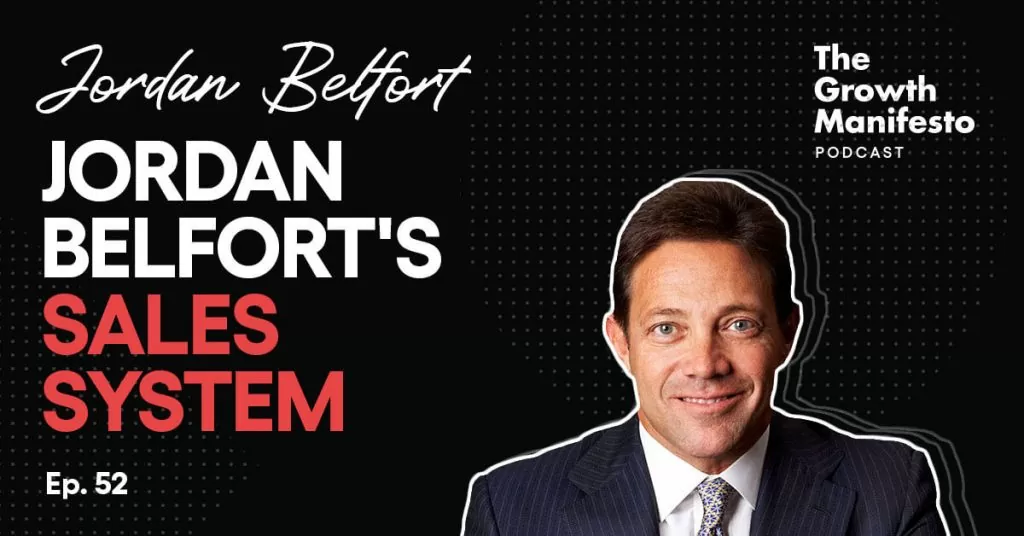
This episode is with Jordan Belfort (the wolf of wall street) – the World’s #1 Sales Trainer, Best-selling Author, Entrepreneur, Motivational Speaker and Creator of the Straight Line Sales System. In this episode we talk about how to close big deals using Jordan Belfort’s sales strategy.
Key takeaways
- In the first few seconds of a sales conversation, tonality and body language, not the words used, decide whether a prospect sees an expert.
- Belfort's straight line system's first tenet is that the salesperson, not the prospect, must take immediate control of the encounter to close.
- Every sale in a long enterprise cycle contains smaller closes, such as getting an email address or booking the next call, before the final yes.
- Combining two or three steps into one, like identifying all decision-makers on an early call, can cut a nine-month sales cycle to six months.
- Belfort avoids competing on price and instead builds a unique value proposition competitors cannot copy, since price wars only invite undercutting.
Chapters
About the guest
Transcript
Timestamps open the video at that point.
We've been conditioned to essentially act a certain way. We believe that we're in the presence of an expert. So the idea is that in those first few seconds of a conversation, you must be perceived a certain way. And the way you end up doing that is through tonality and body language, not the words that you say. You know, you have a product and you believe that you know it's awesome. It's great. It's going to help the prospect. They don't know that. How do you get them to understand how great your product is in a way that seems genuine,
that doesn't break before? That's really what the straight line does. You're listening to the Growth Manifesto podcast brought to you by Web Profits, a fully integrated end-to-end specialist digital marketing agency that helps challenge your brands drive extraordinary performance in a complex and fragmented digital landscape. If you like this episode, please do us a favor and share it with at least one person who you think will get value from it. And I know there's a ton of podcasts out there. So thank you for taking the time to listen to this one today. Now, let's get into it. Today, we're talking with Jordan Belfort, the Wolf of Wall Street, the world's number
one sales trainer, a best-selling author. He's an entrepreneur. He's a motivational speaker and he's the creator of the Straight Line Sales System. Today, we'll be talking about how to close those bigger deals with his sales system. And just quickly, before we get started, make sure to go ahead and hit that subscribe button so that you get the latest episodes as soon as they're released. Let's get into it. Welcome, Jordan. Thank you. Let's jump straight into the straight line sales system. Just for those people who don't know, could you explain it? Sure. So the straight line system is basically what I used back in the day, starting 30 years ago, to take all those young kids who were not natural born salespeople and turn them into world-class closers selling high ticket items.
The average trade investment was $500,000 to $1 million. And these are from people that we never met before, speaking on the phone strictly, knowing video chat back then. And it was a very effective way of essentially transferring certainty that you have about something to someone else. In other words, the idea is that, you know, you're the salesperson. You're very, very certain that your product or service is the best fit for them. And they're just not as certain. They don't know all the features, benefits and whatnot.
So the straight line system allows you in a way that doesn't break rapport, doesn't piss people off. It allows you to get them very, very certain that your product, good or service is the best. And what are some of the key parts of the straight line sales system that are the core to its performance? So the thing about the straight line, it's really, it's an end-to-end solution from literally the first word out of your mouth. You know, from the time the conversation, the encounter starts all the way to even after the sale and how you leverage off of a sale to get referrals, create customers for life and so forth.
Right. So there's different strategies that apply to different parts of the sale. But the basic philosophy is that that human beings as a species, you know, we know when we're in the presence of an expert intuitively. We know very quickly. And when we're in the presence of a novice. Now, what happens is when we're in the presence of someone that we perceive to be an expert, we tend to defer to that person and allow them to control the flow of the encounter.
Conversely, if we're in a conversation or a sales encounter with someone that we believe is a novice or beneath us, or not as, you know, not as schooled in this subject as we are, then we will try to control the flow of the encounter. It's a natural inclination to take control. So what I noticed way back in the day when I was first inventing the system was that there was this huge discrepancy between my closing rate and one guy that I trained, this guy Danny, the junior partner from Stratton in the movie, the Donnie character, right?
And everyone else at my firm, I had a 50% close rate. Danny had one in the high 30s. And my kids were closing zero. Yet they were saying the same words, pitching the same people, the same stock. I'm like, why the discrepancy? What was it? What was that X factor? And it started with this moment of clarity I had where I played a second. Like, you know, in those first few seconds of the conversation, I was being perceived a certain way. And because of that, it essentially induced people to allow me to control the flow of the encounter.
So while I was able to then run a strategy, because once you're in control, once you're in the one calling the shots, you can ask questions. You can establish certain things versus if the other part is in control, you're like just you're like covering up. They're asking you questions, they're interrupting you. So it's almost impossible to close at a high level if the other party is in control of the encounter. So the first basic tenet of the straight line system is that you must take immediate control of the sale.
The million dollar question is how? Uncle, how do you do that? My next question. Of course. And I think that the problem with a lot of sales systems is that they might say, oh, you have to control the encounter. And they never tell you exactly how to do that. You know, but the thing with the straight line system is very granular in the sense that it shows you exactly how you take control of any sale. You know, what are the things that, you know, you say, what are the things that what is the way you say it? You know, what body language can you? So so essentially those first few seconds of a sale when you're being essentially ripped apart, put back together, compartmentalized by the prospect.
Right. And they either put you in one bucket, which is that you're sharp, you're on the ball. Number two, that you're enthusiastic about what you're doing. And number three, most important of all, that you're an expert in your field. So if you end up in that bucket, expert, sharp, on the ball, enthusiastic, your prospect will defer to. They'll allow you to control the sale because what they're thinking is this is a person worth listening to. And even one higher level still is because they can help me achieve my goals.
They can help me get what I want. You know, we always seek out experts to help us solve our problems, to eliminate our pain. And that has been conditioned into us since we've been. You know, our parents took us to the doctors when we were sick or five years old. Right. And even your own parents, they would defer to this expert doctor who went to school and everything there was to know. And with it, and with the doctor, ask you questions. You didn't interrupt the doctor or cut the doctor off. Your parents didn't say, excuse me, doctor, why are you asking that?
How about how, you know, the doctor asked you a question, you answer them honestly, you answer them forthrightly. The same thing happens when you're in the presence of a great lawyer. You get in trouble with the law or the police. you hire an attorney. The lawyer asks you questions. You don't cut the lawyer off. You don't interrupt the lawyer. We've been conditioned to essentially act a certain way when we believe that we're in the presence of an expert. So the idea is that in those first few seconds of a conversation, you must be perceived a certain way. And the way you end up doing that is through
tonality and body language, not the words that you say. The words are very simple. You know, what can you really, if it happens in five, four or five seconds, like, you know, what could you possibly say to someone in four seconds? Hey, Bill, I'm an expert. And they'd say, what the fuck is really, they wouldn't even do it. The words don't really exist. Now, obviously you're not going to say, hi, I'm a moron. Nice to meet you. I'm not, the words are the words. They're very basic. They're simple. It's more about how you say them, how you carry yourself, how you make eye contact.
All right. And these and the human brain is incredibly perceptive like this. And we and we have this instant gut reaction. Expert novice. If you fall into the expert category, what happens? It opens up a universe of possibilities. And that's when the rest of the straight line kicks in. So without that first step, there is no straight line. One is you moving the sales forward along a predetermined path, which is the path of least resistance. But you can't do that if you're in control.
Yeah, sure. And you established a system more than 25 years ago now. Is that right? Yeah. It was actually 32 years ago. 32 years ago. And what happened was, it was just so shocking what happened when I first hit on it. These kids went from not being able to close sales to becoming the top brokers on Wall Street, making millions and millions a year. I was making $50 million plus a year. And then since then, when the firm closed in 1997, everyone spread out and they brought versions, diluted versions of the system to all different industries, automobile, insurance, every type of sales.
You could think of jets or jet sales. I mean, art, you name it. Right. And then eventually, you know, when I made the movie and then I became famous, I got involved and released a very, very, you know, sort of, you know, authoritative version of the official version of the system, which really goes into it in a very, very deep way. And then I wrote a book about it. And of course, that, you know, became huge bestsellers and people use it all over the world. It's very, very powerful. It's very, very effective. I always say, you know, people could love me. I hate them, but they never say my system doesn't work.
Yeah. It's a great, it's a great system. And so has it changed much since you've developed it? No, it's changed a lot. I mean, the core of it hasn't changed much. What's changed about it is, is that the ethics and integrity surrounding the system, in other words, like, you know, like the ability to close is a very powerful tool. It's like a crucial tool to succeed in life, You know, and that's like anything that has power, that power can be used for good or ill.
And when I was very young, I mean, I had this I developed this system was very powerful, but I didn't really embed it. The sort of the ethics and integrity side, like not to use it to just basically rip people's eyeballs out and make them send you money. Because you can with the straight line, you can get people to do things they shouldn't do, buy things they shouldn't buy. And I urge people not to do that. I don't teach it that way. I teach a very, I teach it even more power. It's much more powerful now than it is, than it was back then. Cause I've had 30 years to improve it and I just make it absent,
but it's also much, it's entirely ethical. And it's all about, you know, getting people to take actions they should be taking and not lying, not exaggerating, but really being able to essentially transfer the certainty. I'll go back to this idea of certainty that, you know, you have a product and you believe in it, that you know, it's awesome. it's going to help the prospect. They don't know that. How do you get them to understand how great your product is in a way that seems genuine, that doesn't break rapport? That's really what the straight line does. Great. And you spoke before that this system is
being used across a number of different industries. The focus of this discussion is going to be on the larger deals that take a bit longer to close. We're talking kind of between, say, a couple hundred thousand to a couple million dollars a year. They're more enterprise style deals. How does the system change if you're trying to close these bigger deals? It doesn't change much in the sense that, you know, that's more about strategy and sales cycle. What happens is you're still going to go through. So what is, okay, what's the difference between a
sale that's, forget about like, oh, you know, someone goes into the deli and they get to pick ham or roast people you sell oh try the roast people that's not what i'm yeah no that's transactional sales i'm talking about like someone like influence where someone's gonna let's say someone's gonna go buy a online course and it's two thousand dollars and it's gonna be a decision they make in that day or not at all right well in that case there's one strategy about how you go using the straight line system maybe about about you know about you know like there's an open there's a close and either it ends in a close or you'll probably never speak to them again it's
not going to be about a series of selling them on the next step. What happens in long sales cycles, there's a close in every single sale. Every single conversation has a close, but the first initial contact might be closing them on even accepting your information because they can find out more. So, you know, how do you get someone to take the first step in the process? So, so in longer sales cycle, the sales would be divided up at the steps. There might be multiple decision makers involved, But each and every contact has the same core elements going on.
You have to get them sold on that, you know, whatever you're talking about at that moment has got value. They can trust you. They connect with you. They can trust the company that stands behind the product and then moving them on to the next step in the process. So the idea is that, you know, there's always a sale made on every single call. The sale might be that you're selling them on the idea that I'm going to ask you questions and I'd like you to answer me honestly and forthrightly because it's in your best interest to do so. I'm going to sell you on giving me your email address.
I'm going to sell you on setting up an in-person appointment. I'm going to sell you on bringing this up to the next level. There's always a sale made. So it's just simply no one understands that it occurs over a longer period of time. And ultimately, there's even that one final sale where someone says, yes, we're going to do it. but there was 10 other closes that went in before that. Got it. Got it. And, you know, there's lots of people would say that, you know, these things just take a while, right? This thing would just take 12 months. This thing would take eight months. This thing would take 10 months, which I don't really a hundred percent agree with.
There must be ways to shorten these cycles down. Right. And so, you know, what are some strategies to maybe shorten it to, to be say half the time or less than, you know, what everybody across the industry is saying, that's just how it is. Right. So one of the, obviously one of the big things, I do a lot of, you know, consulting, right. Right. You'll work with a company individually. Right. And one of the biggest, you know, things that you could do, one of the most important things is collapsing their sales cycle down. So if someone, if a sales is taking nine months, you can make, take that sale
and make it six months. What are some of the things that you could do? Well, number one is, you know, it's first understanding what's happening. Like, you know, you know, why is the sale taking such a long time? Is it because there's multiple decision makers? Is it going to be because they have to do other integrations along the way that they can't make it? Is it because there's a budgetary issue where they only spend money over a certain time? Every sale has its own unique parameters of what's driving it to take so long. So number one, the first thing that you do
is look at the sales and say, well, okay, what are all the different – right now I'm using a five – it's a five-touch until I can close. Well, what can I – you know, very often you can combine two of the touches into one because what happens – see, let's go back a step. Sales are all about the transference of certainty, that the product has to be absolutely positively certain that the product is the best, the best fit for them, most cost-effective, cost-benefit ratio, right? So each step in the sales cycle is designed to make them more certain.
It might take an initial call to pique their curiosity. Then you would send them information that has your deck or your brochure. Then you set up a second call and you go through more of the features and benefits and then you get up to them. So depending on what's going on, you're always selling them on the next step in the process. Very often what weaker salespeople do is they will divide it up into too many steps. Like you can usually accomplish two steps or even three steps in one. Like just for example, finding out how many decision makers there really are and trying to get those
decision makers on an earlier call versus going through five different calls and running, running it up the chain and trying to get to the right person on the line straight away. That's a big one right there. And another one is also, you know, how, you know, how do you go out there? And like, you know, one of the biggest mistakes I see is when someone's like trying to get an appointment with a large company and they'll say, you know, say, okay, what would you like to meet? And the person will say, um, let's say, let's say right now we're in the end of May, end of April. Um, I can,
I have an opening on June 15th and you're like, great, let's pencil it in for June 15th versus saying, um, Oh, I see you guys are up in, um, in Sydney. I'm actually going to be in the area on next week, both on Tuesday and Thursday. I just love to stop by. Like I'm already here. what's a better day for you Tuesday? Like just something simple like that of telling them like, I'm already in the area. I'd love to stop by versus I'm going to make a special trip. Just first to get a higher conversion rate of saying you're already in the area, but not leaving it up to like months between cycles, right? That's number one. And then there's also things that
you could do with your marketing materials that help support you. And there's each time that you're on the phone or you're in person, you're moving the sale towards a close. But in between that, they're looking at things, they're doing their background checks by having the materials that you send them be the right materials with almost answering objections in that you can actually get moving along quicker by sending the right materials as well. So it happens both when you're selling and also just while you're in the process of sending out your marketing materials. Okay. So basically you're condensing the sales cycle. You're combining a couple of different
steps into one. You're shortening the time between the meetings, but there are just some things that you can't get around, for example, the budget cycle, the integration. Well, it's like, yes, again, every sale is different, right? Like that in the sense that, you know, what, what are the unique factors that are causing the sales cycle to extend out? But is there anything that will hold you back from selling? Because, hey, they said this, now that stops you from saying, well, okay, I believe you and I'm going to stop trying to push it. Like, is there any scenario where you personally would say, yes, I'm not going to,
If I'm selling a product that I know is a complex product that needs to integrate into a multitude of the company's operations, that it would be ridiculous for me to try to pressure someone to buy it before they've had all the other people look at it and make sure it's going to be a perfect fit. You're just going to kill you. You're going to shoot yourself in the foot every time. So the idea is to know what you're selling and what's the reality. Every product has its own best sales cycle. The idea is you want to collapse into that best sales cycle.
It's different for every product. Some products, by their nature, they're going to require their complex integrations involved, their massive expenditures. They're going to take longer. But there's things that you can do to get to that point quicker. You're not going to take a one-year sales cycle and do it in one call. But you might collapse a year into six months. Or you might have to structure your payment plan so they can get it now and pay when the budget renews or something like that. There's a lot of things you can do strategically like that as well. Yeah, great. So what are some of the best ways to kind of stop the competition from beating you at the same deal? How would you approach the competitive landscape right now, specifically on an account that you're trying to win?
I think number one is, you know, one thing I never want to do is compete on price. I mean, like, yeah, I think people competing on price is like a dead end. If you're just trying to be the cheapest guy in town, you know, there's always then you're really leaving yourself open to to undercutting you. And it's always like you never know if you have a deal. And like what's one of the classic things in solar where like everyone's undercutting everybody. So if you're trying to sell your solar system based on price, it's like really, really frustrating. versus outlining what your unique value proposition, okay,
and separating that out from other people. So basically having something that other people simply can't compete with. So I focus on the actual product, the value proposition, the unique offering about. That's what I would do. And I always do that. I try to find market that cannot be duplicated. Sometimes it just can be, and there's no way around it. I always do my best to try to find out what that unique proposition is and focus on that as my main benefit. Yeah, great. And so what are some of the things that will hurt a sale or that will kill a sale? So, you know,
one of the biggest things is the salesperson that tries to get into rapport with someone by, you know, Oh my God, you like fishing. I like fishing. And you spend an hour talking about fishing, the over schmoozer, the disingenuous salespeople that basically, you know, whatever the prospect likes, they like, and you start talking about it for an inordinate period of time, it has nothing to do with the commerce that's germane to the sale, that's a major telltale sign that you're not doing business with an expert.
You're doing business with a desperate novice who will do anything, say anything, talk about anything to get the sale done. That's one thing. Another big thing is not asking enough questions, especially in a bigger sale. It's like, you know, I made this mistake sometimes in my earlier days where like I would go in there and I would think I, you assume you know what the prospect wants without really asking the questions. It's a big mistake that gets made a lot. You assume that you understand what their outcome is. You assume that you know what their highest pain point is.
And very often it's, there might be multiple pain points that you're trying to resolve. But there's one that's the biggest pain point and that's the one that's going to get, especially the tougher sales over the line. And I think what salespeople often do is they use their own map of the world and assume everyone is thinking and feeling like they are. And you might have no idea what this person might be thinking or what they really want. So the only way to really effectively avoid that is to ask questions, to ask enough questions, to ask them in the right order.
Another big mistake is by asking invasive questions too soon versus from starting off with very non-invasive general questions and then slowly peeling back the layers. That's a cardinal mistake. The other big mistake is that I really see is people spend way too much time with people who are not qualified. They're not actually interested in what they have. They couldn't afford it even if they were interested, but they try to pitch everybody versus sifting through a prospect list
and finding out the ones that are potentially right for the product and then focusing on closing those. Yeah, great. They're fabulous points. Let's jump to sales people, yeah? So can anybody sell or do you need certain talents? So here's the thing. you know barring those people that just have something you know it's wrong with them physically right anyone can become proficient at selling what i always say is like listen you know i'm not
gonna turn you into me i'm not saying i'm gonna make you as good as me but i can make it so that you're good enough that your inability to communicate will not be what holds you back you can always get good enough at selling so you can remove that from the equation of why you're not succeeding in life. There's so many people that don't succeed, that struggle with making money or just getting what they want because they're terrible communicators. They don't know how to close in any aspect of their life, so they go through life just in a very
disempowered way. Straight lines like Mana from Heaven, those people, literally helps anybody become an effective communicator. Ahmaud says, I love tennis, right? I've had times where I play three hours a day and I've got I play with the best players in the world. All right. And I've gotten really, really great. But I'm never going to be Roger Federer. Never. How hard I try, no matter how many hours I play, I just it's not it's not genetically programmed in me.
I'm not that talented, but I can get good enough so I can beat most average players and certainly have a lot of fun with it. Well, selling is the same thing as is playing the piano. You know, you can always get good enough at most things so you can make it so, okay, if I'm not succeeding, it's not because I can't close. I mean, I'm good enough at that. I suck at something else. So that's the goal. And the business environment is so much more expansive than the sporting arena where it's like a very limited competition and the best is obviously the best, right?
But in the sales business, it's… In the world of sales, it's not like first place is a brand new Cadillac Eldorado. Second place, a set of steak dives. Third place, you're fired. There's a lot of room for mediocre salespeople. So then, like if you're looking to hire some awesome salespeople as part of your sales team, what do you look for? What are some of the things where there's going to be a thousand applications, a hundred applications, and now you have to start sifting.
and now you have to start to find out or to create your team. So what are the characteristics of the people that you want to hire? So we give everybody a psychometric test to start. It's just a screening mechanism. It's called the JBSCI. It's really something I developed that actually gets down to someone's sales details. And it's very predictive, but it's only one thing we do. The next thing is I look for things in certain red flags for people that have been in the workplace. Someone's been in the workplace for 10 years. What I really want to see is how often they're changing jobs.
The biggest red flag in a salesperson is they're at a new job every three months. Those people are all like these chronic sort of malcontents. They're always not, they're never happy. The grass is always greener and they go from place to place to place to place. They never stay anywhere very long. And I think the biggest mistake that people make is they will get a resume and they'll never check the resume. They never verify it. Like you got to verify what someone works. Like if someone says I worked at this place for seven years and I was a top
producer, or I worked these two places over the last eight years to call them, find out what really happened. You'll be shocked that most people are somewhat dishonest on their resume. So check the resumes. I think that if anything sticks out, it's turnover, that they don't stay in one spot. If I stay in one spot, I can train them to sound great. and so is there anything that in the interview after that those parts have been confirmed but is there any characteristics is there any personality traits is there anything which you
look for that's going to be like all right this person probably will perform a little bit better than the average because of these reasons you know again you know depending on what you're selling you know sometimes oh yeah for these larger deals let's say you know say for example well someone's got a great face for the telephone you know like sometimes it's that right like you know like are you selling face-to-face is it door-to-door you know i'm saying like there was any person so depending on what that is a certain body types and sometimes do better sometimes women do better sometimes men do better um so so there are realities that based on the industry that you're
in and how you're selling there are certain natural advantages that people if you're going into an office and you're and you're trying to sell a certain product that's health later and you're you're physically attractive in great shape that person has a natural edge over someone that's 40 pounds morbidly obese, slovenly and, you know, disheveled. That's not, and so there's obviously things like that. Yeah. But the other side of that coin is that people are so full of shit when they interview you. Like people, like a professional interview is like everyone's taking like,
do this, don't do that. So it was like, it's so easy for someone to snow you in an interview. It really is. So for me, I always make like all my hires are conditional for the first 30 days. You got to prove yourself over those first 30 days or you're out. Because as good as I am at detecting bullshit, you know, people are professionals at this now because, you know, nowadays, a lot of the information is online. How do you prepare? And they're all prepared for the interviews to tell you exactly what you want to hear. But the truth always comes out very quickly
in the first 30 days. I'll give you a better one. Is that, you know, the biggest mistake is not so much about hiring the wrong people or the right people. Of course, you want to hire the right people. It's what do you do with them after you hire them? Companies fail miserably with the onboarding experience. They don't have a good onboarding for new salespeople. There's no training. There's no mentorship and people fall through the cracks. That's the bigger miss in the world of sales. And so what do you think are the most important things to get right in those first three months of a new hire? Well, number one is, of course, is training is the most absolutely-
Training which part? Like which part are you training? Skills training, knowledge training. In other words, people don't know. Listen, I'm a believer that if you're, if you're selling a high ticket item and there's things you need to know, well, that's homework. You better know that shit. You know, I'm not here, I'm not here to give you classes. You better learn that in your own time if you want to work for me, right? Or even sales. But then there's the whole sales training and drilling and role plays. Role playing is the most important thing for salespeople. So, you know, you want to, it's like the Navy SEALs,
train hard, fight easy. So, you know, you want to get people really, really trained up and then they tend to succeed dramatically. If you just put them in saying, you know, sink or swim, that doesn't work well. Okay. And so, okay, let's jump to leading sales teams now. Now, like if you're a sales leader, what are the most important things to get right to ensure that the sales team is a high performance sales team? Well, you know, again, there's no one thing. It's everything from, you know, initially hiring the right people
to having the right compensation structure in place. You want a compensation structure that promotes excellence, that doesn't let people rest on their laurel. Like I've seen a lot in Australia where, you know, I walked in some companies and like there's like these legacy plans in place where someone started working, they closed five big accounts and just coaxing with their feet up in the air. And they're just, you know, it's easy for them because their compensation program didn't require them to continue opening up new accounts. That's a huge problem. That's one thing.
So I want to make sure the compensation team. Number two, I want to set up bonus structures and commission. I want most of my stuff to be commission-based. I'll give my salaries, but I want that to be incentives that are tied to continue productivity. It's a huge thing. Three is frequent training and meetings. you know motivation training daily or at least weekly and you know repeating themes to people and then next is actually leadership on like granular like you know how many how are people being mentored the biggest i'll tell you the biggest miss here is that when companies start
new sales people they don't invest enough time and money in their training in the very beginning to make sure they are even understanding of what the product they're selling is. They understand how to close it, and they have some sort of mentorship system with experienced sales that groom them and take them through their first sales. That's such a huge thing for companies. How important is script writing? So scripting is obviously crucial.
That I lump into the whole training at. I talk about training and role-playing What I'm saying is, is that that's what you're like in the absence of scripts. What typically happens is people just say stupid shit. Salespeople will inadvertently say things, even if they don't need to be unethical or don't mean to say something stupid. They run out of smart things to say pretty quickly and they start saying stupid shit. So the idea with scripts are is that you're really scripting out the entire sale from front to back, knowing that in some cases it's just serving as a guide.
but it actually is allowing the sale to go on for as long as necessary while giving someone intelligent things to say. That's really what you're training them on is scripts, language patterns, how to overcome objections. Those things are all scripted out. It's a crucial part of it. Okay. And like the final part on the sales process is around metrics. What are some of the metrics that you track a sales team on? Aside from sales, obviously. So I think rather than saying what I track, because every company has different KPIs and things that really matter,
the biggest mistake people make is they track too much. Like you have these platforms like Salesforce.com, and they'll like give you the most granular data. And what happens, it's almost death by information. You have too much information to make sense of the information. There's some very basic things that you need to know. Like, you know, you want to, you have to have each key step in your sales process and what the conversion rates are, what the fall off rates are. And, and, and, you know, what, you know, so it's like not what it's a pipe one.
I have these key things I track every single day. And then it's about tracking them and actually looking at them and comparing that. Not just people like they have great systems, but they don't even utilize, they don't interpret the data. So it's as much about data interpretation is what you track. So you can track everything if you don't ever act on it. And that's, by the way, 95% of the companies don't even act on the data they collect. And they collect way too much. So, you know, it's about identifying what the key steps are in your sales process. You know, how many calls are there? You know, what's the funnel look like?
And then keeping track of each step and seeing what the ratios are. Fantastic. Thanks, Jordan, for the discussion on the sales side of things. Let's jump to the investment side of things, because I know that you've been quite active in it. Has the investment game changed much in the last 20 to 30 years? And if so, how? Well, I mean, it's changed a lot in the last six months in the sense that you have, you know, average investors on social media platforms that have been at least temporarily able to upend
the typical culture and investment paradigms out there. Like you have companies like GameStop that are trading, you know, just massively above their fundamental value or any rational investor would say, but people are making money in those. And, you know, you saw what happened with GameStop's original write-up. So that's been a big one is this sort of this perfect storm of, you know, social media chat rooms, smartphones enhanced with apps from trading platforms that give you the ability to trade with no commissions instantaneously,
almost gamified in a way. And you lock people away for a couple of years because of a pandemic, give them some free money, and poof, you get GameStop. Right. Where it all ends, who knows? OK, you know, but it's a brave new world on that front, for sure, with these meme stocks and the ability to use social media to do what I did at Strat, which is, you know, they're all, hey, let's bring this stock up. They're like, let's push the stock up and do it. You know, it's somewhat similar to what I did with Strat. And do you think that that can actually last against the big guys?
No. The big end of town? I don't think it can last. You know, again, it's going to be very, very difficult for someone to convince me that just permanently, because people decide this particular stock should have an inflated value, that it's just always going to have that value. I think that, you know, what's happening right now is, you know, it's always about the story being told. The new story is about this guy from Chewy, and he's going to turn it all around, and maybe he will. If he does, the stock will go up. He doesn't know, I think, the stock craters.
If there's not eventually some quick action with massive increases in sales, I think the stock is going to crater eventually. Okay. And what about the blockchain space? Because I know that you've been quite active in that. Like, you know, what are your thoughts on it? Do you know between? I'm a big, listen, you know, again, no one knows where Bitcoin's going tomorrow, right? Anyone that tells you is a liar. I was very concerned in the early days of Bitcoin that the governments would just shut the stuff down.
Because it didn't make sense to me that the governments would allow this to continue. So in 2017, I was saying, listen, I thought it was going to crash. I was right. And it did crash in 2017. It was right almost to the day, up at 19,000. When I didn't think would happen, I didn't think it would come back. I thought the governments would outlaw. They didn't. I always loved blockchain technology So I think now that risk of Sovereign risk has been dramatically Reduced I think Bitcoin goes Higher versus lower right now I think
Eventually it'll pull back but I think it's a Stop up maybe at 100,000 It'll test there Don't know for sure I think Ethereum goes higher As well at least doubles But we'll see you know I Like more of the deals that surround Blockchain like payment Services and other applications involved in blockchain technology, the so-called picks and shovels for the minds. That's what I think is the bigger, more exciting, not just trying to bet on which direction to coin those. And so why do you like those types of projects?
What is it about those? Because they're about businesses and their actual legitimate money-making opportunities versus just pure speculation. When you're buying Dogecoin or buying... You laugh, right? It's all about, is there going to be someone even more foolish than me to buy it at a higher price? So like you're playing this game of like, who's the last person to hold the hot potato, right? There's no intrinsic value. You know, now one could start to argue that at this point, Bitcoin has been around long enough and has enough people that like it that maybe that that has created some value that just lots of people like Bitcoin.
Maybe that's true now. but I don't, but the point is like, I don't think Bitcoin's most attractive quality is that it should go higher. Like it's supposed to be a currency. It's like supposed to be used as a currency in a store of value. And like, why does it have to be that? Oh, but Bitcoin's great. Cause it's going to a million. I mean, like that to me, that, that's the part of Bitcoin I don't like. That's always about this inflation of like, Oh, it's got to go higher. It's got to go higher or else it has no value. Like, I mean, if it's supposed to be used as a currency or a store of value,
it should be stable and maybe slowly trend higher and be a safe thing. If it's ever to be used as a real currency, the volatility has got to be, you know, at least partially eradicated. So I, and I think it will, I think it's going to become a lot less volatile over time. And I think ultimately we'll use Bitcoin and Ethereum and other coins for daily commerce. That's what I believe. Essentialized commerce using cryptocurrency. And so if you're investing in the Bitcoin and Ethereum space, you're eventually trying to invest in to the currency in the commodity space.
But there's other smaller projects are more like the stock market that like there's a company. The company has some fundamentals. The company has a business and that's what you're trying to find. Is that right? But assuming that Bitcoin continues to attract many, many investors around the world, the many, you know, buyers and salespeople that hold the coin. Well, then they want to be able to use that coin in daily commerce without having to pay a 10 or 15 percent fee every time they do.
Right now, you can't use any of these cryptos in commerce. I think if you could, it'd be a game changer. So I'm working on bills that are about that. Okay. Okay. Cool. So where do you see it going in the future? Yeah. Like, I think it goes higher. I think it goes higher. But the whole industry, I mean, you know, like the whole of the blockchain industry, like, is this something that's here to stay? Is this something that, I think the blockchain industry is very exciting. And I love this whole,
all the different variations of that. And the things like with NFTs and, you know, with like, you know, for titles. And it really, you know, it's really a distributive public ledger. I think it has a lot of uses for things like medical records, voting. There's a lot you could do a blockchain technology. Great. Jordan, thank you so much for talking today on the Graph Manifesto podcast. If there was one thing that you wanted the listeners of this podcast to do a site, to visit a book, to buy some action to take, what would you like them to do? Just go to JordanBellford.com or go to my Instagram or my TikTok.
You can always find me on social media and check my stuff out. I have a lot of awesome free stuff. And then if you want to buy stuff too, that is more, you know, sort of, you know, form your leg, you can do that as well. But check some stuff out. I think you'll be really, really glad you did. And if you haven't already consumed some of his content in terms of the book or the course, it's highly recommended. That stuff is awesome. That stuff has changed so many people's, the sales performance of so many organizations, I know even personally, right? So this stuff actually works. And so I've been super, I'm super grateful that you're on the podcast.
I thank you so much for taking the time and we'll talk soon, Jordan. My pleasure, my friend. Take care. Thanks very much. Thanks for listening to the Growth Manifesto podcast. If you enjoyed the episode, please give us a five-star rating on iTunes. For more episodes, please visit growthmanifesto.com forward slash podcast. And if you need help driving growth for your company, please get in touch with us at webprofits.io.