How FloQast became a $1B SaaS company in 8 years
Mike Whitmire, co-founder and CEO of FloQast, explains how the company scrapped its first product and scaled to a $1.2B SaaS business.
 with Mike Whitmire
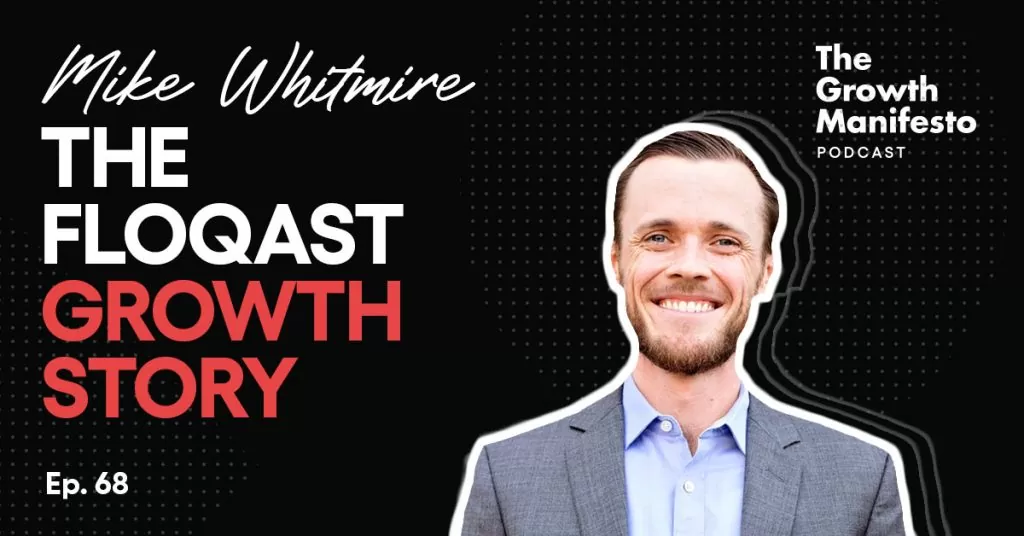


Overview
This episode is with Mike Whitmire – Co-Founder and CEO at FloQast, a SaaS platform that helps accountants improve their operational workflows. FloQast recently raised $110M in Series D funding valuing the company at $1.2B. In this episode we talk about how they built a billion dollar company in 8 years in the B2B SaaS space.
Key takeaways
- Scrapping the first product and rebuilding it from scratch before closing a $1.3 million seed round was the biggest decision in the company's history.
- Storing no client financial data directly, instead integrating with cloud services like box.com, solved the security objections that were killing enterprise deals.
- Hiring accountants and training them to sell, rather than hiring salespeople and teaching them accounting, became the company's long-term go-to-market blueprint.
- Targeting controllers and accounting managers rather than CFOs worked because CFOs do not care about the day-to-day month-end close process.
- Creating webinars and content that qualify for accountants' continuing professional education credits gave the company a marketing edge competitors did not use the same way.
Chapters
- Intro: understanding real accountants
- What the company actually does
- Quitting with $25,000 in savings
- Scrapping the product before the seed round
- Solving security objections with box.com
- The first sales hires
- Building a distinct content strategy
- Toastmasters and pitching investors
- Learning to let go of control
About the guest
Transcript
Auto-generated from the episode audio, so expect the odd mis-heard word. Timestamps open the video at that point.
I think, and this is from my experience, that the reality of accounting is most accountants don't want to get better at accounting. They want to work less and go home earlier and enjoy life a little bit more. And so let's just embrace that and keep it a little bit more real and be real human beings and just be like, hey, maybe it's not, oh, I want to optimize my clothes process so I can take an extra hour and focus on strategic initiatives and blah, blah, blah. Maybe it's more like I want to optimize my clothes so I can save an hour so I can go home earlier and have dinner with my family. Like maybe that's the, maybe that's the real answer and you can appeal to
that real human aspect of it. So I think that's a big thing for me with a lot of our content and our voices. I want to be, I want to be informal. I want to like, we're accountants, we get it. I want to speak to how accounts really are not, not some stereotyped made up version of accounts that aren't actually how we really are in real life. So it's, it's trying to keep it more real, be fun, be entertaining, try to straddle that line. And, you know, yeah, just like be a little bit different. because I think a lot of the B2B content is pretty boring that's targeted at finance and accounting. You're listening to the Growth Manifesto podcast,
where we host in-depth interviews with business leaders, authors, industry experts, and entrepreneurs with a singular focus around business growth. At the end of each podcast, we want you to walk away inspired, to think bigger, and to have actionable takeaways you can apply to improve your business. Each episode is like a masterclass on a key topic. So make sure to browse the episodes to find the topics that are most relevant to your biggest business challenges today. This podcast is brought to you by Web Profits, a digital growth consultancy that helps challenge your brands drive growth
in a complex and fragmented digital landscape. You can find out more about Web Profits at webprofits.io. Now, let's get into it. Today, we're talking with Mike Whitmire, co-founder and CEO of Flowcast, a SaaS platform that helps accountants improve their operational workflows. Flowcast recently raised $110 million in Series D funding, valuing the company at $1.2 billion. That's a billion with a B. Today, we'll be talking about how they built a billion-dollar
company in less than 10 years within the B2B SaaS place, which is a very competitive space. And just quickly, before we get started, make sure to go ahead and hit that subscribe button so you get the latest episodes as soon as they're released. So let's get into it. Welcome, Mike. Alex, thank you so much for having me. Really appreciate it. Yeah, for sure. And there's a lot to cover in this conversation. So we're going to jump around a lot. But I do want to tell the story and then get into all of the details around your growth. Let's just start at the very, very, very, very top. What does Flowcast provide and what audience does it serve?
Yeah. So interesting question, because like a lot of companies, we started with sort of a niche pain point and a niche product that we had built. And over time, it's evolved to do a lot more. So we started off solving a very specific process within an accounting department called the month-end close process. So I'm not going to bore the audience with all the details around it, but just suffice to say, it's incredibly important. It's very underappreciated. It's very complicated. and it's key because it is the foundation for things like financial statement preparation,
which is what investors rely on to make their decisions. It's key for getting through the audit, which is a very expensive and risky endeavor. And then it's key for making sure that numbers that you're forecasting and projections are accurate. So all of that depends on this month end close process that accountants are doing every month. It's incredibly manual. A lot of it can be automated. It's a collaborative effort. So what we did was we said, hey, the month end closes a pain. I lived it. I really hated it. And so we built software to help solve that problem. And as time has gone on, as the last six or seven years of clients using our
Flowcast or using Flowcast has progressed, the use cases have brought into now, yeah, we don't say we're closed management software anymore. We say, hey, we're accounting workflow automation and we help run the entire operational function of an accounting department. And that includes the close, but also things like taxes, accounts receivable, payroll, commission reporting, SEC, all these other things that live around accounting, we now help manage. So I really think about this as like an operational platform for the office of the CFO, really. Yeah, for sure. And I'm involved in a fair few companies. I'm a director, I'm a shareholder.
And yeah, the end of month books, trying to get those financials closed so we can look at the numbers so we can actually have conversations about what actually happened can take forever right it can take it can literally take weeks and it's like wait that's almost like into the next month now right so that speed thing I think starts to solve like a real need within the um the accounting space right and so yeah I can already see the value of just getting that information a bit quicker and improving some of those processes right but you're an accountant
by trade. Is that correct? It was before you started this software. Yeah. Yeah, exactly. So yes. How did you transition from, Hey, I'm an accountant. Hey, I'm going to start some software or create some software. And now it's a $1 billion plus unicorn as they call it. Yeah. So how did you get into that transition? Well, I think I'm kind of a weird mix of like risk-taking entrepreneur, but also an accountant at the same time. So I sort of got here. I would say I grew up this way. It's through my parents. So my mom is an accountant and runs a bookkeeping firm and
provides business consulting for small businesses and family offices in Los Angeles. My dad is a tax attorney turned author who writes the book on incredibly boring taxation law, but ends up, you know, has moved into entrepreneurship from there. So both of my parents kind of took this accounting tax background that became entrepreneurs with it. And then one of the things I got into in high school was it was the late 90s. Every tech company was going public. That was kind of like, oh, the stock market's a really interesting thing and learning about companies like Yahoo and so on
and so forth. And so then I was like, okay, I know I want to start my own company one day and I want to take it public. That would be amazing. So that's been my goal for a really long time. And I've always been very, very entrepreneurial. So through another facet of other areas. And then when I got to college, I actually went for film. So I wasn't, I went, I went to go to school for film, completely, obviously unrelated and ended up finding the business program, taking accounting. I was like, I'm pretty good at this. It's pretty interesting. And so I ended up majoring in
accounting and here we are today. You know, I took the natural career path, which is you go to a big four audit firm, you work there for a few years, you get your CPA license. And then I moved out. And when I moved out of audit, I was like, all right, I really want to get to a pre-IPO company to see what that looks like from behind the scenes. And so I was very focused on that. And in LA at the time, not the easiest thing in the world, but I found a company called Cornerstone On Demand. This was in 2009. And they had just taken on their first round of
venture funding, were about to go public. They said 12 to 18 months was the timeline they gave me. So I loved it. I was the 95th employee at the company, the fifth person in accounting, helped scale that up. And I was there for three years and going public, growing the team to about 60 people on the finance team. It was just like this great learning experience. But that was where I was like, wow, the month end close is a huge pain in the ass. And there's actually an opportunity here. Maybe I'll go and start a company to solve this problem. And so it was wonderful that my degree in accounting actually became useful in my entrepreneurial journey as
well. I happened to find a pain point that was within the world I was operating in. That was great. Like 10 years ago, if you asked me, you're going to say, Hey, you're going to start an accounting company one day and you're going to love it. I'd be like, no, come on. That sounds ridiculous, but it is. And I love it. And it's, uh, it's great. It's been a lot of fun. You know, what's interesting about that is that like, it wasn't created on a whim, you know, like you've been planning this, thinking about this, like you took steps, um, to work in a company that was going to list on the stock market. Um, you've had intention. What's,
what's kind of funny is that you know you kind of tried to buck the trend with your parents by saying well you're in accounting I'm gonna go into art and then somehow you got pulled back into art and now I'm sorry you got pulled back into accounting and now you're in kind of the business side of things which is very creative right and but there's a lot of creativity which is really interesting because you think accounting software in the b2b space for the month end close but literally that's one part, but there's so much creative freedom in scaling a startup, right?
Well, starting a business is close to a blank slate. It's a canvas and go figure out what you want to build from here. And yeah, it's to me incredibly creative. And I did realize if I went into film, I probably would have ended up as like a producer, the person who was raising money, getting the idea off the ground, and then kind of hiring directors and whatnot from there. So I did realize that business is probably the better area for me, not so much the, yeah, the true creative details of it. So anyway. Well, coming from an accounting family that's entrepreneurial,
like, I'm sure your parents are very proud right now, because now you've found the way to scale up an accounting company to the probably, you know, one of the largest accounting kind of software, like companies in the world, right? Like, you know, it's not easy to build a company to $1.2 billion, right? Like across any space, right? And accounting software, like who would have thought, right? So that's awesome. But you took the plunge, right? So you started the company, right? So what was the first 12 to 24 months like, you know, in starting this kind of venture? So I had the idea
and I was still working full time. I had gotten a small option grant when I joined Cornerstone. And so as part of that, and I'd say the number is no problem. I had $25,000 in the bank. And I was like, okay. It's on Crunchbase by the way as well. my, uh, my savings account listed out there. Here's what you got. So, so I was like, okay, I have a little bit of money. I think this idea is really good. The problem is a huge pain for us. And I don't see anyone really solving the problem. And so I decided to actually just, just quit. And it wasn't like a side hustle or a nighttime thing or anything. It was,
all right, you have $25,000 in the bank and you have no job now get after it and go figure it out. And that was, that is a great catalyst, man. It lit a fire under me. And step one was, all right, I have no product. I have to figure out how to build a product. So do I raise money or do I find a founder or what do I do? So I just started talking to all kinds of people. And the first introduction I got was to a startup accelerator here in LA by the name of Amplify LA. And I had a really good connection to one of them, kind of weaseled my way into an introduction and
had lunch with them. And the guy was like, great idea. We'd love to invest in some more SaaS companies in LA. Your background's perfect for this. But literally he goes, dude, you need a co-founder, a product and a customer before I can like even talk to you about this. So I was like, okay, how do you do that? He's like, well, go find a co-founder and get them to build it for free. I'm like, okay, I'll go do that. And so, um, went on and this might, this is one of the more ridiculous stories of the journey here. So the only engineers I knew in the Los Angeles area were out of Cornerstone and I was not about to poach out of Cornerstone because I'm not looking
to burn bridges in a pretty small tech scene like that early on in the journey of the company. So I'm like, all right, I'm not going to be recruiting from there. So how can I figure this out? And stumbled across this website called cofounderlab.com, which is literally like match.com. It's like a dating website for entrepreneurs. So I posted my profile as I'm this business development guy who's looking to start a company. And I started scouring the profiles of a bunch of tech people who like basically sit on a throne and are like, I build software. All of you people
who want to start your own company, like come pitch your ideas to me and I will accept or reject them. So it's almost like the earliest stage venture pitch is really with CTO candidates. And so it's very much like raising money. You know, I went out, I was looking through profiles. I found like 40 people in LA who I thought would be a good fit, started whittling down the list, had lunches and met with them and all this kind of stuff. And at the bottom of my funnel popped out my co-founder, Cullen Zanstra, who's our CTO. Great background. I love working with him. It's been awesome working with him for the last eight years. Who knows coming off one of those websites,
what kind of relationship you're getting yourself into is such a big one, but it's been amazing working with him. It worked out really, really well. And it was tough in LA because we're in a cool market. There are a lot of cool opportunities out there, and I'm out there pitching some boring accounting collaboration software. But he came out of MySpace where he saw the demise of MySpace, as he puts it, when Facebook came on the scene. And he was just like, I want nothing to do with consumer. I want to do enterprise software. Like people pay us money for the software that we write. That sounds amazing. I'm like, yep, that's great. And so, um, so yeah, he hopped on board and it's
been great, uh, ever since then. And then once I got him to build the product, my mom bought the software and then I went back to amplify and I was like, Hey, I got a co-founder, a product and a customer, you know, you said you'd let me in. And so all of that kind of played together. And then I went back, I put the suit on, I pitched them and we got into amplify from there. And then our, uh, our third co-founder, Chris Sluddy, who I've actually known him since college. He's also an accountant and like in college, he was always like, Hey man, when you start your first company, like, let me know. I want to, I want to be involved in it. And then fortunately it was
accounting based. So his background is like perfect for what we're doing. So that's our, those are the co-founders myself, our CTO, Cullen Zanstra, and then our chief product officer now, Chris Sluddy. And we, we put that product out and I was trying to sell it. I was trying to raise more money. We were struggling from all kinds of different angles. And the big, big, big decision we made, and it was really tough, was we ultimately decided to scrap the entire first product that we had built and built a whole new one from the ground up. We thought we had a better approach.
We learned a lot with the first version. And we were about to close our seed round right around the time we made that decision. I actually had verbal commitments for 1.3 million before. And we were in the middle of like, no, we need to get rid of the software. And so our first lead investor is a fund called Toba Capital. And we had worked with them a ton. Like I said, they were giving me the verbal, they were giving us money. And I called them up and was like, hey guys, definitely don't want to start our relationship off on the wrong foot. So I want to be fully transparent. I've gotten enough no's on selling now where we're going to scrap the software and
build a new version of it. And if you want to pull the term sheet, like I completely understand, because that's not the bill of goods you've been sold here. So just want to be honest with you. And they were like, no, we really appreciate that. And we think it's the right decision. So we'd love to make the investment and let's go forward and let's build a new version. And it was great. So that was arguably the biggest moment in Flowcast history was changing the actual software we built, rewriting all the code, building it up. And that was the product that we took to market in Q1 2015 and have been selling ever since then. So yeah, that first 18 months or two years, a lot of figuring stuff out back and forth.
And it all worked out though. Yeah, that's awesome. There's a couple of points in that story, which I really like. I think the first part is the third co-founder in college said, you know, it's when you start something, you should call me, right? So you were thinking and, you know, like you were quite entrepreneurial from quite a young age, which is really interesting, right? Like so much so that, you know, somebody mentioned that to you at school, right? And so that's really cool. the second part is that how hard would it have been to to just scrap the project like what kind
of like that must have been such a hard decision at the time because you've come all this way you've got 1.3 mil just sitting there about to close and now you're having to make all these decisions right and you know so that says something about you in terms of you know so what you're kind of looking to create right because like a lot of companies would have just got the money and then they would have transitioned and then they would have done something else but then at 1.2 billion companies now, right? And so it seems that integrity and quality of the product and service is quite high, but you mentioned that there were quite a lot of sales calls where people were saying
no. So what was kind of happening at that point? Yeah. And so what would happen is we were still solving the month end close process. That's what we were helping with. But we said, hey, here's Flowcast, you know, you upload your documents into here, you sign off on stuff here. So what would happen is we would, I would do the selling motion and the team would love it. I'd get down to the end, you know, we'd get through pricing and all that stuff. And then I'd get handed off to the IT and the security team. And they'd be like, okay, tell us more about your company.
And I'm like, it's three dudes. We have about $28,000 left in the bank. You know, we got 50K from this great seed stage fund here in LA, but, you know, and they'd be like, okay, tell us more about, are you SOC compliant? Do you have these reports, blah, blah, blah. I'm like, no, but just trust us. And it got shut down so many times. And the final straw for me was a company called Whataburger out of Texas. They make great hamburgers. And we had approved everyone. CFO was ready to go on a 50-seat deal, which would have been huge for us. And then IT just shuts it
down. And I'm like, again, this is, okay, this is going to keep happening. How do we get around it? And the big, like I said, the big issue was that we were asking them to upload financial information into Flowcast as a company with three dudes and not a lot of money in the bank. And so I was like, crap, how do we get around this? And the way we got around it was by scraping the entire product, building a new one and building it on top of cloud storage providers, like box.com was our first integration. So then all of a sudden, so this is just out of necessity, right? This is like, how do we get around this security problem?
Well, we don't hold any of it. That's how we get around the security problem. So all of a sudden that talk track went from, you know, how many people do you have? How big's your company? We're putting our files in box.com. We're like, yeah, yeah, yeah. Yeah. You're putting them in box.com. Don't worry about flowcast box.com. They're great. Publicly traded department of justice uses them. Don't worry about it, man. Like your files are always going to be there. worst case scenario, Flowcast goes out of business. You rip us out. You still have your box folders, all your stuff's still there. Don't worry about it. So that was, it was sort of out of necessity, but then it ended up being really good for us because it's actually a much better user experience
to be able to work that way. It allowed us to integrate with more solutions that they use already. And so really it was just like a beating my head against the wall, getting frustrated, and then having the idea and just having to pull the trigger. And in the CPA world and accounting, like integrity is of most importance that's what we do is audit people and make sure people aren't lying and that they're telling the truth and stuff so like yeah i'm painfully honest with investors with the market like you know what's going well and not so well at flowcast regardless so yeah not like uh i wasn't sitting there like oh i have this intense moral conundrum what's the right
thing to do it was just like we made the decision needs to be communicated there we go that's cool and it's interesting because you know sometimes when you build you think you need to build everything right and you know the that's um the box.com service the software they've already spent how many hundreds of millions of dollars on that you can just leverage that and basically add like like a simple layer on top and now that's like your one right so it's like super interesting how you can start to leverage all these platforms to just get you that first kind of step through
the process um exactly but how did you get your first 10 customers your first 10 customers that that continued to pay you, you know, like 10 customers. Yeah. Yeah. Yeah. So we, by the way, like now my mom, she, no, they, they don't count. So, uh, and they're, they're no longer clients of ours. Um, so the timing around that was the decision to scrap the software was made in early 2014. And since it was more complicated, it took us a longer time to build. So there was this weird phase where like, I personally didn't have a lot to do because I
wasn't selling software. I wasn't raising money. So I would go out and I would pitch the vision. I would just show the mock-ups of what we were building, get feedback. I called it selling a mock-up in a dream at the time. So that was sort of getting some demand built up. And then by the time we launched the product in November, Q4 was when we got our first paying client on it. And it was through that exercise. And then over the course of Q1, we onboarded, Q1 2015, team, we onboarded our next like six or seven clients. And I would say, I think half of them
are still with us. Maybe more than half of them are still with us today. So you fast forward seven years and you kind of think about all that. It's pretty amazing that we scaled that way, but we hired a sales team pretty, pretty quickly, like a lot earlier than other, other companies. I felt really confident through all my earlier conversations that we had product market fit. We were ready to go. This is something that could be sold. I had personally had enough conversations and sold enough deals to where I was like, all right, I want to get this company off the ground and get it going. And we need to get people in here to do that. So the very first hire we made
was on the sales side. We hired an account executive. He was a younger guy, but really, really smart, very hardworking, go-getter, super impressive, just individual. He had a couple of years of selling software experience. That was it. But the guy came in and did a killer job for us. And it was just like pounding phones, sending emails, getting demos booked, running demos, negotiating, going through security reviews and closing business together. So he and I worked really closely for the first quarter, I would say.
And he ramped up very fast. So I was like, sweet. All right, man, you get to go hit the ground running a little bit. And a couple of months into his time here, we hired our first business development representative. So he's a younger guy. He was out of accounting. We hired him into sales. This is very important because it's a blueprint. that we have executed on through the entire history of the company. So he was working as an auditor, should never have gone into audit, was a USC frat guy, like no fit in audit and wanted to be in business development. So moved out, came over to Flowcast and now he's actually
done so well. He's now the general manager of our London office. So we have a presence out in London and he runs that whole office and has gone over and set it up. So yeah, our two early go-to market hires were, were key. They did huge things for the business. And it's like, I feel so fortunate that we happened to get great people as those first two hires, or I don't know if we'd be here today. They were, they were so instrumental in the, in the business. Yeah. That makes such a big difference, especially like those early hires, because there's not much leeway, right? You'd like, it's like, it's expensive. It's hard. Like it's all your money, obviously. And so,
you know, that's super important, but also like you talked about you hire accountants and train them on sales. Is that what you said? Like, is that, and that's been a part of like your success because now it's accountants selling to accountants, not our salespeople that don't understand accounting, trying to sell to accountants. Is that right? Exactly. And that's what you still do today. Is that what we do today? So you still hire accountants, train them how to sell versus We hired 10 last month started. Awesome. Awesome. And so like in the beginning, you know, so was the predominant way of attracting new
clients basically outreach? Yes. Outreach. And yeah, so I got a copy of a book called Predictable Revenue and I pretty much followed the predictable revenue model, like to the T, maybe a little too much. The one thing I was really, I was really hesitant to spend marketing dollars because as an account. I like my ROI. So I know that if I hire a business development rep, if they sit at their desk and they send out X number of emails per week and make X number of phone calls per week, we will book X number of demos. We will close X percentage of demos. We will get X number of
clients. I can predict that. I love that. I know that I'm going to get something out of what I'm spending. And we were actually shockingly accurate with that formula from the first quarter selling. It was really weird. That formula worked out, but I didn't invest in marketing. And so it was purely pounding phones, sending emails. I'm sure we pissed some people off with being way too persistent about stuff, but that's really what it was. And in 2016, that was when we started to layer on a little more true marketing to Flowcast. But for the first 18 months, our marketing was,
we hacked together a crappy website. We would sponsor conferences. We would get stuff outsourced and designed. And the bar was basically, as long as it's not terrible, that's good enough. And let's go. Let's go figure it out. And so then you said that you started to invest in marketing at that point, right? Yep. So how many clients before you started to invest in marketing? And then, you know, what did you do with marketing? Yeah. So we had 50 clients when we hired our first
product marketer and we hired another younger, younger woman came out of the software world as well, sort of an up and comer. And she came in and just did everything was like a complete great dynamo. It was amazing to watch her work. And what we did was since she was a little bit more junior, we paired her with a CMO consultant. So I had someone from my network who was really good. He's an experienced CMO. And so we brought him on board and he worked with her, I think it was two days a week out the gate. And so I had like a good experienced B2B SaaS marketer paired
with a very smart, very hungry go-getter, Sylvia was her name, who helped build up that whole marketing function. And ultimately I twisted the CMO's arm into joining us full-time and he was our CMO for about four years there. But that was it is hiring just some great, hungry, smart people who can get it off the ground and have a bit of experience. And that's really, I would say that actually describes like our first three marketing hires is really is generalists who were just very smart, very hardworking and career driven. And they've done really good things in their career,
either at Flowcast or outside of Flowcast. And because like in the beginning, like I'm assuming that it's easy to outreach to accountants because no one outreaches to accountants, right? Like there's maybe the typical SEO company that's going, hey, we can get into Google because basically outreach to everyone on the internet, right? But apart from that, it seems like a pretty untapped market, right? So it feels like that would have been not too difficult to get kind of in touch with people, right? Um, but, but then you moved into enterprise size kind of deals, right?
And it's often not the same as the phone bangers that are just, you know, just, you know, trying to contact like, but it, uh, basically every accountant across every area. So how did you like, um, like shift sales and marketing to now start to attract these larger companies? Well, it's, it's all about targeting within a, within an accounting department. And it's important to know, you know, which people matter and which people don't. So if most companies selling Flowcast would go out there and say, CFO, we got to get in front of the CFO,
you know, this is an important process for them. Their numbers are going to fall apart if they're, so they're going to really care about this. I worked in this world. I know the CFO does not give a crap about the month end close process. All they want to know is that it's done quickly. It's done accurately and it's not holding stuff up. The one who actually loses sleep at night about it is the controller, assistant controller and accounting manager. So let's target them. So it's like you can target those specific personas. And yeah, to your point, they don't get as many cold emails or cold calls as the CFO does. And so you have a higher probability of them opening something up.
And if it's engaging and interesting and will help solve their problem, then they'll take the time to dig around and then hopefully book a demo from there. So it was really about being targeted. And that persona doesn't change all that much as you go up market. It's pretty much the controller. but it's definitely things like the magic quadrant start to matter. What Gartner says about the industry, they start to care about that at the upper end of the market. A lot of people, particularly with accounting, they're just not going to believe what a sales rep says. They need to hear it from somebody else. It has to be referred by a friend. They have an old coworker
who's used it, something to that effect. And trade shows as well. Reality is people sponsor trade shows for a reason. People go to them and we've closed a lot of business coming off of those. And that's more like then targeted at what more, um, we focus on ERPs. So which do I want to try to sell to NetSuite or Intact or SAP or Oracle or whatever? So you kind of target, you target your marketing resources really that way based on ERP. Um, and company size is more of a, more of an outbound targeting motion.
Like for the bigger companies, you're going to have to be targeted with outbound. And it's just a big effort to get like the right kind of demo lined up. how about linkedin ads like is that something which you've experimented with um have found success in or or not uh let's see so the time i experimented with it it completely sucked we totally wasted like all of our money i've been told by our marketing department it's working out better now but i'm a little too removed from it at this point i'm not i i just i just trust our cmo whatever he wants to do with the budget you have a lot on the content side of things i
I see that you create quite a lot of content talking to CFOs and talking to kind of specific accounting functions within organizations. What's your strategy in terms of the content side of things? Content's one of my favorite topics. We actually, I think we're about to do a lot of big things with content. I don't want to let the cat out of the bag too early, but I'm very excited about what we're doing with our content strategy, broadly speaking. But I will say that a big focus of mine and just with the audience is I think there's a really big misunderstanding of accountants and what we are actually like as human beings.
And so you see a lot of the content that's out there for finance and accounting people, very professional, very buttoned up, like very much on how are you better at your job? How do you excel at this? How do you adopt this guidance? All that kind of stuff. And all of that is important, obviously, and we're professionals and we want to be good at what we do. But I think, and this is from my experience, that the reality of accounting is most accountants don't want to get better at accounting. They want to work less and go home earlier and enjoy life a little bit more. And so let's just embrace that and keep it a little bit more real and be real human beings
and just be like, hey, maybe it's not, oh, I want to optimize my clothes process so I can take an extra hour and focus on strategic initiatives and blah, blah, blah. Maybe it's more like I want to optimize my clothes so I can save an hour so I can go home earlier and have dinner with my family. Like maybe that's the, maybe that's the real answer. And you can appeal to that real human aspect of it. So I think that's a big thing for me with a lot of our content and our voices. I want to be, I want to be informal. I want to like, we're accountants, we get it. I want to speak to how accountants really are not, not some stereotyped made up version of accountants that aren't actually how
we really are in real life. So it's, it's trying to keep it more real, be fun, be entertaining, try to straddle that line. And, you know, yeah, just like be a little bit different. Cause I think a lot of the B2B content is pretty boring that's targeted at finance and accounting. Okay. Let me just do this in two parts. The first part is like, I had a look at some of the content that you've done in the past and you created a coloring book for accountants, right? That had, actually, could you explain exactly what that was and how that worked? Because I thought it was a really different way of thinking about engaging with your audience.
And I thought, wow, I've not seen that before. I love it. And to the creativity thing, calling back to that, like I oversee this group that produces, we call it like alternative content inside of Flowcast. So it's one of my, one of my favorite initiatives and I oversee it because you do need that like in-depth understanding of accountants to really, I think be effective at it. So the coloring book that came with the team, we were sitting around like, Hey, it's mental health awareness month, you know, what's going on, what can we do? And one of the guys said, well, I have a coloring book. That's really good. Like helps me kind
to chill out and stuff like that. And we were like, great, perfect. Let's do a coloring book for accountants. And so we're brainstorming, what are some funny pictures? What are some good ideas for things that could be the actual pages that they color in settled on some ideas. And then, you know, you hire someone to design it and you get the, you get the book made, and then you just put the PDF out for people to print and, and do with, you know, do what they want with it. And so to me, that's the thing where it's like, yeah, we're aware of accounting. We were tapping into a bigger, you know, worldwide trend around mental health awareness month? How do we apply it to our
audience and really help the people that we work with? And how do we have you, you know, have them enjoy it? And so yeah, kind of a team effort all came together. And I thought it was a very cool content initiative. Yeah, so one of the parts of the coloring book, because what was cool about it as well, it was like the things which were in it, which you could color in. So I think I read there were some famous mathematicians in there and stuff like that so it was kind of like super interesting as well because it's like it's not just a coloring book but it's a coloring book for accountants that
have yeah concepts that accountants will understand and I just thought that was really really smart yeah that so that's where like you have the creative idea and then the accounting all comes together because yeah you could be like here's a coloring book here's some cool fish patterns you can color or nature or whatever but no it's like we grabbed the you know the picture of Luca Apacheoli where he's the guy who invented double, double entry bookkeeping. And so we have, we have his original image is when you color in there a couple of other stories that are really, really good. And just, yeah, it's all, it's all ties back to accounting, but the goal of giving you something
to color and turn your brain off a little bit and chill out too while you're, while you're doing it. So that was my first part. And I just had to tell that story because I looked at, I was like, I've been doing this for a long time. Right. And I was like, I've never seen SaaS company or an accounting company or any company through a coloring book. But it was really, really cool. And it's something which I could see actually working. And that's the part which I want to talk about now. You said that most B2B content, super boring and so on, right? What's your approach to content, right?
Because people talk about content that it's established as credibility and, you know, like it kind of creates our thought leadership and so on, but you've got kind of a different approach. I mean, so could you talk about like how you see content? Yeah, content, it's funny. I'm curious if our CMO is going to listen to this and hear what he has to say about it. But yeah, a lot of content that's made by B2B companies, it's very much about, it's demand generation focused and it's things like, and mostly that comes around education
and how do you be better at your job? which is important. I don't want to downplay that at all. It's very important. Everyone wants to be great at what they do. However, when I look at accounting, a lot of people majored in accounting because they wanted a steady paycheck and they're not necessarily about how do I become a CFO one day? Maybe you're an accounting manager and you love that job and you're not working a ton. You work in your 40 hours. You get to hang out with your family. You play softball on the weekends with your friends, have barbecues, and that's an amazing life. And that's what you want to do. You don't want to talk about optimizing blah, blah, blah process or whatever. That's totally
cool. I get it. And so it's, it's important to have the mix of content that hits at the people who really care about their job and really want to excel. And we do that through educational content. And in particular, we like to do things that are, um, that qualify for CPE credits. So CPAs have a ongoing learning requirement. They have to take 40 hours of courses every year to remain. So we do that. So we do a bunch of webinars and stuff that are all CPE certified. So we try to make it as easy as possible for accountants to stay up to date with their CPA license by doing that.
Just quickly for the listeners, just think about how smart that is. It's content that the accountants can do to help with their qualification. So that is smart. I just wanted to really pull that out because imagine if you could create content that your target audience had to do as part of their continuing professional education. Anyway, I just had to just pull that one out because that's a good leverage point. Anyway, sorry. cut you off. No. So, so I mean, it's yes, it's not to pat myself on the back too much, but it was a great idea. And our second marketer, she got us all approved with the, the, the CPA
license board is called NASBA. And there are a couple others, but so she got us approved with all of that. So now we can host all of our webinars that are compliant with that. Now, a lot of, a lot of companies in our space do that. It's not like completely earth shattering, but what's different is it is so boring when you watch a webinar by another company. So, so boring. And then the questions are like, you can get them wrong or right. It boggles my mind. So when I host a webinar and we've set this tone, so everyone else at Flowcast who hosts webinars, it's like, hey, this is not super professional. We're going to be informal. We know what the hell
we're talking about. We're accountants. We love this stuff. We're great at it, but we don't take ourselves too seriously. And we're not going to wear suits on webinars and stuff like that. And then there are no right or wrong answers for the questions. We get that you're all here to just try to get your CPE credit. We're going to make that happen. Pay attention as much as you can, but just like click the answers. There's no right or wrong answer. You will get your credit coming off of this. And so it's that beautiful mix of like, we know what they want, which is education requirements. We also know that a lot of people, a lot of accounts are more chill than you would expect. And so let's just like lean into that and make it easy for them to get what they need,
which is all this stuff. So yeah, I would say, yeah, we like our formal content, but with an informal spin on it. And then the other angle that I really love is, and this is how I think you nail the, the, like, not as professionally focused folks is by focusing on the entertaining component of what you do. So that's where things like the coloring book would come into play. I did a really dumb blog post. Did you watch Game of Thrones by chance? Yes. Okay. So, you know, you know, the house of Lannister, they were like the rich house on the show and everything. So I
have no idea why I had this idea, but I was like, what would the financial statements of the house of Lannister look like. And so I built up audited financial statements. So I actually put together audited financial statements for the House of Lannister. It's on the Flowcast blog. And it also made it to another accounting blog called Going Concerned because they were just like, what the hell is this? Who would take the time to do this? But there's actually enough commentary in Game of Thrones to where you can build up a financial statement. So if you want to check it out, go for it. Check it out, everyone, please. I'm going to check it out after this.
Because I always wondered, you know, so how much have the, how much of the Lannisters worth? And what about the bank that funds them? You know, who, you know, who the hell was, you know. So the, so the concept, so it was like, it was the iron bank. So the exact premise was the iron bank decided they wanted to audit the house of Lannister. And I was tasked with putting the audited financial statements together. So I, so I went in and put their, and it, it, you'll, you'll see how they're doing at the, at the end of the. That's really cool. Yeah. No, but that's really cool. And I think like what this kind of brings up is, and it's something that's in the B2B space, right? Is that, you know, people know that it's important to create content. So they create content and they, you know, like they're following like a formula. But, you know, what's interesting is to really stand out, you kind of need to, yes, you follow the formula, but you can get creative in parts, right? And if you can push the boundaries, that's where people start to go, what the heck is that? You know? Oh, cool.
okay who's that company right and it's such a good like um place to start like an engagement of some sort so i just think that's just super interesting um and it's got me thinking too i will say that the key is you have to do both though because if we if we didn't do the serious education stuff right then it's like oh who are these goofballs that just make fun so so you need to you need to play it well it's it's a difficult game with brand but i think if you can do both of them obviously that's the yeah yeah no for sure i think that's a fantastic point so thank you for that. Let's jump on to the investment side of things, right? Because since you started,
you've raised almost $230 million, which is pretty amazing. So congratulations on that. And you talked about your first funding round was, what was that company again, like in Los Angeles? Kind of weird. So yeah, it's an accelerator in LA called Amplify LA. Yeah. And so from that point to the next point, right? Because you talked about the $1.3 million raise, right? And so I'm assuming they still kind of, they still funded you, is that right? Or did they not fund you at that time? So yeah, Amplify has continued to participate in each of the rounds, but they haven't led
subsequent rounds, but they have put more capital into Flowcast. So I feel very good about what we've done for them. I take a lot of pride in like getting them a return on their investment because they took such a big risk for us. So it's been awesome that they've put more money in along the way and have made made even more so that's cool and so you know the first one is why did you choose the investment path the funding path because i want to build a public company and i don't want it to take 30 years so let's take on some money and it comes down to yeah i'd rather own a smaller portion of a massive business yeah and i mean it's a massive business well
it's well it's pretty massive compared to most it's probably just not as massive as what like you want it to be by far. We're working on it. We're going to make it happen. Yeah. Yeah. Yeah. So that's the first part. Cool. And so that's connected all the way through the past job. And now the company, which you founded, which you co-founded right now, when you got that 1.3 mil, what changed like in kind of how you were operating? Not, not much. I mean, it was just like, okay, here we go. We had to hire some people. It was the first time we ever had to hire
employees. We finally got the hell out of the accelerator and we got to rent a little house that we all worked out of to get the company off the ground. So it was like, we went from being three guys who overstayed our welcome at the accelerator because it took us too long to raise money to, all right, we're out of here. We're going to go get our company started. And we were off and running at the house, hiring some engineers. So that was the first time working with non-founders. And that's interesting. We had to let go of a couple of people really early, but we did end up making such amazing hires out the gate, many of whom are still with us today
and have played huge roles in Flowcast. So yeah, I was at hiring people and getting used to building a team was the big thing. And then, because I'm going to keep this part short, because there's just so many parts to it, but 1.3 million, what year was that? That was in 2013 was when I started the process. I think we closed the round in 2014. 2014. And then that's 1.3 million. And then In July, you got 110 million, so 100 times the size of the raise, right? Yep. Did much change in the process between the 1.3 million raise and the 110 million raise?
Or was it similar? Yeah. No, the 110 was so much easier. The 110, yeah, easiest round I've ever closed. It was just like, we didn't even close a round, right? People were coming to us with term sheets. It was the 1.3 is one of the hardest things I've ever done in my life. The 6.5 was probably the hardest one that I ever did in my life. but 1.3 was brutal and took a lot. It was a lot of no's, a lot of work and like close to going out of close, very close to just packing it up and calling it. The 1.10 is way different. And we're at a point where people believe in the business. They like me personally, they've seen me grown as
an entrepreneur. And so it's, it's just a very, very, very different conversation. Okay. So then, so the 1.3 was a game changer, right? And kind of at that point, like, like you were saying that like, like in the first kind of 18 months or whatever it was, it wasn't really a product there wasn't really much to do and so like you were practicing a lot of pitches right and you know you know kind of um trialing the story and so on right how important like was that practice to being able to close at 1.3 um well the sorry so the 1.3 was closed
pretty, it was like six months after we joined Amplify LA. So I would say the biggest thing I did was when I, when I started Flowcast, I hated speaking in front of people. Like I could not do public speaking. It was, I would not do this podcast right now. This would have been incredibly intimidating to me. So I, one of my things was actually starting to go to Toastmasters and like work on public speaking and get some confidence around it and practice. And so that, that component And that was incredibly helpful for anyone who is self-conscious about public speaking,
cannot recommend Toastmasters highly enough. It's literally life-changing for me. So with that, I can now speak in front of investors. I got more practice with customers. That was no problem. Yeah, refine the pitch, work on, you know, and read body language and see reactions and what resonates with them, what doesn't resonate with them. So a lot of practice, but Toastmasters really the training was like the biggest thing for me with presenting. yeah and that's something i can um i can confirm as well there have been quite a few people um that have worked at web profits that stepped into like a leadership role and they weren't
really comfortable talking they went to toastmasters come back from there change the like it just changed them like like they had something to focus on they had a structure and then they found themselves after that right so it kind of helps get you comfortable talking in front of people. So I think that's a fantastic point. Did much change in the business now that you've raised 110 mil or is it like the first time round or is it now it's like, cool, now we've got to go accelerate way faster now? Well, yeah, the pressure is always there because we're a high
growth VC-backed SaaS company. And so the pressure to grow is there every year. Right now, I'm having a bunch of calls with VPs and directors that are like, oh my gosh, next year is going to be crazy. How are we going to do it? We're lining up for a crazy year. And I'm having to remind them like, hey, this is the fourth year in a row we've had this conversation. We've hit all the other four years. We'll make it happen. Yes, it's big, but we're going to go make it happen because that's just what we do as an organization. And so, yeah, the stress is always there with planning. I would say it's, I think about what are the bets we're placing because those are the ones that are make
or break for the company in the long run. So like what bets are we placing next year or maybe the year after? And how does that stage us for, you know, getting to the IPO or our goal is to, we want to be a billion of ARR as a business. So what, what bets do we place now that put us on that trajectory? You know, it's a long way out in the future, but decisions you make this quarter affect what your business looks like in six years. Right. So we need to be thinking that way right now. So I put more stress around the others, like bets that we're placing and making sure they're going to pay off in the long run. And I'm sure you're pretty good at forecasting to being an
accountant by trade, accountant by childhood, accounting software company. Your forecasting must be pretty damn tight right now, right? I built, oh, well, when I was doing it, man, it was like every dollar was entered into whenever it was going to actually be spent. Like the forecast was shockingly accurate. And yeah, of course we have a great accounting department, great finance function. Everything's really good. It's, I love our finance team. Um, and so like investors must love you because you're like, you've got the numbers tight. You've got the numbers like locked in. And so then it's about kind of the dream, right.
And selling the opportunity. In fact, I know them too well. I got accused of being a know-it-all off of one, off of on a, on when I was raising money. Cause they're like, yeah, they'll say, Mike, you should do it with this, this, this. And I'm like, well, actually the numbers are this and this, and this, and I know every metric. And they're just like, not used to CEOs knowing the metrics. because CEOs are salespeople for the most part or engineers. And so I'm like diving deep on it. And they're like, Mike won't even take feedback. He's a know-it-all. And I'm just like, you know, whatever. I just know my answers. Sorry. Yeah.
Sorry. I know my business too well. I don't know. I don't know what you want. I don't know what you want from me, but whatever. But they wouldn't be used to that because, you know, like it's hard to be across the numbers at a level of understanding that accountants would be, right? But you're an accountant and founder, you know? I think that's truly what it was. is I remember it was specifically on the metric called churn. And when we churn is a very, it's seemingly simple, but very complicated and very theoretical, and you can have philosophies around it as well. So we start just going down the fricking rabbit hole. And I could tell this
guy is not being used to being questioned on anything or anything like that. And, you know, I'm happy to spar and debate about it. And I think, I think the dude just did not appreciate that. And so me being hardheaded, it was the feedback that was provided to the person who gave me the introduction, but it was just another no I got along the way. Here we are. It's fine. So you've raised a lot over the last eight years, right? So what have been the biggest lessons? The biggest lessons for me are relationships really, really matter. People
talk about, I don't know, there are a lot of the vulture capitalist mentality and they rip you off and all this kind of stuff. The reality of the venture market is it is such a relationship-driven game that people really want to do what's right by the founders and the entrepreneurs. There's so many times where maybe we're trying to make a decision where, let's say we're going out to raise money. Technically, our current investors have something called pro rata rights, and they could shut down a round of funding and basically make it impossible for me to raise money. Every company
has this. So if you look at the legalities of it, you're like, oh, this is scary. But when you get in the real world, none of them actually do that because then they're not playing nice with the founder. They're not playing nice with the investment community. And so documents get thrown away in the spirit of reputation and relationship management. And I think that's something that's been a big learning for me. And it adds a lot more flexibility to conversations if you know that that's how people think. So I'll throw that as one thing. Two is I went way too deep in the numbers way too early on. You do not need to pitch that stuff. I think there's actually
a lot of benefit to not knowing all the answers, leaving things somewhat ambiguous, um, and having a, doing a lot more arm waving than I did early on in the history of pitching. And so just like more arm waving, less details, get people more excited about it. And then let them ask you the questions and you can fill in the details from there. You don't have to regurgitate everything at them proactively. Yeah, that's fantastic. And, you know, is there anything which you thought was true that wasn't you know starting out you thought this is how it is but it's just not like
that at all it it's it's that it's it's the venture stuff it really was i was i was being warned with like do you really want to are you sure you want to do that blah blah blah and it's like you know this could happen and this could happen and this could happen but between my conviction of like we're going public so a lot of these clauses that we're talking about i don't care about it like there's this concept of preferred versus common shares and a lot of it centers around when is it? So I'm like, that's fine, but we're going public. So everything converts to common. And I don't really care about the share of class or the class of share at that
point. And then, yeah, just in spending more time with them and getting to know them, it is, they will make, VCs will make decisions that are not necessarily in the best interest of their firm in that exact moment. Cause they know that making that decision in that moment is actually macro the best decision for their fund because it maintains reputation and all of that. So that's just something really important to notice is it's really a relationship game and have good relationships with your VCs and the old trope of like, Hey, you're, you know, you're marrying this person. You're going to be with them for a while. It's, it's true. Get, get used to working with
them and make sure that it's people you really want to work like humans you really want to work with. And that was the biggest thing that we focused on for our last round of funding is we had, you know, seven or eight term sheets. And I was in a really nice position where I could basically pick and choose who I wanted involved in Flowcast. And Meritech led our round, George Bischoff's a partner and George is just like gold reputation, great human being. I'm so thrilled that we get to work with him. And that's like, that's, that's where my head is at now. And for example,
we turned down higher valuations. Like we had term sheets at a higher valuation, but Meritech and George are just so, so gold standard reputation that they're the ones I wanted to work with. and we selected them as the lead. And I mean, how cool, like you flipped it on this, you know, you flipped it on its head, you know, like, what was it seven years ago? Like you're begging and now you get to choose. It's like fantastic work on that. I think we only have time for just one more section, right? And we'll keep it kind of concise. Your culture side of things, you've been
named in best places to work from Inc, from Los Angeles Business Journal and built in LA, you know, for an accounting firm, right? And it's competing against lots of other, well, it's a software company, but it's an accounting software company, but it's competing against basically all the other industries, right? What's your approach to culture at Flowcast? Yeah, so when I started the company- There's been hints in this conversation about you hire accountants first and then train them how to sell and whatever, but yeah, please. Yeah, one of my favorite things is like, how do you get people fired up
about the mission of what we're doing? Because it's not like we're here to save the world or anything like that. So what I have found is the easiest way to get people excited about what we're doing is to hire people who dealt with the pain point, which is accountants, right? So they come in here, they're like, oh my gosh, someone's helping with this. That makes a lot of sense. But I would say just take a step back, accountant or non-accountant. So I was just a guy in the trenches doing work when I started Flowcast. I wasn't a manager or director or anything like that. So I had kind of that in the trenches mentality.
I'm also a millennial. I'm a pain in the ass millennial to manage. So when we started the company, it was basically like, I just want to start a company that I would want to work at. And what goes into that? Every decision I make is like, okay, would I want to work at a company that does this? And since I'm pretty much a pain in the ass, that means like most people are going to be happy with the decision we make. So for example, we were talking about going permanently remote versus hybrid versus coming back into the office. And we were like, okay, if you're in LA, you're going to come back to the
office. If you're remote, you can stay remote. That's how we're going to approach it. We ran surveys with the employees. We got feedback that people in LA thought that was bullshit because they didn't want to have to drive in. I was like, you know what? If I were them, I would say that exact same thing. So nope, we're going fully remote. It's totally optional. People can choose whatever they want to do. Their argument made perfect sense and I'm willing to listen to it and make changes based on that. That's one thing. Second is I firmly believe in transparency and the good, the bad, the ugly, and what's going around the company. And if you tell everyone what's up with the business, what's going well, what are our goals, what's not going well,
where do we need to improve? And you're brutally honest with it, that gets people very involved in what you're doing because they know what they're a part of. And so just transparency is key for us. It's part of my personality as well. I just keep it real for the most part and I'm pretty blunt about things. And so it's easy, easy enough for me to lead that way. Cause it just, it is who I am as a person. And how important is the recruitment process? Like, like, are you still involved like in every recruit or, or not? Oh, not, not every recruit. No, I stopped interviewing everyone
at around, I think a hundred 80 or a hundred employees or so at that point. But yeah, I help, I help with any key hires. I obviously do the interviewing process for call it directors and above, but I help with closing calls and all that stuff. And yeah, it's about explaining the mission, getting people fired up about what we're doing and explaining why it's such a great opportunity. And yeah, things usually work out well from there. And one final question. What, I mean, you talked about you had to go to Toastmasters. You talked about you're a person that was in the
trenches. You talk about the grind over the years. What's been the hardest thing for you personally as part of this, like the growth, you know, cause that's significant growth. So there'll be a lot of things with that that would have had to change. Right. So what's been the biggest thing, you know, for you? It's a, I would say it's actually occurring right now. It's a, having to let go of things. I I've been able to be pretty in the weeds for, I think a lot longer than, than most people, but it is stressful and, and grinds me down and I need to not do that
as much. So CMO, new CMO coming in, finally hired our first CFO to help take a lot of work off my plate. I was, you know, basically CEO slash COO slash CFO and doing, I would say two of those jobs poorly. Uh, so by bringing in someone to help out, all those things are going to get done very well at this point. And so, yeah, but I have to, I have to let go and trust the team to do stuff. And, and that's something I'm very much working on right now is trying to trying to do that. So that's the big thing that changes. Cause when you're, you know, I started, I'm doing it,
literally doing everything. And it's having that control in the, the, the peace of mind that comes with the control is great, but you just have to trust, you have to trust that other people are doing things the right way. And I'm, I'm, I think that's a transition I will forever be going through. I don't think there's ever, I don't see myself getting to an end state of nirvana around completely trusting everything that's going on around the organization. So we'll see how that scales. I look, I know that's a hard one, right? Especially because it's got to go public, it's got to be there. And there's something about the drive of the founders, right? Like they, the,
the thing that they bring to a company, right? And so what do you, like, as part of this transition, you know, to stepping back out a bit, you know, so what do you believe that your role will then become as like a founding partner over, like a co-founder, right? Because like, it's like, so what do you do then? You know, that's what's your role in that. I've been thinking about this a lot, particularly with, so Razak's the name of our new CFO. He started three weeks ago. He's ramping up. I'm starting to feel more and more useless every day.
And so I was thinking like, what is my job here? Like, what is the, like, what do I do at Flowcast? And you got the, you said strategy and all this kind of stuff, but I was thinking about it. I'm like, really my job, the best thing I can do for Flowcast right now is effectively be our hype man in every way possible. And so you're the first person, this is the first time I've ever said this out loud is that I'm the Flowcast hype man now. And if you think about it, it's for interviews like this, right? The best thing I can do for Flowcast is hop on this podcast, get you excited about what we're doing, get the audience excited, explain our vision, our mission, all that stuff.
And that probably has the best likelihood of something positive coming out of this effort, raising money, speaking out to like customers, prospects, our employees, recruiting, all that stuff. It's I'm nonstop hype man at this point. That's the way I think about my position now. And I've kind of always been like that, but I realized now I have the time to really look around the world and be like, where does Flowcast need hype? And where can I help with that? And then that's sort of where I can start to insert myself. So maybe a weird answer, but I realized like based on me as a founder, my personality, my background, my expertise, and what I like to do, like, yeah,
professional hype man for uh for flowcast incorporated that's my job i like it it's kind of like what elon musk does for tesla right and spacex like he's a he's i didn't say it i didn't say it i know i said it for you no no no because it's similar right um but um listen thank you so much for coming on the podcast this has been such a great conversation and you have such a great story and it's so cool to hear the end result of like decades of work right you know like i think you know there's so many people um who just start and they think i've been doing this for two years surely this should be done already, you know? And it's like, it's really cool to see what happens
if you stick with it. And if you have a vision and you've had a vision since like you're at school, right? So that's really, really cool. Just quickly, Flowcast, does that provide accounting support across all countries, other specific countries that it can only kind of help with? Could you just talk about that quickly? Yeah. So one of the beautiful things of Flowcast is we're not dependent on like currencies or geographies or anything like that. So we, while most of our business is in the United States, the vast majority of those companies have international operations as well and have folks all across the world closing on Flowcast.
And then six months ago, we landed in London. And so we're selling directly into all of EMEA and that's going very well. So yeah, no geographical limitations at this point. So cool for Australian companies, that part's all good as well. Totally. Australia is great. I would say like, yeah, Australia is a really great fit for us. and especially the types of businesses in Australia. It's a really good territory for us. And just to ruin your demo booking conversion rate from this podcast, right? What's the rough starting price for your software?
Like how does the pricing actually work? Just for the people that just, they just want to know. Oh, it varies based on the size of your accounting team and the functionality that you're going to look for. But I'll say the starting point, and we work with customers with, it's about five or six people in accounting before it really makes sense to look at Flowcast. And the entry point for that is going to be right around 20 grand at that point. So that's per year. Cool. And if they want to book a demo, they just go to flowcast.com with a Q. Yep. Flowcast. Yeah, yeah. F-L-O-O-C-A-S-T.com.
Yeah, the weird spelling because you have domain trolls who own all that stuff. And so, yeah, the weird spelling came out of that. But yeah, just flowcast.com and there'll be this little bubble on the right. Our salespeople would love to chat with you. I'm sure they'll be all over it. Yeah, fantastic. Mike, what a great chat. You're an awesome hype man. Thank you. The evolution. And like, I'm super excited to see, you know, where Flowcast goes the next three to five years, you know, you're on a very rapid trajectory right now. And you've gotten past that first hard part. First, maybe eight, nine years. Now, the next part is when you go from 1.2 billion to 50 billion, you know, so.
So we're working on it. That's the goal. Yeah. Oh, well, like I'm just saying that that would be my goal. But listen, thank you so much for coming on the podcast and we'll talk soon. Yeah, Alex. Thank you so much for having me. I really appreciate it. Awesome. Have a great rest of your day. You too. Thanks for listening to the Growth Manifesto podcast. If you enjoyed the episode, please give us a five-star rating on iTunes. For more episodes, please visit growthmanifesto.com forward slash podcast. And if you need help driving growth for your company, please get in touch with us at webprofits.io.