Crypto and financePersonal growth
How prosperity thinking affects your financial success
Ellen Rogin on how subconscious money beliefs, scarcity thinking and a values-based spending plan shape real financial prosperity.
 with Ellen Rogin


Overview
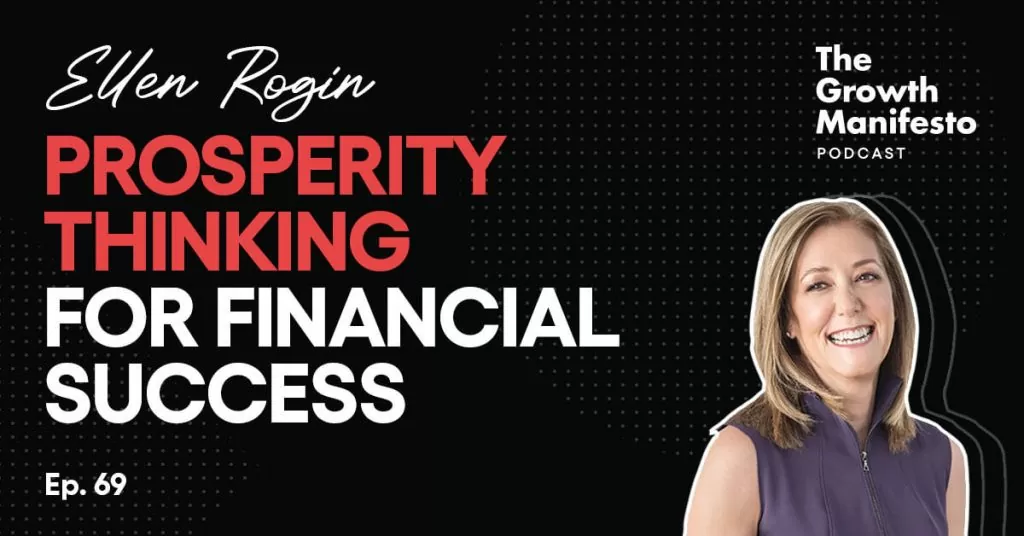
This episode is with Ellen Rogin – co-author of the New York Times bestseller on turning your vision into reality, Picture Your Prosperity. She’s an acclaimed speaker, TEDx presenter, blogger, a 20-year veteran of the financial services industry, and a Certified Financial Planner. She’s worked with CEOs of Fortune 500 companies and billionaires, as well as people just starting out. In this episode we talk about how prosperity thinking affects your financial success.
Key takeaways
- Subconscious money beliefs form between conception and age seven and keep running in the background without most people noticing.
- Once income covers basic needs, about $75,000 to $100,000 a year, extra money buys little happiness unless it goes towards helping others.
- A values-based spending plan, judging each expense by what it is really worth to you, beats a fixed household budget.
- A prosperity picture - a vision board split into sooner or later and costs money or free - surfaces goals people rarely admit wanting.
- Generosity precedes prosperity: more generous people report higher incomes, and more generous countries report higher GDP.
Chapters
- Where money beliefs come from
- Defining prosperity beyond money
- Scarcity thinking versus abundance thinking
- Balancing optimism with practical plans
- Flowing with or against the current
- Financial belief management explained
- A values-based spending plan, not a budget
- Building a prosperity picture vision board
- Generosity precedes prosperity
About the guest
Ellen Rogin
Ellen Rogin is co-author of the New York Times bestseller Picture Your Prosperity, an acclaimed speaker, TEDx presenter, blogger, a 20-year veteran of the financial services industry and a Certified Financial Planner who has worked with CEOs of Fortune 500 companies and billionaires, as well as people just starting out.
Transcript
Auto-generated from the episode audio, so expect the odd mis-heard word. Timestamps open the video at that point.
We all have attitudes and beliefs that inform how we deal with money and finances. Dr. Bruce Lipton, who's a cellular biologist, says we develop our subconscious beliefs between conception and age seven, including our money beliefs. So you have formed beliefs about how you think money works and the world works from when you were a really little kid, and they're operating in the background. It's like chatter back here that most of us aren't even aware of. and we've been taught that, oh, if you just know how to budget and if you know how to allocate
your portfolio, you'll all be fine, which is ridiculous because if we think about the fact that how many people are in debt in the world and if all it took was spending less and earning more or being a savvy investor, then that wouldn't happen with anybody. We know that's not true. And this is where scarcity lives too in these tapes that play over and over. So maybe, and it may have been things you heard growing up or saw. So I'll just give you a quick example. In my family, we were in a position where my dad was off at work and my mom stayed home
with me and my brothers. My brothers are significantly older than me. So I remember being a little girl at home with my mom, seeing daddy go off to work. So he could, as my mom would say, I'd say, dad, why are you going off to work? And I would say to buy Ellen toys. So like to do stuff for me, that was my dad's job. But then also, so fast forward, I'm in my late 20s. I start my own business and I start to explore my own money beliefs. And I realized I was operating with this tape playing in the background that it was my husband's
job to make money because that was my dad's job. And further, I might not even be able to do it. Now, here's the thing about beliefs. Just because we believe them doesn't mean they're true. At that point, I had lots of letters after my name. I have an MBA, a CPA, la la la, after my name. It didn't make any logical sense. And I think back, if I hadn't unpacked that and said, oh, that's a stupid belief, like that doesn't serve me, I don't know if I would have been as successful in my career. because it might've just been like,
that's Steven's job and I probably can't even do it. So we all are operating under these money is hard, it's scary, or maybe you had really good beliefs like always save for tomorrow. It's just knowing that these are operating there and we don't even realize that they're running the show. You're listening to the Growth Manifesto podcast where we host in-depth interviews with business leaders, authors, industry experts, and entrepreneurs with a singular focus around business growth.
At the end of each podcast, we want you to walk away inspired, to think bigger, and to have actionable takeaways you can apply to improve your business. Each episode is like a masterclass on a key topic. So make sure to browse the episodes to find the topics that are most relevant to your biggest business challenges today. This podcast is brought to you by Web Profits, a digital growth consultancy that helps challenge brands drive growth in a complex and fragmented digital landscape. You can find out more about Web Profits at webprofits.io. Now, let's get into it. Today, we're talking with Ellen Rogan,
co-author of the New York Times bestseller on Turning Your Vision into Reality, Picture Your Prosperity. She's an acclaimed speaker, a TEDx presenter, a blogger, and a 20-year veteran of the financial services industry. Plus, she's also a certified financial planner. She's worked with CEOs of Fortune 500 companies and billionaires, as well as people that are just starting out. And today we'll be talking about how prosperity thinking affects your business growth. Just quickly, before we get started, just make sure to go ahead and hit that subscribe button so you get the latest episodes as soon as they're released. Now let's get into it. Welcome, Ellen.
I'm so excited to be here. Thank you. Fantastic. And I think this is going to be a really interesting topic because it's one of those things that I think a lot of people that have achieved some form of success through their career or through business may not have considered. And so I'm looking forward to really jumping into this one, but let's get straight into it. You worked for 20 years in the financial services industry. What made you go into this other direction? How'd you get into the prosperity game? It happened very early in my career, actually, as a financial advisor. I became
fascinated by how people make decisions and how some people could have so much and still be worried all the time or not be worried. And people with maybe more modest means might be super content or not. And I realized it wasn't about the money. And for my entire career, I was fascinated with that. Let's jump into this point then. So what do you mean by prosperity? Because it's one of those words that can mean a lot and can mean nothing depending on how you use it. And sometimes
it can be overused. And yeah, I would just love to understand just what your definition is of prosperity. What I love about the word is that it can mean so many different things to so many different people. Most of the time people go right in and think of money or financial prosperity, which that can certainly be. The actual dictionary definition is a condition of success or thriving. And when I talk to people about their circuit of workshops and ask them, what does it mean to you? It very quickly gets into a discussion about having love in my life or flexibility or good
health, so many different things. And to me, that's really what the whole package is about, because you could have tons and tons and tons of financial resources and be miserable, come home at night and kick your dog and fight with your partner. And so what good is that? But it's really having more of an expansive view around what money and prosperity can really do for you. So prosperity covers all parts of life, right? But it does seem to really kind of often be linked to the financial side of things. Is that because finances are so linked to a certain level of comfort, a certain level of security? Is that why the financial side of things kind of like it's often linked to prosperity?
Well, money flows through so much of pretty much everything that we do. It's a lot of conversations. Our work usually revolves around that for most people, especially if you're an entrepreneur or an executive. Often we've been taught that our worth is based how much, either on how much we're earning or how much we've accumulated. Whether that's true or not, a lot of people really believe that. So the way I look at it is we do live in a material world and money is important.
And we also live in more of an ethereal world. We're having a bigger picture about what true success means to you or happiness or prosperity, as we're calling it. These are both important, but since we're very little, I think we start to be ingrained with the thoughts that money's important and a measure. Yeah. And for sure. I forget the study, but it was a few years ago that I read that if you don't have any money, it's really hard. And then as soon as you make around, I think it's around $100,000 a year,
that's enough to really have money not be the factor that affects your happiness or your comfort in life. Is that- Yep. That's what I've seen as well. And maybe it's 100 Australian and 75, I don't know what the exact conversion is. I've heard 70, 75. The concept behind that is once you get to that level, you've had most of your basic needs met and the incremental amount of money you make doesn't make you that much happier. However, there was a subsequent study that found it doesn't make you
happier unless you're using that money to help other people. And then it actually boosts your happiness level. And we're going to get to that part a bit later in the discussion, is where we're speaking about actually how you change your beliefs around prosperity and so on. But before we get into that, so prosperity thinking, right? Is this like a mindset or is it a way to operate? So what is prosperity thinking? Yeah, I think sometimes people have heard about abundance thinking and scarcity thinking. And it might be helpful to define that a little bit for
people. Scarcity thinking is, I think, how most of the world operates. It's this thought of, for me to win, you have to lose. There's only so much to go around. It's aggressive competition. And people may be able to relate to this on a personal level. Like if something good has happened to someone you know in your life, sometimes there's that little bit of envy or jealousy or judgment on it that can happen like, oh, well, they didn't really try that hard. Or if
it's, you know, say someone buys some big fancy car, they're so materialistic. It's this little judgy thing that we can have happen versus being so excited for them that they got this awesome job or this beautiful car or house or whatever it is. The other extreme of that, this abundance thinking is that there's more than enough to go around. It's about collaboration. It's about giving a standing ovation when something really good happens to someone that you know. And I believe that a lot of the world's problems come from this scarcity thinking.
Like, why can't we all do well? But it's this, no, I have to do better, that viewpoint. And what I found over the years is there's almost something magical that happens when you can move to this more abundance mindset, all of a sudden things start to flow more easily for you. Or if there's things that come up, because it always happens for us, there might be something that's a bump in the road. The resilience level is much greater for people that have an abundance
mindset than people that have more of a scarcity viewpoint on things. It's an interesting one, which I'd like to kind of unpack a little bit, especially in business, right? And in life, like competition is seen as a thing, right? Like it's called a competitor, right? So, and it's often seen, especially from a strategic perspective, right? That there's the military analogies and there's all these things where there's an opponent and there's like a way to be.
And it seems that there's a common, maybe it's a misconception, but it's a common belief that it's to win in business, someone has to lose. There's a finite market, you know, there's competition, there's competition for clients, there's competition for market share. How does prosperity thinking kind of fit into that? You know what I mean? Like in terms of, you know, instead of thinking about them as competitors, now we're thinking, well, or what's the abundance version of that, right? What's the positive version of that? That's not
so, um, what's, uh, yeah, please. The prosperity version of that could be, how do, how do we best serve our clients to the highest good and that the people that are, that we can serve best are attracted to us and we do our best for our employees and the community or whatever your goals are for the business. I don't see, I think it's just looking at things from a different viewpoint. Like, I don't know why you still can't grow your business and do phenomenally well without having this feeling of crushing the competition. I don't think they're mutually
exclusive. You don't have to like crush someone for you to do well. If you focus on doing your best work for the people that you're most meant to serve and serving your employees well, I don't know why that means somebody else has to do bad in the process. Okay. So prosperity thinking is not it's not ignoring the fact that there's competition. It's just not putting, let's call it, but negative energy towards it. You know, it's saying, Hey, there's a competitor. They're pretty
good. You can go with them too, but here's what we're doing and here's how we're helping the world. And here are the positive things that we're doing. And that's kind of like how we approach her. Is that a good, is that a fair summary of that? Yeah. And putting your attention Yeah. And some people might not feel comfortable saying, you know, you can go to them. I mean, you know, when I was a financial advisor, I certainly did because there's lots of business to go around. And I knew someone that was going to be comfortable with me wouldn't necessarily be comfortable with somebody else or the other way around. If you're in a larger business, again, it doesn't mean that you're necessarily escorting people over
to the other people. Although if they're better suited there, then why not? No one wants customers that are miserable and unhappy with you. Wouldn't it be awesome to be really putting all your attention on how do we do our best for our people? And we can grow more people if we're doing our best, but it doesn't mean that someone else has to be crushed in the process. And I really like this. Look, just to be clear, I mean, this is how I operate. And this is actually how we operate the web property agency side of things. And oftentimes it's like, how important is competition?
And it takes a while. it does take a while and this has taken some times for me to be happy for someone else that is doing good who is a competitor or who someone who you thought back at school they weren't very nice to me and now they're super successful it's like that was 20 years ago so chill out you know you can let things go right and like that that that default response when you hear somebody that you know that maybe you don't maybe like that much that does well, you feel that negative energy come up.
I don't know what it's called exactly. It's like jealousy. It's something that's that scarcity mindset, right? That's that scarcity thinking. That's kind of the opposite of prosperity thinking. Is that, is that correct? I'm going to ask you lots of questions to check in on this, right? Cause I'm really trying. No, I think that's, that's absolutely correct. And if you think about it, I get that. I mean, it certainly happened to me, but it doesn't make me more successful to spend my energy being pissed off that someone else is doing well. And often when I've really been frustrated, like, why is that person doing well? My ideas are better, blah, blah, blah.
And if I really get quiet, I look at the fact they're often doing something that I felt I should be doing. And it's really a defensive mechanism that I have a higher standard for myself that I haven't been stepping up to. And that's just a way to defend against that for my ego to defend against that. But it doesn't move me forward to be focusing on whether they should be successful or not. I mean, sometimes there's nasty people in the world that get, that become
financially successful. Doesn't do me well to spend my energy focusing on that. Yeah. And I fully agree with that. Like just for quite a while, that's something I've been working on. And there's a few people I know that are generally like that. They're like, oh, that person just did that. And they're not happy about that. And it does seem to really link to what you just said around. It's something they think they should have done and they're not doing it. And now seeing someone that they know that's achieved something puts it front and center and makes them question themselves.
And the default is the jealousy, is the negative, is that you're not happy for someone else. And so we'll start to unpack actually how we can actually start to change that mindset in a minute. But I just want to just to jump on a few more topics, just so we've got the full scope of like this application of prosperity mindset, right? Let's say from zero to 75 grand, the entrepreneur that's just starting out or someone that's just starting out in their career and they don't have basically anything yet, right? And it's really hard to have a prosperity mindset when you don't have the core basics,
you know, for security. And there's that constant uncertainty. How do you separate out prosperity thinking from the blind optimism? You know how sometimes it's all so positive. Everything's so positive. Everything's positive. There's nothing wrong ever, right? And then there's prosperity thinking, which I think has more pragmatism behind it. Could you explain the difference between that? And, you know, like, yeah, just how that actually works. We live in a material world, right? So if you're starting out in business, hopefully you have had some plan to cover some expenses
before you jumped off and said, I'm in business by myself with absolutely no resources. And just to be practical, and I'll get to your question, you know, maybe you get a side job while you're doing this. You can pay your bills because here's the problem. When your back is up against the wall, and you are freaked out about money, you cannot make good decisions. There was a book called Scarcity and the researchers found that when that happened, when people were really in a dire financial situation, their IQ actually dropped. So you can't make good decisions when
you're in that situation. And sometimes you just have to be really practical about it. And there can be blind optimism on that. I mean, I can skew a little bit that way. I'm highly optimistic. Same, by the way. So, so the same. I got a bit more practical over my career, you know, and it can be annoying for people in our lives, right? If I'm always like, everything's going to be fine because I have a pretty low tolerance also for whining about things. But there is some realism that's a good balance there. Optimists tend to make more money. They tend to be better
it's sales. And there's times when we just want to be realistic and have a plan, right? And have a financial plan. So to get a little practical on that. And it can take a lot of the pressure off when you're dealing with things in a practical level as well. Sometimes entrepreneurs who maybe are more creative, they push off the money side of things. It's like, it'll work out. you make sure you have a really good accountant or people on your team that can really look at
the numbers. It was shocking to me when I started to talk to people, they'd be like, well, I don't really know what the numbers are in my business. How could you know? Because it was so easy for me. That was my background, even though I love the creative side of things. So to have some practicality around this, there are some basic things that need to happen. Yeah. And sometimes we need, I mean, I have talked to people in the past that are so constantly sure things are going to work out and maybe they're not, and it's time to move on to something
else. And maybe that's when you need a consultant or a coach or an accountant or someone in your life that can deliver realistic, but not dragging you down kind of information. Yeah, I think it's a fantastic point. And I really like what you said around have a financial plan if you're going to start something out. Have a job and start a side hustle. And if the side hustle starts working, then you can grow it. That's financially responsible approach versus this more, I'm just going to go into it.
I'm going to have no money. I'm going to put everything on a credit card. Because there's so many stories out there of like, you know, I started with nothing, put everything on a credit card and just worked. And that's like the 0.01% of things that actually work when the majority actually need some kind of financial support in the beginning, right? But there's a difference between prosperity thinking and, you know, being financially irresponsible, right? There's like, there's a difference between that. It's not just, if I just think it, like think it, then it will happen, right?
It's a bit more than that, isn't it? Yeah. Yeah, I'm all for being positive, but there's the action steps that need to happen. I mean, sitting on your meditation pillow, chanting OM, waiting for the universe to provide without taking any real action usually doesn't work for people. I mean, maybe once in a while. And you were telling those stories about people that, you know, I used to have this probably magnet on my refrigerator that said, jump in the net will appear. Well, that's not always such good advice. Like, what if it doesn't? And you don't hear those stories of people that like,
totally got flattened by, by doing that. And so let's jump now quickly, right? Because we just talked about entrepreneurs and that come to a certain point, right? And now we're talking, let's say to people that have built a successful business, they're senior leaders in an organization, and they're trying to grow the company. These types of people will likely have a lot more success under their belt. And so it may seem that they already have prosperity thinking, but they may not. Right. So how do they start to really understand if they have prosperity
thinking or not? And I think we gave like an example in the beginning, but then, you know, how does a lack of prosperity thinking or scarcity thinking actually affect their growth? Yes. I want to get to that and give a metaphor for that. I also just want to mention here for the people that are starting out or might feel like they're struggling. There's often this thought of if I just had more money, everything would be okay. Money is rarely the solution. Yes. If you don't have money to pay medical bills or if you're below that level, then of course, but it's usually not the solution.
And people without a lot of wealth may say, oh my God, how could that person have any problems? They have millions and millions of dollars. There's different problems. And people with a lot of wealth worry about their money as much as people without money. They're just different worries. So I just want to say that. One of the metaphors that I've been working with that has been very helpful for people is this thought about flowing with the current or against the current. And I like to think with the current is prosperity thinking and against the current is more scarcity
thinking. And when you're flowing with the current, things flow more easily. There's a lot less stress. There's less worry around it. There's things happen with more ease. seems sometimes things seem like they happen magically. Like, oh my God, I just got this new client. I don't even know how that happened. But there's things that people put into place energetically and then also with their actions to make that happen. And flowing against the current, if you can just kind of imagine trying to swim against the current, how hard that is.
And the scarcity thinking. So we take this executive that's doing really, really well, and maybe they've been saving, there might be stress like, oh my God, what if I lose my job? I have this big lifestyle. What if my family isn't okay? Like there's all those kind of clinging to what they have and thinking about their lifestyle and their current situation. And if that were to go away, feeling like they wouldn't be okay at all, that's more on the going against the flow. Going with the current is, yes, having a good plan, being responsible, saving,
but also creating time for true prosperity. So you have time to be with your family. You haven't missed your kids totally growing up because you've been working so hard or whatever your values are. And so that, and you can actually feel into it when you're going with the current, there's a more relaxed, open kind of feeling. And against the current, it's really restrictive. So that may be helpful for knowing if somebody's like, where are you on that scale? And we flow
back and forth, right? Something can happen like a global pandemic. And all of a sudden, a bunch of people start feeling like they're going against the current because they've never had to deal with this before. But within several months, depending if you were in an occupation that was still viable, most people kind of settled into a new way of flowing with things. Okay. Let's talk about that for a second then. How do you know if the current is going upstream
or downstream? It's sometimes hard to even tell that, hey, I'm on the downstream, I'm swimming against the current. I mean, you can tell when you're swimming, right? But sometimes in life, especially like in professional life, you're going in certain directions. How do you know if those directions are like with the current and how do you know if they're kind of against the current? Yeah. I hadn't thought about this until very recently, but I think because money we think is out here for us, it's a material thing. I think we can feel that. Like if you slow down and check
in, are you sleeping at night? Are you up in the middle of the night worrying about things? Is this constant feeling of dread or anxiety there? Those are signs that maybe you're flowing against the current and that maybe there's things you can do to shift things a little bit. And same thing when you're going with the current, things just feel easier. There's a lighterness to way. Okay. And so prosperity thinking is the opposite of scarcity thinking. Prosperity thinking
is thinking of like of things which you can create. It's not subtractive, you know, and it's supportive, like it's expansive and so on. And with prosperity thinking, you can achieve a lot more than with scarcity thinking, right? From a business perspective then with prosperity thinking, is it just thinking about the competition difference? Is it thinking about, you know, of what is a successful future state of the business actually look like? Is it engaging with the client book differently? How does prosperity thinking start to come into the
business side of things? It can start with the vision of what you have going forward. So I like to think about this process of creating prosperity is being aware, which is noticing, Am I going with the flow or not? What are some of my beliefs about money? Being clear, which is where do you want to go? Like, what is the vision for the business? And that can be an amazing driver to help you know where you want to go. And I know that sounds, you know, for larger businesses, they have strategic plans.
If you're a smaller entrepreneur, you might just be kind of going along. And without a real clear vision, like, what is it do you want to create for yourself, but also for others? Because what I've seen over and over is when you have a goal that serves other people besides yourself, it happens much more easily and more quickly. And there's more kind of oomph and drive behind it when you're not just serving your own needs. Not that you don't want that, but they're not mutually exclusive. You can do well and your clients and your family and the community or whatever you value.
So those are the first two parts, being aware, being clear, taking care. So this is where we were talking about, you got to know the numbers and having, if you're not the numbers person, have people in there, have a personal financial plan and a business plan for yourself and then care, which we can talk about, which is about how do you, you know, how do you, how do you draw more in by sharing with others? Yeah, that's fantastic. Let's jump to now start to financial belief management, right?
Because this is something which you talk about, right? Can you just explain just what that means? What is financial belief management? We all have attitudes and beliefs that inform how we deal with money and finances. Dr. Bruce Lipton, who's a cellular biologist, says we develop our subconscious beliefs between conception and age seven, including our money beliefs. So you have formed beliefs about how you think money works and the world works from when you were a really little kid. And they're operating in the background.
It's like chatter back here that most of us aren't even aware of. And we've been taught that, oh, if you just know how to budget and if you know how to allocate your portfolio, you'll all be fine, which is ridiculous. Because if we think about the fact that how many people are in debt in the world, and if all it took was spending less and earning more or being a savvy investor, then that wouldn't happen with anybody. We know that's not true. And this is where scarcity lives too, in these tapes that play over and over. So maybe, and it may have been things you heard growing up or saw.
So I'll just give you a quick example. In my family, we were in a position where my dad was off at work and my mom stayed home with me and my brothers. My brothers are significantly older than me. So I remember being a little girl at home with my mom, seeing daddy go off to work. So he could, as my mom would say, I'd say, dad, why are you going off to work? And I would say to buy Ellen toys. So like to, to be, do stuff for me, that was my dad's job. But then also, so fast forward, I'm in my late twenties. I start my own business and I start to explore my own
money beliefs. And I realized I was operating with this tape playing in the background that it was my husband's job to make money because that was my dad's job. And further, I might not even be able to do it. Now, here's the thing about beliefs. Just because we believe them doesn't mean they're true. At that point, I had lots of letters after my name. I have an MBA, a CPA, la la la, after my name. It didn't make any logical sense. And I think back, if I hadn't unpacked that and said, oh, that's a stupid belief. Like that doesn't serve me. I don't know if I would have been as
successful in my career because it might've just been like that's Steven's job. And I probably can't even do it. So we all are operating under these money is hard. It's scary. Or maybe you had really good beliefs, like always save for tomorrow. It's just knowing that these are operating there and we don't even realize that they're running the show. And how do you start to be aware of them as a step one, right?
Before you can even start thinking about them, there needs to be some awareness, right? So are there ways to catch yourself? Like, oh, I just said something that seems like a belief or how would you start to be aware of the beliefs that you have? A couple of ways. Well, first of all, 100% being aware. I have studied mindfulness and emotional intelligence. And one of the best things about that is it takes us from autopilot to aware. The more you can do that to start to hear what you're saying to yourself. I also think it's an excellent exercise to go through and think about what was money
like growing up for you? Was it talked about? Was it not? Did your parents fight about it? Did you think you had a lot and didn't or think you didn't have anything and had tons of money? was it used to control? And just notice that and not be angry about it, but just know that that's affecting you now. And to be, start to be aware of things you say. Oh my God, what if we go into another 2008? Like, and everything implodes and you go down this death spiral of worry
that we can catch ourselves in. And to know that they're just thoughts. It's, that's what's so hard is to not believe everything that we say to ourselves because it's so easy to get carried away. But 50,000 to 70,000 thoughts a day, most of them are positive and there's no way they're all true. So is it the thoughts or is it the words or is it the words that have some energy behind them? Like, you know, when you start thinking something
and you feel it, right? And there's all these thoughts where you don't feel them, but they're there. But is it both or is it the ones that are a bit more charged with emotion? I think that's a great way to be aware of them. So I've noticed that if all of a sudden I start to feel anxiety, there's some thought I had right before that, that caused that it was replaying something that happened in my past. And all of a sudden I'm living in it again, you know, we tell, or we're making up stories like disaster rising what can happen. And I like to think, well, if you're going to make up a story,
make up a good one. Why does it have to be this scary, horrible one? Just make up a really better one that can happen. But I agree with you, Alex, that I think it's those ones that have that charge because otherwise we're not getting caught in them. It's like if there was a train that went by, you can notice the train going by or you can get on it and be taken to the next station. And it's those thoughts that carry us away and lead to these compounding ones that I think can really be a detriment. Okay. So now that we've set the stage for prosperity thinking, for beliefs,
for all these things, let's just talk about how people can start changing their beliefs and mindset to take their prosperity to the next level. And I've got, I think you've got like nine steps or something to doing that. I'm not quite sure if we can get through all of them. It'd be cool if we could, it depends how much there is to talk about, but what are some of the ways that people can start to change their beliefs and their mindsets? Okay. So a couple we've already talked about knowing that they're there and examining like, okay, that's stupid. I don't have to have that belief. One of my favorite strategies when someone, when you catch
yourself saying something you really don't want to have happen is to say, cancel clear, cancel that thought, clear it away and replace it with something else. Instead, we've taught our kids this since they were little. Like if someone says, I don't even know, like, uh, they're, I'll give you an example. When I used to go to group fitness classes and the teacher would go, this is a killer. I'd always say out loud, not really loud, but cancel clear. Like, I don't want anyone in this class dying from doing too much cardio. Okay. So it can be when
you catch yourself, cancel clear, and then replace it with something that you want instead. and you can do this with people in your life so you can catch each other because we don't always notice that. Sometimes it's taking really clear actions and knowing what's going on. If you're worried you're not going to be okay financially, then do a plan. You can hire a financial advisor. There's lots of calculators online, but you got to know what you own and owe in your business and in your personal life.
So your assets and your liability I'm not a believer in budgets, which might sound weird for a financial advisor. And it's not so much that I don't think you should know where you're spending your money on. I absolutely do. Most people are unconscious with that. But when I say the word budget, it feels like that against the flow thing, right? It's like my co-author Lisa says, it's like a pizza party, right? Who wants to be?
It's diet. It's awful. And most people, okay, in all the years I've talked to people about their money, once I've heard someone actually say, oh, when I spend too much on clothes, I spend less on food this month. I mean, no one does that. What I recommend instead is a values-based spending plan. So this is where you look at everything that's going out and you decide if it's really important to you. And I really like that better than saying these are my fixed expenses or my variable expenses. Just a quick story about that. There was a woman who was at one of my workshops a while
ago, and she was in her fifties and she'd never looked at what she'd spent before. And she went through and created a values-based spending plan. And so with each category, she decided, is it an A, B, or C priority for her? And her house, she realized most people think, oh, I have to keep that because that's where I live. She's like, that's like a C priority. She was divorced. She had this big house. It was filled with junk. She had a big mortgage still. I don't even like living there anymore. She decided to sell her house, pay off her mortgage, pay off her debts, buy a little condo on Lake Michigan, which is outside of Chicago where I
live, beautiful. And she also had been working in a family business that she hated for years, kind of a well-known in this area business. And she cut her expenses so much she could leave this business she hated. So all from going through this process, instead of just kind of going along and doing what she'd always done. Yeah. So, you know, knowing that all those things are taken care of and then also clearing clutter, which financial messes or paper messes, which people
don't realize is actually a financial strategy. Flutter can take our energy away. Now, maybe some of you are saying I'm just looking around my office right now thinking like, no, but I agree with that because I, because I'm of the same opinion, like just used to, um, to keep stuff organized. Like if you can't keep your things organized, how's there anything else going to be organized in life? You know? And when I feel out of control, like when there was a, you know, big recession or something, when I clear clutter, somehow that just, it's something I can do when
there's things that you can't do. And now some of you might be saying, I get that. I would never have clutter. I invite you to look at whether you have any mental clutter. Are you hanging on to past decisions that you made that you wished you hadn't or things you wished you had done? I wish I had bought Bitcoin. Everyone wishes they bought Bitcoin except for the full tech geeks out there that bought it in 2010. Yeah. But so like those things that you wish you did and you didn't, like that is just hanging out they're keeping you from moving ahead from what you want to do.
Just on the clutter perspective, it's obviously the environment, which is important, but I like what you said about the financial clutter, right? And I'd like to take that into the area of like, you know, there's things which you need to get solved and sorted and they're on the back of your mind. And if they're not, like maybe your car needs to get fixed and the registration's about to get done. And there's a bill which you need to pay, but you haven't because it's a bit too busy and it just starts to all just start to weigh on you. And so I'm hearing that by cleaning
that stuff up, that you're opening up space just for your mind to become a bit more prosperity thinking based. Is that? Yeah. It gives you more energy towards those visions that you have. So you can actually have some creative energy for that. And there's certain things in people's personal finances that fall into that category almost all the time, like doing estate planning. No one, it's the biggest thing I see people procrastinating on. My husband and I procrastinated on it for a while, but that's hanging out there. Like, oh my God, is my family going to be okay?
Or insurance issues? A hundred percent trying to knock those things off. Actually, when you're saying that I was thinking of something I needed to handle. I'm sure everyone's thinking of something, right? That's part of the challenge. Yeah, no, but it's really, really important. And even if you just make a list and start knocking it off one by one, that's going to be so helpful for moving ahead and you'll feel so good. There's just this energy. I remember when I was a little girl and my parent, my dad would say, if you don't clean your room, I'm going to throw your toys
away. And he would like get a big bag and threaten. And then I finally clean up my room and it felt so good. I was so proud. I would take him on a tour and my mom, but my dad more because he was the one that was pushing me to do that. And it felt it because it felt so good to get stuff cleaned up. It just does for us. And so it sounds like these first two parts is really about really kind of clearing the slate and, you know, just being financially prepared, I guess. And just to just to get those parts sorted because it sounds like if you don't have those two things sorted,
it's really hard to start to be creative because the mind's so full, right? Or there's stresses there, right? And to your point, at the beginning, when we're talking about entrepreneurs, if you just jump into a business and there's no money and there's no potential, there's no clear plan of kind of how you make money, it's really hard to think well. And so starting with that, will just create the foundation to start to think, well, is that a fair way of thinking about it? Yeah, I think having financial resources there takes so much pressure off. And it may be you're
willing to cut your lifestyle down. So it doesn't mean you have to have your current lifestyle and your current job before you can do that. There's something that you really want to try. Maybe then that's where you're downsizing and you're looking at your values-based spending plan and saying, okay, I'm going to live a lot more leanly so that I can do this thing that's really going to make a difference, but that I'm passionate about or really excited about doing. But I think that's really important. And a line, a cousin of that is one of the things I saw over and over is that my
clients, when I was working with individuals on financial planning that were most on set for their, on track for their goals were people that were really good savers. And I know it sounds obvious to spend less than you earn, but most people don't actually do that. But it provides a cushion for you to have flexibility. I don't love this concept of having an emergency reserve. Might sound a little bit more scarcity. So I like to think of it as a solutions fund, but having that cushion there just provides so much more flexibility. It takes that pressure
off so that you can be more creative. And that's such a big point. I'm not quite sure on what the stat is, but it's some very large percentage of people who live week to week on their salary, right? And that must just be very stressful, very stressful for people. And it would be really hard to have that in your face and then to be positive and have a prosperity vision and to be abundant when you need that next paycheck to come in to be able to do that. So I think it's a fantastic point about having a cushion because
it just relaxes you so you can start thinking a bit longer into the future. But that now leads me to the next point because you talk about creating a vision for yourself now, right? So I'm saying part one, clean your life up a little bit, you know, you know, have a savings plan, have some cushion so that like, like your mind's now starting to be a bit more relaxed and a bit more open to be creative, right? Can you talk about now the vision side of things? Yeah. Our minds are really cool.
Like we, most people, not everyone, but most people think in pictures. And when it comes to dealing with money, financial advisors, the financial services industry just goes at people with numbers and it doesn't always land for people, even graphs, people don't really understand. And so one of the things that I encourage people to do is to create like a visual financial plan. We call it a prosperity picture. But it's similar. Some of you may be familiar with like a vision board where you take images of things that are important to you and put it on a board.
This is similar in some ways to that, but there's a little bit more structure to it. So you'd come up with images that are for goals that are important to you. But the board has quadrants based on timeframe, like when you want it to happen sooner, five years or less later, things that require money and things that don't. So things that require money might be, I want to take a trip around the world once things open up.
And so it might be an image of an airplane on there. And maybe that's something you want to do later. Like my board for a long time was before when I had my practice and a little bit less flexible schedule, it was to take a year off and travel the world. And that was on my upper right-hand quadrant where later require money. And since I've moved away from that business and now I'm doing speaking and consulting and other things, more flexibility, I've actually moved it to sooner and down a little bit because I'm like, oh, maybe someone will pay me to fly all over the world. I was just thinking
that. And it changed. Yeah. Just so you know, I have a big goal about Australia. I'll just put that out there. Oh, you want to share it publicly? I'll show you. I'm going to show you my prosperity picture. This is the latest one I've done. Yeah. So I think I want to live in Australia, but I've never actually been there because I love summer. And I thought, oh, I could be in Chicago in our summer and they're in your summer and I can have summer all year long. So this is part of my prosperity picture and you'll see Australia, New Zealand up here. Cause that's part of the goal to
get there. And, um, so because it's up the top left, that means sooner, sooner, but it costs money. If it was on the bottom left, it would be sooner. I did. Some of it is, I also didn't have room down here because I'm writing another book and there's some other goals here, but, um, you have to be able to see it. You can't stack them on top of each other because it's a visual, but maybe I should, you know what, now that you're saying that, Alex, I'm going to move it down because it's been a little elusive for me. I'm going to do that. Yeah. Um, yeah. And the fun thing about doing this is that it brings up goals that people don't always think about,
you know, as a financial advisor, we were taught to, um, help people figure out like, when do you want to retire? Where in the U S college is so expensive. Where do you want to send your kids to school? And, um, and it doesn't go after these parts of our brain that really are a little bit more creative and maybe are more about your desires. So when I did prosperity picture with my husband for the first time, we have some images that are in our book and he pulled out the, um, sailboat image and I said, Oh, tell me about that. And he said, Oh,
that's when we take a trip. That's where I want to go on a trip with friends and a sailboat for two weeks. Now I had been married for like 28 or 29 years at that point. I never knew that was his goal. We talk about travel a lot. He's secretly thinking, I hope he means his friends because I do not want to go sailboat for two weeks. I get too sick. And then my, my co-author, Lisa did this with her husband and there's a picture of food. And he said, oh, that's when we have friends over our apartment in LA. Now, Lisa and her husband live in Chicago. She's like, what are you talking
about? He goes, oh, I would love to have an apartment in LA. He's a musician. And Lisa, when things were open, was traveling like 80% of the time. They ended up, because of that discussion, downsizing their home in Chicago so that they, when she travels, could potentially rent an Airbnb for a couple months in LA. And it brought up a goal they had never even talked about before. So I just think this process is so great. And it's not just like if I put Australia and New Zealand on my board and never do anything
about it, that's that wishing that like no action, but abundance thinking. I don't think it's going to happen. But what happens with this, just a little of like our mental process, I mean, it's well established that mental rehearsal is a powerful tool. Athletes know this, right? Right. Olympic athletes will do the mental visualization before all their competitions, picturing exactly how they want things to go. If something happens, how they'll deal with it all the way through to probably a gold medal around their neck.
But it happens for other goals as well. Like any goal that you have, you have the big meeting up, you can mentally rehearse how you want it to go. And part of the reason this works is we have something in our brain called the reticular activating system. And it's about the size of your pinky and it's at the base of your skull and it helps filter information. It helps you know what's important to pay attention to. So that's why if you're in a large group and someone says, Alex, you turn because that's your name and you've been told it was important.
Any moms out there know that if you're at the mall and some kid says, mom, even if your child's hundreds of months away, you're turning around because you've been told that was important. So with my like Australian, New Zealand example, you know, when I hear someone with an Australian accent, I make a beeline like, hey, this is my goal. Where would I want to live? Where should I? And I start asking questions about it. I start noticing things in a different way. It's like the car thing, right? It's like it is when you're going to buy a car and all of a sudden
those cars are everywhere now it's like what happened that now those cars are everywhere those cars just haven't just magically appeared they're always there but now because you're focusing on that now things are appearing to you and I don't want to go down the path of the unconscious mind because that can go really really deep but the unconscious mind's powerful and that's what's happening right now because like you're focusing on something now things are coming basically into your reality to help you go towards it and I think this is what that prosperity vision board does. What I like about your version of the board is that you've got a
time and a finance axis, right? And so normally it's just like kind of the mishmash of everything in no particular order, like in no particular time, in no particular cost. But I do like how you've got this, this axis because now all of a sudden you've got a path for your future. And I really like that little adjustment, which is not so little, right? Because now all of a sudden And you're saying, well, what can I achieve sooner? And what can I achieve later? And is that the right order? And can I change it later?
And so on. And it can be part of their top of your board is your visual financial plan. Okay, how do I start planning for this if it's really important? And what is interesting is in workshops, people realize like I have so much in my lower left hand quadrant doesn't cost anything. I thought everything I needed was dependent on money. Um, and the, the thing that I find fascinating about this is it works with, I've, I've done this activity with kids in Ghana or some of scholarship students I've worked with who have not much
different images. Right. And I've done this activity with one of the most wealthy men in Europe and his son, different images. And it just is effective to have people start to envision what they most want. And people who, and then if you put it somewhere where you can see it and spend some time with it and focus on these goals and how will you feel if you accomplish them, things start to happen. And it's not just kind of that magic again, but you start to listen
differently and look for opportunities and take action in ways that maybe you wouldn't have if these goals weren't in front of you. And let's talk about action now because, because like I said, that we're going through the list, which is great. And this is all in the book as well and it goes into a lot more detail which is great. But the action side of things, right? So when I was first starting out in where profits, this is back in 2006, just set like an arbitrary goal. It was like a number in terms of revenue. I shared it with my co-founder. We both focused on it and
I just visualized the logging into the internet banking and seeing that number in there, right? And it was for about six months. Had no idea how to get there but had it there and was focusing on it and was doing a lot of action. And then one day, like it just got above it. So I just subtracted like, like an amount out. So it was exactly that. And I was like, oh, it happened. Right. And so that was completely arbitrary, but I picked it, I focused on it, but then there was a massive amount of action towards it. Right. So there's a lot of parts in that, in terms of what we just spoke about, in terms of the goal and the awareness of how the
unconscious mind works, but how does the action part kind of like, so now we've got the vision, right and we're getting really clear on that and that's that kind of the mental rehearsal but now we've got this action how important is that action and how much action should somebody be taking um so i know um that you had jan and atwood on your show before and one of the things she says that i love is intention like what is it you want attention and then no tension so that action
feels to me like the attention and then no tension like there's a certain amount of action you want to take that you are moving towards your goals, right? If you and your co founder just pictured this account and never went out and sold or did what hired people or whatever else you had to do to build your business, it would not have happened, I suspect. And I also suspect when I ask you more about this, like what else were you picturing? Because I bet there was more than just that number. It might've been the feeling you'd have or how you were going to make a difference? Because I think that a lot of times people just focus on the number and nothing else.
And maybe for me, when I had my practice and the financial services industry for advisors has people focused on this a lot, like number of assets under management or your revenues. If I had nothing else behind that, I never hit those goals. And it was elusive. It didn't feel right. What felt better was when I was figuring out how I was really serving people and how my purpose was behind it. Then I blew past those number goals. Let me answer that question then. So yes, there were a lot of other feelings. I mean, I'd done quite a lot of stuff before that
in terms of NLP and hypnosis and Anthony Robbins stuff and just whatever else. And so I understood it's also about, it's the vision, right? It's to step into the vision, to see what you see, to feel what you feel, to hear the environment, to really create a clear like picture. And it was, you know, the feeling that, you know, there was something that was positive and they were creating it and there's all this stuff. And just like in that moment, I was in a car, like I was going past a certain point and I was just having a look at the bank
account. I shouldn't really be checking my phone in the car, I know, but I was looking at a specific set of lights and I had a certain feeling and that's just the vision I always had. and then it happened and I was like oh I'm at these lights so quickly let me check the bank account now you know what I mean and and it was just it was just an interesting way to just step into well first of all to create a goal and then to visualize it and then to think about it and then you know to do everything positive towards it you know so yeah anyway that's my answer
Yeah, I love that because I knew there was more. It's not just the number. It really is that feeling is kind of like the part of the secret sauce to it. And so this action, sometimes there's action that feels like you're allowing, you're doing the right steps. They feel great. And then there's sometimes action that's kind of grasping at things. So to give an example where you could be in scarcity, but taking action is if someone is checking the value of their stock accounts on a regular basis, like multiple times a
day. Now, if you're doing day trading, I guess maybe there's some reason to do that. But for everybody else, there is absolutely no reason to check it that often. And that's like a grasping. Maybe you think, oh, I'm being careful because I'm checking. but they found actually that people that do that too often or actually listen to too much financial news do worse because they feel like they have to do something all the time. So there is this balance and that's where you might feel into it too. If there's a huge amount of stress behind it and you're not getting the results, it's often helpful to just take a break from that. And I
don't know if that's where you were going with the right amount of action, but some of that is just experience. If you're just starting in business, you might not have figured that out, or it might require a whole lot more action than it might five years down the road. Yeah, sure. I think, I guess what I was just going into was more like, how do you know if you're doing enough and how do you know if it's the right action and how do you know, you know, if you're going in the right path or not. And oftentimes, you know, especially when you're first starting up, but even later on, well, like if you're going into
new things, you don't know, there's going to be mistakes, you know, how do you sustain that kind of that abundant mindset, you know, where it's going to be okay, but even though I'm failing so much, you know what I mean? It's just trying to know, you know, how does someone know if it's the right path or not? And how do they tell if they're on a scarcity path or not, just when it's an unknown path, if that makes sense? I'm a believer in getting support, you know, getting a good coach, getting in a program to have somebody support you in that, because it's
not always easy to know. And someone who's been through that path before is probably going to help you to guide you through that. I've always been, I've either had an individual coach or I've been in group mentoring, coaching programs to learn. I like from learning from people that have made the mistakes ahead of me. Same. No, I don't want to do it all on my own. Like I rather pay some, I'm not a DIY person. Same, same. So that may be helpful for people. They also do a check-in.
I think that's just a fantastic point. I think, you know, that having somebody there that can really help to say to you, yeah, you're on the right path or, Hey, have you considered this? Or, Hey, maybe you're not doing the right thing or, Hey, be careful what you're saying about yourself. You know, like there's all these things that you don't even know in the beginning. So I do think having a coach or having a support group or having some people that are on the same path as you will be very valuable. One more point, because I'm conscious of time. You talk about to give back, you know, like we started at this point, right? Like it comes a point, I think you said 75 grand
depends on the exchange rate. That's about a hundred grand in Australia where it's not about the money anymore. Like there's enough security there, but there's a correlation to giving and how you feel. So can you talk about that in terms of how this affects your whole experience of life? Yeah. And I would maybe make one tweak to what you said. I usually don't talk about giving back. I talk about giving forward because I think there's this tendency that to think, oh, when I get to this point, then I'll give. And I'm talking about financial giving here. We can talk about
doing kind acts, which is hugely important as well. But just visually, if you're hanging on so tightly to what you have, that energy of scarcity, like I'm not going to be okay. I remember in the several recessions that I was dealing with people on their personal finances, you know, I remember I had one woman I was talking to who wasn't uber wealthy, but she had two homes and she was freaking out. I'm like, I didn't say these words, but like, honey, you are so far from not okay. Like you got two houses, you know? And,
And but in that moment, I didn't say that because she was feeling freaked out. Right. But so when you're hanging on so tightly to what you have, you can't possibly receive. Now, there's people that are out there that don't feel good about receiving either. They're always giving, giving, giving. There's something that doesn't feel right from their beliefs or whatever about having money or there's guilt or embarrassment. That doesn't work either. They're both important. And what I've seen over and over is when people are generous, more flows back to them.
And there's actually studies on this. More generous people have higher incomes. Countries that are more generous have higher GDPs. And there's something called subjective wealth, which is this way that our brain works that when you donate, like if you were to donate $500 to charity, somehow you equate that in your brain and say, oh, I must be wealthy to be able to do that. And it feels as good as getting a $10,000 raise. So there's that idea when we were talking about ways to feel less scared about things,
finding somebody that could really use your support and helping them is amazing. Even hearing about how other people do that makes us feel great. You know, this is a very privileged conversation you and I are having, right? We're talking to people who have wealth and are above that level. There are so many people in this world that are not there, right? And could they still be positive and happy and loving?
Yes. And could our resources support them in other ways? A hundred percent. And that's where we alluded to this at the beginning that your happiness level does increase when you're helping other people. Even doing, certainly doing kind acts, they found that kids that have generous, generative behavior, wanting to make things better for others as teenagers are more successful as adults. They have less depression. It's really an important thing.
People that volunteer have longer longevity. Their health is better. There's so many benefits of kind acts and also financial giving. that's really interesting um because it just it seems that you know this you know waiting until something happens in the future to start to give time or resources or money um is part of the challenge right and so what you're saying is that um you know but just kind of helping somebody now so even if you don't have anything but there's someone who has maybe less than you or something
else which you can help them with um that is based outside of the thing which you're working on but is something which someone else is trying to improve, but you know something that that process of actually helping somebody makes you feel better. It adds value to the world. It changes the energetic flow from you to someone else and you actually helping somebody else. And that creates something. It's hard to put something on what that creates. Is that right? Like it, it does something, right? Like, is there something which you can call it? Like,
you know like what's the thing that that creates because it feels like it changes like the energetic flow or something like that i think you're boosting your abundance creation prosper it's like a prosperity practice that you can do um and i think back i was um thinking about being on the subway in new york and there was some person who was a homeless person walking around asking for money and most people were ignoring him and then there was a guy on the train who did not look like he had much money and went in his pocket and pulled out change And so this was not like a wealthy person, I don't think, giving money. And I thought, oh, that's so beautiful. And this idea of even little bits make a difference. People who run big charities say that the $50 contributions, if they didn't have those, they'd be in big trouble.
There's not lots of hundred million dollar contributions that they received. And I just think it loosens something up in us that creates more of that flow. And that's great. And I think this is a really good place to end the conversation. So Ellen, thank you so much for coming on the podcast. For the listeners, if you want them to take an action, to do something, to subscribe to somewhere, what would you like them to do? They're two different things. So taking an action, go out and do something good for someone else and give some money away. That would be the action, I would say.
Even a small amount, something, right? Generosity precedes prosperity. Yeah. So anything, do something nice for somebody else. And if you want to connect, you can go to ellenrogan.com. There's lots of resources there. I have prosperity tips that go out on a regular basis. You can connect with me on LinkedIn. I'd love to be in touch. yeah and i'd love to help you increase your relationship just to have a better relationship with your money yeah i see that is how we're going to change the world that's true and yeah and um
her books are available on amazon um so check them out there and i highly recommend them um they're uh super insightful um for how you can just start to change how you think about prosperity scarcity and it doesn't matter what stage of life that you are um it's always something which could be holding you back, you know? And what you want to do is you want to create something that will move you forward, you know? And I'm going to really take care of my words now and start saying forward, not back, and positive, not negative.
But thank you so much for coming on the podcast. This has been a fantastic conversation and I'm sure there's been quite a lot of insights for the listeners and the viewers. So thank you so much for coming on the podcast today. Oh, my honor. Thank you. Thanks for listening to the Growth Manifesto podcast. If you enjoyed the episode, please give us a five-star rating on iTunes. For more episodes, please visit growthmanifesto.com forward slash podcast. And if you need help driving growth for your company, please get in touch with us at webprofits.io.