SaaS and techCrypto and financeEntrepreneurship
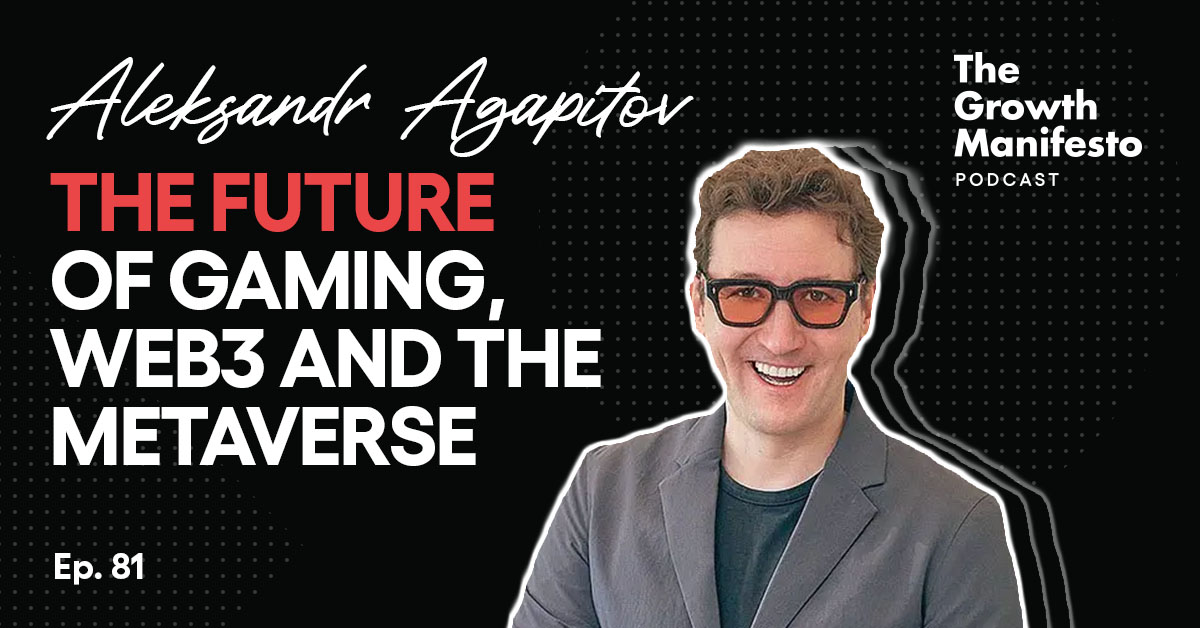
The future of gaming, Web3 and the metaverse
Xsolla founder Aleksandr Agapitov explains how gaming technology is building the metaverse, and why NFTs need new standards to move between games.
 with Aleksandr Agapitov


Overview
This episode is with Aleksandr (‘Shurick’) Agapitov, the founder, CEO and man behind the multibillion-dollar gaming payment enterprise Xsolla which is used by Epic Games, Ubisoft, Twitch and hundreds more. We talk about the future of gaming, the metaverse, Facebook, Web3 and what changes we can expect to see in the next 5-8 years.
Key takeaways
- Xsolla processes about $2 billion a year in gaming transactions from 10 million monthly users spending around $15 each, on a 5% fee.
- Agapitov defines the metaverse as photorealistic 3D websites, or metasites, reached through a browser rather than downloaded apps like Fortnite.
- He expects Facebook could become irrelevant within four to eight years because it cannot create its own currency and is behind on crypto.
- Making game items such as NFTs work across different games needs new NFT standards and financial alignment between competing game developers.
- His new venture X.LA is built so the community will own it, raising money to pay partners rather than for himself.
Chapters
- Intro: Shurik Agapitov and Xsolla
- Building Xsolla from Siberia to $100m
- From browser games to Farmville to mobile
- Defining the metaverse as photorealistic websites
- What Facebook is really trying to build
- NFTs, portable items and game incentives
- Xsolla's crypto pivot and X.LA
- Why Web3 means building without owning it
About the guest
Transcript
Auto-generated from the episode audio, so expect the odd mis-heard word. Timestamps open the video at that point.
My personal view, you don't go to Fortnite, you just go to the website, Metasites. You go to the Chrome, type the URL as you used to, and you can go full screen and boom, you're there. It's a 3D photorealistic experience and everybody would understand it. And I think that's how it's going to be. You're listening to the Growth Manifesto podcast, where we host in-depth interviews with business leaders, authors, industry experts, and entrepreneurs. with a singular focus around business growth.
At the end of each podcast, we want you to walk away inspired, to think bigger, and to have actionable takeaways you can apply to improve your business. Each episode is like a masterclass on a key topic. So make sure to browse the episodes to find the topics that are most relevant to your biggest business challenges today. This podcast is brought to you by Web Profits, a digital growth consultancy that helps challenge your brands drive growth in a complex and fragmented digital landscape. You can find out more about Web Profits at webprofits.io. Now, let's get into it.
This is Alex Kleanthus, and today we're talking with Alexander Agapitov, who is also known as Shurik to his friends, so I'll be calling him Shurik in this conversation. He's the founder and CEO of the world's leading payment company for gaming called Exola, which is used by the Epic Game Store, by a company called Twitch, which you may have heard of, by Ubisoft and hundreds more. Today we'll be talking about the gaming industry, we'll be talking about NFTs and the conversation which everyone's having today which is around the metaverse. And just quickly before we get started, make sure to go ahead and hit that subscribe
button so that you get the latest episodes as soon as they're released. Now let's get into it. Welcome Shuri. Thank you for having me. Yes, this is going to be a good conversation because I think the gaming industry is just expanding very quickly right now. There's integration of NFTs and there's this whole other conversation of the metaverse which for gamers probably is quite easy to understand but for non-gamers talking about the metaverse is confusing at the very least. So let's get straight into it and let's start with Xola. So can you quickly explain to the
listeners exactly what Xola does? Sure so simply saying we are B2B company in a B2C industry So we're helping game developers to have more sales, simply saying. So we're living inside the video games like Fortnite, Escape from Tarkov, and some other games, like some of the Ubisoft games, and Roblox.
And every time when people make transactions outside of the Apple, we're most likely using our service. and we're helping the gamers from all over the world buy in-game purchases, microtransactions, or buy the games because in the global world, gamers want to have the access to the games, same games like we have here in the U.S.
And we're helping game developers make more money and gamers to play their games on day one. So basically, just to summarize, so you help the game developers to monetize their games outside of the app stores, yeah? So there's the Apple Store, the Play Store, and then there's the payment facility, which Xola provides. Is that the best way to explain it? Yes. And so when did you launch? I started this company when I was 22 in 2006.
Wow. Okay. And it's what's that now? 16 years later. So 16 years later, still around. And there's quite a lot of transactions that are going through the platform at the moment. So are you able to speak about the volume of transactions happening at the moment through Xolah? Yeah, roughly while we're speaking, it's 10 million users every month spending 15 bucks on average. And that's for the past 365, for the past year was $2 billion gross volume.
And my company is charging the 5% from that. And if I can do quick math, $2 billion, $5%, $100 million a year? roughly yeah yeah okay so that's pretty good for a company that started in 2006. Well gaming industry is growing and we're growing with it yes. So why did you get into this space specifically because it's really interesting that you chose to go into the payment facility business for gaming. I don't have a lot of options and
opportunities like as you hear my accent I was grew up in a very poor family in Siberia and And I just, I was a student in the Mafia University, and I just want to find opportunities to make money to buy shoes and jeans for myself. So it's not something romantic. I would want to change the world. It's just looking for opportunity and looking for a way to survive and get out.
And back then in 2005, it was a few things happening online. There's a lot of online games and a lot of new online payments. And I think opportunity always somewhere and it's very visible. So today's crypto and metaverse, something's happening there definitely. So, and past 16 years, I saw some of those things also.
It's pretty quite obvious what was starting. It's just, yeah, opportunities like a bus. They come in every 20 minutes and they're very obvious. In 2005, it was very obvious something's going on there. And so are you a developer by trade? uh i never have a developer job i never have the formal education as a developers but i do um i don't have a funding in the beginning so i do as a founders i do everything by myself i create the
first version of the website myself and for that i learned the new um developer language and html I create first contract for my customers. And I get a lot of inspirations from the internet. And I think on internet, you can learn everything, almost everything. And yeah, there's a lot of copy paste, as you can assume with legal agreements. So, but yeah, I managed to do my presentation
and the business pitch, everything by myself in the beginning. And that's how I think today many of my employees and colleagues is growing. They do it themselves and then later able to build their own team and hire, and that's how organizations grow. We're not that kind of the static organization when it's a static size and you and employees going from the career ladder which is standard
path so if you can't join Luxor you most likely sooner waiter is going to expect that you're going to build your organizations under you that's how we naturally um and organically grow it's a growth podcast I thought that's of course of course yeah no that's amazing and so you started off by yourself you found some stuff on the internet um you wanted to make some money to buy some shoes and some jeans which is probably how a lot of internet kind of entrepreneurs start
right and then you found a way maybe by accident potentially on purpose where you started by yourself and now 16 years later the company's making around 100 million dollars so hey that's a really good kind of introduction to the conversation right and i congratulate you on that because because i know what it's like to copy and paste contracts from the internet and all that stuff right that's kind of the ultimate kind of the bootstrapping process right it's like seriously starting from scratch but so you've achieved some pretty good success in the last 16 years right and
so you would have seen quite a lot change and i think like if anyone who's listening can remember back in 2005 and 2006 i think that's i think there was still a company called myspace back then I think this is before Facebook even launched, right? So just think about the things that Facebook's done, you know, in terms of kind of the social gaming and then all the stuff with the iPhone. I think the iPhone was only 2006, 2007, right? And all that time since then. And now there's basically the Fortnite and the metaverse.
So a lot's changed in that time. Yes. But so what have you seen as the biggest changes across the gaming industry? since 2006? When I began with a lot of the browser-based games, and it's quite low-budget games when I start working with, it's basically a chat, and you can have some extra social activities there. And many of those games is expected to be free-to-play,
and that's why services like mine is really, It's really interesting for those game developers, because we want to monetize most of the users. So in free-to-play games, let's say 10% of people are actually spending the money, and 90% is playing for free. So you can easily imagine if you have relevant payment options and little seamless process, it could go from 10% to 20%.
So it could be double money for game developers. It's a big deal. And I'm charging my just 5%, and I'm helping the game developers of all size now. But I begin with working with those browser-based games. When we ate Facebook, introduced the Canvas games, and you probably remember the Farmville. Farmville. Everyone remembers Farmville. Oh, my God. Everyone was, like, gardening and farming. that was big yeah so that was kind of the also the waves and then what's um interesting vital
mechanics and and have a lot of the kind of us games it was a flash games which is now also that i would never imagine i would live longer than flash um but it's that and um obviously mobile mobile games um um enter the market on the right after the social games become this And some people thinking mobile games is going to be something like social games, or it could be a similar platform, not kind of a big deal.
Many established game developers thought about mobile games like it's not real games. It's not like this amazing artwork we're creating for the console on our PC. Similarly, like today, many established game developers, they don't respect the new crypto games, let's say. But to announce mobile games, it's enabled a whole bunch of the new audiences would never
play games before. Of course, people who play on PC probably very rare would switch to the mobile. And then when we come to mobile dominate and investors and VC saying about the PC games and PC as a platform dying literally every three years. And I was having very serious concerns about my business. What is, oh my God, what is really happening with my business if PC truly will die?
But then eSports kind of kick in and we learn most of the eSports and serious gaming is happening on PC platform. And because it's open platform and most likely something we'll call metaverse, most likely going to have happening on the open platform as well. However, I have my own view on the metaverse and how it could be my own vision on the metaverse, how it could be distributed faster when we think.
And yeah. Okay. Cool. So we're going to get to the metaverse soon, but let's stick with the gaming industry for now. So just to clarify. So in the beginning, it was the browser-based games. And then it went to the social-based games. I say, for example, the FarmVilles, and then it went to mobile games, right? And the whole time there has been the PC games, right? Because that's been there since the beginning, right? That's applicable for my business. That's my personal journey.
My payments and my services are most relevant. Yeah, sure. But I guess the payment system probably just reflects the ecosystem, right? Because the monetization of the games is the growth of the industry, right? Because no one is making them for free, just to make them for free, just to be a good person. I'm sure there's some, but the industry overall has to make money, right? So I think payment platform perspective is extremely important. But so then it went to mobile games. And so now it's going into something else called the metaverse.
That's something that we will get to in a minute. But just to clarify, when you speak about smartphone games and the mobile games and so on, Is that just what you buy in the app store? Is that just kind of like you purchase a game, it's for free, and then there's all of kind of in-app purchases and so on. That's what you're talking about? Yeah. Yeah. But on Apple, before Fight with the Fortnite, I don't know if you follow that. It's a big lawsuit battle between Epic and Apple.
So Apple control how the payments get made inside the ecosystem. Similar to PlayStation, and that's a part of the strategy. That's a part of the monetization of their own platform. So I think it's fair to say Apple may treat some of the game developers as suppliers, not as consumers, because end users is their consumers. What my company has succeeded in doing is having game developers as a customer.
So my customers are game developers. I need to apologize to my gamers users because I'm selling them and monetizing them. I'm that evil corp who monetizing the gamers and it keeps in the robux. And we give the fair refunds and fast and fair refunds. That's also because it's good for the business to keep it safe
to the consumers in my view. And, yeah. But so smartphone games are the ones at the moment that is getting the casual gamer, right? So let's say, for example, I've got some games on my phone. I play golf. I play Wordscapes. I play all these things. It's free. But then you pay for extra kind of advantages or benefits, right? And that seems to have been the growth across the gaming industry in the last, what, two, three, four, five years?
Is that right? Well, the mobile segment is the fastest growing segment. And with a lot of the consumers and a lot of the gamers and a lot of the industry growth coming from the mobile. However, PC and console have a very steady growth and a lot of the hardcore gamers, they prefer to the PC. And mobile games is a good introduction for the casual users who want to have something fast.
What's interesting is also with a lot of the research in a company like Newzoo have the reports about the industry pies and the growing the pies. And in my view, many of those research firms, they underestimate PC market share. And the reason is because everything that's happening on the mobile, it's open. It's almost, almost, it's with a company called AppAni. and you can find for the pay little subscriptions
how much each of the game developers make money. And Xbox and PlayStation, they're both public companies. So we report some of the numbers about their own sales and the market. But whatever happened on PC, if some of the game developers, maybe 20 people create an amazing indie game, maybe first games and making hundreds of millions
of dollars or 200 million of dollars. Nobody would know that because there's no data. And I think this is very underestimated. It's a bigger one, a media thing it is. And industry surveys on the game developers conference in San Francisco is I think it's like 60 something percent of the game developers actually developing games for pc now right and so you've got professional
gamers which is for the pc well semi-professional or more serious ones and then you've got kind of the casual gamers on smartphones and stuff because obviously smartphone gaming is nowhere near the the experience, the speed, the engagement than the PC games, right? And so, and then you have like this thing called eSports, right? So eSports is where people compete to win prizes, right? Or to win something, right? And so they all play on PCs, is that right?
Or computers, is that right? Yeah, most of the discipline. And that's actually, in my view, my humble opinion, it's a little bit overheated. So people talk media and people talk a lot about the e-sports, but in reality, it's less than 1% of the representing the gaming industry, money-wise and even user-wise. So just in terms of the gaming side of things,
where do you see the gaming industry now going in the next two, three, four, five years? Definitely everybody's thinking about the metaverse and what does it mean. And I believe metaverse will come definitely from the gaming technology. People who work for the gaming industry have understanding what's possible and a lot of
innovation coming from the gaming industry. And that's a reason I really enjoy the lifestyle of the business I have. So for example, we can pick any innovation, a great innovation, like artificial intelligence like and self-driving cars. They exist because of the company NVIDIA exists and company NVIDIA exists because of the video
games. NVIDIA is a video graphic cards manufacturer. So all we can pick the virtual reality as an innovation. And virtual reality most likely before we're going to do the surgery in a virtual reality is most likely it's going to be a gameplay in virtual reality. And many, many other things. We have a fast iPhones and fast computers not to run office applications.
buy them to play video games before buying the new iphone to have a better camera and video games yeah so okay um i understand the gaming industry now i think that we've talked about that pretty well for the listeners and the viewers um now let's jump to the metaverse and to nfts right because i was gonna start with nfts but i guess let's start with the metaverse because they're They're both integrated, right? So let me see how to take this conversation right now. So let's go to metaverse, right?
How do you define the metaverse? Let's start with that. Because if you ask anyone, oh, what's the metaverse? Probably someone who's in the gaming space can probably explain it a lot better. But for the average person, the professional person even, right? Trying to get their head around what is the metaverse and who owns the metaverse? And what is Facebook's part in the metaverse? Yes. How do you define the metaverse? My vision for metaverse is when game developers will develop the websites. So websites, as you know, you open your Chrome and you go on the website.
It's now flat. It's like a book. In the future, every experience of new websites, or I would call them metasites, will be developed using the game developer technologies. And you go to the, I don't know, adidas.com today and surf the shoes. In the future, you go adidas.3D world
and can have experience what you expect as a video game. You can walk in 3D dimensions. It could be photorealistic or it could be in some graphic style. And if you can see other visitors of the meta sites, you maybe get some items with you from one meta site to another meta site. Oh, okay, cool. Okay, so look, I'll ask a lot of questions now
because this is what it's about, right? So it's a 3D world. Is that the first confirmation? Yes or no? is it 3d or is it not 3d because like the central land which is part of the metaverse we'll call it and we'll jump to that in a minute is that 3d is that 2d what is it and i'm really going to try to get the definition right now because trying to find this on the internet conflicting information yeah in video games i get used to nobody knows anything i have i'm trying to predict uh what's
what's the next turn and it's often coming from nowhere and and the video games it's a lot of the things unpredictable. Yeah, so I can I can is it 3d? So in my metaverse 3d or not? In my view, it's a photorealistic 3d. In my view, it's a photorealistic 3D. And the reason why is photorealistic. So today, what I heard from the developers, photorealistic
using the Unreal Engine instead of the art technology, Unreal Engine 5, it's maybe even cheaper to create when it's creating illustrative and like an artist. Because they're using the technology called Metascans. It's easy to scan objects in real world and maybe fine tune it and mix it with some of the created objects. And most, in my view, it's a photorealistic 3D using cloud
gaming and deliver to the masses through just a simple Chrome screen. Right. And so the metaverse, right? But is the metaverse unlimited or is it Yes. Is it like land or is it like unlimited land? No, it's unlimited land. It's like a website. So every business, every business, every company, maybe some people want to have their own home site or meta site.
And yeah, similar like websites. Every business wants to have a website. okay so so basically okay so so if somebody says hey i want to access the metaverse that's simply the same as saying hey i'm going to go into fortnite that's the same thing right because that's a version of the metaverse right or it's basically saying hey i'm going to go into decentraland again these are completely separate platforms separate communities but they have like a lot of people within the platform that interact with each other.
Is that a good summary? And it's fine if I'm wrong because I'm going to keep checking if I'm correct or not correct. My personal view, you don't go to Fortnite. You just go to the website, Metasites. You go to the Chrome, type the URL as you used to, and you can go full screen and boom, you're there. It's a 3D photorealistic experience and everybody would understand it. And I think that's how it's going to be.
Got it. I'm getting it again. Cool. So you go to Chrome and it's a website and then you're in the metaverse, right? It's a 3D photorealistic place where you can interact through the internet, right? And that's the metaverse. Now, assuming that is the case, right? So can I maintain my avatar and my wallet and all the things that make me me across the different metaverse, across the different sites within the metaverse?
Yes. Yes. That's one of the future. Yes. that's one so it's kind of like and i'm just going to use this example it's kind of like the facebook login the facebook login can be applied across every single website if you install it actually on your website right and so it's the same with the facebook login or the google login or the apple login and so there's a login which has your i guess like information about you the payment facilities and that's what you are going to be using is that a good way to think about it? Yeah, today you can bring the little piece of the information with you from one site
to another site. It's like a layer. So in the future, in Web3, you're going to have the whole baggage of everything. So you're going to have a lot of the files with you. And the site is going to decide if we want to use this luggage, some of this item on or not. Is it practical for them to give you some benefits if you have some of the luggage um yeah so so it sounds like there's a bit of a let's call it like an arms race towards who's going to own um not the metaverse but
the personalities in there yeah the logins the the central uh place where everyone accepts that that is the money in the metaverse this is the identity like in the metaverse is that is this a true statement or not and i'm going to keep you know just doing it like this so in in my vision of metaverse i see it as a every meta sites will be created like a old-fashioned hollywood um hollywood model movie so bunch of talented people come together create this experience
with artists, there's developers, there's vendors. They create this experience, they establish between among them, how they're gonna split the revenue and they move to the next project. And when you move to the next project, maybe you change some of the vendors, some of the artists, somebody playing the leading role, different actors, and instead of other people. And those people and groups like in Hollywood
will develop all those meta sites and each of them going to have the credits or revenue share or stake in form of tokens and we're going to get paid for the effort and contribution. I'm getting there. I'm slowly getting my head around this. So I really appreciate all your patience here, Shurik. So then... I'm happy. I'm happy to Yeah, this is good So then, what is Facebook doing?
So they've changed their name to Meta They just said they're going to be investing all this money into creating or investing into the metaverse So what are they actually trying to do? What I would not be surprised if the Facebook will will fell in four to eight years as a company. We will not remember
will become absolute. I would not be surprised. What we're trying to do and I'm assuming we're trying to create a gaming console which is people done before. However in his presentation Zuckerberg talk about different items and NFTs and they're going to adopt NFTs for the Instagram. And I think Facebook is a really tough spot. And they need that
rebranding moment just as a fresh idea because of the issues. But I think inability to create the currency, but the US government not allow them to create the currency where they can transact, that's a big deal. That's a deal breaker. So, and adopt the other cryptocurrencies, they're very behind from other companies who've done that right. Companies like Coinbase,
who could become this explorer in the metaverse. So one of the race is creating the explorer for the metaverse. What I'm building is like I'm building the cloud gaming technology with the Google and Unreal Engine and with my payments. So you can explore those meta sites created by a group of people And we have this project that's my new project and I focus on x.la.
So somebody could create this different explorer for those meta sites. And it could be displaced up to your head with 48% taxes. That's possible. But I think people would be more adaptive just in Chrome and radically new web experiences, which is most of the gamers having now and enjoying many decades now.
So when the people say, oh, imagine you can get the item, virtual item, and you can own it, and people who play video games say, come on, guys, do you ever play MMO? We have that 20 years ago. So, but it's roughly a few hundred million players who are hardcore players, gamers. It's not 2 billion users on internet or 3 billion users on internet.
So I think having this cloud gaming, are you familiar with the cloud gaming? It's like a Stadia, Google Stadia, when you can actually don't need to download the games. It's a streaming. It's like YouTube, but you can control it. So it's like a video stream like YouTube, but you can control it and play. PlayStation have, Xbox have a lot of successful. So playing actual PC games without the PC,
but for cloud gaming, that could be the metaverse. And so the metaverse has a lot of possibility right now. But just coming back to my question, just with Facebook, right? So what is Facebook trying to do? Facebook trying to create the one Chrome site that everybody will go into and they've got their VR goggles and they've got their NFT payments and they've got all these things that they're trying to create the world just like they've got their Facebook platform right now to close system where you know they can get
external kind of information in there but it's hard to get the information out like is that is that what they're trying to build yeah think about like a YouTube but you play not the 3D experiences. Game developers tools, it's radically developed and it's on really high pace. There's two companies called Unity,
which is get successful and get a lot of funding from the going public. and Epic Games who get a lot of success with the Fortnite to get funding and reinvesting all the money with Fortnite to democratize the video game developers. Those two competing in game engine is creating amazing tools. And today, very small team can create really immersive experience and photorealistic
unimaginable experiences. So in Xolo, we have game developers of all sizes launching the games with us, I don't know, 40 times a month, 40 different games we launch a month. And some of the game studios coming from nowhere at the student projects and it's a very small team and they created decent games and have a decent revenue. And that's very inspiring. And it seems like it's very democratizing,
similar to like YouTube, when people get the cheap cameras and it's available to everyone, everybody can become a creator. In the future, anybody can become the creator of the some of the environment or assets. Of course, obviously, all those technologies are allowing to create the breakthrough innovations for the very creative teams and very talented engineers. But the level is going up from the top tier
and for the bottom tier very, very fast. So it sounds like you're a supporter of a decentralized and I guess like a metaverse that is not actually owned by anyone, a community-led one, right? You know, where it's not Facebook that owns it. it's not like google who owns it or microsoft that owns it right it's not about having a closed system it's about having like an open platform right yeah as i say it's it's think about as just
the websites or meta sites every business gonna want to have it meta sites they own it they manage it they admin it and they accepting the guests visitors and when you visit those meta sites you can see other visitors and you can bring items to you or you can get the items from this experience and maybe you can have a shopping, maybe you have a social and it's hard to predict what use case is going to be. Similar is like hard to predict what use case is going to be for the
iPhone in 2005. But to start, it's going to be social and shopping most likely. Right. And so what are some of the interesting applications that some of the bigger brands are doing in the metaverse? Yeah, because there is some stuff happening at the moment. I saw some advertising. I think there was some billboards somewhere in the metaverse, right? Yeah. Are you able to talk about that quickly? Yeah. So brands want to have a presence in the metaverse.
I think Minecraft have done a lot of collaboration with Macquarium and other brands. On the entertainment side, Fortnite definitely is number one, having the live concerts and integration with other IT and Spiderman and Marvel. But in my view, what's common is just everybody will have their own experience.
experience. Every business want to have their own experience and some of the businesses will be created around, like think about like a web studio helping to create websites for your business and very niche museums could have. I would go to the Daft Punk Legacy Park and have this experience or Tron experience
and or Studio 54 experience and hang out there. And maybe we don't, it's very, that's what's intriguing is we cannot predict what kind of real application is gonna be because when we have this technology, when we start to use it, whether something's gonna pop up, Something like Uber get a merch from the iPhone
because now this device have geolocation and it could be Uber. So until we have it, it's really hard to predict. But yeah, definitely shopping and social. I hope it's going to be less advertising. I think advertising is, it's, it's, people get tired from advertising everywhere. And I think, um, where is, um, Web3 was an alternative, uh, way how to, uh, promote,
um, the brands and items and people could be more appreciated. One of the things that we see today is, uh, what's called airdrops, um, with NFT community, but I think it's going to be a higher potential, maybe not necessarily NFT, but imagine you give away the digital items to the people who visited this show, this podcast, for example. I would be happy to give them XOE NFTs special for this show.
And later on, when they come back to my experience, I would recognize them and give them a t-shirt or I would give them virtual item or maybe I give them free tickets for something. That would be one of the mechanics. And because you're helping me to give away those NFTs, you're actually helping me to acquire potential customers for my future endeavors, for my business.
So I maybe embedded that in some sort of revenue share for the customers who helped me to acquire. In that sense, with no annoying advertising, people could, if they feel, if they like what I'm talking about, they can claim the items and get the items. If you don't like, we probably can move on. And I think when we, in the future, users would most likely to accept the items, especially NFTs,
and because they know somebody may have value this eventually, it's maybe not them personally, but somebody who missed this live show could want to buy this NFT because it's because value is provided It could be redeemable in many experiences. So I think, and one of the reasons I think Facebook could be out of business in eight years, I think it's changing how advertising works. Cool. Okay, we're going to jump into NFTs because that was a really good start to that.
I just want to finish off just on the metaverse conversation quickly. So it seems that like websites, right? Cool. So in the beginning, there was all these websites and it was really hard to find anything. And then there was Google. And then basically, you know, so they actually own all the website kind of access, right? And so they have now centralized that power, right? Then there was social media and there were all these social platforms. There's Facebook and now maybe some TikTok, right? And, you know, but they're the ones
that actually have all of the personality information in there and they have all that stuff, right? So it would seem that the metaverse would have something similar. If there's all these separate 3D environments, there needs to be a place to centralize it, right? And that's the thing that we don't know yet, right, is actually how are you going to go between all the different experiences? Oh, yeah, that's pretty straightforward. So before Google was a Yahoo, who is manually collect the links of the sites they like by category.
So it's easy to imagine how in 3D experience, when you have want to navigate the users and promote other meta sites you like, or your partners, it's going to be a door or portals. So you can go to this portals and end up on the different meta sites. sites and it can be collection of the portals and um so yeah organized by by yeah by like how you said that's easy we're just going to put portals between all of the 3d experiences no problem
no problem that's that's easy that yeah that part's easy okay everyone who's listening hey listen that doesn't sound easy to me so like if you're listening it's okay if it doesn't sound easy to you as well just remember this guy shurik he built a payment platform that like is now processing two billion dollars of transactions um per year so so okay cool let's jump to nfts now because and this is um this is kind of um seems like this is what's going to power the metaverse
this is what's going to shift the gaming industry yes what are your um thoughts around kind of how NFTs are going to be integrated into gaming, into the metaverse and so on? We are very early with NFT protocol. Some of the, with a lot of the good critics saying NFT is not totally decentralized, they're storing all an OpenSea and it's OpenSea can ban the
NFTs and stuff like that. I imagine is with the things called decentralized interplanetary file system, IPFS, I think. Yeah. So it's a technology allowing to store files on a decentralized network. I think next version of NFT, we're gonna keep some of the source files necessary
for the, it's working for the game, inside the games, store on that file system. So it's a lot of, it's very hard to develop the items which is work from one game to another game. And for the game developers, That's game developers drives them nuts. Why would I add some piece of the content for one users
and why I would support the items somebody else sold if I'm not gonna get any money. So, and I think the biggest challenge here is economic incentives around those words working together. And I think the solution is somewhere among user acquisition and in user exchange. So if one item's moving from one game to another game,
that could be used as a mechanics to create the context of the user acquisitions. So if that's been in one game developers, helping another game developers acquire the users. And most of the game developers, they want to have new users, but they still need to find a way how it doesn't need to be justified. So it's a long, broad progress until those dreams
when one item to another, we will work in many games because the biggest challenge is how to incentivize game developers work together. And in my view, they value users, their own users, and they value user acquisition. So it's something there. So just to confirm, and correct me if I'm wrong again, because it feels like I'm going to be quite wrong quite a lot in this discussion,
but how you see nfts especially within kind of the gaming industry and within the metaverse is that the nft um can be used to purchase something in a game and that that thing can be ported to another game because that nft is external to the game itself that's on a decentralized platform or or that could be on something that's like the the ethereum say blockchain or something like that but it's on something external which can now be used across games but now what you're saying is that
the challenge is that the the game developers need to have some incentive to create that because at the moment it kind of encourages the users to go elsewhere right um not to stay basically specifically within the game so what would need to happen then for this kind of innovation to start happen right yeah so first uh there's need to be a next uh nft standards specifically for the video games um and second there's need to be alignment among game developers
financial alignment financial financial alignment so is it like a solving script crypto is designed to solve those yes sorry sorry what's that crypto is designed for that Crypto is designed to solve the economic alignments. Yes. So you spoke at the very start of this discussion about crypto gaming. So what do you mean by crypto gaming? Because now it's all feeling like it's coming together that I'll actually understand what you're talking about when you say crypto gaming.
Well, today, crypto gaming is games with NFTs and they not get a lot of respect from the traditional game developers. Same way how the mobile game developers doesn't get respect early on, very, very early on. and it's good possible crypto games become like open up for the new set of the players
that's a one scenario but I choose to believe eventually that the crypto games could work with many traditional game developers yeah what do you mean by a crypto game is this a game where you play and you earn crypto or that you pay for it with crypto? How do you define a crypto game? Yeah, crypto games is something when you purchase NFTs
and use this NFT to play the game. And maybe you do something with this NFT and they give you another NFT. Yeah, that kind of metamorphosis. great and so you purchase an nft to play a game and then within the game you can actually you can earn nfts or you can actually continue purchasing some more stuff i'm assuming it's like all the games right now right instead of actually paying through the apple wallet or
through xola you would pay through xola's version of crypto right or you pay with crypto it links the wallet and then everything's happening through crypto is that right that yeah is that step one of it at least is that like the beginning yeah the thing is was digital items exist as decades the thing is nft is a attempt to have a standards for digital items when it's good same digital items could work in a different
gears and it doesn't work today and the two things need to happen so it starts working together the economic alignment and nft format need to be upgraded sounds like there's a lot happening in the gaming space including nfts in the metaverse right so how is that solar now starting to adapt to this kind of whole new opportunity? Because like at the very start as well, you said that you were concerned about the future of XOLA.
You're like, well, what's going on with all the gaming stuff? Like it's going to change. But then smartphones actually became a thing and that actually became a pretty large kind of source of the user acquisition and therefore the revenue for you, right? But now there's all this other stuff happening. So how is XOLA looking to adapt for the future or to stay ahead? Industry knows us as a company who aggregates payments. We want to be known as a company who aggregates opportunities.
And that's meaning we not only aggregate payments for the games, but we also want to help them to find ideas how to earn more. And it's definitely something with the crypto and NFT. And two months ago, I decided to establish the LoonShot department in Xolo. And I decided to be myself the web-free entrepreneurs
because I built this enterprise and it's have a lot of employees. We have a lot of customers and it's money involved. So it's a very serious business. So my CTO has become CEO of the Xolo and roughly it's 500 people work there and we have more traditional payments and traditional video games industry. And it's have its own potential to grow also
because mobile is, it seems open up after Epic stores after Epic stores, a lot of the mobile game developers, mobile first game developers now seriously considering to have the browser-based games and or PC version of their games. There's some mobile publishers like Scoply and they have a lot of Marvel IP, which is I'm a big fan. So they they launched the browser version of their games.
And there's 40 people who has worked with me on X.LA and I'm doing my entrepreneurial stuff again. And it's a totally different world. The Web3 is, it's completely different. Everything is upside down. It's the way how people operate and deal with internet strangers. And it's very fascinating. Definitely something happening there. So how many people there? Is that four or 48?
40. 40 people. Okay, of course. So you've taken you plus 40 people, started something on the side called X.LA where you're trying to disrupt yourself. But also you've got this other, the big company that supports that, right? Which is continuing to grow as well. Just before we wrap it up, because I'm conscious of time. You did say something super interesting, which maybe it's something which we can end on. You said the Web3 is completely upside down.
What does that mean exactly? Like how is it completely upside down? The fix what we're building, we're not going to own it. Is that because it's going to go onto the blockchain and it's going to be tradable? Yeah, it has to be open source. And in traditional business, you have a concept you have a product market fit you prove it you raise the money and you scale it with the
the sellers and partners and in Web3 we think we're going to build it we will not own it a community will own it internet will own it we now looking for the partners who will help us to build it, who believe these things that we're building, it's necessary for the internet. After that, we might raise a lot of money, but not for ourselves,
but actually to pay the partners to build, who will help us to build it. And only after that, we will have a product market fit. we hope it's going to be somebody like it what we what we've built so yeah i'm not gonna i'm building the company i'm not gonna own it and that's a very strange feeling what's interesting is that you started xolid back in 2006 and now it's making 100 million dollars a
and now you've you're starting your next startup but with 40 people and a bit of money but now this is what you're trying to focus on now and everything which I've had a conversation with you so far like in this but like in the last hour I'm really starting to like it's hard to get the head around right and so now you've created a whole nother venture called x.la which is trying to figure out this next part with 40 people trying trying trying so i am going to keep following
that specific journey because um you've created something super interesting and i really like your thinking around um it's for the community it's not for centralization it's for everyone um i'm not quite sure if everybody like investing in the metaverse is thinking the same way but i do like how you're thinking. So if somebody can support you, what's the best thing they can do? Like, is there somewhere they can sign up? Is there somewhere where they can support? Say for example, if they're a game developer or something like that,
and they're interested like in participating in X.LA or into the creation of whatever is going to be the metaverse, how do they get involved? They can go to the X.LA and the left to email. and they're going to get NFT from me and they're going to have an opportunity in Metaverse, what we're building. Shurik, thank you so much for taking the time to explain these complex things,
which probably are not that complex for you, but that are complex for the average professional in business, right? Sounds quite complicated and it sounds like there's a whole other world about to open up. And it feels like this is kind of like the beginning of the internet, which I thought was kind of the beginning of the crypto world, but it wasn't. That was still kind of the same. And then I thought, hey, so maybe NFTs, but they're like smart contracts,
but it sounds like the metaverse is the next huge opportunity like the internet is. Yeah. So thank you so much for explaining all this today. And yeah, like we'll talk soon. Thank you so much for coming on the podcast. Thank you. Thank you. Thanks for listening to the Growth Manifesto podcast. If you enjoyed the episode, please give us a five-star rating on iTunes. For more episodes, please visit growthmanifesto.com forward slash podcast. And if you need help driving growth for your company,