SaaS and techEntrepreneurshipStrategy
How BigPanda became a $1.2B SaaS company
BigPanda founder Assaf Resnick explains how a failed ad-tech pivot led to a $1.2 billion AIOps company after years of pre-revenue growth.
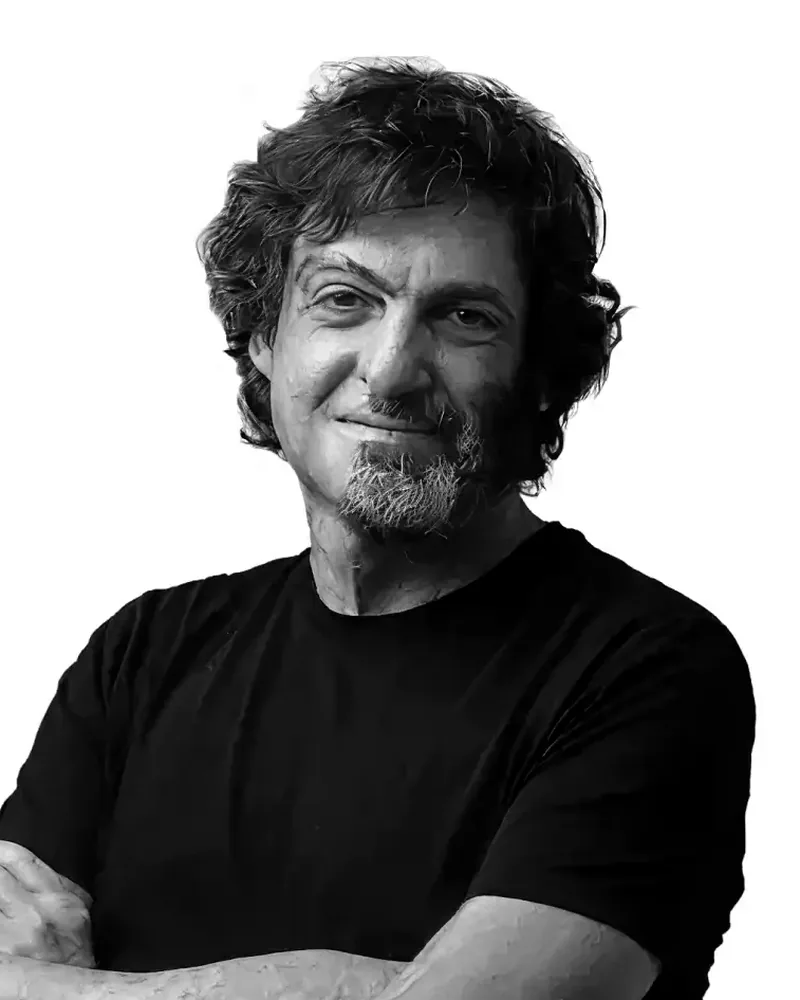
 with Assaf Resnick


Overview
This episode is with Assaf Resnick – Founder and CEO at BigPanda, an AI Ops SaaS platform that recently raised $190M – valuing the company at $1.2B. In this episode we talk about Assaf Resnick’s journey from startup to billion dollar unicorn.
Key takeaways
- Resnick argues the first 10 customers exist for product market discovery, not revenue, so founders should never outsource that process to salespeople.
- BigPanda turned down a life-changing acquisition offer in 2015, before it had meaningful revenue, betting the opportunity was bigger.
- The company stayed in a weak market for years until 2017, when enterprises finally began moving mission-critical workloads to the cloud.
- Sales grew 155% in 2021, with the fourth quarter setting a record for new customers added in a single quarter.
- BigPanda invested early in content marketing, starting with a project called the Monitoring Escape that mapped about 200 vendors in a fragmented IT ecosystem.
Chapters
About the guest
Transcript
Auto-generated from the episode audio, so expect the odd mis-heard word. Timestamps open the video at that point.
So to get those first 10 customers, you have to meet 100 customers. And you're going to get a lot of no's. And you're going to hopefully learn from those no's. So those first 10 customers are not an exercise in sales. They're an exercise in product market discovery. And you can't outsource that to sellers. Because the point is not to sell. The point is to listen and learn and adapt. You're listening to the Growth Manifesto podcast, where we host in-depth interviews with business leaders, authors, industry experts, and entrepreneurs
with a singular focus around business growth. At the end of each podcast, we want you to walk away inspired, to think bigger, and to have actionable takeaways you can apply to improve your business. Each episode is like a masterclass on a key topic, so make sure to browse the episodes to find the topics that are most relevant to your biggest business challenges today. This podcast is brought to you by Web Profits, a digital growth consultancy that helps challenge your brands drive growth in a complex and fragmented digital landscape. You can find out more about Web Profits at webprofits.io.
Now, let's get into it. Hello, this is Alex Kleanthus, and today we're talking with Asaf Resnick, the CEO and founder at Big Panda. Now, Big Panda is an AIOps platform that recently raised $190 million, which valued the company at $1.2 billion. Today, we'll be talking about how they built a billion-dollar company in 10 years within the AIOps space. And we'll explain what that is shortly for people who don't know what that is. But first of all, hello and welcome, myself.
Thank you, Alex. Good to be here. Great to have you here. And such a great story because it's been 10 years plus now. The company is now worth over a billion dollars. So now it all seems like everything kind of had a plan, but that wasn't always the case. And I'm kind of interested in talking about the journey. But first, just for the audience, could you quickly explain exactly what Big Panda does and who does it serve? And what does AIOps mean for the people that don't know what that is? Absolutely. So we are a software company. More specifically, we are a SaaS company, meaning we deliver our software as a service that does AIOps.
And so AIOps is kind of a fancy buzzword for how do you use artificial intelligence and machine learning to scale a function called IT operations. And so what does that mean? IT operations is folks typically at enterprises and large enterprises, but have to keep all of the IT infrastructure that powers business services running.
So what does that mean? It means if I am an e-commerce platform and someone comes to buy my shoes online, there's a whole data center or cloud that makes that digital transaction possible. And that data center has things like servers and storage devices and networks and all these technical boxes and components that have to work together so that me as a customer from shoecompany.com can go online and have a really good digital transaction.
And today, every enterprise is a digital enterprise. So we buy our airline tickets digitally. We are doing this interview digitally, educate our children digitally, find groceries digitally. It's a digital economy more and more. And underpinning that is all of this infrastructure of servers and storage and networks and clouds that keep all the digital economy running. Turns out that keeping the digital economy running, being the plumber for all of this digital infrastructure is really, really hard.
Because the digital economy is growing, meaning the size of the infrastructure is growing. You just have more stuff that can break. Plus, as more and more enterprises are moving to the cloud, things are just getting even more complex and moving even faster. And so that's good news because it lets companies innovate and do so with high velocity. But for the folks in IT ops, IT operations, whose job it is to keep all that stuff running, keep the lights on, that's not good.
It's a big challenge because now they have lots more moving parts, more servers, more storage arrays, more networks, more applications. And those things are moving faster and breaking faster. And that's creating this tsunami of data that people in IT ops engineers have to be able to consume and understand and react to. And they just can't keep up. They're drowning in too much scale, too much data, too much velocity, too much change. And so we come and say, well, that's a very applicable problem set for AI and machine learning.
AI is a generic technology. It's good at taking large sets of fuzzy and fast-moving data and turning that into actionable insight and automation. And so we do that. We do it for a very specific use case called how do you automate digital IT operations? And that's what we do. And you established this company back in 2011, 12, is that right? 2012, that's right.
2012. And so where did you get the idea for this? So what were you doing before you founded Big Panda? So before I founded Big Panda, I was a venture capitalist as a VC investing in kind of early and mid-stage companies. And I left that venture capital to start a company called Big Panda. But it didn't do what Big Panda does today. The way that we got to what we do today is kind of scratching our own itch after having a monumental failure.
I've got to ask you about the failure. I've got to, I mean, this is called the growth manifesto. And for growth, most of growth is failing. This is what I always say, right? You know, the success of a company, the success of an entrepreneur is fail, fail, fail, fail, fail, fail. And then if you hit something with all the failure, that's what scales up, right? So what was the growth moment that started with failure? Sure. And then even from there, it was not smooth sailing.
Happy to talk about that. So it started with, you know, we started this company. We do AIOps for IT today. And we originally started the company with a very different direction around how do you do AI for advertising online? how do you use AI to drive smart targeted advertising? Light years away from what we do today. And we founded the company, we recruited our seed funding, we brought in early employees, very smart engineers,
and we spent a year going after this original idea of targeted online advertising. And after a year, we just kind of hit a wall. It was clear that the direction we were taking wasn't the right direction for all sorts of reasons. And so we kind of said, hey, well, what are we going to do? We've still got about half of our funding left from our regional seed round. And we've got some really smart engineers.
And there's a good culture. And we all like each other. And what do we want to do? And turns out that there was an itch that we've been scratching for ourselves that turned into the genesis of what we do today, which is, you know, when you're running online advertising, it's a lot of people surfing the internet at any given moment and serving those people ads requires some pretty significant, you know, IT infrastructure. You've got to build what's called web scale infrastructure to be able to do things at a scale of hundreds of millions of concurrent users at any moment.
So it's performance intensive, latency intensive. And we had built a modern IT stack based on like a lot of other startups do with lots of clouds and open source components and SaaS components and lots of different best of breed moving parts, which is how most people build a data center today. They don't buy everything from HP or IBM. They pick the right tool for the right job. And so we had 20 different tools and 20 different environments.
And when something broke in our performance-sensitive, latency-sensitive environment, it's really important that we find and fix that problem quickly. But we had 20 different silos on our stack that didn't talk to each other. It was the tower of valuable. And so it took us forever to find and fix the problem. So we ended up just hacking together some very basic software that could help us find and fix issues faster. No AI, no machine learning. And so after we hit a wall with the original business idea, we said, hey, here's a pain that we've been fixing for ourselves.
And we were six or seven engineers and we were using the same tools and clouds as everyone else in the world. maybe everyone else in the world has this problem too of how do you stitch together this frankenstein of an it infrastructure and so that was kind of the genesis of the idea and that's that's how we got started through failure interesting so it took you a year to figure out the thing that doesn't work and then there was something that was happening on the side
that became the main product, right? And then from that point onwards, I'm sure that the sailing wasn't smooth, but that was the idea that kind of sustained until today. Is that right? Yes. We're the same company with the same idea. It's morphed and evolved. And certainly it was not a straight line since then. But yeah, that was the genesis. So what's interesting about this conversation with you is that you started in the venture capital space.
Most people start from a different space, right? So what was it like transitioning from the VC space, you know, where, you know, so you were looking at all the deals to now you are trying to raise the money. You know, was it easy because of the experience which you had and the connections which you had? It's a good question. It was very different, but I would posit that, you know, raising money as a CEO is an important skill, but it's like number 13 on,
of, on the list of important skills that you need. You know what I mean? So yeah, coming from venture for sure, helped me understand the mind of venture capitalists and be able to, you know, pitch well and raise money. And, and we've always done that well. and we've always been well capitalized to go, you know, realize our vision. But, you know, that can't be your superpower as a CEO.
That's not enough. No, it's definitely not enough, but it is helpful to know. It's like when somebody has never actually interviewed somebody, right? And then they get some promotions or they start a company and they actually start to have to hire someone, right? And then they're on the other side of the table and then they do that about 100 to 500 times and then if they have to sit on to the other side of the table again they're going to be able to handle like to be able to handle the interview in a very different way because they've done it 100 times before so i'm sure that that probably helped you
a lot but that's not the focus of this conversation it's just interesting to think about quick one because it's such a it sounds like such a technical kind of business yes like your background yeah so so are you a technical founder like a person that understands the tech or are you someone who's an entrepreneurial founder who can just pull together the people or are you like just a hybrid of that yeah well so you know I'm not an engineer by trade my uh my father was a electrical engineer and a software uh programmer and he
always told me in high school that if i don't go learn engineering i'll be homeless so as a good parent yes so i went to go study business and history just to uh just out of spite um so no not not a uh not a technical co-founder didn't grow up in my career as an engineer grew up more on the business side um but we're running a business this is a business and in the business
in this business you have to be very user-centric and customer-centric and you have to have deep empathy and understanding of their world and their work and their pains and their aspirations and you have to but you also need deep understanding of the ecosystem in which you operate and you have to have a deep understanding of how to sell and market and deliver you have to be able to you know position your offering and deposition your
competition you have to know how to hire you know spot and hire really good executives and you have to know how to create a really cohesive team of executives that will be a first team and win together you have to know how to build a great culture in the organization and so you know yes product you know technical understanding and more than technical understanding customer user empathy it's critical critical without it you know nothing else matters but there's a lot of
other ingredients that go into the soup uh so when i hear you speak um it sounds like you put together everything in the beginning you know based on what you saw from pictures and what you saw was important to raise money now what's interesting is that you're not the technical the technical founder for a very technical space right so you know there's so many stories of non-technical founders starting a technical business right and then just not succeeding
right so how did you ensure that you hired the right person who could actually who could ship product you know not who would get stuck in the weeds of let's go into this machine learning language for about six months. Oh, that's not the right one. Or this one, right? Because I've also had the experience where I hire some developers. Obviously, I didn't have the right experience for it. And I couldn't talk their language. And so when they had problems for me,
I couldn't tell them what to solve. So I think I missed a step in the chain of conversation. And so how did you ensure that you had the right person or people that could actually ship product? I did that by bringing on or partnering with a very good co-founder. So the first thing I did when I decided that, hey, I want to go be an entrepreneur,
before I really had a concept of the pain I wanted to solve was I want to go find a partner who can run this marathon with me and can create a shared vision for what we want to achieve together and then go execute on that vision. And that was the most fateful decision I made. And how did you do that? How did you find them? Uh, you know, the same way you found, you find a spouse is, uh, you meet a lot of people and, uh, you date, um, and, you know, you have a vision of what you want in that checklist for your spouse.
And that checklist never materializes and you meet, you meet the person you need, you know, not the person you thought you wanted. and that's it. I met a lot of potential co-founders, lots of VPs of R&D and CTOs and was introduced to my co-founder via a friend after meeting probably 50, 60, 70 others and it was a good fit. That's great.
That's great. And it's such a good approach because you're spending the time on trying to find the person that can help you to go along the journey, which is super, super important, right? And it's obviously succeeded now, right? And we're going to talk to the journey a bit more in a second, right? But let's talk now in this course, so you transition now, and so now you say the web advertising thing's not going to work, but now there's this solution we've got that can actually help to manage the infrastructure, right? And to optimize that. Now,
how did you start to get your first customers so you had this idea now you're like wow this is a really good product now I think there's something here let's go test it out you know how did you validate this was something that could scale up and this was something that there was a deep need for? You've got to network your little heart out and get in front of as many potential users and
as many potential customers as you possibly can. And just validate and iterate and experiment and do it again and again and again. And the more people you can get in front of, the better. Eventually, a few of those folks were interested enough to be design partners with us. So we were fortunate enough to have some nice design partners. And then some of those design partners turned into early customers, paying us
very, very, very little. But once we had that, we were able to turn that into kind of a series A that gave us the next kind of milestone in funding, then you can start bringing on a few more. Or, you know, your initial sales and marketing resources or people to start getting the word out, start kind of getting the surface area of conversations you can have with the potential market to get bigger. Then we started bringing on the initial customers,
the initial cohort of customers who are not design partners um and then you know it goes from there so sounds like you needed to do a lot of the groundwork um yourself until you hit the series a right and so like it was all about the case studies and the stories and the pain points is that correct and then yeah it is because you know in the first handful of customers, let's call it 10 customers, you're not selling
in order to generate revenue. You're selling in order to generate feedback about what's working and what's not working. So to get those first 10 customers, you have to meet 100 customers. and you're going to get a lot of no's and you're going to hopefully learn from those no's. And so those first 10 customers are not an exercise in sales.
They're an exercise in product market discovery. And you can't outsource that to sellers because the point is not to sell. The point is to listen and learn and adapt and you're going to get a lot of no's And so once you did that, that got you to the point is where there was something to scale, which is where the series A started. And then from there, you hired. Yeah. So you basically hired kind of sales and marketing, right? how long um within the journey until you started to actually advertise and market because i'm
assuming the first stage was kind of it started off like a sales lead right because that's how the majority of sas companies start right it's sales lead right it's just you know it's talking to people right at what stage or what year um you know did you start actually spending money in marketing advertising? I'd say the year was, I mean, we'd spent, so let's say we pivoted the company in 2013
to the AIOps space. They didn't call it AIOps at the time. That wasn't a thing. And then I'd say it took us two years to build kind of our first product. and take it to market. In 2015, we released the offering. 2015, before we had any revenue, any offer to release,
I remember we got an acquisition offer to buy the company. And me and my co-founder. That's a good sign. Yeah, yeah. And me and my co-founder, what about a life-changing amount of money? and we decided not to sell the company because we thought that there was something, a bigger opportunity. And so we said no and we were really proud of ourselves and macho and kind of bang in our chest that we said no, we didn't sell out.
And then we released the offering and did a little bit of marketing as well, press release and stuff like that. and, you know, crickets for almost, I'd say, a year and a half to two years. After we released the offering, you know, some fish were nibbling, and we were doing okay, but far from good, and certainly far from great. And, you know, what we did and only in 2017.
And did the market really start to take off and that's when also, you know, we expanded on sales and marketing. And we didn't realize at the time what what I know now to be true, which was we were our timing was off or market timing was off. We were at the right product at the wrong time. Because we were coming in 2015 and 2016, we were coming to enterprises and saying, hey, you're moving to the cloud.
You're going to have a hard time keeping your operations effective in this brave new world of the cloud. And we're here to help. And what we heard back was, hey, that's very interesting. but right now you know with the cloud we're still experimenting with cloud most of our 99 percent of our stuff is in traditional data centers and we see the public cloud and we we love the future
there but we're experimenting we haven't put kind of our mission critical assets in those clouds and so we don't really have the pain that you're talking about and if we do we'll call you and only 2017 did they start calling us. 2017 was I think when we saw this kind of tipping point in the market of enterprise adoption of cloud. That's when they started putting big, their most important services in the cloud.
And then they started waking up to, oh, managing this stuff is really hard in the cloud, I need help. And so, you know, it took us five years of kind of first the initial pivot and then just pushing that ball up the hill to kind of be at the right place at the right time. Pre-revenue, right? Is that pre-revenue for five years? It was pre-revenue. I mean, we were, you know, two, three million dollars in sales.
so not completely pre-revenue but not you know not today crushing it not today not today and even yesterday you know even at the time you were under the weight of hey this is really hard and it's not taking off as well as it should be and why what did you say to yourself you know when you turned down that the life-changing offer you know with you and your co-founder and then there were crickets for two years what kind of things were going through your head at the time because
you know these are the times in life where self-discovery happens when you're looking questioning the decisions which you make in life and the good news is it's turned out well but but just for that period that's a long time to have those questions and so yes what were you thinking and how did you handle that that period in time you know those were like you see a lot of entrepreneurs and kind of the technology, you know, writers talk about, you know, self-doubt
and moments of dark moments where things are looking very, very bleak. And, you know, you hear things around, you know, the per capita instances of depression in, you know, entrepreneurs and CEOs is, you know, orders of magnitude, and I don't know, but heads and tails more than the common population. And something like that, you realize why, because you're under pressure, and everyone's looking at you, employees are looking at you, investors are looking at you,
you know, your spouse is looking at you, and most of all, you're looking at yourself. and so much of your identity and self-worth is wrapped up into this venture that you're leading because this isn't a job, a nine-to-five job. It's so much of your identity is wrapped up into this thing. And so it's hard. It's very hard when things are going bad and going bad for a long, sustained period of time um it's hard and you know there's definitely self-doubt uh and self-criticism
that come uh and you know a lot of people don't survive that they just say hey why am I doing this why do I need this I can go have a job and take the stress out of my life take this uncertainty out of my head uh and there are definitely moments where I came home and told my wife like why didn't I sell that company you know what was I thinking uh and then you get to a certain point where you kind of say yourself look I'm driving down the highway I keep looking
at the wall I'm gonna hit the wall the only way I'm gonna make this is look at this look at the road ahead start driving and yeah the wall's there but I can't keep looking at that otherwise that's failure guaranteed i might not make it this way i'm certainly not going to make it that way and so yeah you with time you just learn to live with the self-doubt and the self-criticism and just move forward just you get stronger you don't give up and so yeah but so what would you because
you know there's a ton of sass startups out there there's a ton of startups out there there's a ton of people and it's probably the majority of people um the majority of entrepreneurs actually they don't succeed right like there's just it's the majority of things actually just don't succeed right so i mean you stuck with it for years and years and years um how long would you suggest somebody sticks at something for no because this is the big thing right because people can't pay rent sometimes can't eat you know they can't pay the mortgage they got their kids in
school and they said i'm going to start this entrepreneurial path or they're young and they think hey look I'm going to start this thing and it just doesn't happen as fast as what you think ever that's just the thing that's the experience I've got like in business everything takes about 10 times as long right but like how what would you say to people you know like how long should you stick at something before you say hey there's like there's not something here or how should people think about it especially to the founders and you know the people that are Sure. Still struggling, still, you know, basically, you know, so in the grind, still trying to hit that scale point, you know, so what would you say to them?
Oh, man, I'd say a lot to them. First of all, there is no formula, obviously. And the answer is extremely, extremely subjective. uh it's not a math equation uh but you know there's a few ways to think about it i'd say so one is to try to be as you know and you got and you got to layer on these different ways of thinking about it together
they're not in isolation so one is hey how do i be as dispassionate as i can about the opportunity that i see so pretend that you haven't invested the last three or four years of your life here and that your self-worth is wrapped up into this thing and so is your reputation uh and you know you're an outside uh spectator and you're looking at the business and you're saying, well, does this business still make sense?
And, you know, is there, does it, knowing what I know now, would I start this company again? And do I think that there is a future? Like, so for us with the advertising technology, you know, one year into it, I'm looking around, I'm saying, this doesn't make sense. You know, there are all these things that I thought to be, that I thought were true or not true. and I've learned a bunch of other things I didn't even think about and for all these sorts of reasons like I just don't think we can build a big company here
and I probably dragged my feet for six months longer than I should have because of emotion and you know shame of failure and you know it's just really easy to lie to yourself really, really, really easy to lie to yourself. And so you want to be as dispassionate as you can on the one hand. You want to understand, you know, is there a huge market here?
Like when we said, when things were tough for us, this company, you know, with the new iteration apps, you know, there was always for me, Hey, the market size is huge and the pain is real. and so if someone can solve this it's gonna build something really really big and I want to be the guy to go do that I'm not sure I know how to do it I'm not not doing it at the moment but I see what it can become um so that's one aspect that you want to make sure that
you're not lying to yourself around what you have there's a lot to be said for not quitting and not giving up and are you doing this because you know are you thinking of quitting because you've taken a dispassionate look and you just don't see a good path to success or are you doing it because you want the pain to stop and you want the self-doubt and the stress and the sleepless nights and all that to stop.
And so that's a different thing. That's a more emotional decision. And even there, there's no right or wrong answers. You know, you ask a lot of the most successful entrepreneurs, you know, what was your secret to your success? And they'll probably say something, including, I didn't quit when shit got hard and none of these you know success stories had it easy everyone had to drag themselves through a field of glass that's just how it is yeah I always say um you know that
that um the trait of a successful entrepreneur is their ability um to take sustained pain for years because it's literally just solving problems you know and you know like how long was it until the business was like successful like in quotation marks right you know it's just like oh cool it's finally happening now you know what I mean it's like it's not the two three mil which is better than zero to be clear but it's like all right now ah now we've got good problems
now we're cooking yeah so i'd say that you know 2017 was when you know we're five years into it 2017 comes and you start seeing um you know pick your metaphor shoot coming out of the ground or initial signs of oil or whatever you know whatever you want uh that's when things started That's when the wind started shifting and we said, hey, we think that something's going on.
Right. And in 2018 was, hey, this is really picking up. And then 2019, I think, was when we said, hey, OK, there's something real here. This is this is happening. 2020 came along with COVID and changed the topic. But I'd say it took us probably two years in 2017 for that tipping point to really solidify into the whole world's moving cloud.
And this trickle is now a flood. And so in 2021, sales grew by 155% with the fourth quarter that set the record for the number of customers added in a single quarter what what happened in that quarter you know so so now we're talking what are you nine years in and now it's starting that kind of hockey stick kind of acquisition thing you know so what happened in 2021 yes was it because of the pandemic
everyone was in the cloud you know like is that what was happening or the transition was happening or was it some other factors that just hit a point in the business? Yeah, I think it's more the latter. If you think of the pandemic, I think there's kind of three groups in the pandemic, three types of businesses, because of the pandemic, folks that just got a turbo charge from the pandemic. So think of Zoom or all sorts of digital services
and entertainment and all sorts of... Then there's folks that got absolutely crushed by the pandemic. So anyone having anything to do with travel or retail or any kind of physical business, well, the world, the physical world was closed for a long time. And then there's everyone in the middle. That was, you know, we were in the middle. So because we ride on a long-term trend, which is enterprises are moving to the cloud. That's going to be a 30 to 40-year journey.
and it's going to have multiple economic cycles on that journey and multiple world-changing events like COVID, but it's going to keep trucking. People aren't going to stop moving in the cloud. The tectonic plates are shifting. And so it probably on hold was an accelerator because the pandemic accelerated digital penetration of our economy.
So we used to go shopping at the grocery store. Now I get that stuff delivered. I used to have meetings in person. Now I do them over Zoom. And so digital services just became overnight, 10x more velocity in terms of penetrating the way into our lives. And digital infrastructure underpinning that wasn't getting any easier to run. So at net net, it was a good thing for our business, but the real acceleration came from just, we just started maturing more and more as a business.
And, you know, you bring on executives, you build teams, you build capabilities, you add muscle to the organization and you get bigger and bigger and bigger. So it's just natural evolution of the market and the company. No, no, you know, one crazy thing happened and suddenly everything's different. Yeah, sure. Especially because enterprises, they do move slower generally and they do have a lot of money to sustain the economic cycles kind of oftentimes, you know, which is interesting.
Quick tactical question because, you know, I was looking at the website and the marketing and so on and you've got this content hub, which is something special. You've got the hard knock life. NIC actually stands for something like in the space, right? You've got the big panda. You've got the university. You've got case studies. You've got the webinars. You've got the IT Ups, Pulse Magazine. You invest massively in content. How important is content? Like, okay. So I assume that content is super important
because you've got pillars upon pillars upon pillars of content. Is this a core strategy for you to engage over the long term is with your customers or your potential customers? Yeah, absolutely. You have to keep in mind that we are innovating a new category of how do you use AI to automate operations. That category has never been around.
So you have to do a lot of evangelism. Because if you're selling into an existing category, which is, hey, I've got a new flavor of ice cream. Well, everyone already knows what ice cream is and why it's tasty and delicious and why they want to buy it. But when you're building something brand new, it's you got to invest a lot more first in articulating to people that they have this pain. That's first and foremost,
is part of kind of category creation is evangelizing the pain. Because imagine, you know, before there was aspirin or Tylenol. And, you know, you had to articulate people, hey, you've got this kind of pain back here in your neck. That's called a headache. And we've got the headache medicine. And so they knew they got it, but you have to articulate it because it's like the frog in the frying pan. Where, you know, they've just been living like this forever. You know, putting out firefighting all day long and IT ops and going from one crisis to another.
that it just is the status quo. You don't even know, like, wait, it doesn't have to be this way. The way things are today, they're kind of fundamentally broken. And so you have to educate folks about the problem. And then obviously educate them about your vision for what the solution can be, which is, hey, there's this thing called AI ops, AI. and not only can AI drive your car,
if you have a Tesla, and help you find great things to buy on Amazon, but it can also automate a lot of your enterprise workloads, including IT operations. It can help you run your most mission-critical operations. And if you do that, you're going to save a lot of money and you're going to be able to run a lot faster and you can be able to make your customers happier. And so you have to evangelize and certainly content marketing
and thought leadership plays a huge, huge part of that. And so what was the first content play that you did? Because you've got like, I think around like eight streams now. Yeah. What was the first one? What was the first one you said, okay, we need to engage. We're going to start creating content. We're going to do X. What was X? I think X was what we call something called the monitoring scape, which is kind of a playoff
the word landscape. And it touches on the problem that we solved. One of the problems we solved for is it's a best of breed world today. No one's buying all of their stuff, like we said before, from one vendor. No one's buying everything from IBM or HP. We're buying 257 different tools from 257 different vendors. And now they've got this fragmented fruit salad where nothing speaks to each other and it's complex and people have to connect the dots.
And so one of the first things we did was we created this thing called the Monitoring Escape. We basically mapped out the different kind of core segments that have to do with IT operations. things like observability and monitoring and others. And we mapped out who are the top 200 vendors in that ecosystem. And we helped people take an ecosystem, which is very crowded, very hard to understand, and map it out in ways that were very, very useful to practitioners that also happened to be our customers.
uh and so that was a very very you know that was our first that's a content marketing motion and and you know it was very very successful helped us get a lot it wasn't that we was advertising what we were doing but it was adding you know thoughtful and valuable insight to our customers and integrating with what you're doing like in yes yeah and being very close to what we're doing Very close. Yeah, this is great. This is great. I am jumping around, but this is all about the
story of Big Panda. And I really appreciate the sharing so far. So it's a billion dollar company now, you know, so now I'm sure that you have all the accolades, right, of like, congratulations, now the company's worth over like a billion dollars, right? How has life changed since the company's now, you know, just worth over, you know, $1 billion, you know, it's 1.2 billion, you know like has life changed much like has there been you know small people out of the woodwork or is it all kind of the same you know what's life these days like no it's pretty much
the same uh you know with i'd say the one thing that changes appetite you know with success comes appetite and um you know when i started the company getting to a billion dollars felt like an unachievable vision. And now it's, hey, there's a lot of companies that need help. There's a lot of folks in IT ops that need help. And we're the market leader today
that can go do that. And we can build a very, very, very large company by doing those things. And so the appetite to go do something meaningful uh it's definitely grown for sure so so the confidence right and dollars is just a milestone yeah and so now so so the belief is the biggest one right so the belief is the biggest and this is a quick one i want to touch on as well and um i think they
talk about it basically in the star principle is that yeah you want to be the number one company in a market that is growing at least at 10% a year. That's you, right? So now, how are you, because you already have the first mover advantage now and there's a lot of things which you have which are hard to catch up with, right? How are you thinking about sustaining that competitive edge? Because I'm sure because of your success, there's a ton of competitors now going,
I can do AI ops, how hard is that? Because all entrepreneurs, they're very confident, right? You know what I mean? Everyone's like, I can do that. But how are you thinking about sustaining that competitive advantage now that are the market position? Sure. You know, there's no one silver bullet. So typically things break up around, you know, things you're doing on the product and technology, and then things you're doing on the go to market motion. And there's things that need to be done on both fronts. So on the product and the technology side,
it's making sure that, you know, it starts with understanding, you know, what are the key areas that I have to be really, really good at over the next, you know, four to five years in order to expand my market dominance. And so being, spending time with customers and your team and everyone who's in the field selling and delivering and supporting customers
and taking all their insights and being just as clear as you can around, okay, what are the small handful of areas where as I go through the craziness of life and the company gets pulled in a million different directions, where are the areas we cannot lose sight of? And for us, it's around maintaining our leadership in AI. It's around maintaining our leadership and being this kind of connective tissue across this very fragmented best of print stack. It's being fast and easy
for our customers to try and buy and use. And it's making sure that we are not taking, you know, continuing to invest in those areas, making smart decisions to expand the moat around our business, continue to delight our customers and just, you know, stay focused is one. You know, with that comes an expansion of the size of your R&D team and your product team and be able to increase the velocity of your innovation and your growth. And on the other side, it's the go-to-market
And there it's, how do I take more share of the market faster? There's 50,000 large enterprises out there that are all moving to the cloud. And how do you get to those folks quicker and own those relationships? And how do you do that with the mix of sales and partnerships and different paths to market? How do I do that with smart marketing? how do I evolve my marketing to reach you know different audiences so it's a whole
it's a multi-pronged strategy you know once you've taken Normandy and you've created the beach hey well now you gotta go take Europe and that's a multi-dimensional campaign yeah and you know how's the pressure these days now that the company's worth so much right you know how does it compare to back in 2017 you know when it was you know just at that crux point because now it's a different type of pressure right yeah it's a much more enjoyable type of pressure then you know the first you know until you have product market fit it's a very existential
pressure which is am I going to live or am I going to die right so it's very binary and here it's it's hey there's momentum happening the success happening and okay i'm driving the car and how do i optimize and how do i get bigger but you're it's offense not defense and and it's a lot of fun to play offense you know and and so then um there's one or two final questions um yeah
if you had your time over is there anything which you would do differently in the journey oh yeah you know um i'm just a very different um person than I was 10 years ago when I started this company. I've learned a lot of things, mostly the hard way. I started the company and never managed a single person in my life
and had to learn what being a great leader means and being a great manager. That took a long time. and you know yeah a million different things I'd do differently but that is refreshingly honest you know because often people say no I would do everything the same it's like really I think literally it's a it's about 10 years of mistakes right so I would do all those mistakes the right way the first time but you can't often do that you know like to become a good leader I mean you
You have to be a bad leader first. Like just to become fantastic at anything starts with you not being that good at it. Like it's not possible to just be good at something, is it? Like I wish it was. I mean, maybe some people are born perfect. I was not. I was not one of them, you know? Yeah, great. And so for the people that are listening who are working at an enterprise that think, hey, this big panda thing sounds pretty interesting. So what kind of companies are ideal? And what's the process of engaging with Big Panda?
Sure. I mean, the ideal customer is typically an enterprise, not a startup, but someone who's got problems of scale of their IT infrastructure and their cloud infrastructure. They're having a difficult time managing problems in their data centers or the cloud environments. They're doing incident management and they're just find themselves firefighting all the time or having to hire more and more people to help firefight or their best engineers.
That you want to be out there developing code and innovating new products are getting pulled into firefighting all the time. So if that's you, give us a ring. And, you know, it's very easy to find. Just go to bigpanda.io, our website. And, you know, there's plenty of ways you can reach out to us. Asaf, thank you for coming on the podcast and sharing your story. It's such a great story. I congratulate you so much. And it's really easy to congratulate someone after, you know, 11 years in business, right?
Yes. And congratulations for sticking the path and for creating something that is significant. It's an amazing story. I thank you for sharing it. And I hope this has been inspiring for all similar founders and startup entrepreneurs out there that are going through some of the challenges that we spoke about. So thank you so much for sharing your story on the podcast today. Thank you for having me, Alex. Thanks for listening to the Growth Manifesto podcast. If you enjoyed the episode, please give us a five-star rating on iTunes. For more episodes, please visit growthmanifesto.com forward slash podcast.
And if you need help driving growth for your company, please get in touch with us at webprofits.io.