EntrepreneurshipPersonal growthStrategy
How to use New Renaissance Thinking to build an extraordinary business
Perry Marshall explains his New Renaissance system, a daily thinking practice and seven-step approach to business built on 80-20 focus, simplification and a moat.
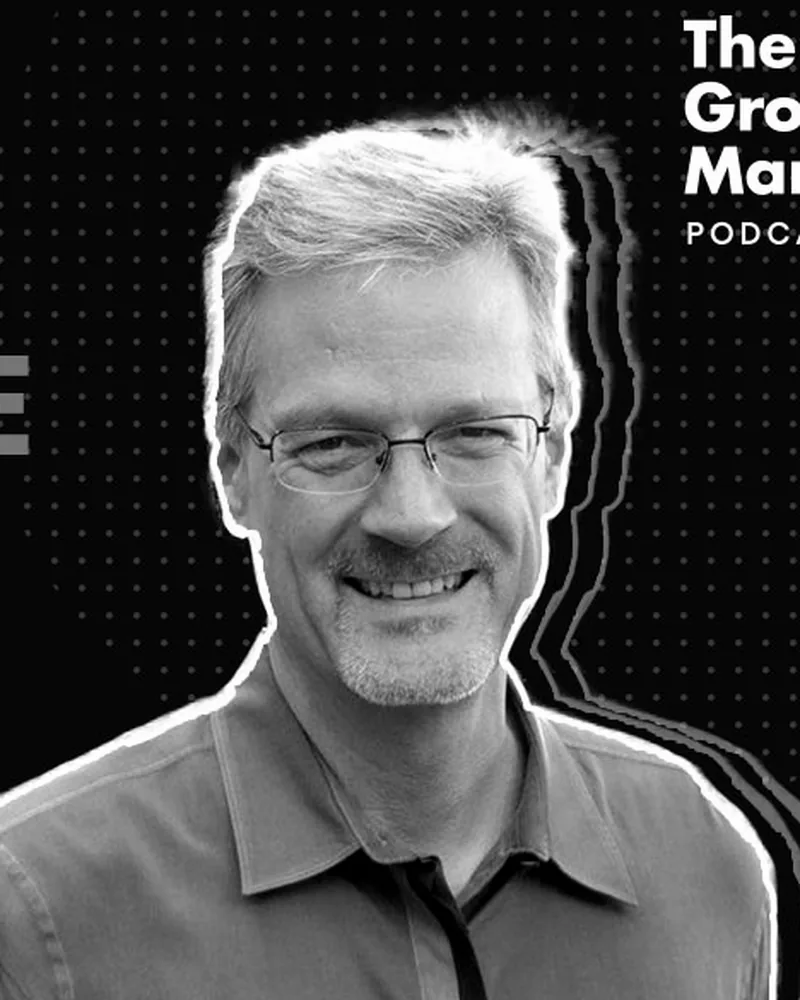 with Perry Marshall
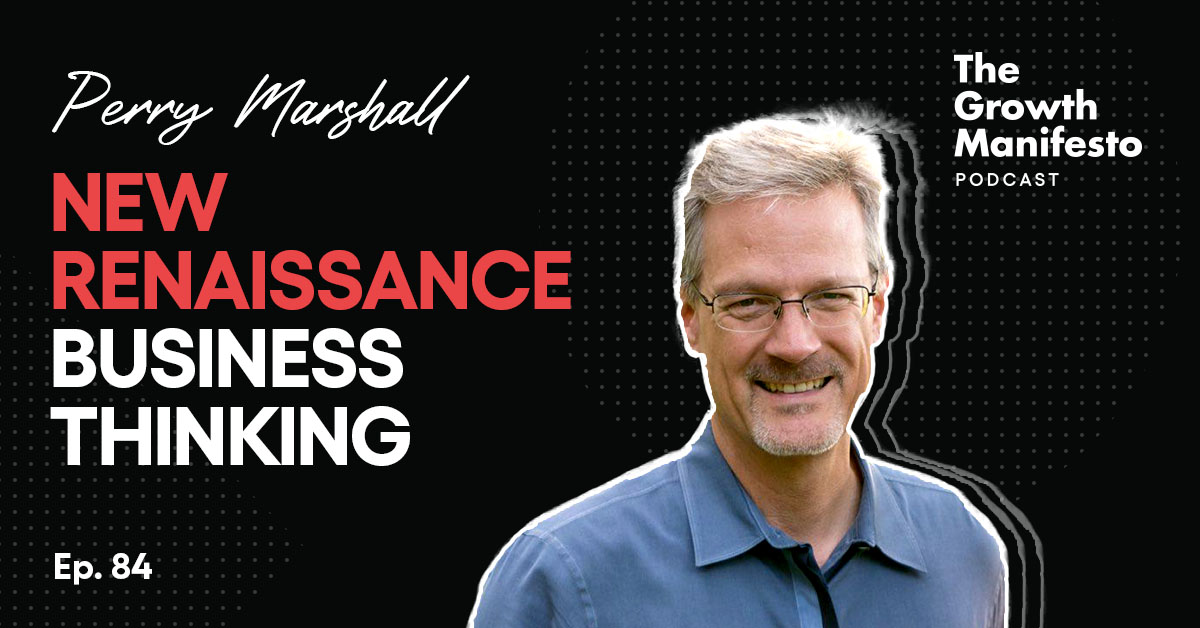


Overview
In this episode we talk with Perry Marshall – best selling author of 8 books including The Ultimate Guide to Google Ads, The Ultimate Guide to Facebook Ads, the Definitive Guide to TikTok ads, and 80/20 sales and marketing – about his revolutionary new approach to business thinking called New Renaissance.
Key takeaways
- Renaissance time, 30 minutes of quiet, unstructured thinking each morning before phone or email, changes how the whole day goes.
- Perry Marshall's 80-20 focus holds that productive hours are 16 times as valuable as unproductive ones, so the priority is deciding what to cut.
- A two-minute hold that loses one dental patient can cost 5,000 to 10,000 dollars, an hourly rate of 100,000 dollars for that call.
- Every product that becomes popular, like the iPad, succeeds by being a simplification of whatever category came before it.
- A business needs a moat, some way to stop competitors copying it, or it will not keep its advantage for long.
Chapters
- Intro and Perry Marshall's bio
- What is the New Renaissance
- Starting the day with Renaissance time
- Why big questions matter more than answers
- Overview of the seven steps
- 80-20 focus and the value of time
- Simplifying products and finding your niche
- Building a moat and playing hard
- How to join the New Renaissance
About the guest
Transcript
Auto-generated from the episode audio, so expect the odd mis-heard word. Timestamps open the video at that point.
80-20 says that your productive time is 16 times as productive as your unproductive time. Well, that means, yes, the 16 times is important, but the most important thing is what you decide not to do. You're listening to the Growth Manifesto podcast, where we host in-depth interviews with business leaders, authors, industry experts, and entrepreneurs with a singular focus around business growth. At the end of each podcast, we want you to walk away inspired, to think bigger, and to have actionable takeaways you can apply to improve your business.
Each episode is like a masterclass on a key topic, so make sure to browse the episodes to find the topics that are most relevant to your biggest business challenges today. This podcast is brought to you by Web Profits, a digital growth consultancy that helps challenge your brands drive growth in a complex and fragmented digital landscape. You can find out more about Web Profits at webprofits.io. Now, let's get into it. This is Alex Clantis and today we're talking with Perry Marshall.
He's a bestselling author of eight books, including The Automate Guide to Google Ads, The Automate Guide to Facebook Ads, The Definitive Guide to TikTok Ads, plus 80-20 sales and marketing. Today, we'll be talking about his new approach to business thinking called The New Renaissance, which I'm super excited about because I came across this about two months ago. And since the first time I've heard of it, I've been implementing it every day and it has literally changed everything I have done in business. And I have learned a lot from productivity and sales and marketing and this overlay, I cannot talk highly enough.
So I'm really excited about this conversation because I think it is the thing that the majority of people in business actually need. And it's very counterintuitive. So that's my quick intro and welcome, Perry. It's great to be here. And what's thrilling most about talking to you today is that Jay Abraham sent you that thing and you digested it and you just started doing it. And now you're just all excited. Like, you're not faking this. Like, I've done lots of these interviews. I know when they're just going through the motions, you're switched on.
So I can't wait to talk. Yeah, fantastic. And yes, so Jay Abraham, so I had him on the podcast and then we started to do some things together and he's been helpful as well. But yeah, but he sent me this video, which you had created. And for him, I think it was just a, oh, hey, just check this thing out. You know, this is something which could help. And I don't think he knew how much it would actually help. So that's the intro, but let's get straight into it. Cool. So what is the new renaissance? Well, I think 500 years is too long of a time to go by to not have another one. And it's time for another one. I feel like the world is pregnant. In fact, it's kind of in birthing pains and everybody can feel it. Everybody does like, and it's not just having a pandemic or anything.
It's like, you know, and I remember the 1990s and there was problems in the world, but the world wasn't having an existential crisis. Now the world's having, it's like, where is this all going and what's going to happen? And what about all this technology and where's humanity going? And why is there so much polarization? It feels like everything's like creaking and groaning and pulling apart at the seams, okay? and I've been talking about at least for 10 years like I want to start a new renaissance we need
another one if we could get one percent of the people in the world like we don't need everybody by any stretch we just get one percent of the people in the world to stop sleepwalking amazing things would happen and and so I feel like the world is very pregnant and like well how do you create a new renaissance oh i i don't know how should i know but what i do know is i can have my own renaissance and i know how to help some other people have one and we have to think
differently about time we have to think differently about opportunities there's some old thinking that we've got to shed so on with it yeah and and and it's an interesting concept right because when you say it's a renaissance, it is a different way of thinking. It is a different way of living life. Is that kind of how you would define it? Because it's such a word that kind of people think about kind of the art renaissance, you know, that's what they think about is when they hear about it, right? And this is from a business perspective or from like a life perspective.
Well, if you go back to the first renaissance, what was going on and what happened? So what was going on was contrary to what you typically hear. You typically hear, well, there was the dark ages, you know, and then we came into the light. And honestly, I don't think there was a dark ages. Most historians would say, no, that's not an accurate term. What was really true was there was a lot of little things that people were working on. They invented eyeglasses and nobody
knows who did it they invented windmills and nobody knows who did it and there's all this stuff that was brewing but then you hit some tipping points you had the printing press and you had the economic situation in Italy and you had all these artists and like there was a market for music and art and inventions and science and it was kind of the stir fry of you know you've got these these ideas that are brewing and you resurrect a little bit of some of the ancient
greek stuff and like and the world just catapults into this whole other place in the space of about 100 or 200 years to where it was almost unrecognizable where it ended up compared to where it was and i felt for a long time that we are in one of these eras and like this is not something that happens in one year or five years this takes longer than that but after it happens you can look back and you go well you know that Leonardo da Vinci guy he had something to do with it you know
and Martin Luther had something to do with it Gutenberg had something to do with it I think Copernicus probably had I think Galileo had something to do with it right and you can you can piece to like well you know I think um I don't know Mozart maybe that's a little little late Vivaldi right and and I don't know if you've ever been to Florence Italy it's one of the coolest cities ever like you go around you go all these museums you see all this incredible stuff and you see the evolution of the art and and it's it's so incredibly inspiring like I actually am getting
emotional just thinking about I was there four years ago and in this feeling like the world is yearning for another one of those eras, but it's got a piece of chicken caught in its throat, or it's like, it's like, oh, we're pulling the cord on the lawnmower and it's not starting. And there's just all of this. There's a lot of frustration, right? There's a lot of things
wrong in the world. Nobody needs, you know, an expert to tell us that, but it's just ripe. it's just like we're on the cusp of something. Yeah. What's interesting. Isn't that better than, oh, you know, it's all going down, man. Like it's all going to burn. Which is kind of how it feels sometimes with all the stuff that's been happening in the last few years. Look, you know, I tend to go through hope and the opposite of hope, right? I don't want to speak too negatively right now. Right.
Like, cause I can see how the world has ended up how it is right now. And without going into that kind of side of things, just from kind of the business perspective, I can't be more efficient. I've done every piece of efficiency, productivity, time management training. I've got every tool. I've got every piece of software. I've got my schedule. I've got everything possibly done. And I've been running and I've been sprinting for like 20 years, right? And so when I heard about your approach to this, it was really interesting because it actually, it's not about how quick a person can produce stuff across a day, right?
Because that's not where excellence is. And that's not basically where change is, right? It's actually changing how you approach every part of every day. And really, this is the key word. And this is the key word that I don't think a lot of people actually use is thinking. Thinking seems to be at the core of how the system actually is constructed. And we're going to be speaking about the seven steps shortly. But I just wanted to just quickly touch on the value of thinking and how it's the least used part of our kind of daily lives.
We are all conditioned from childhood without even realizing it. Look busy. Whatever you do, just make sure you look busy. As long as you look busy, you're not a bad guy. As long as you look busy, you're not in trouble. As long as you look busy, well, it may not make you a valedictorian, but we'll at least pat you on the head, right? And like Lily from kindergarten. And one of the most scorned things is people who don't look busy.
But how are you going to give serious thought and consideration to what you're going to do next if you're always running, running, running, running, running? And if you're trained and bred to have the appearance of doing something useful all the time, whether or not it's actually useful. I mean, a lot of people are like digging a hole and filling it up and digging a hole and filling it up every day, right?
What would happen if you had permission? It's actually okay to do nothing for a whole hour. What if it's actually okay to do nothing for a whole day? And nothing is not necessarily nothing, okay? But let's talk about how I start my day. I have not missed a day starting my day this way in nine years, not one.
It's the most important habit that I've ever cultivated. I get out of bed and I might get myself a cup of tea and I might turn on some music, but I sit down with a notebook and I'm alone with my thoughts and my prayers and my inspiration. And that is my sacred space. It's my thinking space, but it's also, it's not just head thinking. It's also heart thinking. I don't mean that in some froofy, like, you know, like blathering emotions all over you
way. I mean, what is your intuition telling you? What is your gut telling you? You've got a situation with an employee. Consult your head. consult your management books. That's all fine. But what situationally feels right about how to handle that person? And if I pray and ask for an answer, what answer do I actually get? Am I ever quiet enough to actually, like, if I was going to hear an answer, am I ever quiet enough that I
would actually hear it? Or is my mind just so whirl a gig with so much information and so many blogs and so many podcasts and so many TikToks that I don't even know what my own inner voice sounds like. So I start my day that way every day. I call it Renaissance time. And I don't know how to describe it, but there's a point at which I know, okay, I'm good. I feel right in the world. My armor's on. Now the day can start. And social media doesn't get to be in there. And email
doesn't get to be in there and the demands of other people don't get to be in there. And I realize this might sound like some kind of crazy luxury, like, oh, oh, well, I guess he must walk on imported air and he probably doesn't have any bills to pay. And he's probably has a few money. Well, I could never do that. Well, none of that is true. OK, I got a family. I got a business. I've got payroll to meet and all that kind of stuff. Okay. But like, I had a conversation with
one of my clients, his wife had just had a baby. So now he had two kids and his wife is nursing and we met up and we're having breakfast. And so his life is I got a toddler and I got a baby and the baby wakes up three or four times a night and he's crying. And sometimes, you know, my wife will go feed him and sometimes she kicks me in the back and I got to go get the bottle out of the refrigerator and I'm living this life he said it's crazy and anybody with kids knows exactly what I'm
talking about he says if I do my renaissance time my day goes okay he said if I don't do my renaissance time my day goes to crap maybe it's metaphysical you could call it woo woo if you want I don't care, but there is something about getting your body, soul, and spirit aligned before you go into your day that makes everything work out better than if you don't. And it's like you just have to give respect to the most important priorities, not just
by paying lip service, but by actually doing it. you exercise that listening ear and you pay attention to discernment and wisdom. And notice what I'm telling you is not just intellectual math equation thinking, it's whole human being thinking. Yeah. And it's, I think I mentioned that, like, I kind of heard about this when I was on holidays, I was in Bali. And that's when I had time to actually just listen to it. Because again, I had no time, you know, that's what everyone says,
right and actually I actually listened to this and I was like oh wow I think there's something here and then from the next day and every and except for two days and that's it's been about two months this is something I've started the day with right and my fiance like she's like renaissance time renaissance time because all I keep talking about is how good renaissance time and she's like man you you really like renaissance time and now you know some of the team at web profits are like renaissance time renaissance because I just can't talk about it like enough And it's really simple, like just to wake up and to write for half an hour or so and to not check your phone, you know, to have that in a separate room, handwrite it, which I've been doing.
So it's on the Remarkable tablet. So it's still handwriting, but it's just not a computer handwriting, right? And it's been fantastic, right? And so basically, this is like step one of the system, right? It's to start the day with Renaissance time, right? because that basically leads to every other part of the system, isn't it? Right. And it's not like there's specific like rules. It's free, right. It's free flow with questions. That the best way to think about it. Yes. Yes.
In fact, I think questions are more important than answers and questions to hard problems are more important than questions of easy problems. I think one of the most important things you can do in your Renaissance time every day is just pay attention to what are the biggest questions I'm trying to answer right now. And you just keep circling them. And look, if the biggest questions you're asking right now are questions where you could go look up the answer in a book, you're not asking big enough questions.
And you're not asking personal enough questions. You should be asking the kind of questions that take weeks or months or years to get answers to because they're much bigger than you and they're much bigger than whatever you're working on. Like, how am I going to start a second renaissance? I don't know. Keep asking. Right. Because it makes people show up. It makes you aware. It makes your, you know, circuitry and your brain switch on. Very, very important.
And I think there's a lot of people who are terrified of unanswered questions as though it were possible to not have them. what why i don't know like what glue they're sniffing if they think that right but you know people do kind of get in this well you know we got all the answers we got it all figured out i mean uh oh it's it's it's maddening right but i think there there's a mystical aspect of sitting
in mystery right i mean that's what mystical it's it's about being comfortable with mystery okay why am I here and what am I really supposed to do and how on earth am I supposed to do it and like I just talking to you I get the vibe that you and your audience are people with some pretty huge ambitions right like well I want to cure world hunger or I want to I want to make malaria go away or I want to uh I whatever like whatever it might be I want to cure cancer
or, oh, there's just this one little disease. And if we could make that one little disease go away, 200,000 people a year would have a better life. Well, we, yes, need people thinking about this, but we need people making tangible progress to these things. And we need people who can even, they manage the bureaucracy and they manage all the insanity in the world and they still get there. like you don't want your life to be like an honorable mention like you know johnny really
really really wanted to cure cancer and that's just what i loved about not that he ever did it or anything right yes what's interesting is that you know you're listening to perry now you can tell he's been doing it for nine years i've been doing it for about two months and like the first week back from holidays I was doing it the first thing that popped out was you know asking myself the challenges are the unanswered the questions I have um the things I'm trying to achieve and so on and everything I actually had constructed I was like I have no time in my week
to even be thinking about the things that are the most important to even start solving so my number one thing I had to solve first was fix my schedule so that's how I spent the first part of my renaissance time and it took me about a week just to think about it all but I've changed my whole schedule and so now every day I have like three to four hours of spare time right how good is that and I'm trying to pass it on to people I speak to at web prophets especially like there's this thing I don't know why it works you write for half an hour a day you think of the problems and then you
start solving each problem individually and then the next day there's another one or it's the same one and then you fix that one and then it opens up space to actually start to solve the bigger problems because at first it's like i'm not going to cure cancer on the first day of renaissance time right the first day of renaissance time is what is renaissance time oh this is really interesting oh wow you know the second week third week it starts to evolve and this morning you know i had to wake up and i wrote and yesterday same thing and every day now actually now um i have to do some cuddles on the weekends because apparently like I'm so excited every day to wake up at 5 30
and even on Sundays so I'm like okay maybe I can do it a bit later in the day on some days but this is how exciting it is but I am conscious of time and how and there's like kind of seven steps this is the first step right so the first step is every day to start your day with renaissance time right and that's at the core but then there's another six steps to this approach and we've got about 20 minutes what's the best way to go because like no but but just for the listeners the first part the reason i've spent quite a lot of time speaking about the time in the morning the renaissance time
is because without that the next six parts they're not going to work they're just not going to work because you're not going to have the time the headspace or the thinking to think at the level that is needed to get the real success and breakthrough, right? This is the part I found, right? Now, correct me if I'm wrong, please, Perry. Maybe I'm wrong. It's fine if I'm wrong. I'm wrong all the time on this podcast, just to be clear. Look, I think if the first Renaissance was making things like printing and books and
the laws of physics and the musical scales available to masses of people, which are all kind of mechanical know-how kind of things. I think the new Renaissance is people acquiring the ability to innovate all of the new things originally, which is a whole higher level of thinking than a new Renaissance is not just an old one with a repeat button. Okay. We don't need
another Mozart, we don't need another Gutenberg, we need, you know, the, the, the progeny of, of those geniuses being geniuses, okay, and you can't, and so, like, the problems that really need to be solved are the wicked problems, and wicked problems are, by definition, definitions problems for which there is no prescribed solution right like a good example of of a wicked problem is nuclear arms once two countries have them it's almost impossible
to get them both to just make them go away right because each attracts like one missile attracts the other missile right and so then they're pointed at each other and and it's mutually sure destruction. That's a wicked problem. Okay. We need people who can solve wicked problems. So that means that learning is not reading things in books and having the answers memorized. It's having wisdom and discernment to ask original questions and to develop original answers,
which is how you get out of the wicked problems. Like, I think 100 years ago, people not having enough to eat was a wicked problem. Well, now people being overweight is a wicked problem. Well, that's a better wicked problem than the first wicked problem, right? And there was a lot of ingenuity and a lot of intentionality to get to where the world has as much food as it has, right? Do we still have problems? Of course we do, but they're better than the problems that we had when half the people in the world were going to bed hungry, right? So you need the time and the
space to think. And then, okay, so let's just quickly go through these and let's look at them through the lens of how it relates to Renaissance time. So step two, step one is Renaissance time. Step two, make your business twice as profitable with 80-20 focus. 80-20 says that your productive time is 16 times as productive as your unproductive time, well, that means, yes, the 16 times is
important, but the most important thing is what you decide not to do. Okay? It starts by subtracting. And then when you subtract, you don't just fill it up with another thing that looks good. you think about what would give me another 16x so that I'm 256x instead of 16 because if I have a couple of those little 256s it pays my bills and it gives me space to figure out what the next
thing is right and so there should be empty space you it should be okay to just sit down with your headphones and listen to some music and not be doing anything. You don't have to be reading. You don't have to be jogging. You don't have to be cooking sipper. You could just have the space, right? All right. Then step three, earn $1,000 an hour, at least an hour a day with 80-20 time. Okay, now most people don't realize their time is not on a $25, $50, $75, $100 an hour kind of scale.
Time is really on a $10,000 an hour, even if the $10,000 an hour is just for a minute or two. Okay, if the dental office has somebody's calling in and they want a crown or something, and somebody puts them on hold for two minutes and they hang up, that dental office just lost $5,000 or $10,000 in two minutes. That's $100,000 an hour. And a $20 an hour receptionist caused that problem.
So there is literally $10,000 an hour little snatches of it here and there and all over the place. And I'm only talking about a dental receptionist. I'm not talking about a nuclear power plant or a presidential office or a CEO, right? Those people are dealing with $100,000 an hour, million dollars an hour leverage a few minutes here a day, okay? Step four, create an irresistible product that's a joy to use by simplifying. Everything that ever gets hot and that people really want to buy in some way, shape, or form is a simplification of whatever came before it.
An iPad is a lot simpler than a Windows machine. It does a little less stuff, and it's 1 20th as complicated. A two-and-a-half-year-old can use an iPad. And an iPad is pretty much the same as an iPhone. The iPhone completely revolutionized the world. go read the Steve Jobs biographies. It's he was obsessed with simplification. Okay. Well,
simplification is not something that you just go look up in a book and fall into. You have to take apart a problem and put it back together. You have to rethink it. You have to circle it and circle it. Okay. Step five, carve out the niche where you are the undisputed number one via star principle. Now, how's this useful? You will never be successful if you're in the wrong business in the first place, if you're in the wrong niche in the first place. If you want
to make cars, you better make a car that's number one in its category. Otherwise, you're just duking it out with Ford and Honda and Toyota and Nissan and everybody else, right? Do we have any new car companies? A very few. Tesla. Did Tesla do a bunch of new stuff? Yes, right? Well, if you can't be number one in a business, you shouldn't be in that business. Well, and you go, well, then what
should I do? Well, use your Renaissance time and think about it. And switch on your question asker and start asking. Like, well, if you're in that business and you know it's the wrong business, I guess you're still eating. Okay. So feed yourself and eat and have Renaissance time and keep circling the problem until you figure out where can I carve off a niche that nobody else has claimed. And I can own that. And I can be the first person. I can be the first mover
advantage. And then I can expand that into build moats around the castle, right? Which is step six, build a moat around the castle. It's not about the castle. It's about the moat. If you have a great castle and no moat, you don't have a castle for long. Okay. They might beat you up and steal your lunch money, or they might kill you and drag your body out, take over your castle, or they might burn down your castle and go build another one somewhere else. But if you don't have a moat, you're not
going to have a castle. And there's lots of businesses where there is no moat. There's no possibility of a moat. There's no way to keep anybody from competing. So you probably shouldn't be in that business. But most people aren't thinking about this. You absolutely should be thinking about this. And then seven is enjoy freedom to create an event every single day. Now that sounds like Renaissance time, but it's a slightly different version. So the first version, I call it reflective or meditative Renaissance time. But the second version, let's call it playing hard. So my experience of entrepreneurs, because that's who most of my clients are, and I live in a world of entrepreneurs.
most entrepreneurs even when they're struggling still love their work okay even on a bad day their work is still all engrossing and good thing it is because they're easily bored and they have adhd d and it would drive them crazy if they didn't right so they found something they could do that like captures their imagination and gets their juices going and that's great okay So here's the problem. The problem is, if you love what you do, you think about it all the time, you do it all the time, your technology is with you all the time, your phone's with you all the time, and it like never stops.
okay and when it never stops you never get distant enough from it to actually think clearly about it and you're just caught in it okay and this is why entrepreneurs have to play hard okay so if you have a business and you love it and you're you find it all consuming and all encompassing even on a bad day you need to like go bungee jumping or skiing or go to antarctica or like do something that it is so stimulating that it drags completely drags your attention away
from the day-to-day so that your subconscious can solve all these problems in the background that your conscious mind is not going to solve and you probably you need to get around interesting people and you need to have interesting conversations and if you go to meetings or seminars, well, they need to be like really good ones. And they need to be the most stimulating people that you can find that will let you in the room. And they need to be having the most stimulating conversations to where every time you go home, you're like, man, you know, I thought I
was doing pretty good until I talked to those people. Well, that's, it doesn't mean you're doing the wrong thing, but like, it should take you outside yourself. And, and it's like, this is something you get to do. And one of the things I've had to do is I've had to give myself permission to do the things I love to do. So for example, I love to build stereo equipment. I'm a total stereo geek. And I've been doing that for years. A few years ago, I came to this realization, Perry, you don't need permission. You don't need a reason. You don't even need to need another
piece of stereo equipment if you if you get inspired order the parts and when they come put it together like you don't have to like oh well after i get to 10 million dollars a year then i'll build the stereo equipment or after i do no like it's not a terribly expensive hobby especially if you're building this stuff you know it's like electronic parts okay but i it was a real struggle to give myself permission because most people feel guilty when they're not looking busy. And
they know they don't look busy when they're like, if you're into golf or you're into pickleball or you're into skiing or whatever you're into, I mean, everybody can tell you're not working. Yeah, you're supposed to not be working. You're supposed to be doing something that's so interesting that you're not thinking about work because that's what allows you to do your best work yeah and um what's super interesting um this is something i've been um reflecting on is that you know what's the value of an idea that can change everything right this is this is the one
right and for that question to even be answered you need space to even be thinking about that question right which is what just just to start back at step one again which is how important or which is how Renaissance time actually helps you to be okay with this kind of thinking, right? Because this kind of thinking is not normal thinking and it goes against a lot of what we've been trained historically, right? And so, you know, spending half an hour with someone and then all of a sudden they say one thing
and that one thing changes everything about actually how you approach everything. what's the value of that versus I got 28 things off my to-do list in the last 30 minutes that all have no impact but now there's less pressure right because now because I know that they were there and they were little so I wanted to get them done because I felt bad that I didn't get them done there's very there's two different types of thinking here there's one that is creating something of significant value in the world within a competitive market right trying to simplify
things and kind of add value right and the other is i've got all the productivity tools i've got all the softwares they're all integrated i've got my zapier that integrates my to-do list with my slack with my asana i've got all that that type of thing everyone can do that like and i think you know you know what this does is that it moves you to the upper echelon of thinkers who have the gall to try something in the world that hasn't been tried before right that have the audacity, not the goal, you know, the audacity to try and to try to do things that are
counterintuitive because here's the one thing I've learned after being very productive for a very long time. Productivity is not the answer. It's just a tool. It's just a tool to apply things to. So I still use all of my productivity hacks, but now I apply them to the hours I work and to the hours I work, I make sure I'm doing 80-20 thinking. So for those six hours or whatever, I'm doing the top 20% of things that are applying to all these six, seven questions, which you've basically just outlined, right? So I'm trying to put this into perspective
for people. And I'm really trying to get people to just start because I've been talking about this like a fanatic since I've started. Thank you, Perry. But it just seems a bit too unbelievable. It's almost too simple. I don't know if there's like, trying to get people to just start it almost seems too simple. I don't know, there's a preconditioning. But there's a conditioning that's happened over, you know, for some people for five decades, right. And just changing that
is really hard. So I guess for the last part of this, how do we, you know, just get the listeners or the viewers to try to start this thing, you know, like, have you figured out like, like any ways in or is it just that there comes a point for somebody that they go, I can't do this part anymore. Something else happens, right? Like, what's the best way in for people here? So imagine that you're a slave on a plantation and you pick cotton and then the master says pick a bale of
cotton and we'll give you an oreo cookie this is your life i mean i know it to us it sounds really awful but like that's just what they do right so okay i'll pick a bale of cotton and then i get an oreo cookie and it's a little dopamine hit right and you go well how long did it take to pick a Now let's compare this to how long did it take to think of a cotton gin? And how long did it take to build one prototype?
And then you have a machine that replaces thousands of people doing really stupid work. And think about the dopamine hit of building a cotton gin. one guy who figures out a cotton gin is more productive than a million people picking cotton and you go well why didn't anything anybody think of that before well it was 1830 or whatever year that was and people weren't accustomed to thinking that way but it was really a matter of asking a
completely different kind of question than a slave would ask. Slaves don't ask questions like that, right? Innovators ask questions like that. And so if the world has trained you to be a slave, think about how many time-saving devices we have all over our houses, all over our basements, all over our attics and we still don't have time. Is it that we don't have enough time-saving
devices or is it between our ears of how we think about time? Like if you want to go through the rest of your life being so busy that and I'm earning money so I can buy more time-saving devices so I can earn money to buy more time-saving devices so that someday I might have some extra time. Hello, is there any point where you might want to get off the merry-go-round? When are you going to do it? You're going to stay on it until you get off. That's something to think about. That's something to think about. And look, I think I've been a
bit of a broken record on this podcast, but it's just a reflection of my life right now. You can ask my fiance, you can ask people I work with. You should be doing this every day. If you think that you don't have time, then you absolutely have to do it, right? If you're trying to achieve something that is significant, you absolutely have to do it, right? And the cost of not doing it is you're stuck in the same place and you're part of the majority who are kind of in the middle, right? And if you want to be outside of that majority, you have to do something that is
different, right? Most people are productive these days. Everyone has a to-do list these days. Everyone knows how to use kind of shortcuts on their computer. And that is something that is kind of the standard now. So I think if you want to be exceptional, you have to do things that are courageously different, right? And this is one of those things. Now, Perry, how do people kind of sign up to this? Because I signed up, and I think that anyone who's interested in this should sign up to Perry Marshall's subscription club called The New Renaissance, right?
this is a journey this is not an answer this is the journey right so how do people sign up and what's the best way that they can get started and yes this is a pitch I'm sorry but look it's so nothing compared to anything else which you're going to spend your money on really this is like this is literally life-changing processes and information so you know I highly recommend signing up how do they sign up you go to perrymarshall.com slash renaissance and we will we'll put you in a in our membership we'll send you a book called detox declutter dominate
and we'll get you rolling down the road and we have a whole community of people who live and think this way they live and think 80 20 they live and think simplify they live and think star principle they live and think moats and it's a very vibrant bunch of people and it's a rather than being a bunch of people who are addicted to the next keyboard shortcut or whatever equivalent right it's people are like i actually have permission to have space
and time and uh to create a spiritual atmosphere um and to be part of that liminal space where i really can channel the muse. And I don't like at least maybe 30 minutes a day or only 15 or maybe an hour, I can just lock out everything else and do the most important work. I think that in the entrepreneurial journey, I think there's three stages that most entrepreneurs could be on
I mean, I think this is universal for mature entrepreneurs. So the first stage is scrappy, sling mud against the wall, do anything you can to survive. You're probably drinking a lot of pink Kool-Aid. You're probably absorbing a lot of bad advice. You're probably doing stupid things. You're probably doing stuff you'd be ashamed of in 20 years, but you had to start somewhere. And at least you learn how to put on a shirt and tie and make a presentation or whatever.
OK, for me, it was MLM back in the day. Like I was drinking the Kool-Aid. OK, at some point, you actually find something that works. And then and then you're a phase of making the work work. OK, and I think this is where most people are at is, all right, they do have a business and that they've got some idea there's best practices and there's people they can learn from and they can do it better. If you're successful at that,
you get to where you may or may not be rich, but you at least have options. You at least have some choices, okay? And if you really wanted to or want to, you could take a longer vacation or you can spend time on certain things every day, or you could take care of your aging parents or whatever. And then you get to a third stage, which I don't think very many people get to, which is doing your true work, which may or may not have anything to do with paying the bills.
But it might have a lot to do with paying your bills, but you really want to reform your industry or be a leader or get your book out there, get your ideas out there. It could be like that. Or it could be like, well, I own an IT company, but I want to cure cancer, right? And you go and you do that, okay? And so like those three stages. And I would say the new renaissance is for people who they may very well be in the middle of the second stage, but they know what they're
trained to get to is the third stage. And their real work is calling them and calling them and calling them. And it's like, dude, like if you don't do this, nobody else will. So like, we got to figure this out. We got to get there. I don't know how we're going to get there. We got it like got to got to let somehow or another, it would be the best thing in the world if I could do really meaningful work, instead of just checking boxes and getting a little dopamine hit. And that's the new renaissance. Perry, first of all, thank you for coming on the podcast and talking about this.
But more importantly, thank you for actually creating this thing because I was looking for something that was more. I couldn't actually get any more done in a day. I was full. And then it was all about just optimizing that fullness. And now this has provided space and it's provided space to think. And that thinking is changing everything. there's, it's not like there's not, it's not like there was no hope, but there's, but there's hope of something significantly larger now, right? It's not just that incremental scraping for like your
whole life, right? The grind, they call it, right? This is more like kind of evolutionary steps, you know, that happened pretty quickly comparative to the other approaches out there. So Perry, thank you so much for coming on the podcast and sharing this fabulous approach to thinking about business success. Thank you so much. Well, Alex, thank you. And I want to congratulate on you really internalizing it and owning it so that you could enjoy the power of it because it's just a wonderful thing. And I'm so glad you're sharing it. Thank you.
Thanks for listening to the Growth Manifesto podcast. If you enjoyed the episode, please give us a five-star rating on iTunes. For more episodes, please visit growthmanifesto.com forward slash podcast. And if you need help driving growth for your company, please get in touch with us at webprofits.io.