
MarketingEcommerce and DTCStrategy
How to launch a brand in China
David Laris explains the budget, cross-border rules and influencer economics behind launching a consumer brand in China.
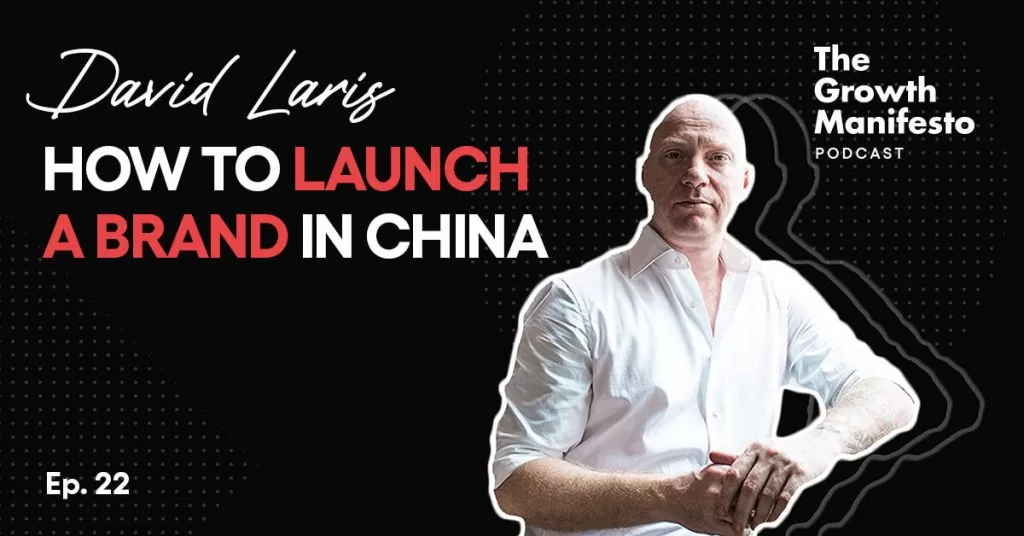
 with David Laris


Overview
This episode is a discussion with David Laris – managing director of Acorn Digital – a social commerce agency based our of Shanghai, China. We talk about everything to do with launching a brand in china, from the budget you need to put aside, to how to get product into china, and what a marketing campaign looks like (which is deep). If you’re interested in launching a brand in China, this episode is a must.
SHOW NOTES
Key takeaways
- Brands aiming for 5 million US dollars in first-year sales should expect to spend 2.5 to 3 million on marketing to become a category leader.
- China is a 100% pay-to-play market where there is no free lunch, since almost every part of the marketing journey costs money.
- Cross-border e-commerce lets a brand start selling in China within about two months, avoiding a year or more of regulatory approval.
- A meaningful China launch needs at least 50,000 US dollars a month in spend, rising to 500,000 a month or more for aggressive growth.
- Brands should keep at least 60 days of stock in a Chinese warehouse and plan for 50,000 to 100,000 units per major livestream campaign.
Chapters
About the guest
Transcript
Auto-generated from the episode audio, so expect the odd mis-heard word. Timestamps open the video at that point.
You're listening to the 2020 Marketing Series on the Growth Manifesto Podcast, a Zoom video series brought to you by Web Profits, where we talk about how to drive business and marketing success through the rest of 2020. This episode is a discussion with David Laris, the Managing Director of Acorn Digital, a social commerce agency based out of Shanghai, China. We talk about everything to do with launching a brand in China, from the budget you need to put aside, to how to get product into China, and what a marketing campaign looks like, which is deep. If you're interested in launching a brand in China, this episode is a must.
So let's get into it. We are today speaking with David Laris. I've known David for quite a while. We met because we have the same haircut. Nah, I'm just joking. We actually met through my business partner, Paul Sprockreif. He is a top chef out of Australia. And I'm going to keep this super high level. and at the end I'm going to ask you how I went with this intro. He moved to Shanghai 17 years ago. He's run over 100 restaurants over there.
He's an influencer. He has his own following of over a million people, if I'm correct. He then moved into hotels as the chief creative director for Cachet Hotels, which basically improved the fit-outs for hotels around the world. And now he is the managing director of a social media slash influencer company in Shanghai called Akon Services. and basically that's a division of Acorn International, which is a publicly listed company in the US. And today we're going to talk about how to do business in China.
Yeah? So how did I get with that intro, David? Like have I left anything out? I'm sure I have. Well, it's 30 years of my life, I guess, if you want to count career-wise. But thanks. That's pretty good. You know, I think having been in China this long, I've been here for 17 years, has given me a unique perspective on the industry. And I've kind of played multiple roles, had multiple hats. I'm still very much connected on the food side. I mean, even what I do now within the Acorn Digital Services side,
I still work with a lot of food brands. I still kind of run my chef brand and do a lot of content around that. And really it's become a nice anchor for us while helping folks kind of come to China, navigate China. I guess we'll talk about that in a little bit. but really you know being here watching the evolution of China over the last 17 years and being on you know the business startup and started my own company I had a consulting company I've you know been part of a hotel startup I was part of Three on the Bund which was really a
landmark sort of F&B business development for the whole for the whole China hospitality industry sort of feels natural to migrate into what is the I guess central focus of Chinese life which is digital um i would make one additional point on the acorn digital part is that we really are the commerce piece as well of of social media so really it's although we do do pure social media we're truly an integrated you know social commerce you know outfit and that's part of the sweet spot
and also part of the success formula for china all right yeah cool i'm just taking some notes because i'm going to ask you about this these parts of it but um let's just start off by saying that I'm working in my home office and you're working in an actual office and you know we're at the end well not the end we're still in the pandemic right um it looks like China's pretty much opened up based on what I can see behind you is that what's going on right now because full house man full house yes what's happening in China just from the pandemic
perspective right because obviously everything was shut down for a little bit is that right Yeah, look, we went through the shutdown. I actually was in Australia in January and, you know, right in the middle of the sort of the storm and it was all going off over here. I decided to come back because, you know, my view was let's get to work. There's going to be loads of opportunities. There's also going to be important to be on the ground with the team. So I flew back, you know, much of the distress of my parents and other people were telling me I should stay in Australia. But, you know, I was also here during SARS, you know, many years ago.
It was, what, 17 years ago. So I kind of seen the journey of how China deals with these sorts of things. So we had the lockdown. We've come out very much out of lockdown. Restaurants are back open. Retail is back open. People are out and about. Events are starting to kick off. I mean, I'm in the middle of, you know, programming and planning several offline events that are designed, you know, the O2O style stuff, which is why I probably look so beat up and tired. I mean, I remember why I got out of the event business. but anyway I'm sort of back in the digital channel so yeah China China is
very much returning to life back to back to normal and we can speak about it in a minute but I really think that in many ways China was geared up to deal with this and was also geared up to respond to it and make the shift very quickly to the way that people deal with you know life in a very let's say more virtual digital space from consumption of media to the actual way of purchasing yeah right so China's opened up again basically fully pretty much people go to movies I have the movies opened up yet I haven't checked on the big movie fan so
I pretty much just stream these days but I can't be far behind I mean restaurants are full you know people are yeah yeah and I can imagine full in Shanghai is is pretty different to full in Sydney right like Australia 22,000 restaurants in Shanghai all right Wow and they're all busy yeah well you can imagine as well how hard hit they were during the epidemic everything was shut
down so the industry really felt it and retail really felt it okay and so now it's opened up again but in that time I mean I've been speaking with you and you've been you've been pretty busy haven't you yes with acorn the social commerce side of things could you just give a quick a quick kind of explanation on how you define social commerce hmm sure sure yeah first of yes it's been super busy I mean I haven't had a rest since I got back so and we talk about
that in a sec but you know how I define social commerce is you know the the experience in the in the consumer journey in China is very much the point of origin is in is in social media and if you look at the major demographics of age groups in China as it stands today you know the media consumption is still heavily weighed towards they get their news or information and discovery is all happening on you know a handful of platforms but then the actual landscape itself is immense there are there are hundreds of you know ways that someone
can navigate through the social social media side of China you know and then through the commerce so the easiest way to define social commerce in China is to say you have you you consume your media on one of the sort of giants or one of niche platforms that you kind of get getting your consumption on on on daily uh digital consumption and then you move to look at a product and you've had product discovery and a lot of the kols or what we call kols or what you would call influencers um they're also they're selling
they're sort of promoting and selling product in a very very more direct way than you might see in the us or in australia um and again i'd like to elaborate on that a little later on so So being present on social is equal to being present on commerce. And the only way you're really going to drive meaningful ongoing sales and increased sales is to make sure that you're present in the social media space in such a way that you're constantly driving consumers to the store, to the virtual store. Now, media spend inside the platform, for example, which is the traditional way that
a lot of folks approach, you know, the way that media is purchased and the return on media spend is also influenced by how successful and meaningful your social campaign is and how meaningful your KOL program is because what we see is a direct spike in correlation between great content, great influencers. I'll use that word for the sake of the audience. I'm used to using KOLs, but the right influencer program will increase your ROI on in-platform media spend. so if you're listening you're running at a 1.9 media spend on pure ad spend around word keywords
and banners in the platform and so I'm talking about something like T more for example if you have a very meaningful what's T more sorry I'm not in China across all the social media platforms I'm gonna get to the to the nuts of the actual get to that second yeah in a second I'll just finish that thought and I'm going to go to the commerce. So, you know, having a really meaningful influencer program, which is then directly driving, not only creates sales from the actual activity that are measurable, so I can measure the KOL's performance and I can almost forecast
it down to, you know, the point of the percent. I'm also then able to see the spike that it creates within the platform itself. So let's say my dollar, I spend a dollar and I get my media return on that just in a normal everyday sense without social driving it okay or influences driving it when I see that program successful I see a natural spike as well in my media spend value so I'm getting two bites of the apple as far as my return on media is one way to kind of think about it and so what
we try to tell brands is really what we focus on as you're launching in China we're looking at a total media ROI spend to revenue we look at that probably starting you know obviously the negative and then ramping up and kind of looking at the best places to be spending media on, spend on social and platform influences. So it's a multi-layered web of activity, much more complex than, say, you know, in Australia or in the US, which has really only a handful of channels that people are consuming media on and then going to make a purchase, right?
That's kind of like the nuts and the nuts and the nuts and the nuts and the nuts and the nuts and the nuts and the nuts and the nuts and the nuts. I don't want to be e-commerce. And so does Acorn specialize in helping the brands that want to get into China yes yes we do both so we specialize in helping brands navigate the entry into China through social media through commerce we well I should say we bring them in through through brand building and social media and launch them on commerce so we set up all the platforms we handle the import distribution the after sales you know all of all of the touch points
that are required on the ground here we help them navigate you know getting getting their product into China yeah bring it through cross-border and I need to talk a little bit about cross-border a second because that's a that's a whole other animal so we help them navigate we create that we create the model for them both the actual sales and marketing model campaign models influencer models you know in platform e-commerce model entirely together and say this is this is your ramp up for sales in China and brand visibility and all the usual you
know you know touch points and KPIs that come along with social media and so on and we pretty much do it all for them and we were very good at staying in touch with our clients like I'm talking to a client at least once a week my team is speaking to them on a daily basis we're really navigating this journey together yeah those kind of partners because it's it's a minefield and starts changing continually you've got to stay on top of it so what kind of well there's so many questions there's so many passes conversation right so I'm gonna try and keep it like to a structure as possible let's see how it goes right so if I'm
a brand and I'm looking to get into China all right what kind of budget should I be thinking about in my head because then I'm gonna talk about the process after this right but I'm trying to understand this because it seems like the landscape is so big that it's not gonna be cheap right and so what is a a starting point in someone's head of like okay so I want to go to China here's how much I should be thinking to put to the side for this launch a lot of us
got to do with where how big they want to be in the first 12 to 24 months right so and I'm able to help people navigate that that question by kind of trying to understand where they want to be from a actual you know dollars top-line sales in 12 months and 24 months right or how many unit sales they want to be at so I would say typically you know I'd advise brands if you want to do 5 million in your first year you let's say 5 million US top line sales you've got to be
anticipating spending 2.5 to 3 million if you want to grow aggressively and become a market leader or category leader if you want now that that's a that's a that's at the level where you're expecting that you know year two you're going to be doing 12 million year three you're going to be doing 15 20 million you know so that's that's the kind of accelerated growth right and for brands that have you know the budget and the appetite to do so now i also work with and i have clients like that i have clients who say great you know we want to be the category we want to be the number one in category in 12
months we want we want to be the not you know the number one brand in this in the sector so I know how to get them there and I will I will say that's not cheap depending on and most of the majority of that money of course is pure marketing dollars being spent on influencers celebrities you know impact on spam all of that so that's actual marketing dollars being invested into an ROI for them outside of advertising spend advertising spend separate separate I mean if they're doing like traditional advertising which I don't even know how meaningful that is
to China anymore, to be honest with you. Like I would say, don't bother with TV, don't bother with print media. I mean, don't bother with billboards. But if you want to show, if you're in that mindset and you feel you need to do it, okay. But honestly, I think the more money you pump into the digital space, the better. Work with strong KOLs. So, you know, again, connecting with the right influencers is not cheap in China. China is a 100% pay-to-play environment. There is no free lunch in China. anything for anything any part of the marketing pretty much journey yeah even
pre-pro-pro doesn't really success isn't that really successful here you know on and again when I talk about budget with people I also say you know quite often I'll have brands that speak to me that are already very successful us that maybe a younger brand they've done very well they've used influencer marketing in the West to kind of really pump it up and and they've got a lot of freebies along the way as well where let's say an influencer just loved the product and decided to post um that just doesn't happen in china in a meaningful way i mean it happens rarely um
so really you know at the core of the influences in china is broken into two parts we cannot underestimate both the cost of them and also the value of them um go on yeah just quickly so you said like if you define the sales numbers and then you can do a percentage of that sales like amount so say for example it's five million dollars you should be spending in the first you said three million dollars right what's the minimum investment that somebody would make and
say they don't even know what they want to make in sales because they're not sure yet and they're like all right look i want to have like an experiment i want to see what does china feel like i want to feel that what's it called the fire hose right that it would be right what's the starting point well again like i i think i i do address this as well i actually have brands that are at this level and you know we have brands that are investing 250 000 us you know into the marketplace and that's their first 12-month budget you know and and for that you know i i would say okay we'll you know again there is we cannot uh neglect the category specific impact now if you're
in a very crowded space, you know, and you're trying to make an impact or you're in a space that is traditionally like tough to navigate, you know, that money may not go very far. But, you know, I am helping brands navigate as the budgets of, you know, $200,000, $250,000 as market entry. There's even a level below that if someone wants to come in and literally just dip the toe and kind of say we're in China. And that's really just to get what I develop for them as a WeChat strategy, pure WeChat strategy where we're really spending very little on you know influencers we're spending very little
on on you know getting deep into meaningful content we're repurposing content that exists and we're building a wechat store and the wechat store becomes the point of commerce the point of transaction and really we're just sort of building communities um that are sort of more niche and interested in that product category now that's definitely a much cheaper way to enter and you could you know you could do that for you know 100 150 thousand dollars but really the anticipation on real return shouldn't be there as well this is really more of a way to just be in the market um this community build is also expensive expensive as i'm sure you know right so then
so with that in mind then um if i'm thinking because i'm just like starting off by just understanding the mindset of before you go into china here's what you should be considering right before we talk about the how, right, the why, right. And so really if you're going into China, you're going for growth and it depends on the category, right. And so what you, what companies need to kind of understand is that because it's so big,
because it's so competitive, if you want to do anything that is like meaningful, need at least say 50,000 a month starting point. to do something meaningful right and then if you it can go up to 500k a month and above but the difference in china is that and we'll talk about this as the next part is about the process right is that that investment will go to key opinion leaders slash influencers that will drive sales is that right like it's almost like like is it kind of guaranteed in a way not guaranteed but
Is it above average success rates than in the West? Yeah. I'll tell you, this is one of the interesting things is I never used, I hate the word guarantee because, you know, especially being used. No, it's the wrong word. I'm sorry to say that. But I was going to say, but I say almost guarantee. Yeah. I do use the word almost guarantee or the phrase almost guarantee because it is a formula. It is a formula. It's a matrix. If you understand the machine, you know, again, it's pulling the levers, is pushing the buttons, is knowing where to spend, you know,
and that's what this team behind me are doing like, you know, 24 hours a day. You know, if you know that system, you can almost guarantee where you're going to be. And I also advise brands to be, or companies to be aware of, the need to allow their partners in China to be flexible enough to, you know, adjust along the way. Because there's a lot of it, there's a lot of, the first three months is a lot of experimentation, finding the right sweet spot for the brand that's why you know don't expect to make a profit in the first three months you know you're just you're just really stabilizing your position and and
figuring out what's going to work for the brand and then then turn on the key start flicking in the switches in terms of um all the variable various places that you should be spending money so yes i do think it's more of a formula it's more of a system that's built to win if you spend money and if you know how to navigate the system now yes some people get lucky they come that's been very little it goes viral and you know it happens but it's not the norm mostly it's it's people dropping the right coins in the right slots um pushing the buttons you know and then knowing
how it works i do think there's also a lot there's a lot of sharks out in the marketplace especially on the kind of direct to consumer you know e-com guys who just only do that um because they you know i happily know the expression all the hammer sees is a nail so you there's a there's a lot there's a lot of that in China and you need to be wary of you know working with a guy who has a one-track mind about how to navigate success in Chinese digital space so that's again why I've you know really adopted and built a principle around you know multi-layered approach to how
we drive consumers to purchase and to the store and then how we continually then build up repeat ratios and so on but yeah it's it's a lot more guaranteed I feel like I know how to get there if I have the right resources to do so. So we're really talking about like because it's so competitive in China, right, we're really talking about like this is for brands that can sell a ton of products, right? That's what it's about. It's less for services and stuff like that, isn't it?
This is more a strategy for brands that have products that they can scale up big time in China, through China. Is that right? Yeah, look, at the end of the day, it's about volume sales, product sales. So I think if you're selling services or if you're selling pure celebrity, it's a little bit of a different animal. I do have a division, for example, that looks after just Western influencers and helps them navigate China. That's a whole lot of animals. It's about doing deals with brands, tying the pieces together and so on.
And services, from a services standpoint, I don't really touch because I think that's very tough to navigate in some ways unless it's integrated into the business that I'm selling or the services that I'm selling, which is okay. And I do that on tech and various other things where we have partnerships or let's say affiliations. Really, our goal is to get product to market and sell as much as possible and get the brand to a positive ROI as soon as possible. That's really the muds and bolts of what we do.
Got it. So that's clear now, right? I just want to make sure that everyone who's listening, this is the context that we're talking to, right? This is for products scaling up in China through the machine that it is, right? Now, let's say that I am this brand and I've got, let's say, like a line of, say, like jeans. I don't know, right? Like it's just an example, right? And I want to expand to China. Like I'm already successful in the West. I've got some budget now. I got a hundred thousand bucks a month, which I'm happy to spend on this thing.
Right. Because I know that if I can make China work, it's like, it's like, it's unlike anything. I think anywhere else. Right. Like before we get to my next question, can you just explain the difference in the size of like the volume of China compared to, for example, the U S or Australia, you know, like, cause it's a, it's a completely different beast. The population is so big. so how would you explain the difference I'll throw a few numbers out there
maybe that'll help because it's always good to throw that so much like okay we chat which if anyone is not familiar with we chat who's watching I really recommend go out and explore we chat because it's the super app of super apps it has 1.2 billion active accounts that are using we chat and they're using WeChat to pay it's a seamless payment system they're using WeChat to find their news to read articles for entertainment it has it has multiple functions that
has sort of a video function it has a you can make phone calls you can do everything you can shop in there WeChat stores I mean it's it's a you never leave that need to leave that app and as a you know you know just said one 1.2 billion accounts that exist so that gives you a sense of scale and reach for that single app now you have done things like doing which is tick-tock 600 million users you have and that's again that's another way as there's direct consumer you know you can sell directly through doing you have Billy Billy you know
again 500 million users you have you know you know the commerce platforms again maybe maybe say 700 million and I'm probably throwing I'm probably off by a hundred million or something I want to do these when it comes to that those are numbers I think it's about 700 million people using you know Tmall which is the largest e-commerce platform in China you know and what we've seen since Corona is you know we chat usage gone up 50% you know going has gone up
like 35% you know so we've seen these massive spikes in daily use which means that people more and more people are using it for their solutions for shopping for their news for their entertainment and kols to add that layering and the whole live streaming phenomenon in china is it has become entertainment where people watch their favorite kol you know on a nightly basis a daily basis they're selling like 24 7 um there's apps that link to the stores um that then you know
you can see your favorite influencer telling you about a new product and buy straight away so it's um it's completely integrated that way and it's massive and we're talking about over if you put those together you know if you aggregate the number of users across the let's say the major platforms you're in the billions of daily you know clicks into various platforms and views yeah which is huge and I'd like I but I was just trying to find the article quickly but I
saw that there's an influencer in China it's one of the big ones over there and she sold yeah she sold on the rocket ship ticket for 5.6 million US dollars also via is via right yeah yeah but like it was like just that's just kind of like an idea of what they can sell, but all she does is sell 24 seven. Like her whole thing is selling, right? I am actually doing it.
I'm actually doing a live stream with her. I hope, you know, maybe I don't want to jinx it, but we're setting up with, you know, with one of the brands to do a live stream. You know, I'm anticipating needing to have 50,000 units available that five minute period. And that was my next question, right? Is that cool? Thanks. That was a perfect, it's like I planned it, but I didn't really. um if i'm cool so now i say like okay cool i got about 100 000 bucks a month um to spend and i want
to so that's what that's every year that's like like a million dollars let's say and i want to get back a couple million let's say right um but what should i have in my mind for production and you know like stock that's available you know but how should i be thinking about how much stock should i have available like is it already over there and then we'll talk about the rules with the whole cross-border thing because that's a bit complicated but volume like how much should i be thinking about stock-wise to have available yeah again that the answer to that
question is driven by the the amount of money that's being invested in the marketplace right so So we would tie, as any such plan would tie the volume to the expected sales, right? So I would anticipate, you know, someone needing to have, you know, 60 days worth of stock at least in the warehouse in China ready to go. So then, you know, again, what I've seen with one brand that I'm working with, you know, we've grown them exponentially month on month, like, you know, 200%.
so you know they've been trying to keep up their stock production without growth and there's been a couple of occasions where we've missed the timing on stock and it's really it's really you know it's this hasn't been there thankfully we've been able to get people to hold the product in their basket you know make the transaction later but yeah it is important to really be forecasting production and make sure that if you're going to spend real money in China and it's anticipating real unit growth and if you're going to really work with the guys like you've got girls like via or you know a bunch of other those top those top streaming guys um you need to be forecasting
you know units in the 50 to 100 000 mark you know from one anticipated campaign um because one campaign that's not even per month that's one campaign that's a campaign right so if i worked with someone like well i'd be hoping to sell between 30 000 units from that one um campaign right and that's so gives you a sense of so it's kind of fun in china to work with those kind of numbers because like it's not like that in the west like like yeah you might get somebody like
the jenners right that yeah like at that top top top level they do it but it feels like in china there's thousands of them it's not just a few at the top there's like there's so many of them which you could access is that right yeah so you've got the rock stars obviously right the rock stars are right at the top you know getting their time and attention is is is is a job in itself you know you know they've got to agree they like your product they've got to believe they can sell the number of units you know so there's all of this navigation that happens with us and their agents i mean there are agents agents and agencies that just manage influencers on scale we're not
you've never seen anything like it anymore else we're talking on scale um there are almost no influencers working independently they're all part of what's called mcn which are agencies that manage them so um and and then there's also the platform specific ones that have you know their their niches like Bilibili for example, which is the equivalent of YouTube or it's Douyin or anyway. So, and then you have the ones that are just dedicated to streaming, they're only in the e-commerce landscape, right? So yeah, just to come back for a second on that,
you've got these top rock stars that are literally gonna sell rocket tickets and cars and whatever else, and if you get them on board, expect sales. They're expensive. there's usually an upfront fee plus a percentage of sales. So there's obviously a cost, but, you know, again, what a great way to get your brand out there, but also sell major units. The other thing is that we have a lot of mid-range payrolls, like the sort of medium ones. And then you have, you know, just a lot of guys on the sort of,
the bottom end. I work, for example, this month alone, I'm working with 70 influencers. And that's about average for us in any given months across the various brands we manage, you know, one brand alone is doing 30, you know, and only two of those are major ones, and the others are kind of like at that sort of, you know, they'll move. I mean, I'm doing one, let's say I did one yesterday. I don't know, remember the top of my head, the number of bottles sold, but it generated an ROI of 2.1
and we, you know, what is it, 250,000 RMB, for a cost of like 60,000 RMB for that K-Wall, very successful, you know, whatever, plus the cost of goods and other things and so on. So, you know, that's... The RMB exchange rate right now? Let's go to RMB to AUD. $50,000 or $60,000 Australian? So that's... One to five. Yeah, that's the return on one K-Wall program that I ran yesterday, for example. So you mentioned doing that across 30 for a brand,
you know, different degrees of success for each one. You do the maths. As long as you're staying ahead of the ROI, right, you've got to make sure that you don't want to do a one-to-one ROI. You definitely don't want to do below a one ROI or you're in trouble unless you're doing it purely for brand building because obviously when you're factoring in other expenses and so on, you're not in a positive place. But depending on the cost of goods of the brand and you can position where your ROI needs to be, then you go out and find the right chaos in that sweet spot
that's going to hit that for you. Great, great. I just want to sell a bunch of stuff over there right now. I just want to have some products to sell. That would be fun. But it's not about me right now. It's about the listeners. But let's say that I want to – this is because I remember, and it was cool because I think we caught up for coffee just downstairs here, like on the day before everything lockdown i'm like are you gonna go back to china with everything going on you're like yeah
my flight's tomorrow i'm like are you sure your flight's tomorrow because everything's gonna be closing down right and i remember that and then i didn't hear for you for like six weeks i was like is he okay or what but anyway it's good that you're fine but but like we were talking about the uh what's it called um the the challenge with having product that is made in china exported overseas but then if you want to sell to china and it's made in china you can't just
sell the product that has been made in china right this is the the um the cross-border thing right this is the cross-border challenges is that right like you can't manufacture in china and export but then just kind of hold the stock in china to sell it there is that right there's a few things it was complex when we talked about it I was like you could just make it there and this other it's like mass not like that how is the cross-border thing you know just explain what that is sure I just I
just sort of navigate that answer in a couple of ways because first of it let's just very quickly touch on it was made in China right so if you're making a product in China that's for export it has to leave the country you can't just tap into that product and then sell it in China right the special restrictions around the way that's made. So if you wanted to basically, if you've made your product here, you'd have to ship it overseas and then sell it back through cross-border or even import, which is kind of bizarre. There are special exemptions and deals
where some brands here have a local produced product that is approved in China for sale. That's a different animal. So let's talk, we're going to come to cross-border because I know that's the crucial thing, but I do want to address the manufacturing and sourcing side of things a little bit. so you know we can source product here that is then sold in China we can source product here that is then sold only overseas brands do the same thing if you're if you're in certain sectors let's say you're in cosmetics or you're in your skincare or food you have to if you want to sell your product domestically
you need to go through all the same sort of regulatory setups and approvals and so on that anyone else has to go through in other countries and it's tough it's very very tough and it could take a year could take two years to get up to get a product approved and if you happen to be a brand that's you know concerned I am personally concerned you know with things like animal testing and you know wanting to make sure the product doesn't go then you definitely can't do that you just you're almost it's impossible you're locked out right so let's now talk a little bit about what cross-border is and how that solves the problem for brands like
that so cross-border is a special economic zone that's been created in areas of China where product can be imported into bonded warehouses. It's held in China, in Chinese territory, but in a special, you know, economic zone that is considered, you know, outside of China, if you will. So there's interesting tax exemptions. There's, you know, there's no need to back label or go through all the regulatory process. As long as you're considered a product that's not on the banned list of banned substances, right? So as long as you tick that box, we help brands navigate that.
It's actually a big sweet spot for us because we understand that area extremely well. We'll set up the cross-border store for you then. So there is a difference between an e-commerce store that's domestic and an e-commerce store that's cross-border. So product comes into the bonded warehouse. It's received. We do all the regulatory setup stuff that needs to happen, you know, proof of ownership in terms of the IP and all of that sort of stuff that's very legitimate. Then we launch your cross-border store. Now, the consumer is then discovering these products that they couldn't ordinarily buy domestically in China.
And if they wanted them, they'd have to literally buy them from overseas, right? It becomes a shortcut for them now to access either discovery of new interesting brands or the favorite brands that were not previously able to buy directly from China. Now you have a direct consumer link between the brand and the Chinese audience available to you, you know, in Chinese language, let's say from the shopping experience standpoint, and you can make the purchase and have it the same day or the next day. So, you know, there used to be, now, again, I did digress for a second here because this is the beauty of China.
Pre-cross-border being established as a legitimate channel for sales in China and these special economic designs being created, pre that what happened was people would order from the website or they had these special agents that would say, hey, we'll import it. It's a little bit of a gray area type of thing. And then we'll resell it for Taobao. let's say Taobao is a little bit more the Wild West and Tmall is very much the legitimate trading platform it's the Amazon if you will of China and what China did was I guess they realised
how much traffic was going through those unofficial channels and established an official system and allowed brands to enter legitimately, legally and so on everyone's good, everyone's paying taxes everyone's kind of doing business properly and most importantly the platforms are now making money off and the government's all it's all organized and systematized right so if you are a cosmetics brand or your beauty brand or food brand and you're not on the the excluded list of banned products you can enter through cross-border and we could have it on cross-border in within two months you
could be you could be saying hey David I want to be I want to be in China in two months I could have you on for sale in China through this system and and and avoid you having to go through like what would be a year and a half process of getting a product made to be domestic. Okay. So having said that, we still do run domestic stores, which is different. So is it because this is, um, because this is like a podcast for companies that want to get into China. Right. So, um, but like,
is it easier to manufacture in China and to do the, um, the cross-border approach than it is to import into china and it's manufactured outside of china what's easier they're both i mean they're both very easy i'm honestly you know if you're if you're manufacturing in china and then you're selling direct domestically in china it's obviously super easy but then you've got to have someone managing the manufacturing you've got to have people on the ground there's a whole lot of stuff because then you need to be registered you You need to have all your local entities set up in such a way that allows you to do that, right?
And we do work with people who have manufacturing in China, and even China startups that we're helping them build their strategies in China. So absolutely, absolutely very doable. Manufacturing, exporting out of China and then back, to me, doesn't make a lot of sense, unless your product is made in China and it's unavoidable. The cross-border channel, to be clear, cross-border is entering China. It just means that you're not selling domestically in the traditional sense. But your product is here.
It's being promoted by influencers. It's being promoted on social and it's being bought directly by the consumer in the, let's say, Tmall, JD or WeChat cross-border ecosystem. So it's the next best thing. And in many ways, unless you have some ambition to be here for some reason, I don't even know why you'd need to worry about the domestic manufacturing and direct sales in China unless you had a specific reason for that when cross-border is already such a large marketplace and an incredible place to start.
So don't forget there's that point, Alex, as well, where, you know, if you may have a product that would never get registered in China, let's say, you know, you're a cosmetics brand or a skincare brand and you don't want to end the test and you don't want to go through that regulatory process of, you know, the FDA and all the stuff that has to happen here. And you just want to sell straight away. You don't have to do any back label changes. You don't have to do any reposition on product. You just literally put your product on the shelves and go through that process. them it's a super easy way to enter the market so this is basically so so then
they're pretty much every company that's going to be selling into China that's kind of outside of China will go through the the cross-border process right that's just how it is pretty much right and it's a couple months to get that kind of up and running is that right yeah the only other way is to go the really traditional well two traditional routes one one you come to China you open a China office and you basically become, you have a whole China entity, which many firms have done. Of course, the other way is you get a distributor here and you have to go through the rigmarole,
finding the distributor, and then you're selling through that distributor. That's also very possible, but subject to being approved as a product that can be sold and get registered domestically. If either of those two options for you are something that you can't do or aren't going to do, or the next best option, and in my opinion, the actual best option is to just start with cross-border. Build an audience. You own that data, by the way. So that audience you build on your cross-border store, it's your consumer. You own that customer. So what's a cross-border store, just quickly?
Is it some site? Is it like a marketplace site? Like in Singapore, there's the Lazadas and stuff. Is it like that, where it's like a marketplace? Think of it like a Amazon. Okay, it's an Amazon. So you have domestic, again, in this case, for the sake of the discussion, you'd have Amazon cross-border, you'd have Amazon domestic, right? They belong to the same parent company.
They operate in different, slightly different, you know, legal parameters around product that's on the shelf, right? So that's it, it's pretty simple. Now, a year or so ago, two years ago, let me wanna say the cross-border marketplace was kind of smallish, but now it's become massive. So, you know, whereas before your audience might've been a little bit small, now it's actually extremely large and people are doing very well on cross border. Now, if you can be domestic, be domestic because the audience is bigger. But again, I've got to kind of reiterate labor
that point a little bit, you know, for some quotes, it's just not, that's just not an option, right? Got it. The other thing is you might be a smallish branch that, you know, the idea of coming to China, opening a China office, you know, getting set up. I mean, you've got to burn through so much capital to do that. Would the wise thing to be to start and cross-border, burn that capital in building sales directly, immediately, versus, you know, the kind of, let's say, the need to feel you have to have an office,
you have to have people on the ground, you have to have traditional manufacturing. You know, yeah, I mean, if you're big enough, sure. But a lot of brands just, you know, it opens the door for them to enter China in a much more meaningful way. And again, a little cheaper than perhaps the whole other way of doing it. And that's the point, right? Like, so like, like a company that is looking to sell into China, start with cross border because that's the way where you're going to get the fastest sales. And that's going to be the way where there's the least amount of paperwork and bureaucracy, which you have to deal with. Right.
Precisely. And then you're in, you're in a marketplace, one of the biggest marketplaces in the world. you know yeah so it works and insufficient it works just imagine so team all the giant right so team all have it down to a size both domestically and cross-border so and but we need people managing that for you you know each brand has a team of around five six people that are just dedicated to managing that store purely on team for example Wow and that just gives you a
little bit of an insight into how much is involved in this but I mean it's a huge like the volume you talked six seven hundred million you know you know like that's just like you know like the mistake that we make between those two numbers is five times the population of australia for example right so it's massive volume but now let's move quickly because because i am like i'm conscious of time there's so much to talk about with china so now we've got the cross-border store we've got the budget now we're starting to put say 100 000 bucks a month
you know up to 500 000 bucks a month into this thing right we've got the stock is there and it's ready to go right what's the like the channels you know so what's the way that that would be kind of rolled out you spoke before about um the key opinion leaders and so on but But just explain or just go over a sample strategy of how you would take, say, a hundred to, say, a couple hundred thousand bucks a month and kind of roll out a campaign.
How would you do it? So typically the strategy that I apply is I firstly map out a 12-month calendar from a pure model standpoint and the financial model of what we expect to see. So I need to start there. I take that monthly budget and I allocate it across the various channels. And we'll talk about those channels now. So one channel is what we describe as the in-platform media channel. So that's where we buy media value inside the platform. And that's broken down into banners, keywords,
various other tools and mechanisms that exist within the pure e-commerce platform. And I deploy a certain percentage of dollars into that channel month on month. So that's one. The next one is I'd have the influencer program. I'd deploy a certain amount of capital into creating a kind of web of influencer kind of activity. Now, it's a little bit different in the beginning because in the beginning, you know, what we're really focused on is getting brand awareness out there, you know, building traction in the marketplace. So the type of influencers I might work with might be less direct sales and more kind of brand building guys that kind of get the brand out there, get it visible.
and then I'd migrate that to being more guys that are direct sell. So the balance would shift over the first month or two and then by the time I get to kind of month four, I'm almost not working at all with influencers that aren't measured through direct sales, right? So that shifts. Then I would work with various campaigns, off-site things. I might do some offline events where, again, I'm capturing users directly, promoting the brand and then leading to a sale.
So the O2O strategy is something I deploy as well, depending on the nature of the brand. And, you know, I have a couple of beverage brands, for example, where you're getting out into the marketplace, participating in events really, really helps get the brand out there. But my goal is to, you know, QR is king in China. So everywhere we go, we have a QR code and we're getting people to scan. and the natural gravitation towards people being happy just to scan is like, it's just like breathing in China. It's like, yeah, you want me to scan? No problem, I'll scan. It's none of that sort of concern about what am I scanning?
What am I getting into here? It's just like, you know, so we do capture a lot of users that way, so there'd be a certain amount of money deployed with that strategy. I would break them down into subchannels, and the subchannels are the other platforms that were selling through Doyin, Bilibili, you know, Weibo, you know, the various third-party social platforms where I would be positioning the brand both from a brand visibility standpoint but then also to direct sales. So that KOL program and that marketing program breaks down further down the bat.
Each of those channels would have an ROI next to it so I know what my anticipated return per dollar media spend is and then I create an aggregate total of that and then I know kind of where I'm trying to go for the first, let's say, two, three months, and then how that's going to morph into something else over a period of time. So that comes back with a fairly complicated model, which then we then navigate. So our team's broken down into our influencer team, our e-commerce team that are just dealing with the impact
and spend. We have the influencer team. Sorry, I mentioned this. We have the social media team that are writing content, you know, great articles, interesting, you know, anecdotes sort of things about the brand seeding the market with that um and then i'd have a i'd have a wechat strategy which is again slightly different to the others because i'm again creating articles of content that are again driving consumers to be aware of the brand and i'm also then deploying a koc keeping a customer strategy which i'll have to spend some money on to build
up my key opinion customers and then third party sales through affiliate programs and so on so I'd also have some dollars allocated to that, as well as my discount strategy, which is crucial. So we didn't talk about discounts. China loves a discount and they love a sale. So part of the budget is also allocated towards making sure we have a coupon and discount strategy. I do highly recommend as well that brands come to market and we build this for them with a recommended retail price that they hold for me. but a very very clear understanding of the need to participate in sales of what their bottom line is
on both b2b direct sales and the b2c direct sales and we help them navigate that and then we have a bandwidth in between that that is kind of constantly moving on commissions and coupons i know there's a lot in there i'm sorry i know i talk very fast but it's good that's kind of like my head every day yeah no no like i was gonna say like you've done a good job like in explaining it like it's it's it may it's kind of simple but it's complex in its simplicity like you've got those
channels but just the depth and the crossover and it's like it's not that there's too many channels it's just the depth of each channel the complexity of each channel the the what's it called the um the subtleties of how to do the condo, when to launch it, timing behind it, and how do you link everything? That's the hard part. Like you got like, so it's just the size and the depth
and the fact that you're going for sales every time, right? Like it seems to me that, you know, and correct me if I'm wrong, but well, let me ask you the question actually first of all, do you need a website in China or not? Good question. Actually, I say you need a website purely for the positioning of the brand. But, yeah, so have a website and have it in Chinese. And, you know, maybe another call or time, I should tell you more about this. But, you know, again, look at the consumer journey,
which is typically twice as long as the West. The website is a touch point that the consumer will go to to validate, but they will not purchase that. So one of the first things I say to people is don't worry about your consumer facing, you know, the purchasing component of your website for China. Don't worry about it because really you're not going to get any meaningful sales there. But by all means, if they insist, I say, sure, no problem, put it there, you know, great. But you have a website purely for aesthetics. All the transactions are happening in the major platforms.
And I think you really nailed it there, Alex, and your understanding of the fact that it's about the depth and the subtlety and complexity and having all the pieces come together, you know, in a perfect alignment, then it goes bang, and then the magic happens, right? And then kind of being able to just repeat that on a landscape that's evolving. It's like an organism, right? I kind of feel connected with it in a way that it's almost breathing. It's alive, you know, and got a state cognizant of that, And you're constantly dealing with competition, shifting.
And, you know, so, yeah, there are more platforms in the West. You know, there are. Than in the West? Than in the West? Yes, there are more. They run away deeper. They have many more embedded tools at the same. And then there's different levels of them. And that's, but having said that, there's like eight or nine places you've got to be. And then they run deep. And I love the way you put that. And then it's about all the sub stuff.
Yeah. You've got these niches, these niche platforms, you know, where you can just target a certain market or demographic. And that's another layer which probably we can't get into today. We can't get into today. So, but because everybody's on their phones, right, and all of the commerce is pretty much done through their phones these days, right? So people don't actually need to pull out credit cards anywhere anymore. They add it to their WeChat account and that's how they make their purchases, right?
So does that mean that's what, yeah, like, is that right to start with? So does that mean then that the analytics are better because everything is trackable? Is that, or is it not, like, is attribution still difficult there? The analytics are incredible. The access to data is phenomenal. you know we see the back end of competitors we see our own back end it goes it goes very very deep i mean we we really are able to track every single little thing that's happening um to a point
you know we there's still privacy protection laws in place of course and we respect them and i fundamentally believe in them um but in terms of big data and the way it's shaping and moving the marketplace down to what the individual brand is doing incredible incredible i mean a lot of great stuff that really allows us to help navigate you know how to continue to be successful and if there is a problem it allows us to pinpoint it um and really be able to kind of address it is that how you kind of can like predict um or forecast how a campaign will go because you can see the analytics
of the platform, of competitors, and you can say, okay, we think this influencer will give us this ROI because they've done this product before. And is that how you're going to work it? Yeah, that's pretty much sort of what we're able to do is we'll position a category-specific influencer with, you know, let's say we have someone that's really good at supplements or we know that they're really good at skincare or beauty or something. we'll analyze and
shortlist on a monthly basis those influencers. We track their previous performance, we look at all the data, and then we assign and agree with them a bandwidth on return for ROI. Now, they're also incentivized because they're getting a commission on every sale. The great thing about China, it's play to play, but everybody gets a piece of the apple or a piece of the pie. So it's just... Apple pie. You know, I love it. I'm a capitalist, you know, at the end of the day.
I kind of was very much the Greek in me, you know what I mean? You know, we didn't tell people that I'm Greek. So, you know, I was raised that way. My dad didn't take us to the markets as youngsters and so on. We buy and sell. And, you know, I kind of love commerce. And, you know, being able to take commerce to a science is thrilling. Like, I'm excited about it. I never get bored. and being able to kind of play with those numbers, understand, forecast, predict, you know, is wonderful. And there are also some pretty great tools
that one can tap into here and use. So one more question, because I know we've got about four minutes left. Where's the future going in China? Like, you know, so what are some of the trends which you're seeing? Really, really good question. I think we're going to see more and more China brands emerge that are going to start to compete on a quality standpoint in big spaces. I mean, major spaces in China are beauty, cosmetics, supplements, you know, and so on. So I think we will see increasing amounts of competition.
At the moment, Western brands are still seen as the kind of higher end. So I think we will see a trend towards that. I think really more of the same, to be quite honest. I don't see, you know, in any way the live streaming thing going down, tapering down. I think in many ways, more of the same, more consumer shifting to, you know, doing everything digitally. China's already pretty much a cashless society. So perhaps we get to the point where it really is almost 100% cashless, which again will further affect the way that people consume.
you know honestly i just see the marketplace getting bigger i don't see any real like disruptors coming into the market it is you know i know shopify you know looking to get in they've got an office here and you know again the question for someone like shopify can they disrupt the way they did in the west i i sincerely doubt it i mean because they're up against the giants who control the ecosystem right so you you know you've got to play with team or you've got to play with jd you gotta play with wechat there's just no there's there's no way to break that so i don't
foresee in in the immediate future anyone coming in and disrupting what is already a pretty effective system for better or for worse um and i just see more and more consumers moving towards consumption through the digital digital landscape and i think the lockdown corona has actually accelerated that exponentially and I see more and more people just you know direct the direct consumer interfacing with with the platforms and you know deliver to your door deliver to your home I just see more and more of that actually more the
startups will be built around how they tap into that and if one big trend I think we will see more is more community based activity more digital communities that are in interactive and I know that there's going to be some moves on the WeChat to see how they control and manage that so that they maintain the ad spend on their end, for example, and don't hand it over to the individual. So there's that. I think we're going to see more and more live streaming evolutions.
And I think short-form video is going to become keen. And video consumption is going to become keen. So I think we'll see more and more, you know, irrelevance around video consumption being a major driver of both social build and sales. Well, David, thanks so much for coming on the podcast. I think the insights which you shared are just unparalleled. You know, I think people have so many questions about China and, you know, just to be able to speak, you know, with an Australian who's now in China, who's pretty much Chinese,
but we'll call you Australian still, has been fantastic. If people want to get in, like, of course, So if there are some brands that want to get kind of in touch with you, we'll put like a link in the show notes. But is there any specific way which you prefer to start a conversation? Is there any specific thing? Yeah, if someone just reaches out, I mean, I'm more than happy to send them some starting info and get on the call. I mean, I probably do about five, six calls a week with, you know,
brands that are looking to enter China. So I love speaking to people. It's sort of an easy thing for me to do. So yeah, just reach if anyone's interested, reach out and we'll talk. And I think we're going to have to do a part two, man, because I've got a list of questions here that's like, which I really want to find the answers to. So then if I want to know the answers, I'm sure the listeners do as well. Right. So, man, listen, this is probably going to be part one. And there's probably be a part two as well. We didn't even get the live stream. We didn't get deep with the live stream. Yeah, like especially around kind of the risks around it,
trademark challenges, like there's so many other parts. But look, that's it for today, mate. I'm really happy that we had this chat. Thanks so much for taking the time. And we'll talk soon, brother. Thanks, Alex. Take care, mate. Really appreciate it. See you, man. Thanks for listening to the Growth Manifesto podcast. If you enjoyed this episode, please head on over to iTunes and give us a five-star rating. For more episodes, please visit growthmanifesto.com forward slash podcast.