EntrepreneurshipStrategyMarketing
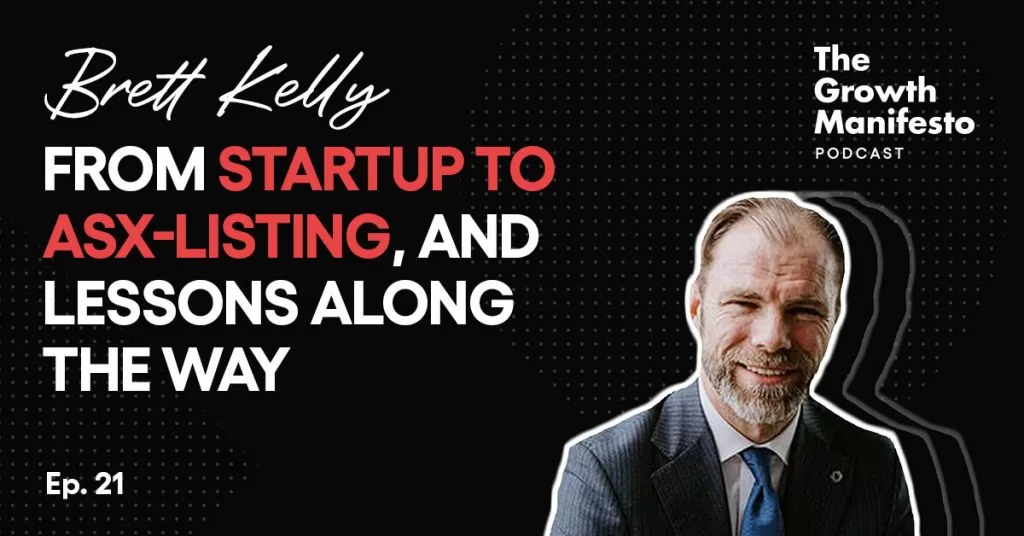
From startup to ASX-listing, and lessons along the way
Kelly Partners founder Brett Kelly explains taking his accounting firm from startup to an ASX listing, and why marketing fundamentals beat fads.
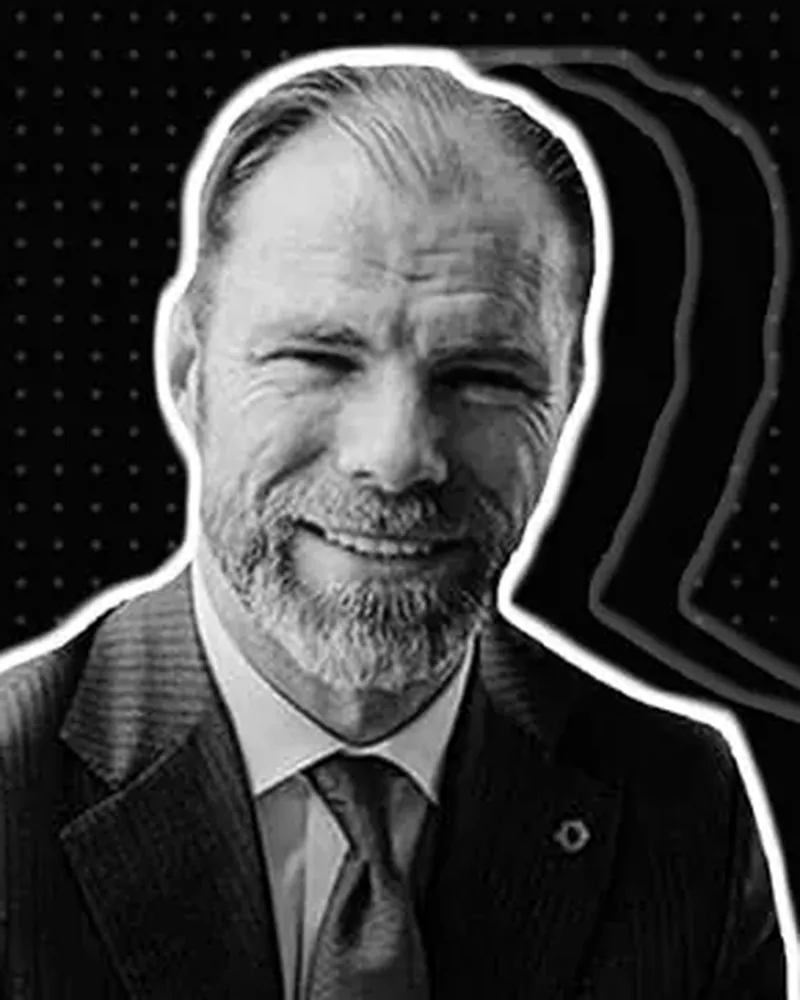 with Brett Kelly


Overview
This episode is a discussion with Brett Kelly – founder and CEO of Kelly Partners, speaker, and author of 4 best-selling books. We talk about what it takes to succeed in business from somebody that has taken a company from startup to being listed on the stock market, and the lessons along the way.
SHOW NOTES
Key takeaways
- Reduce personal living expenses before cutting business costs, because lower personal demand for cash removes pressure from the business.
- Most business owners cannot state their 4 Ps of marketing or their unique selling proposition, so marketing spend goes nowhere.
- Cutting marketing spend during a downturn is a mistake because competitors who keep marketing while others pause end up winning new clients.
- A private business is shaped by the founder's attitude, so growing a business means first growing the leader's best self.
- Be pessimistic in the short term and optimistic in the long term, focusing on controllable costs rather than predicting the recession's severity.
Chapters
About the guest
Transcript
Auto-generated from the episode audio, so expect the odd mis-heard word. Timestamps open the video at that point.
You're listening to the 2020 Marketing Series on the Growth Manifesto Podcast, a Zoom video series brought to you by Web Profits, where we talk about how to drive business and marketing success through the rest of 2020. This episode is a discussion with Brett Kelly, founder and CEO of Kelly Partners, speaker and author of four bestselling books. We talk about what it takes to succeed in business from somebody that has taken a company from startup to being listed on the stock market and the lessons along the way. So let's get into it.
Look, thanks for coming on the podcast. We're speaking to Brett from Kelly Partners. You founded the company back in 2006. So you're the founder and CEO, and you listed on the ASX in 2017. You know, so we started Webprofits as well around 2006. So we've had about the same amount of time in business. like in the current business anyway. So maybe let's just start with that, because obviously that's a fair journey.
And to be able to grow and then to list on the stock exchange, like that's the goal of a lot of organizations, right? But you've done it, you know, and so congrats on that. But I mean, could you just talk about that journey just quickly? Yeah, so Alex, I think that it looks like most things from a distance look relatively straightforward. But in reality, there's a bit more depth to them.
I played a lot of cricket and I used to love playing taking guys out to the SCG and they'd stand behind the nets. They'd have an opinion on the game, but you'd stand them behind the nets and the test bowlers were bowling and they'd sort of flinch. I always thought that was a good metaphor for the difference between what things look like and what they are in fact and so look I started my career in 1993 at Price Waterhouse as an undergraduate straight out of school and I spent five years there I then went into an investment bank and
I lost my job from that bank they said you know Brett you don't fit in with other people you're a bit different and you know we think that you might do better at something else and um i had worked out in that time it was a really top flight advisory house that i really wanted to build a business not simply be on the sideline as an advisor and so i went back into chartered accounting because i'd read everything that warren buffett had written since i was about and buffett you know talked about looking at businesses that were relatively certain to exist
in 20 years time and I thought death and taxes were life's two great certainties and I happened to be in tax and so I looked at chartered accounting businesses and thought that they are typically not well run they're not even thought of as a business they're just a guy with a desk and he just is busy and when you ask them what they're busy doing they're not quite sure and so So I had had the frustration as a young guy working in these businesses. And ultimately, when Beck and I had our first child in 2005, the partners at the firm I was at made an offer to me that was different to what they promised me when I joined the business 12 months before.
I went home and I said, Beck, like people in this industry are just they just lie. They just say one thing and do another, which I just personally have an enormous problem with. and they do that to themselves. I call that delusion. And then they ultimately do that to other people. That's deception. And they do it to the clients, which is sad as well. And they say they can do things that they ultimately don't deliver. So I just started the firm. I said to Beck, look, I think I might start the firm. Talked to two of my best mates, and they said,
I don't know why you haven't already. And so we started Kelly Partners Chartered Accountants on the 12th of June 2006. and I had the benefit, I guess, of having been in a few different pursuits. When I lost my job from the investment bank, I turned around. My dad gave me a book called Think and Grow Rich and it says find people that have been successful and go and ask them what they did to get their outcomes. And I like to call that, you know, how they achieve their goals.
And so I'll show you. I've just got it here. I ended up, you know, one of my quests was I turned around and I wrote this book. I needed a reason to actually get people to speak to me. So I wrote to them and I said, my name's Brett Kelly. I'm 22. I'm unemployed, but I'm keen to learn. If you'll spend an hour with me, I'll ask you my 10 standard questions or 11 standard questions. Put it in a book and get it out to other young people. And this was in 1997 I did this.
I made 5,000 phone calls in three months. I got 34 out of the 80 people I approached. Three others phoned me. They couldn't do, they could do discussions, but they couldn't let me publish them. And then I was told by two, two publishers have been in the industry for 20 years. Hey, Brett, I've been in the industry 20 years. You know, there's eight new books published every day. You know, you're not Alan Jones. You're not, you're not Ray Martin or Alan Jones. so who's going to read your book?
And with that, I thought, right, I'll go and get Ray Martin in my book and I'll get him to interview me, which he did. I self-published and the book was the number one bestseller. Funnily enough, I got these things, you know, even at this point, I found a guy in the US and he'd written this book called A Thousand and One Ways to Market Your Book. And this is the 25th edition of that book. I've never met anyone in the industry in Australia that's ever read it, which I'll share the relevance of in a minute. And then I found this guy that sold 500 million books,
the chicken soup for the soul series called the mega university. And it's all, it's all CDs. I remember those, those courses. I used to buy those all the time back and it was CDs and stuff. And I can't throw them out because just in case there's good content in there still, right? I found these, I did the library for our CBD business. And I put all my old books and things in there and I found them the other day, which was great. And so, look, basically, that book taught me how to develop a product and sell it. And then I basically went on this journey where I said there's a BBC 7-Up series where they followed kids every seven years from the age of five.
And it's the most successful documentary program in history. And so I found that such an interesting study of people. And my ultimate interest is people and why they do what they do. right and so i then went on and i said look every seven years i'll write a book so i don't you know one of the biggest things i learned here was people get busy and even if they appear successful they achieve their goals often they end up in some other place and with outcomes that they weren't they weren't planning on broken families marriages destroyed relationships all over the place
because they'd been focused but not really conscious of where they were and so i then wrote this book in 2005 which was seven people who changed the world so and and look to to give you an example of of how much fun this was in here um you know i had warren buffett i had um helen keller i had um nelson mandela gandhi luther king but in here um i've got you know
Warren Buffett and I wrote to Warren Buffett and said look I'm you know I'd really like to interview you and and would you sign my book and so here's the letter that he wrote back which I don't know if you can see that but you know dear Brett from Warren Buffett and so here's the second richest man in the world thanks for your nice letter in the books I'm returning the book you requested to be autographed however I can't help you on your other requests I'm cooperating with Alice Schroeder who is working on a book about me and therefore regularly declined interviews from other
authors now Alice was paid the largest advance in history for a non-fiction book 12 million US dollars and the book became the snowball and I had advance warning in 2005 that this book was coming out which is amazing I framed my office but it showed that again what I learned in my first book was the people at the top, the real people at the real top. They're very generous with their time and their ideas. They're comfortable in who they are. They'll help you and lift you up.
And so then I wrote this book. So then I started the business. And then in 2006, in 2012, I interviewed 16 leading business owners. And then I've just published, came out on Saturday, this book called Investment Wisdom, which is nine of Australia's leading investors. So there's very few people that have a book series of over 1,200 pages focused on wisdom. And the reason I share that is that when I came to the business, I'd written two of these books.
I'd done over 2,000 professional speaking engagements. I'd sold 40,000 plus books. I really had some sense of how to put a website together, how to build business card, how to market, et cetera. and and what they were you know i'd read over 3 000 books by the time i started our firm because my interest was you know how does the world work how do we fit in what's this all about but when you lose your job and you're not sure what you want to do you kind of have some time
for self-reflection i guess and um and what that meant was when i started the business now often people look at our business and they say well you know you just started here and grew like this and that looks pretty straightforward um but under the cover um there's a there's a there's a whole um you know journey and and you know three kids and and um you know seven or eight house moves and and a whole story and so to pick up in 06 we've had our first child he's nine months old
i start our firm in a small room about the size of my study here there were four of us my wages bill was about $300,000 a year. I had $200,000 worth of clients who I owned as part of my agreement with my employer. And so I was under some pressure to grow. So I guess I used all the experience that I'd had. I've always been selling good under pressure. But key to what
I did was I actually sold my apartment in Kirribilli and I moved to first rent in Lane Cove and then in St. Mary's and then I bought a block of land subdivide and lived in a place called Oxley Park which is one suburb next to Mount Druitt and then I lived for two and a half years there then I lived in Penrith for four years and then I bought a house with cash in Mossman so I grew up in Penrith actually that's where I yeah and then I left when I was 17 and I came to the city and I was like that's it on the PN Avenue there uh yeah on the ridge we bought the house
in the middle of the GFC but the reason I share that Alex is firstly I came to the business with with the full support of my wife who you know I've always regarded as a co-founder and wanted us to build a business and was prepared to sit there she's an accountant as well fill in tax returns with a baby under the boardroom table and and just do whatever it takes and allow me to do whatever it took to actually build a business now i was working from 3 30 typically in the morning i would work till 6 30 i'd get home at 7 i'd have dinner for an hour and i'd work from 8 till 11 and
then i would go again we had a young baby who'd wake up every three hours so beck wasn't doing much sleeping so i didn't think i should either and so the first thing was i had the support of my wife who who you know it's very trendy these days for both people to be pursuing their career at 100 miles an hour and and that's great but it's difficult for both of you to do that at the same time as having a very young child so that was a big sacrifice from beck and then secondly
i had sold my apartment that i'd bought renovated and loved in kirribilli and i just didn't have the status anxiety around the suburb I lived in that seems to afflict most Sydneysiders it's it's I call it post-codalism in Sydney and it's a massive issue you know I'd go I'd pitch for a client and people would say oh so where do you live I drive a six thousand dollar second hand Mitsubishi Magna that I'd picked up on a fire sale that they'd done and they'd say well you know you live in
Western Sydney and you drive a Magna. How does that work? When I was trying to later buy firms. And so that careful management of capital, you know, the big word in the middle of capitalist is capital. And you can't be a capitalist without capital. And if you're not born to the manor, where mummy and daddy or someone else is writing you a check, and you don't want to give up all of your equity so that you effectively sell off your company before you start, then you need to cut your living expenses such that we you know beck lived on 100 bucks a week and she'd run the
house on 100 bucks a week we pay our mortgage that was very very small you know i was living in a duplex ultimately was about 350 000 those places now worth about 450 000 most people wouldn't do that we then had two kids and i didn't buy a decent home by most people's standards until the business was about 10 years old, not eight years old. And by then I was 38.
No, yeah, 38. And I had worked since I was 18 like a crazy person to build up firstly what I call your career capital, which is your skill set and the things, you know, the books you've written and the talks you've done and the travel you've done and the people you've met. I have over 10,000 people in my mobile phone. How many, sorry? Over 10,000. Wow. I think it's a bit of a tip for your listeners. If you go down into your contacts on your Apple phone,
at the bottom of the A to Z, there's a little hashtag and it shows you the number of contacts in your phone. So I've got 10,026 contacts in there today. and so I regarded all of that as my capital you know 10,000 contacts books I'd written speaking engagements I'd done all of the work I'd done five and a half years at PwC I'd been through three other firms and everything I'd seen of the market and then the 3,000 books that I'd
read I'm just this huge believer you know firstly you need a supportive wife secondly you need to manage your capital and thirdly you need to grow yourself if you want to grow a business and so that's the story we had a very clear strategy i just went from the the people that taught me now were my heroes in business and so i nominated i built a little model for how to build a business and and i believe that first you have to be clear on your mission clear on your values and clear on your vision so that's the foundation most people are up here operational and not down
here foundational when you're building the foundations nobody gives you a pat on the back because you're underground in muck and dirt and smelly stuff. But our mission was clear that private business owners employ more than 70% of Australians and that they should be able to get anywhere that they operate just as good financial tax and accounting advice as any large multinational because, let's face it, employment is absolutely critical to people's sense of dignity. And I was very passionate and still am about that.
I said that we must take the best of the best we must be the best at what we do and our quality must be better than any big four firm or anyone else in the market and that we would then use Walmart the Walmart strategy that I got straight out of a book called by Sam Walton called I think it's called Made in America and he said go where other people won't go and grow what people don't notice and so I drew a map and I said we would go to Central Coast and Norwest and Penrith and
Campbelltown and Barrela Mugong and I then went and either grew or bought the largest or second largest and oldest firms in each of those regions. I used my M&A background to understand how to put a deal together in the right way which is uncommon for accountants who don't really know or have deal experience and i said that we would get big before anyone noticed so we'd have one brand a centralized back office we would own these growing markets because they're all growing above trend so cbd low north shore eastern suburbs no one has babies mostly people are old so there's not a lot of
growth and the growth the money that says often had an accountant for 50 years so why not grow where why not grow where the economy is growing above trend which is typically outside the immediate cbd and in our profession people are kind of too snobby to go outside you know again they're post-cotal you know you say alex you grew up in penrith and people think that there are gangs are over the streets out there with machines i actually grew up in emu plains and i think oh were the emus there running around i'm like i'm like yes yes yes they were very nice golf course
beautiful river yeah actually gorgeous and um so you know again because people don't get out of their own suburb much in sydney there's there was all this opportunity out there and um now we have the largest uh and generally oldest vermin certainly in wollongong in the southern highlands in campbell town in penrith second largest we're now in glenbrook in the blue mountains and Northwest and Central Coast.
And there's 15 offices, including Hong Kong and Melbourne. So that's the short history. But I guess- And so what made you go on the stock exchange though? Because in 2017, you listed, and I've been involved in that type of, call it that kind of adventure, we'll call it, right? And it's not a simple process. And why did you do it? It's all about goal setting, Alex. So I had- wanted to have a public company is that what it was I so my my primary business
hero is Warren Buffett yep when I grew up I wanted to be Warren Buffett and so I started the business with the view that we would grow the business and ultimately have a listed company that listed company would be a holding company just like Berkshire Hathaway so the holding companies called Kelly Partners Group Holdings and my plan from the day we started and for many years before that was to ultimately have a listed holding company that would grow wealth for
our investors in the way that Warren Buffett has, which is long-term compounding of capital by buying private businesses, which is what accounting firms are. Most people just don't think of them that way. And doing that for a very long time. And so basically, we've been three years listed in June. We didn't need the money. But what drives me is I think that our industry often says one thing and does another and that they don't run like a great company.
They just run like, you know, there's four guys who are partners and four guys with a briefcase, right? And so I want to set a new standard and I want to disrupt our industry. and the best way to do that after being in the shadows for a decade is to do that in public so that people can see you know the talent that i want to recruit to our organization i want them to be able to see our organization i believe that we're going into an unprecedented era of transparency where everything you say can be recorded everything you can do can be filmed
you can see a lot of the older pillars of our society being caught up in icac and other investigations where it's quite obvious the way they build their wealth over time hasn't been that squeaky clean to be gentle and i thought if we had a public company we could just build something transparently that could inspire the best talent in our industry to come and join us and so that's the ultimate mission to say you know what you can behave well and do well and you know mostly the reason chartered accounting firms aren't listed is two reasons one they
couldn't behave in public the way they behave in private i saw that in my you know decade i spent in other people's firms and secondly in a partnership typically in a chartered firm alex is there's you and i and there's partners every time the partner see a dollar of profit they want to rip out 51 cents each that's a dollar and two yeah they're not people that want to reinvest in the business and grow the capacity of the business not just for themselves but for their people and for their clients so that over time what they're building has even more capacity
to deliver what they claim they do yeah in that structure we'd have retained earnings we could we would have permanent capital we would have the infrastructure to be able to grow a great business which is really what drives me yeah sure so then on that point so how has um the quest for growth changed since you've gone public because obviously the challenges shift a little bit um so how has it changed yeah so as a public company at the head co
you have a lot more voices and there's more people with an opinion so it takes a certain buffett style independence of thought to be clear on what you're trying to do to explain that consistently and then to ignore all the people that keep harassing you with their latest thought bubble you know the number of people who will come to me and say i think you should do this or i think you should have done that or don't you do this and you can tell that they haven't done the work you know henry ford has this great saying and and that was that thinking is the
hardest work in the world and that's why so few people do any of it and so with me you know this is this is somebody who's gone and spent more than 1200 pages you know there was in my first book there was 800,000 words, you know, that's 1600 pages of text that was edited down to a 320 page book. I, you know, if I hadn't have been a chartered accountant, I'd have been a researcher because that's the way I kind of attack
everything. So I like to think, I enjoy trying to solve problems for my people and our clients and our organization. And there's a huge depth to what we do and what we know, and how we're doing it. You know, a guy who's now working with us, wonderful guy, came to me the other day and he said, you know what, Brett? You know, you and this organisation are like an onion. And I just keep peeling back and I keep finding more and more good stuff. I just didn't know. And I'm like, well, mate, I don't spend my time out there trying to explain it.
Now, as a public company, there's this balance between how much you need to share by law and how much that's competitive intelligence and any of the intellectual property of your organisation that you want to continue to grow before you share, if you like. And so that's, you know, I've had to be disciplined around my thinking and not let voices who haven't earned the right to be heard into my headspace. I think that's key, you know, to any young person or any person.
you hear a lot about mental health in our community i think we spend a lot of time teaching people how to do push-ups but we don't teach people much about how to keep their mind focused um and what would you advise to somebody who was like hey brett um could you help me to get more focused yeah so what would you say well typically i would take them through the sort of planning process that I do and that I've shared with many people. I sit down, you know, again, I'm a student of excellence.
There's a guy, Michael Hill Jewellers, and Michael is a wonderful guy. He's written a book called Tough Enough. It's probably on my bookshelf back there. And he has always talked about having a 30-year plan. So I have a written 30-year plan. I've developed it up based on what he recommended and some of the things I've heard from other people. And then each year I pull that down into a one-year plan, and then I break that out into quarters and pull that out into months. And I'm very, very, very focused on what I'm trying to do today and how that fits into the broader long-term context.
And how long is that plan? Like, is it two pages, 10 pages, a page? Like, how long is it? Yeah, I have an Excel workbook being an accountant. Somebody loves Excel art. And in there, I've got about 30 pages, Alex. But to be clear, you know, I have a one-page plan for the year. Yeah. And then I have a way to control. And then I have each area of my fitness goals, what my, I guess, my prayer goals are,
what my, you know, in terms of spiritual life, what I'm trying to do from a learning perspective, which I know really drives me. You know, I believe in that old saying that learning leads to earning. And if I'm not learning, I don't feel good. So I need to be reading all the time. I've got a page in there that's got our wedding anniversaries you know what the gifts are modern and ancient for wedding anniversary so I know where we are I meet people and they're like oh I'm not sure how long we've been married again trying to be very intentional and focused on you know where I am I've got my kids goals so my three kids you know what are their goals for this year I've got a page on my superannuation
so on my financial position and you know a bunch of other random things basically I just keep one workbook I call a flight plan we do it with clients I've got one for the business and one personally but it you know we've always said that that a private business is most affected by the attitude of the founder and and that growing businesses are led by growing people and so if you want to change your business you've got to change the leadership most people think that means you need to get a new leader no you need to get that leader to access their best self so
So Warren Buffett was once an employee. Steve Jobs was once an employee. Nelson Mandela was once an employee. And so it was quite obvious when they were sitting there as an employee, they were delivering this level of themselves. And later they delivered this level of themselves. And so as a leader in a business, you want to make sure you get the maximum capacity of your best self for it to work every day. And you want to make sure you're doing that for your people. and so that's to me that's how i get focused um and then i've got my diary sitting here it's an
ancient diary that's got my list of things that i literally write down the night before i print out my diary from my outlook and i write them down again i've always felt that anything i write down goes up my arm and into my brain it goes yeah sure so then the then the next morning i know i wake up and i and i've already been thinking about my brain about i think while i sleep about what I um what I need to do the next day so none of that is particularly original I've got an extremely organized version of that but you know I must say I've never met anyone who's
done anything significant who isn't you know you don't accidentally land in the marathon of the Olympics or or in anything else so it's just a question of the standards I play a lot of top level sport the question is do you want to play you know in your business are you trying to play park cricket or you're trying to play test cricket you know what level do you want to play and and and ultimately you're you're the only one that's going to know whether you're playing at your best or whether you're you know mucking about it yeah sure so you've um been in business
now for some time how have you seen things change over the last 15 years in terms of same kind of marketing side of things or the business side of things you know so what are some of the biggest changes that like you've seen and kind of how are you adapting yeah so alex it's a good one i think too many people spend too much time focused on change in the sense that while change is important um very very very important um the fundamentals don't change and so my observation
is that many people spend more time on the latest fad than they've ever spent on the fundamentals so for example if you say to most people what are the four p's of marketing we'll use marketing it's your area and we enjoy what are the four p's of marketing what are they in your business what's the one word that describes your proposition to your client and how have you you know what have you got an activity map or how have you activated that within your business the answer is they can't answer those questions you know what is unique selling profit what is your unique selling
proposition what are your four p's they just genuinely can't answer those questions they might they will skip over that and say yeah yeah but i think we should put it out on facebook and it's like well what are we going to advertise if we haven't done the thinking so and you would see this so let's say somebody comes to me and they say i want to sell my company i'll say no problem you pay me twenty thousand dollars we'll sit down we'll review your business your strategy the whole top to bottom and then we'll tell you where you're at and we can work out a gap analysis between where you are where you want to be and how to get there oh no i don't want to
spend 20 grand i've got all that and then you say okay show me what you have and normally most people's plan for their life or their business isn't is is an empty you know it's an empty page it's not substantial it's not deep it's not well thought out so the fundamentals i believe of you know i love um our reason jack trout so they're fantastic book positioning 22 immutable laws of marketing 22 immutable laws of branding whatever you like all those books there's probably never
been any better books written on marketing and almost nobody's ever read them and if they just sat down and read them before they came to see you you would be able to help them so much more because your your minds would be meeting at a more similar level so the first thing is i think the fundamentals are much much much much more important than change and then and then if you've actually master those fundamentals, then think about change. So the biggest change most people could make today is mastering the fundamentals.
The next thing. Yeah. Genuinely, like, mate. Yeah, no, it's true. It's true. It's like they're so focused on the new platform that they forgot about what is it that they stand for and what is the value that they're going to offer and how they're going to communicate that value effectively. Correct. So it's the latest shiny thing, right? So I'm writing books on wisdom. Wisdom's a pretty out of fashion subject, right? A lot of people might want to be smart. They might want to do a deal, but they don't genuinely want to have depth of understanding. So wisdom means depth of understanding. So let's first go for real understanding.
around the partners then around change there's again this great song you know old-fashioned song everything old is new again and um and so so much of what we're seeing even these great tech businesses uber's a new way to be a taxi airbnb is just a new way to be a hotel these businesses are not they're not coming up with new new businesses so often they're coming up with better ways to to address the fundamental consumer challenges that people have in their lives afterpay is a great australian example is afterpay a new new business absolutely not it's a it's it's
a new interpretation of what i did with a kid when i was a kid you'd go to the bike store and you give them 10 bucks and come back and expect you give them 10 bucks yeah lay by that's a lay by right so then that's not a criticism you know that's that is a business that is that has understood the fundamentals look hard at the consumer's actual problem and come up with as used new technology and ways to do things to address those so for us um what i what i believe the biggest change is that faces most business owners that we deal with and you probably deal with
is that the superficial changes in their customers and in their employees versus the reality of who those people are so we've got a great example today in the media, George Floyd's, you know, policeman's kneeled on his neck and killed him. There's a lot of outrage around race. But at the same time last night, there was an Aboriginal kid swept off his feet, face planted into a concrete floor by a police officer in broad daylight in Australia
and 400 Aboriginal deaths in custody since 2001. The stated position of most people today has become a dopamine-inducing touch on a screen, at best a like or a comment. But I don't believe there's ever been a bigger gap between the stated values of people and the underlying realities of how they spend their time and money.
Yeah, agreed. What we see is the money. And so I say you are what you do when no one's watching. and if I take your accounts for the last three years, stick them in a zero file and show you exactly where you spent your money, biggest expense to smallest expense, but before I showed you that, I asked you to tell me where you spent your money, those two things don't reconcile. And so that gap in psychology, you know, between who we are in fact and who we know we could be, that gap's always been a source of attention
in people's psychological life. and I think a business that can help close that gap has a very unique and powerful offer so what we try to do with people's financial position is say without judgment hey mate you say you want to get to here with your business or your financial position or both in fact when we really do the work you're here and this gap is not what you you tell me you're doing it's you're doing these things so let's breach that gap and close that gap what you get is a more whole person a more
focused person somebody who's more congruent and aligned in terms of their values and their behaviors that's a happier person in every realm of their life and their financial results go through the roof and so that's that's to me a way of understanding what's going on and addressing what i see you know as the biggest change is that people today are much more mouthy than they used to be they've all got an opinion on everything and they're much more public with those opinions but i genuinely don't believe you know for example rotary clubs were community service
clubs that did community service forever they can't find a member um if we're so much into community service why are the community service organizations just dead yeah we do community service in a different way well making a comment on facebook's not necessarily it's not it's not necessarily not but it's not the concrete community service that we've seen in the past yeah sure but that's kind of the way i look at it from a you know straight business point of view the biggest game in town is the internet not in the way that people think but in my view since
91 or whenever it came along what that's doing is delivering a whole ability to have a much more transparent situation to have a much more transportable situation to make a service more personal to make it more relevant to allow people to work in a way that is more consistent with the way they want to live to allow a client or a customer to interact with a business in the more in the way that they might want to interact um i do think you know you'd be a fool to imagine that the digital space isn't absolutely the most relevant thing or the biggest change
what i would temper that with though is that we're still a world full of people and people have changed a lot less than they think they have the dna the drive ambitions and underlying issues that we have as humans are very much the same and so um you know i'm i don't like to jump on the bandwagon of um you know it's just the world's changing you know i think it's an unbelievably self-indulgent view to believe that the world is
changing more today than it has in the past you know in 1918 when the spanish flu hit i guarantee the change that people experienced was much more significant than what we're experiencing right now i believe that when world war one happened that that was a much bigger disruption and change than anything i've seen in my lifetime world war ii fit the same category a missile crisis in the US so there's all these I look back I look back and I think things are changing
but when somebody riding a horse first saw a car that must have been something else when fridges replaced ice deliveries that must have been amazing when people saw the first rocket the radio even or TV you know that's all you know um yes what do you so that so then on that point in terms of um kind of the the big changes that we're experiencing in our lifetimes um they're talking about this
economic recession that's starting started that's about to happen is going to be the worst one since the great depression so what are your thoughts on that you know as an accountant as a founder as a stock market listed company, you have a lot of, I guess, insight. And what do you think the economy is going to do in Australia and then beyond? It's a great question, Alex.
I think that towards the end of last year, we listed in 17 because I believe that a recession was coming. I believe that we're at the top of the cycle and that we live in a world that still has cycles. I didn't believe that Trump would do as good a job as he did with the economy in the US. I just didn't know that he would be prepared to be as forward-thinking as he was. Lowering the tax rate was seen as a gift to his friends,
but in reality, what it did was inoculate the US economy against attacks from China during the trade war or anyone else and really done an unbelievable job of the US economy. And so that meant the market kept going up. We were always likely to have something happen. I thought it would come out of China. So when I was asked last year, I was selling a bunch of property and people said, well, I said, well, I think there'll be a recession. I think there'll be an issue out of China. I thought that they had more debt in these local governments than was,
again, it's not a transparent society. so it was hard to know. China just feels like a Ponzi scheme to me. I don't know how long you can rule in that way. Can you blend, you know, authoritarianism and buying control with a market economy? I'm not sure you can. So I just think it goes against human nature so it can't persist. Things tend to return to equilibrium at some point and they're certainly at an extreme. I think that's probably true to the US at the moment that the extreme market economy
is probably going to be tempered somewhat. But again, what I would say, Alex, and to you and anyone listening, I say to everyone all the time, is that it's a temptation in our time to always imagine what's happening to us. It's bigger, badder, worse, the greatest. You know, the greatest ever Olympics was Sydney 2000. And at the end of the next Olympics, this is the greatest ever Olympics. And then, you know, what Olympics is he going to turn up and say, you know, this was a very good Olympics. It was probably the fifth best we've ever had. You kind of want to have the, you know, it's like, I want to have the greatest car, the greatest girlfriend and the greatest recession. It's like, well, you know, some things you don't want, you don't wish for.
So I hope and pray that for all the people that have spent their lives building businesses, that this isn't as bad as the 91-92 recession, because I believe that governments are more, have better understanding as do the banks now as to how to react in a crisis. in that, you know, in 91, 92, big companies fired a bunch of people. Banks just wound up thousands and thousands of businesses. And I think most of them learned during the GFC that if they'd done what they did in 91, 92,
it would have been a really, really, really poor outcome for the country. I do get a sense. So that's the first thing. Second thing, I get a sense that there's better leadership now. But I think that Morrison is, unlike Keating in the recession we had to have, I'm not sure we need to have a recession. I think if we work together as a country and we're well led and that governments step up and do the infrastructure spending that maybe they haven't done for the last 20 years and push forward with some visionary projects that we can well afford.
we've got three trillion in our superannuation sector we've got one of the most educated and certainly hardest working motivated workforces in the world that incredibly innovative have led some of the greatest discoveries in in humanity over the last 50 years then why should we feel down and out we've got a massive resources sector that was just going to keep operating no matter what because, you know, and I think the, you know, I think it was Al Goyle, he had the, what was his movie called, The Uncomfortable Truth
or whatever that was called. I call it the uncomfortable truth. You know, the uncomfortable truth is that Australia's prosperity. An inconvenient truth. Sorry, that was coming to me. The inconvenient truth for Australia is that our prosperity is built on coal and iron ore and the mining sector. And I can tell you, if we turned off the iron ore and the coal and our mining sector tomorrow, then yeah, sure, we'll have a depression that'll be five times worse than anything you've ever seen anywhere. But Australia has this enormous wealth
that is in the ground and that gets exported during recessions, depressions and every other time and does unpin our economy. And we're unbelievably in the city dismissive and ungrateful for that sector. So look, I am not a bear in the sense that I believe that there'll be a depression. But I have said to all of our clients, and I'd say to you, Alex, and anyone listening, you should always in this situation prepare for depression
and work for a recession. There's a great, you know, my second favourite business leader who's a massive inspiration to me is a guy called Bernard Arnault who founded and runs Louis-Ton-Moyen Hennessy. And he has this great saying, be pessimistic in the short term and optimistic in the long term. And so I would describe my view as short term pessimistic, long term optimistic. So focus on what you can control in your business. Don't let people owe you a bunch of money. You know, somebody who doesn't pay you will send you broke.
Don't go for the biggest client. Just go for a client that will keep paying you. Overservice your client. Find new clients. Work a bit harder, you know, not to be... flipping about it but you know the 12 hour day is pretty underrated in Australia it's incredibly effective because most people won't work even when they tell you they are there's a massive opportunity for anyone who really is prepared to work and commit to what they're doing I think the stock market's got it right in that you know I love this saying
when Tiger Woods was down and out. Tiger Woods might be many things, but on a golf course, he's probably the greatest player ever. Roger Federer is a bit the same. It's a bad thing to bet against champions. And when you think of the US, they might be many things, but they have led more medical innovation than any nation in the history of humanity. And so if they decide, as they have, that this virus is a threat to their national security and they marshal all of their efforts, all of their capital,
all of their scientists and all of those scientists of their allies towards an effort to come up with a solution for this situation, they may not find a solution in the next five minutes. But I would be very suspicious of anyone that suggested that they won't find a solution at some point. Now, if this has been a man-made altered virus, well, you know, maybe they won't. But in the ordinary course of things, when the whole world is trying to solve a problem, I believe in people.
I believe in the higher efforts of people. And this is a global crisis that I think that there's many incredible people working to solve. And so I think as soon as that's done, you'll see a change in mood. And mood is so important. You know, working with people and I'll say, hey, what do you think is the most important thing? I'll say, be focused. What do you think is the next most important thing? Manage your mind.
What do you think the next most important thing is? Have shitloads of energy. Yeah. Right? And so when the whole scientific community globally, there's over 100 efforts to come up with a vaccine, they're working 24-7, some of the most wonderful, smart, thoughtful, innovative people in the world with limited capital being thrown at it. I think at some point they'll come to a solution and when they do, you'll see everyone's I love the idea of a depression where everyone's depressed, it's about mood and where everyone's mood steps up and if the governments can lead that
then I'm hopeful that the economy will reflect that I think it's a turning point for Western nations around their values and how prepared they are to live those values and I'm optimistic there'll be a real resurgence So what can in business today do to be pessimistic in the short term and be optimistic in the long term and you talked about a few things about you know having clients that are not too big that pay you and stuff like that but like okay so the most practical thing you can do if you own a business
is if is reduce the demand that you make on your business or money that means that if you have a two million dollar house with a 1.5 million dollar mortgage you should sell that house and you should buy a much smaller house with little to no debt that's the that's on the personal side of things but from the business side of things like is that the same kind of psychology of like reduce your costs wherever you can without yeah so what kills most businesses
is the owner's demand for cash from the business. You see, the biggest expense in most small businesses is the owner. And so the reason the owner's taking this money out is he wants to pay for his third Ferrari or a house that he has that he doesn't need to impress people he doesn't like. It's the number one issue facing private businesses, how much money the owner's trying to rip out of that business. Now, if you've got a moderate house that has got no debt on it or he's got very minimal debt on it,
then you won't need much money out of the business. So reduce your personal expenses first because that reduces the pressure you put on yourself and your business. Then go to your business and do exactly the same thing. You see, Alex, when I tell you, okay, look, mate, sell your house, reduce your expenses. Do you know what that owner then does? He walks into his business. Imagine I'm on this screen, I'm at home, and I walk into this business. and then i say mate in your business reduce your expenses well he's got some pain going on over
over here because he's just turned around to his wife and said right we're going to sell a house or she's if she's running the business she's turned around and said right we're going to we're going to sell an extra car we're going to sell a holiday house we're going to get rid of this we're going to get rid of that we're going to reduce our cost of living dramatically then once he's done that or she has done that they go together into their business and it's very easy for them to do that in their business because now they're feeling the pain so they go into the business and they go right i'm not spending on anything we don't need we're gonna we're gonna watch what
we're doing with our money we're gonna so number one don't spend any on anything you need number two make sure any client you're dealing with you know exactly what the payment terms are you're getting some money up front some money as you go and you do some money at the end so if they're not paying you at some point you don't go broke and then where you come in alex at number three is that most people pull back on marketing and it's a massive mistake you see when the market pulls back everyone will do the same thing they'll all stop marketing so what i've been doing during this during this um downturn is i've i've done a whole bunch of things i've launched a new book
that just happened to be you know a thing of time i did a program a 90 day program for people called fire up 90 i'm up today com yes fire up 90.com so go check it out yeah so so so to our people to try and get them fired up the owners to focus on themselves i did a little version for kids a 30-day one for kids called uh fire up kids 30 then we did a grow program in a closed so my grow program is normally fifteen thousand dollars over nine half-day sessions i did for
free for our clients in a closed Facebook group. So that's my board behind me there. Every Friday morning, I do an hour in a closed Facebook group. We've got 500 clients doing that. And then I went out and I said, right, I want all of our directors. There's 42 directors. I want you to personally contact every one of your top 50 clients. And we did a massive daily effort around JobKeeper, JobSeeker, every type of government stimulus, a whole new page on the website that's daily updated for the latest initiatives.
And then we've also launched our podcast, which is up to about the 20 or 20 second, it's called the Be Better Off Show by Kelly Partners. And I've been doing two episodes a week of that. One of those episodes is called Smashing the Crisis. We've also then put into the market, I'm doing a 10 minute segment every Thursday morning at 11.15 on 2GB with Ray Hadley, answering questions from small business owners on exactly like this you know what should i be doing in my business so if you think about that plus plus plus right if you think about those efforts
i made a i made 52 accountant jokes put them in a deck of cards and sent them out to all of my people and make sure that they were healthy wealthy wise and didn't forget to have a smile and have a laugh yeah so we've doubled down i'm probably working 50 more hours than i have on average over the last few years um and you know i guess that's you know controlling what you can control and taking action where you can take action is the game you know and then i'm
standing behind the results that we can generate in terms of yeah we charge um i look obviously um i'm very biased on not stopping the marketing spend because because i think across the board like kind of since the coronavirus hit everybody just paused but there were some organizations that doubled down and they stood out and they stood forward and they helped and i think that's a huge um it's a huge advantage i should have mentioned that for companies that can do it
yeah like we've been doing just social content through in facebook linkedin um together with podcasts like micro videos little comments blah blah now a lot of again you know a lot of companies are marketing to try and get you know they're trying to get a first date before they've had the first date type of thing um we still believe you know the reason i love buffett and and bernard i know is they're both people that believe that ceo should be should have an investor's mindset
and that is that you know you invest today and over time you get a return um you shouldn't be too anxious about exactly when you get that return um and and so you know i guess if you stop marketing then there'll be a time where people where there'll be a gap in your revenue in my view so yeah for sure we've been pretty careful and we're and we're working harder around the the impact of those efforts and and how to measure them and make sure we're getting results
and so what do you advise to people then on like they're looking to cut costs you know just to be pessimistic and to protect themselves they want to spend some stuff on marketing the marketing behalf of the marketing let's say is on the brand side of things so it's like like it becomes like almost an investment in the relationship how much should they be investing in marketing and as an accountant you can actually provide this kind of information right Yeah, you can see it, right? So look, I think it starts with, do you think you should get a direct return on your marketing? My view is yes, you should get a three to one return on your marketing, you should be able to measure it. But that means that you have to, you know, a lot of people say, well, I'm doing that for awareness, that's cool. So where's your sales process? And who's going to actually make a call to a prospect to sign them up?
so you know what i would say is that when i say you know look at your cost mostly most people haven't looked at their electricity bill ever they haven't looked at their mobile bill they've got a stationary bill where people are just ordinary stationary by the ton and you know they'll look at marketing because it might be a good number good size number and they think that there's something to save there but often the savings are just firstly overhead have feet so there's a lot of people often in organizations that don't do anything nobody ever bothers to look there's always spending on stuff you don't need so you just stop all that um but i don't see you
know it's like saying well i'm not going to have employment contracts for my people anymore because it costs me money to to produce those that's ridiculous and marketing is as essential as an hr agreement with you know employment agreement with a with an employee so um i'd want a three to one return but i'm prepared to make every person in my organization a salesperson in a sense of saying that i want you to be asking people do you have a great accountant is there any chance we could talk to you about your accounting now that's got to be led from the top you know if the owner's not prepared to sell and in accounting that's just you know unheard of
yeah um then then you might as well not market you know marketing i don't know why there are the two birds i don't see them at all and so you know um you know if somebody's worried about their return and and this again alex what i would say to you in terms of selling your business you know if somebody's worried about what they're spending on marketing, private businesses are most impacted by the attitudes and behaviors of the leader, of the owner. And so the very first thing I'd ask an owner if I was selling marketing
services is, hey, mate, so I'm selling tax services. I ask them, hey, mate, how much tax did you pay last year? And how much did you enjoy that? Too much, didn't enjoy it much. Great. if I was selling marketing I'd be asking them how much time do you spend each day on prospecting how many customer visits do you do each week and how much have you sold yourself personally in the last day week month three months and when you get an answer which is not sure don't know don't do any don't measure it then you basically got to say look mate if you want to work with us
we're going to need you to personally commit to actually doing some action so I want you to prospect for half an hour every day i want you to do three customer visits a week i want you to personally sell your services to some dude or do that because if you are not prepared to do that then there's no point us working with you because your organization is not going to be a marketing organization not going to be a sales organization yeah um yeah but that's why i'm so passionate about you know you start with the leader the person and their behaviors um because you know
a person that understands the value of selling and marketing, they'll engage you and they won't turn it off, you know, when things get a little bit tough out there in the economy because, you know, we are signing up as an organization. Kelly Partners right now are signing new clients in every one of our businesses. And we're signing new clients because we're active while our industry is not. Yeah. There's nothing you can do as an organization to solve that problem. if the business doesn't want to be active with you.
Yeah, for sure. For sure. So just one final question before we wrap it up because I'm just conscious of time. How many hours are you working these days since the coronavirus kind of started? Because I'm sure, well, because you just said like 50% kind of extra hours. And how do you manage the energy? Yeah, so Alex, it's fair to say that I work all the time.
I don't work on Sundays. I never have. But at every other moment of time, I regard myself as working. I work at least 12 hours a day, five days a week. I always have. I'm probably averaging 14 plus at the moment. I enjoy it a huge amount. I don't feel any stress from it, I must say. Absolutely. And so on Saturdays, I've got the kids and I'm trying to do some things with the kids,
but they know I've always got my phone with me. I am always thinking about my clients, our people in the business. And I don't like gender stereotypes because I am somebody that can do two things at once, notwithstanding that I'm a man. I'm sorry, but I can't. I try. I just can't. I'm part of the stereotype. Some guys can't. I'm weird. I can do two things at once. You know, if you phone me and I'm watching my son play sport
and I know it's you, I'll take the call. Yeah, mate, no worries. So that you feel heard. Yep. Yep. Give me an hour. I'm at Tom's basketball or whatever I'm doing. I'll give you a call. you know i'll do i'll do what i'm doing and then i'll give you a call like there's so many little gaps in the day where you're not doing anything in particular sure and so look you know but again i think it's a bit of a false distinction between work time and play time if you know i love the
expression that buffett's always used that he tap dances his way to work because it's what he loves to do so I I have you know I love to read I love art I love some sport I like to play golf I like I love to snow ski it's hard to do on a moment's notice but but primarily I like to help people and my business gives me a vehicle to really do that and so I never really feel like I'm I'm I'm sort of working and I feel sorry for people that that have this very hard distinction between you
I'm working, that's tragedy, and then I'm partying and that's life. I've often had people say to me, hey, you should get a life. But back in I, the kids, we feel with 40 partners, 250 people and 8,000 clients that we've built a life. Yeah, and it sounds fun too. It sounds fun. But I mean like I am pretty biased because that's how I see life as well. So like I wouldn't have it any other way. Correct. You've got interesting clients. My clients have involved me in things that I would never have seen in a hundred lifetimes. I've been to places all around the world, seen things, learned things. And for me, I'm primarily driven, you know, from, I guess, the life of the mind.
and so that to me is amazing you know I feel very privileged to to be to be in that position and you know I think it's always helpful that you know that old saying when you've got a sore leg just look at the bloke who's got no leg you know like there's always somebody worse off than you and it's easy for us to forget that. All right Brett thanks so much for the time today. If people want to get in touch with you,
should they go to brettkelly.com.au? Is that the best place to see some of your content? Kellypartners.com.au. Give me a call. There's books at brettkellybookshop.com.au or .com, Google, but LinkedIn, send me a message if there's anything I can do to help. Happy to help. And Alex, I really appreciate our chat today. Yeah, it's been really good. and yeah, thanks for sharing. There's some fantastic information in there and yeah, I really appreciate it. Have a good day.
Have a coffee soon. Oh yeah, I'd love to, mate. I'd love to, I'd love to. I'm back in Sydney next week. So maybe then, but yeah, let's keep chatting. Thanks, Brett. See you. Thanks, mate. Thanks for listening to the Growth Manifesto podcast. If you enjoyed this episode, please head on over to iTunes and give us a five-star rating. For more episodes, please visit growthmanifesto.com forward slash podcast.