Personal growthLeadership and culture
How to use Transcendental Meditation to reach your full potential
Dr Tony Nader explains how transcendental meditation transcends thought to broaden awareness, ease stress and lift decision-making and health.
 with Dr Tony Nader
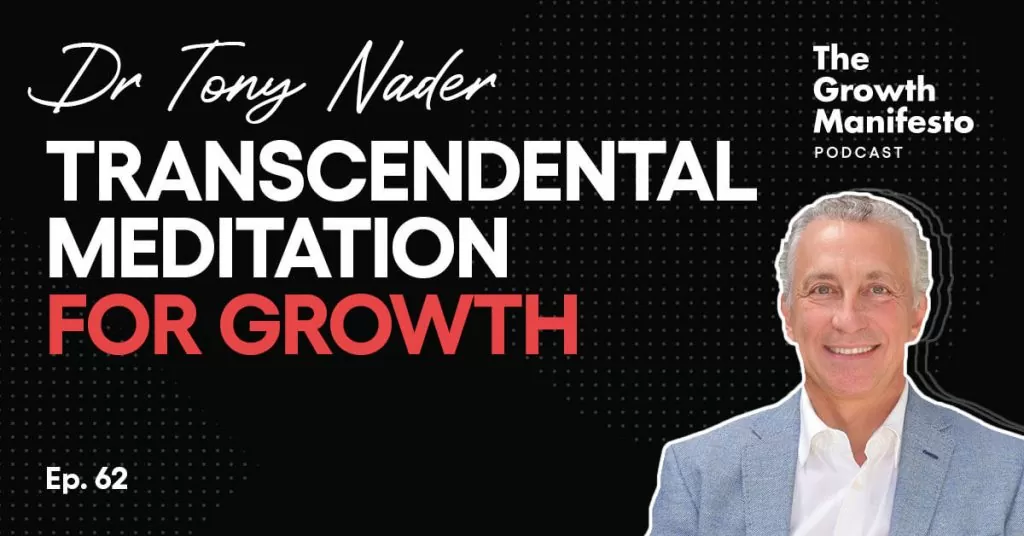


Overview
This episode is with Dr Tony Nader – a medical doctor trained at Harvard and MIT (with a Ph.D. in neuroscience), and a globally recognised Vedic scholar. As Maharishi Mahesh Yogi’s successor, Dr Nader is head of the international Transcendental Meditation organisations in over 100 countries. Dr Nader guides the Transcendental Meditation program and its advanced practices, and the practical applications of this technology in all areas of life and he has recently released his new book “One Unbounded Ocean of Consciousness”. In this episode we talk about how to use Transcendental Meditation to reach your full potential.
Key takeaways
- Transcendental meditation is a simple mental technique practiced 20 minutes morning and evening, sitting comfortably with eyes closed and no belief system required.
- Unlike standard meditation, transcendental meditation transcends surface thoughts and feelings entirely, settling the mind into a state of pure consciousness.
- Stress narrows awareness by diverting blood flow to the brain's fight-or-flight areas, while meditation increases blood flow to the prefrontal cortex.
- Broadening awareness through meditation lets people focus sharply on specific problems while still seeing the wider business picture and more options.
- Studies show people who practise transcendental meditation have 66% fewer heart attacks, strokes and deaths over a five-year follow-up.
Chapters
About the guest
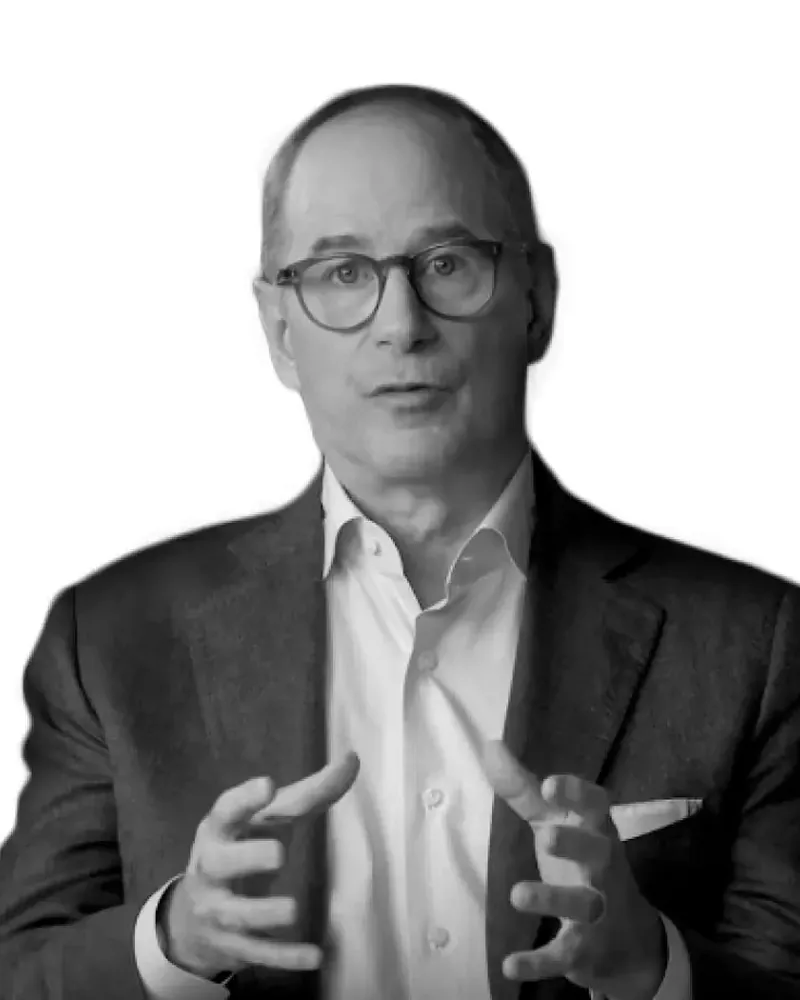
Dr Tony Nader
Dr Tony Nader is a medical doctor trained at Harvard and MIT with a PhD in neuroscience, a globally recognised Vedic scholar, Maharishi Mahesh Yogi's successor and head of the international Transcendental Meditation organisations in over 100 countries, and author of the book One Unbounded Ocean of Consciousness.
Transcript
Auto-generated from the episode audio, so expect the odd mis-heard word. Timestamps open the video at that point.
First, let's in a simple way say that transcendental meditation, often we say TM. TM, thank you. I'll start saying that from now on. It's simpler. It's a very, very simple technique to learn. Even children from the age of five on, as soon as they can understand what to do, up to any age, can learn it. There is no need for any preparation in terms of education, of background, of knowledge.
It's a technique. So there is no belief. It's not on the basis of philosophy or belief system. It's just a mental technique that is practiced morning and evening for 20 minutes, sitting comfortably in a chair, eyes closed. There is no physical exercise that is required. and also there is no mental manipulation that is required, which means we don't try to focus the mind.
So it is not concentration technique. We don't try to contemplate. So we don't try to guide the mind towards a specific way of thinking or feeling or understanding. So that's not a contemplation. That's not a concentration. So what is it? It is based on the ultimate nature of the mind. The nature of the mind is to search for more charm, more happiness. You're listening to the Growth Manifesto podcast, where we host in-depth interviews with business
leaders, authors, industry experts, and entrepreneurs with a singular focus around business growth. At the end of each podcast, we want you to walk away inspired, to think bigger, and to have actionable takeaways you can apply to improve your business. Each episode is like a masterclass on a key topic, so make sure to browse the episodes to find the topics that are most relevant to your biggest business challenges today. This podcast is brought to you by Web Profits, a digital growth consultancy that helps challenge your brands drive growth in a complex and fragmented digital landscape.
You can find out more about Web Profits at webprofits.io. Now, let's get into it. Today we're talking with Dr. Tony Nader, a medical doctor trained at Harvard and MIT with a PhD in neuroscience and a globally recognized Vedic scholar. As Maharishi Mahesh Yogi's successor, Dr. Nader is head of the International Transcendental Meditation Organizations in over 100 countries. Dr. Nader guides the Transcendental Meditation Program and its advanced practices and the
practical applications of this technology in all areas of life. And he's recently released his new book, One Unbounded Ocean of Consciousness. Today, we'll be talking about how to use Transcendental Meditation to reach your full potential. And just quickly, before we get started, make sure to go ahead and hit that subscribe button so you get the latest episodes as soon as they're released. Now let's get into it. Welcome, Tony. Hi, nice to be with you. I'm excited about this one because I've heard so much about transcendental meditation
compared to standard meditation, right? But maybe that's the place where we can start. Yeah, so what is transcendental meditation and how does it differ to standard meditation? Meditation as a general term is mental, something related to the mind, mental procedure. So it's not a physical, but there are, of course, so many kinds of ways to use the mind. Could be in counseling, could be in thinking, directing the mind to focus, contemplating on different thoughts, different proverbs, thinking about one's life, even praying or, you know, having a moment of peace and happiness to experience your breathing.
There is this techniques of mindfulness where you're mindful of your breathing or mindful of your thoughts. You witness them. You are being told to not be involved sometimes. Sometimes you do an analysis of the thoughts, go back to the past, have thought associations. All of these are generally kind of meditations. You can also think of beautiful things, think of compassion and important things in life, unity values, all on the thinking meaning level.
And transcendental meditation is very different from all the other aspects of meditation because it transcends all the surface values so that we go beyond. So transcending is to go beyond. So you go beyond mental thoughts, you go beyond emotions and feelings, you go beyond trying to do anything even, and you just dive within.
And that is a very natural, simple process that happens guided by the nature of the mind, which we can talk about more to see how does it work? Why does it work like that? And so therefore, it's not a contemplation technique. It's not a technique that depends on focusing or forcing the mind. You do not manipulate or even guide the mind in any way. and therefore in that sense it goes beyond all these other aspects and takes us to the inner deep
value of ourselves so that is in brief definition but of course we can explore that more in terms of why and how it happens yeah sure but just um because i'm going to ask a lot of questions um that's what i do um but just to clarify the first part is that meditation is about kind of understanding and kind of you know being aware of kind of how you're feeling emotions thoughts and so on transcendental transcendental meditation is taking that to the next level yeah it's
transcending the current state is that a right summary if i can yes yes it's going beyond to transcend is to go beyond. And in this case, it's go beyond the finest level of the mind to the level of pure consciousness, pure awareness. We say the mind is like an ocean active on its surface with waves. And as you go deeper into the ocean of the mind, it gets more and more settled,
more and more settled. And when you go to the bottom of the ocean, it's the most quiet level. And that is to transcend even, this is going beyond that to the field of pure consciousness. See, consciousness is like the screen in this case on which all the thoughts are happening. So, you know, we are conscious, so we have thoughts and we are absorbed by the thoughts. The thoughts are the objects on which our attention falls.
And there is a screen, actually, that upholds these thoughts. It's like you go to a movie and you watch the movie, you forget the screen because it's the movie that is happening. So we can say, well, think of the movie, think of what's happening in the movie, think about the characters, think about their emotions. You know, you get involved personally in it and all of that. And all of this is happening on the screen of consciousness, of awareness.
What we do in transcendental meditation is to go beyond the movie to the actual screen, to the screen that upholds all the thoughts and all the feelings and all of that. And this is our true inner self. This is what we say. It's the most settled state where there is no thought at all. Yet one is not asleep, one is awake. And so this wakeful and deep rested state is what we call transcendental state of consciousness,
transcendental state of awareness, where the individual is facing themselves. They are with themselves alone without the object of surface thinking and feeling and planning and all of that. And so you talk about consciousness a lot in your book. How do you define consciousness? Consciousness is that screen, we can say, on which our life happens on the experiential level.
So without consciousness, we cannot dream, we cannot hope, we cannot plan. And, you know, imagine yourself if you are in anesthesia, which is a very low level of consciousness. We don't call it no consciousness at all because the body is still being conscious of things and reacts to things in anesthesia. Even you can have change in heart rate and blood pressure if there is, you know, pain or something that happens.
So it's a different thing. So that's why we call it not completely without consciousness. But let's assume on the level of awareness as we know it, that in anesthesia or in coma, there is no consciousness at all. So in that no consciousness state, you do not experience anything. You do not experience your health, your happiness. You do not experience your wealth. You don't experience your creativity.
You don't experience the love that you have for others or that others have for you. The plans that you have. And so what brings all of this to light is consciousness. So consciousness is the light that lights up our life and allows us to see what is there. If you are in a dark room, there might be many, many things. But if it's really pitch dark, you don't see anything. And without the light of consciousness, you cannot experience anything.
Of course, we are defining it here by what it does, what it allows us to experience. But what is it itself? And this is where we go to a different level of understanding. And that is that it is actually consciousness is the source of everything. Consciousness is primary, and it is actually what ends up becoming the universe and our life and all that. But that's a different layer of understanding what consciousness is.
In terms of its effects, it is what allows us to see either more or less. So if your light is dim, you see less. If your light is strong, you see more details and you see broader. or if you like to call it in terms of the screen, if your screen of life is tiny, you see only a patch of the reality. If your screen is wide and broad, you see more and more of reality
and the things that are happening. So consciousness on an individual level can be narrow and can be broad. And that is what we would like to highlight, you know and that's why in the book i i highlight this the importance of consciousness and ability to see more or experience more of life it's it's a hard concept i think for a lot of people to understand this concept of consciousness even though everybody is conscious to a level the
size of their screen could be different the size of their screen could be extremely small or extremely big but it seems like transcendental meditation is all about expanding that screen is that right as much as possible is that right like exactly the goal as much as possible that expansion to accept kind of as many inputs as possible exactly it's broadening the awareness broadening consciousness you know when one is tired if you didn't have a good night's sleep
and you wake up, you're tired, you're stressed. There are so many worries. Your mind narrows down. It narrows down to the issues that you are facing. And this is part of the system that allows us to face situations. When we were in the jungle and we experienced a dangerous situation, like the tiger was going to pounce on us, It's not the time to think about music or planning or beautiful grand things and plan even your business and your family life and your education or whatever and experience life.
It's the time to run or to fight if you feel strong enough. So what the system does, even physiologically, it shuts off the higher parts of the nervous system, of the brain, which are in the cortical areas on the surface, and puts its attention, its importance, on the values that are in the inner parts of the brain, we call the limbic system area, etc., that are responsible for the fight or flight response. So the blood gets diverted even in the nervous system to the areas that will fight.
They get diverted to the muscles. You know, there is constriction of the pupil and other things that happen. There is adrenaline increase and like that maybe. And so increased cortisol and all of this are response to stress. Now, in life, you know, we don't have to have any more the tiger pounce on us. It's not every day that we encounter that. But even loud noise, even sometimes in some cases, you know, worries, things that happen in our life, they actually activate this system because it's translated subconsciously in our mind as being a danger.
And therefore, our consciousness gets narrow. It gets narrowed down and we don't see anymore the broad picture. And when we are tired like this, when we wake up in the morning and we're feeling tired or stressed, we notice that. We notice that, you know, small problem becomes like a mountain. We are annoyed. We're not feeling good about it, et cetera. When we are well rested within, even from just a simple good night's sleep, and the same problem,
We deal with it in a much more complete, holistic way, if you like. We have broad comprehension. We see that the mountain is not such a big mountain. We can solve it. We try to find solutions. We think of solutions. So this is a simple example to say how narrow consciousness can lead to aspects on the environment to become overwhelming. and broader consciousness allows us to deal with our life in a way that is much more complete
and allows us to be bigger than the problem and to solve it. So transcendental meditation, what it does is transcend all this. So go beyond the surface level to the deep level of the self, broadening the awareness. But as we said, as we go down in the ocean of the mind, The ocean, as we go deeper and deeper in the ocean, the regular ocean, it becomes more and more quiet, more and more settled.
And that's what happens also in transcendental meditation at the level of the mind. The mind settles down, settles down very deeply. And since mind and body are intimately connected, what's happening in the mind is reflected by a rest in the body. and when the body gains deep rest, it gets rid of its stresses and strains. This is how we heal ourselves naturally. You know, when you are tired, you don't try to pull the tiredness out of your muscles.
You rest and the body heals itself. But transcendental meditation brings a much deeper rest and a different quality of rest because it's restful alertness. So it's not that we are sleeping. We are very alert, yet very, very deeply rested. And this quality actually has been shown to remove stresses and strain and eliminate all of these blocks on our nervous system. Therefore, allows awareness to be wide and allow us to act from a more settled,
more inner, peaceful and quiet platform that allows us to then see more things. And so that is how broadening the awareness gives us the ability to have more comprehension. Yeah. And so this is a business podcast. So I'm going to focus a little bit on the business side of things because I think there's a lot of places where this is applicable, right? You just mentioned before the fight or flight response causes us to narrow the awareness, right?
And, you know, the goal is to kind of have expansive awareness, right? now in business there are a lot of tigers there are a lot of well there are the feelings that there are quite a lot of tigers around the corner there might not be tigers around the corner but there's a lot of feeling of things that could go wrong or pre-empting certain um challenges or you know like i think the world that we're living in these days especially with all the stuff that happened in 2020 there's a lot of stress there's a lot of stress in people's lives yeah and from a personal
side of things, it certainly kind of affects people's health. And we know there's a lot of studies around that, but from the business side of things, that stress causes the narrow awareness. And when you're in that stuck state, you can't see, you can't see the solution because sometimes the solution is a little bit outside of the narrowness that you have. And so am I correct in saying that kind of this approach kind of helps to find solutions
in stressful situations and especially on the business side of things, kind of expand the number of options available to solve a solution? Absolutely. You know, if you want to invest in the stock market, for example, you want to know the maximum you could about the company that you are investing in. If you have only one information, you know, it went up, it went down, then you're likely just to be playing a kind of game on the casino, maybe, or a chance game.
But if you know the company's profits and losses, if you know the demands on the products, if you know what the future is requiring, how people are moving in the market, if it's a good time, you know so many other things, interest rates, the banking and the finance and all of that. The more you know, the better you are able to make the right decision, not just the stock market, but certainly if you're creating a company.
And as you say, if there are potential tigers around and the competition and all these possibilities, the more you know, the better it is. And if you focus on only on one factor because you get stressed by it, you lose the ability to actually make decisions. So in business, you're not only just putting your money somewhere, you're actually either running a company or making decisions of investments and other big companies and all of that. And there you really want to find solutions, how to inspire the workers, how to advertise your product, how to this and that, and how to overcome difficulties that happen.
So what you need is actually the ability to focus on specifics, but with broad comprehension. If you don't have the broad comprehension, as you beautifully summarized and expressed, you cannot see solutions that are beyond the immediate concerns of the problem you are facing. Sometimes we have to find what we can call the second element or the third element, if you like. So there are two elements or something happening. You have to think creatively. You have to think.
And for this, what you need, actually, in simple terms, you need your brain. You need your awareness. You need yourself. And if you're stressed, your brain is not available to you. And this is what we're saying is scientifically studied. When we did transcendental meditation studies, we have found that, and many scientists have done it independently in different institutions, that, for example, the blood flow to the executive part of the brain,
which is the frontal and prefrontal cortex, increases during transcendental meditation. So this is where anticipation of the future happens. This is where the ability to think far happens and not to be stressed and focused on, as we say, the fight or flight response. whereas in the stress this part does not receive the proper blood flow and it's not working completely well and the blood flow goes more to the actual inner parts of the brain that deal with
the stress response and fight and flight response so it's a physical thing also and we have found also that there is higher connectedness between the right side left side of the brain front and and back, which shows greater integration and brain functioning. So if we bring this back to the business side, suppose you have an artificial intelligence computer or something, or you have a great computer, which has millions of processors.
And these processors, if they work separately, and they're not in tune with each other, they cannot perform in the same way as if they were able to work separately, but in coordination with each other, in harmony with each other, and therefore attend to the problem at hand from different angles, from different perspectives. The nervous system is like this. It is millions of processors, actually, with different parts acting
to assess this, the color, the time, the space, the past, the present, the future, the memories, the potential possibilities. And we use only a small percentage of that brain, of that possibility. And many of the reserves of the brain remain unused. So in transcendental meditation, also we have seen great coherence between different parts of the brain. And scientists have even said that it leads to an increased use
of the reserves of the brain. So this is where it's very important to be able to transcend so that you can see things from a distance. And many top executives, of course, they say that in order to run a company, the chairman or the CEO has to take a little bit of a distance from the small things. They have to see the things, but they have to be able to watch it from like an overview perspective and have all the elements
under their understanding and their control. And that is what transcending means. It doesn't mean running away and not being involved with the details. It means being able to focus even more sharply, but keeping that broad comprehension. It seems like this should almost be part of every leadership training program, right because it seems like you know um people spend their whole careers accumulating skills
and experience and kind of trying to uh to be the best version of themselves and trying to get to that next level the next promotion the next i say revenue target or whatever else it is right and it comes to a point where your day becomes full yeah and that kind of happens pretty early on like in a person's leadership experience, right? But over time, over five, 10 years, the fullness, that space that is left over to think about the future
becomes extremely small, right? And so it seems like this is one of the only ways to really through what everybody had to go through last year, like this year, there's stress in the world, then there's stress in business, And then there's the importance of making the right decisions, the right time, the right resources and the right information while still operating a whole organization and all the challenges around that. So it does seem to be that this is a very good way in to providing yourself space, right?
And to be able to think, right? Because it's really hard to do it, you know, just go, okay, now just relax, you know? That seems to be very hard, right? But it is in those times. And so there's a lot of different parts I want to go to here, but I just wanted to make that statement because I definitely appreciate that last comment that you made. But before I get to the next one, a quick question. This is a quick side note, right? Because the first time I heard about Transcendental Meditation was because Oprah was doing it, right?
And then I had to look around and there's all these celebrities that are doing it. Why has Transcendental Meditation kind of become so famous through people like Oprah? Well, because these are people that are true seekers of how to help society. You know, many are seen, okay, as being just celebrities and, you know, they kind of mind their own businesses and how to this. But they are creative people and they want to contribute to the betterment of society and human life.
And so when they find something that is precious and help them, they really want people to know. So it's out of totally genuine need and desire to help. None of them, absolutely none actually, makes any benefit. They just use their time and their energy to spread it out and make it known, you know, as we all do, even in our programs, as we do it. So when you see that, you know, and that ties back to what you just even beautifully said and summarized.
And that is, we can call the container of knowledge, the container of experience. What we have today in education and in business and all that is focus on information. Even in education, you take the students, you give them information, they have to remember it. And at the end of the year, they have to put it on a piece of paper or some exam. And then, you know, they pass. But nobody concentrates usually on the expansion of the container of knowledge, which is the student or the executive or the business person themselves, because they don't know how to do it.
There has been no means to expand the container of knowledge. We imagine somebody has this potential and that's it. And with this potential, you try to do whatever you can. The technology that is presented through the Transcendental Meditation Program is to expand the container of knowledge so that, of course, knowledge is important, information is important, but how much water can you put in a small glass
versus a swimming pool or a lake or the ocean? So we are the ocean. We are the ocean of consciousness. That's why the book is called One Unbounded Ocean of Consciousness, because we truly are the ocean of consciousness. And we can experience that. And the result is manifold, not only experiencing inner silence and peace and happiness, which is very fundamental and very, very beautiful, but also productivity is more, the ability to do more on the outside.
So there is this inner development in the direction of greater bliss, greater happiness, greater peace, greater harmony with oneself and the environment. And at the same time, the ability to be productive, to be creative, to achieve things in a way that keeps us healthy and there is no burnout. You know, now we're doing large studies in hospitals in the United States, many big hospitals on physicians burnout.
And we are seeing some tremendous results where they regain good sleep quality, less anxiety, less depression. Because, as you mentioned, we've been through this period of difficulty and time, as we, of course, all know. And the physicians, the doctors, the nurses, the hospital staff have really seen something which is dramatic and stressful.
And they are the first ones who kind of are taking this brunt of the, you know, hitting of the side effects, you know, on some way of the pandemic. And so this ability to release stress, to rest and to broaden one's awareness and to be refreshed and ability to do more and help others more has been also part of the beautiful results that this program brings.
And that's why celebrities who want the well-being of others promote it. fantastic you talk about the technology quite a lot the transcendental um the transcendental meditation technology and i'm going to try and get a few insights into it but understand it's this is only a very short podcast compared to how much content there is but high level high level how does one start to practice transcendental meditation i understand how it works um with standard meditation i'm not quite sure what that's called but
like where you kind of focus on the breath, but you focus on the awareness. You can either think of something or you don't think of something, you know? And so, and as I understand that, it's all about trying to get the gap between the thing that happens and how you respond, right? That was the best explanation I ever got about kind of how meditation, like the benefits of it, right? Like it gives you a little tiny space between the thing that happened and the response to it, right?
But it all starts with the technique, right? And so maybe we start with the technique, and then maybe we can speak about my second point. But just kind of how does transcendental meditation technique differ to standard meditation? First, let's in a simple way say that transcendental meditation, often we say TM. TM, thank you. I'll start saying that from now on. It's simpler. is a very very simple technique to learn even children from the age of five and on you know as
soon as they can understand what to do up to any age you know can can learn it there is no need for any preparation in terms of education of background of knowledge it's a technique so there is no belief there is it's not on the basis of philosophy or belief system It's just a mental technique that is practiced morning and evening for 20 minutes, sitting comfortably in a chair, eyes closed.
There is no physical exercise that is required. And also, there is no mental manipulation that is required, which means we don't try to focus the mind. So it is not concentration technique. We don't try to contemplate, so we don't try to guide the mind towards a specific way of thinking or feeling or understanding. So that's not a contemplation, that's not a concentration.
So what is it? It is based on the ultimate nature of the mind. The nature of the mind is to search for more charm, more happiness. You know, we always want to have more love, more beautiful things to see, more beautiful things to hear. We want more knowledge. We want more power, more wealth. It's the nature. Everybody's wanting more and more. So wanting more in life is the nature of the mind.
If you are, you know, sitting and reading a book, for example, and the book is interesting but not so interesting. and then some music starts next door, you can find your mind going to the music and even though the eyes are going through the lines and the words in the book, and this we all have had kind of this experience when a book is not so much attractive. Now you realize that we didn't do any effort
to go from the book to the music. Why? Because the mind and its nature, searching for greater enjoyment, greater happiness, suddenly just went there. It went to the music. It went to the thing. So, you know, if you have, let's take an example of a bee buzzing, a buzzing bee. It's buzzing, buzzing, buzzing. And then suddenly it's quiet.
When it's quiet, you know it has found the nectar. and it sits on the flower to pick up the nectar. So when it's attracted like this, the mind is like this. The buzzing mind is like this. And when the mind finds something that is interesting, it settles on it. You don't have to force it. That's why there is no concentration in this technique. You don't even have to tell it and guide it in that sense if you let it be on its natural tendency to go for more.
That's why we say transcendental meditation is natural. That's the term natural comes from here. It's not just, you know, a word that we throw. And it is natural because it uses the natural tendency of the mind to go towards more. Now, there is one difference. Usually we search for more always towards the outside. through our senses. We want to smell beautiful things.
We want to taste wonderful things. We want to hear beautiful music and harmony and beautiful words and all of that. We want to see beauty and harmony and health. And we want to see here always we are searching for more on the outside. In transcendental meditation, we learn how to take the inward direction and therefore dive within our self. And so why is inside, you know,
mind can say, oh, my inside is full of stress and strain and I'm tired. How would that be attractive? Well, the inner deep true value of the self ultimately is the unbounded ocean of consciousness, is the one field of source of our intelligence, our creativity, our integration, our wholeness is deep within us. And that's why we hear the sages throughout time saying,
know thyself, know thyself, as a very important aspect of development and growth. And know thyself doesn't mean just intellectually analyzing, because in transcendental meditation, there is no contemplation, we said. So it's not like trying to intellectually understand who I am, what I am, you know, take these thoughts. It's just naturally diving within and directly discovering, directly experiencing. But instead of experiencing through the senses outside, we experience through consciousness inside who we truly are.
And we find that inner peace and quiet, like diving in the ocean that we described. You dive, you take the right angle and you let go. And the diving happens by itself as you go deeper and deeper. And that is how transcendental meditation works. Now, there is a technique, how to do it, what happens when there is stress, what happens when we meet thoughts, what happens if we fall asleep, what this, what that.
These are things one has to learn. and it is taught in just three days, three, four days. You know, there is an instruction day and then three days of checking each day for one and a half hours or so. And then you do it yourself technique. You don't depend on coming to, you know, a class all the time and all of that, although that is offered all kinds of knowledge and experience. so that's basically the whole uh the whole kind of high level as you call it idea yeah and um
i'm interested to know you know um maybe it's too much because it's a whole day is it so like it takes a whole day to learn the ins and outs of you know what to do when you know this thought happens or that thought happens like is that like it no it takes a whole day for that to happen is that right no no it's uh the total thing is usually an introduction and your listeners who are listening to us they can assume they have an introduction in the introduction
in the introduction uh we just speak about the benefits of it we show usually the teacher will show scientific research about the benefits in health improvement of sleep anxiety you know removal, depression is going, cortisol level decrease, there is blood pressure normalization, then long-term benefits in terms of longevity and rejuvenation of the body. So the benefits are really studied, 600 scientific research studies and more now showing the benefits of
transcendental meditation. So in the introduction, we show the benefits and they are really on all levels, hormonal, blood pressure, mental, physical, behavioral, improvement in relationships, improvement in all aspects of life, and even changes on the level of society, because collective consciousness changes where individuals in society practice transcendental meditation. So first lecture, introductory lecture. Second lecture is what we call preparatory lecture.
and that introductory lecture we practically have covered so it's not the whole day thing it's just okay a few a few minutes together with alex and we're done awesome and then a preparatory lecture is what are you gonna learn and that takes half an hour 40 minutes and then a personal interview where you know the teacher discusses because it's taught personally every person have their specificity and they're personal and therefore the teaching is personal and then so these are three
quick sessions and then the instruction day the instruction day is for about one and a half hours maximum could be even one hour but it depends on the need the time and in the instruction day the teacher puts the student directly to the practice shows them how to do it and this then there are three more days so that's all and if three more days each day are one and a half to two hours and that's it it's not a whole day okay so because yeah because i was thinking about
all the busy people you know yeah actually you've done something new for the busy very busy people we have created an app that gives the three days of follow-up you cannot learn tm from a book you cannot learn it from an app. It is taught personally by a teacher. So there is a procedure, it is personalized, there is a personal attention. Now the three days, which are usually consecutive
of two hours each or one and a half hours, have always been done personally also. But now with the technology and advancement and processing and all of that, We were able to make it a personal level, which is there is interactivity through the app. So there will be questions and answers, and there will be knowledge that's given based on the answer that the student gives.
And so the three days can be done at home with still the teacher who taught UTM will meet with you briefly to do some meditation or some checking. but you can follow all the instructions at your own leisure in your old comfort of your home. Now, just for the listeners, it may seem like this is like some kind of paid promotion. It's not. I'm just really interested in understanding how to get into this. The benefits are strong.
I'm trying to understand actually how long it takes and what's the fastest way in. This is all my questions. You just said a second ago that the sessions are in person. What happens if you can't actually see somebody in person say for example there's a lockdown or it's too far away from the person like is it possible to do it through zoom or through something like this like is there like other ways of you know starting well most of it can be done as we said between
zoom and the app and all that except the instruction day the instruction day has to be personal because the teacher has to take the students stepwise through the procedure on a personal level. And not everyone reacts exactly the same. And so it's a very delicate time when one gives the technique and the teachers are well-trained to follow up. And so the procedure is done like that. So at least one meeting, you know, it used to be that all these meetings,
which we can call seven steps used to be always in person. And now with technology, again, we reduced it to one step. So one step one can make the trip, you know, take the possibility. And we have teachers all over the world. Okay. And so what about for groups? Okay. Let's say now this is fantastic. I'm a leader. This is great for me. And this is something I'm going to do. Right. But let's say now that I, like I'm now thinking about this for my team, right?
Because it would seem, and again, I could be wrong, but it would seem that if there was a company which really provided transcendental meditation to their staff, that collective consciousness of that organization would be far broader, right? And so they would probably operate at a far higher level. Have you ever kind of supported a company like that, where you've trained the organization?
Yes, yes, absolutely. Many, many companies like that. And what have you found from that kind of practice? The results are tremendous. The executives are very happy because we start by teaching, usually, the executives who make the decisions about whether they want to implement it or not, naturally, because they are the ones who are running the business and they want to see how their employees' time is being used and what benefits they offer, what bonuses, and all of that.
So they have to know first themselves what it is like. And so we have it in many, many companies and actually also in many schools and some government offices and rehabilitation, even Veterans Administration in the United States, for example, uses it for post-traumatic stress. And it's one of the most, if not the most effective one. The American Heart Association recommends it for people who have heart and vascular issues,
for stroke prevention and for, you know, studies have shown longevity. Those who practice transcendental meditation have 66% less heart attacks, stroke, and death followed up over five years. So also the benefits for the company, for the organization, for resiliency and interpersonal relationships. All of these are actually studied.
As we said also briefly, hospitals now are using it. So these are big organizations. So definitely it has been applied on all these levels. That's great. So just from a practical perspective, so would the instruction day that would happen in person and then like have there been organizations, because I'm sure it's very flexible, right? But have there been organizations where they all collectively meditate, like in the morning at the same time? Or do they kind of, you know, let they learn it and then they practice it separately and then that kind of affects their business?
You know, so what have you kind of seen and then what have you found to be the most effective? The basic technique is do-it-yourself technique. So you do it yourself. Even if you're in a group, you will just sit together, close the eyes, and meditate for yourself. You just don't mind the group. But what we have seen is when you are in a group, interestingly, the experiences are deeper, and the effects are also much deeper on the collective level.
So there is something which is beyond just the surface, which is the inner quietness that we share together when you meditate with a group that gives a feeling of silence together and deepens the individual experience and also has an effect on the company and on its functioning. You know, when people come together, there is something more than just being oneself and one's room.
It's something, you know, to be explained scientifically. There are many logics about how it could work, but it's real. It's for real. You mentioned 20 minutes in the morning, 20 minutes at night. how okay my first part of this question is how long should somebody be practicing this before they start to see um the noticeable effects i'm sure like there's going to be like effects immediately but the noticeable ones how long would that take for somebody to start um to see
immediately of course you said it but i want to emphasize it as soon as you started something you feel something different, something already there. Of course, the first time, you know, depends on the individual's stress level, you know, and all of that is different. We are all different. We have our own, you know, what you have eaten before or not, what, you know, how you slept the night before, if you're coming out of a stressful situation and all that.
But doesn't mean, you know, that if you come rested, you have certainly going to have better results than somebody who's stressed. Sometimes the contrast makes the one who is very stressed feel something deep. And sometimes those who are rested will feel something deep and deeper because they don't have so much stress. So it really is very personal. But within a few days, there is something that happens. And what's happening is so natural that it grows with you.
And that's why it's really so enjoyable to do. It's not something you feel, oh, now I have had a long day's work and I have to do one more thing. You know, maybe my exercise. Okay, fine. I like it. But again, to sit and do something more, I don't feel like it. But that's not the way it works. Actually, transcendental meditation, you're really looking forward. You're just finding the time you want to do it. and you sit and it gives you so much rest that afterwards you feel you're starting a new day
almost. And so we do it usually morning before breakfast and in the late afternoon before dinner because it's good not to have full stomach because during digestion, the blood flow goes mostly to the digestive system. So, you know, there are all these details that one learns during the three days of follow-up after instruction. And so within a few days, definitely you feel something.
And this grows and gets more deep and deep as it grows. You know, people go in their lives through ups and downs and moments where they're feeling better, moments they're feeling low. And these ups and downs reduce, reduce, reduce, and then the upside stays more. But there can be sometimes based on activity and life conditions and all that. There can be still variation. But it keeps going up and keeps going up. And the feeling of inner peace and settlement gets more and more stabilized with time.
And, you know, of course, it's very personal. But weeks, we can say, days for others. A few will take, you know, a month or something. yeah one of the um standard meditation i heard once on a podcast you have to do it really for about 14 to 21 days to really start to see it and you have to do a certain amount of per day and then that's when it becomes something where you actually will notice and i think i said this before right like the best explanation that this person was able to provide was that it gives you space between
the thing that happens and how you respond and like that was the best way i could i could understand the reason I was doing it because yes all these health benefits that's fantastic but like if I'm doing this to be more productive or to reach my potential you know so kind of how does it help my days and that that is something you know that space like to not be so reactive to the world that happens to you but to choose how you respond to all the events that are around you
If that makes sense, you know? Yeah, absolutely. Absolutely. This is the same in that sense. Only it happens naturally and spontaneously and profoundly. So the space is so deep and profound that you have it all the time. That's what we call actually higher states of consciousness. So, you know, there is transcending. And this also you learn during the three days. There is transcending, which is going beyond, and therefore you dive deep and you experience your deep self, which is a state of quiet and silence.
And then you act. And as you go in, diving in and acting, this state of inner silence stays with you longer than before. and ultimately you reach a state where you are always established in that state of transcendence, even while you are acting. So that state, therefore, of not being a football of situation and circumstances, but being a witness from a platform
of broad comprehension and great intelligence and understanding, this is the space. And the space becomes infinite in a sense, because the objects do not anymore disrupt your peace, disrupt your quietness, disrupt your intelligence. And you are sitting there and acting from a platform of broad understanding, broad vision, yet ability to focus very deeply. We have a name even for this. We call it cosmic consciousness.
When you are established in the self, and then you perform action based on a platform of stability and strength, we call this enlightenment even, or the state of where you know yourself and you never lose touch with yourself when you are exposed to the outer objects of life. So in the pursuit of realizing one's full potential,
even if that's even possible, it feels like it's more of a pursuit than it is like a destination, right? But let's say that there's this pursuit to reach a person's full potential. Is it correct to say that through transcendental meditation, you know, by connecting with the deepest, most quietest part of who you are and being able to listen to that because it's so full of all the stuff around
for like, you know, just for our whole lives. But, you know, just being able to get through all that and to really listen to what it is that you want and then like creating the decision of the things which you want to pursue. That combination, you know, with the ability to not listen to all the noise is the way to reach a person's full potential? Absolutely. Absolutely.
And this is not contrived. This is very important. If you try to do it on a contrived level, you divide your mind. This has to be a spontaneous situation that one grows in. And it becomes something that becomes natural and spontaneous through transcending. So there is transcending, acting, transcending, acting, transcending, acting. And now the transcending starts to permeate your action. Normally, when you see something, you see a flower, it takes over your consciousness.
Your consciousness becomes the flower in a sense. You hear a sound, you hear something. It becomes, for a moment, this is your consciousness. For the other moment, it's a feeling. The other moment is a thought. The other moment is a worry. The other moment is some event, something happened, what's going to happen in the future. Your consciousness is always taken over by these moments and moments. This is what is called in the ancient knowledge from which this technique comes, because this is not a technique I invented or anyone invented.
It's been thousands of years. It comes from yoga. It's the supreme level of yoga, which is unifying value. And in this, what it used to be called boundary, you are bound by the object. And then you are liberated. They call it liberation or self-liberation. and self-realization. Because when you are always the self, your self is never forgotten, and yet you act in the field,
you are liberated from the boundaries of the objects of perception, and you are established in the field of the self, and your self is full. It is the source of creativity and intelligence. It's pure consciousness, which what we discussed is the unbounded ocean of consciousness from which all energy and intelligence and creativity come. So you're established on that platform. So you have peace and happiness and fullness, and you're acting from the platform which contains all the variables
because it is the source of the management of the entire universe because that is the field. In physics, they call it the unified field of the laws of nature. and from that field you are acting so that is self-actualization in its supreme level that is self-realization that is also liberation from the boundaries of of this and that's why in this ancient terminology they call it enlightenment where you actually are not bound by smallness
but living in wholeness. Wow. Look, I have so many more questions, but that seems like a really good place to finish the podcast. This has been a journey for me as well, because I heard about transcendental meditation 10, 15 years ago, and I was going to get into it, but I got busy, right? But now I'm excited again. So for the other people who are interested in finding out more, My first question is, how do people find out more about Transcendental Meditation?
And the second question is, where can they buy your book from? Your new book. Thank you. Well, you know, nowadays, everything is on the internet. The best site is simple, is TM, Transcendental Meditation. So, TM.org. It's a United States-based site. but it covers the whole world so you can go in and search you can also go to drtonynader.com
d-r-t-o-n-y-n-a-d-e-r.com also there there is no knowledge about what i do and there is a place also to search for teachers the book is called one unbounded ocean of consciousness simple answers to the big questions in life. It has been published by Random House, Penguin Random House. It will be published soon in English in print, but it's already available on Amazon and Kindle as an e-book.
And it's Spanish. It is available actually as a print plus an e-book. And soon we're producing an audio book and a printed book, and it's being translated in many languages. Well, I had a sneak preview of the book on the Kindle. And if this podcast has started to really open your mind to the possibilities, you have to get the book. The book goes into a lot more detail. Dr. Nader, thank you so much for coming on the podcast.
This has been such a great discussion. I've always had so many questions about transcendental meditation, but you've convinced me anyway. I'm not quite sure about the listeners. I'm sure they will as well, because I have got a lot of questions and I need to be convinced. But look, thank you so much for coming on the podcast. This has been such a fantastic conversation today. Thank you, Alex. Wonderful podcast. Thank you for having me. Looking forward to getting in touch and maybe meeting personally soon. Fantastic. Thanks so much. All the best.
Thanks for listening to the Growth Manifesto podcast. If you enjoyed the episode, please give us a five-star rating on iTunes. For more episodes, please visit growthmanifesto.com forward slash podcast. And if you need help driving growth for your company, please get in touch with us at webprofits.io.