How Global Liquidity Affects the Economy
Michael Howell explains how global liquidity, not interest rates, now drives economic cycles, asset prices and Bitcoin's volatility.
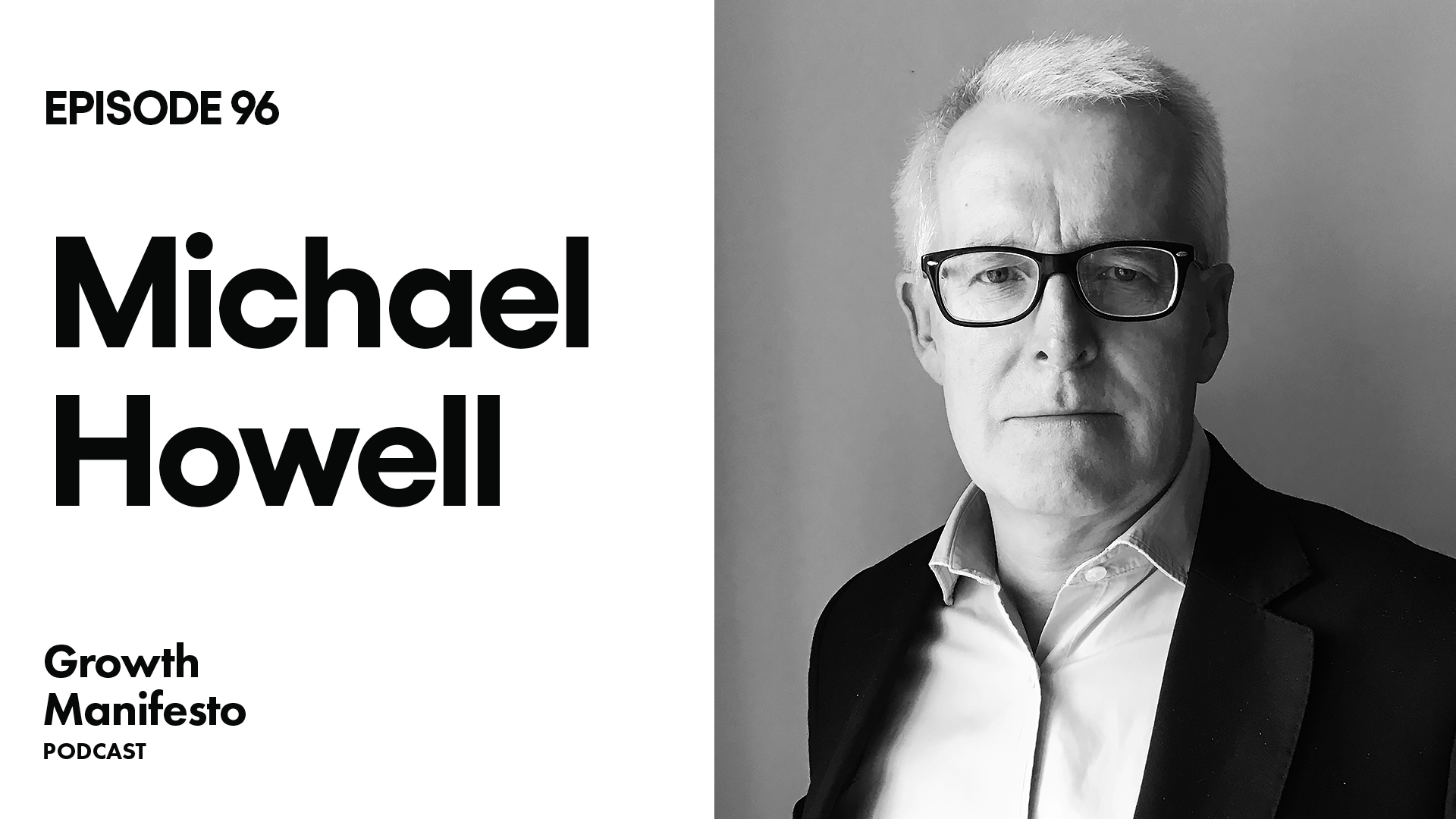
 with Michael Howell


Overview
In this episode with speak with Michael Howell – author of the books Capital Wars and Investing in Emerging Markets and the leading authority on global liquidity. He’s worked in finance for over 30 years and was the research director at Salomon Brothers where he developed the concept of ‘global liquidity’ – about how global liquidity affects economic cycles.
Key takeaways
- Global liquidity now drives the business cycle before real economies do, reversing the textbook view that economies produce and finance follows.
- The world must refinance roughly $70 trillion of the $350 trillion in global debt every year, nearly the size of global GDP.
- Strong economies tend to have weaker financial markets, because central banks pump the most liquidity into weak economies to prop them up.
- Bitcoin is about five times more sensitive to changes in global liquidity than gold, making it a far more volatile inflation hedge.
- Foreign ownership of US Treasury debt has fallen sharply from about a third a decade ago, pushing more of it onto domestic savers.
Chapters
- Intro: Michael Howell on global liquidity
- The $350 trillion debt refinancing problem
- Gilt crisis and SVB spark liquidity
- Liquidity now drives the real economy
- The US debt spiral and QE renamed
- Gold and Bitcoin as inflation hedges
- Bitcoin's five-times sensitivity to liquidity
- China, the yuan and the US dollar
- Where to follow Howell's liquidity research
About the guest
Transcript
Auto-generated from the episode audio, so expect the odd mis-heard word. Timestamps open the video at that point.
The key thing for all of us as investors is how do we protect ourselves against government-driven monetary inflation? And history has one asset that always delivers over the long term, and that's the gold price. Gold is always a fantastic monetary hedge. Another one could be, and I'm putting inverted commas, could be cryptocurrencies, particularly Bitcoin, because Bitcoin has demonstrated in the last five years an ability to keep pace or more than keep pace
with the monetary inflation we've had. You're listening to the Growth Manifesto podcast, where we host in-depth interviews with business leaders, authors, industry experts, and entrepreneurs with a singular focus around business growth. At the end of each podcast, we want you to walk away inspired, to think bigger, and to have actionable takeaways you can apply to improve your business. Each episode is like a masterclass on a key topic, so make sure to browse the episodes to find the topics that are most relevant to your biggest business challenges today. This podcast is brought to you by Web Profits, a digital growth consultancy that helps challenge
your brands drive growth in a complex and fragmented digital landscape. You can find out more about Web Profits at webprofits.io. Now, let's get into it. Hey, this is Alex Kleanthus at the Growth Manifesto podcast. In this episode, we'll talk with Michael Howell. He's the author of the books, Capital Wars and Investing in Emerging Markets. And he's the leading authority on global liquidity worldwide. He's worked in finance for over 30 years and was the research director at Salomon Brothers,
where he developed the concept of global liquidity. In this episode, we talk about how global liquidity works, the challenge that the US has with their debt, the growing Chinese yuan, how liquidity affects the crypto markets, including Bitcoin, and what you can do to protect yourself from an increasingly volatile economic landscape. I hope you enjoy this episode and make sure to subscribe to get the latest episodes as soon as they're released. How are you today, Michael? Pretty well, thanks. Doing well here. Great. And so you're based in the UK, right?
Exactly, yeah. I can tell from the accent, although I do have a few people I work with who are from the UK as well. So it is good to know that, yes, you're across the world. Look, this is going to be an interesting conversation because I don't think there's that many professionals outside of the finance industry who understand liquidity at the global level, right? And I know that the approach which you have is quite unique. And I have spoken to a few people in the industry and they speak so highly of you. And so I wanted to start by just unpacking the definition of global liquidity.
And just for the listeners, I'm going to be speaking about this from someone outside the finance industry. And so I'm going to be asking simple questions and I'm going to be there on the path with you all. Great. Okay. Thanks. First thing to say is the liquidity is basically a measure of something like money. Okay. So think of it in that way, but it's money, which is specifically circulating in financial markets. And I think what you've got to do increasingly is to differentiate what goes on in financial markets or asset markets generally from what's going on in the real economy. And we've evolved into a situation where finance is basically running
economies rather than economies running finance. And if you look at textbooks and the conventional wisdom, it says that what we've got is a situation where economies are dominant and finance are the servants, if you like, of the masters, which are the economy. It's now the other way around. Finance is the master and the economy is very much the servant or it gets the crumbs from the table. The whole world has sort of shifted its polarity. There's been a major polarity shift. And what I would go on to say is that if you look at the whole nature of financial markets,
they very much change their complexion. If you pick up a finance or an economics textbook or do economics 101, what you're taught is that capital markets are there to raise finance for new investment. In other words, interest rates are the governing price. If interest rates are too high, there's not enough finance for capital spending, the economy slows, etc. We're in a very different world. We're in a world now where there's not that much capital spending, or what capital spending there is being done by state enterprises in China. We're in a world where there's huge
amounts of debt refinancing going on. We've got to refinance debt. There is $350 trillion of debt out there in the world economy. And what that means is that that debt, which has an average lifespan of about five years needs to be refinanced frequently. So every year, you've got an average of $70 trillion that the financial markets need to refinance. So we've shifted from a world of new capital raising to rollovers or refinancings. And just think of that in a very
simple example, like a home mortgage. So if you've got to refinance your home mortgage after 25 years, say, you're not that interested so much in what the interest rate is you're going to pay on that refinancing. What you're desperate to get is the role. You want to find a lender that's going to lend to you again for another 25 years or whatever. And that focuses the mind. If you don't get that role, you're homeless. If a corporation doesn't roll its debt, it defaults. So in a world of massive debt, it's about refinancing. Now, if you've got this whopping great amount of debt to
refinance $70 trillion, which is the world economy, let's say, to put that in perspective, is about $120 trillion of GDP. So we're looking at almost rolling the entire GDP every year of the world in terms of debt refinancing. What you need is balance sheet capacity to do that. It's not the interest rate that governs it. It's the capacity of the financial system to do the role, the balance sheet capacity. And that is what we think about as liquidity. So in other words,
how much financial capacity do the financial markets have? It's similar in a way to money supply, but it's much, much bigger. It's a much broader concept. And it focuses specifically on the financial sector. And what's more, it's global, because money in that sense is fungible. so you could get your home mortgage financed by an American bank or maybe possibly a British bank if they've still got any money left or an Aussie bank. So it's a global concept. Does that make
sense? It does make sense. And I'm going to be talking about this a fair bit right now. How does your approach differ from the global liquidity index, right? Because that basically has a look at all the central banks and how much money that they're holding. But I know that you We look at things a bit differently. And so your approach is a bit more kind of accurate, I'd say, because you look for additional things that are outside of what the normal person can see. So how does your approach work? Well, okay, let me step back.
The first thing to say is we don't put a lot of importance on interest rates. Unfortunately, or fortunately, depending on which way you look at it, the media and the central banks are getting us to focus 100% of our time on interest rate movements. It's all about what the Fed's going to do with rates, what the Reserve Bank of Oz is going to do with rates, all these questions. They're the talking points, but they're irrelevant, really, in the big scheme of things. What really matters is this debt pile and how this debt pile is refinanced.
And so what you need is the ability to create liquidity in the system. And let me stress again, what we're looking at here is funding liquidity, because there is a concept that finance people think of as liquidity being a measure of market depth. In other words, they're looking at the other end of the pipeline. They're thinking of market liquidity. We're fundamentally looking here at what we think of as funding liquidity, access to funding. That's the key point. That drives market liquidity, but it's an earlier stage. Now, in terms of that dynamic, we therefore want to understand how that liquidity is being
created. It can be carried by central banks. They're very instrumental in doing that. Now, let me give an example, which may be a slightly wonkish example, but let me try and do that. One of the things that the Federal Reserve and many other central banks have been arguing for the last 18 months is that they've been doing what is called quantitative tightening. In other words, they've been shrinking the size of their balance sheets because for some reason, they say big balance sheet equals bad, even though we were told whatever it was three or four years ago, big balance sheet was good.
So they now come to the idea of big balance sheet bad. So they're trying to shrink it. In fact, if you drill into the data, what you find is the active parts of the balance sheet, the bits that really create liquidity in the system, because all of the balance sheet doesn't, only certain line items are liquidity creating. Those liquidity creating parts have been expanding for the last 18 months. So despite the fact they've been saying, hey, guys, we're tightening, we're tightening the system, we're shrinking our balance sheet, they're actually injecting liquidity in the system. Now, that was largely triggered by two
big events in the world financial system. Number one was the British guilt debacle. In other words, when the sovereign debt markets went AWOL after the Prime Minister Liz Truss came in and decided she was going to rewrite the rules. That was number one. That spooked finance ministries and central bankers worldwide. And what the Fed began to do then was to stop taking liquidity out of the system. They began to flatline their liquidity injections. And then you've got the
SVB situation in March, February, March of last year. Silicon Valley Bank went bust. And that began to spread into the regional banks. Credit Suisse versus Boston failed. That was merged into UBS. Beginnings of banking problems. And what the Federal Reserve then did was explicitly to increase the size of its liquidity injections. And what's been happening pretty much ever since is liquidity has been expanding in the US system, but also generally in the global system. Now, if you look
at that inflection point or that shift from around October of 2022, that's largely when the bull market in risk assets began. So they've been key. Another factor you've got to take into account, is it's not just about central banks, of course. There are other forces out there. One of those is private banks and the extent to which private banks, in other words, commercial banks, investment banks can actually lend on the back of collateral. Now, let me just explain that bit, because that's a nuance. I don't want to get too much in the weeds here, but let me try.
In the pre-2008 situation, in other words, before the global financial crisis, there was a lot of lending on trust within the world economy. So you're a bank A, I'm a bank B, I'd lend to you, I believe you, I trust you. That interbank market was huge. The problem is, is after 2008, trust disappeared. And what you needed was collateral. So I'm only going to lend to you if you can post good collateral to me. In other words, you've got a government bond, for example,
which I've got a claim on. And then I'll lend to you. I'll basically do a maturity transformation. I'll lend to you short term and you'll post a bond to me. So now the bulk of borrowing, just again, think of the home mortgage example, that's collateralized borrowing, but it now extends across pretty much the entire system. There's very little unbacked lending going on. And what that means is that the value of collateral is important to the whole liquidity and credit system. So the other wrinkle in this whole thing is it's not just the central banks,
is if the value of collateral changes, or it becomes more uncertain, that will also change the dynamics. So you've got these two big forces really coming together. And the ideal world, as it happens, from a liquidity and an investment point of view, is if the central banks are basically easing. And that's normally a situation, A, when you've got banking problems in the world, or you've got a situation where economies are lackluster and central banks are trying to goose what is a sluggish economy. That's the ideal situation, OK? So you don't want very strong
economies. And that's the great paradox in finance. Strong economies don't have strong financial markets. It's actually weak economies that tend to have good financial markets because the central banks are trying to goose them higher, like goose the economy higher. And the other thing is if you've got stable bond markets, in particular, the volatility in the bond market is actually low, because that means that collateral values are a lot more certain if you've got very stable bond prices. So those are the two levers, if you like, of the system, collateral and central banks. Does that make sense?
It does make sense. I am going to ask a few questions that probably sound super simple to you, but I do need to make sure that everything, I guess, makes sense for myself and also for the listeners, right? Especially as we're not finance professionals. The first one is, so is global liquidity the money supply across the world? Is that a simple way to think about it? Or is it the total funding? Yes, please. Yeah, sorry. The simple way to think about it is it's the elements of money supply that is in the financial markets, okay? It's not the bit that's in the
real economy. Now, I'm going to go on and say something a little bit just to embroider that a tad, right? What people define as money supply is normally bank deposits in retail banks, retail bank deposits in high street banks, okay? So what's in Commonwealth Bank, in other words, what you deposit in Commonwealth Bank, basically is part of money supply. What is outside of money supply is actually the bits that really matter to the financial markets, which is wholesale money.
In other words, we're thinking of money supplies being more retail-based, but you've got a wholesale end note as well. Now, it really does get stuck in the weeds. So that's basically things rather like repo market activity, et cetera, which can be driving the system. So that can be finance to finance transactions. That's a kind of a gray area, in a sense, which is a very wonkish area. But that is an important element in understanding what Gliquidity is. But if you think about it as the broad money supply that is vested in the financial system, that's a good definition.
I understand. I understand. And so there's the money in the banks, and then there's essentially everything in the wholesale markets. In terms of the size of it, yes, what is the proportion between the money supply and the wholesale market? Okay. The number that we have for global liquidity is about $170 trillion. Okay. And the amount that's in the real economy is probably something nearer about 70, something of that magnitude. So what you're looking at is an aggregate which is probably around three times as big, two to three times as big.
So what changes the expansion or the contraction of the global liquidity? Well, it really comes down, as I said, to those two levers. It's what central banks are doing, or it's what happens to the pool of collateral. Those are major drivers. Now, there's also, you could argue on top of that, risk-taking activity by the commercial banks or the wholesale banks or whatever. That will come into it. But that largely depends on actually a stimulus from the central banks. So in other words, these players will be a lot more keen to lend if they think the central
banks have put in lots of cash in the system. Equally, if you've got collateral values, which seem to be very solid and rising, as a lender, as a financial system lender, you're going to be keen as the lend. So you tend to find that you've got this base, if you like, this primary base of liquidity, which is the central bank and collateral. And that tends to drive lending in financial markets through the system. So global liquidity seems to be the most accurate measure of the future economic state of specific countries.
It seems like, first of all, is that a correct statement? Because I speak to like a lot of people like in the finance industry and they always start with liquidity and then they go down from there. And so liquidity seems to be the macro driver of growth for specific asset classes and so on. Is this a correct statement? And I'm just going to continue to put statements out there. Feel free to shut me down and say, incorrect. It's possible it has an effect in the way that you say. But I don't think you can get away from the fact that what's really driving the real economy in terms of the trend in the real economy is what we all know and love, like enterprise, productivity, what small business are doing, innovation.
All these sort of supply side factors are really what's driving an economy. In other words, if you look at an economy like Britain, where all those factors are going downwards at the moment, where you've got limited innovation, you've got low enterprise, you've got everyone's mood is very depressed and all that sort of thing. By chucking liquidity at the system, you're not really going to revive things. Whereas you look at America, where there's a much more dynamic, or odds where people actually want to make money, there's a lot of enterprise, innovation, et cetera. If you put liquidity into that, you're going to improve the situation for sure, but you're
not going to change the underlying trends. And that's really the key thing. Liquidity will affect the cycle, but it won't affect the underlying trend of economies. And that's where I think you've got to draw that distinction in terms of what I'm saying. So if you've got a situation, for example, where, let's take the US right now, where you've got probably a strong underlying trend in the economy, or certainly a lot stronger than many other regions because of the innovation technology of the US system, and you start throwing money at
it. So you start expanding global liquidity or liquidity expands. Then what you've got is a situation where you're going to get an increase in acceleration in growth, but it's going to be a business cycle move. So that business cycle is effectively going to be driven by the pool of liquidity. Now, the interesting point is contrast that with what the textbooks tell us or what our experience was maybe three or four decades ago, three or four decades ago, where economies were much more manufacturing based, where you had capital expenditure, which are big item. So in
other words, businessmen were thinking about building a new chemical works or a steel works or whatever it may be, very capital intensive spending, then that was also driving the business cycle. In other words, in the traditional textbook way, the capex cycle is dominant or the inventory cycle is dominant. That's not really the case anymore. What you've got is a very different dynamic. And now it's a situation where the financial markets tend to drive the real economies and they tend to drive the real economies through wealth effects. So in other words,
what happens, the mechanism now is kind of different, is that what you'd see is the financial sector will expand. So let's say the central banks get spooked by a banking crisis. They start to throw liquidity at the system. The system reliquifies. Asset markets tend to feel the nice warm wind behind them of more liquidity. They go up in price. There's a wealth effect generated. And consumers and businesses, to the extent that they're involved too, will actually feel their wealth rising. So they're going to spend more. And that then drives the
economy through that mechanism. So I think you've got a very different dynamic. It's now much more that financial markets drive the business cycle than the business cycle drives the financial markets. And the sequence is liquidity first, financial markets second, real economies third. You mentioned before that production is a really important part of the economic drivers, Right. But then the same time, the business cycle is led by the financial markets. Right. So is it it's so it's a bit like the chicken and the egg.
Right. Because it sounds like if finance is leading the economies, but the economies actually have to produce something, there's like an interact a relationship between the two. Right. And so how does the average person understand is what's happening in the world right now, you know, between, I say, for example, the excessive debt of the US and, you know, like all the concerns that are happening, uh, it was with the downfall of the dollar and the rise of the one, right. But there's all this stuff happening at, um, happening at the moment to the bricks and so on. Right. And there's all this kind of instability and volatility right now.
there's wars going on. There's so much happening right now. Is this thing happening across the global scale? Is it starting from liquidity again? Is this a component of that? Is this almost like a response to what's been happening in terms of the size of the debt and the refinancing of the debt and the fact that China is actually the one who's investing in capital and then everyone else is just refinancing their debts? Well, the short answer is yes.
Global liquidity is the one that's actually the driver right now for all this instability happening across the world, well, a part of the drivers of what's happening across the world? To understand what's happening, you definitely need to understand what's happening in terms of liquidity. Absolutely, 100% correct. But if you come back to why is global liquidity doing what it's doing, it comes back to this debt situation and understanding how the shape of the world economy has changed. Now, what I said is that if you look at economic textbooks, they'll give you
a very different model of how the world works. It's all about capital spending. The capital spending drives the business cycle, etc. Interest rates are important. That world is gone. And that world changed really because of two big factors. Number one is China. So China came in, muscled in. What you've got is the world economy pre the fall of the Berlin Wall and the opening up of China was a labor force of probably, what, 2 billion in the West or generally of that workforce of that
amount, that more than doubled with the entry of Eastern Europe, Russia, China, India. This globalisation, if you like, was a huge supply shock to the world. Now, what that meant was a lot of Western industry basically became competitively challenged and relative to China, unproductive or less productive. So all the new investment was going into the East, whereas the West was suffering and there was no incentive to invest because the returns on capital
dropped away. So in other words, to keep going, a lot of companies began to borrow more money. So debt began to explode. Economies were still very lackluster. So governments came in and governments started to spend money. I mean, look at the escalation of debt in Japan, for example, after the bubble burst. Their debt GDP is eye-watering numbers to over 250%, for example. OK, these are big, big, big, scary numbers. And then what you've also got on top of that is that aging demographics, the other big factor, is meaning that consumer spending is probably
challenged because you haven't got the younger cohorts who are doing new household formation and lots of spending. And the older generations don't spend that much or they spend on different things. So the economies tend to slow down. And that was another case evidenced by Japan. So again, what you need is more debt to keep the economies rolling. So what we've had in the last two decades is a huge accumulation of debt. Now, that's point number one. Hold that thought. The second thing to say is that, as I said right at the beginning, debt has to be refinanced.
So what you've got to do is to roll the debt periodically. You can't borrow, unless you're borrowing with a perpetual bond, you can't borrow forever. You have a term. So I issue a bond or I borrow it from a bank for three years. I issue a bond for five years, for 10 years or whatever. But I've got to roll that over. I've got to refinance. I've got to come back to the market. Now, spoiler alert, debt is never repaid. That was what I was going to ask, right? If it continues to increase, how does this ever kind of end?
But I cut you off. This is the second point. That's a brilliant point. That's the question we're all going to ask, because debt is accumulating. Now, the wiring dynamic that is coming in here is that if you start to look at fiscal situations in the world, take America. I mean, America is, in many ways, the cleanest shirt in the laundry when it comes to fiscal problems compared with Europe, Britain. I mean, Oz is actually in a pretty good shape because of the demographic backdrop.
of, but uniquely, perhaps. Japan is in a bad way. But what these countries basically have is a sharp deterioration in their budget deficits. In other words, think of America, and use America as an example, because it's very transparent, and the Americans are very open with the data, and they project the data out 50 years ahead. So hey, we've got a pretty good benchmark. But look at what's happening in America. You think of these dynamics. Number one is you've got an aging population. Now, America is not aging anything like as fast as Europe's. But in America,
they've got to start paying up enormous amounts for Medicare and for Social Security. Well, just think about Europe in that context. That's going to be massively worse, right? You've got also an increase in defense spending, which is slated because of all these geopolitical tensions. So that's another factor you've got to add to it. And then you've got a third factor is, which of the presidential candidates is going to raise taxes? Neither of them. Just forget that. I mean, the society is so polarized that you simply can't say, I'm going to raise taxes,
because you'll get a marginal swing or a significant swing to the other side, and you're going to lose the election. And that's why both Trump and Biden are doubling down and saying, we're not going to raise taxes. We're not going to cut spending. We're actually going to give you more money. Now, who pays for that? And that's the real question. Now, America has had the luxury in the last few decades that American treasury bonds are the safe asset, the pristine asset that everybody wants to hold, because they're considered to be absolutely safe, rock solid.
China bought tons of them. Japan has bought massive amounts of US treasury bonds. Back not even probably 10 years ago, a third of America's debt was held by foreigners. That number is coming down rapidly. And that's the average holding of debt. It's not the marginal buying. At the margin, these guys are selling. The Chinese are selling their treasuries. The Japanese, given the problems with the yen, are likely to be selling theirs as well. And so what you've got is the funding sources for the US are shrinking fast. So they're going to go back to
their domestic savers. So what you've got is a very unattractive situation. Now, it gets worse than this. And this is the thing that is the magic of compound interest. And I think, wasn't it Einstein who said the eighth wonder of the world is compound interest? And that's really the problem you've got. Because basically, if you start to look at the interest bill that America is paying, it's now over a trillion dollars a year. In other words, more than they spend on defense is now being spent on interest payments. Just think back to 1980, when Reagan came in,
when Volcker was at the Federal Reserve, when US interest rates were 15%, right? But the debt GDP ratio in America, public debt GDP was 25%. So even though you had 15% interest rates, the interest bill on the debt was small, okay? They can manage that quite comfortably. Now what we've got is interest rates a third of the size that they were in 1980, but the debt burden is five times as big. So what you find is that that's starting to scale up.
So the interest bill now is meaningfully large. And what that tells you is, in other words, to balance the budget with that huge interest bill, the US has got to go into huge primary surplus. In other words, before interest payments, the US government, federal government has got to be taxing more than it's spending. Well, good luck with that one. That's not going to happen. But it keeps getting worse. Because then if you start to say, well, OK, the debt GDP ratio this year is 120%.
And then by 2050, on Congressional Budget Office, which is the bipartisan neutral body in America that monitors this stuff, they figure it could be 250%. 50%. So you're going to pretty much double again. So this interest bill is growing exponentially. And the question we've all got to ask is, how do they fund that? Now, the easiest thing for politicians to do is, wait for it, kick the can down the road, because that's what they're used to doing. They don't want to raise taxes. They don't want to cut spending. They're going to
basically fill the gap by printing money. And whether that comes directly by the central bank saying, hey, look, you heard of this QE thing? Well, we're going to rename it now. QE was a bad name. We're going to call it QS, quantitative support. The Federal Reserve Acronym Department works overtime, and they think of a new name. And they call it quantitative support or something like that. But they start to roll that out. Now, hey, look what's going on in America right now. What did they announce last week? They announced that their QT program, quantitative tightening,
was being tapered. They were cutting their treasury roll off from $60 billion a month to $25 billion. So they're already stepping in this direction. And all they need now is to say, well, actually, we're going to start expanding the balance sheet and liquidity once more, and we're going to start to buy the government debt. Now, the problem is, is if they do that, or what's more, they get the banks to do it sneakily for them, because they basically start to issue more treasury bills, very short-dated debt that the banks buy. That is what is called
monetization. And monetization, in other words, monetary inflation, is what the central banks are doing. They're devaluing the value of their paper money. And they're doing that either secretly, surreptitiously, but they're doing it over the long term. And the scale of this is ironwateringly large. Now, in past cycles, where you've had a hint of finances going wrong, what the policymakers would say is, hey, what we're going to do is we're going to jack up interest rates. We're going to
discipline the markets. We're going to force them back out of equities or risk assets, back into the safety of government bonds. We'll get everybody in government bonds. We can finance ourselves. Inflation comes down. The economy has a recession, but hey, that's a short-term problem. And then we'll start the whole process again. But the problem is they can't do this in the future because the interest bill is so high. So if they start raising interest rates now, they're going to basically shoot themselves in the foot because they simply can't manage the process.
So what you've got going on is a lot of manipulation in the system, whether it's called yield curve control. They're trying to keep a limit on yields, government bond yields. They're keeping interest rates lower than they probably should be. All this sort of stuff, they're talking about all this forward guidance, this sort of mystical stuff. They start suggesting inflation is coming down. They're saying, hey, but then you and I know that inflation is not what they report. Our inflation rates seem a lot higher than that. Well, hey, that's a surprise, isn't there?
there. And what you've got is this long-term inflation. Now, the key thing for all of us as investors is how do we protect ourselves against government-driven monetary inflation? And history has one asset that always delivers over the long term, and that's the gold price. Gold is always a fantastic monetary hedge. Another one could be, and I'm putting inverted commas, could be cryptocurrencies, particularly Bitcoin, because Bitcoin has demonstrated in the last five years
an ability to keep pace or more than keep pace with the monetary inflation we've had. And so what we've got to start thinking about is asset allocation in a world of what I would call fiscal dominance. In other words, where the central banks are the slaves of government funding. So they're just doing what the governments tell them. We've come through a period of several decades, probably beginning with Paul Volcker in America when he was head of the Federal Reserve, which you could call monetary dominance, where basically the central banks say, hey,
we're in control. We're going to target inflation at low levels. We're going to be disciplined. The governments have got a count out to us in terms of what the fiscal deficits are doing. You've got to have austerity. But the central banks are in control. That world is a brilliant world for the asset allocation we've all got on our pension funds, which is the 60-40 mix. 60% equity, 40% bond. Hey, that works. It does not work in a world of fiscal dominance. In a world of fiscal dominance, you don't want government debt. Bad idea. Well, what you do want is at the front end of the curve, and there's short-term rates.
You want to start diversifying. You want to think about real assets, because they're a great monetary inflation hedge. You want to think of gold, and maybe you want to think of things like Bitcoin. And I'll come back to the asset part shortly, because that is certainly an area which I want to touch on. Coming back to the US debt. So now everyone's experiencing inflation. So there's less money in the economy. It's struggling. And they're looking to kind of find a way to get themselves out of a hole, which doesn't seem like it's going to happen. It seems like it's
significantly increasing. So what happens to a country if it can't get out of debt? And then if it can't actually cover its interest payments. And if that country is the reserve dollar of the world, so what happens in that scenario? Well, the answer is they can always cover their interest payments because the debt is dollarized, so they can always print dollars. That's not a problem. But they print the dollars, but then that increases the money supply, which increases inflation, which lowers the economic power. So it feels like that's a cycle
where the population will start to suffer, I'll say, for example, Argentina, right? Or Venezuela, you know, that like essentially the currencies are completely crushed. And, you know, I think they were using it for toilet paper because it costs less to use the money than to pay for toilet paper, right? So like, and so that kind of scenario seems scary for at least a lot of the Americans I'm talking to, right? And so is this a realistic scenario or not really? Because it seems like the US dollar, because it's a reserve currency, it's got some stability for a couple of decades at least.
I'd love to hear your thoughts on it. Yeah. Well, I think, I mean, the first thing to say is that you just think back to the old Irish joke is if you want to travel to Dublin, don't start from here. The point is that the lost travelers asking how to get to Dublin and the Irishman says, if you want to go to Dublin, don't start from here. And that's the issue for basically policymakers acres worldwide. They're in a very bad place, and they shouldn't be where they are. But they are, and we've got that, and you've got to face up to it. Now, are we going to get hyperinflation like Argentina? I don't think so, no, or Zimbabwe or whatever. I don't think so. That's not on the
agenda. But will we get higher levels of monetary inflation? I draw the distinction, which is an important one, between monetary inflation and high street inflation, but I'll come back to that split. Are we going to get more monetary inflation? Yes, we are. It's happening already. That's the global liquidity dynamic that we talk about. That is rising. And what you want to do is to basically invest in assets or bear in mind those assets that are most sensitive to rising global liquidity. And that tends to be blue chip equities, commodity prices, real estate,
primary list rate, obviously, gold, things like Bitcoin. Those are the assets that tend to be the best hedges against the monetary inflation. And monetary inflation is going up. But we may be only talking about, in terms of a trend growth rate, a few percentage points, not hundreds of percentage points. But that's all that's needed. We just need a little bit more. And that comes back to the compound interest point, is that over the long term, if you're growing a few percentage points more, it adds up. You get this sort of exponential growth. And that really is what
maybe is on the agenda. So a bit more, but not a lot more inflation is what we're really saying. But then that matters. So in other words, rather than facing, let's assume monetary and high-street inflation are the same, rather than facing 2% or 3% inflation, we're all facing 4%, 5%, 6% inflation. Now, can you accept that? Well, yeah, probably. It's uncomfortable for people that are on low incomes, because inflation tends to hit those the hardest. And if asset markets are rising
at a faster clip, then it creates a much bigger wealth divide. But hey, that's what we've been seeing anyway for the past couple of decades anyway. And maybe there are ways within the tax system of somehow addressing that. But that's another challenge. Why is there a difference between high street inflation and monetary inflation. And the reason for that is that monetary inflation is part of the high street inflation input. But you've got to also think about what's happening to costs. And in the last two decades, we have had a lot of monetary
inflation, evidence rising stock markets and asset values, right? But that hasn't spilled over to the high street because we've had cost deflation from technology, from China dumping cheap goods, et cetera. And those are the facts that come into the equation. Now, if you roll forward and say, look, high street inflation equals the cost bit plus the monetary bid, if monetary inflation is running at 5% and cost deflation is running at 2%, you're going to get a net impact on the high street of 3% inflation. But if your cost element suddenly swings, oil
prices rise, technology slows down, China starts to be inflationary, for example, then you've got a cost term on which may be another 2%, plus your 5%, you're up to 7% inflation already. That's how you've got to think about this. What we're saying from an investment point of view, we can't help on the cost bit, because that's all about the economy and the supply side. But we can say you protect your assets against the monetary inflation by thinking about how you diversify against these different assets. Bonds do not match inflation by definition.
that's good and so um for people to protect themselves against this it sounds like this type of scenario just where the economies have lots of debt and the interest payments are high and so are they put more money and the cycle like and it continues right it seems like if you already have assets you're going to be in a much stronger position than if you don't have any assets. It sounds like the wealth divide is going to increase significantly. First of all,
is that a correct statement? It's probably the case. Yes. It's probably the case, right? Because the more money's in the economy, the more inflation goes up, the more asset prices go up and the harder it is for the average person to afford something like that. And so if you're going to look to the future, right? And try to protect yourself against inflation. You know, say for example, if you've got some cash in the bank, it sounds like having cash in the bank is a bad idea right now because you'd be losing 7% per year, if not more,
right? Because of the inflation, right? And so now we're going to invest in either gold or Bitcoin, assuming that we can't afford like houses and properties and so on, right? Or gold. From what I understand about gold, it's like all the central banks are hoarding, are starting to hoard all their gold. And so can the average person actually invest in gold? Are they just investing into like an ETF? Is like an ETF safe? You know, like how does the average person start to now protect themselves against inflation? And then we'll come to Bitcoin
because Bitcoin's obviously the easy slash the risky one, depends on how you think about it. But yeah, how do you think about gold for kind of, yeah, the average person if they wanted to invest in gold? RAOUL PAL Well, you could do it. I mean, you can buy a gold ETF. That's one way of doing it. It's clearly possible to buy bullion anyway. You can buy that. But it's probably inconvenient because you've got to carry it by yourself, or you've got to store it somewhere. And that clearly
is a security risk. So when you buy an ETF, that's an easier thing to do. So that's number one. Or you buy gold miners. Gold mining stocks, Oz has got lots of those in the market. It's a gold producer. Hey, maybe think about that. Buying shares in some of those resource companies makes sense, I think, in this world, not least because we're in a world of geopolitical tension where if you look at historically those periods, there is a great accumulation of access to
commodities during those periods. So commodity markets tend to go up. So that's probably not a bad call. I think on Bitcoin, it's a different question because regulation gets in the way, and it's very difficult, or the regulators have made it hard to invest in some of these cryptocurrencies, but clearly you can do it directly. Individuals can go directly to the designated exchanges. And now you've got ETFs on Bitcoin, BlackRock do one, for example, which are widely available for investors. So there are other avenues that you can now use.
The world is sort of growing in terms of these access to these alternative investments. So is part of the reason that Bitcoin is having such a big surge because of the global liquidity challenges right now, because of the size of the debt, and because it has to be refinanced every year at 70 trillion, I believe you said before? The fact is, yes. I mean, that's a key factor. If you look at the data, the data definitely supports that conclusion. Now, why is it that
Bitcoin is so sensitive? I think it's a hard reason to evaluate. Once you actually drill into the mechanics, why is Bitcoin so sensitive to liquidity is a question that I find it very hard to answer. But the facts speak for themselves, it is. Now, if you think of Bitcoin, we talk about it as being exponential gold, because it moves rather like gold does. Now, to give you some numbers, and these are statistical numbers that we've evaluated looking at the data, for every 10%
increase in global liquidity, gold tends to go up by 15%. So it's a 1.5 multiplier. If you look at the same analysis for Bitcoin, the answer is five times multiply, 50% increase. For every 10% increase in global liquidity, Bitcoin goes up 50%. It's very, very sensitive to liquidity. Why is it five, not three, not four? I have no idea. But the fact is it is. And that's how it's acting. Now, clearly, I say clearly, probably if global liquidity goes down 10%, Bitcoin may go
down 50. So it's a very volatile asset class. And you've got to start thinking about it in that dimension. Now, that doesn't mean to say that it's a bad investment, but you've just got to know what you're buying, and you don't buy so much of it. So if you think something's going to be volatile, you don't put all your eggs in that basket. You just buy a little bit. So you might put 2% or 3% of your wealth in Bitcoin. You may put 10% in gold. So what I'm saying is you've got start diversifying. If you go back to the 1970s, it was very, very common for investors to hold
gold in their investment portfolios. That fell out of fashion as inflation came down, but it's coming back. Investors are starting to move into gold. Now, the significant point, which people will not know unless they look at the data, is who are the big marginal buyers of gold? And the answer is the central banks. They are accumulating. But hey, it's not the Reserve Bank of Australia. It's not the Bank of England. It's not the Federal Reserve that's buying the gold. It's the BRIC economies and their friends. In other words, it's China, it's Russia,
all these, this grouping. And if you look at the data, what you find is that these guys now own more gold collectively in this BRICS club than is in Fort Knox in America. And they've just overtaken the US in the last quarter, in the first quarter of this year, in terms of the amount of gold that they're buying. And that is moving upwards from the left-hand side of the page to the top right. The line is moving upwards. And they are buying more and more.
Now, what do they know that we don't? I don't know, but they think gold is a great asset. So they're buying gold, which means there's less available for retail. And that is why you've got the gold, part of the reason why gold is going up. Now, what I would argue, and this is maybe the wrong analogy, but it's an interesting point to ponder for everybody, OK? Let's go back to the early 1920s, 100 years ago or more, right? And think of what was happening in Germany. And Germany came out of World War I, defeated, and they started to print money.
And that money printing created a hyperinflation. Now, if you were the older generations in Germany, and you basically had your money in fixed income bonds, which they did, you lost everything. It was a bad, bad move. But they were loyal to the German government. And that was their experience that bonds were basically a safe haven, a store of value. So they kept their money in bonds. The younger generations didn't. The younger generations put their money in the stock market.
And the stock market skyrocketed because, obviously, equities, businesses are not exactly inflation-proof, but they largely move with inflation. So the stock market escalated. So what you saw in Germany in the early 1920s in the hyperinflation was a huge redistribution of wealth from the older generations to the younger generations. Now, we know that that ended badly because the younger generations sided with a particular political party, generally.
But you get the point that in the early 1920s, I'm sure I've got nothing to substantiate this with, but I feel sure that the older generations were saying to their kids, you're crazy to invest in the stock market. What are you buying? These are pieces of paper. They've got no real value. These corporations are bust or whatever it may be. Don't waste your money. Isn't that exactly what we're saying to our kids with Bitcoin and all these cryptocurrencies? Exactly the same thing. But maybe they're feeling the same wind that young Germans were feeling in
the 1920s. And they were saying, we've got to protect our wealth here against this monetary inflation. And therefore, these cryptocurrencies and Bitcoins are things we really understand. And we're going to put our money in there because the stock market's kind of all over the place. And that's where our mums and dads and grandparents, and we don't really figure this. So they're putting their money in these new instruments. And what's the difference between these things and buying papering companies? Maybe not a lot. You don't get a dividend, but so what? A lot of companies don't pay dividends. And so there's a direct correlation between liquidity and the price of
gold and the price of Bitcoin. And Bitcoin is exponential compared to gold, and it can go up and down the same way. Is the fact that Bitcoin has a fixed supply, is that a big contributor to the fact that non-inflationary or deflationary, it's more a protection against it? Probably it helps. I mean, that clearly is a factor. I'm sure that it's behind the reason that Bitcoin is attractive, because you've got limited supply or actually fixed supply, And you just had a Bitcoin halving. So new supply is coming on at a much lower clip.
So I think all these factors basically add up. You have got security. And I'll never say never. Maybe there was a wrinkle somehow in the algorithms, which mean that these things can increase in supply. But the whole point is that this space is limited, allegedly, in terms of its ability to create new supply. and whereas government paper is unlimited and the printing presses are worrying, you can hear them at the moment. And that's really the problem. And what I come back to is this whole point about debt is the big bogey. That is the problem out there. And we've got to refinance that debt.
And the only way you refinance it is by creating more and more liquidity in the system. But that has to have a vent somewhere. And the vent seems to be going into things like gold, bullion bitcoin whatever that's that's what's going on and this is only going to get worse that's the thing it feels like it's going to get a lot worse right and so i'm just conscious of time as well and i can talk about this because this is a very complicated topic but how much worse is it going to get like um and i put it in kind of context of i have been reading about i think it's
the 18 year cycle you know since i think 1800 uh every 18 to 25 years or so you know so there's like peak, a drop, a massive one, and then a big crash, right? And it happened like in the Great Depression. It happened in 2008. It happened in the 80s. Is something like that happening in 2028, 2029? Is this like a prediction from your end? Like, I guess I'm asking for how you see it like in the next, say, five years, right? Because I'm hearing like a lot of things
saying, oh, well, the bull market between, say, 2025 and 2028 is going to be the biggest one, and there's going to be a crash at the end of that, right? And I just wonder how this links into liquidity conversations and thinking like that. I would love to know your thoughts on that. Maybe it's a big question to end on, but I'm just trying to get the right predictions here. I think it's an important consideration. I mean, we haven't delved into some of the bigger issues out there, which are equally big, which is China and how China affects the world economy.
I gave you some evidence that China is accumulating gold, so it's trying to get out of the dollar system. And I think a lot of these rival countries to America or to the West basically don't want to be owning dollars because the dollar is being inflated away, ultimately. But then, look, hey, so is the euro, so is the Aussie dollar, so is the British pound, et cetera. Because what you've got is a very different dynamic going on in the West, is that populations are aging fast, and the productivity of these economies is being challenged. Now, if you roll on to how this,
what's the end game? How does this end? Are we going to be seeing a big crash? Well, the answer is that's possible. And you tend to get that in situations where inflation goes out of control. Okay. So hold that thought. If inflation goes out of control, you could be seeing a problem. The second thing is that most financial crises, if not all financial crises, in the course of the last two or three decades have been refinancing crises when there's been insufficient liquidity coming forward, and you can't roll the debt over. And so basically,
there's a crash of some form, a liquid, you know, a liquefaction. And that could happen. But that comes back to whether the central banks are prepared to actually allow liquidity to be created. That's a policy decision. And then the third thing is, what about the debt accumulation? How fast is debt going to grow? Now, you or I don't know the answer to that question. That's in the gift of the politicians. And if the politicians keep kicking the can down the road, and they start making these promises about more spending, as it happens, they in many ways don't
have any choice because this is mandatory spend, mandatory commitments, social security, welfare payments, all these sort of things. We're an older generation. But the more they do not address the problem, the deficits get bigger. They don't want to tax. It's actually difficult in a global world to tax because if tax rates go up, we shift somewhere else, presumably, if we can, or we try and hide our work. So it's kind of getting more and more difficult. So what you've got is a lot of it is how fast that debt accumulates to an extent depends on the politicians. So there are
uncertainties. My best guess as to how this ends is it goes on for longer. What you hear a lot of economists say is these debt levels, they keep telling us, look, these debt levels, 200% of GDP, they're unsustainable. The fact is they're not unsustainable. They are very sustainable. And the backdrop basically is, think of what happened to Britain after World War II. And what you saw in Britain after World War II was skyrocketing levels of debt. Debt GDP went up to,
I think, 250% of GDP, because they had to pay for the welfare state, the economy was stuffed after the war, all these sorts of things. Now, if you start to think of that backdrop, what happened to the British economy in the 1950s and 60s? Did it collapse? No. Was it prosperous? No. But it basically muddled through. These were the grey years. I mean, it's still pretty grey in written. But I mean, look, hey, these were the great years that the economy suffered. So what you're going to get is that same sort of wet blanket thrown over the Western economies. And
that's not a great environment to live in. So is the inevitable crash that has to come at some point, is that a way that the global liquidity kind of resets? How it resets? All the asset values come down, everyone's struggling. Okay. The problem you're getting is that what's causing the crash is you might get interest rates being hiked up. Okay. But what I'm saying is there's a difficulty there because the more that governments hike interest rates or central banks hike interest rates, the more they shoot themselves in the
foot here, because basically what you've got is a skyrocketing interest bill. And that's really the problem. And so it seems that the world is in a very complicated place. And it seems that there are things that the average person can do in terms of protecting themselves against future inflationary challenges or economic issues. And we spoke about that with gold and Bitcoin and kind of certain asset classes. Where does the BRICS thing kind of fit into this whole thing, right? Because we're talking about the West.
it feels like, well, there's a lot of, what's the word, conversations that the West is falling. And because of the prosperity of the West and all that type of thing, right? First of all, is that something that is happening? And is that because of the growth of the BRICS and how their system is based on a different kind of economy? Yeah. Yeah, I mean, the answer is that a lot of these problems go back to the rise of China, the fall of the Berlin Wall. These were sort of huge shifts in the tectonic plates of the world economy, and they made
a big difference. And really, as a result of that, what you've seen is, in many cases, the polarity of the world economy or world financial markets have flipped. OK, so you've had capital flows moving in different directions. You've had world financial markets becoming refinancing vehicles, not new capital raising vehicles. So a lot of things, the whole landscape has changed. And what we think about, it may have been 20, 30 years ago that interest rates were a decent thing to focus on. Now they're not.
What you've got to start thinking about are these global liquidity flows. So the answer is yes, they've been huge in the reshaping. And what you've got is in terms of the marginal growth in the world economy, it seems to be coming out of these brick economies, because they're basically at earliest stages of their development. They're seeing, if you like, technology, productivity catch up with the West. And what we know from experience is that that tends to fuel very rapid growth. So these economies are going to be faster growing. They are going to be more dominant in the world economy. It's
China that's going to shape the future of commodity markets, because it's got such a voracious appetite for many, many things. So all these things are really important. Now, the problem that China has, and this is the big issue which faces all of us, is that basically China, to a very large extent, is a dollarized economy, because it's basically exporting huge amounts of goods, and it's getting paid in dollars. Now, what China needs to do is to get off the dollar hook and start using the Chinese yuan as the main currency. Now, are they going
to do that? The answer is absolutely at the first chance they get. And if you look at policy statements that have come out of China, out of the Politburo or whatever, they're very, very clear that what they want to do is to displace the American dollar as the main currency within the Asian region, at least, if not generally. And that's what they're really trying to do. Now, if you go back, and this is where you may say geopolitics, conspiracy theories really come in, but it's kind of interesting for us to ponder these things. Go back to what happened in 2016.
In 2016, in Shanghai, there was a G20 meeting. And what the G20 countries basically agreed on, particularly, was then the dollar was strong, and the Shanghai Accord, so to speak, was an attempt to stabilise Asian currencies, largely around the Chinese yuan. Now, look back at that period. It wasn't very widely publicised, but you can read about it on the internet that this happened. Go back and look at Asian currencies, Asian currency crosses, during the period from 2016
to early 2022. There was a remarkable stability, like you have never seen in history, in the Asian currencies. They basically flatlined in value terms. And that was because governments or central banks were intent on stabilizing their currencies. And there was a lot of monetary policy shifts, very small tactical moves to keep that there. Now, what happened in February, March of 2022 is the Japanese yen collapsed. Now, hold that thought because that's
important. The Chinese want a stable yuan because that helps them to establish the yuan in the greater world. It's a store of value. America does not want a stable yuan because it competes with the dollar. So the fall in the Japanese yen in March, April 2022 was significant in that regard, because what it did is it destabilized the Shanghai Accord. In fact, it ended it, finished it. It smashed through the Shanghai Accord. That fall in the yen, in all the years I've been in financial
markets, I've never seen a currency, a major currency, fall as fast as the yen did. Markets never do that to currencies, only governments do. So I think that was a deliberate move to shift the yen. Now, what is the yen now? We're flirting when we were probably back at about 150, 155 against the US dollar, but it could be going a lot weaker still. And that is the stalking horse, in my view, that is being used against the Chinese financial system. America is trying to get the
yuan to devalue, in my view, because that helps to destabilize the Chinese system. And it puts China on the back foot. And it means that the American dollar retains its long-term advantages. And that's really the key thing. Now, in terms of that process, to think back to what the consensus view was at the beginning of this year, almost everyone was saying the yen is a fantastic investment, the yen, which is then 140-ish against the US dollar, it's going to 110.
The most widely invested consensus was that the yen is going to be strong. What has it proved to be the weakest currency this year? And in my view, what's going on is there is a deliberate attempt to weaken the yen against the yuan. And this is part of the geopolitics that I wrote about in the book Capital Wars, which is describing these challenges. This book here, which- Oh, yeah, You've got it. There we are. Of course, I've got it. And it's a great book, but be prepared to learn a lot. Can I ask a final point, right?
So for the average person who wants to be across all of the liquidity information across the globe, what's the best way that they can start to just kind of understand what's going on so they can kind of protect themselves or just kind of think ahead on, you know, just what's happening in the future, right? Because it does seem that liquidity does seem to lead a lot of the events of the global economy right now. So what's the best way that somebody can stay across this information? I think it's maybe people that have been listening may have realized there's a lot of wonkish stuff going on here.
It's kind of difficult, you know, even for people like us, which have been sort of versed in this to kind of understand all these all these currents that we're seeing. And terminology and financial markets is kind of difficult. But what I would do is look at a number of things. I mean, maybe two or three different things. One is to monitor things like the price of gold or to monitor things like the Bitcoin price, because they're very important bellwethers of this whole process. If those are going up, then you're basically seeing a monetary inflation underway. And that's what we're saying. This is
not a short-term phenomenon. It's a long-term one. We're at the beginning of the process. We're talking about this process for 20 years, 30 years into the future. This is going on for a long time, unless it doesn't. But then I assume that if it doesn't, there's a crisis and we all suffer. But generally speaking, this is the trend that we've got to start thinking about. The other thing which goes into that is think about what government deficits are doing. In other words, how solid are government finances country by country? And these are important things to
acknowledge, because if you've got a government that is willing to spend money furiously, is not prepared to tax, running big budget deficits, then hey, there's a problem. And also start to focus much more on bigger currencies, bigger units, rather than the fringe. I mean, if you're a small country, what hope have you got in a world where savings are scarce, where the ability to fund the American system is challenged? So if you're a small country and you want to seek international finance, good luck there, because there's a diminishing pool. Money is becoming, or good
money is becoming scarce. What a topic. You are obviously a global leader in this topic. And I know that from a number of people I've spoken to. And also you've written the book on it. And you do it like in a different way. Yeah. So how you actually pull the data together is a bit more complex than others. If people want to subscribe and get some of the data straight from you, What's the best way they can do that? Because you have a newsletter and you have a subscription service and you have some fantastic data.
So how do people subscribe? I think there are three different ways people can use our services. I mean, one is that we have an institutional service for professional investors. That's available on our website, crossbordercapital.com. People can get access to data. We've got extensive databases. databases. A lot of quant funds, particularly in America, use our data for money, money, etc. So there's that side. We produce a narrative research as well, which is part of that process,
trying to understand what's going on. And then we have a summary, which is a sub stack, which is a much sort of condensed form, which is under the title of Capital Wars. And if you want a lot more of the detail of this stuff, there's a book, as you kindly advertise, called Capital Wars, which is a power-grade Macmillan publication. And that's available too. I'll have all these links in the show notes. This is just the beginning of this topic for me. Obviously, this is a big, big, big topic. And I do think that it affects our people in ways that they don't see,
but it affects everyone. And the more you understand liquidity at the global level, the more the world makes sense, actually, right? Because it feels like the world is a very complicated place, but it's actually simpler than what you might think. I mean, this conversation is not a simple conversation, but at kind of the global level, it's the flow of money across the borders, right? It's all about money, as always. It's all about money. Exactly, but there we are. Well, let's leave it there. Thank you so much for coming on the podcast. This has been a fantastic conversation. I'm sure this is going to open up a lot of thinking
and conversation just for the listeners. And I know for me, certainly, it's certainly helping me to go into Bitcoin more because it seems to be a fantastic resurgence in the last six months. And I think that the world's going to get into a very interesting place shortly. And I think understanding this information is going to be helpful for everyone. So thank you so much. Great pleasure. Thank you. Thanks for the discussion. Thank you.