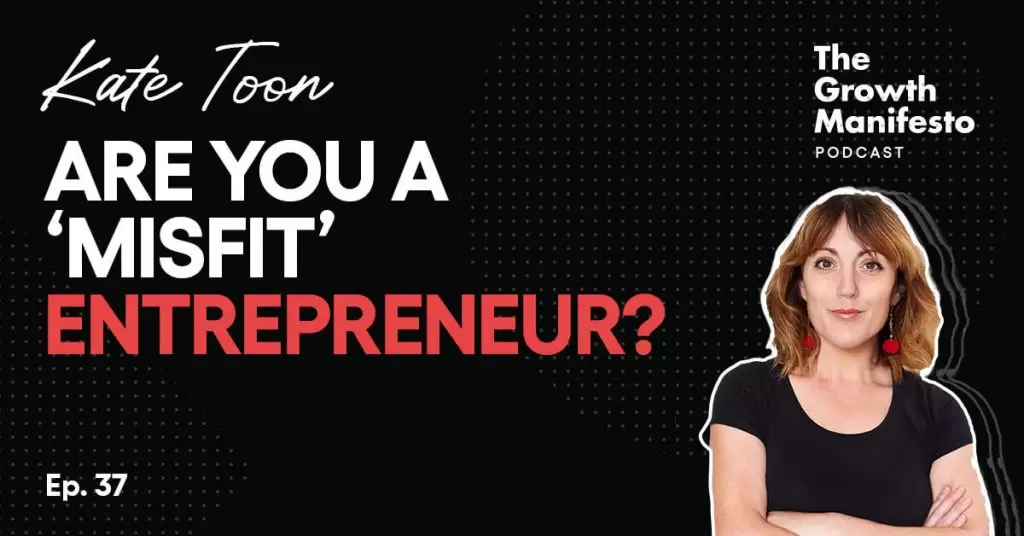
How to be a ‘misfit’ entrepreneur
Copywriter and SEO expert Kate Toon on writing copy that sounds human, building a personal brand without ads, and being a misfit entrepreneur.
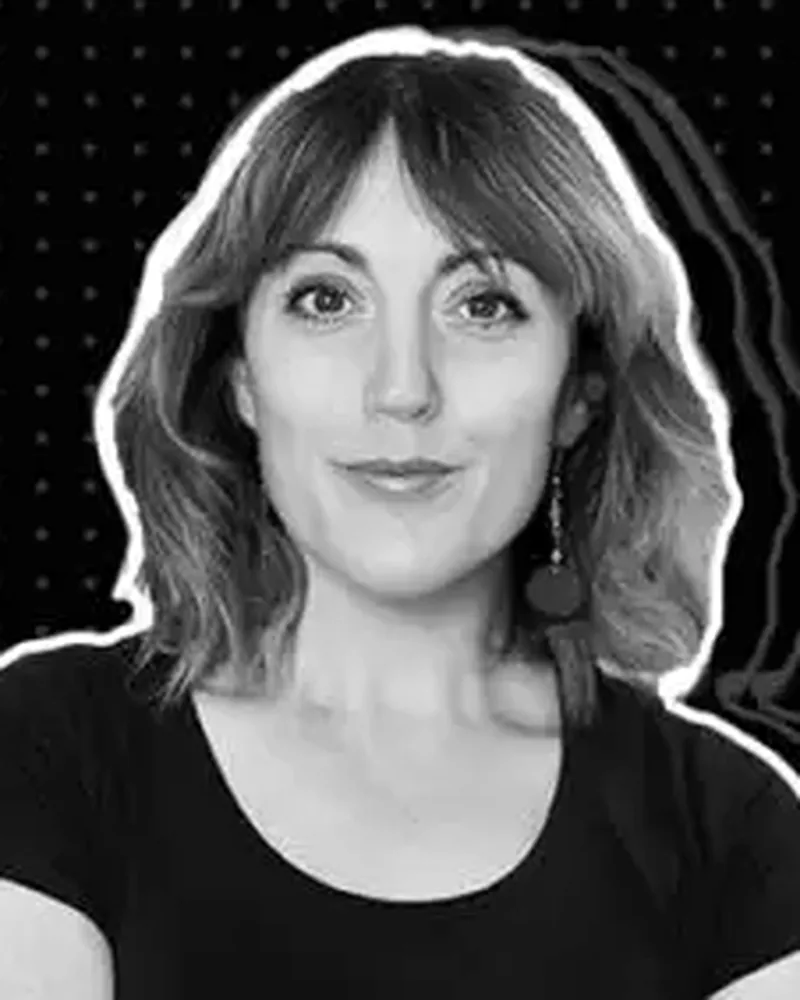 with Kate Toon


Overview
This episode is a discussion with Kate Toon – copywriter, speaker, podcaster, author and SEO expert. We talk about copywriting, building a personal brand, and what it means to be a ‘misfit entrepreneur’.
Key takeaways
- Customer personas should look past basic demographics to beliefs, desires and fears, and even what they google at 3am.
- Imagining what movie star would play your brand, like Tina Fey, gives copywriters a clear personality to write in.
- A paid membership stays sustainable by capping content to four elements a month, since overwhelming members drives cancellations.
- A personal brand can grow through a free Facebook group and consistent email sequences, without spending on ads.
- Ignoring competitors and focusing only on your own customers avoids the comparison trap that leaves founders feeling inferior.
Chapters
About the guest
Transcript
Auto-generated from the episode audio, so expect the odd mis-heard word. Timestamps open the video at that point.
So you have to dig deeper than demographics. You know, often in marketing, people go, oh, you know, this is Clive. He's 62. He's got a wife called Maureen, 2.5 kids. None of that tells us anything about it. CDFs, I think, help us really understand customer pain points, fears. You know, everyone wants what do they want from this experience? CGF really goes further. It goes into the dark places of our minds. what is Clive googling at 3am in the morning when he can't sleep? What is he really worried about?
If you can be there for Clive at 3am when he's googling why do I have a rash under my armpit? If you can be the brand that's there for him and says oh this is the reason you have a rash then later when he goes to buy the cream for his rash he's going to remember that brand because you were there for him in his dark moment. So trying to find those beyond the pain points into the dark night thoughts. We all have them. We all wake up at three o'clock worrying about stuff. If you can be the copywriter or the brand that's there for people in that moment,
then you've started to build a real relationship. You're listening to the Growth Manifesto podcast, a Zoom video series brought to you by Web Profits, a digital growth consultancy that helps global and national businesses attract, acquire, and retain customers through digital marketing. This episode is a discussion with Kate Toon, copywriter, speaker, podcaster, author, and SEO expert. We talk about copywriting, building a personal brand, and what it means to be a misfit entrepreneur. So let's get into it. So today, we're speaking with Kate Toon, copywriter, speaker, podcaster, author. She's been voted
number one woman in SEO from Serpstat, and she's the winner of the best SEO community from SEMrush. And I remember that awards night. That was a pretty fun night at the Opera House. It was. It was hilarious. She's also the founder of the Recipe for SEO Success course and Clever Copywriting School and is the author of Confessions of a Misfit Entrepreneur and also hosts the Hot Copy Podcast. A lot of stuff that you do, Kate. Oh, yeah. I've actually got three podcasts. So, you know, I get a bit carried away.
I'm an overachiever. That's fantastic. And I'm really excited about the conversation that we're going to have today. And I figured, you know, we can talk about copywriting. We can talk about personal brand. We can talk about the courses and the membership sites and kind of how you built them. And the SEO community. I mean, you've done so many things as well as the book. You know, like I do want to hear about the book as well, you know. But I figured the first time I heard about you was through a shared client and you were their copywriter.
This was a long time ago right now. I'm not going to say how long ago it was. I'm going to say that it was a while ago, though. But you started off in copyright. Yeah. I started? Yeah. So my background, I started off at my very beginning job was in events. And then in about 1997, these things came along called websites. and I got a job at a digital agency, must have been one of the first, eh? Working on the Marks & Spencers website in the UK, building the first ever e-commerce site in the UK.
And from there, I was mainly in the production side of things and then I moved into copywriting. So I worked on Microsoft and Qantas and American Express and lots of different brands and then eventually set up on my own in about 2009 so yeah it's a while ago yeah and let's just um let's just start at the very beginning why did you get into copy because you started in production but then you moved to copy why i think i'd always i always felt like i'm a creative person i always wanted to be a real
writer you know write books um and but getting in as a copywriter is quite hard like agency agencies are quite challenging to get into especially like you know the high level ones like Ogilvy and it just seemed an easier route for me because I had you know back then I had some secretarial skills and you know I could do that kind of thing but the copywriters were like these lofty beings sitting on beanbags drinking beer and it was hard to get into the clique really so I had to kind of I had to take a 75% pay cut at Ogilvy to become a copywriter and start from the
bottom up. And to be honest, at that point, copywriting didn't pay as much as being an executive producer. So it was a hard decision to make, but yeah. Wow. And so you worked at Ogilvy and you were doing the copy. And I mean, I think anybody that's in marketing has read Confessions of an Advertising Man from David Ogilvy. So were there any things that you learned from there that kind of, I guess, influenced your career and kind of how you approach copy? Oh, so much.
Not just how I approach coffee, but how I approach business, how I approach life. It's extremely hard work working in a high-level ad agency. At that point, it was Singleton Ogilvy, so it was run by John Singleton. It was a hard place to work, and digital really didn't have any credence in the agency. They thought websites and the internet were a flash in the pan, and it wouldn't laugh. But no, I had some amazing creative directors who really taught me ways into coming up with creative ideas and also gave me the ability to write when there is no inspiration and there is
no motivation and the ability to you know just pump it out to turn up and take that kind of Stephen King approach of sit at your desk and do the work because you know you just had to come up with concepts you had to pull them out of your bottom because the client was waiting for them and also you know the notion that no idea is a bad idea and that can be thrown around and manipulated into something good and reverse justification. So you come up with the idea and it doesn't really work, but then you think of an argument for why it does for the client. Gosh, so much stuff, presentation skills, time management,
and how to drink an awful lot of alcohol on a Friday night. That's a big important requirement as well. That's agency land, I think, across the board. Yeah, yeah, yeah. So then let's talk about copywriting for a second, right? because I think I started to learn about copywriting at the same time as you, and I got into the Gary Halberts and the Robert Colliers and all of the greats.
But what's your style of copy? How would you describe your approach to copywriting? I'd say it's fairly random and fairly natural. Although I worked at Ogilvy, we were never asked to read the Gary Halberts or any of the Bob Bly's. We didn't write out sales letters, all these things that are kind of taught as essentials. We didn't do any of those things. We did sit around on beanbags and just throw ideas around and chat about stuff. And I think, you know, I have no formal training, no qualifications, no degree, no marketing backgrounds. So, you know, how dare I
call myself a copywriter? I think the thing is because I can and because you learn on the job and because I think my style is very much talking like a human. I mean a better version of yourself. So, you know, if we just recorded this chat and we did a transcript, it would be okay. But generally what would we come out with on this podcast will be natural, it will be interesting, it will flow, we'll use idioms and slang. And if I have that as a basis, I can tidy that up, improve the grammar, maybe restructure it a little bit.
But the basis of the copy is there. and I think too many people overthink copywriting and try and follow strict rules and copywriting formulas and I think that's when it kind of comes off a bit kind of staccato and static and we all know how bad SEO copywriting can be. I think it's about just letting it flow and reading it out and making it feel like you're talking to a real human. Well, how do you do that then for companies or for businesses, right? Because, you know, I think it would seem that where most companies should be is being a bit more risky with their tone, a bit more risky with how they're engaging.
How do you approach it when that's the challenge and you need to write awesome copy and maybe they're not as risky as what you'd like them to be? I think it all comes down to really working hard on what their brand values are. Like, you know, what do they want to be known for? What do they stand for? what will they not stand for? Those need to be really solid. And a lot of brands haven't really worked that out. You know, when you talk to a brand, they say, oh, well, we want to be professional. We want to be knowledgeable. It's like everybody wants to be that. Push it a little bit harder. And then really digging into their brand personality,
you know, and you can use really dumb ways into this. Like if your brand was a movie star, who would play it? If my brand was a movie star, I'd like to think it'd be played by Tina Fey, you know? She's great, by the way. Yeah, she's everything I would want to be. She's funny. She's intelligent. She can be silly, but she can still be really impressive. You know, she's done amazing things, blah, blah, blah. So that can really help. And if I think about what would Tina Fey say when I'm writing my copy, it makes it easier. I mean, Tina Fey is different to The Rock. She's different to Donald Trump. So if I can keep her like avatar in my mind, it makes it easier. So brand values, brand personality.
and then I think you know most brands will come to you and say yeah we want to be really fun and conversational and wacky and then you write the copy and they're like yeah not not that kind of fun not that wacky um and it's about persuading them that being conversational contracting words you know using familiar familiar phrases it doesn't make you sound any less professional I mean we don't want to be like yo dude check out our new insurance you know it's awful we don't want to be try hard, but we want to mirror the language of our customers. So that's often the
great starting point as well. Going and reading testimonials, what people are saying about your brand, what words are they using? Great. Mirror them. And then you're going to get an immediate connection with the customer. Where is this usually owned in the company then? Like who's, who's, or what's the role that would be responsible for deciding this? Because it always seems to be the part that's in between roles. Copywriting seems to be the forgotten child, you know? It is. It's the neglected child of the marketing world.
Because often what will happen is the client will go, oh, I can write the copy. Or if the client doesn't say that, the account manager will say, oh, I can write the copy. Because writing copy is easy. We all think we can write, just like we all think we've got a great sense of humour and brilliant dress sense. But we don't, you know? You do, obviously, Alex. I wear this web profits shirt. I have a lot of them, by the way. It's not the same one every day. That's fine. I want one cent. Anyway, but yes, I think people think, well, we can do it. And then they get down to actually the nitty gritty of writing it. And they go, actually, we can't do this.
And often it's the last thing as well. Like it's kind of the most important thing. But it's left to last. So I've worked with all different people in business. Often it's the business owner. If it's a smaller business, if it's a larger business, maybe the marketing manager. you know that sometimes maybe if it's with an agency it'll be the creative director or the producer or the account manager and often it's a committee which is obviously the worst we know what this is like an agency world but it's like well we've looked at it and now we're just going to show it to Maureen in marketing and then we're going to show it to Bob who's in sales I'm going
to and I'm going to show it to my wife and my hairdresser and my cousin Kevin because he wrote a newsletter in 1972 and knows all about copy so often you know about 17 different people will be looking at the copy and that's when the copywriter has to be quite strong about why they've made the decisions they've made and be able to back them up and go, nope, you know, the reason I wrote it like that is because of this and it's based on your brand values and you have to have reasons for why you're writing the way you're writing. So you can argue. You can argue. And so what's
the best way that you've found to really kind of educate somebody on the different types of copy and why this copy is like that and why this is so much more expensive than the SEO content I can get overseas for $1 a page, you know, like because it's all words, right? And so what's the best way that you're found to communicate that? I mean, I think you're right. I think it's the reason you'd struggle to find the word then is because it's a little bit persuasion, it's a little bit education, and it's a little bit selling, you know, like especially as a copywriter,
you don't finish selling your services when the proposal is signed. You are still presenting and pitching the copy every round that you do. And especially in agency world, there's quite a performance involved in that. You know, you bring them in. We've all seen Mad Men. You know, the whiskey's on the table or like green tea or whatever. You put on a show. Like the creatives are often wheeled in and wacky outfits to put on a show to sell the copy. I think truly if a client doesn't understand conversion copy, the power of SEO copy, the power of conversational copy and building a relationship, it can be really, really hard for them to see the value and to see just as it is with anything.
Like you can get a website overseas for like 200 bucks on Fiverr. And if that's what you want, you know, you get what you pay for, you know? So I think I don't work too hard to persuade clients about that because the kind of clients that I want to work with kind of already get it. And then it's more about trying to not be so too subjective with the copy and going, yeah, I know that that's not something, you know, let's, we have to find a meeting ground between what you would say is a brand. and what the customer wants to hear.
I often have a little test that I like to use and it's called the WeWe test. I love it. And it's so many brands, they write from their perspective, we want to talk about this. We are this. We have experience. We can do this. And they're just trying to flip them around to you want this, you need this. And, you know, try to try and focus on the customer rather than themselves. But it is, you know, a lot of copywriting is talking to the client about why you've written what you've written, you know? And as I said, everyone thinks they can write.
Not everyone thinks they can code a website or design, but most of us write every single day. And so it can be, yeah, it can be quite an interesting conversation. So the point which you just said, the wee-wee test, we'll call it, is a really good discussion. And let's just go down that path for a quick second. It's easy to talk about yourself because you know you. It's harder to talk about your client or your customer because you may not know them.
And so what's your approach to understanding the customer so that you can talk to them with you instead of we? Oh, this is my favorite question. I love this question. So, yeah, I think there's lots of different routes into, you know, talking to your customers. The first thing is to actually talk to them, you know, to ring them up and to get them on the phone and say, you know, what was this experience like working with us? What was good about it? What was bad about it? You can use surveys, but surveys are quite a blunt tool that puts people in boxes.
Much better to let someone just chat and listen. But the way that I approach it, I've got two little acronyms for you now. We love an acronym. So the first one is BDF. And that is around thinking about your customers' preconceived beliefs, deepest desires, and darkest fears. So anybody, when they come to use a product or service, I always use lawyers as the example because it's a really easy one. So I'm writing copy for a big law firm. Someone comes along, they have preconceived beliefs about lawyers.
We won't necessarily go into them, but I'm guessing it's going to be, they're going to overcharge me. They're going to talk in legalese. It's going to cost me a fortune. Their deepest desire is that they want this horrible legal issue to go away as quickly as possible. And they want to, you know, they just want it to be easy and smooth and they don't want to go to prison or whatever it may be. And then their darkest fear is that it's all going to go wrong. They're going to spend an awful lot of money and they're going to get bamboozled and confused. So if you can, if you understand those, that BDF or pain points, you can address that in your copy.
So you have to dig deeper than demographics. You know, often in marketing, people go, oh, you know, this is Clive. He's 62. He's got a wife called Maureen, 2.5 kids. None of that tells us anything about it. So I've got one more acronym for you. It's called the CGF. So it's the Clive Google Factor. So I know I made that one up myself. You're a true creative. Oh, yeah. DDFs, I think, help us really understand customer pain points, fears.
you know everyone wants what do they want from this experience cgf really goes further it goes into the dark places of our minds what is clive googling at 3 a.m in the morning when he can't sleep what is he really worried about if you can be there for clive at 3 a.m when he's googling why do i have a rash under my armpit if you can be the brand that's there for him and says oh this is the reason you have a rash then later when he goes to buy the cream for his rash he's going to remember that brand because you were there for him in his dark moment. So trying to find those
beyond the pain points into the, into the dark night thoughts. We all have them. We all wake up at three o'clock worrying about stuff. If you can be the copywriter or the brand that's there for people in that moment, then, then you've started to build a real relationship. And how do you get those insights? I mean, it would seem difficult to get people to say, here's what I search for at 3am in the morning, right? How do you get them? Well, there's, I mean, there's some great tools out there. Ask the Public is a great little tool where you can, you know,
put in what you do or the noun or the verb that you want to work on and it will come back with all the questions. I just think Google's great though because we have a rough idea. And once we put that question into Google, you know, one of my favourite things, predictive search in Google is when you put in, how do I convert to, and the answers that come back are Christianity, Catholicism, PDF. I love that. So Google gives us a lot of insights. And we know now with featured answers and featured snippets that you put your question in.
And then directly under that, it's going to give you five more questions. And if you keep clicking, it keeps on going and it goes deeper and deeper and deeper down into the darkest recesses of what people type in. So I think you can find out a lot just by Googling. You can work a fair bit out there. That's such great advice. And there's so many parts in there, which I'm definitely going to do after this too. And just check it out, how far down it goes. Quick one then. Before you mentioned conversion copy and SEO copy, how do you define them?
What's the difference? Well, I mean, really copywriting in its very nature is conversion copywriting. because copywriting just means words that sell, essentially. People often make a distinction between copywriting and content writing. So content writing is more about words that educate and inform. But really, let's be honest, the copy that we're writing to educate and inform is generally there to also sell in the end. It's just a little bit further away from the sale. So it's, you know, copywriting, conversion copywriting, I guess,
can often be about more of a single goal, about really leading people down this path of, you know, hooking them in, getting their attention, getting their interest, addressing their desires and their pain points, explaining the features, the benefits, the advantages, providing proof and results, and then a call to action. You know, that's classic conversion copywriting. SEO copywriting is obviously about, you know, trying to connect the dots between what people are typing into Google. And I say Google because massive market share, you know, sorry Bing, what people are typing into Google and what you have
on your page. Because although, you know, Google gets more and more sophisticated with algorithm updates like Hummingbird and BERT, at the end of the day, it's still a robot. Terminator hasn't happened yet. So it's about going, you know, someone that types in, it's, you know, the basic one we always say is someone types in blue widget. Have you talked about blue widgets on the page? Is it relevant? Is it helpful? Is it useful? But I don't think the two things are distinct. So you get a lot of conversion copyrights saying, I don't do SEO. And a lot of SEO
copyrights saying, I don't do conversion. But it's all the same because we have to write for humans first and Google second. You know, it's no point getting someone to the page and then it being an awful blob of copy that just says, you know, we're a Sydney window cleaning company in Sydney that cleans windows. You know, SEO copywriting gets people to the door, conversion people gets them to the sale, conversion copy gets them to the sale. So it has to all be cohesive and holistic. You can't separate the two. So when you're writing SEO copy, let's say for example, and that's based on that 3am search in
the morning, right? Where they're searching, how do I, you know, and there's that. You approach that the same way as what you would do a sales message, but you're starting with information first. Is that correct? I mean, I think whenever I start some copywriting work, I think about what's the intent. You know, we talk a lot in SEO about searcher intent, you know, is it conversion intent, information intent, comparison intent, or navigational intent? And I maybe think local intent is kind of another one as well. So if it's conversion intent, you know, I am going to go
more towards classic conversion templates and formulas like problem, agitate, solution, PaaS, and AIDA, attention, interest, desire. I can't remember what the last one is. Action. Action. Yeah, I used to be a copywriter. So, you know, I'm going to go more down that route, but at the end of the day I still have to go, well, what would someone type into Google to find this page? If I'm going down an informational route, well, then I'm much more at that top of funnel stage. They don't really know me.
I have to focus on the question in hand rather than shoving the price and the product down their throat. I have to be educational and interesting and funny, and then maybe at the bottom of the page I can kind of bring in the product, but I'm not going to ram it down their throat. So I think you dial up one dial and you dial down the other and you're constantly doing this. Yeah, got it, got it. Where do you see companies going wrong with copy? I think, again, the wee-wee test is something you've talked about. I still see a lot of SEO companies pushing the exact match SEO keyword stuffing into content.
I still see it. This is the 72 keywords we want you to use on this 200-word page. It's like there's not enough space. I can't even get a preposition in there. And I think just being overly formal, really overly formal, and forgetting that people buy from people and people, even if you're a brand, people still want to feel like they're you know they're helping someone within that brand you know as we move towards this buy local and buy small the big brands are actually struggling i think
they're struggling because we don't want to buy from them we see them as corporate evil geniuses so the more they have to work even harder to build a relationship with us and we see i think these days we see through it so much we see through the the fluff and the hooks bar we want transparency and honesty. So I think the brands that do a great job of that, what's the toilet roll brand that does an amazing job? The ones that send you the toilet rolls. It's got out of my head. But they-
Cut the crap or something or- Yes. Something like that? You know, these brands that started up online primarily and have got bigger and bigger and they just are honest. And when they make mistakes, they make mistakes and it flows all the way through. You know, really great brands. The totem voice on the homepage is the same as in the email. It's even in the error messages. You know, when you make a mistake on the form and it says like, you know, it doesn't say, we are sorry, the form was submitted incorrectly. You know, it's like, oops, the form didn't work.
We'll get on to Bob in the back. You know, that's what we won. But I think, yeah, still old school SEO tactics and a fear of being friendly. I think those are the main areas I see. That's awesome, Kate. That's awesome. I mean, we could talk about copywriting for days and days and days. But there's a lot to talk about in this podcast. You've done so many things. You moved from agency to freelance, but then you built a personal brand, which led to everything
else that happened in your life from there on in. So let's just talk now about how you built that personal brand. because what you told me just before this podcast is that you did it without spending any money on ads. Yeah. Well. How the hell did you do it? Well, I think it was slow, so it's taken a while. I'm not one of these people who had overnight success. So I left Ogilvy. I worked as a copywriter for about five years, and I think I got as far as I could get.
Like for the hours I had, we were very limited. I only had about 20 hours a week because I had a young kid. And I was charging top-notch rates and working with brands that could afford them. And, you know, you get to the point, I think it's the Warren Buffett line that says, you know, if you exchange your money for time, you'll work until you die, you know. And so your time for money, sorry, other way around. So, you know, there was only so much more I could charge. I couldn't make any more time. So I had to try and get into this passive income thing. I mean, I didn't have to, but I felt I wanted to.
so you know throughout my working in copywriting I form little communities I've always tried to be about you know community over competition and I would say to people hey look I've got this great template that I made for myself in Ogilvy that makes writing a press release really really easy or I've got this little cheat sheet for writing video scripts and people be like oh can I have that can I have that and so I was like well I'm giving this away for free I could make a little shop so I made a little shop with my one little word template and I sold it for like seven dollars Now it's about 37.
And since then, I think I've probably sold about 6,000 or 7,000 copies of that one template. And from there, it just grew very slowly, incrementally. You know, I was doing SEO for brands like Pedigree Chum and smaller brands would come along and they couldn't really afford the rates that Pedigree Chum were getting. So I was like, how can I make this affordable for them? Oh, I could make a little mini course or I could do a little workshop or a webinar. And it just grew really slowly, to be honest. What were some of your tactics though? Like I'm trying to get into the hat, like what you did.
What did you do? Because yes, it took you a long time. So first of all, how long did it take? I kicked off both the recipe for SEO success and the Clever Copywriting School in 2017 properly. So I guess it's only three years really. It's not that long. The first tactic I did, the first thing I did was just put things live and nothing happened. Yeah, you know, like that whole thing. If I'll build it, they will come. No, they won't. So that was the first thing. So that was a mistake. The first thing that really kicked things off was I did a challenge. I did a 10 day challenge, a 10 day SEO challenge where
you've got an email a day with a task in it. And then for the people who joined that, I set up a little Facebook group and I promoted that and I promoted it everywhere. And the first time I did it, I got about 500 people. And that was just through word of mouth because back then, even, you know, four or five years ago, challenges were quite a new thing. Facebook groups were quite a using like today I don't think it would happen so quickly those 500 people did it and that challenge was better than someone else's paid products like it was good you know you could have charged a fair amount for it so then they started to it was a lot of word of mouth um and and I just really focused
on that Facebook group which I still have now today it's called I love SEO and whenever I went on a podcast I talked about it it was in my footer it was in my header it was just the drum that I banged repeatedly. And as soon as someone joined that group, which had a really low barrier to entry, all they had to do is give me their email address, you know, no money, nothing. It's easy to join a Facebook group, but then there were my people and I could communicate to them as I wanted and I could build the trust. And so then when I had something to sell, I had a little gated
community of people who were ready to buy and already liked and trusted me. So then launched the next thing and the next thing. And it's just that those are my tactics, really. I am giving away really good quality resources. So I have an SEO checklist. Again, it's not like a one pager in Word. It's, you know, it's a 15 page detailed thing with tools and tips. And, you know, at first you get nervous about that. You don't want to give away your IP. Why is anyone going to buy from you if you've given it all away? You don't buy a cow and milk it yourself or something.
I don't know what the expression is. Don't buy a dog and bark yourself. I'm the worst at coming with analogies. It's like a joke where profits are like try and try and try again and it's like far away. Don't buy a dog and milk it or something. Anyway, you know, you have to have the confidence that even if I do an 18-page checklist, that SEO is vast. It is vast. There are so many angles and areas to it. I'm never going to give away all my knowledge, you know. And then, yeah, it's just grown by word of mouth. I don't have an affiliate program for the course.
I haven't really done ads. I tried briefly to do Google ads, but SEO course is just a hugely expensive phrase. And I've done a little bit of Facebook ads, but it's so noisy in Facebook ad world. Everyone's got a $37 template. Everyone's doing a webinar. So the biggest tactic for me has been the podcast. So let's rewind back. So did you start to post on LinkedIn or on Facebook or anything before you started to have a course, before 2017?
No, not really. You just went straight in. I went straight in because I already had five years of clients. So my first audience, as is most people, you know, your first circle of people who already know you, you go a bit wider. And let's be honest, when I first launched it, I think the first round, I only got 17 people. It wasn't like, and it was cheap. It was cheap as chips back then. It's only like 400 bucks, you know? And then the next round I got 16 people. So it went down, you know, and I was like, oh God, what have I done? I also sold it before I built it. So I sold it to those people and then I built
it week by week. And then the next round I got 30, 40, 50, 60, it goes up, it goes up, but no. And then I did start posting mostly on Facebook. I still, back then LinkedIn was still very stuffy informal. I think it's changing a bit now. Instagram just seems silly to me, although I'm doing it a bit more now. Most of my stuff has come from Facebook. I do use Twitter, but that's more to keep up to date with SEO trends and chat to other SEO people. I don't really think I get a lot of market from that. And also email marketing. So as you've noticed all the way through here,
I'm like, I get their email. I send them something awesome. I send them another awesome thing. So email marketing has all been huge for me. I was the email marketing manager for O2. back in the UK briefly. And I learned a lot there about email. I still think kind of after SEO, it's the second most powerful tactic, even more than ads, if you ask me. I'm going to have to take a quick side point now to talk about email. That was a surprise point to talk about it. So what are some of the key insights
which you got from there, which you still use today and which you would recommend other people use? I just think O2 were very forward thinking, and we're talking a long time ago now about segmentation. You know, none of these CRM systems existed back then. So, you know, we would really try to make emails, not one static email, but pull in elements based on people's mobile spend, their package, the type of phone they had. So, you know, an email might have maybe 17 or 18 different segments that would be pulled together into a four-segment email.
That was huge. And just the work that we did on mining the list, and the A-B testing of subject lines, even just that 1% difference in open rate made a huge difference because they have a list of like a million people. So just the pre-work and the personalization and how we found that the more we personalized, the less impact the email had, the cheeser it got. So if we started to say, hey, Alex, we know you live in whoop-whoop and you like cats and nice t-shirt you were wearing last week.
People got freaked out, you know, if we're going much beyond the salutation and one other bit of that. People didn't like to know that we knew that much about them. We had to be subtle in the way that we knew things about them. And also, even back then, they were doing great sequencing. So, you know, you joined, you got your first email, your welcome email. What did you get next? What did you get next? What did you get next? How frequently did they sell? You know, the whole Vanya Chuck approach of jab, jab, punch. you know give give now we can sell give give give now we can sell and just that whole flow which now
we all talk about it's funnels it's you know everyone's got a funnel um but back then it was it was you know it was really innovative and and different so yeah i still use a lot of those tactics today and how do you use it for your list because i'm assuming you don't have two three five million people on your list not quite that many and this is it i don't think you need a huge huge huge list you know like we talk about people like amy portfield who's got millions of people i don't want to pay those kind of fees to actually so you can have a relatively small list you just
have to treat them well and not spam them and you have people expect a lot these days you know so for example i've got a free course that people can do and it's a good course you know it's like not like six minutes of me talking about myself and then after that i get then they get the checklist list and then they get a list of tools and then they get something else. And only after that four more emails do I then say, Hey, here's the first paid thing. Here's the first paid thing. And then again, there's free stuff, free stuff, free stuff. And then there's, here's another thing that you could buy. And, and you know,
my big course is not cheap. It's over $2,000. And sometimes people have been on my list for three or four years before they, well, I know now my list is about three or four years old. People buy now and I'm like, gosh, you joined. because in the early days I would watch everyone who joined. You joined four years ago. It's taken you four years to buy, not because the price was wrong, not because necessarily they didn't like me, but just because the timing was wrong or they didn't have a website yet, but they stayed on that list.
We talked at O2 about spam emails. We talked about bacon emails. So bacon emails are emails that are not spam. You kind of want them. You just kind of don't want them now. So, you know, say you sign up to buy something from a store, you like it, then you get all the follow-up emails. You never unsubscribe because you know one day you will want to buy again. So you just delete them, delete them, delete them, because one day you will want to buy and you'll forget the name of the brand. So you kind of keep on that list. I've got a lot like that. Most of us, we can't aspire to have emails that people are desperate to open,
but we can aspire to be bacon. Aspire to be bacon. That's an awesome one. So do you just use email sequences or have you also got like the weekly broadcast or the monthly newsletter? I do a monthly newsletter. I try to do it monthly. But again, you know, I'm just me. I don't have a huge, massive team of people. I've got, you know, people helping me, but, you know, no employees. So I say monthly. It's monthly when I can manage it. And I make that a really great roundup. I include news and tips and advice and sales.
so I do that once a month and then I'll do what I call soulless emails I think not soulless but soulless um for sales for the sales but also for all my courses I create wait lists so I'm not spamming my big list so if you want and to be on the sales email ask me I'll put you on if you want to remove be removed I'll remove you and then I try not to spam the big list maybe one email per launch I launched the big course three times a year that's it the rest of the year you won't be
sold to and that's really important to me as well because you know um but I know I have no fear as well about removing people from my list we all know that that massively impacts deliverability so if people haven't interacted for six months to a year I'm not going to keep them they're clearly not interested they may not have the time or the energy to remove themselves so I'll remove um people for me and then people email me and go I've stopped getting your emails can you add me back and i'm like okay i mean that's always great isn't it but so then you've cool so you've used
that to build a course which you've sold thousands of now the free and the low cost one i think we're up to nearly 10 000 people have been through those the big course i know the exact figure i think 984 people have taken the big book course so yeah congratulations that's great Then you've also got the Clever Copywriting Store. Yes. And so that's a membership site. Yeah, gosh. I mean, because I'm torn between – I'm a copywriter at heart, but I saw a gap for the SEO thing. You know, Alex, about four years ago,
there really wasn't that many people teaching SEO. There was the dude from ClickMinded and Heather who does SEO copywriting, but there really wasn't that many. Now everyone's got an SEO course. So I saw a niche, but my heart still lies in copywriting. So, yeah, the Clever Copywriting School started with that one template. It's a shop, a directory, a job board, and a membership, and a conference. So I run an annual conference called CopyCon. Yeah, but it's a membership primarily where we help people be better copyright.
We give them skills advice, but a lot of business advice as well, because most copywriters are great writers, but they're not great business people. And with membership sites, I mean, that's the dream, right? people subscribing to get information and pay you on a regular basis and then if you can keep them staying on you can keep kind of adding people to the top it grows how do you keep people staying uh is it what's your some of your strategies or what's some of the things that have failed and what's some of the things that have worked it's funny because you know the reason i set that up
was because all my money was coming three times a year with the big course and it's big chunks but I just wanted some recurring income. And I believe the dream as well. It's not the dream. It's really, really hard work. So the things that I found haven't worked is giving people too much content. You think I just want to give and give and give. And the more I give them, the better it will be. But then people get overwhelmed. They have no sense of completion. And they kind of want to cancel because they look, I'm missing out on all of this. And I'm paying this money and I'm missing out. So one of the earliest things I learned was only four elements a month.
So we do a coaching call every month where we can ask questions. We have a couple of masterclasses, like so maybe about like how to write for chatbots or how to write video scripts. And then we have a training with me once a month. And that's it. And it all goes into a library. So there's oodles of stuff in the library. But it means that people aren't feeling they have to turn up too many times in a month. So that was one thing. The pricing is really interesting, what people will pay and how much that was interesting. So I've actually no longer got a monthly option because you just get so many
tire kickers who come in for a month and you can't really get the gist of it in a month. It was a brave decision. And I know that it means I don't get as many members as I could, but I'm about quality, not quantity. But the real thing with the community, with the membership is building the community because people come for the resources and the freebies and the templates and the training, but they stay for the community. and obviously you alone cannot create that you have to set a culture but then you have to rely for the people in the group to enforce that culture because you can't be there all the time
so you have to build people up within your community and enable them to facilitate the community for you in a way so it's very people-based it's not really about i've got 17 checklists and 52 videos it's about how do you feel in the group do you feel supported do you feel helped do you feel judged that seems to be the main thing so let's talk about community now um you won the scm rush award for the best sc uh for the best seo community a couple years ago back when we could go out um publicly that was fun um you mentioned it briefly before but um was
that um the facebook community or was that the paid community well it the front it's i like to think of it it's kind of like the tuna verse so yes the obvious part of it is the facebook community but about 10 000 people in the post stuff and help people but really you kind of enter into this world of stuff so while you're that you also get the free course and you get the checklist and there's webinars and there's it's like an ecosystem and obviously the goal from my end is to move people through from free to to low cost to big cost to the membership you
You know, that's the end goal. And then maybe from there to other things that I may decide to do later. But, yeah, it was also about, and this may make me sound cheesy, but it generally was about a need to help people. I, when I started in SEO, joined a lot of the communities on Google. They were very male-dominated, and I felt like an idiot whenever I asked a question. There was one particular guy who used to screen grab my questions out of the group and write blog posts. Kate Toon asked this. And it was kind of a subtle dig.
As soon as you ask a question, you're showing that you don't know the answer. And it's like, but are we here to learn from each other? No, we're not. We're here to bang our chests and wave our willies and show that we know more than everybody else. So I wanted to create a place where, because I still ask questions in my own group. I don't know everything about SEO. None of us do. It's huge and changes every five minutes. So I wanted a safe space. So that community is as much for me as it is for the people in it. it's really helpful. It's also a great place for me to test ideas out, to see what I should do next.
I try not to look at my competitors. Instead, I'll go into my group and say, hey, I'm going to do a webinar. Would you prefer it was on this, this or this? And the people choose and then I make it and then people buy. So it's great for me in so many ways. And for the people. How much time do you spend on the moderation or on supporting that Facebook group? Because I know that can be very time consuming. So how do you manage that part of it? Because I know there'll be people saying, I'm going to start a community on Facebook. I'm going to start a Facebook group.
And it's quite labor intensive sometimes. So what's your approach to kind of, to fitting that into everything else that you do? Well, I think there's a definite approach that there is a definite strategy to it. I didn't think there was but there really really has I've seen it coming out of me in the last few months for a few years I have really clear boundaries so in my big group questions don't go live in the group freely I pick times during the week and I will answer them when I'm able to if I don't have any time I delete the questions it's a free group I'm not saying I'm going to be here for you every
five minutes I prioritize questions from people who are paying me and I will always for every one thing I do in the free group, I'll do five things in the paid membership because there has to be delineation. Why would anyone join the membership if I was giving my all in the group? I just have to be really strong with that group. I'm also really strong about competitors because I have not spent five years building a group of 10,000 people for another person with an SEO course to come on in and start helping. I don't want to build their business. I want to build mine. So I'm very strict about that as well. So that takes, to run a Facebook group, well,
you have to have rules, but you have to be willing to enforce them. And that means you're not always going to be popular. People aren't going to like you because sometimes I have to kick people out. And sometimes I have to not answer questions of people like, Hey, you know, and I'm like, well, I am me. I can only do what I can do. And this has got to work for me. It's, you know, it's free by the way. So you can't get that excited, but people do. So really strong boundaries and understanding that it's very top of funnel in terms of my marketing ecosystem. and I will always give more time to my bottom of funnel people
who have paid me money and just doing what I can when I can. And if it's quiet for a bit, no one's going to cry. No one's sitting there going, oh, God, where's Kate Toon? They're just glad not to see me for a week. So I just took the pressure off myself to turn up all the time. You value your time very highly. How long did it take you to get to that point where you're like, actually, this is how it is? and because that's a hard thing for people to do right they're like i should do it i should just reply i should do it like that you know so how did you get to that point i think it was literally a
couple of years ago it's only been fairly recent i mean i like everyone else flogged myself for a long time and then to be honest i just got super tired i did a year where i spoke at 37 events and we know that speaking at events is a huge time suck you know doesn't necessarily the roi isn't immediate you know we don't all get paid sometimes we're turning up just for the exposure dollars and that year I was just like I literally can't keep being this person to all these people and I'm sitting here answering a question from Maureen in Wollongong about SEO and she's being a bit rude
well my son is in the lounge watching telly on his own what am I doing with my life this is stupid my priorities are wrong so it was quite a switch but it took as well some confidence because i'm a people pleaser i want maureen to like me uh but then i had to understand that i want my son to like me more than some random stranger on the internet and so that was a big shift to me i also got trolled a lot got a lot of negative comments and that kind of you know that changes your perspective a little bit as well it does doesn't and it's really hard um well it takes practice
to ignore it to not like because it seems to be like and it seems to be something with people who are quite ambitious or and who want to have like a big impact is that they ignore all the positives there could be 99 people that this is great but you had one percent that don't like you that troll you. And for some reason that sticks. It's so frustrating, isn't it? Because we want to, I think, you know, unless you're a horrible sociopath, most of us want to be liked. We try and treat business as we do our personal relationships.
We generally want to do no harm, be fairly nice. And I've realized again, which has taken me a long time, it is impossible to be a relatively successful business owner without some people hating your guts for no reason. They just don't like the look of your nose. They don't like the tone of your voice. You know, you haven't even done anything to them. They've just taken an instant dislike to you. And I used to agonize about that, but now I realized there's just nothing I can do. You know, my nose is my nose. Don't like it. What am I going to do? You know? Yeah, got it.
You also have written a book, Confessions of a Misfit Entrepreneur. Talk to me about that. Why Misfit Entrepreneur? Because, I mean, you know, you can see me now. I've actually made a bit of an effort today, but Alex and I were talking about this before the podcast. So, you know, I work in a little shed in my back garden. I call it the Toon Cave. I still don't have a big team. I don't have fancy offices. I don't have any full-time employees, no angel investors, no business plan, no none of the usual things that people talk about when they're on their startup journey
or they're a founder. You know, I read Ran Fishkin's book about his journey, and it couldn't be more different. Do you know what I mean? Like I resent even buying a new pen from Officeworks, let alone, you know, kitting out an office in Surrey Hills, you know. So and also from a female entrepreneur point of view, you know, I'm not I don't have great glossy hair and I don't wear pencil skirts and I'm not very glamorous. Do you know what I mean? I'm kind of I'm pretty scruffy. So the book was really a bit of a permission statement to say you can have the kind of business you want and you can be very successful, whatever that means to you.
But honestly, these days, often that's largely financial. You know, I think people underestimate how financially successful I am because I don't talk about it and because I don't look financially successful. And therefore, the book was there to say you can do it your way. You know, you don't have to be like these glossy teeth, people lying on Porsches talking about their seven-figure plan. You can do it your way. So that's really what the book's about. You hate Instagram then, don't you? I like making Instagram.
It got better since then. That used to be there a couple of years ago. It did totally. And I think, you know, it's there in everything. It was very much in the male entrepreneur world and now it's slayed into the female entrepreneur world where everyone's like talking about being a seven-figure this and a seven-figure that. and you know there's a look that you have to have and there's a way you have to feel like women have to be really positive and really happy all the time so I'm miserable quite a lot and I want to be able to share that side of me as well so yeah it's yeah it's a permission book really I'm an
entrepreneur but I don't quite fit the mold I don't think and for people that are listening who are thinking about investing the time to read your book but what are some of the things that are in it? I talk about, you know, how to start a business without a business plan and zero investment. I talk about dealing with copycats and competitors and dealing with trolls, how to build a personal brand and how to, again, another thing I think it's true for
both sexes is we're taught not to be very emotional about our business. You know, we should be serious, whatever, and how to bring emotion in, how to decide whether that shiny object that keeps distracting you is actually worth following because sometimes it is we're told to not follow them but most of my cool things in my business started off with shiny objects so yeah it's and there's lots of exercises and advice in there and things you can try out um for yourself so it's not really all about me it's about you know how you can do this for yourself
that's awesome um and it kind of does sound similar to confessions of uh the david ogle Mr. Ogilvy. Yeah. I mean, Ogilvy gets wheeled out in every copywriting presentation ever. And, you know, obviously an amazingly intelligent man. And I think he was an oddball as well. I mean, you know, for his time, he was an unusual creature. It's funny because every copywriter that I've learned from, the greats, and every really good copywriter that I know is a bit strange. Yeah.
It's a bit of an oddball. oh well so are you all the best people are odds all my favorite people are odds i think i'm definitely not it's a huge compliment to say someone's odd i think if if it's said with love i think yeah and i like that's something i'm i'm trying to figure out how to teach my son who's seven right and i'm still trying to figure that one out right because you know um you so want to fit in when you're young and being odd is like the opposite of everything that you want to be
when you're young and so I'm still trying to figure that one out I am too my son's 11 and he's you know he's head to toe in black Nike stuff even though he doesn't play any sport whatsoever he's not a sporty person he's a geek you know and and I just the thing I've realized with him is it's not the time like this is the time of fitting in I think maybe 15 16 17 is when you start to be a bit odd and you can do it and celebrate it uh took me a while to embrace my odd I think I've really only the last couple of years I've really kind of started being fully myself online sharing all my
good and bad sharing my sense of humor which some people just do not get at all and then being that same person when you meet me in person because we've had this Alex you know we've been to a few networking events and you meet these people that you followed and in person they are nothing like the person they are and the people who are the same aren't they just lovely it's so such a relief when you meet someone and they're exactly who they said they would be so that's taken me a long time to have the confidence to just be me everywhere all the time odd and not yeah I think
um um for me that happened well it happens slowly because you put something out it's a little bit you and then people respond to it and then you get a little bit more you yeah you creep you creep and then the more you do it and this is why action is so important you got to put stuff out there right constantly you're going to get a feedback loop and it's going to help you get the confidence because at first I was like I can't do a podcast I've got to stutter you know what the hell I'm going to do a podcast for and plus it's going to kind of hide the sheen of like the perfectly
produced videos and you know yeah and again but I remember when I met you and you talked about the better and I thought that was so great of you to to bring that up straight away then when you start doing the podcast because we don't know each other that well but I see your podcast videos coming up all the time and I watch I watched them all the time and I'm not even your ideal customer but it's slowly I like to say people ultimately buy from me because they're just so sick of me I've worn them down they're like I've seen you know I'll say to people how I've got you know
I've got the thing on my phone that says how did you find me and people are like I don't know but suddenly you were everywhere. Every post in my feed, you're on my podcast, suddenly you are everywhere. And I think it's like they get to a point where they're like, we're so sick of seeing your stuff. I'll just take my money. Just go away. And I'm being silly, but I think that's what we do. We slowly, slowly edge into people's consciousness. We bring out ourselves and we accept that we are going to get negative comments and people aren't going to like us. And that's fine. You know, then they've just identified themselves as not our ideal
customer. Thank you very much. yeah I'm good at being everywhere too like I think we started doing Facebook ads back in 2011 and so there's some people now that have agencies that that that I've spoken with and they said to me yeah I started to see your stuff when I was like 14 or 15 or 16 I'm like wow how old am I now I've got one more question and then we're going to go to quick fire questions which I like to do at the end, right? Because I had to ask this one. You have hula hooping all over your bios,
your LinkedIn, your website. What's up with the hula hooping thing? It's such a cheesy thing. When I first went on to LinkedIn, I noticed that everybody's job title was like agency owner, entrepreneur, writer. And I was like, SEO copywriter, copywriter. But I didn't have a third thing. I just didn't have a third thing. I couldn't, This was right at the beginning. So I just put hula hooper as a joke and I can't hula hoop or I couldn't then. And it's kind of took on a life of its own so much so that the Sydney Morning Herald contacted me.
They were doing an article about Sydney's best hula hoopers and I've been identified and I had to admit to the journalist that I couldn't hula hoop. Since then, I have rectified the lie and I have learned how to hula hoop. So next time we're at a networking event, when we're allowed, I'll hula hoop for you. To really confirm that oddball status that you've got. It's a wonderful site, I tell you. Yes. Why is she hula hooping? Oh, it's a long story. Yeah. So some quick fire questions. There's five. Number one, what book has had the biggest impact on your success?
None. I'm not a big business book reader. So I would say The Lord of the Rings. There we go. Okay, cool. That's the strangest answer I've heard. Number two, what's your number one piece of advice for hiring people? Don't. Subcontracts and don't have people on staff. It's a nightmare. there. Number three, what's your best time management or productivity tip? I love a bit of Pomodoro. I love working in 25 minutes spurts. I can only do about four before I crash and burn, but working on a single task for 25 minutes with all notifications turned off. Yeah, I actually
just did one this morning. I was like, I have to do this again. It's so good that you said it. Number four, what's the best piece of business advice that you've received? I get asked this one a lot uh i think really it's probably just ignore your competitors you know don't think you're doing competitor research you're not you are just comparing yourself and generally probably feeling pretty poo at the end of it ignore your competitors just because they've got a big shiny thing you don't know what's going on behind the scenes you don't know if it's even working they could be telling you it's working but it could not be just focus on your own stuff perfect
Last one. How do you relax after a crazy day in the toon shed or the toon office? I've actually just built a toon tub. I have an outdoor big stone bath in my back garden. Nice. So I've got a little row of a pathway to my little toon tub. I fill that up. It's all plumbed in hot water. Have a glass of wine. Watch some trashy Netflix and that's how I run down. Oh, fantastic. Thanks so much today, Kate. for the people listening if you want them to take one action
to subscribe to you or to visit some place or to subscribe to I mean you have so many locations where people can connect with you if there was one place where would you want them to go? katetoon.com it's a work in progress it's not the best looking site but that's where you can kind of start your adventures into all the various bits and bobs that I do highly recommended everyone who's listening And obviously, you should subscribe to her SEO course if you're into SEO. But Kate, thank you so much for coming on the podcast today.
This has been such a fun chat. I always so enjoy speaking with you. Yeah, same, same. I love it. Yeah, this has been really great. So have an awesome weekend. Have an awesome day. And we'll talk soon. See you soon. Bye. Bye. Thanks for listening to the Growth Manifesto podcast. If you enjoyed the episode, please give us a five-star rating on iTunes. For more episodes, please visit growthmanifesto.com forward slash podcast. And if you need help driving growth for your company, please get in touch with us at webprofits.io.