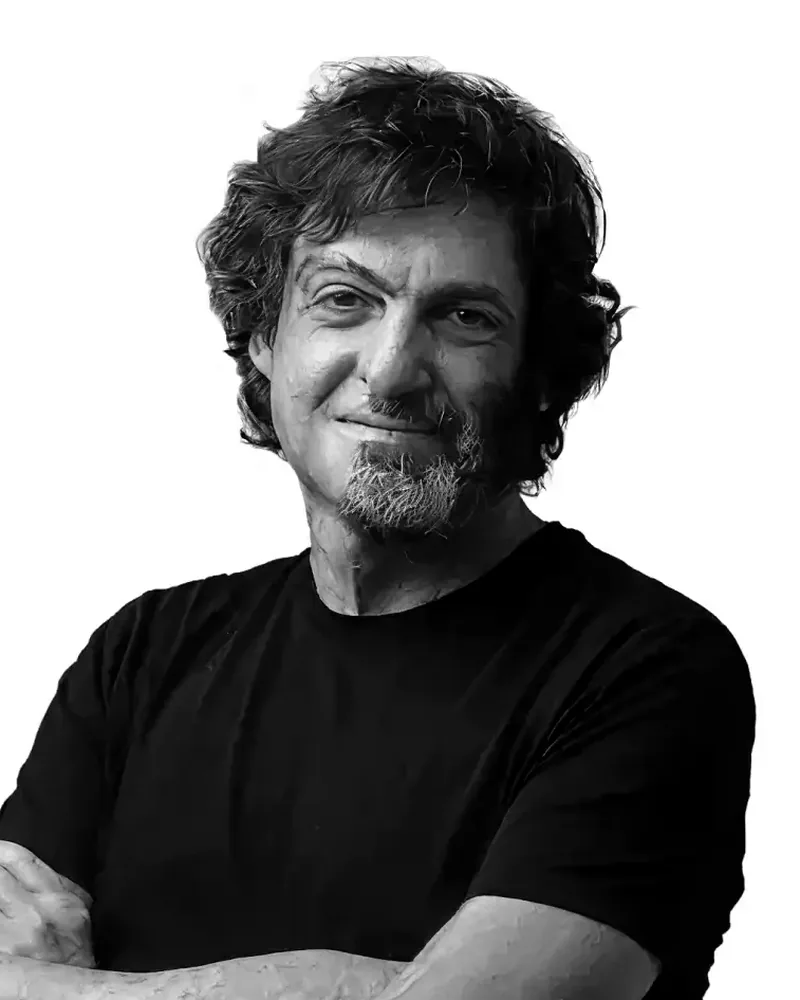
MarketingSaaS and techEntrepreneurship
How Hacker Noon became an industry-leading publication
David Smooke explains how Hacker Noon's contributor model, SEO strategy and equity crowdfunding built a publication with more traffic than Forbes in four years.
 with David Smooke
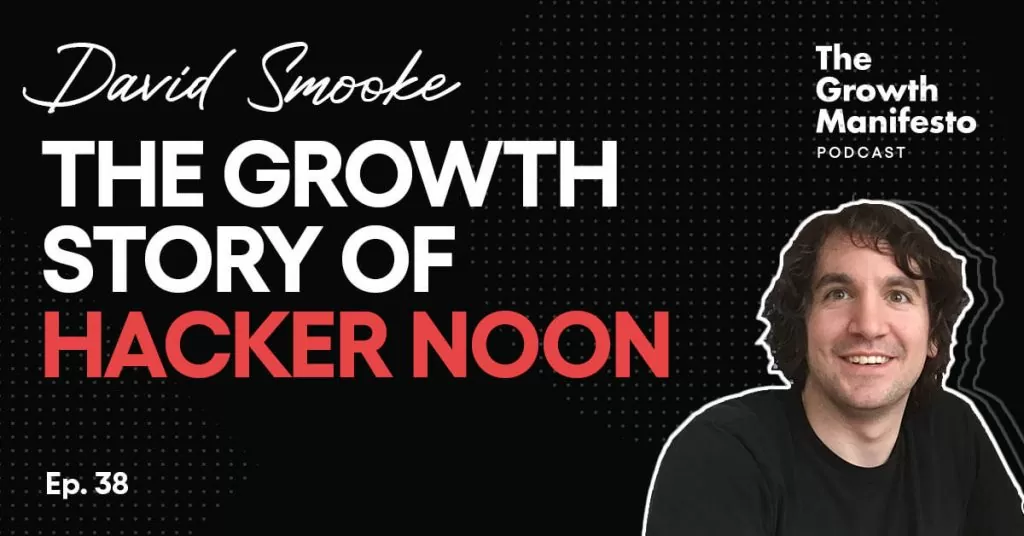


Overview
This episode is a discussion with David Smooke – Founder and CEO of Hacker Noon. We talk about how Hacker Noon was able to become an industry leading publication (with more traffic that Forbes) in just 4 years, how they used contributors and SEO to drive that growth, how they used equity crowdfunding to support their future growth plans, plus we touch on blockchain, A.I. and the state of the news industry in today’s world. We go on a few tangents in this episode but I’m sure you’ll like it.
Key takeaways
- Hacker Noon lets contributors keep ownership of their content under a non-exclusive licence, with every submission reviewed by a second human editor before publishing.
- Writing specific, long-tail headlines drives more durable organic search traffic than chasing short-term spikes from social media algorithms.
- Hacker Noon raised 1 million US dollars from 1,200 people through equity crowdfunding, selling about 13% of the company.
- About 60% of Hacker Noon's revenue comes from a 10-pixel tall yellow banner ad sold directly to companies on every page.
- Owning the software behind a publishing platform, rather than using Medium or WordPress, lets a media company grow like a software company.
Chapters
About the guest
Transcript
Auto-generated from the episode audio, so expect the odd mis-heard word. Timestamps open the video at that point.
Media companies have 3x revenue evaluation. Software companies have 10x evaluation. They just look at their little rule of thumb. Which one are you? Okay, let's multiply your revenue. So there's like that rule of thumb valuation. And it's real though, because we could take our content management system and build 50 more sites, because it's our software. And it's not the same as, hey, we're going to take WordPress and white label it and say it's Smook Press. And now we have, there's a level there of like, what are your actual growth paths?
And like software is something like with the Noonies is a voting software we built. And, you know, now we're going to put it in more types of voting locations. And we build it and now we have a software that allows people to vote on different items and like securely vote and track votes and that stuff. So there's an element of how do you grow? And sometimes with software, it allows you to be horizontal as opposed to just saying, I'm just building hackernoon.com. You're listening to the Growth Manifesto podcast. A Zoom video series brought to you by Web Profits, a digital growth consultancy that
helps global and national businesses attract, acquire, and retain customers through digital marketing. This episode is a discussion with David Smook, founder and CEO of Hacker Noon. We talk about how Hacker Noon was able to become an industry-leading publication with more traffic than Forbes, how they use contributors and SEO to drive growth, how they use equity crowdfunding to support their future growth plans. Plus, we touch on blockchain, artificial intelligence, and the state of the news industry in today's world. We do go on a few tangents in this episode, but I'm sure you'll like it.
So, let's get into it. Cool. All right, everyone. Hello. Today, we're talking with David Smook, founder and CEO at Hackernoon. Hey, David. How are you? Good. Thanks for having me on the show. Yeah, for sure. Now, for those of you who don't know, Hackernoon is one of the leading tech publications on the internet. And where? And I quote from the website where hackers start their afternoon. So it may have started with hackers, but the site was founded in 2016 and drives more traffic than Forbes,
which was established in 1917 with millions of visitors each month. And so today we'll be talking about Hackernoon's success, including initial growth, the evolution of it. And then we'll get into the tech stuff because there's been quite a lot of stuff happening across the blockchain space recently. And Hackernoon, I first heard about back when we got into the blockchain marketing side of things. And Hackernoon was and still is the place to go for that level of tech news.
And before we get started, just make sure to go ahead and hit the subscribe button so that you get the latest episodes as soon as they're released. David, this is going to be a fun chat. But I thought it would be good to start by talking about Hacker Noon and just explaining what Hacker Noon is for people who may not have heard about it before. Hey, great. I'm looking forward to this as well. So Hacker Noon is a technology publishing platform. We publish about 30 stories a day by technologists across all different job types, product managers, software developers, founders, CEOs, investors.
And then we have an editorial team that will review and improve this content. And then we've built a number of distribution systems like a typical publishing company. But most of our software, we've built entirely ourselves. So we also have a software team. So we're exploring different ways to kind of push the boundaries on what publishing technology could be and bring our software into more locations than just Hackernoon.com. Okay, that's a really good intro. Let's just take a step back a little bit, right?
Hackernoon was your third business, right? Well, sometimes it's tricky on how you count. How do you count it? A lot of times I've actually just put the failures all into one company. And, you know, I've had a number of failures. And we started, the original name of the company was ArtMap, Inc. And we were about scaling people's voice on the internet. And really, I just tried to work with the smartest entrepreneurs I knew. And I would contract with them, get a stake in their company. And then on the side, I was building 10, 20, 30 sites at once and trying to build different content destinations, different digital publishing solutions, different things about just curious around text on the Internet and how that's going to change and what business models are going to grow around it.
And in that time period, Hacker Noon became the most popular site. And so slowly but surely, it went from my part-time interest to my full-time focus. And as it made more money, we brought more people on. It was really the first two years was just me and part-time people. And then my wife, who is more talented than me, joined. And that's when things started to grow a little more significantly. And that's been a pretty fun ride. Right now we're at seven people full-time and eight part-time. So I'm enjoying, you know, the life of a small remote team and how to just have fun on the
internet together. And have you always, so like in, well, you started a few years ago. there's seven people now is everybody remote uh well my wife lives with me except for but yeah everyone else is uh so our chief product officer he we were friends for eight years in san francisco where i used to live and then uh in february he decided to move to new york city which is a pretty tough thing to do so he ended up actually relocating in colorado so he's about two hours away from me and then we have two people in michigan uh india amsterdam uh hanoi
So all over the place, it's nice for editing too. So people get kind of a different perspective and also they're online at different times. So you get a little more like rolling submissions and a little better response time. Yeah, that's great. That's great. That's great. And how did you get the idea for Hacker Noon? Because you said you were doing 30 sites or something and you're trying to publish a bunch of content, but how'd you get the idea for Hacker Noon? So originally it was the Hacker Daily and we built with Medium software for a while before it was Hacker Noon. and uh you know it's just before that i was with a company called smart recruiters and i built up
their corporate blog from nothing to 400 contributors so this idea of like making a trade-off of helping people get their content online and have it look better online and have the content be a little better and distribute it was something that i had done you know with hundreds of people so it kind of became like okay how do i cut out the human parts of those process because you remember like six years ago it was still pretty tough to like use wordpress and publish a blog post. Not that it was like impossible. It was obviously tougher like 16 years ago and 26 years ago it was impossible. So that's like kind of the evolution of it.
Just it got much easier to move content around. And I think it's going to continue to get easier with different plugins and people wanting to speak better to each other where you own your content, it's in one place, and then you distribute it to HackerDune and many other sites. So that's kind of like what I saw as like a trend is how people wanted to behave. And the challenge of growing your online presence is everywhere. You know, why are you an expert? Why are you doing a podcast? Like, how do you meet new people? Especially as there are no, we're all in America, we're all locked down. I don't know. Maybe it's a little better for you.
It's rolling. Sometimes it's locked down. Sometimes it's not locked down. It depends on the week. And then with this model, the technologist just makes more sense because they're already writing. They're already using the keyboard all day. They're already writing, documenting how they're coding they want more people to read the ideas they have and the ideas is the currency and the readership of the ideas is the currency so it kind of hit an industry where like if i tried to make a community driven blog with like manufacturing advice or retail advice it'd be like a less interesting destination and just less vibrant yeah sure and let's just jump
back a second to one of the comments you said you said that um that in your previous role um you built up a blog to 400 contributors and I'm assuming a bunch of traffic and I'm assuming a bunch of success as a result of that it sounds like your approach is the contributor-led approach to content publishing is that right yeah absolutely so our model is our contributors own their content and they give it a non-exclusive license to Hacker Noon and we can edit and
distribute it. So this is a good model because it's between social media and traditional publishing. If you publish on Forbes, it's a lot of pitching. It's a lot of back and forth. It's kind of a clunky login and submission of content. So having a good contributor experience is there, but not going as far as anyone can publish and there's no rules here. Every post goes through a second human and there's quality control issues. There's content improvement efforts. So that's kind of like just a better experience.
I think the second human rule is something everyone should use when they post online. Let's just be sure a second human sees this before I put it to every human on the planet or every human on the planet could find it. So I think that's kind of like, if you want to look at how you could have one rule that would increase the quality of content online, that would be kind of a good one. I think a lot of, sometimes it's a little powerful to have just the whole internet at your hands and for people to post things they're going to regret in the future. So I think as we think about the future of the internet, a little more quality control is probably a good thing
for how we can read and write and not harass each other. Yeah, right. And so your approach is produce a lot more content because you get other people to publish it, right? There's often this approach where everyone thinks that I need to create content, you know, just to share with my audience. And so they go out and create it themselves. But your approach is to get other people to contribute that content and to create the location where everybody comes to for that content. Is that right?
Yeah. Yeah. That's accurate. It's definitely, we're a publishing company that doesn't employ writers. So, I mean, it's kind of a, we employ editors and we want to improve content, but and we write our set we all write ourselves and we all publish you know multiple places and stuff like that but yeah the core of it we're creating a destination in a community and what's your um approach in attracting contributors yeah i say for example in the previous role right like you got 400 contributors for somebody's blog right so how is how do you approach that
um well you this may surprise you but there is people are pretty vain and also the internet works a lot on validating multiple sources and having third-party validation for your ideas so there's always going to be a value and not just saying i say this and i verify it having someone else say it and verify it and i mean general is like as blogging has gotten bigger you know especially professional blogging um and like not professionals as in like that's blogging is their job, but professionals know they need to spend time writing on the internet to grow as a
professional as that's become more of like a clear thing. It's been kind of a lot of organic, you know, traffic and people are honored to be asked, you know, that a site decides would want their stories. And then the best thing for recruiting content is just a good story. A good story goes out. And if it's about JavaScript, you'll see 50 more submissions from JavaScript that are JavaScript related advice come in. And so the best, the absolute best thing to recruit content is just a great story. And then how do you kind of get traction on that? Because in the beginning, it would have been challenging to get people contributing when
they haven't even heard of Hackernoon, right? So how did you kind of just get started in the beginning? Well, we sent a lot of messages. We asked a lot of people just like a sales funnel. And so we're kind of feeding the market and fueling the market a bit. And then it's something that builds up over time. You know, a site, as it moves up to higher authorities, a lot more organic good things start happening. A lot more citations start happening. And then you just build a lot more systems to amplify the publish button. When you publish here, who gets emailed? When you publish here, where do social media updates automatically go?
How does the RSS feed work? How do we get more traction on all these distribution channels we have? So we spend a lot of time thinking about how to amplify the publish button. The more things that happen the moment we hit that button, the better off everyone is. Yeah, right. Yeah, right. And so I'm assuming then because it started off as a part-time gig and it's not a small team, but it's not a huge team, you have been bootstrapped. And so I'm assuming that you relied a lot on organic traffic to support that growth.
Is that right? Yeah. I mean, today it's still organic traffic. You know, we started bootstrap, but we did raise some money a few years into the operation. But I mean, Google search, search traffic is number of search and direct are number one and two right now. And then, you know, social networks, referrals, emails on down. So, I mean, I've always kind of liked search just in terms of like the pureness of intent. And, you know, if you write very specific titles, you're going to have this kind of long tail intent as opposed to like,
that's such a, it's a, it's a much better traffic than trying to game the Facebook newsfeed or whatever. And you're trying to, you know, clickbait and incentivize this thing and get this short-term bump and you're like, it's over. But if you have kind of more specific headlines that will serve people that are at that moment in time, many times over, you know, you kind of have a long tail evergreen, you know, group of your library that help you have more stable traffic. So as part of your process then when people contribute articles to kind of help change those headlines a little bit to rank higher? Absolutely. Most headlines are different on the
other side after they, when they come in and they come out and that's, you know, we've looked around kind of taking some A-B testing tools too, but just in publishing, you know, 65, 70,000 stories, we've kind of learned a lot of trends. And then we kind of teach that to our other editors and that, you know, creates more, hopefully long-term benefit for the writer and us. so without just giving away all of your best stuff what have been some of those trends that you've found I mean the trends that people know and they don't want to admit are things that are
pretty simple like numbers in the headline work that's a pretty simple thing of like it just it lets people know what they're getting into sometimes it can be a little it can feel a little cheaper so you know that's kind of a tool that you want to use with smart discretion you can also make fun of it and you can use it in headlines where it's kind of funny but it's still value. I mean, just, just more specific is like, specificity is a lot of times that what people lack and especially as you get on to like different, how to integrate this with that, you know,
how you write that information. It's actually, it can, you can, you want to know what the intent of other people that are looking for that is. So there's you know, just a lot of thought there. And just I hate misleading the reader. Like, I want you to come here because you know what you're going to get. So that's where I think like, and there's also practice, like most bloggers and professionals, they won't spend the 20 minutes to write 20 headlines. Like just that exercise of saying, hey, I'm an editor, this story, I know this headline doesn't work. I don't know what the answer is. Here's 10. Let me take a deep breath, have a drink of coffee and pick one. And even just
doing that moment is something everyone should do. But if you don't, you know, we can do it with our editors at Hacker Noon. Yeah. And it's so interesting as well, because you spend so much time creating the content and yet that headline is the number one reason that anyone is going to read that content but because that content has often taken so long and taken out so much of you emotionally physically at the end you're just like oh it's a pretty good headline i just want to hit publish so i can get on to my next task like done you know but it's like it's such a
it's such a good piece of advice spend 20 minutes and write 10 20 headlines then step away then come back you know the other reason people don't do it it's that they put all this work in but it's also you have to admit to yourself where i'm at now is different than where i'm started what i set out to do was write this what i did was actually write that and it's related and it's very good but it forces you to take a moment of like i didn't quite do what i wanted which people don't want to do like i did what i wanted done you know so it's uh it's a little bit of both of like why a second human is really helpful there that's great that's great and so just from an seo
tactical perspective like are there any tools which you use to help kind of improve the organic performance at the time of a publishing or in terms of the structure itself uh so we'll have tools for writers at that point like we don't have it right now for writers like in terms of showing identifying opportunities and we want to uh we're talking to scm rush about different integrations with them. And I mean, we've used them in Ahrefs or Ahrefs internally and Google Search Console
and Google Analytics itself as well is pretty useful. And also just, yeah, monitoring some terms and learning from there. But, you know, now one of the editors, our AI and machine learning editor, Lamarck, is also our SEO lead. So we kind of, we take a structure where everyone kind of has two roles for the most part. And he knows a bit more than me, I think. But search is, it's ever changing, you know, and it's something where it's a very dominant market. And that market
leader has many other products and is being looked at by and they have many other relationships with other companies, and they're being looked at by the government for different things. So it's like, we'll see how that all plays out. But it's probably not going to be as centralized as a market as it is now in the future. Cause search is the technology has gotten so much better. Google's advantage over everyone in 2003 is not what it is today. So there's there's that element of it. And how much do you want personalized search and search based on what I've done before
on the internet versus how much do you want search based on pure intent? And what does the aggregate of the internet think when this term comes in, which yeah, I like that in terms of subject matter expertise, finding what you want to look for, looking beyond my circle. My bubble is my bubble. If they have information, I'll find it. But I really would prefer to take a step away from my bubble and learn what the internet thinks this word means or what I should find when I search for it. Yeah, right. Yeah, right. And just a quick shout out to just one of our clients as well.
I have seen what SEO Clarity does and they've got this awesome AI recommendation engine for content so just kind of have a look at them as well there david because that might you know just give you some alternate um kind of ideas and they've got some pretty huge clients man like and you know i just say that because for your site i think it'd be super interesting to see you know what it could do right thanks for sharing so far um i want to keep going down this path um how did you then take that this information and how did you become a tech platform of choice
for so many niche or niche industries, right? It depends on which country you're from, right? But yes, how did you, you know, because I'd heard about you when we got into blockchain and then as soon as I heard about you, I was like, wow, okay, this is a big site. And all the tech companies, they know you, they all want to be on Hacker Noon. Like if they're on Hacker Noon, then all of the other kind of, like the audience of Hacker Noon is very specific. How did you become that place of choice? or the destination of choice?
There's a lot of just like showing up of like you have days where traffic is higher, traffic is lower, like, but if you showed up, it just keeps slowly going forward. So there is something of like four years of just building up the brand over time, but also a willingness to, I mean, with the rise of blockchain, it wasn't something I said to myself, we have to go out and publish more. It's something like good stories were coming in. Some of the most cutting edge tech people were moving out of software and into cryptocurrency and talking about it. So it's something that we saw people just talking about it and just let them know,
here's a place you can talk about it. And that was definitely helpful. And I mean, coming back to Amplify the publish button, the more systems you build where you just have a little more support. And I have a little army behind me that's not just me and you publishing a story and sharing it to our Twitter. So we get a little more systems and that builds up over time too. I mean, we're pretty good about tracking stats. And we recently did an investment from Coil where now writers can stream small micropayments from Coil subscribers to Hacker Noon writers or their time spent reading.
So there's like, how do you get more little carrots? And how do you build out these more little benefits, these more mentions? And just like, how do you serve the contributor? And that's something where, you know, more readers is one of the simplest ways to do it. So was there like an area that started first that had driven the initial traction? Like, was it because of blockchain and because that went nuts back in 2016, 17, 18? Is that the area which started it or kind of had it started before that?
I mean, that definitely helped the blockchain rise. And there's been viral stories where people that help, you know, like when net neutrality was trending in America, getting a good sentiment analysis of what how many of these tweets are actually from bots and what side are they on? You know, that was like a story, some data journalism that really helped us. But overall, the simplest thing you can do is just increase the rate of publishing quality stories. If you forget, if you just ignore traffic and you say, how do I make my site better? You know, this is the barrier of what quality is.
I want more of those. And then more people can read more of those. And you just ignore traffic for a while. And you just focus on publishing more quality stories, like good things will happen. That was kind of the leap that I made. And so how do we, how do we figure out how to publish more quality stories? Yeah. And because I've been, so I've been in the SEO game since 2001. That's, I'm kind of older now, but the one thing that has been consistent since that time is the more content that you publish that's quality but in the beginning it didn't have to be quality but
these days it's quality so the more quality content that you publish if you structure the site correctly which is not that too hard these days the organic traffic starts to grow and if you then add a little bit of promotion outreach like a little bit of strategy behind it it can really start to accelerate you know and so and so it's interesting um how you kind of how you explain it sounds so simple and yet it's a bit of a process to put like to find content publish it
to edit it and to do that consistently like on a daily basis and then continue on how did you balance that like in the beginning i mean part of it was uh self-motivation like how do how do i make it that hacker noon submissions are as good as what i would read on the rest of the internet and like try and like get to that and so that also forced the process of of all the submissions in I'm judging the order which I read them by the quality of which I deem their headline. So, or the person who wrote it and whether I like reading them. So there was a, in the early days
when it was just me publishing the stories, there's a selfishness. And it's like, how do I get to the stories I want to read and like getting upset if like, uh, I get through my queue and, or I get near the end of the queue and they're not good enough. Let's go out and see how I can talk to or find new ways to get stories. I will like reading in the morning. I mean, now I'm publishing more like five or 10% of the stories and the editors are doing more of it. And I'm split between reading the stories and draft and reading them after they're published. So like that area is a little less self-interested than it used to be, um, just in terms of spending my
time. And it was, uh, I mean, it took over because people wanted to advertise on it and it was enough to pay for the, uh, like if, if once Hacker Noon was more in demand than my other clients, I was taking Hacker Noon money. So the goal is like, if I'm trying to make money, you know, the simplest way is leave your job, get a consulting contract in your area of expertise. That's something anyone with some level of proficiency in the market and that the market is hiring part-time people, you can do it. And that's like how I started. And then it's like,
okay, how do I scale? Because at the end of that, you can really only scale by selling, you know, scaling up your workforce and selling your workforce to somebody else. So I was really just searching for ways where it's my site. It's a thing that works while I sleep. It's a machine that keeps operating. And like, if I'm hit by a bus, it will continue to exist. And that means it has enough value that it can, you know, grow without me, with or without me. It's like, if you can't grow without you, it's not a real business. It can still be a business, you know, selling endorsements for athletes.
Well, if the athlete's not there, they can't sell the endorsement, but that's a lot of money, but it's not the business in the sense of, uh, it'll outlive you or it will, um, it can do stuff without you. And so I'm assuming you had a lot of late nights with content editing in the beginning. Is that right? Yeah. Yeah. And a lot of early mornings, early mornings. Yeah. And I mean, I, it was kind of, I had clients too. So I was writing for them, you know, advising them how to grow their business. So that was like, it was a fun time, you know, this was like the passion project and then it took over and then it's a little more
serious and you have to like figure it out. But there's definitely, I mean, anyone considering, you know, doing their own business, I would totally just set a window. You know, when I, when I left as like, Hey, I can do this six, eight months, you know, has to make more than it spends and just trust yourself. Nothing like putting yourself in the, you know, you need to get money more than you spend by a certain timeframe to like figure out how to do it. Yeah, sure. And so it must have been really exciting to see that organic traffic chart shooting up like in the early stages, right? Because, I mean, if it were me, I would be looking at Google Analytics daily, I'd have the real time up, you know, just on the side so I could see like, you know, how the real time traffic's going.
But how was that experience, you know, just seeing that traffic starting to just really shoot up? Catch 22 because you're, yeah, you have those highs and you're just like, look at that number. And then you're like, look at my bank account. You're like, wait a minute, these numbers don't align. It's like, if you get traffic growing first, but there's not a good system to make money, you end up in this thing where like, oh, it's going to grow, but I can't, I can't spend on the things I want to spend on. If you don't have revenue, you're not investing, you know, reinvesting in the business. So it's a lot of highs and lows because you feel great about seeing the traffic, but not great about, you know, coming up with a business model. And
In our case, we ended up having sponsors, and 60% of our revenue right now is a 10-pixel tall yellow banner atop every page on the site. And that creates the incentive of just more time reading, more impression, no click-through, no tracking, really simple ad that we sell directly to companies. And so that's kind of the stance we've taken on sponsorships and ads. And then we want to absorb companies' corporate blogs and tech releases and be a trusted source where they can distribute their news. So that's kind of a little more of the direction, you know, we're headed in terms of how we work with tech companies.
And is that a subscription model? The one which you're talking about with companies or is that coming soon and you can't talk about it yet? Yeah, that is coming soon. So we've done more of a post packages and buying, you know, for republishing your blog and buy 100, buy 10, you know, and kind of like do it on a piece by piece. But yeah, we'll be moving brand publishing. we'll offer a subscription offering to, you know, keep it stable and just have a few more bells and whistles that we can start. Cause once they're subscribing to us, then we can justify investing more in the software and the experience for
brands specifically. So we've invested a lot in for the writer specifically, and we're investing more and more for the reader and brands experience. It's kind of like, you know, we haven't really spent as much on it. So, you know, we're looking to serve all three groups with Hacker Noon. And it's, I mean, the publishing industry over the last 10 years, you know, from the newspaper or the downfall, you know, like in inverted commas, right, of the newspapers and the journalism has caused this real friction between publishing and monetization, you know.
And so that would be a really hard challenge because on one hand, you got to the traffic which you got because it's been a pure, clean website. And then on the other side, you got to monetize it because if you're getting that much traffic each month, I mean, you're going to have to be investing in ensuring the site's always up, that the site doesn't go down because somebody awesome, which you absolutely want, posts something and a couple million people just hit the site at the same time, you know? and so how did you balance that that that challenge uh surviving is the balance
there's definitely up and down i mean you know it's an interesting model now so much of the money has moved from the publisher to the tech company so that's like um excuse me um i tested negative for covid recently but do have a little cold okay cool well congratulations thanks i felt good afterwards yeah yeah you're like i still feel sick but i feel way better sorry david yeah so i mean there's there's that and then uh i mean one thing that really
influenced me was learning more about the history of buzzfeed and you know it came from the buzzfeed founder was one of the co-founders at huffington post and the huffington post built no relations with their sponsor and just plugged in uh google ads or whatever other ad service they could and everything was about building all their software and their system around that. And it's not integrated with how the company makes money. So the money as the company spends all their efforts, you know, for contributors and readers to have a better experience, you know, that they get a better experience. It doesn't necessarily correlate with how much revenue they get. So
that definitely influenced me of like, have a direct relationship with your customers, you know, have your sponsors buy from here, you know, they're buying because they trust the relevancy and the quality of the experience and for the readers. So I think it's owning the relationship with the customers is a big one. And I think also with subscription models, I think it's better. I'm more of a fan of kind of the Patreon and the individual creator than I am of Comcast. And I think as you look at individual creators connecting directly with their fans, that makes a lot of sense. The value of grouping together 10 or 100 or 1000 sources. Well, I can kind of do
that on my own, you know, in terms of like how that works. So I think that's kind of where I ended up on like learning about this, but it's also depends on the industry. It depends on the content. Like there's not a set business model for anyone that's writing stories online. You know, for you is probably your blog is all about your clients. And the moment they signed that big check, you're like, oh, I justified the time on the blog. That was part of it. That's part of the buying journey. It's not like you want a dollar from each one of your readers. And if they don't read it. They don't pay you a dollar. You don't gain a reader either. Yeah. So that's, um,
people should kind of pick their own path when they're trying to make a business model for us. We wanted to keep all of our content free. How do you do that? Well, it's 10 pixels on the page. It's going to go to this guy. And this guy is going to tell you he's launching his new open source tool and you can check it out and maybe build an app on it, you know, and then they win. So that's kind of the spot I ended up on it, but there's, there's, it depends on your company, depends on your field. Like there's not really, it's a bit of a free for all of like, it's not as simple as other industries where they know what the best business model is.
Yeah, that's right. And it's also like, it's changed so much. It's changing so much and nobody's really figured it out yet. And so you do have a real opportunity to create a new, what do they call it? A category. You can create a new way for publishers to publish content and to get paid for it, right? Because, you know, I get super concerned about how journalism is kind of just going by the wayside a little bit because of the speed of social media, the speed of requirement
of content, the speed of all these journalists having to write their own content and having to get ideas and not having time to research them properly because the news cycle is so quick these days, you know? It's a real concern. And so there's certainly a big opportunity, I think, to really open this up, right, and have, you know, people kind of share the news and actually have it corroborated or confirmed through sources. Like it's still a problem right now, the fact that like I can just say
something and it can be referenced 20 times and I could have just lied, right? And so there is opportunity about that. But just quickly, could you talk about your thoughts on the media industry, the journalism industry and so on, the papers, the places that we get our news? Yeah. So I don't watch cable news anymore. That's, I think, a good first step that everyone can take. The commentary is so heavy. I'd rather read the story in a simpler form than to hear it perform for me.
um so i think that's like in terms of like health of citizens i think health would go up a lot mental health if they just didn't watch the news and they read the news so i think that's kind of a step i made in my own life that i recommend highly to others um i mean the newspapers uh they consolidate a lot you know there's not that many companies that own all the newspapers in america so all these small papers they they're mostly owned by other people so there is something where like, was it that good, you know, in terms of print ads really working and local
journalism working like 50 years ago, was it really that much better than now? There's definitely less choice. And the things were less drama size, dramatic size, whatever, you know, all the different forms and spins of it. And I mean, I know I spend too much time on Twitter and like looking through the news that way. And now you're saying an algorithmic organization is the way to curate the version of this story. And then on top of it, it's like, okay, how do I just filter by stories that aren't paywalled? Or how do I filter by stories that are original reporting versus regurgitated?
You know, so there's like search things that I'm hopeful companies can do better, you know, over time about how to find news. So that's the eco chamber stuff. It's like, you see why it works. You know, if you're trying to say engagement is the answer, what you want when you surface content. What you want is engagement. You just create sensationalizing and bubble. And that like, if I publish what I like to 10 people that I know already like it, it's going to go great. It's going to go great. Yeah, sure. Yeah, sure. Yeah. Thanks for that quick aside. It's just,
I get super passionate about this stuff because it's the news, right? And it's what they tell us. How are you reading then consuming the news lately? I've gone back and forth on channels. I stopped watching TV five, 10 years ago. So I don't watch the news. I stopped reading the papers for quite a while, except for the business news. I was getting a lot of my stuff from social media, but then I stopped that too. Now what I do is I will get a few apps that are from the different newspapers out there.
So I'll get, say, for example, the one that's on the right, and then I'll get the one that's on the left. And then I will just read the one that's in the middle. And I'll just see what are the extreme opinions and then what's the one in the middle. And I'll try to make my own assessment of the story. And then I will go and I'll have a look at the things that they say to corroborate it or just to confirm that what they're saying is actually based in truth and trying to read between the lines of what I'm being told. because I understand that they're a business and they're owned by people
and those people, they may have agendas or not. And so that's okay. And so being aware of that, you know, to read what the US says about coronavirus and then to read the South China Post and then to read the Russian today, right? And just to see what everyone is saying about the same thing and see how it changes, right? And then between all the stories, there's the truth somewhere, hopefully, right? And that's the way I try to keep across things without feeling like I'm being told what to think, if that makes sense.
That's a good way to do it. It's definitely good to read outlets that aren't aligned with your view. That's a good way to see how do I circle around what the story is. yeah jordan peterson was the one um that opened that basically opened my eyes to say like if you believe something so much that it's the absolute truth that's where all the worst things happen in the world right that's where all of the worst stuff happens in the world so and also most people are generally wrong and not everybody can be right so then it is good to have some
skepticism about how strongly that you believe something's true if you believe it's absolute is it absolute can it ever be absolute or is there another way it reminds me of something uh sinbag said the comedian he calls them keyboard gangsters and you know once you're behind the keyboard it's so much easier to be extreme and go further into these things that you really kind of believe it's so much easier to go further because you're just you and your internet and your keyboard. And you don't have to actually explain like how you're going further down the rabbit
hole to like a sane human sitting next to you. You just go and you can document your path down it. Yeah, exactly. Exactly. But I am aware that we're going way off track, but I do love this conversation. I mean, I have this conversation for hours with friends and stuff, but let's come back to Hacker Noon, right? Because you've now got some traction and then you bootstrapped it for a couple of years, but then you raised some money through a crowdfunding campaign. Yeah. Yeah, so we did equity crowdfunding. So we raised a million dollars from 1200 people. So, you know, kind of a smaller sizable donation. We remain an entirely common stock company. And the strategy here was to build a software team, make our own platform and have software be one of our competitive advantages.
I mean, to me, if you're in digital publishing and you can't control the software, you're always going to be capped and you're always going to have directions you want to go that you can't do. Like you just can't, you're going to wait for someone else to build it and then use it. It's kind of boring. You know, just kind of build it and customize it for your needs. But equity crowdfunding, like it's a really cool idea. Came out in America. It started in 2015 from the Jobs Act. It allows anyone to own shares in a private company. So, you know, we had to do a lot of due diligence, spent about 30 grand on lawyers and accountants and third party reviews.
So it's like, you know, it's still like it's a pretty good cost and it takes a lot of time to write the campaign. But I mean, for the most part, all we did was put the crowdfunding link atop our site and people click through. So, you know, 85, 90 percent of the traffic to the StartEngine crowdfunding page was from Hackerdone.com. So it was like this cool thing of like you're visiting a site, you can buy a stake in it. So that was kind of like what we played into of like how to grow. And then it also creates people like some of our largest customers have come from introductions from shareholders.
You know, so you have this little army of people that have a vested interest in growing this thing because they like this thing already and they see it could be bigger and better. So in terms of aligning interest, it's a lot cooler to have 1,200 people that already like the site than one venture capitalist who thinks you have an interesting idea and may want to change the direction you're trying to take this thing. Or you just have one partner who, you know, it's a lot more fun to have the community owning a piece of it. And whenever I grow this thing in the future, that they're going to be rewarded for believing this.
Yeah. And so they actually own a part of it. Yeah. So, so like, like, it's not like, um, what are those other crowdfunding sites? Um, like Kickstarters and stuff. It's more, it's equity crowdfunding. So, so they're getting a piece of the company. Is that right? Yep. Yep. How does that work exactly? Like, like, like, is it like a large percentage? Is it a small percentage? Like how much have you given away? uh with equity crowdfunding um the range is they they've bought about 13 of the company for around
a million dollars as a group yeah so that's kind of the the ballpark you can go to start engine.com slash hacker noon and they have the full you know details of what they bought but um that's the so you know so it's uh it's an eight million dollar company basically like instantly overnight because of the the crowdfunding right well i would say because of the traffic it had the the market putting their wallets there validates that it was worth i think it was valuable you know i thought it was valuable before crowdfunding but it's nice to have 1200 people say it is this valuable yeah and it's black and white as well it's like because everyone thinks
their company their baby is like the best one in the world right but it's only when you get that external validation and especially when it comes to valuations it's absolutely black and white Yeah. So when somebody spends money for a percentage, that's the value. That's how that's absolutely black and white. And so, but it also shows like the passion and the quality of the company of Hacker Noon, right. The fact that like you raised quite a lot of money and I would suggest,
well, I would think it was probably wasn't that long because of the volume of traffic on the website. That must've felt pretty rewarding at that point. well it's fun because it was you'd wake up it'd be a different number each day that was like it was kind of fun to go through that process of like do work and then suddenly you know oh 10 000 investor came in you just see the number live in real time changing so it had a little like you know just like you're watching your sales meters and your startup numbers it had a little bit of that for sure that was um pretty fun yeah
like google analytics on steroids like it's it's stats that are money that's why like i would just love um to see the google ads like the dashboard like inside of uh basically inside of the google headquarters um to see just because we calculated it like back in 2016 like we did this chart on i was like like an infographic on kind of how much google makes per second and it was just out of control and i was just thinking like if that was that would be a cool report right but um but this
is not like Google, but still super fun. And how long in terms of that whole process, right? So you launched the crowdfunding campaign. How long did it go for before you closed it off? I mean, all the third party reviews, it ended up taking about two months to go from when we decide to do this to when we put the page live. So, you know, a good bit of work and time and money there in that front. And then I think we ended up running five months, something in that range. So it went for a good bit actually. Um, you know, it's 1200 people, you know, it's,
it's a decent amount of people making decisions and over time. So, you know, it's, it's, it's, uh, it's a, it's just like a marketing or a sales campaign or other ways of fundraising it's effort. You know, you're not going to just, uh, you know, even though most of the traffic was, and then most of the traffic's from hacker doing that you have to keep working on and you have to keep growing the thing so that the thing at the link at the top is, you know, getting enough referral traffic to grow the next thing. So it's a lot of work. And so what are some of the biggest lessons or the best pieces of advice which you can share
with people who are listening and who may be considering equity crowdfunding? Yeah, just preparing for the marketing and sales side of it is a lot. And making sure you're making enough revenue that you can budget for the cost of fundraising. So whether you're flying around, in the old way and meeting people and like trying to spend in the networking side of it, or you're building a marketing campaign or you're building your sales pitch. Like it's a lot of upfront work. So I would say that. And then also it's like, what business models fit this?
Why were we a good business for this is because we had a large community. We had a lot of people that had vested interest in this thing getting better. They want to read it. They want it to be a better writing experience. Like there were things that they selfishly wanted. So, I mean, if you look at like media and larger community driven sites, and I think people with large, you know, Instagram followings and super fans like that, looking at saying, Hey, how do I turn someone that really likes and believes in me into a shareholder? Like that's kind of the group where like, I think equity crowdfunding is going to grow a lot. If you're like trying to sell another shoe and most of the people that visit your sites are interested
in shoes, you're probably not a great fit for equity crowdfunding unless like, Hey, maybe you figured out Tom's, you know, a mission driven shoe company. But if you're not as mission driven, equity crowdfunding is probably, you know, less viable in a lot of ways. So mission driven is a, like, is a big part of it. Yeah. Yeah. Yeah. I mean, for us, it's being a free location to hopefully learn anything, you know, that's kind of like where we would like to get of like, the cool parts about the internet to me are that the whole library, all these libraries are online, you know,
you can learn so much and then like go to college and you're like, Oh, I need my J store login, you know, if you want to learn. So like, there's a lot of just like people putting a lot of stuff online for free. And like, how do you actually level up human knowledge as a whole? The internet has a real chance to be a huge part of that, but it's more likely that, you know, it becomes the next TV in terms of business interest and the incumbents making it more like Comcast, like TV could have been like this, not like this, but it could have been much, much different about how many people could submit
content to TV as opposed to like how many levels of barriers there are. So we'll see. It's hard to give up market share once you have it. It's hard to change your business model once you decided like that's the way it should work. Yeah, for sure. And so you spoke at the very start and you mentioned that you're investing quite a lot in the platform itself, in the tech behind the platform. Can you talk about that? Yeah. So we built a content management system atop Firebase. We had a $100,000 grant from Google to start this.
So we're just kind of towards the end of that. So we haven't really been paying hosting much in a while. Then we also built with Next.js and Versal more recently. So writers can log in, you know, write posts. We build an editor with Slate.js. So an editor is something that's just a constant iteration. Like a text editor never ends. You just keep finding these little use cases that you have to optimize for. So it just continues and continues. and then stats for writers. And then readers can do things like react to stories with emojis,
bookmark, choose their subscriptions, customize their emails, stuff like that. So it's been pretty fun to make software and just like control where the button goes and like learn. It's just kind of fun. I don't know. I started to like it more and more as I've done it more. Have you always been into software or was this the first kind of forced requirement to get into software? So my degrees in school were economics and creative writing. So no. But after my first serious job, because I was a newspaper reporter for a little bit,
small town, but my first serious job was a tech startup. And so day one was like, I'm the first American, the first marketing person. I'm going into a meeting with a bunch of European software developers and the CEO. And it was just shadowing of how they build and learn. So it was, um, the value I was adding was much more writing and story and messaging, but the only other people in the room were software developers. So, you know, I kind of learned a lot about it. And also just like, once you become like the public facing person of it,
or you're interacting with company channels, you get all the complaints of the software and you learn like how much the software is like, okay, how did that complaint happen? Like, why doesn't it work the way we thought it would? Or like, why did we think this was so obvious? And they like, can't get to the next stage so it definitely created a lot of thinking like that that like now I habitually do and I hate my phone and I hate the computer and I don't like the way it works you get frustrated and distracted so you know we'll probably want to a phone company next
so so but um the reason that you created your own platform is so that you could have full control over how people engage with it, what extra features. Is that the reason? How it works. If you don't control the software, you don't control how it works. So, I mean, the ceiling of a company. What was lacking before? Because like you said before, if you publish the right content and if you publish it regularly, things go up and they have for you, right?
But now you're saying, actually, there's another level. what's that next level that the software is going to help you kind of get to um well before we were working with medium's content management medium.com and so that like hit a limitation where they were putting paywalls on stuff and pop-up account creation ads and all this kind of stuff where like it's creating value for other people that aren't the writer or aren't the publisher so there you know there's like that trade-off of like just providing experience that doesn't have the negatives that doesn't have the tracking
Google ads and stuff like that, where you're like, Hey, those are softwares that are like, I understand why they exist. It's just not for me. So, you know that. And then even if you're looking at like, Hey, I'm going to go build on ghost or WordPress. It's like, it became a matter of your, your directions are limited. You know, you can't just like, you can put a plugin in, but you can't control the way a page works. You can't control the way data flows. You can't control, you know, even something, look at emoji reactions. It's like, how do emojis get stored? How are they floating around? How do they aggregate? Like once you own the system, or you build the system, you can control the different ways it works. So there's just like,
you're just only going to get so big. You know, why does the New York Times have such a large tech team? You know, their tech team is massive. Their tech is all built exactly for what they want. And they have billions of dollars, over a billion dollars a year in subscriptions, you know? So then that's like an online experience they've created. So there's, you just get capped as a media company and you see it, like if you want to look at in the reverse way is you look at how a venture capitalist talks about it. Media companies have 3x revenue evaluation. Software companies have 10x evaluation. They just look at their little rule of thumb. Which one are you? Okay, let's multiply your revenue. So there's like that rule of thumb
valuation and it's real though, because we could take our content management system and build 50 more sites because it's our software and it's not the same as, hey, we're going to take WordPress and white label it and say it's smoke press. And now we have, there's a level there of like, how, what are your actual growth paths? And like software is something like with the Nunis is a voting software we built. And, you know, now we're going to put it in more types of voting locations and we build it. And now we have a software and allows people to vote
on different items and like securely vote and track votes and that stuff. So there's an element of how do you grow? And sometimes with software, it allows you to be horizontal as opposed to just saying, I'm just building hackernoon.com. Yeah, that's fantastic. And just on the point around the inline emoji reactions, when I was reading about that, I thought this is really cool. And this is where you can actually, actually, maybe you should explain it. Could you explain, you know what? Yeah, we built some pixelated emojis, you know, because we love 8-bit stuff and just kind of the ode to the old internet.
and these emojis, you can react at the story level or the paragraph level or the word level. So you can just highlight some texts and react to it. And then you kind of get, what we're trying to get towards is how can a reader convey value to the writer in the least amount of work? So, you know, as you look at saying, hey, I could like it and you click one button at the top and you don't know what section of the content they liked. So actually getting the reactions to where the content is in the story is much more valuable information to share with the writer and share them specifically what resonated in the story. so just like you know on the opposite side of it looking at where they drop off the story
is you know also very useful uh information or where they provide a thumbs down so we we kept the thumbs down in um as one of the four default reactions and it was mainly because like what do you say if someone has a grammar error what do you say if you disagree we don't want people to use it to hate on people so we didn't put it at the top of the story so that when you first get to the story you can't say it's negative because you haven't read it but if you get to a part where you're actually reading you can give you know a thumbs down and a negative feedback so like figuring that out was kind of fun of just like how do i not be the platforms i hate
good one good one is that information public as well like so not yet uh well some of it is now but it's not driving as cure it's not driving curation as much as it will so as we start to think about how how do you filter content and whenever you're looking at the different emojis we're going to do more there. But right now it just aggregates the amount, the total number of emojis that people did on the story. It'd be cool. Like, like, because, you know, it's, there's so much content to read, right? Like I get like, like my pocket app, right? Like I just
have saved so many stories that I just never get to, because when I get to them, it's like, they're like 7,000 words, 20,000 words, 10,000 words, content's gone out of control. And so having a way to scroll to where all the emojis are and see why did people like that? And why And if they're not like that, that'd be really cool. You know, just helping people consume the best parts of content as curated by others, you know? Yeah. I think that's just a really, that's a really cool feature. So I get, I'm starting to get just why creating the platform itself is so much better for the reader as well, you know?
Yeah. You also, and correct me if I'm wrong, but does the tech also have a component of blockchain in it? Yes. So we've done a couple of blockchain experiments. So most recently we integrated with Coil and they're built atop Interledger, which is an open protocol built by the Ripple staff. So with that one, writers can put their payment pointer. And when coil subscribers who pay $5 a month, read their stories, they'll stream small payments directly to their uphold wallet.
So that's happening in the browser. So writers, we're actually, we're not, we're making no money on that. It's just the right now the coil subscribers go directly to the hacker and writers. So it's kind of an interesting use case in terms of, I love that like streaming, streaming payments can happen in the browser without disrupting the reading experience whatsoever. And you just have pennies, you know, all the time, you know, moving around. And it's something where the reader doesn't have to take an extra action to do. Like I, one thing I like about the coil model is like, what do you consume online? Give them that portion
of my budget based on how much I consume it. Just they, they earned it, you know? So that's the area where I really like, you know, the direction they're headed and why they're a good partner for us. So that's, that's been our most, you know, successful blockchain experiment so far. And know what's so cool about that experiment? It's actually one of the only ones I've heard of that's actually live in the world. I'm sure there's a lot, by the way. I'm sure there's plenty. Can you see the price of Bitcoin today? Yeah, let's jump on that quickly, right? Because the date today that we're recording is Thursday, the 19th of November, right?
That's in Australia. You're probably Wednesday 18th there. But it's almost $18,000. It's $17,000, $785,000 right now because I've got the little thing at the top of my browser. So I can always, it's on there 24-7. It's almost at $20,000 again. Yeah. Got pretty close. what do you think's the cause of that or what do you think's the driver of that right now um i mean so i uh price speculation you know bitcoin has a lot of speculation in it the way i like to think about it is um bitcoin is the mascot of digital currency it's not the
best one really in any way in terms of different functions but because it's the mascot it's created a store of value effect much like gold and the fact that you know you have these billionaires keeping 15% of their money in Bitcoin and stuff like that is huge, you know, in terms of whales and perception and like people buying and holding it. So I think like for the industry as a whole, so by industry, I more mean digital cash as opposed to specifically blockchain based currency, just that blockchain has proved to be possible to make digital currency without a central entity.
It doesn't mean it's the best thing that will exist to do that role, but it's proved that it's possible. So that's huge because, I mean, to me, the credit card fees are why? Why? It's just like, you know, if you just look at a bank account, there's just so many fees where you're just like, why? And is the central entity helping? Well, what the central entity really has helped with historically is trust and making over time to believe that the currency remains this amount. If community trust is high enough that that amount is true, the central entity isn't needed
anymore. So I think that's a direction that cash is definitely going. And Bitcoin's part of the story. It's not going to be the end thing of how I pay you and you pay me is kind of where I see it. But because it's such an important part of the story, I think it's a good store of value. And the market reflects this and it'll go down again. But in the long run, it's going up in my opinion still. Yeah. I mean, some people in our team were suggesting that, that it could either go to a
hundred K, um, because some people are speculating a hundred K like if it hits 20, it's going to hit 30, it's going to hit 50. What do you think? Nah, I guess price prediction. Um, I think, what do you think just as a personal opinion, right? Like, you know, I think a year, not to invest, this is not investment advice, you know, but just what are your thoughts on that? Well, it's, um, I, there's a world where digital cash takes off and Bitcoin goes down. So if I, I fundamentally believe digital cash is taking off and it's just going to continue
and the paper dollars and the penny shortages in America and all these things of that is just that larger trend and that's going to keep happening. So how to capitalize on that trend, Bitcoin is one way to do that, but it's still, it's a lot of energy on the transactions. It's still not as private as some people would like it for different use cases. And then for other use cases, there's Bitcoin billions, so much Bitcoin sitting in empty wallets and people don't know, is that money like not accessible because they lost their private keys and it's out of the economy?
Or is it, Hey, they're going to 10 years from now, you're suddenly just going to see it move. So there's like, there's things in Bitcoin where, um, like I said, the mascot is how I always think about it in my head. You think about digital cash is the truth and that's the way cash is headed. and then what Bitcoin is doing is like a parody of that almost. Like it is true that it's doing it, but it's also just like the face. And it's a good name. You know, they kind of, however, in the story, like I love, you know, having an anonymous founder or a group of founders
and not having a company at the core of it. You know, whoever did that, they get it. Like, hey, the story needs to be decentralized at the core for the thing to grow up. Even if that person is sitting on so much Bitcoin right now, they're just laughing their ass off that they think that because there's not a company, it didn't make me everything. But the story is just, it fits the technology. When the story fits the technology, you can get a lot of adoption. And what do you think about the blockchain space? Well, the first time I heard about it, I was like, this is going to change everything. And I still
believe it's going to change everything, but I thought it was going to change everything quicker than what has happened. And last two years have been pretty low in terms of the whole industry across the board. But where do you see it going? I mean, like many exciting industries, there's just too many scams in the beginning. And that hurt a lot of credibility, but it also was a usability problem and a UX problem of if you're going to build a decentralized X, it's like how many different layers do you have to build
just to get what you could get out of the box today. So the infrastructural challenges of the industry were just underestimated by most. And say, even if you had a good idea and a good use case, you're ending up spending 90% of your dev work on this infrastructure stuff that doesn't affect the user experience. So it's just a lot of work in that way that was underestimated by most people. Really the blockchain solutions to grow adoption, they have to be as plug and play and as simple as the alternative. And it just needs to be, hey, I'm choosing the blockchain for this reason to not deal with surveillance capitalism or
whatever your reason happens to be. Blockchain treats that use case slightly better. And then you have to do no extra work to install it or to integrate it. And it's the same amount of work if you were taking a competitive solution that's not blockchain based. And so when that is closer to true, we'll be in a better spot. But I do think blockchain may not be the best solution to digital cash and digital cash could grow digital crafts with a zero transaction fee is something that i think will get will get closer to existing and it may or may not be a blockchain based solution
what will it be if it's not a blockchain i don't know you don't know the door open here i'm just saying you know that if that's the thing you're trying to solve for there's many people thinking about it and it could be something different but it could be blockchain and blockchain cash um yeah no for sure for sure um this is one last point and we'll see um how long this goes for but you get to be across a lot of tech stuff like you know just being across all the hackernoon stories and so on you know so what are some of the coolest tech i guess innovations that
you're seeing coming in the coming years um yeah i mean ai is pretty exciting in in general for somewhat bittersweet causes, like looking at how artificial intelligence is absorbing customer support is kind of wild. And scheduling is something where it's getting closer. And those two are big. I mean, there's a lot of people doing those jobs. And then you look at the different machines powering the Amazon warehouses. That's also a lot of jobs. So some way like
what is disruptive technology? If it eliminates marginal costs, that can sometimes be the technology that makes a lot of money, even at the expense of other people, where it's not as exciting, you know? So, but the cool thing about AI ones are more like, Hey, can you, how can the small business owner be helped? Well, if they don't have to deal with scheduling customer support, or those things are like funneled down to an effective, I only get to the actual ones that manner and the noise. My machine deals with the noise, gets me the decisions. I make the decisions,
you know, how to, how to get your work day towards like non-mindless work. Cause you know, you always get to a point where you have to copy and paste. Isn't that kind of mindless work? There's something where like those, those technologies are exciting. And I think getting better at writing, which is like a little scary, like making machines that can write books and the different stuff like open ai is doing specifically um there's some yeah it's still a lot of data in the early days but like you know i you read about sports like a baseball report can get pretty close
of just them translating a box score into human language and learning from it and it's like you can get kind of the story of the game especially with baseball where it's uh you know kind of boring and it's very like they swing they either miss they get a single or they get a double they get a triple like there's not as much like uh fluidity as you know football or basketball got it got it and so i did read an article i forget which publication it was it must have been hacker noon i'm joking um but where the ai had written the whole article and it says hey i'm i am
artificial intelligence and i'm the other entity that is writing this article and it went on and it was a really good article and the whole point of it. And I, I just assume it was AI. Look, this is one of the things that I didn't check, right? So you can't quote me on it, but the whole point was that this article was created by AI. Now, if AI starts to write our news, what would be some of the concerns about that? Yeah. Knowing whether it's an AI or not is pretty
important. I mean, we've done the same thing. The next web has a series that's actually pretty good. There's, there's been a few companies that are doing these kind of cool, like they ate my AI wrote this. And I mean, if an AI reads all of Shakespeare, and I haven't read all of Shakespeare, and you tell them to write like Shakespeare, they're going to do it better than me. Like, it's all about the data set. And, you know, they can learn with a large data set. And, you know, they can learn a lot. So I mean, with news specifically, it's a humans, you know, you need them. You need like the headlines, you need to know, like, if you're putting out, you're trying to break news, and it's
misleading and wrong. It's yeah, it could have massive effects. And I mean, that's where if one person puts out a misleading or wrong thing and the algorithms push it further, you know, we've really hurt everyone involved in the situation. So, you know, more review it's, it's, it's, it's, yeah. Trusting your sources is, has been getting tougher and it's going to keep getting tougher. It's just it's, it's a tough, it's a very difficult problem. the biggest well well one concern i would have is that if ai is writing um the article right
and if the article is then seen and this is kind of how fake news proliferates right you create like an article and then you create a bunch of other sites that all link to that article and they're all the sources and then you create a bunch of other sites that link to that it's like a blog network that SEO companies have used in the past, but now it's done for content creation. I would say that that would be a real challenge because they don't have any cost of creating content. They, it's just the machine that makes it and they can just create a web of content that
supports itself, you know? And I think, yeah, I, I think AI is really awesome. I just, the application of it and how it's coded is it's still coded by people and you know the singularity which is i think they said 2042 or something like that and we don't know what life is going to be like you know after that i like life now that's cool you know what i mean i'm happy to be alive as well yeah i just but where do you see it like eventually going you know i mean the stuff you're talking
about is scary and you combine it with the deep fakes and like that's pretty scary too uh you You can spread fake news and then you can have a video that shows the leader validating that the news that is fake is real. And then you have the... Once you get to like the... I mean, text fake news is like you're looking at the source and you're looking at text and font looks the same to everyone. And that's the thing. Like once you see a face actually saying the words, your inclination to believe it real is so much higher. So that's where like also very scary.
I don't even know where to go with this. Listen, this is a good chat. Yeah. Like, like a really, um, let's just leave it there for now. Right. I could go down a rabbit hole right now. This is not the Joe Rogan show. So we'll just, um, we'll stick to growth and marketing and stuff like that. Hey, thanks so much for coming on the podcast. It's such a good, um, like, well, congratulations on the success of Hackernoon. Um, I'm excited about, you know, what's coming next. if there was one thing that you want people to do as a result of listening to this podcast,
what would it be? Well, Read Hacker Noon is a great option. We have tech company news pages coming out. So we're going further down the route of telling the story of the different tech companies because we've done a good job of saying, hey, this is the person, this is the technology. So like the what and the who, and then the why and how they're building it, but how does the money come in? What greases the wheels? So we're using the Bing News API to aggregate news from around the web, put it next to business overview information like employee counts and Alexa traffic, and then mentions on Hacker Noon. So in terms of like
getting more of your tech company news from Hacker Noon, we hope to do that. And always anyone can submit a story on Hacker Noon. It's just publish.hackernoon.com. And you get into our editor, You can submit it to an editor. You'll hear her back in two to four days. And so you can tell your tech story, your business story, your software story, your crypto story. And yeah, publish with us. Awesome. Thanks so much, David, for coming on the podcast. This has been such a cool chat. We've gone on to more tangents in this podcast than I normally do.
If we don't do tangents, what's the point? I mean, life's all about the tangent, isn't it? It is. Absolutely. I just keep looking at your tree in the background, by the way. It's such a beautiful tree. That's gigantic. How big is that tree? Maybe 30, 35 feet. It's not mine. It's out my window, but it's not my tree. It's out your window. Yeah. But listen, mate, this has been such a good conversation. And yeah, thanks for coming on the podcast. We'll speak soon. Cool. Thanks again. See you. Thanks, man.
Bye. Thanks for listening to the Growth Manifesto podcast. If you enjoyed the episode, please give us a five-star rating on iTunes. For more episodes, please visit growthmanifesto.com forward slash podcast. And if you need help driving growth for your company, please get in touch with us at webprofits.io.