EntrepreneurshipLeadership and culture
From Entrepreneur to Prime Minister of Haiti – Laurent Lamothe’s growth story
Laurent Lamothe on his path from junior tennis player to tech entrepreneur to prime minister of Haiti, and the discipline of listening.
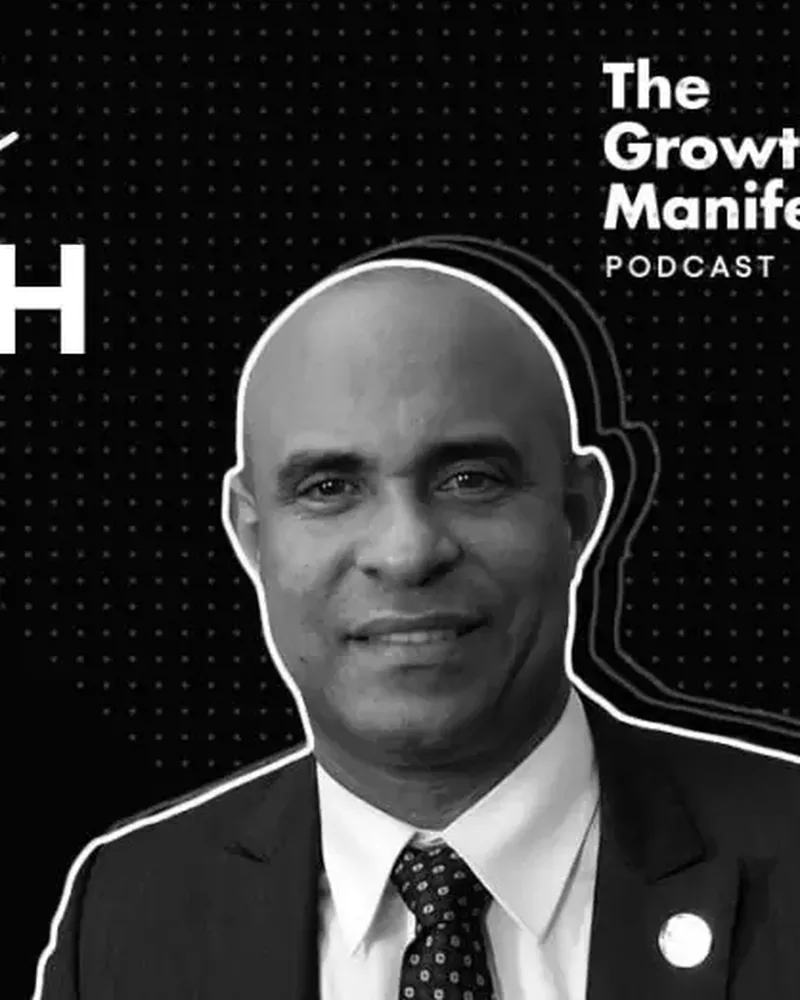 with Laurent Lamothe


Overview
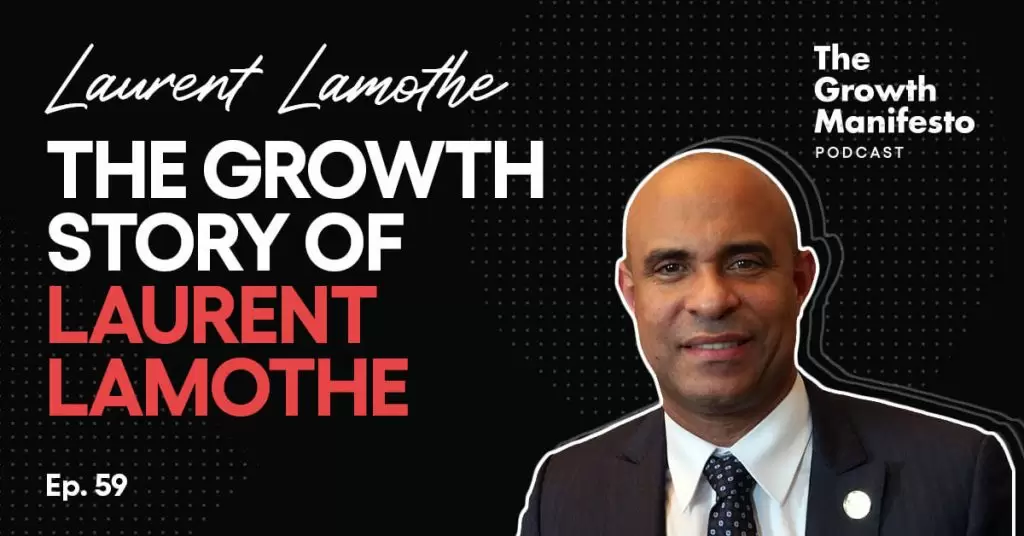
This episode is with Laurent Lamothe – a global thought leader, technology entrepreneur and known as Haiti’s longest-serving Prime Minister. Laurent is a visionary leader who is driven by a deep sense of global social responsibility, and is a thought leader in social entrepreneurship, impact programs, technology and innovative finance. He is a successful entrepreneur who leverages his business and management expertise to develop critical infrastructure in emerging nations. And recently published his new book The Hands of the Prime Minister. In this episode we talk about Laurent’s journey from entrepreneur to Prime Minister of Haiti, including lessons along the way.
Key takeaways
- He scaled Global Voice Group to about 45 countries by staying focused and treating clients, suppliers and staff as he'd want to be treated.
- Building political consensus took far longer than business, because he had to convince up to a million people, not a handful of board members.
- As prime minister he used Salesforce dashboards and KPIs across portfolios such as education and poverty to track whether decisions were being executed.
- Under his government foreign direct investment rose from $24 million to $350 million, and Haiti became the Caribbean's second most secure country.
- He hired for ambition, passion and honesty over pedigree, judging character by how someone explains their work rather than which school they attended.
Chapters
- Intro: the discipline of listening
- Childhood in Haiti and junior tennis
- Founding Global Voice Group across Africa
- Success factors behind scaling to 45 countries
- Why he left business for politics
- Becoming Haiti's accidental prime minister
- Cutting kidnapping and tripling investment
- Founding LSL to promote innovative financing
- His book, The Hands of the Prime Minister
About the guest
Transcript
Auto-generated from the episode audio, so expect the odd mis-heard word. Timestamps open the video at that point.
And how did you actually speak to the potential customers and understand the things that were most important to them and so that you created the product that they actually wanted? Well, by listening, by talking and listening. Sometimes in business, you do all the talking and you don't do any listening. So maybe you should try. And that's what I say to, I do a lot of talks in universities, and that's why I say listen, listen, and listen. And then from there, you develop your strategy because if you're the one doing the talking
and not doing the listening, your strategy is not going to be consistent with what the clients want because you haven't taken the time to listen to what they want. You're listening to the Growth Manifesto podcast, where we host in-depth interviews with business leaders, authors, industry experts, and entrepreneurs with a singular focus around business growth. At the end of each podcast, we want you to walk away inspired, to think bigger, and to have actionable takeaways you can apply to improve your business. Each episode is like a masterclass on a key topic, so make sure to browse the episodes
to find the topics that are most relevant to your biggest business challenges today. This podcast is brought to you by Web Profits, a digital growth consultancy that helps challenge your brands drive growth in a complex and fragmented digital landscape. You can find out more about Web Profits at webprofits.io. Now, let's get into it. Today, we're talking with Laurent Lamont, a global thought leader, technology entrepreneur, and known as Haiti's longest serving prime minister. He's a visionary leader who is driven
by a deep sense of global social responsibility. Plus, he's a thought leader in social entrepreneurship, impact programs, technology, plus innovative finance. He's a successful entrepreneur who leverages his business and management expertise to develop the critical infrastructure in emerging Nations, and he's recently published his new book, The Hands of the Prime Minister. Today, we'll be talking about his journey from entrepreneur to prime minister of Haiti, including lessons along the way. And just quickly, before we get started, make sure to go ahead and hit that subscribe button so you get the latest episodes as soon as they're released.
Let's get into it. Welcome, Lauren. Thanks, Alex. It's a pleasure to be here. Yeah, I'm excited. It's not often that I get to interview a prime minister of a foreign nation, so I'm really excited about the journey. But let's get straight into it, because I've had a look at your story, and you've excelled across your life in sports, in business, in politics. So I guess maybe a good place to start is what was your upbringing like? Because you're a very special kind of person who can be successful in sport, plus business, plus politics.
And so I'm trying to understand kind of how this all started. So maybe we can start there. Well, you know, I grew up in Port-au-Prince, Haiti. um i my father was a phd in literature and my mom an artist and uh you know so i was very close to my family growing up uh my brother is nine years older than me is ruben uh he was the haiti's champion when he was a junior tennis player so i decided my parents decided i should follow his
footsteps and then put me in um you know into tennis so i started very young when i was six years old i started playing tennis and really continued you know for like you know almost 20 years so tennis was my you know it's my was my everyday life it was my everything and taught me a lot and you played sport for 20 years that's um and so obviously you've got that kind of sports person psychology, you know, that kind of that competitive, that competitive nature,
the desire to win and, you know, uh, the ability to, to put in the time and the work and to put in the discipline to achieve something. And so like you went, um, but you started the entrepreneurship path when you know so like you were in sports and then um you started a company in 1998 at the age of 26 so that was 20 years later right and so like had you gone straight from sport to business
is that what the path was like or were there some smaller businesses along the way where you tried and it wasn't the success of uh um the global voice group you know so what was that transition from sports person across the business person? Well, in this case, I mean, basically what we've done was, you know, so I went to school in Haiti. And then I was playing tennis at the same time. And then I left school and I went, you know,
it was a deciding choice whether I would do, you know, whether I would stay on or whether I would, you know, go professional, what would I do? So I decided to go to university. And then, so I stopped the professional career. I went to the university and I studied political science. And then from then I opened the company after graduation, not the bachelor's, but the master's degree. I did an MBA also in management. So I said, okay, I'm, you know, basically leaving tennis
and then dedicating myself full-time to my company and my business at the time. So that was starting in 98. So I went straight from school. I mean, I played tennis all along. So I played tennis in the juniors, and then I tried one year for a professional, but it was a costly endeavor. And, you know, tennis is a hard sport, so you actually spend more money than you make. So you're running a deficit. and you cannot run it for a long time unless you start winning some money,
which is very difficult in tennis. Yeah, I think it's much harder to be successful in sport at those levels than it is in business. I think there's a lot more success available through the business pathway than it is through the sports pathway. I think there's so many sports people that put so much kind of effort and time into this thing, but it's only until they become in the top that they start to actually make money from all of that effort. So that must have been a hard decision at the time. Is that right?
Like, you know, to transition from this thing, which you've been doing for 20 years to now going down this whole nother path. You know, what was that transition like at the age of 26? Emotionally, it's very difficult, right? Because, you know, that's what you do all your life. This is how you see yourself. you see yourself as the next Rafael Nadal or the next Andre Agassi. That's how you see it. And nobody can tell you anything different. So that's how I saw it. That's how I saw it at the time.
And it was very emotionally very difficult. It was because to stop everything and then realize one day that you're going to choose a different career path was that easy. But it had to be done because that's life. You try your best and you keep going. And so you did transition from sports person to successful business person. And so how did you get the idea for the Global Voice Group, which, just for the listeners, has operated for more than 20 years in Africa and is one of the foremost ICT companies in that region?
So that's become a very successful company. And so how did you kind of identify that opportunity? And how did you grow it? Well, at the time, you know, I was looking for a job. You know, I was looking for something to do. And I said, look, I had a friend of mine who had a very also large telecommunications company because it provides ICT telecommunication services within Africa. And I said, look, I'm going to, you know, basically try my luck with my partner. So, you know, I decided to open the company.
with a partner and that came along. And we launched the company called Global Voice Telecom at the time. And then in 2005, it became Global Voice Group as it provided telecom, data services, data solutions, ICT, and it became like very global. And we operated in about 45 countries in the world. So it was like a mini multinational company in the technology world. So what were some of the things which you did at the time to drive the growth, you know, because to go to 45 countries
is no small feat, you know. So what were some of the things which you learned at school or across the experience that you had that kind of help you achieve the initial traction to scale it up? Well, the most important, I would say, point and factor, The most important was to stay focused, to basically wake up every day, keep your focus, and make sure that your execution strategy works.
So that was the number one factor. The second factor, I would say, was to treat everybody the way you would want to be treated yourself. So clients, suppliers, workers, co-workers, you know, whether it's you know them well or not, you give them full respect and treat them the best way possible. because that buys a lot of goodwill and that enables you to, I would say,
that gives you the foundation of success, which is treating people the way you would want to be treated. And it gives people a sense of comfort and creates a family-like atmosphere that you don't learn in Harvard Business School, that you don't learn in an MBA. it's about how you treat people how you treat others and it's about also the definition of you know
doing things the right way and starting out the right way in business life and so it sounds so simple but that's not so easy sometimes as you are trying to grow quickly as are you trying to close all these deals and recruit and all these different things that happen. And so kind of how do you maintain that style of thinking, you know, because obviously sometimes maybe people don't treat you how you treat them,
you know? And so how do you kind of stay with that philosophy? Well, the idea is mostly the idea is I would say to start off with having a well thought out, you know, business plan, a well thought out product, a well-targeted, you know, basically group of consumers and listening, hearing from that group in order to have a product that's, that's, I would say, absolutely necessary for them.
And this is what we try to do in Africa is to try to develop solutions, you know, that would cater to emerging markets. And that became, you know, I mean, we were talking about a huge amount of volume at the time. It was very difficult to connect to some of those countries. And the services that the community provided at the time was buying, you know, large amounts of airtime, when hard to reach places, underserved communities, and then resell them to large carriers around the world that needed that connectivity.
so whether it was the large carriers in the United States, in Europe that needed to call some of those countries so that's what basically they were wholesale services targeting the population and ensuring the connectivity and quality connectivity at the time so this is our own start so the idea was to multiply it to other countries and of course multiply revenues, multiply you know income as the markets themselves were growing.
So it was all about market growth and penetration. And how did you actually speak to the potential customers and understand the things that were most important to them and so that you created the product that they actually wanted? Well, by listening, by talking and listening. Sometimes in business, you do all the talking and you don't do it in listening. So maybe you should try. and that's what I say to you know I do a lot of talks in universities and that's what I say listen, listen and listen
and then from there you develop your strategy because if you're the one doing the talking and not doing the listening your strategy is not going to be consistent with what the clients want because you haven't taken the time to listen to what they want and that's a theme across your entire entire experience is to really just listen to the customers to the people is to really listen. And, you know, it's not easy to listen, right? Sometimes like because everybody has an opinion,
everybody has a thought, everyone wants to share their thought, right? And so there is a skill in being able to accept all of the information and then to then talk, you know? And so I'm sure that we'll get to this across the rest of the podcast, But, you know, what were some of the biggest lessons that you learned from the business side of things, which then led to the political side of things? You know, because obviously you transitioned after, what was it, around 15 or so years?
Then you went into politics. It was like, yeah, 11 years. 11 years. Yeah. And so what were some of the lessons in those 11 years that then kind of like you had learned, which you had then taken to politics? Well, one of the most important lessons at the time was that in order to succeed, you need to have a good plan. In order to see, you have to be well prepared. So you have to be, and that tennis taught me that is preparation. Preparation, just like in business, preparing your product, studying well your market, having the right strategy, being well documented.
So basically the whole preparation side of it was very important at the time. So that helped me a lot in my subsequent years in order to be, you know, just being prepared. And how long do you take on the planning side of things in creating a strategic plan, let's say, or a plan of attack for some specific thing, right? Like how long are you spending planning and creating a strategy? I do a lot of mind mapping. The way I do it, I do a lot of mind mapping. So sometimes it depends, you know, I have an idea, I write it down.
and then I go back to it and I expand it and then I mind map it. So basically mind mapping helps me gather the thoughts and organize the thoughts and put out it. And then I put it out to my teams and then they provide the finishing and they put it together as far as the global. But I would say the whole process takes about two to three weeks. Okay. Okay. That's good for me to understand because there's people who say you should plan for a while and they talk three months. There's some people who talk about you should plan for a few days.
It's good to understand, you know, just how long like you're thinking in terms of the planning process. But it would also seem that through your business career, you would have recruited quite a lot of people. And so like you would have a strong understanding of the kind of team that you really need to succeed. And so what would you say are the characteristics of a good team that can support achieving a big strategic goal?
Well, in my world, which is a technology world, is to having a good, I would say, two people. One is a good chief technology officer, somebody that's going to translate your vision into a platform, into algorithms in order to execute. and then two is a good financial person okay somebody i will develop the financial models in order for you to to survive and succeed so those are the those would be the two key aspects
that i would think um you know the finance and the technology guy and what do you look for up in a person um that has those skills and now that you're looking to kind of attract them to be part of your team, what are the personality traits or what are the things which you look for, I guess, in the person before you hire them? When I look at ambition, I look at passion because I think you have to be passionate
about your work in order to succeed. So I look you in the eyes and see the passion that you have when you're explaining and selling the product. I look at for good organizational skills, just the way the deck is presented, you know, because I always require a deck. I'm just looking at the way it's done now. If it's not done by the person, I'll see it as well. Because sometimes they have to do it live. They have to prepare with me. So there is that part.
And then I just look at for generally, you know, not necessarily always well-educated in terms of high school, high, basically good, the best schools. It doesn't have to be from Harvard or MIT or whatever. So I look at the side of the good people, the good person, the honest person, because I believe that honesty and kindness are keys to success in this case. Honesty and kindness are keys to success.
It's good to hear a leader talk about that because, you know, there's not often examples of that at the highest levels, And so it's really interesting just to hear you say that. In 2008, you were awarded the Ernst & Young Entrepreneur of the Year Award, which is a big feat. But then a year later, you left the business world and you went into the political world. What caused that transition?
Why did you make that jump? well after business you know my uh my friend was running for you know to become president and uh in haiti and uh he asked me to come and help him so i felt sort of a higher calling um and leaving him so i took a leave of absence in order to join uh it was supposed to be for a month, it turned out to be, you know, five years. But, you know, I just felt that there is more
to life than, you know, doing a business to support yourself. But there is, you know, basically the same to doing a business and then helping others, especially those that are in deep need. So I felt like making the switch and I did. transitioning from the business world to the political world you know what were the biggest things which you had to quickly learn to succeed in politics well the main difference between
i would say succeeding in politics and in business is that in politics the turnaround is not as quick and then the convincing is much longer and the number of people you have to convince is also much greater. So it's all about consensus building. It's all about, you know, basically convincing, not only the board, you know, consisting of a board, but it's consisting of up to a million people for your policies to work.
Right. So, so it's a difference between, but it takes, it goes back to the explanation of what you're trying to do. So building consensus is key to success in the public sector, whereas you just have to convince a few board members in the private sector, or if you're the CEO of a small company, you just have to convince a couple of people and then you're on the way. So the speed of execution is much slower in government than it is in the private sector.
and what are some of the best ways um to build that consensus you know so what did you learn about you know so these are the ways to really get consensus on a topic or whatever else it is well first starting to listen you start with the listening part again you listen to different sectors okay and then you try to to make it work to fit it into your strategy if it doesn't work you narrow it down but you explain why you're doing it um and then and then you have a good
communication strategy to communicate it well to the rest of the stakeholders because running a country is like is convincing more stakeholders like i was saying before and you need to have the ability of convincing them that's it you started off yeah it sounds simple right no but it's not as complicated because people are complicated right generally right because everybody's pretty unique. I mean, there's going to be segments of the population, but still people is always the hardest thing to get experience with, right. Is understanding actually how to
engage with people, their needs and their desires. And now that you've had to do it kind of at the highest levels, you know? And so it, yeah, it does sound simple to, to some people. I understand the complexity of how do you kind of influence anyone? And that's always complicated you know but you started off as the foreign minister and then you became the prime minister you know so kind of how did that transition happen because but you were supposed to go for a month and then you were there for years and you became the highest authority like
in the government um pretty quickly so what was that transition and how did that happen Well, the transition was mostly, I would say, based on need at the time. So I started as the equivalent of the Secretary of State, which is the Minister of Foreign Affairs. And then after that, after six months, the president put me as prime minister. So I would say the biggest difference is that when you manage a sector, the other one you manage the entire country.
And then the system in Haiti is like the prime minister is like the CEO and the president being the chairman of the board. So you're like the hands on every day to day, you know, hour to hour policy follower and implementer. So it takes the right treats also to do that. But so you were like, I'm sure that you were offered the role and many people may not have accepted it. So again, why did you choose to take this role?
Because it's a pretty challenging role. It's a pretty difficult role. So why did you choose to take the role? And what were you hoping to achieve? Well, in my case, I was, I would say, accidentally. I see people call me accidental PM because I didn't even know that I was going to get the job. So the president just sent my name down to the Congress. and then and then after that he informed me and i heard it on the radio actually so you know yeah so you were just kind of i had to like just really quickly yeah i had to just
very quickly adjust very quickly and you know so what were those um the first month like you know the first month of like hey or like so you've gone from secretary of state to prime minister you know so what was that first month like well you get a lot more phone calls a lot more visits a lot more a lot more hours, I should say, on the job. So the foreign minister, you put, you know, you go to sleep in a regular like a regular 9 to 5 job with a lot of travel. The prime minister is a 24
hour a day nonstop job with less travel. So it's, you know, you have to go into the detail of the nitty gritty. So it's a, you know, it was a tough experience. you know, not that I think of it, but you also do it with your passion and with your love for your country and the desire to see the country doing better. And yeah. You succeeded in changing a few of the policies and kind of how the government operated and supporting the people.
What were some of the biggest things which you achieved in that time? On the education front, on the foreign direct investment front, on the social front, on the security front, I think those were the four biggest gains. The security, the country became the second most secure country in the Caribbean. You know, that's one. Second, we became, you know, we had an education program to include over half, you know, basically to include 90% of kids that were outside of the school back into the school system.
And, you know, education is key for any, you know, development of any society in the world, let alone the country. so we focused a lot on the education and foreign direct investment basically went to 350 million up from 24 million the year before so that's, you know, we're very happy of that and then most of all, I would say but the biggest win was against the gangs and kidnappers
you know, in the country because the kidnapping was very high in 80 and during our attendance almost disappeared. Why? Because we said we're not going to, we're going to go after everybody that's involved in gang-like activity. We're not going to make any exception. And if you're a criminal, you're going to go to jail. And that's what, we had a no-nonsense approach to that. And how did you choose these areas? Because it's hard to have priorities in business sometimes, but it sounds like creating priorities in government
is significantly harder because of the amount of stakeholders that it affects. And so how did you choose those areas to focus on? So we decided to do it in a modern way. So we pulled the population and see what is it that they wanted the most. And then we focused on that. So you listened again. Yeah, exactly. And so what was the hardest thing which you had to deal with as the Prime Minister? the the hardest thing is is sometimes um was you know i had uh you know you always have
first of all the hardest to me was spending time away from my family from my kids um i was very hard because you know i mean their kids were little and their father to be with them and i was away all the time so that was i think the biggest hurdle the second biggest hurdle is developing is trying to manage a country that basically had very little resources and that had a lot of bad press. Doing things in a country that has a lot of bad
press, trying to change things, isn't that easy. We focused on that, on changing the image of the country, making the country image better. That was done for security, for education, and the foreign investment was the proof kind of thing. It was the proof that this was actually working. Absolutely. So you were there as well for the earthquake in 2010. Is that right? Yes.
Well, no, I went into office in 2012, so it was two years after the earthquake. And so what was it like? Because at the time, the country was still being rebuilt, wasn't it, in 2012? Oh, yeah. The country took several years. It's still being rebuilt today. I think it's on the tail end of it, but there is so much more to do. So much more to do. And so how did you deal with that plus all these other things at the same time?
Because it seems like the country had to be rebuilt plus education, plus safety, plus corruption. Yeah, so it's management, right? It's all about management, right? It's prioritizing. It's about execution. it's about having the right team around you having the right people around you so it's all about that that's what I was able to accomplish mostly I had a very good team had a bunch of young Haitians coming back to help their country that were in the top schools in the US
and in the UK and elsewhere in France they wanted to help the country so I created a way for them to come back and to help and to participate you know add a good youth movement into the government uh and where people that love the country and we're very competent at doing so that's great i mean there's so many things to discuss but i'm trying to keep this as a concise podcast just to kind of understand how you think right because it's not often that you know um people can understand the challenges of actually
running a country and it seems like it's far more complicated um than running even a big company You know, it seems like the biggest challenge to me, and again, I don't have the experience, but this is a, this is a question is around the fact that, you know, you're never going to make everybody happy. Right. Like that's the biggest thing with the population. Right. Like, I don't know if you can make everybody happy. So, so is that a true statement? Number one. And number two, if that is a true statement, I mean, how do you approach that?
Well, the number one, I would say, the number one thing is that you're never going to make everybody happy. And that's where the leadership comes in. You need to arbitrage and listen and focus on what's the most critical points first. And then you go in the skill of priority. So it's all about ensuring that you have maximum amount of efficient decisions. Maximum amount of efficient decisions.
And how do you make efficient decisions? Well, one is, you know, identifying what the people want the most through, you know, polling. And then you're putting an execution team. Then from the execution team, you put, I mean, you're putting a team to supervise the execution, but you do it all the, you know, in, in, uh, basically, We had an app at the time. We worked with Salesforce to implement some of the dashboards
in different aspects of education. We had different dashboards for fight on poverty, et cetera. So we had KPIs in place to ensure that decisions were being done the right way and were being met and that the goals were being met. So that's how. It's having the goals and having people get to the goals. And so you use like a lot of your experience in business, in government as well, to really kind of, you know, take the learnings of how do you, you know, create a successful business to how do you create a successful company.
It's really interesting that you use the Salesforce dashboards, you know, that's not the first thing I would have thought about, like in terms of Salesforce application. And so you would have used that quite successfully in government. So what were the biggest lessons that you learned from your experience as Prime Minister? Well, the biggest lesson is not trying to over, you know, don't try to overdo things. Let things play out. So be patient with the outcomes.
Don't try to force things. Prepare yourself well. Execute. Supervise. and then be patient. And be patient. How long is that patience? Is that like, you know, to wait a year? Is it wait two months? Is it wait five years? Like how long are you talking about when it comes to patience? Because I know it's very hard for me to have patience. I'm trying to understand what you're thinking. Well, it depends on the goals that you set for yourself because you need to put realistic goals.
You know, that's it. You need to have realistic goals. So the patience has to be there, but you have to put realistic goals to know that, hey, this is where it's going. And you have to be patient and making sure that it happens. And that's where just being a strong leader is helpful because sometimes you need to get all of the data and then you get all the insight of everyone on your team, but then you need to make the decision and the decision has to be in that direction. 100%, exactly.
That's what it's all about. And so were there times when that was hard, that where, you know, there's conflicting kind of insight, there's conflicting advice, there's conflicting opinions, the data is not clear, and you have a plan regardless? And you're like, oh, well, it's not perfect, but this is the direction that we need to go? That's part of the basically guiding and implementing the plan. so you know we can adjust along the way but generally we tend to stick to the kpis
okay that's good to stick to the kpis that's great it's very black and white in that respect which i like um so then you left as prime minister and then you established the lsl the world initiative yes what is the like initiative that's why did you transition from the prime ministership to LSL? Well, the LSL was basically about keep the models
going in innovative financing and keep telling the story to help other countries. That was the goal of LSL. LSL is still active today. The thing is with the COVID, it went more from physical to virtual. So we did a lot of Zoom conferences and things like that. But it talks about innovative financing. It talks about making the world a better place through technology. And what's the aim of the LSL? So the LSL is, I mean, it was a think tank. It's a think tank to push innovative financing
and explain what that is throughout the world. Innovative financing for development. And so what are some examples of innovative financing? So basically you take countries and then you apply micro levies, put them on large volume transactions, and then use the proceeds of that for a national development plan. Okay, so let's say you have large amounts of data, large amounts of calls, you know, you put a micro tax on them, and the micro tax is being used to finance a development goal, for example, to finance your healthcare program,
to a universal healthcare, to finance education policy, etc. So it's innovative financing that doesn't exist today. you put it in place in order to finance the program. So LSL, so that's what I did a lot of that during my years as PM. And then I wanted to use that also throughout the years in order to basically keep telling the story to our leaders. So the theme is that you want to help. That's right. To affect change, yeah? Exactly.
You started in business, but then you went into politics, but now you're continuing that path of trying to help as many people as possible, as many people across as many countries as possible. Is that right? That's right. That's exactly right. And so is it kind of harder now or is it a bit easier now kind of having moved from the prime minister of Haiti to establishing LSL and trying to help a lot of developing countries? Now, what's the harder thing, you know?
Well, it gets harder because, you know, when you leave office, your mic is lower. But I think it's not about helping one country. It's about helping whoever needs the help. So, you know, so that's what it's all about. It's ensuring that, you know, basically those processes are updated. The micro levy ecosystem is upgraded and is expanded. And more people know about it and more people apply it. But harder definitely is now
Okay, so it's definitely harder now Because the microphone is lower Is that why it's harder? Because I resigned seven years ago So imagine seven years ago Imagine we're talking about The beginning of the second year Of the Obama administration Right, so that's a long time ago That is a long time ago Yeah, so what happens is Just like anything you have about one to five years to keep your policies going
or to do something leader positive. So it's harder now because you have less access to world leaders, but it's much more refined and focused now. Yeah, sure, sure. The things which you're trying to achieve are very, very difficult in the world. You know, it, it takes a very unique individual to have a thought, a desire and kind of the reason to do something,
but actually to follow through and go all the way, you know, from business to politics and now to kind of helping like across all the countries to kind of improve their financing, you know, which can help kind of everybody kind of increase their standard of living. So that's a unique individual. Yes. So you're a very unique individual. You have a few principles that you talk about and that have served you best. Yes. What are the principles that have served you best
across your career, aside from listening, because we've talked about listening. But I mean, there are other ones as well. What are they? So one is definitely listening. Two is keeping yourself up to date and current with industry trends. So whatever industry you are, you need to be an expert at it. So you have to study, stay ahead of the curve. That's the second principle.
And then the third principle is to ensure efficiency in what you're doing. In whatever aspect of what you're doing, you need to ensure that you're not wasting your time. that you have a market, that you have people wanting to listen. And those three core principles is, you know, we lead to a success story of some kind. Cannot guarantee which, but of some kind. Yeah, sure.
And so, and you spend a lot of time planning, it seems like. Not like, well, you plan a lot. Yeah, like it might not be like a lot of time planning, but you plan everything that you do that is big. Is that right? And you spend time on the money. Yeah, because I find it is better to have some planning rather than to just jump in. Sometimes it's good to jump in, but then with planning. Otherwise, you get to a spot where your policies don't make sense. And so what do you think about when you plan?
What are some of the considerations? Well, I think about how others would react. how will the product, what impact will it have, what would competitors, how the competitors fight it and how to overcome that contingency planning for sure. Yeah, so generally that's what I look at. Mm-hmm. What would you say has had the biggest impact on your success?
Yeah, because you've achieved quite a lot over the years. you know and um it's very impressive you know so what would you say has contributed to that i think it's probably my it starts with my background you know i have a very diverse background my my parents also contributed a whole lot to that um but ultimately ultimately it's it's it's uh planning but it has a lot of luck also you need to have a little touch of luck because you know i mean what you could be the hardest worker and things could not work out
right so it's a touch of luck as well touch of luck but it does sound that sound like you're a hard worker you're very well i i try to be i try to be in terms of like well here's the question i have you know like many people you know want to affect change in the world you know um and sometimes it seems like it's it's insurmountable the challenges which people have to overcome
you know how do people actually affect the real change that has an impact you know like because there's so many conversations in social media like an in person and you know it seems so difficult sometimes to actually make a difference and so as someone that has been at the top of the chain um what would you advise people who wanted to make an impact on something that's in kind of that's happening in the world um well you know i mean
i i think it's subjective to the person okay i don't think you can give a wholesale advice on that. But if I have to say something, you have to stay in the know, stay in the trend, technology, cryptocurrency, the cancel culture is very active these days. And then you have a whole generational shift that's happening. So you have to be able to stay ahead of the shift. Because the world is changing.
It's more normal right now to take your phone and call and dial in an Uber than it is going to a corner and look for a cab. Right? So the habits are changing. It's much easier right now to pick up your phone and WhatsApp someone in China rather than to go and buy a calling card at your nearest gas station and make a call. So things are changing. So try to
stay ahead of the curve. Stay in the know. stay in the sectors that you see are moving. Cryptocurrency is moving very fast now. And I think it's a very good sector. Development, engineers, in terms of career, you know, programmers, put your kids to learn how to code. Because that might be a good thing for tomorrow and today in this environment. So to affect change. Yeah, I think you have to be the one you have to stay ahead of the curve for sure.
So to affect change, you kind of just need to follow the changes that are already happening in the world and leverage them to kind of progress. I would say so. Something which you want. I would say so. Because it's difficult otherwise. It seems so challenging because there's no leverage. So most people, they don't have leverage. And so is the technology and now the trends like a way to get leverage across a specific idea? Is that like kind of what you're saying right now? I'm just trying to understand.
Well, yeah, that's exactly what I'm saying. I mean, yeah, I guess you summarize it very well. Okay. And from a business perspective, yeah, say, for example, if there's a business that wants to kind of affect to change or to help the world in some way, what's the best way for a company that has a lot more resources than an individual to help? Many companies are doing that right now. You know, a company like Google, for example, is helping because right now having access to a phone that has a Google,
you have more information in your hand, but the president of the United States is 25 years ago. So tech companies are helping. Of course, they're profiting big time, but then they're helping. If you look at it that way. And it's studying, and I think it's researching through the R&D department or just researching trends, what would impact the world's poor more and then coming with policies and systems
to help those grow. So this is one that I would say would definitely help. I mean, the sectors are varied. Thank you so much for coming on the podcast. It's been such a fantastic conversation. Just to understand the journey from sports person to entrepreneur to prime minister, it's such a unique journey. Now, you recently have published a book. Where can people purchase that book? It's called The Hands of the Prime Minister, by the way,
just for the listeners. Where can people purchase that book? So The Hands of the Prime Minister is available on Amazon.com, so you go online and you get your copy, or at the website www.handsoftheprimeminister.com. So those are the two sites where the book is available today. And it would be, you know, it talks about a lot of the stuff that we just discussed. It talks about leadership, listening, and it's in four languages, French, English, Creole, and Spanish.
So it caters to every culture and nationalities, at least the ones that are closer to me. Yes. so yeah Amazon and hands of the prime minister dot com is where the book can be purchased right now and it's highly recommended I mean like it's not often that you get to kind of understand the full journey of someone and kind of it's such a good book because it's kind of written as a conversation
and it's super easy to read there's lots of photos in there and yeah look it's got kind of so many takeaways that people can use across life. So again, Lauren, thank you so much for coming on the podcast. It's been such a fantastic conversation. It's been so nice just to get insight into the mind of a prime minister. So thank you so much for coming on the podcast today. It was a pleasure, Alex. Thank you very much. And I really enjoyed the podcast and keep doing it.
Keep up the good things. Thank you. Of course I will. Of course I will. Thanks so much, Lauren. I'll speak to you soon. All right. Thank you. Bye-bye. Thanks for listening to the Growth Manifesto podcast. If you enjoyed the episode, please give us a five-star rating on iTunes. For more episodes, please visit growthmanifesto.com forward slash podcast. And if you need help driving growth for your company, please get in touch with us at webprofits.io.