Leadership and culturePersonal growth
How to build a team of impact players
Liz Wiseman on why well-intentioned leaders diminish their teams without realising it, and the everyday habits that make someone an impact player.
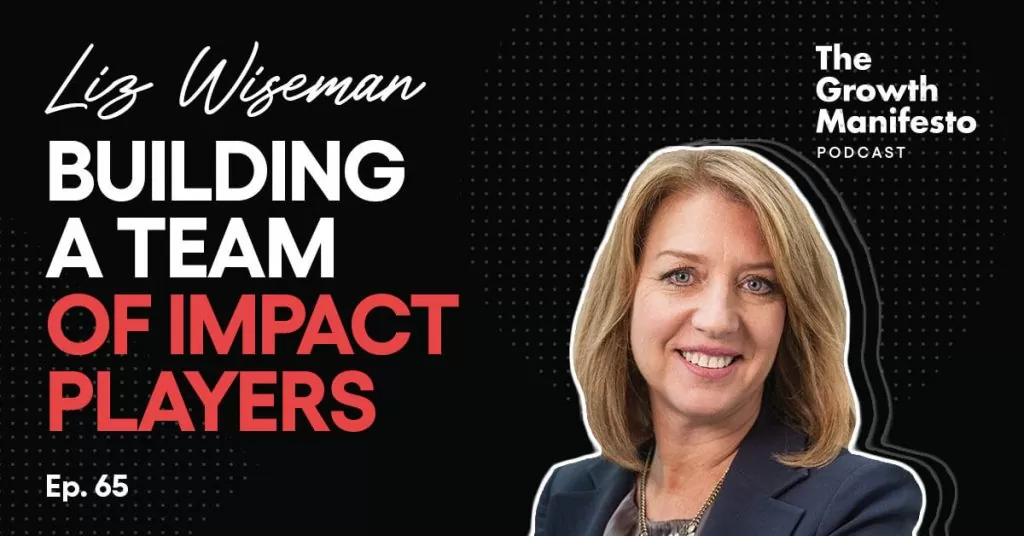
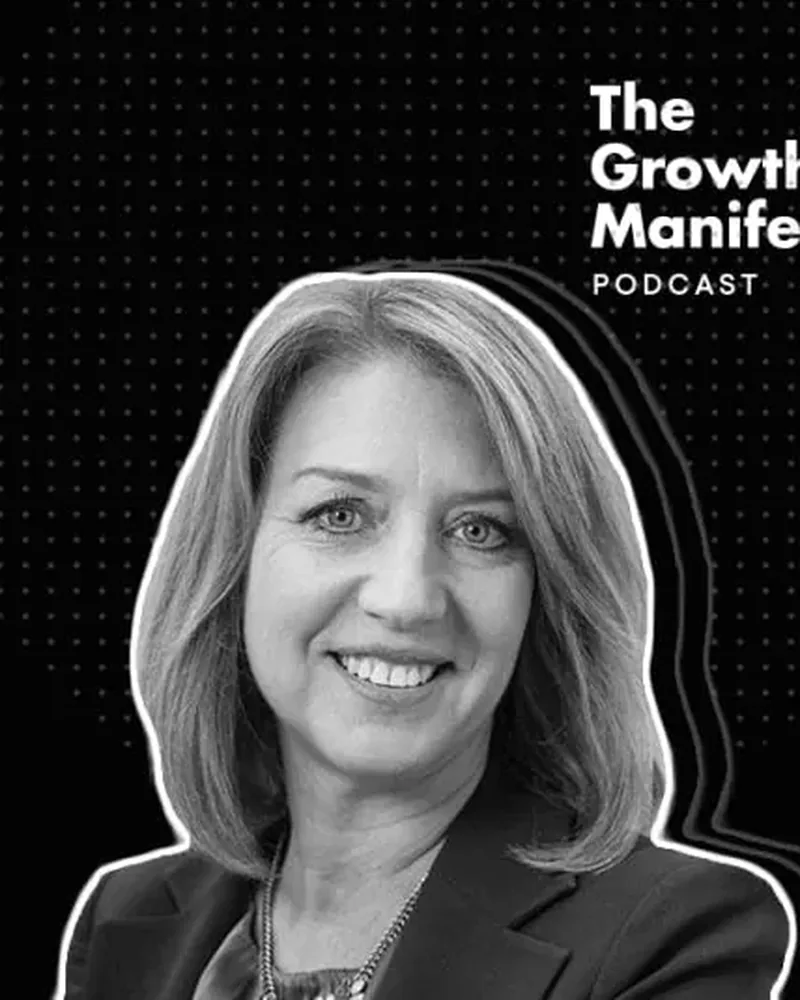 with Liz Wiseman


Overview
This episode is with Liz Wiseman – author of the best-selling books Multipliers, The Multiplier Effect, Rookie Smarts, with her new book being released in October – Impact Players. Liz is the CEO of the Wiseman Group – a leadership and development firm based out of Silicon Valley with clients like Apple, AT&T, Disney, Facebook, Google, Microsoft, Salesforce, Tesla and Twitter. And in 2019 was recognised as the top leadership thinker in the world. In this episode we talk about how to build a more impactful team to drive extraordinary growth.
Key takeaways
- Diminishing leaders access less than half of a team's available intelligence, even when the company has hired genuinely smart people.
- Most diminishing behaviour comes from well-intentioned leaders, not tyrants, because they judge their own actions by intent rather than impact.
- Impact players don't wait for role clarity, they step into messy, unclaimed problems between job descriptions and then step back once the job is done.
- Asking how can I be helpful right now slows a leader down and signals support without taking over the work.
- Body language in interviews, leaning in versus backing away from ambiguity, is an early signal of who will thrive as an impact player.
Chapters
- Intro: spotting who thrives in uncertainty
- The biggest challenge facing leaders today
- Multipliers versus diminishers, explained
- Practical shifts: ask more, tell less
- What makes someone an impact player
- Stepping up to lead, then stepping back
- Can an entire team be impact players
- Redefining what winning means for a team
About the guest
Liz Wiseman
Liz Wiseman is the author of the best-selling books Multipliers, The Multiplier Effect and Rookie Smarts, with her new book Impact Players released in October, and is CEO of the Wiseman Group, a leadership and development firm in Silicon Valley with clients including Apple, AT&T, Disney, Facebook, Google, Microsoft, Salesforce, Tesla and Twitter, and was recognised in 2019 as the top leadership thinker in the world.
Transcript
Auto-generated from the episode audio, so expect the odd mis-heard word. Timestamps open the video at that point.
I now know what to look for in interviews. And I can tell now who is uncomfortable in these situations where impact players tend to distinguish themselves. He says, I am certain who I should not be hiring. And he said, I'm not yet certain who I should be hiring. Like, it's hard to like guarantee a pattern of behavior in an interview, but I think it helps to say, oh, wow, that person, they're skilled, they're interesting, they've got capability, but they are not comfortable in the messy ambiguity of everyday work life. And they're constantly looking
to avoid those situations where impact players say, yeah, that's a great big ocean wave. And rather than run from it, I'm going to like dive into that thing. Cause I think there's something interesting on the other side. You're listening to the growth manifesto podcast, where we host in-depth interviews with business leaders, authors, industry experts, and entrepreneurs with a singular focus around business growth. At the end of each podcast, we want you to walk away inspired, to think bigger, and to have actionable takeaways you can apply to improve your business. Each episode is like a masterclass on a key topic,
so make sure to browse the episodes to find the topics that are most relevant to your biggest business challenges today. This podcast is brought to you by Web Profits, a digital growth consultancy that helps challenge your brands drive growth in a complex and fragmented digital landscape. You can find out more about Web Profits at webprofits.io. Now, let's get into it. Today, we're talking with Liz Wiseman. She's the author of bestselling books, The Multiplier Effect, Multipliers, Rookie Smarts, and with her new book being released
in October called Impact Players. She's the CEO of the Wiseman Group, which is a leadership and development firm that's based out of Silicon Valley with clients like Apple, Facebook, Microsoft, Salesforce, Tesla, and Twitter. And in 2019, she was recognized as the top leadership thinker in the world. Big place. Today, we'll be talking about how to build a more impactful team to drive an extraordinary growth. Just quickly, before we get started, make sure to go ahead and hit that subscribe button so you get the latest episodes as soon as they're released. Now, let's get into it. Welcome, Liz.
Oh, it's good to be here. It's good to talk to you because like I have read your books and I, you know, have been using a lot of your thinking for years. Right. And so it's so good to be able to have a conversation and truly get into the weeds about leadership because it's one of those areas that there's no right way. There's no wrong way. And there's lots of different ways. Right. And so I really like your approach, but I figured let's get straight into it. Okay. What are the challenges that executives have in today's world, you know, especially with all the stuff that's happened since 2020?
Oh, you know, here's the one that I think is the biggest challenge. There's a couple, but I want to start with what I think is the biggest challenge is we haven't evolved our leadership approach. I think we're in a fundamentally different form of leadership than we've ever been in the past. I want to start with like where, when I began my leadership career and I went to my very first management training class, the instructor said like, your job as a leader is to provide a vision and then to take people to a better place. And he stood up on a chair, like literally stood up on chair and he like reached over
and extended his hand. And he's like, your job as a leader is to extend the hand of greatness and to grab people by the hand and take them to a better place. And I'm like, well, that sounds inspiring, but like something sounds wrong about that. to me. And now I think I understand why, because right now leaders aren't asking people to come with them to a better place, a vision that they have of the future. See, when you're working in total uncertainty and ambiguity, you as a leader aren't like taking people to a land you've
been to before. Like, oh, come with me. I know this country. I'm an expert, but come with me and I will guide you there. This is, you know what? I'm gonna wake you up in the middle of night, rouse you from your sleep, tell you to grab your go bag and come with me because we've got to leave what we're doing today and we've got to reinvent and rethink and build something new. Well, where are we going? I don't know, but I know we need to leave. So what leaders are, the challenge I think today
is leaders are leading in the dark. And when you lead in the dark, it's a very different kind of leadership. You're not asking people to follow your vision as much as you're saying, come with me in the dark and keep your eyes open. And we will figure this out together. You've got to build the trust that you need for people to follow you into an unknown and uncomfortable place. And then you need collective vision. You need, I think of it like special ops.
where it's like, okay, you know what, we're going in on this mission and we know what we're trying to do, but we don't have all the information we need. So we need people saying, I got eyes on this. I see this, this is happening over here. And the leader is coordinating that through a headset and you're building collectivism. It's such a different form of leadership. And I think it's the biggest challenge right now is a lot of people say, I don't have the answer. I don't have the answer. So it's, it's helping to navigate a team through this uncertainty. And is there like almost
a lack of vision because of the uncertainty? So it's not like very kind of easy to set a vision, but in the current environment, is that part of the challenge or is it, they should be setting a vision within the current environment to help everyone go, that's the path. Well, I think it is actually both of these. It is a lack of vision. Like you may have an intent, an objective, but I don't know that you can have this vision because it's going to unfold and it's going to be created. So it's about getting a team to build a real-time
vision of reality, a real-time vision of what we're creating. And I actually think, you know, all the research I've done has led me to this sort of strange conclusion is that we tend to be at our best when we don't know. We tend to be at our best when we don't know. That's not true for everybody though, is it? That's true for some people, right? So for example, like a bit later in this conversation, we're going to be talking about impact players, right? And that's like the
characteristics of one that they seem to, you know, to step into kind of uncertainty or they handle uncertainty, like in a bit of a different way. Is that consistent across everyone or is that consistent across the best teams? Like, how would you define that? Well, I think there is a general dynamic is that we generally tend to do better thinking and better work when we don't have answers because of what it does to us. It, when you have an answer, bam, you ask me a question,
I have an answer. You ask me any related question, I have an answer. You get halfway through your question, I have an answer for it. And we are so quick to assume, but when we don't know, and I'm not talking when we're like empty headed, no nothings. I mean, when we are fully engaged and thoughtful and we don't have a ready answer, well, what do we tend to do when we don't, we have a question, but we'd have an answer. Well, we think we make mistakes. We learn from
them. We're humble. We ask a lot of questions. We feel uncomfortable. Like we feel tension when we don't know. And most of us don't like staying in a not knowing space. So we're very driven to, we tend to do our best when we don't know, because we don't like it. and we have to close the gap. So like generally, I think this dynamic plays out
when you look at leaders, when leaders have the answer, their team becomes an extension of them. Here's what I want you to do, your arms, your legs, I'll be the brain. And they can end up having this diminishing effect on others. But when leaders have the right question, but don't have the answer, well, then they need to ask questions. then they need to listen to people, then they need other people. And we, we love working for people who need us. It lets their team find the answer. So it tends to put leaders in their best
space. And it tends to create learners out of us when we don't have ready answers. And this is what the book, the multipliers book was about, right? Is basically how to be a multiplier, not a diminisher, right? And so it's to have a vision, right? And in uncertainty, we seem to perform a lot better because of the challenge, because we're, you know, just being, you know, pushed to our creative limits, trying to figure out a big problem. But then kind of as
a leader, you can either be a multiplier or the diminishes, right? So could you just quickly explain for the people, for the few people that haven't read the book, and I'm sure everyone has read the book, but what's the difference between a multiplier and a diminisher in terms of a leader? Yeah. So it's a name I gave to this dynamic that I saw and I saw it in my early days at Oracle. And
I joined Oracle when they were a young, rapidly growing, like doubling every year, revenue, head count, market share every year. And they hired a really interesting breed of people. They hired for this kind of trifecta of talent. It was really smart, like Uber driven, and then kind of fun or nice. And I can tell you, if they compromised on any part of that triangle, it was the nice part of this. So I landed in this organization and I don't think I felt like an imposter there.
I just felt so lucky to work around all these brilliant, brilliant people. I was like, man, I work with smart people. But I think because I was a little bit enamored with how intelligent and driven everyone was, I noticed that when some really smart, capable people got put into management roles, They continued to be smart, but the people around them didn't get to be knowledgeable, capable, know-how. They had this way of weakening the people around them.
But I saw other equally smart, capable leaders who use their intelligence in very different ways. And I called that first group diminishers and that second group multipliers. And these were leaders who use their intelligence in a way that other people were at their best, like we're smart, we're capable. We take ownership. Like we lean in around these leaders. Whereas the diminished leaders, we tend to lean out. We shut down. We kind of power around them. It was a dynamic I watched play out over and over. Then I went and did some executive coaching
at places like SAP and Apple. I see the same dynamic. I'm wondering why is it that some leaders amplify intelligence while others drain it. And probably the two things that I found there that are important. So, you know, if someone isn't familiar with the idea or hasn't read the book, like skip it and let me just give you kind of the nuggets maybe is. Buy it, don't skip it, but just listen right now. I will warn anyone who hasn't read it that some people say it was the most painful book they ever
read. Because they've got themselves because they were like reading it going, oh my God, I'm doing this wrong. No, but Alex, I was a first time author and people say this. I'm like, what do you mean painful? Like poorly written, painful, or like no self-reflective painful. But here, I think the two big ideas, one is that the research I did, which I have replicated over and over in virtually every country is the diminishing leaders are getting less than half of people's
available intelligence. So they may be working for companies that are working really hard to hire smart people, but they're only yielding half of that capability, which seems to me like a bit of a crime, not just in terms of waste for shareholders or what have you, but, you know, these people were promised a great environment to work and they got duped because, you know, they're now have a bit of a ceiling, a wall on what they can do. So that's the first thing that these multiplier leaders didn't get twice the level of insight, know-how, and capability from
people they lead at zero cost, the cost of good leadership, or maybe the cost of self-restraint. The second idea, which was really more disturbing to me, was that most of the diminishing that's happening is not coming from like tyrannical, bossy, narcissistic, know-it-all kinds of leaders. Like, yes, they're out there. They exist. And some people have surely worked for one and they
shut people down overtly, but most of the diminishing was coming from really well-intended people like the good guys, people who are, you know, people who take management training, people who read management books, people like me who write management books, who are trying to do the right things, but yet following some just popular leadership guidance end up shutting people down to the same extent as those narcissistic know-it-alls. And I think that's the hardest part, right? Because it's people who are good and people
who are good trying to do what they believe is good, but not knowing its impact, right? And saying, well, you know, like, like an example of money is protecting someone from something, right. Whereas like, why are you protecting anyone? You know, like, is that because that's what you would want? Like, but that, but that actually can help people back. Right. So it's like, there's so many different little things that you do from the best intentions, but that kind of doesn't go that way. I think, you know, if you want to create a high, what I call a high
contribution organization, where people are contributing fully, like as a leader, you really have to understand the difference between your intention and your impact. You know, and it is human nature to judge other people on their actions and their impact and to judge ourselves on our intent because we know our intent. And, you know, I think my mission with this body of work is to help people kind of look into this dark space, you know, like that's what you meant.
Like someone was struggling on your team and you extended the hand of help. Like what you thought you were doing was saying, I support you. I care about you. I want you to be successful. Like, you know, you're on my team. I love you, man. But what you actually just said to that person was, I don't think you can do this. I don't think you can handle the hard things. Like I'm here for the hard stuff. Like you can't do this without me, which is actually at the very core of the diminishing logic, which is nobody can really do this without me.
And so really understanding how our best intentions can be received differently. Like if you really want all that capability, you just hired. And then more because people say, man, I got so much smarter and more capable where you for these leaders, like you really have to understand like your shadow as a leader, like what, what is it like to work for you? What, what true impact do you have on people? And what are a couple of things that people can do that can start turning them into like a
multiplier instead of a diminisher, you know, so what a couple of things to say, all right, if you just keep a couple of these things in mind, you know, this will just at least help, you know, obviously like you should read the book because like, you know, just to be aware of it is the first step, but like a couple of points. Is there a couple of quick kind of takeaways for the podcast right now? If someone is listening, sure, sure. I'm going to try to get as many as I can in like a minute or something. Please love that. Love that. Start with awareness. And it's like, assume you're having a diminishing impact and find out how you're doing with the best of
intentions and talk about it. Assume you're having a diminishing. I just assume that, wow, that's a cool one you know no just because everybody thinks that they're not so just assume everything kind of is that's a i just had to stop you because that was like whoa you know i just want people to understand just to just to get that you know well thank you and i'm not sure i've ever articulated it quite that way is but i haven't really found too many leaders who aren't having an accidentally diminishing impact so assume you are find out how talk it up on your team i find
that the leaders who make the most progress are the ones who don't hide their accidental diminished tendencies. They put them out there on the table. Like for me, I'm super lazy about this kind of stuff, personal growth. Everyone thinks I'm like a machine, super lazy. Uh, so what I'm going to do is I'm going to tell people what my accidental diminished tendencies are. Like I might say, I have a tendency to rescue people. If I'm jumping in to help you and you really got this, say, Liz, I got this, you know, cheer me from the sideline, but let me finish the work. So tell people and let them help you correct. So things to do, tell less,
ask more. It's probably the most profound shift a leader can make is operate in the mode of asking questions rather than giving directives. Ask the questions that get people thinking, that get people taking ownership, ask more questions, ask better questions. Have a set of what I call back pocket questions, like five go-to questions that if you're running into a meeting and you haven't really prepared, you got them. Like, hmm, what's your perspective on this issue? What are the risks we haven't explored? What are the reasons why we shouldn't proceed? You know, what help do you need
for me to be successful? If any, you know, like have your go-to questions, talk less in meetings, You know, take your percentage of the room and maybe even back it off a bit. Look for people's what I call native genius. What do they do brilliantly? Like a fast way to do this is, and I have to admit, this is Alex, this is a little true confession becomes behind this. I feel like I've done this wrong many times. So instead of asking, man, is this person smart?
Like I've done that. I've asked that question. Ask in what way is this person smart? And then let me see, maybe one more would be clarify that, particularly for entrepreneurs, let people know where it's okay to make mistakes and where it's not. We tend to say like, be innovative, you know, fail fast, fail forward. That doesn't help anyone because we know there's lots of parts of the business. You can't bring the production database down and say, oh, bummer, dude. You know, we learn to give it up. It's like, yeah, it's like, let people know in this parts of our operation, you know what
we can't. experiment and make mistakes and recover our reputation, our dignity, our business, our careers over here. These, these are places where like getting it a little bit wrong can have devastating consequences like business ending or life ending. Those are freeways. The other places, they're playgrounds and letting people know that delineation is one of the most powerful things a leader can do. There's some super points there. You know, I think I really
like the one of, you know, talking with your team, right. And saying, Hey, look, I tend to do this. If I do that, please let me know. So because it gets the conversation out there and it gets you past your ego. Cause it sounds like a lot of these, the place where you could be an accidental diminisher is because of your ego is just getting in the way of you protecting them or you helping them or you trying to make it easier for them or kind of however else it is or you thinking that you know better than someone else right um instead of kind of asking questions i think the second one
is asking questions i mean i've learned about asking questions as a leader for two decades now and i'm still working on it it's so it's so hard sometimes if you're really really busy and you have a lot of people asking you questions to just slow down a little bit um and actually kind of ask a question back, but to your point, you get like a lot more contribution from the people if they feel like they're fully engaged. Right. So that's, that's the prize, you know, so ask questions. It feels a bit slower in the moment instead of just going bang, that's the
answer. But on the other side of it, you're building a stronger team. Is that right? Yeah. And have a, have a go-to question or two, and it really helps because if you're someone like me, who has the curse of like processing things really fast, it's like easy to go and just want to jump right in and offer a suggestion. And one of the ways I slow myself down is to say, okay, what's your go-to question here? And this was like a little success story for me. Our youngest son
just went off to college. And one of the things he was preparing for a summer job. And I was of course, like giving him a little bit of coaching about how to like make himself useful and be helpful as mom, you know what? I'm just going to like ask that question. You always ask me. And I'm like, well, what is that? And he goes, Oh, like whenever I get stuck on stuff, you ask, um, how can I be helpful right now? And I'm like, Oh, I suppose I do. And I ask it when I want to
jump in and tell someone what to do and how to do it. It's my way of saying, okay, I need to signal to them that I'm here to help them, but I'm not going to do anything without their permission. So how can I be helpful to you right now? And it just slows everything down. Cause I'm basically, I'm assuming by interfering, I'm not being helpful. So how you, so how you just explained
how you process things quickly and you just want to put the answer. That's me. So I'm literally just going to take your question now okay and i'm going to start to use it and i'm going to see how that does and for anyone um who works with me they're going to know this is my trick now um so they're going to hear this podcast and they're going to know but it's such a good way of doing it because i often don't know what to do in that kind of moment when you've got the answer it's quick like you're busy and you just want to help but then all of a sudden yeah like you become an accident to you or you potentially become an accident to diminish all right so i really like
that question. And if it's okay with you, I'm just going to literally use it. And all of you who work with Alex, I want you to hear this. Like it is okay to use the same questions and it's okay to steal other people's questions. Like having a go-to question like shows discipline and consistency. So like use it. There's so many questions you can just use. One of my favorites is just, what is your perspective on this? Or what do you think we should do? Most people don't being, don't mind being asked like what's your opinion that's well like thanks i'm glad you asked alex
like yeah yeah that's great how can i be of help right now um and what's your perspective on this you know they're two really good places to to go cool so we started off by saying so leaders need to have a strong vision um and to be able to really um support their team you know like in going through uncertainty, right? Then talked about, you know, how to be a stronger leader, right? You know, by being a multiplier and things to watch out for. Now let's talk about the
team, right? Because like in your upcoming book called Impact Players, you talk about the difference between an impact player and a contributor, right? And so could you just quickly explain the difference between the two? Yeah, absolutely. So probably the most important thing is that these aren't necessarily people, their belief systems, their mindsets that we tend to move in and out of. But here's the concept behind an impact player. So I was just watching some sporting event and it was like someone was like impact player. You know, an impact player in sports is someone who makes
a really valuable contribution. Like they're talented, they make plays, but they play the game in a way that everyone on the team gets better. Like they have this positive effect, like, oh man, when we got this person on our team, we win. And I think there are impact players in virtually every organization. And they're the kind of people who, you know, are the people you turn to in a clutch. And they're the people who get the job done and people who know how to make
themselves valuable and who have a positive sort of this resoundingly positive effect on a team. And what I did was go in and talk to 170 managers. Tell me who your impact players are, people who having an enormously positive impact. And then tell me about other people who are like equally smart, talented and hardworking, but yet their contribution, I wouldn't want to say is average, is solid.
So I was looking at what are those small differences that really cause some people to have an enormously positive and valuable impact inside an organization. And for starters, what I found was so interesting that it's not like these impact players distinguish themselves in times of massive crisis. Like they're not these heroes that emerge from the ashes that save the day. They're heroes that kind of like save every day. because they deal with what I call everyday challenges differently.
And these are, when I looked at the situations that they differentiate themselves, it's problems are messy and they don't fit nicely into any one person's job, which is where most important challenges inside an organization. I was like, well, it's not this person's job or that person's. It's a little in that white space. They differentiate themselves when roles are unclear, when we know we're all supposed to work together, but we can't quite figure out who's in charge. When, you know, we're working on something new and there's like an obstacle that no one could have planned for, just like drops in the path.
Or when targets move, like when you start a project with one target, but you know, you're midway through and it's like, oh, wait a minute, we're doing something different. How do I handle that kind of change? And lastly, when there's just so much work that it's just not possible, humanly possible to handle the workloads when the demands are unrelenting. And when I looked at these, I'm like, wow, these are the challenges that exist, whether you work in a tech company or in a hospital or a high school or in a nonprofit organization. These
are the things we all complain about every day. And they handle them differently because they see this uncertainty and ambiguity really differently. Most people tend to see these as a problem to avoid, whereas the impact players see this as, oh yeah, that's messy, but that's an opportunity for me to add value. So they're constant value adders. And I can kind of go through how they handle each of those five situations differently. Yeah, sure. I mean, you said it's a mindset, not a person,
but is it often certain people have certain mindsets and it's hard to change mindsets? Is that a true statement? Well, I kind of ferreted out the mindset by talking to people who are having enormous impact. So I started with people, identified these impact players. What's common across all this? What do they do differently than what everyone else is doing? How do they think about their role differently? And from that, I kind of said, like, this is their playbook. And the playbook is a set of practices, things they do differently.
but it's also their mental game. It's how they think about their role, their job, their contribution. And, and so with that, I kind of call that set of practices and assumptions, the impact player mindset. And I think there are people who operate predominantly in that mindset. And there are people who operate predominantly in what I call the contributor mindset. And my goal is most. Oh yeah. Yeah. Some of it is very coachable.
Some of it is a little less coachable. What is less coachable then? Well, here are the things that are less coachable. Here are the things that are less coachable. How much like one of the things is it pivots around internal locus of control, which is what the psychologist termed this belief that either I act on situations or I am acted upon. And it's probably something that, you know, happened long ago in our childhood that
set this expectation of, am I a victim of circumstance or do I shape the world around me? And impact careers very much operate from a notion that I shape the world around me. So if I'm starting a company, this is one of the things I want to look for. This should be like top of the hiring profile is hire actors, not people who are acted upon. Speaking of which, when I think about starting a company, I have to tell you, Alex, because I know you work with a lot of high growth companies and startups.
you know i'm a researcher i'm having so much fun in this research about midway through talking to managers about 170 of these amazing contributors and then interviewing 25 of them personally to really understand their head and their game i'm like oh maybe i should abandon the book project and i should start a company and just hire these 170 people because wouldn't that be amazing because these people are the kind of people you would want to build your company around Well, I think like, like how you explaining the impact player mindset, you know, like what is an impact player? It does seem to fit the kind of person that we try to hire within web profits, right? Like it's that kind of work environment. It's that kind of culture. It's that kind of thinking, you know, we often try to find people that have entrepreneurial experience because they've had to kind of create stuff and to shape things themselves.
And no one's going to do it for you. If you want a website, there's no department to do it. You build it. Kind of thing, right? Exactly, right? Especially for entrepreneurs. And so that kind of, that mindset is really, really important, right? So are there kind of ways which you've seen or that you've experimented with on actually how to actually hire these impact players or find them? You know what I mean? Because it doesn't feel like, it feels like that would be more the minority of people at the moment are impact players across the world?
Like is, but I'm not sure, right? So that's why I guess I'd love to have the conversation about, you know, so what do you see as like the makeup? You know, what's the percentage of them out there that are like actually impact across an organization and are they able to be hired easily, you know? Oh, these are such great questions, Alex. And these are the questions I don't have great answers for yet. It's like, I know, so here's what I know. I know what impact players tend to do and how they think. I know which of these behaviors and assumptions are most coachable and those that are least
coachable. And I know a little bit about how to use that framework to know who not to hire. And I'm learning about how to use the framework to hire. So I, you know, I kind of built, built the framework and we haven't really gone through it. So maybe we should back up and talk about like some of that, but so I gave the framework to my buddy, Ben, who is one of my like favorite test pilots. I always give him stuff and say, Ben, try this out and see what happens. So I give him this hiring profile and build a behavioral based interviewing tool for him
and said, you know what? He, um, part of Rivian, he had to hire like 10 people in a month. And he's like, great. I'm going to give it a try. Like, here are the behaviors. Here's like a set of questions, ask her this. And after interviewing about four people, he reaches back and he says, Liz, here's the thing I just learned. I now know what to look for in interviews. And I can tell now who is uncomfortable in these situations where impact players tend to distinguish themselves. He says, I am certain who I should not be hiring.
And he said, I'm not yet certain who I should be hiring. Like, it's hard to, like, guarantee a pattern of behavior in an interview. but I think it helps us say, oh, wow, that person, they're skilled, they're interesting, they've got capability, but they are not comfortable in the messy ambiguity of everyday work life. And they're constantly looking to avoid those situations where impact players say, yeah, that's a great big ocean wave. And rather than run from it, I'm going to like dive into that thing because I think there's something interesting on the other side. Yeah. I mean, this sounds like
some of our interviews right like because I'm involved in the second interview and my whole job in the second interview is to really explain the uncertainty of the thing that we do and how hard it's going to be and how fast we move and that for the right person they will excel but for the wrong person that they won't and it's literally just that's the point of the second interview is to really just make sure they're going to flourish in this kind of environment right so like I do think the ability to tell that somebody like is not a fit is huge because most people are not a fit and then you've got a few people left over but all of the people who could be and you can
deep dive on that you can deep dive on them right so i think that's fantastic but let's jump to your other point because alex can i just give you a little something on that because i want and if whoever's listening to like know what to do with that is this is the tip my buddy ben gave me he said liz one of the things i learned to watch for is body language and he said when i described like you know what roles are unclear here you're going to be in situations where he described like one of these messy situations he would ask people like tell me about a time when you had to like be involved in the project it was unclear who was leading and he said some people are like they
backed away and they kind of threw up their hands like oh yeah let me tell you about that oh versus the person who was like oh yeah we're like literally physically leaning in so i think body language is maybe a first like litmus test for some of this and it's so true it's the eyes it's the body and it's like the it's the instant and you can tell in an instant when they are excited about that because they're like oh yeah it's like on or it's like they get deer eyes like panic like oh yeah i i hated that i did that yeah versus oh yeah i don't like you know and it's not like
impact players like uncertainty and ambiguity better than anyone else i don't know many of us like it if they know how to navigate through it and that's what lights them up which is like yeah it's messy and uncomfortable, but I'm like, I walked through the valley of death and I survived. Like, I can't wait to tell you about this. Exactly. Yeah. That's awesome. It's so true as well. Can we talk quickly about your framework? Yeah. So could you go through the approach, you know, for impact players? Oh, absolutely. So it's these five situations and here's how they
handle it. Some of them seem like very small differences, but they actually produce a big impact. So the first is when problems are messy and they're no one person's job. Most people do their job and they do it well. It was one of the things that struck me in the interviews. How many managers say, yeah, here's one of my typical contributors. They're awesome. They're so good at what they do. They do a great job, but they're not having big impact. And the people with impact, when the problems are messy, they don't just do their job. They do the job that needs to be done. It's not like they abandon their job and it's not like they chase every wild problem.
It's that they're willing to expand their range. Like, you know what? That's not my job, but it's not her job either. So let me go over to where there's something that's important, but it's broken or unattended. And I'm going to go kind of like throw myself over that. And they're drawn to these unattended problems. And that's what they impact. Leaders love them. Entrepreneurs love them because, you know, once you've got an org chart and job descriptions, like that's a great capture of the past. But like, actually, if you're doing your job, you're probably handling yesterday's priorities.
like all the interesting and new and important stuff is in the white space between jobs we haven't had time to codify that yet and that's the space they work in like it's not my job but if it and and like um you ask for kind of practical things like if i could suggest like one thing people can do in this part of it is you know what find out what's important to your boss or your clients or your internal stakeholders,
find out what's important to them and make it important to you. And you will end up spending your time on different things. And if you really want to plus that, let people know, I know I understand what's important and here's how I'm working on what's most important. Doesn't want to hear that. Cause I was just about to say, right. You know, um um this is i work with quite a lot of people and always the ones who come with solutions right
because obviously like there's the job and there's the role and there's the current responsibilities and obviously they have to be handled but then there's the few who go hey i saw that thing over there and nobody like is doing anything with that so if you want i can do that i was like well yeah that's a problem i've got on my list to solve and no one said anything and so like all of a sudden but they go up right now again they need to be the kind of person who's happy to take that on and perform at it like and be okay with the uncertainty and all that but every leader loves that i mean who doesn't want to be told hey i can help and here's what i do and let me just do it
and it's like okay do you want any support not fine yes or no you know it's great it's great and there is a little bit like you know we all say this we see really busy you know executive senior leaders hey how can i help and they're kind of like i know when people ask me i'm like I don't even know where to start because it's all in the white space. Like if it was that person's job, I would have already given it to them or they would have figured that out. I'm like, it's all messy, messy work. And I had a friend who was recently just struggled with a lot of personal things. And it was one of those things, Hey, do you need any help? No, no, no. And then finally,
I just said, Hey, I'm coming over and I'm doing this thing. And afterward, her husband said, I don't think we realized how much help we needed until you just like bossied your way over here and just did the job that needed to be done. And like, thank you, because I couldn't have figured out what we needed, but you just decided. And yeah, but you know, as leaders, we can also just give people permission. Like, you know what, don't take your job description so seriously, like do what needs to be done.
Okay. So that's the first. The second is when roles are unclear, like we're collaborating, but we can't figure out who's in charge. Most people wait for role clarification. They wait for direction. Like somebody give me a racy or a rocky or, you know, like, okay, who's responsible? Who's accountable? Like they're looking for the powers that be to declare who's in charge. The impact players spot a leadership vacuum and they just step up and they fill it.
which is interesting, but not really the nuance of what makes them so valuable is not that they're willing to step up and lead. It's that they're willing to step back when that leadership job is done. So, you know, if anyone spent any time in the corporate world, you know, it's like, um, once you go into management, it's like your price to keep for life. Like I'm a manager, I'm in management, and we hold on to these management jobs and titles. And the impact
players had this much more fluid orientation to leadership, which is, hey, I'm willing to take the lead, but I don't need to always be the leader. Like I don't have to be in charge of everything. I'm as happy to follow someone who's a peer or who works for me on the org chart. And they practice this sort of like on demand form of leadership when a situation needs coverage boom i'm on it but then when that job's done let me step back so other people can take over it's more
like um canadian geese do they make it down to your part of the world do you not do you have any birds that fly in v formation when they oh yeah i don't know what they are though i'm not a i don't have any idea about like any name but you've seen them in the sky i've seen them in the sky yes the v formations yeah and do you know why they fly in that v formation uh is it like because of the the wind or something that's just me having full guess i have no idea yeah and so we look at but
we see them in the sky but you don't see how it happens they they so one of the birds and i don't know how they do this it's pheromones or something but one of the bird will fly to the front they fly in that V, which they're breaking the wind, reduces the drag for the birds behind them. But then when they tire, they roll to the back and the next bird takes the lead. And so they rotate this leadership and the scientist, I kind of nerded out into this one day,
the scientists say they can fly 71% further than solo flight in this formation. So we have a lot of organizations where we got a bunch of leaders who are exhausted, and then we've got a bunch of people who are underutilized. And when we rotate this and we normalize, like, you know what, take the lead in this project, but you're following someone else here. It distributes that workload and the organization doesn't suffer from burnout and exhaustion.
exhaustion because most of us like having a turn leading something. It does sound like this is like kind of how you can be a leader who is a multiplier and support these impact players. And so they can have their, I guess, opportunity, you know, to lead and to show the team that they can do this too. And then they can step back again. Right. But it's like, you know, just giving them the opportunity. That's also like very supportive of the organization's growth. right and so just it all connects right it's impact players being a good leader that's a
multiplier you know it's all it's all part of the same kind of pie part of the same question that I'm like a dog on a bone with is how do we create organizations where people are contributing at their fullest like deeply engaged not like emotionally engaged in the rah-rah we do around that, but like intellectually engaged, locked on working at their best, not just so the company has access to all that resource, but we create environments where people like, man, I'm doing,
I'm doing big things. I'm having an impact. It's very, it's like the regenerative brakes on my car. It's like the more engaged we are, the more it creates energy back for us. So it also reduces is this time, like, you know, I did this book, Rookie Smart, and I was looking at why we tend to be at our best when we don't know what we're doing, how it prompts all this learning mode. There was a role where there's a notable exception, which is when we're new to this role, we are disasters. And the role is manager. Like most people suck at this, like first six months,
it's a write-off. Like you don't want to be working for someone in their first management job. but when we have this more fluid model of leadership like when people are now appointed into formal management roles they're like i got this i know how to do this i know how to like not have everyone on the team hate me like i i understand like the concept of diminishing yeah what's interesting is um you know like i've over the years i have worked with a few people
that have gone from being an amazing producer to now being a department head or you know somebody who has to manage others and the first thing i was here is like oh my god it's all about people like i don't even do the work hardly anymore i was like i know what a shift that is and now you have to understand people and i tell you forget any technical stuff of any product any service people are way more complicated right it's just it's literally the hardest thing which is why it's the highest paid stuff in the world, right? Like the people who run companies get paid the most
because they're having to run people, you know, and to ensure an organization performs and on an organization is people, you know, I know. And it's mind blowing, but like, I remember, I remember the day Alex said, I figured this out and it was like 7.00 PM lights are out in the building. People have gone home, except me. And I'm like grumbling over my to-do list that got longer during the day because everyone's bringing their problems. And I'm like, why is everyone else home? And I'm still working and people aren't doing their jobs. I'm like, oh, maybe you aren't doing
your job. Maybe it's me. Maybe it's me. And maybe my job is to give other people work to do and then to keep it there. So it doesn't all roll back to me. I'm like, oh yeah, no, I am not doing this job well. And then comes the real aha when I'm like, oh, it's not about me anymore. It's not about how much I can produce and my skills. It's how much production we get from the team and, you know, innovation and such. And it's this outward orientation, which these multiplier leaders
all had this ability to get out of their own head and in like into other people's heads, like into their heads, but like, I wonder what they're thinking. I wonder what they can do that I haven't yet seen. I wonder it's getting other people thinking. And here's the kicker is that's the same orientation I saw in these impact players is they aren't like self-obsessed. They're not even like around self-awareness. Their awareness is around other people.
hmm wonder what pressures my boss is under i wonder what success looks like for my client because you can't create value for others unless you understand what's valued and so their awareness is all outside of themselves it's an interesting one isn't it and you know There's so many parts to unpack here, you know. So impact players, so is it true that impact players are more likely
to become leaders in an organization? Like are the leaders in an organization often the impact players that have just stepped forward enough times that they now have opportunity to lead, like officially? Well, here's the thing I saw for certain in the evidence, And that is that organizations and leaders reinvest in impact players. Like we know who our impact players are and we keep giving them more, more responsibility. They become our go-to people.
Managers deputize them. And it's partly because of this performance guarantee, which is they always get it done and they always get it done in the right way. Meaning there's not blood on the floor. Like it's a parent victory. Like I got it done, but don't talk to the eight people who like suffered in this process. And, and so they naturally get tapped for leadership roles. They get moved into management, but so they it's strange.
Like there's some counterintuition here is because they tend to subordinate their will. They tend to subordinate their agenda, which is like, oh yeah, there's what I want to work on, but then there's the job that really needs to be done. And I'm going to be willing to do the job that's needed rather than what I personally am passionate about. They do that and they start to build influence and pretty soon they get to set the agenda. So then like the organization just keeps pouring back into them, but it does take a couple of
different forms. Like the impact players that I looked at, some of them are kind of rising up the management ranks or very high in the management ranks, but others take that reinvestment and all that influence and cachet that they've built and they don't use it to expand their influence to rise in the organization. They use it to have more influence about how they work, where they work.
Like, you know what, let somebody else climb the corporate ladder, but I want to work on this kind of work and people are like, yeah, you can have anything you want because like, I trust you, you get it done. You get it done in the right day. You're like my go-to gal on this. So, and some of it just, some of them just gain bigger voice in the world and in the organization. They're the people that when they're the management meeting, everyone's like, okay, let's rally, let's bring our managers together and we're going to do this. Oh, and then these three people they're not managers but like they're the influencers in this organization like they are
the leaders of this organization so i'm conscious of time this conversation's gone so so quick and you've only talked about two of the parts i don't think we're going to be having to get to all of them so so that people should definitely purchase the book but can every because i have a couple more questions still um can everybody like in an organization be an impact player is that possible or is they because i would say that they would have ambition that so that everybody would need to because like they're impact players right so they seem to be more
ambitious can they all be impact players or is it just not like that well let me answer that from two angles i'll try to be brief can you have an entire team of impact players let's answer that question so here's what you can't really have is an entire team of mvps like most valuable players You know, people tend to say, well, there's someone who's more valuable than everyone else, but can you have an entire team of impact players? Now, I chose that word on purpose because what an impact player does to circle back to where we began, you know, and to perhaps like sort of see it for the first time, really impact player is someone who is playing at their best, their fullest.
They're making an enormously positive contribution and they have a positive effect on the whole team. I'll take a whole team of those people because you can have people having impact from all types of roles. And because you're not saying this one person is more valuable than anyone else, they're not the superstar of the team necessarily. Like I actually believe with the right kind of thinking and reframing, you can have an entire team of impact players. Now, then there's a second question.
And there's a whole like way to think about that. There's a chapter in the book on it. We don't have time for this. But the second question is, can everybody be an impact player? And I don't think the answer to that is yes. I think there are some of the mindsets that some people will struggle with and maybe don't want to get beyond. But I'm sort of a hopeful learner in that I've seen people learn to do some amazing things and let go of some mindsets and beliefs, but the only ones that are successful are the ones who have chosen that for themselves.
Like you can't, like I've seen these raging diminishers become multiplier leaders, but I've never seen someone else turn them into a multiplier. I've only seen them turn themselves into it. So like, if you're a manager, you can't like sprinkle lavender fairy dust on your people and say, okay, you know, we're going to hold players, you know, like read the book, boom, like, no, that's not going to happen. But here's the thing. I mean, it's very similar
to how I felt about multipliers, like that way of working is hard for some people, but once you get there, it is such a more rewarding way of working. It's worth that. Here's what I have learned studying the best leaders is actually what it's like to be on their team and what it's like to be on a team led by a diminisher is that people come to work every day desperately wanting to contribute everything they have like you know when you're used at 50 of your capability it's actually painful it's exhausting strangely to be under me oh my goodness i have to do
something else i'm like yeah nah this is not like bored i'm like i need hobbies i need something to do yeah it's like we are built for challenge and we're actually built for change and growth and you know what i've learned is that people don't want to be job holders like people want meaning and impact and people want to contribute everything they have and know that it's making a difference what impact players do this is the thing i've noticed this is what impact players want
everyone wants it so this is everyone wants i guess they do right i am sure i am sure about this like this is probably if you had to say liz what's the one thing you know everything else i'm suspicious about this thing i know people want to contribute now there are plenty who have learned not to ah okay i mean who wouldn't want to contribute right who wouldn't want to have an awesome job where they're doing the best of that they can and getting paid well for it and having a positive contribution in the world and doing meaningful
work like everyone and i have been looking at this in different cultures and different industries everyone wants it now there are some people who've been working for diminisher so long they're like i'm not even like innovative thinking not at all doing anything more than i'm asked dangerous. So some people have learned not to, but I don't, I don't know someone who doesn't want it. And if given a safe environment, wouldn't try because you don't have to actually
work more hours. It's about working in different ways that create more impact for the time you spend. And I think everyone wants that. I mean, no one wants like to have no life because their job has consumed them and eaten them up. But, and so like, I actually think it's possible to have a team of people who are playing at their very best and having really deep, meaningful impact in their work. Yeah. I think that's a super point, you know? So again, if we look at the conversation
we've had today, start with vision. There's a lot of uncertainty right now. Right. And so you want to be a multiplier and to really to inspire and to encourage your collective vision, right? And to kind of include them in the process, include them in the journey. Now, ideally you have impact players. And if you can identify them now because of the conversation that we had through the book and you're like a multiplier leader, now you can start to identify the areas where you can really
start to get the most out of your team and for the team and you know just for the people who are on the team you know this is kind of how you can become an impact player you know to take that extra step right and the goal out of all this is to create a successful work environment a successful organization that has a massive impact on the world that is above and beyond the competition right just from the same kind of effort right and I one question right this is the one question which I always have, right? Because they say it's not the best, it's not the best person
who wins a championship. It's the best team, right? Can they, can everybody be the best team or like, is there always now going to be one team that's better than another, you know, like, and, and if so, you know, what is the difference between the team that is the championship team and, you know, one who came second or third, right? Cause that's still good, you know? Yeah. So let me, let me offer a thought that probably is going to be unpopular with a lot of people. It was unpopular with my kids. I'm the kind of, I've got four kids. I'm the kind of mom
who goes to the sports events and not only cheers for our team, I kind of cheer for the other team. And they're like, mom, what are you doing? I'm like, well, that was a good play. Like that was an amazing catch. And they're like, yeah, but there are opponent. I'm like, yeah, but it was amazing. So I'm not rooting for them. I'm just acknowledging good play. I think there is a bit of reframing that we can be done. Like particularly as we're starting companies and entrepreneurial high growth is redefining what it means to win. So you can choose to say winning is about like
suffocating your competition or like beating the competition and being in number one. And that, I guess it doesn't hurt, but I think it's an incomplete definition of winning. Like if you want a team of impact players, like include in your definition is like we win when we have played at our best. Like when we have done everything we possibly could and not only did an individual do their best thinking and best work, the entire team did. That's a win. And I think there's lots of evidence in sports and in business that when managers coach for that mindset and behavior, teams win in the market.
place but it's it's saying like the the point of the arrow is our best work like our very very best and make maybe that your primary definition and then keep your scoreboard of actual you know w's and l's like i think it helps create this high contribution environment yeah but some people like oh no no losses are not wins well it's persistence right like in the face of that
right and so you try your best maybe you don't win a competition you know um or something right um a pitch a client like a thing or whatever um but then you try again you try again and you try your best every single time and you know through consistency through the right environment through the right team and through the right plays but you know we didn't even get to speak about smart plays unfortunately today so the people will have to listen to the book i mean to read or listen to the book um um at the time that it comes out but you know there's there's how to run an organization
i think there's a lot of organizations that are not like this right so i think like even if you were starting to do just a fraction of the things that we speak about um like in the podcast for today like like you'll be way ahead of a lot of companies out there i mean i've seen a lot of companies and they're all over the place right so you know just add it to your thinking it's not about, oh, okay. Losses are okay. It's like your job as a leader is to extract people's best thinking and best work and to create an environment where they can do that. And that leads to wins.
It does. But if you put that as your primary goal and the win loss moves out a little bit into a secondary position, you're going to, you're going to win. You're still going to win. Yeah. The win loss thing is not for the team. Like, you know, like that's what I've found as well is they are not kind of motivated about that but they are about you know just doing the best that they can and you know creating something helping you know having a strong kind of support team having impact themselves you know and to your point before and i just sound corrected you know
everyone wants to have impact you know not everyone has impact but they don't want it you know and i think that's a and there's a lot of people who aren't getting it right now and i think it's what we're seeing the pandemic has um caused us to like see the outcome there's a bunch of things that have happened there. Yeah. Liz, this has been a fantastic conversation. I feel like we could talk for hours more on this topic. I know. I don't know that anyone wants us to talk for more, but thank you. I love all your insights and thank you for even looking at the work. It makes,
when you're an author, people are like, oh, how many books do you hope to sell? I'm like, well, actually I think about it. I just hope people read it and use the ideas. like that wind lusting again just read and then the wind secondary thing right it all just it flows from it and like chill out figure out how to help people do their best work figure out how to help people have impact focus on impact and everything else follows from that so where can people purchase your book when it launches well i think it's launching it's october 19th and it's
going to be sort of in all the normal places like it's going to be in some bookstores it's going to be on amazon and barnes and noble and the various retailers it's i just recorded the audiobook i love the audiobook by the way it's so um you know that's my favorite style of learning you know because i'm you know to go for a walk i'm in the car and i'm just thinking i like my notes so yeah um and it's a it's a very in-depth book and so you know so with these in-depth books i really like to listen to them because they're so thick and so like when someone else is just speaking you
can just think you know and you can't and here's the thing i like about the audio books is because what's in the pages of like the books i've written that's not nearly as important as the thoughts that people are going to have as they're like listening to it it's like that secondary kind of book in your head is the important book because you're teaching yourself i've never heard that like that before that's why i love audiobooks and i i guess um yeah we daydream a little bit a little bit right and then how can people um connect with you if they want to connect with
you yeah i'm pretty easy to find on linkedin at liz wiseman um oh i just started instagram like i just got like maybe some cat pictures or something there um the wiseman group.com I'm pretty easy to find. Yeah. Great. Liz, thank you so much for coming on the podcast. This has been such a fantastic conversation with other kind of ideas that are super relevant for how to lead and to build extraordinary teams in today's world. So thank you so much for coming
on the podcast again. Oh my goodness. I just love talking to you. Thank you. Awesome. Thanks for listening to the growth manifesto podcast. If you enjoyed the episode, please give us a five-star rating on iTunes. For more episodes, please visit growthmanifesto.com forward slash podcast. And if you need help driving growth for your company, please get in touch with us at webprofits.io.