
MarketingStrategyEntrepreneurship
The future of the travel industry
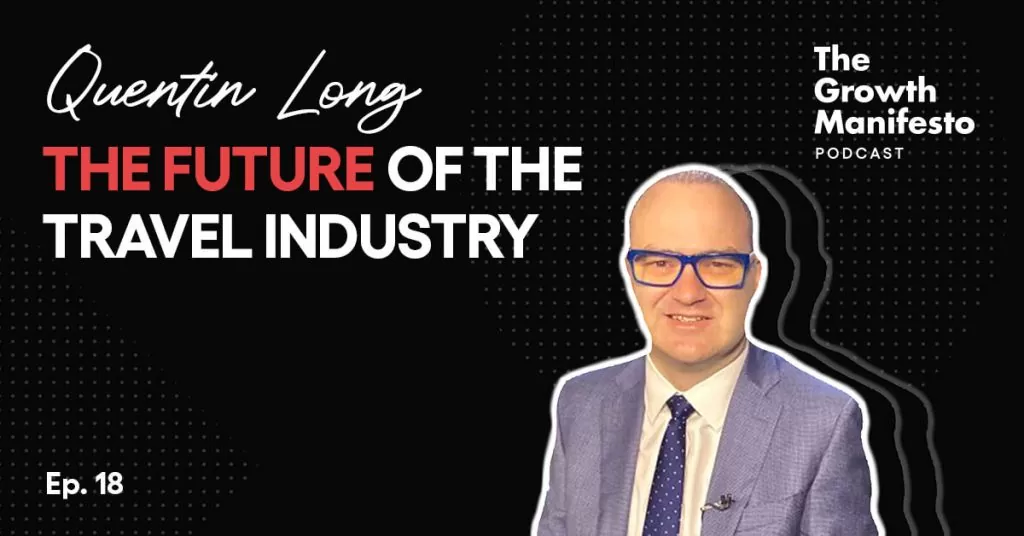
Quentin Long, co-founder of Australian Traveller Media, unpacks how COVID-19 stopped travel overnight and what a staged domestic recovery could look like.
 with Quentin Long


Overview
In this episode we speak with Quentin Long, co-founder and managing director at Australian Traveller Media and one of the foremost travel experts in Australia. So, let’s get into it.
SHOW NOTES
Key takeaways
- Quentin Long argues travel brands should ask customers if they personally are okay, instead of pushing generic 'we're in this together' messaging.
- He built Cove Intelligence, an analytics and polling tool that tracks consumer travel sentiment to help time the shift from engagement to retail.
- Long expects Australia's domestic travel recovery to happen in three phases: intrastate trips first, then interstate, then international travel last.
- He warns that most attempts at partnership are really just people asking what they can get, rather than what they can offer the other party.
- Long argues messaging should appeal to people rewarding themselves with a holiday after lockdown, rather than framing travel as a duty to support industry.
Chapters
About the guest
Transcript
Auto-generated from the episode audio, so expect the odd mis-heard word. Timestamps open the video at that point.
You're listening to the 2020 Marketing Series on the Growth Manifesto Podcast, a Zoom video series brought to you by Web Profits, where we talk about how to drive business and marketing success through the rest of 2020. This episode is a discussion with Quinton Long, co-founder and managing director at Australian Travel Media and one of the foremost travel experts in Australia. So let's get into it. today we're talking with quinton long um who is a foremost authority in the
the australian travel industry and is the founder or the co-founder the founder or co-founder founder co-founder of australian the co-founder of australian traveler magazine which also includes international traveler yeah how'd i go pretty good usually we say australian traveler media We have that great brand problem where we launched the company under the name of the brand. And then we added another brand and we still haven't changed the company name, although I desperately want to. Yeah. And you started this quite a while ago.
Is that right? 15 years ago, based on an experience of coming home from working. From the age of 14, Alex, all I wanted to do was get the hell off this island. And, you know, I backpacked around the world when I was 18. I celebrated my 19th birthday drinking Long Island iced teas in a pub opposite Madison Square Garden illegally because I wasn't 21 and then I did my university degree and then all I want to do is go overseas and I went to Singapore and worked there for 18 months and then I went to London worked there for two and a half years and I came back to Australia I had an English girlfriend
and I said oh you've come to live in Australia I should show you some of this country and we went to Broome and if you've ever been to Broome you fly over this thing called Roebuck Bay and I was looking down going, man, this is amazing. It has some beautiful Maldivian blue water and that incredible what they call pin down or red soil in Australia. I was like, why haven't I seen this before? All I wanted to do was get the hell off this island and I haven't seen my own country and that's where Australian Traveler was born. Registered the URL when I got home from that holiday.
Me and my business partner did the classic get drunk for six months saying, why is this a bad idea? We're not the smartest guys in the room and someone must have thought of this, but we could never find a reason why not to do it. And so we sold our houses, pushed all in and launched the company on January 1st, 2005. Wow. Well, congrats. It's still going. And I'm sure like as a publisher, that's probably going to be quite a challenge. And also nowadays with the whole travel industry,
I think that's a whole challenge as well. But I think the good, the first thing I heard about you from Catherine, right, was that he's a character. He's got very strong opinions, you know. And I think I saw an interview on Channel 7 with you. And Channel 9, yeah. Channel 9, I can attest to that. But where do you want to start with this thing? because you've got so many, because like you have a lot of experience in a quite a vast range of things
that I think people are going to be interested in from travel, publishing, to this whole challenge that we find ourselves in today. You know, where do you want to start? Because I mean, I have ideas. I mean, I can start it, but if you want to have an area which you want to go down first. Well, mate, it's your show. You get to say what you like. Let's start with the travel industry. Let's start with the travel industry, right? Because, you know, since COVID-19 hit, it is the biggest, it's hurt the most. It's hurt the most. Like it seems to be, and this is from the outsider's perspective, that overnight the travel industry has just shut down, basically, in terms of no one's traveling. I mean, everyone's in lockdown, at least in Western cultures.
um everyone's in lockdown now that means that like cruise ships are docked and kind of hotels are empty and like what is the landscape actually look like right now you know in the travel industry yeah it looks like a post-apocalyptic world um you know the best data i can give you is that flight center is operating on less than three percent of turnover they three percent three percent that's that's good we as a business have been pretty much resigned to the fact that for the
the final quarter of the financial year we will not raise another invoice and that's what we're planning once and so then we have to cash flow it from that and also look at our receivables and estimate really what that's going to look like and then work from that ground zero and move from there. So the travel industry is in a pretty, it's in hiatus. It's just not there. It doesn't
operate. Airlines are grounded. Airlines run aviation, sorry, airlines, aviation basically runs tourism to a large degree. And so when aviation closes down, you have absolutely nowhere to go. The recovery is really interesting and everyone's spending a lot of time trying to think about recovery and when and how and what. I would say out of this, I've found that there's a lot of tone deaf responses to this crisis that I've been really surprised at. And I think a lot of press has started to pick up on how the messaging's
all the same, all that sort of stuff. I think there was too many people who wanted to jump on the, we're in it together. We feel you. Well, that sort of stuff and really didn't have the humanity behind that message. The first thing that I did was email almost all of our clients saying, are you okay? Like, no, no, I'm not talking about your business. I'm talking about you. And if this is, this is, this is crap. This sucks. But are you okay? If you want to have a chat, talk about some ideas,
talk about what recovery could possibly look like. I'm here to chat. I'm not as arrogant to think that you need me, but if you need to reach out, let's have a chat. I got really interesting responses from around the world. I had conferences like this, Zoom meetings with people in Kuala Lumpur, Singapore, America, who just said, yeah, I'd love to see what's going on with you. Let's have a chat. I want to know what's going on in Australia or what's going on and have a chat.
So that was, I think, the best thing. But as a brand, I think we need to stay true to who we are but understand that people are losing jobs. People are really at some very difficult places. And we had a long conversation. And sorry, Alex, if I'm rabbiting on. No, no, no. This is what it's about. We had a long conversation internally and I felt very strongly that we should not be directive. Don't tell me what to do.
Don't tell me to keep dreaming. And look, a lot of people have done this, but we thought it was inappropriate. I've just lost my job. My husband may have lost his job. My wife may have lost her job. Don't tell me to keep dreaming. I'm dealing with some really severe shit. and so we've decided to do a much more invitational if you're okay and if you want a distraction from this we're here to help if the you know travel is the light at the end of the tunnel for
you maybe we can help and so that tone difference makes like such a big difference right in terms of the message how it comes across i mean we talk a lot or i talk a lot about how great content is a feather touch. You know, remember the old days when we used to tune a radio and you'd have that static, static, static, and then you'd have that little last, like half a millimeter before it came in and it was crystal clear. Great content is that, and great editors do that,
and you just, you don't know what they've done to get it from static to crystal clear, but they've done it. But I really think too many people have gone with a very, unsympathetic unhumanistic approach to their marketing and i yeah look i can um confirm that's across like across basically all the industries right like i've received emails from all my credit cards or my bank saying we need to help um a lot of my interest rate well i'm interested right yeah yeah that's good i actually got a call from one of them saying hey look i'm just calling you now
to basically to halve the interest rate. I'm like, oh, wow, it's great. I'm so busy. I could have asked, but they actually could. That was a good experience, right? I'm like, cool. Now they've got that bond with me now where they're actually helping, you know? Lots of others were here to help speak to us if you need anything. And there's a massive process behind it and so on. So look, I do hear you. I think the travel industry is really interesting because it's literally overnight just stopped, you know? like everything's just had to stop and because you like you're not allowed to travel like for
the first time you know and so what's happening with all the hotels that are empty with all the cruise liners that are you know basically like docked with all the supporting travel agents you know like like is like this is the hibernation that they that they speak about this is kind of the one industry that actually has to hibernate and actually can't really sell any well it can sell it i saw some i saw a cruise offering three for one tickets right like where you pay for one
you get three yeah you get three um spots on the cruise so it does feel like there um you could promote some pretty some pretty effective like deals right now to the people that are interested like is that what's like is that what's happening right now or you know because i don't have insight because all our clients kind of stopped because they had to because they had no revenue so there's no real conversations behind kind of how we can help them what does recovery look like yeah so there's been a few case studies out there um what one is uh i think
really interesting um which is what the barley hotels did and they went out and they released um hundred dollar bonds and so what they said was you buy a bond at this hotel for a hundred dollars and in 60 days that bond will um will mature and that will be worth 150 dollars and so they're basically effectively giving you a 50 markup on your money um and that was to get cash flow in to the business right then
there. Interesting concept, really appeals only to the existing customer base because they have an existing relationship and there's not as much perceived risk. The whole industry now really is looking at risk and risk mitigation and how do we give people assurity around investing, but unfortunately they shot themselves in the foot. And Intrepid, unfortunately, Great Australian company, great Australian brand, absolutely did it the wrong way. They went out with an offer saying,
if you invest in this tour, you will give your money back if it doesn't happen or if you want to cancel. They then changed the terms and conditions retrospectively, which is actually against the ACCC rules and the ACCC has come out. And so there's been a lot of that kind of missed goals that have created more problems as understandably things got worse and they ended up with that situation. Most major travel businesses are using this opportunity to accelerate
and I'm sure Alex you're the same and we are definitely the same to accelerate all their investments in things that they want to do to improve their business they can now bring them forward because they have this opportunity to do so. So things like refurbishment of ships, refurbishment of aircraft, whatever, digital assets, digital. There is so much cleaning up in the digital world going on. You know, we are absolutely determined to be, have an incredible user experience and we've got 90 day sprints.
Next 90 days, this is what we're going to do. This is how we're going to be a better business. This is how we're going to have a better product. and this is how we're going to have a better user experience in 90 days and that's what we're focused on. So that by the time that this hiatus, hibernation is over, we hope to be something that people go, oh, that brand experience was amazing. Why don't I do that before? And then go from there. But I think largely that's what the travel industry is doing if they can. So from the consumer's perspective,
I think a question that they might have is if I spend money now on a deal, how do I know the company is going to be around to honor that deal? Because if they go into administration, then I'm a creditor at the bottom of the list, basically. And probably not going to get much out of it, right? It's not secure creditors. How do they get past that? Like what's like a way that they can kind of instill trust into the market, right? Because I think that's that intrepid example that I just heard a second ago.
They probably changed it because things are probably going to cancel and they need cash flow and something like that. Right. And so what can they do to really establish trust? To build trust? Yeah. I think the really interesting thing is, you know, Richard goes on about market through a downturn, blah, blah, blah, blah, blah, blah. That's all very well and good if you are a large organisation that has the ability to market at a very different level than to want an immediate return.
Most travel businesses don't have that. They're faced with this awful situation where they don't have money to be able to generate money. They need that to generate money. so I'm not being very clear so let me start again the the problem is they don't have the the ability to market long term without having a return so what do they do well they they maintain their own channels in an authentic way so that's social and email and they do that without being
tone deaf and they do that with an understanding and sympathetic and humanistic way they tell good stories and they try to find good stories. There's a great story and I cannot believe I haven't been able to get it up yet. Fitzroy Island. Fitzroy Island, island off the Queensland coast up north. Up north has been absolutely decimated by COVID. It's a long story. But what they've done is they've said to their employees, you can come and be in lockdown with us on the island. Bring your family.
bring you what better place to be in lockdown you're not getting we've got to furlough you we've got to stand you down but come over to the island in the morning do three hours of maintenance help us keep upkeep then we'll have lunch and then in the afternoon do some upskilling do some training do whatever you like come over with your family 50 people are on that island in lockdown they don't have to pay for board they don't have to pay for accommodation they're not getting a salary but they wouldn't have anyway and all they have to do is help upkeep the resort and then they
get to upskill themselves it's a you know of all the also situations yeah i'll take that tropical island up north fantastic i get to upskill and i don't have to do too much um and my family gets looked after so i think that's a smart response and those stories are the ones we're looking for they're the stories that people will resonate with about how the big thing i think um is community safety and and and um risk community so want to feel community safe safety obviously
and then risk and my my interdying risk sorry mate go on i was no no good oh good i'm sorry to cut you off um when does it open again like is it when it gets to stage two is it stage one like what is like what stage of restrictions can hotels open again you know they're open because at least because like are they open now yeah but so they've been accommodating people in quarantine a lot yeah and saw that yeah and and they've been accommodating so it depends who you
are right so if you're a city hotel you can be open and it's it's okay but you do have situations where the police are coming around and making sure that the people the guests in your hotel are there for essential reasons. And so that's the... So you can only do it for essential reasons. When can you do it for non-essential reasons? Because I know I want to go on a bit of a kind of holiday from the lockdown, right? And get some room service. You know what I mean? Like a staycation if you must. Yeah, it's funny you should say that. So one of the first questions all the travel marketers asked
was when do I go back in the market? And so we set up a product for them, which I've called Cove Intelligence. We're really smart at naming our products, which tracks consumer travel sentiment. And we're using analytics, on-site analytics, and on-site polls to collect that data by asking questions but also analysing behaviour. And so I've got a great graph that shows you the bottom of the market in terms of confidence in booking travel was probably the week of the 29th of January. Sorry, 29th of March. Yep. And we've slightly seen it tick up.
We expect, and no one knows, we expect that by July, people will start to travel be able to travel again the recovery will be in three phases the first one is what we call intrastate and that'll be people driving three hours within this in in there uh from their from their from their homes and then it'll be interstate and that's all aviation dependent when the flights come back then you see when people start to travel again and the stimulation of that will probably be very retail led and i think that's
both good and bad, and you've got to be working out when to start seeding that market with a brand story and an engagement story that you can then follow up with retail. I think too many people are going to go straight to retail and that will be problematic for their yield. And the smart people are going to start with their engagement strategy before they start with their retail strategy. And that timing, we're helping people work out. um just quickly just um just uh for people um who are watching how do they get access to that
that intelligence yeah email me and i'll send them the first report it's a weekly report that we send to clients what's your email just so they're sorry at qlong at australiantraveler.com and you can can get that report and so the other interesting thing is international travel and when that will happen um let's start with the domestic side of things first um because let's unpack that quickly um so so in your opinion um june 25 first in sorry june 25 we will be launching
a a a massive campaign with tourism australia that will be about stimulating demand and getting people to into that engagement phase and then into the retail phase and the engagement phase is here's all these cool things you can't go overseas let's let's let's put that time and energy into those great things you always wanted to do in australia let's do them now if you've ever had stuff to do on your bucket list in australia this is the year to do it it's funny because because of myself and everyone i know 2020 was the the
travel in the travel in australia year yeah but then it got stopped right and so now that's only going to be stronger because as far as i understand the international travel is going to be closed until at least the end of the year which is which is which is good for which is good like um uh kind of like which is comparatively good for the australian travel industry right um but just but just to confirm it will start within the same area within say for example three hours
of basically the places that people live. And then it will be dependent on if you can fly, right? That's right. I do believe personally, and this is everyone I've been speaking with, in the first month, I mean, in terms of lockdown, if you had asked people, like, are you going to travel? It'd be like, hell no, no way, blah, blah, blah. Second month of lockdown, everyone's still crazy. Like I know personally that, like in the shops and the coffee shops and all that, people they're social distancing but there's a lot of people social distancing right now and i think
people are kind of over being stuck at home and as soon as you know we heard that the government in this state on friday will allow two people to visit somebody else it's like everything opened up already it's like oh we're all better right and so like i've got some opinions about that But from a travel perspective, I think it's going to be strong, like strong immediately out of the gate, like where people are going to try to find the deals, the specials, because I know that everything's going to be on special.
So I'm going to try to book it in. And if I'm an example of a small kind of like sub segment of society, enough hotels are going to be booked up. So the domestic recovery in that it will be a V, not a U. um we're just straight back up yeah very sharp but it is you know tourism's like real estate there's markets within markets within markets so it really is that drive market so if you think about it it's it's three hours of all capital cities places like cairns uluru um darwin
kimberley's those more remote destinations they totally rely on aviation and therefore are much more vulnerable. the, um, the, and that's, and that's, that's what all the evidence is. The one interesting thing that's coming out of COVID intelligence. So Alex is we expect that people to say, I just want to go for a weekend. They're actually saying, I want to go away for a week. I just want to go right now, but they can as well right now. They could go somewhere and they could work from home for a week,
somewhere else. And I think that's going to be a huge battle for the tourism industry after this is so much of aviation relies on the business traveler and they're actually going to be able to go no you have to travel well let's zoom it you know and so we've actually trained ourselves into this now and so therefore business travel may not recover as much and that will change the dynamic for aviation because as we all know it's the front of the plane that that makes the money oh yeah right it's the front of the plane that makes the money like but i didn't know that
just but that makes sense right yeah so cattle class pays the costs yeah the front of the planes what makes a profit yeah well um and so i've got a conundrum for you later too and i'd love to hear your your thoughts on this but we'll get to that in a second okay i'm gonna to to write down conundrum so i remember it um once i get in conundrum um so um so then so then it said international travel like a lot of these smaller islands in the pacific that it's all kind of
international travel based um they're saying it's not at least until the end of the year but like i think people will be more fearful of traveling overseas because they trust their government a bit more than they did before now right and especially for australians right like if you talk about Australians, I think Australians have, like, they've listened to the government, but the government's also executed, I think, pretty well,
comparatively, to some other governments in the world. And so I think, you know, we'd trust travel within the same country. International travel, I think, will have a lot more doubt on the efficacy of the health standards and the quality of all these things that, you know, before we would just accept it you know we'll go to bali it's fine whatever you know what's the worst that can happen we're going to get drunk a couple days and we're going to have some hangovers a couple days and the taxi drivers are going to train scammers or whatever you know what i mean like but that's it but now there's this extra thing how do you think that's going to recover
yeah great great question so uh here's a great little case study is that singapore being singapore and they know how to get stuff done. They've now released a certification program for their hotels on the, I think it's a seven-point cleaning system. Again, managing risk and giving assurance and confidence to consumers. And so they'll be rolling that out now. And that's an innovation. The rollout of international travel is going to be fascinating. And the real scenario is that it's going to be,
it has to be reciprocal. so if you open your borders they have to open their borders but the problem is who else are they opening up to wow so so new zealand australia is a really easy solution we can easily do that new zealand we're the biggest trading partner so they really will benefit a great deal but it'll also be reciprocated the next step is what happens next and i think that actually if you open up to new zealand you should open up to pacific islands and i was just talking to cook islands yesterday
Cook Islands has no COVID, no cases whatsoever. Yeah, yeah. The biggest problem, though, with the Pacific Islands is medical attention and their hospital systems. That's what's worrying. But I think that if you open up New Zealand and Pacific Islands, that works and that can work very well, as long as those Pacific Islands don't open up to other countries. And so as soon as they do, that becomes problematic. And so the question then becomes, after New Zealand and the Pacific Islands, who's next? uh you know and you know Singapore or South Korea or Japan they all seem great but it does depend on
who they open up to so for example Singapore between Malaysia and Indonesia if they open up to Indonesia I can't see us opening up to Singapore then it becomes the US and then it becomes Europe Africa South America Africa's scary right now it's about to go through hell Europe Europe they're very bad way as we know and the US isn't a bad way as well Canada's the interesting one um could we open up to Canada without opening up to the US well Canada's closed its borders to the US
so that could possibly happen um the cruise market's expecting to be operating out of Australia in October but just around Australia so it just stays within Australian waters yeah that's interesting yeah it sounds really complex sounds really complex like the negotiation like these are the things that i think people don't think about like i know including myself is that it's lockdown we're just trying to survive trying to ensure that our businesses like like are kind of healthy as possible at the end of all this but at kind of
the um the government level and at the international trade level wow like the negotiations that would have to happen and who gets priority and like we're just this little small little island like in terms of international trade right and so the nationalist side of things you know what i mean like where everyone's like no let's basically you know like ensure our borders stay closed become stronger i don't know right now you know like i'm happy to travel overseas when i feel safe to do so right and i think that's so complex i didn't even think about how complex it was going
to be yeah how long do you think it would take then for that to happen because they said you can travel at the end of the year but when do you think people are going to feel comfortable to travel it yeah that's the other thing there's three things which is the legislative can you actually do it is it open second one is can i afford to do it sorry and the third thing is do i feel safe so legislative uh financial and then personal safety and i think those three interactions will depend on the market if you're older if you're over 60 you you are not gonna feel comfortable and the
problem is baby boomer market has been fantastic for the travel industry especially for the cruise liners right the cruise liner because i went on a few cruises i didn't know that i'd be the youngest person by a factor of like two, you know, like, um, so I think it's interesting. Yeah. So the cruise industry though, the cruise industry I estimate has probably been set back about 10 years. There are, you know, our research shows it. The latest data I have is what's the first holiday you're going to do.
Style wise. Number one is I want to go bush or outback, but there's about 2% of people who want to go on a cruise. as their first post lockdown holiday really do not underestimate the crazy cruises they are absolutely rusted on they love it and you know what all they're thinking is absolutely brilliant it's going to be cheaper and more affordable than ever yeah yeah and i think and that's the part
which like like in conversations like and i'm no expert right like in terms of the travel industry but from a human behavior perspective um people want a good deal i think like like i've already started to look for holiday places i can book now maybe pay a deposit now ensure i can get my deposit back not pay the full amount up front or anything but pay something i'm prepared to lose yeah much right but to get a holiday like at a place where i'd have to work a bit harder for
about five more years before I could go there. Now, maybe there's going to be a deal, you know? And, you know, like stuff like that could be happening right now. That's right. And so the industry is faced with a real yield problem. Do they have to stimulate demand that much or not? And do they do long-term damage to their yield? And so the interesting thing that's to add another layer to that is there's a whole bunch of people who are not flying business class to Europe anymore. They can spend that money here. so they can actually really upgrade their Australian experience.
And so that's going to be another layer of, there's going to be markets within markets. You know, the people that we usually get, we're going to go business class to Europe this year and spend that three weeks in the south of France. They don't get to do that. Do they go to one of the luxury lodges of Australia and have that amazing experience? Yeah, Wolgan Valley is one of those ones, right? Wolgan Valley, El Questro, Lizard Island, up at like unbelievable qualia i could go on sapphire yeah yeah they are fantastic
incredible experiences that um that that that kind of clientele will probably be going why not why not i've got this money back and so this comes back to then like like if i'm a travel marketer i'm especially just for i say for example holiday destinations or for accommodation yeah when's the right time to start how do you stimulate it without cannibalizing the yield
too much right you know how do you be competitive and you know but there's also the challenge of i've got all these empty rooms so every room that's empty i've lost that night's money that's right and so that's the how do you approach that like apart from the cove intelligence software which they should all have because i think that will give them some insight fantastic but apart from that like is there like i don't know like is there a percentage of spend you should be doing now is there something which you should be kind of trying to engage with um how would you do it
if if if i were in that space yes the one thing i would be doing is what we're doing you know it's just constant engagement engagement that's meaningful true to your brand and not sound deaf. The second thing becomes when do you start to actually put a retail offer out there for a date? And what lots of people are doing is giving that non-cancellation and
my instinct is from July onwards. And so when do you actually put it out there though without being tone deaf? It's getting closer and closer with all the good news. I'll give you give you a couple of data points that I think are worthwhile. Obviously our stuff at COVID intelligence is one of them, but the New South Wales government will lose its power of enforce. Sorry. New South Wales police force will lose its empowerment enforcement power on the 1st of July. So you do not be fine.
July still. Okay. That's the current standing. Sky most start, stop talking about six months and started talking about months. we've now had the two two adults plus children relaxation that's fantastic and is leading towards that stage where i believe from july onwards you'll start to see the race is on to be the right person to time when to come back in the mark and the race i can tell you now is it's not just yet it's not yet is it but it sounds like everyone's just just there
waiting and when they hear the news flood to social media it's a start it's well it'll be interesting i don't think social media will be the right the problem is advertising i mean you know like in their faces yeah yeah but what i think is you think about it's a starter's gun and that that starter's gun will see social media flooded and how do you get out of that noise and that's i've got a lot of strong opinions on that and i think if you're relying on social media
to do all your hard work don't get me wrong you cannot ignore social media yeah but if you're relying on social media to do all your hard work you are just like everybody else so what do you suggest instead because i want to hear some of those strong opinions you know because because i'm into marketing on social media obviously right um but i'd love to understand kind of you know your perspective on the full strategy approach. The right, this is not rocket science to most travel marketers.
And if I'm teaching them to suck eggs, I apologize. That's fine. Teach me to suck eggs. I don't mind. You've got to have, the first thing they're doing right now anyway is warming up their existing customer database. They've got to be doing that. And then they will be looking at media partnerships to be able to access new audiences. Now, Facebook and social is part of that new audience strategy, but the engagement rates that other people can deliver you, when Facebook is flooded, how do you get attention?
And so for me personally, I'd be looking at an email strategy, utilising other email lists. And this is now starting to go into the partnership space, right? Yeah. And I don't think I've ever received, A, so many people requesting a partnership and B, so many companies saying yes to partnerships I've suggested, right? You know, so because everyone tries to partner up the scale, right? It's hard to find someone exactly the same
as your company, right? So if you have to choose, you go up, you know, in terms of the brand, the size of the database and so on. Everybody wants to marry up. Right. But what's your opinion on how to do partnerships effectively in the travel industry then of sorts? I don't know about you, Alex, but my experience with the word partnership is it's, I'm going to use a very bad analogy, but it's not anywhere near
what people think it is and they don't know how to do it. True partnerships, we've got skin in the game. when we win you win when you win we win and we'll all take the upside who's going to take the downside and how do we actually how do we talk through that and how do we be really honest about the greater benefit because someone always gets more benefit can we be honest about that at least up front now and talk about what what that looks like um you know the best piece of advice i ever
got about contracts was write a contract as if you hate each other and getting divorced and then you'll actually envisage all the problems before they come and at least have the tough conversations now it's better having a tough conversation now than later i think too many people will hear the word partnership and say yep partnership for me what's in it for me yep what's in it for them and how does that actually look and what's honest about that the amount of times i've said this is not a partnership this is a supplier relationship i'm comfortable with that i just want
to make sure that you know i i'm now a supplier not a partner got it got it and and so then you said before um to use email marketing and to share some lists or to kind of email each other's lists um what would you say is like a good um partnership for like a hotel for example or for like because like they can't just be emailing each other's hotel lists right like so how would you approach something like that because obviously all of the um the support around travel as well
but i mean yes how would you be thinking about it how would somebody think about it you know well the the hoteliers are pretty good at it and what they do is they often use their suppliers so for example victoria coffee is their coffee supplier they've got a big consumer database anyway or They've got contacts and that sort of stuff. So that's often how they'll utilise and leverage their relationships. If you're the guy that supplies, you know, cleaning products or whatever, what can we, how can we make this work?
Alcohol is a big one because they have contracts with alcohol suppliers, obviously. And so they utilise those existing relationships. And then they go further afield. And invariably, everyone overestimates their value. They all overestimate. Like I've got 200,000 amazingly rusted on blah, blah, blah, blah, blah, blah, blah. And, you know, it's really meaningful to you, but it's not that meaningful to somebody else. Right. You've got to be prepared to hear the bad news. It's not as big and as valuable as you'd like.
But you've got to then talk to further afield organisations. It's like, you know, event management companies, they often have great relationships and they can actually help with that sort of stuff. And then going, you know, externally to your clients, talking to them. You know, one of the best things, and I've never shared this with Qualia, but I'll never forget, I was at Qualia, not big nutting myself, but I was there six weeks after it opened 13 years ago, 12 years ago,
with my then girlfriend who's now my wife, but that's another story. and I think that sealed the deal. And I was talking to some guests and they said, oh, this is amazing. I can't believe we're here. This is fantastic. And they were actually the auditors of the Hamilton Island Enterprises who were given a special thing. So all PwC were given this special closed loop deal. So often you can use those sorts of things to get stuff out. That's smart. That's smart.
So you could partner up with organizations to offer them specific things as well. And then, sorry? Yeah, yeah. So Hamilton Island obviously is a large company because it's also part of the wine company that they own and all that sort of stuff. So using their contacts at their suppliers, that's how they went about it. So for yourself then, how would you be approaching partnerships right now? I am really reactive, by which I mean I'm just in there going,
I don't, actually, no, that's not true. I've got a great partnership with Tourism Australia. I just had a meeting with them where we had to have a hard conversation about my skin in the game and their skin in the game about a project we're doing with them in the US. And because we've always approached this from a partnership point of view And I've always been very keen to illustrate what partnership means by, by taking, you know, paying it forward, taking a hit first and being like, that's okay.
That's not great for us, but we'll do it. That conversation was a lot easier than it, than it could have been because it's honest and it's, there's no one trying to leverage someone else. And that may put him skin on the game and saying, I will take a hit if that happens, but we need this to happen is for both of us yeah right and so being honest about the hit and and all that sort of stuff um so my approach to partnerships is to be really reactive in that i want to understand where you're at i want to understand your business i'm going to be very
transparent about what works for me and what doesn't and and then if that does work then i'll talk to you about the scenarios you know if we were going to get divorced what would it look like so where it may seem it's just hey look i'll email to my list and vice versa it's more a strategic partnership it's to find a way to add value to each other yeah um to put skin in the game um to be fair in the contribution of each party right and not it's like half half everything and that's what it is especially because i have a list of 700 000 yeah you have a list of 20 000
and like be open to like, if it's not fair, then how do you make it fair? But it's more a strategic partnership than it's just to share a database. And there becomes an element of trust that at future opportunities, you involve the partner and you value add. So for example, for my strategic partnerships, they're all getting code intelligence free. And they're all getting it because that's what partnership looks like. Yeah. And I got them involved in the development of the product
to make sure I delivered to them. The smartest, not the smartest, the luckiest thing I've been able to do is to get my partners to design the product with me. And that I think has been very helpful. Yeah, great. It's, the partnership perspective kind of makes sense for a lot of people right now because you leverage each other's lists and you don't pay anything for it. Like assuming that's what you negotiate, right? And then there's a share of something that's combined
in some form or another. But there is a, sorry, sorry. There's got to be careful there because so many people tempt themselves to bullshit, to up the value, to get the leverage. You will be found out. Yeah. And if you don't, if you are not, if you're going to bullshit and get found out later, why do it? Yeah. Sure, it'll give you a small change. now but at the end of the day that partnership will then end and you've lost an opportunity so i think they think long term yeah think long term and think what you can offer them i think
that's the big thing i think everyone's thinking about themselves yes and i think like i've received so many outreaches hey let's do a partnership like yeah and so on and so forth and um you know we've got this thing for me yeah and we've got this thing and it's like yeah cool bang archive and market spam, you know? I'll never forget. Years ago, sorry, I didn't have a bit of a bitch and a rant. Years ago, I had a meeting with TripAdvisor and they sat in front of me and said, you should take our reviews and put them on your site
as a partnership. I said, cool, that sounds okay. So what are you going to do for me? We're giving you our reviews. No, no, no, but what are you going to do for me? Because I'm going to promote you and your brand and your reviews. but what are you going to do for me and that it was it it was like i was speaking a foreign language and that everything for me in partnership starts with what can i do for you how can i help you let's start with that as a as a as a base and then talk about what you can do for me
i'll tell you what's super interesting on that point is that um you know like it's really easy for the person who's receiving the what can somebody like do for me to see if it's bullshit like you're just saying what you want in a way that you think that it's for me but it's not for me right so it's actually thinking what can you do for the other person and if there's nothing that's going to be of interest to that party it's probably not going to work anyway so just save your time save the potential relationship because sometime in the future you might have something
that they want as well you know and i think that's what people don't think they just think i'll just try and all you're doing is you're just hurting yourself because like you're not actually adding any values and try to find a way to add value in that respect i mean that's the old saying about all they can say is no yes they can say no and they can then think that you're not worth dealing with again yeah and i've i've i've realized god you know alex i could tell you a lot of stories about launching this business and how we fucked up so many things but one of the we don't have that much time unfortunately yeah but one of the biggest
things I came to realize too late, two things. One was you get one chance to really make it work from the get-go. And after that, if you don't get that right, you're never going to get it 100% right. But every percentage point you don't get it right requires three times as much effort to get it right and get back. And the second one, just in case people like it, it's the best piece advice I ever got and totally ignored for a startup in case there's startups out there.
Yep. You know, you get your business plan. It looks amazing. It's double the time, double the cost and half the revenue. It said to me by a guy who's now a VC investor and I ignored it. And then I came back to it two years after we launched and went double the time, double the cost, half the revenue. And that's exactly what happened. it's a good um it's a good way to think about things and you know i think yes it's good for startups but it's good for any initiative they let you go for like everything takes twice as long
no matter how fast you're moving like and you assume that like it's going to go fast and even if you do go fast it takes twice as long and if you go slow five times as long to it not ever happening you know we've got about 10 minutes left so i just want to ask about the conundrum which you had for me because i don't know how big it's going to be so i just want to just give us enough time okay so so here's the conundrum it's a marketing conundrum it's a messaging conundrum right so so we're doing this project to um to stimulate engagement with domestic holidays and
we're trying to time it right it originally started as a post fire you know bushfire recovery program and it's in partnership with Tourism Australia with their 100 ways to holiday here this year. It's now evolved, right? It's still holiday here this year, but it's not bushfire, right? It's now COVID. And so when we first initiated this partnership and created the partnership what i've done is i said we're going to uh reduce the price of the magazine
to 395 that's cost so i don't profit from this as as a way to show that we're not profiteering from this we are genuinely just care that we look after these businesses that have been totally damaged by bushfires and that was globally you know nationally because they got lots of cancellations from international so it wasn't just bushfire infected and now that's evolved so does the message become support industry in australia or should we appeal to the selfishness
of australians and say you've been in lockdown this is your way out um i have a very strong opinion on that one selfishness focus on the people focus on what they want like it's um what's that called it's kind of um the what's in it for me i think like i think everyone um has done a fantastic like job in staying home in kind of flattening the curve you know and it's a time to treat themselves for being actually responsive for being responsible
australians you know like i've been pretty impressed at how a lot of the country was in even before it became like law you know and i think um it's certainly about them now but it's always been about them you know supporting industries for business and it's for that percentage where they have to give back you know that's going to be good i think it's a secondary benefit support industry but only when it can be linked to the people who work there so maybe there's a campaign around the workers that that can have some jobs so have fun treat yourself
and by the way you're doing a couple of stories of the people whose lives are going to be affected by you having a great holiday that treats yourself you know like i think engaging on emotion is key right now and i think that's what is lacking everywhere you know that vulnerability yeah i I think we're going to end up at that whole, you've earned this, Australia's earned this, we're here to help, we're here to facilitate,
we're not going to profit from it, go for it. It's an interesting, you know, how things change. I'm sorry, quick one. I was talking to the guys at Tourism New Zealand. I like their strategy of dealing with these things. And they've got a three-tiered strategy, which is react, re-imagine sorry react rethink re-imagine so react to what you've got to do rethink what you've been doing and how you do it and then re-imagine what your business and future looks like and i think we're all doing that to some extent but recognize that it's it is very helpful i yeah look and um
i do think that that there's um a story arc you know this is what they like they um they talk in the movies right and i've been learning about this because there's like a person on a team now that does like kind of video production so i'm kind of just learning all this kind of like lingo now right there's going to be a story arc of the recovery of like emotions of people and so i think in my opinion the days of getting the one single message correct is gone that single message will
change every two weeks right now right but if i think back to six weeks ago when when everyone was in the middle of hell right um that message is very different to to today's message and in a couple of weeks that message again will change in six weeks it will change again so i think the message story needs to like evolve you know and become a story i think we've got to also spend time on how receptive the audience is to you you know to your message in travel i don't think people did enough of that they just went no no no we've got to keep telling them to travel
no just get out of the way let them deal with yeah let them deal with the problems they've got that anxiety the despair in some spaces you know like teaching my kids at home let them deal with that and then when they're ready let them engage um so yeah it's an interesting one quentin q thanks so much for taking the time today pleasure i hope i didn't teach too many people suck eggs and bore anyone no i learned a lot thank you i really appreciate your time alex it's always lovely
to speak with you buddy and go to australiantraveler.com.au right now just com and quinton long at australian traveler yeah q long at australian traveler q travels is most of my handle if you want to get um the cove intelligence um software which i think you probably should get because you don't know what your customers are thinking and if they tell you it will give you so much more insight because this is the thing about surveys it's only the people who like to fill surveys that will fill out the surveys
and they might not be the people who spend money with you right so the combination of analytics plus some information i think is the key so i think it's a fantastic idea quick case study on that this is my favorite one yeah yeah 61 of millennials will pay for additional uh value-added services jet star how many people actually pay for their seat i just i like it's a lovely survey stat that tells people lots of you know interesting things and justifies things the reality is different
the reality is always different and i think that's where like insight is so important and now more than ever especially for the travel industry you need the real insight um and it's like it's not going to be perfect because it can't be perfect but as much information as possible can certainly help to make the right choices thanks so much q thanks mate love your work thanks mate see you later bye thanks for listening to the growth manifesto podcast if you enjoyed this episode please head on over to itunes and give us a five-star rating for more episodes please visit