Leadership and cultureStrategy
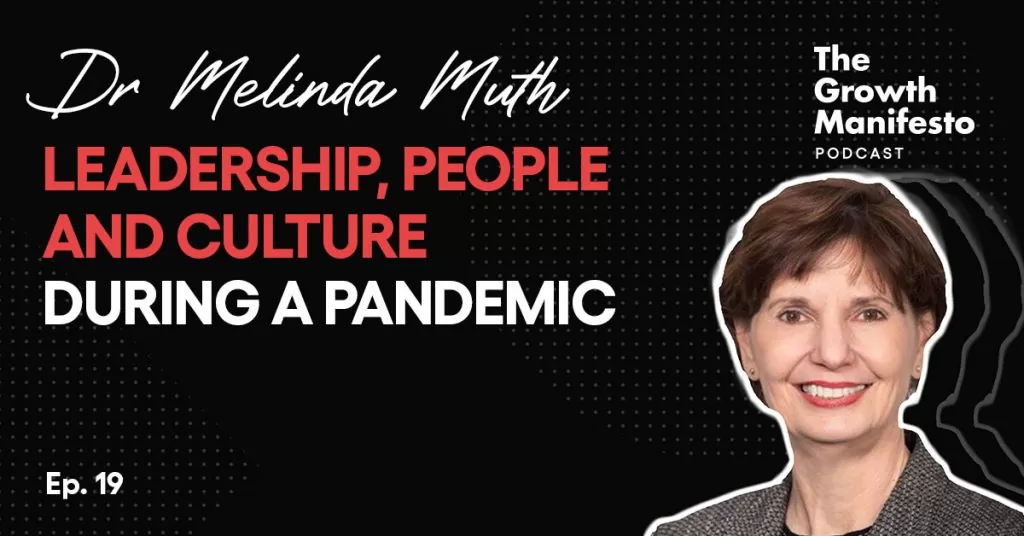
Leadership, people and culture during a pandemic
Dr Melinda Muth on leading through the COVID-19 crisis: calm evidence-based communication, disciplined decision-making and what builds culture over Zoom.
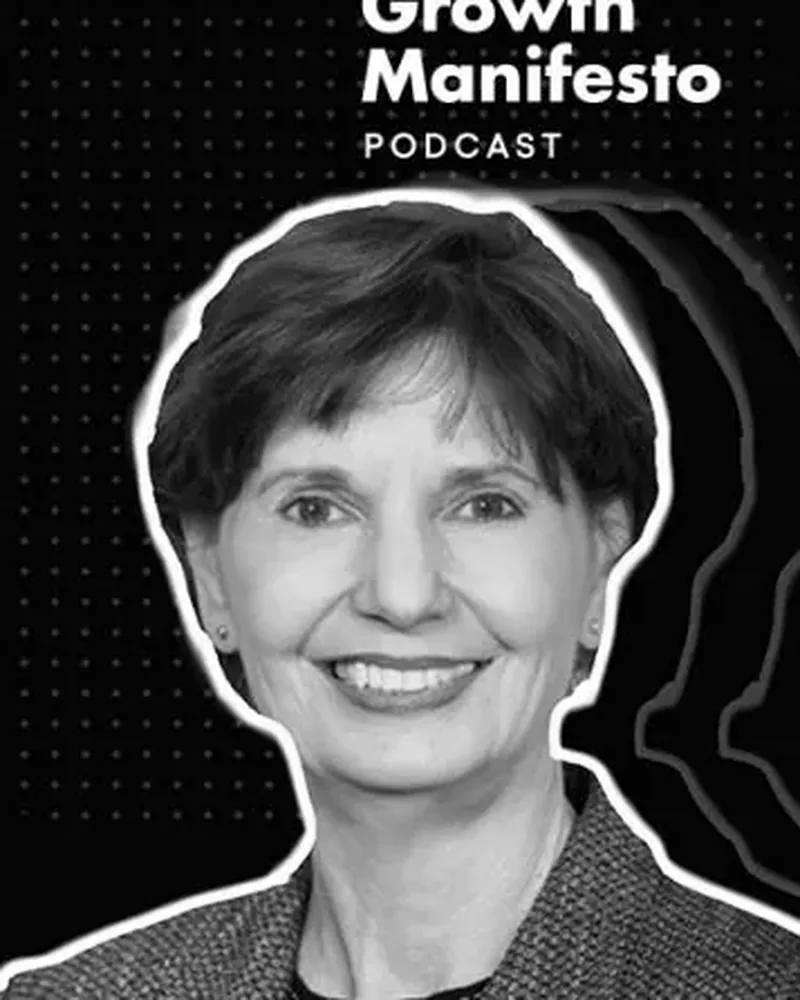 with Dr Melinda Muth


Overview
In this episode we speak with Dr Melinda Muth. Managing Director of Streamwise Learning, Facilitator, Board Advisor and Fellow of the Australian Institute of Company Directors, Director of the Harvard Club Australia and author of the book “Setting the Tone from the Top: How director conversations shape culture”. So, let’s get into it.
SHOW NOTES
Key takeaways
- Calm, evidence-based communication, not speed or hysteria, is what builds trust in a crisis, as shown by leaders like Jacinda Ardern and Angela Merkel.
- Good decisions follow a repeatable process: identify the issue, generate options, test them against evidence, then loop back and try again.
- Moving too fast without gathering evidence is dangerous, so cash burn rate, not urgency to reopen, should set a business's pace.
- Culture is not created by tools like Zoom - it's shown in whether people still talk with respect and follow their usual decision protocols.
- Companies that entered the crisis with strong balance sheets and leaders who visibly cared about staff have the best chance of coming out stronger.
Chapters
About the guest
Dr Melinda Muth
Dr Melinda Muth is Managing Director of Streamwise Learning, a facilitator, board advisor, Fellow of the Australian Institute of Company Directors, Director of the Harvard Club Australia and author of the book Setting the Tone from the Top: How Director Conversations Shape Culture.
Transcript
Auto-generated from the episode audio, so expect the odd mis-heard word. Timestamps open the video at that point.
You're listening to the 2020 Marketing Series on the Growth Manifesto Podcast, a Zoom video series brought to you by Web Profits, where we talk about how to drive business and marketing success through the rest of 2020. This episode is a discussion with Melinda Muth, Managing Director of Streamwise Learning, Facilitator, Board Advisor, and Fellow of the Australian Institute of Company Directors, Director of the Harvard Club Australia, and author of the book, Setting the Turn from the Top, How Director Conversations Shape Culture. So let's get into it.
So today, I'm speaking again with Melinda Muth, who is a woman of many talents. She's been a consultant to WebProfits over the years, and she's helped us kind of overcome a lot of challenges at key times in our trajectory. um she has so many kind of accolades to her name um she's the author of a book um she's a board advisor and a fellow of the australian institute of company directors she's the director
of streamwise learning she's a facilitator um she has a list as long as i don't have an example for how long it is, but check out her LinkedIn profile. She's someone that we go to for the harder questions around people and culture. And there's not many people that are like that. It seems like that's one of those softer sciences. Is that what it's called? Is it a soft science? Wow. I've made you angry.
Is that what people call it, soft? It's really the soft science. No, it's people. It's the people's science. It's not black and white. I think if it was black and white, lots of spreadsheet people would be a lot better at the management side of things, at the cultural side of things, right? But before I insult you any further, I just want you to welcome Melinda. Thank you, Alex. So how should I refer to it instead?
It's not a soft science. What's it called? The people and the culture side of things. how would you refer that like as an area you've got the data side of things and you've got the the people side of things i guess is that how you refer to it suppose we could think about what universities call some of those things the humanities ah the humanities humanities now and people might think of literature or history but they that's the you know the softer gooey stuff but i like that word humanity the humanities yeah and i think that's the one thing um
that in this capitalist world that we live in humanity is not always the priority is it a lot of the time it's the the quarterly report it's the numbers it's the growth it's the stats it's the charts it's all that stuff right it's a very interesting time in the world to ask that question because I think most citizens, despite not wanting to be cooped up in their houses, have been happy that governments focused on their lives, their human lives, rather than a balance sheet.
And so there were a lot of debates still going on about we can't shut the economy and people making the argument we have to have the economy because people have to make a living so they can eat. And so their first priority is the economy versus the governments who made their first priority people and their health. So I don't know about you, but I think I prefer to live in a society where the government is interested in whether I'm healthy enough to stay alive.
Yeah. And I don't think, no, and it's not either or. because that's a thing that human beings want to make that you know you want you want to make it this or that and it's it's it's not or it's and it is and isn't it and i think um because this is the second time that we're having you on the podcast um and it's in a different scenario this time it's not like in our office it's in zoom and this is the scene i think that everybody um that can operate a business um is actually having to say is like the zoom screen um but i
I figured, and I think you're the first person that's come on the podcast twice so far, but only, but a big part is because your, the insight which you have around people, culture, stress, you know, what's happening in society, I think is, so it's certainly a conversation I think other people should be part of, you know, and I certainly have lots of questions which I'm interested in hearing. feeling, um, just what you think about it. And, um, and I think that this is going to add like quite a lot of value, um,
to lots of the leaders out there that are trying to figure out, you know, um, kind of how to stay in business, kind of how to look after your people, how to maintain your culture, you know, how to be a good leader right now, you know, you know, like the challenges of, um, trying to focus on kind of ensuring that the business sustains itself through this horrible kind of health crisis without being seen as opportunistic, but all the responsibility of
having staff. There's so many challenges right now from that side of it. And so I guess that's what I wanted to speak about today. Yeah. So can we maybe start by kind of with the question, You know, so what are you seeing kind of happening in the world today from a corporate perspective, you know, with all the stuff that's going on? Because, I mean, it's changed so much in the last two months, hasn't it? You know, three months ago we were having certain conversations. Two months ago those conversations have changed. And now we're living in a whole new world, you know.
But how are you seeing that unfold, you know, just from the conversations and just from the stuff that you're seeing? Well, I think you would describe it as stages of fear and grief. And if you think about, I don't know if you've ever read Elizabeth Kubler-Ross and her stages of grief. First, there's anger, then there's denial, then there's upset, then there's acceptance, then there's recovery.
and I think we've seen all of those things in response to COVID-19 you know denial and anger you're taking away my job you're shutting things down you're shutting me in and then oh people are dying oh you know so then the fear comes in and people you know accepted uh lockdown and then they were locked down in fear and looking for the end of the tunnel and when's it going to end when's it going to end you know all the comments in the press about mental illness and anxiety and you
could see the stages in terms of you know people wanting to fund more for domestic violence um you know all those things and now in australia at least australia new zealand we seem to be coming coming through and now we're now we're we're seeing a light at the end of the tunnel and we have to decide, oh, now we were sitting still, now we have to come out of it somehow. And I suppose if I were to sum all that up, it makes me think about a Harvard Business School crisis management
series that I listened to. And one of the professors, I think it was Dutch Leonard, he said, And in this whole, you know, to resolve your response to this situation, you have to, it's like all the things that you face when you're trying to innovate, except it's innovation, rapid innovation under stress amidst fear. Rapid innovation amongst stress?
Under stress. Under stress amongst fear. Fear. that pretty much sums the last six to eight weeks in business, you know? And, you know, people, lots of people might be talking about innovation. They were now literally on the burning platform. And some people were just swallowed up by the anxiety of it all. And other people had to try, you know, to figure out what to do. But it's interesting, you know, there's no solutions. There's no solutions.
you have to find them or make them along the way. And you have to keep, you know, we have to keep trying things. It's like what we have to do now, we have to lift some restrictions and we have to see if the thing blows out again. And then we might have to, you know, so we have to, we have to crawl very slowly through the tunnel towards the light and try things along the way. And, you know, when we get a piece of evidence, you know, like respond to that. We can't freeze up, but we have to go very carefully. Nobody can just, well, no,
some countries think they can just run through to the end. I'm thinking Brazil. Yeah. Oh, by not offending any Brazilians, but it looks like they're just doing the strategy of, you know, there's not any, anything, any leadership about it. You, you, you're sort of deciding on your own. And then I, you know, and if you can believe what you see on the news, You see these mass grave sites and, and, and you see people protesting because they haven't experienced it themselves. Like maybe they don't know anybody that, that died. And so, you know, when I say innovation, under stress, amidst fear, the fear part is, is probably the thing that I've seen operating the most.
and if you think about the fear instincts that people have it's really interesting you know there's these things embedded in human behavior main things that we're afraid of like what like what's some examples of that so contamination is one contamination and germs really gets people's attention and boy has covet 19 got our attention my hands are clean by the way i've washed them 17 times today so far. You wouldn't shut the economy down for climate change with the planet on fire
or Australia on fire, but you'd shut it down for a germ. I mean, people don't even seem to remember the bushfires happened, which I think is quite sad. All the animals that died and the, you know, the sort of paradoxical assistance to the planet that this germ is given. So germs, being locked up, being in captivity is a fear. And another fear would be physical harm. Because, you know, just think a minute.
When you look at your news feed, this is the weird things I do. Do you ever want to yourself how they pick the stories they pick? Because right now most of it's about the germ. But germ stories are always out there. You know, germ is big. Germ or, you know, physical harm. somebody and think about the when we've ever had a mining disaster and people were trapped under the ground and the amount of effort that people went to to get those people out thank goodness um but that really uh that captures our imagination and it'll just wipe anything else
off the headlines and then funny you know or um like snake stories or spider stories or um you know, things about all the creepy crawly stuff. Yeah. Yeah. Anything, anything violence caused by, um, people, animals, sharp objects, forces of nature. That's what Hans Rosling would say. Uh, and then, you know, captivity, we don't like anything about captivity, jail, loss of freedom.
And we don't like contamination. Like we're afraid, you know, a lot of people are afraid of nuclear power. they got Chernobyl in their mind or Fukushima or, but now there's germ. Those are the things that get our attention. Now of all the things that are going on in the world right now, all we're looking at is COVID-19. But you know, when I go, when I go out to the grocery, cause I'm allowed to go there, there's a lot of people on the street and a lot of things are still going on. Just think about how many things are still going on. Cause they're essential.
nobody's paying any attention to that it's like no we're all huddling in our houses waiting for an invisible germ to come and kill us i mean like it's kind of crazy to think about don't have it in perspective so the first thing you've got to do is get some perspective and how do you get perspective like because you know especially on kind of the business side of things right like you know that's like you know but you say it again um it's rapid innovation
under stress under stress amongst fear amidst fear right and so you have all these things that are all happening at the same time and you're a business leader let's say right and you need to be that person who leads from the front right um well i'm assuming if you want to have a successful company, you know, like, how do you approach it as a leader, you know, like within that challenging environment that we're in? You have to be calm. Nobody wants to follow anybody who's hysterical.
Now, if you think about the leaders around the world, like Angela Merkel, I got to put her up. I mean, have you watched her briefings? I've seen some of them. Number one, she's a scientist and she just speaks and nothing rattles her. She just speaks in a clear, calm, composed tone. She gives evidence. She gives evidence. Because what you do not need is somebody who's hysterical and who is speculating and has no data or evidence. This is not going to be useful to anybody.
I'll keep names out of it. But if you think about the calm, rational. I watched her explanation of the reproduction factor, why it has to stay under one. So she didn't baffle anybody with scientific terms or jargon. It was just she told them what they needed to know about it. Bang, bang, bang. You know, all the leaders who are being applauded at the moment have been clear, calm, composed communicators.
Because the first thing people need to do is to calm down so that they can use the talent of the brain they've got. because a brain that is hysterical is of no use. You know, do you think you can get any innovation or a solution out of someone who's just, no. So first you've got to be calm. And, you know, like I looked at this when it all happened, like because for my business, you know, I teach face-to-face, revenue went to zero. And then I chair an arts company, no gatherings.
And then you think about your super fund and you go, oh, don't even look at it. Because, you know, one of the things about this thing is, look, we're all in it together. That's what they keep saying on the TV. And, you know, like, it's not like just one person facing this alone. So just get calm. Then you have to say, okay, if I'm calm enough now to make an assessment of the risks, uh if i think about the germ for this is how i thought about it personally okay so
uh what's how much risk is it to me so we won't talk about my age but look i'm in more of a risky age group so i'm going okay in terms of risk personally to me uh anybody can get this and anybody can die from it because lots of people have but we do know that there's you know uh more uh chance of finishing with the virus if you're in you know more mature life phases so so you know everybody's got to assess that for themselves
then you have to say well what's my you know what's my exposure like what what you know what what are the chances i'm going to come into contact with this thing so it's because my risk if we're just talking about the germ. My risk is, you know, my predisposed, you know, my predisposal to be exposed and get it and suffer a dire consequence. So if you think about a business, well, you know, what's your,
you immediately think industries. So some industries are just, you know. Done for now. Well, if you're in airlines, like what innovation are you going to make now? Yeah. So you just have to get calm and say, okay, can't do that. You know, what plans can I make? How can I handle, you know, a hibernation? If you're in your business, say web profits, you guys did, dare I say, a pivot.
Yeah, we did a pivot, even though I was not attacked, but pointed out that I shouldn't be using that word because everyone's using that when I'm like, relax, everyone. Maybe we'll say pure or what. Or look, because there's always, you know, depending on where you're situated, you know, like I was talking about age groups first, but think about where you're situated. Like you calm down, you go, where am I situated? What are my options within that? Like, you know, if you're Zoom, wow.
Right. Wow. Wow. You know, like I have lots of family members. Not one person has lost their job because they work in communications. You know, now Web Profits is in a position to, you know, online is your world. You're in a position to do something. So then you go into problem-solving mode about what is it, what will we try. And I think that's, I don't know if it's making any sense to you.
but the approach, Tom first, what is my situation? It seems like a factor, at least from the companies I've been seeing and speaking with that are progressing in this time. I want to say they're growing, maybe it's not the right word to say, but they're progressing and they're continuing to move and the business is operating because it can operate. There's some adaption required or some adaptation, is that right? It's certainly not like adaption. for some adaptation required.
Better than pivot. So anything but pivot. But the ability to make decisions right now, like I don't – well, personally, I have not experienced something like this ever in my life, and I'm not the youngest either. And so there's no real playbook of what to do right now. Is that right, Melinda? like stating that so you must have in terms of your decision making you know and uh i mean i say
this when there's no covid19 good decisions are based on a good process and by the word process i mean identifying the series of steps that you will take and so that underpins good decision making in good times and bad times. And if we ever needed it now, you know, with so much uncertainty, you have to know what are the steps that you are going to take in order to arrive at a decision.
So you have to break things down into steps and then say, at what point will this thing trigger this thing, you know, and when you think about the steps in the decision process, number one, identifying the issue, like that's, you know, what's my exposure, my industry, you know, what is my situation? Number two is option generation, criteria, evaluation of options, selection of an option, trial of an option, option works, doesn't work, more data, go back through
the loop. That's what it is. That's what you have to do because it's not like there's some answer to this. We've never been through this before. So the process, I mean, that's a fantastic point. It's actually having a process for how you make decisions. But it also seems that the speed where that process completes the cycle has accelerated significantly. And the faster where which you can you know just go through that process and to make a decision to see the result and then to assess and
then to make the next decision that seems to accelerate it just to this point because i know in the past we've had conversations about uh how i have a tendency to move too fast um is that tendency or like, is that a thing right now in the current environment that you can move too fast right now? I think you can. I think you can. You can move too fast. Because in those steps that I
was talking about, you generate options and you agree the criteria or the, how we'll filter the options to filter the options you've got to have information and evidence and if you go so fast that you don't want to get any evidence well you won't be going through a cycle of decision steps you'll just be drowning how do you balance the process with speed
you know because i don't know that i don't know that you have to have i mean just think about the situation we're in right now if everybody decides oh the economy has suffered we have to go fast let's just open everything that's not going to be good so if we're going to get things open we have to get evidence so we have to take a step we have to have some criteria and i've listened to a number of leaders name these four criteria for um what has to happen as each thing
opens up and it's about testing transmission rate. I can't remember what the others are, but they've got some criteria. So they're going to try something, going to see how it goes against that criteria and either keep going or pull back. Nobody's going to be rushing at speed. That is going to be a disaster. So I think the worship of speed is not necessarily the thing that that we're good you know we you have that think oh everybody's saying we're going
to have a vaccine we're going to have a vaccine i'm like oh my gosh i'm not shooting something in my veins that you came up with in 12 months because you let go of all the protocols and the collection of evidence and the peer reviews and everything else you have to do to make something safe oh because we had to have a vaccine so we could all take that and let that kill us that I'm not up for speed there. You know, there's never been a vaccine found yet for a coronavirus, not for SARS or MERS. They haven't found one because it mutates. I mean, you might find a
treatment. Look how long it took to get treatments for AIDS and HIV. Now, do you think people wanted to go fast? Oh, yes, they did. Do you want to die because you want to go fast? Personally, I don't. sure but i do think there's a difference between the health side of things and the business side of things there right like yes it's a it's a it's similar but um but i guess in business right now it's like it's like it changes um like from week to week right now you know and
like like like it's evolving very quickly you know and so if you're going through a process right now we're trying to make the best choices and it's in like an uncertain environment yes like i quite like um how you outline kind of the three parts um you come up with an idea you put it out there you see the evidence and then you analyze it and then like you create the next idea and so on and so forth it feels like you can be a bit faster from a business perspective than from a health
perspective because um the stakes are a bit lower than the whole world dying you know it's like it's not like the whole world dying it's like rate of cash burn will determine pace a rate of cash that's a good kind of overlay right the rate of cash burn is a really good overlay like in that conversation then isn't it right because i think every business is different and what they have to go through is quite different as well, you know? I mean, we, you know, you, you, if you get,
if you get cash and you can keep going, then you have to decide what you put that precious cash against and it has to win. And, you know, you have to, you have to move, you know, look how fast universities got, you know, teaching online. Although don't get me started on that. Cause sure there's the kind of teaching that i like that i think participants enjoy and then there's you know other stuff but other stuff uh but you know lots of things moved at at pace
but you know then there were also um some assumptions about that speed on whether students had access to technology and the bandwidth to do the things online right because the whole world doesn't have all that and you know so yeah that's all the facts of your situation because you could rush to do that um okay you know you think about um kids at home they're supposed to if you've got three kids and they're all three supposed to be doing their lessons
and they're in different classes if you got three computers or you only got one like wow yeah You know, it's not just like a magical and everybody doesn't have that. There are plenty of neighborhoods in Sydney's western suburbs where they don't have any. You know, people have a, you know, they might have a phone, but they don't have a desktop. So, you know, you want to go fast and think, bang, online's the answer to everything. Maybe not. Sure. You still have to employ the brain and do the thinking.
And the horses want, you know, they're afraid and they want to run. Well, what if they run off a cliff? And that's where having a good process behind and how you make decisions is really, really important. Let's jump quickly to the culture side. Haste and slowly. That's a term. It's a Latin version of it too, which is escaping me at the moment. Okay. let's jump quickly to the culture side of things as well right now because you know i think the
unemployment rate across at least um the us australia and the uk is like skyrocketing you know and i think um like that's an environment where so many people kind of have been let go um because of a defensive approach where people are just trying to conserve cash you know so that they can kind of survive this thing. You know, what does that do to culture? Cash you don't have. Right. Yeah, but so what does that do for culture? And, you know, how does a business leader kind of ensure
that their culture remains as strong as possible in such an environment? Well, I think we do have to accept that some things will be fundamentally broken. They won't come back, so there won't be any business, so there won't be a culture. Some things are not going to come back. They're gone. Like what's not going to come back? A lot of arts companies aren't going to come back. I've seen estimates that in Australia
we'll lose 25% of the restaurants. Really? 25%, yeah, because it's so hard because they just had to shut overnight and we had no revenue. And if your staff are casual and they form and reform around projects and they go off to wherever they go to survive. They're not going to just be there the day you want to call up and say, oh, you know, oh, they might, but they might not, you know. Yeah, sure. You can't give blanket answers to these things.
So if you're a big company that's going to, you know, got a good chance of surviving, like I wonder, you know, like Qantas has had to stand down. So most of their staff, and I'm sure they'll be ready, you know, to be called up again. And the way the leaders handled all the communication and that, that I heard about anyway, I'm not saying everybody was happy with everything. Cause you can't say that. Nobody's you don't get a hundred percent happiness, but I heard people saying,
you know, they are speaking to us on a regular basis and you can hear the, you can hear in their voices you know you can hear their emotion about this in their voices and and we're all sad um you know but the the the communicating the the taking uh people with you then there's lots of other companies where i mean think about the grocery store people oh my gosh now they have had to deal with different things because people have abused their staff
that's crazy isn't it like it doesn't deal with different elements of culture because it's it's like we've got to get people to continue to come to work being afraid about getting the germ and being abused by other people and we've got to keep them safe so you know culture for us will be about you know our safety our appreciation our care our our demonstration of that in words and deeds you know because now all the grocery stores have the i guess the grocery store equivalent of ppe
and it was ppe what ppe protective equipment ppe ppe okay yeah definitely versus you know what's happened in say um the uh the all the meat works in the united states that have closed down because those people were being told to come to work even when they were sick and they were being some of them were being told, you know, if you don't come in, then you're going to lose your job, you know, and then they've come in and they've all, they've gotten sick and then they've had to shut
the plants down and the meat supply chain is really in terrible shape at the moment. They've had to shut down major plants. And so you think now in terms of HR and culture, I think that could have been better handled i mean yeah yeah in terms of worker safety care about worker appreciation of worker because their business isn't stopping it's essential so i think you know that it's it's about the the communicate i think it's about the humanity
starting yeah that that side of things and everybody's going oh you know the grocery stores must be making a fortune. They've had to put on extra staff, you know, to manage the queuing, to manage the hand sanitizing. They've had to put, you know, some of them have put temporary sinks and wipes and everything out in front of their stores. They've got stanchions. They've had to shut off doorways. There's all a cost in that. So in terms of their, you know,
their culture and their handling of it, they're wearing those costs and they're doing the right thing. And that's demonstrating something to their staff. I hope, I think. So it's words and deeds that demonstrate, you know, care, composure. So it's management of situation. It's pretty hard to be a good leader right now with all of the, not conflicting challenges or the conflicting product,
like it's just like on one side of the thing, you need to ensure that the business survives. And so you got to make some hard choices in that. And then on the other side of things, you need to ensure that you're communicating about everything and you're communicating in such a way where everyone's like, well, it's calm and it makes sense and there's a process behind it and that people feel like this person, they know what's going on and I trust their leadership. And then the leader, they need to be vulnerable
in not maybe having all of the solutions right now. And I think that is what talks to people. I think maybe there's a challenge that lots of professionals have is to know how to be vulnerable. So, I mean, like how would you advise someone on that side of things where you like just tell them how it is, but you need to make sure it's in a way where you're still a leader and not kind of hysterical or anything, but how do you communicate at a time like this?
If you think right now to yourself during this time, who are the leaders that you admire personally during this crisis that you've looked at and you go, wow, that person's got cred. I'd follow that person. Who comes to mind for you? Hmm. I mean, I've been so internally focused. that I haven't really looked at externally so far. I mean, all of the external leaders that I've kind of had impact on
are more the leaders of kind of the countries around the world. So – Okay, we'll pick one of those. Prime Minister of New Zealand, you know, like – And what is it about her – Jacinta. Because what is it about her that people appreciate so much? because they appreciated it before now and now her ratings are going through the roof what would you say it is um she made the right choices and she took aggressive action um to stop the
thing spreading and um she was kind of decisive about it right like she was like this is happening this is how it's gonna go this is why and we'll see how it goes at the end of this right and she just went straight to the heart of the problem. She didn't like spread it out for too long, you know, and she's been commended for it now. Yeah. And when, when, and when she speaks, because, you know, she's a masterful communicator and the empathy, because your question to me was,
how do you, um, how do you show vulnerability as a leader? Now I would say that she has the balance right, because it's about the mix of empathy, the recognition of what's going on for people, and all combined with the, this is what we're doing. Now, you may not like it, and this is going to be difficult. This is what we're doing. You know, but at that same time, countering that with the messages that demonstrate the understanding that, you know, may go to your
own feelings. If I go back to Angela Merkel again, when she gave her first briefing that, you know, went viral. She said something like, I understand what it means, you know, coming from the Eastern block of Germany. I understand what it means, what personal freedoms mean, and how hard fought, you know, what we had to do to get those personal freedoms, and then to ask people now to give them up to stay at home. It was something to that effect. Now, don't you think
that demonstrates some level of vulnerability yeah uh so it's what you say and it's how you communicate that's why i wrote the book about words you know because it's not you know when you talk about all the things that that jacinda ardern did actually most of what she's done is communicate and take decisions because the leaders not actually physically doing things you know and
and i you will like this alex you know you can't can you can't confuse action and speed with you know getting uh the result that you want they're they're parts of it but they're not the whole thing. That's why, you know, I've always on this thing, employ the brain. We don't want analysis paralysis because we want action and we want people to be decisive. But you know, if there's no decision you can take yet, then you just have to speak and explain why. I think she does that.
I think there's, you know, a number of leaders. Like if you think about, I don't know if you've listen to any of Andrew Cuomo's briefings. He does a briefing every single day in New York. Now, he might be tired of saying the things he's saying, because people go, I've already said that they should have, and I'm bored with that. I got to get on to, I got, there's a lot of things to do here. But no, every day, does the briefing, gives the, he starts out with the data. He's, there's a format to it every single day. And that gives you trust, doesn't it?
And he shows the, you know, all of the leaders are up with their chief medical officer. I mean, think about the guy that on the ABC, Norman Swan, he seems to be very popular at the moment. What do you think it is about? Have you watched any of him? No, I haven't. Oh, well, you know, you got to look at the people that people are, you know, talking about and respecting. If you look at what they're doing, like Norman Swan, he's there on his Corona cast and he is calm.
He is methodical. People put the questions up. If he doesn't know the answer, he goes, I don't know. He got asked a question the other day and he said, I don't think anybody has the answer to that and I don't know. It takes a lot for somebody to say, I don't know, doesn't it? It takes a certain level of confidence to be able to admit people that you don't know. Right. And for the more junior leaders, I guess, that haven't had as much experience and that feel like they should, they should have an answer right now.
I suppose what's your definition of leadership is a leader is your definition or someone's definition of a leader, a person who has all the answers all the time. Cause it's not my definition of leadership. What's your definition of leadership? My definition of leadership is someone who understands the environment and the needs and wants of the people they're leading. And can take actions in that environment that resonate with people such that people will want to go ahead with that action.
It's not somebody who's going to do this. I don't see that because I don't think that the world's that simple that there's just if there was an answer to everything out there that one person could have for an organization of 50,000 people well it'd be pretty easy to appoint a CEO wouldn't it because there's a basket of answers and anybody can pick them up yeah sure isn't it kind of simplistic to think
that the person who's the leader is going to have the answer to everything. Like the older I get, the more I know there's not answers to things. There's more questions in the world than there are answers. That's something I can certainly attest to as well. And it's something which the more that you learn, the more that you realize how much, like how little you actually know. Let's jump quickly now then to, all right, cool. So now we've made all of our choices, you know,
we've got a plan, you know, we're communicating with the team. It's going like, you know, we're being kind of open with it. You know, we've got kind of the balance of empathy, but also a plan of like, this is what's happening. What are the, like, what companies or what are the characteristics of a company that's going to come out of this stronger than when they came into it? If that even is a possibility in terms of this stage. outside of market trends yeah so obviously like zoom's going to come out stronger right
but outside of like that top percentile of organizations that have instantly scaled up you know the rest that have had to make these harder choices that have had to make these plans that potentially um have had to let some people go and to communicate about all this What are the characteristics of the ones that will come out stronger as a result? Well, you know, we'll have to say it's a balance of things.
So I think, you know, the ones that were reasonably strong beforehand, they had strong balance sheets. That's like a strong immune system. They got a better chance. If you were on the verge before this happened, oops. Right. You know, you can see in the retail world, a lot of companies were on the edge. And now it's just this is the last straw. Oh, and it's more than a straw. It's like, kaboom. So, you know, there's the companies that will come through will have had a strong balance sheet, and they would have had, you know, a bigger range of moves on the board that they could make.
and they would be able to make those moves because they had leadership that demonstrated some care about the people who were on the boat. I think, you know, if you came through this and you know that, you know, you may not, you're never going to be happy with everything, but you know that your employer stood by you as best they could and communicated with you, then you'll still be ready to, you know, come to grips with it,
whatever its new form might be. Yeah, right. I think people have to have felt that somebody cared about them through this. How do you, yeah, no, sure. So how do you transition to Zoom as a company, right? I know that you like face-to-face interaction, right? And the majority of the world I think is the same, right?
People like to be around other people and you just don't get the same connection through a screen. You don't get the energy from someone else. You kind of get a little bit of it, 5%, let's say. but how do you transition to that kind of a world overnight and instantly we're all locked down. If we want to continue to operate a business, we're all on zoom. Like, how do you establish connection in that? Well, I think, you know, people had no choice. So that's what they did. We're all, we're all like on a screen. They had no choice.
So you had to make trade-offs and you had to do some things that aren't your preferred options because you had absolutely no choice. So then when things open up a little bit, then you've got to decide, okay, so what worked well about that and what didn't? So I think companies might make some changes about, you know, whether they fly down to Melbourne for a meeting from Sydney and back in a day, because maybe you could do that on Zoom. But if that meeting,
you know it depending on what the meeting is and how many people need to be in it and how critical the decision is you're going to get on that plane and fly yeah okay you're not going to just say everything's going to be on zoom you know because even when we weren't zoom was around before this thing lots of people were doing meetings on zoom but you know people maybe tended to want to be in a meeting room together because they could be. And, you know, maybe it wasn't that important,
depending on what that, you know, content was about. Like if it was a meeting to, you know, show content versus, you know, debate vigorously, a really critical decision, maybe you would make, you know, a distinction between those kind of meetings post COVID because you can, whereas now you've got no choice you've got no choice so on that point then when do you think it's absolutely critical to be in the same to be like
face to face with someone because it's not always the case but there's going to be some times when you just need to be side by side with someone to really get the full value is there I'm going to do a board meeting tomorrow night on Zoom because I don't have a choice I do not have a choice but if you had the choice I like are there there is no way I would do that not with the number of things that we have to talk about
that I have to be able to facilitate everybody's contribution and you know and you sort of it's not like an educational situation where you can go let's have the raise hand button I mean I cannot see that. I just cannot see that. Now I can see that there would be, you know, maybe some board meetings about like, like if somebody was going to make a presentation to us about a particular thing, and we just needed to learn that and they were going to do slides and we could ask questions.
That's one thing. But when you're coming to a board meeting, you're making important decisions. And like two of our board members are stepping down. And I want to give them some, I wanted to hand them flowers. I wanted to go out to dinner with them afterwards. I wanted to, you know, toast. Gone. Gone. so you know things things where there's emotion that matters and there's you know really critical
decisions and you really have to read everybody and be able to to know that they they really expressed their opinion oh wow so then so does that then mean and maybe this is um the final discussion i don't know how short it will be because it's probably a big one right but culture you would have had culture before the pandemic now everything's on zoom all right um is the culture created in person is it created kind of outside of the platform like
um it could be zoom it could be like uh basically inside of like an office like where's the culture created right now and how is it being kind of affected because everything's online and through zoom well you know all the all the limitations of our interactions with each other are are affecting us you know because let's get to a definition of culture it's a very abstract term you know the way we do things around here so um have we you know have we changed our decision protocols because
we're on zoom if we haven't well we've still retained that aspect of our culture are we still talking to each other with respect even though we're on a screen well we've retained that aspect of our culture have we decided not to speak to each other because we're sick of little zoom boxes well that is impacting our culture you know so it's how we're you know and there's a lot about how, you know, how people are feeling versus, you know, what they're actually doing on Zoom
and whether we're picking that up or not, because we're all disparate now. I've been thinking about that question a lot, and I've been wondering if it's going to make us more machine-like in the future. And like, because is culture stronger or created like a lot stronger when it's in the same office versus if it is, you know, like this through screens? Is that like a big impact on culture?
You've got to think about, I'll just, when I was writing about this, I had my little, you know, diagram about all the things that impact the way we do things around here. So you won't be surprised that I'll say words and language. So we've still got words and language. We've still got that. Physical space, we don't have that now. So that aspect, you know, and being able to, you know, create a vibe out of physical space, we don't have that.
Rituals, people have converted the rituals, like people are having Zoom drinks, they're trying to have Zoom prom, Zoom weddings, Zoom conferences. Rituals are impacted, but people seem to be trying to retain some of them or maybe make new ones. I don't know. Formal statements, we've still got those. People are still making formal statements. Banks are making statements. People are making statements on that. We still have that. Rules and procedures.
I don't think people have dumped all their rules and procedures because they're working on Zoom. And sort of their mental state about whether they think they can impact things versus they just have to sit back and receive it. you know, I don't think that would have changed. People who think the world's happening to them would probably just sink lower in this. And people that think that they have the capacity to, you know, to impact their world, they're out there trying things, doing things.
And depending on as a leader, what you're exhibiting, it could increase people's ability to try versus make them want to sag and sit down. So, you know, the things, the elements that you can observe of a culture, most of them are still there. They're all still there. I mean, you know, like somebody made a fraudulent transaction on my credit card the other day. So you have to phone the bank. That hasn't changed. I talked to the person on
the phone it was exactly the same all of the same things happened so some things are not this hasn't changed everything so it's the physical component of culture that's changed right now but most other things have stayed the same if you've kept them the same if you've changed them that's when the culture changes right like if all of a sudden you're not kind of adapting that well to Zoom life and you're now changing how the business operates,
that can affect the culture right now. Yeah. And, like, not everybody's – believe it or not, not everybody's working on Zoom. There's Microsoft Teams as well. That's the other one. But not all video conference. Oh, no, I'm not even talking about software. I'm talking about people who are in construction. There's some guys out in the back there that are building. They've been building for six months. They're still building. They don't work on Zoom. I mean, let us not think that we're the whole world because we're not I mean, if you're in a grocery store and you do checkout, you're not on zoom
You're still going in there doing the same things you always did, you know People make the mistake of thinking what i'm doing is the whole world, you know There's seven billion eight billion of us on the planet and we're all having a different experience And if each one of us thinks our experience is everybody else's you've sadly mistaken not everybody's working on zoom yeah yeah construction seems to be one of those are the essential services um it seems um that they can continue to construct right now well abattoirs
don't work on zoom if you're um supplying the fruit any of the food and the trucks you don't work on zoom you're just working yeah always did i i don't think um you know maybe the management ranks or they're doing more zoom but a whole lot of other people if you're a nurse or a doctor you're not working on zoom that's a good reminder especially um take over the whole yeah yeah sure they don't intubate you via zoom they don't they're in front of the ventilator
yeah that's yeah that's um that's a good point um it's really easy um to forget that especially because you know especially you know for us and for everyone who we deal with is via zoom you know and i think like a lot of the companies that can adapt adapting is via zoom i think if you kind of have some stuff like in the real world you know where it's like like the physical world yeah i think there's other um challenges around that as well it's one tool it's one tool that
people are using it doesn't mean that all of life became zoom because it didn't it does seem to be the main communication channel for a lot of of white collar kind of side of things at the moment you know you do a lot of meetings and and you're in management but that isn't everything it's not everything. It isn't. Yeah. Yeah. I mean, and I've done lots of, you know, and there's been lots of socializing on Zoom that people weren't doing before. And quite frankly, I'm sick of that.
And some of, you know, I had some friends from the United States write to me on the weekend. And I thought, oh, geez, maybe, maybe it would be good to Zoom. And I wrote back and they said, oh, we're Zoomed out. I'm like, okay, it's cool. yeah it's funny because because before everything was in the screen and then like you'd stop and you'd actually have to go talk to people not have to go but like that you'd go talk to people and you socialize but now you go from the business kind of conversations to personal conversations
and it's like and then at some point you close the screen and it's you know just you at home potentially you know my daughter's wedding got cancelled so we did a zoom at the point where we would have been toasting and slicing wedding cake. Oh no. Sorry to hear. I gotta tell you, Zoom's no substitute. Zoom is less up to chip for that. I don't think, and my daughter's not, you know, like some people are doing a Zoom wedding because they want to go ahead. We said,
she said, no, no. It's not, it's not everything. It's a tool and it's a good tool. It's a really good tool. I think it's really good. That's a really good point as well is that your culture is not the tools that you use. It's how you think. It's how you operate. It's the people. And it's how you engage with the people. And it's independent of tools, of anything else. Yes, there is some additional benefits in being in person, but that's just one part of it.
And I think to anyone who's listening, who's maybe stuck in the tools, it's not about the tools. It's about the people. and you can pick up the phone and speak to people and you can, there's so many ways to engage with people. And I think that to the leaders out there to find that combination between kind of empathy and strength in decision-making, you know, and to communicate well, if I can summarize it well. And it's not all about Zoom. That was the last part.
I mean, you have to think. There's more cognitive load at the moment because you've got to think, okay, I can't go to that meeting room and see people. So how am I going to organize them? And then if I do get them in a zoom meeting room, how am I going to make that effective? Cause it's different. It's a different set of, there's like every tool, you don't use the screwdriver the same way you use a hammer. So you've got to figure out how do I use that tool, but that it's just a tool. It's just a tool. Yeah. Just a tool. And some people are better
on the tools than others. That's for sure. Well, obviously, I love Zoom, so that's great. It's good. And, you know, when you think about the distances in the world, you don't just, you know, fly to New York at the drop of a hat anyway, do you? Or maybe some people do. But, you know, so it's fantastic. I mean, it's another tool. And one of the good things is so many more people have utilized it during this period that, you know, they'll have good practice with it
and they'll have, you know, there'll be more opportunities and ways for people to use it and be good at it. But I don't think that people are going to stop meeting face-to-face. Gee, I don't want to be on a planet like that. Yeah, I think it's going to be slow in terms of the uptake because people are mostly scared of the germ and the contamination, which you said before, and the physical harm side of things, you know, So trying to find that balance. Yeah. I think a lot of people have done during this thing, like, you know, in Italy and Spain, they were out on the balcony singing and waving to each other or,
or in the UK, they all went out on the balconies and bang their tins at the same hour. They didn't stay inside and bang their tin on zoom. And they saw each other, you know, for the dawn service, people went out to the ends of their driveways and stood there at 6. AM. They did not zoom. yeah yeah it's a toy and i think um that physical connection is um the thing that i think like um like is missing right now from everything in society right now i think that's the one thing
i'm seeing um you know like like as soon as we heard the news um that the restrictions are going to be like a bit open and you can see people everyone's out it's like yeah like it's like the same people that two weeks earlier were like no we're not going to see anyone it's like yeah we're ready to go and mingle now you know we're ready to go and just connect and just be relaxed with someone else because it's like because zoom is like such a you start it and you stop it it's not like you just kind of have it always on it's just there you're just kind of hanging out you know and i think um yeah i think that's a super point melinda yes thank you so
much for doing another podcast with us i love having with you alex you're my go-to person for anything around the people culture side of things because it's um to me it's kind of as complex as well it's so much more complex than anything in the digital space like any complex technical strategy whatever else it is which they can get complex people oh yeah you're way ahead of me on another level yeah well that part's easy compared to the people stuff and so for anyone um who needs help in this respect and i think there's a there are quite a lot of
leaders out there that I think are stuck right now and that could use some advice I highly recommend speaking to Melinda Muth you can find her on LinkedIn the link's going to be like in the show notes and yeah like sometimes it is good just to have a conversation with someone who just knows a little bit more about the world than you and for me that's a lot of people I'm pretty good at the digital space outside of that space I try to find experts everywhere I can just so that I don't have to make all the mistakes.
And so, yeah, I highly recommend speaking to Melinda if you are stuck right now. But look, Melinda, thank you so much for being on this podcast again. And I can't wait to speak to you in person, not on Zoom. Great speaking with you. And I want to speak with you in person as soon as we can. Yeah, fantastic. Thanks so much. Take care. Okay. Bye. Thanks for listening to the Growth Manifesto podcast. If you enjoyed this episode, please head on over to iTunes and give us a five-star rating.
For more episodes, please visit growthmanifesto.com forward slash podcast.