Ecommerce and DTCEntrepreneurshipMarketing
How Bellroy built a global DTC brand in the carry goods space
Bellroy co-founder Andy Fallshaw explains how the brand built a global carry-goods business through steady iteration rather than one growth hack.
 with Andy Fallshaw
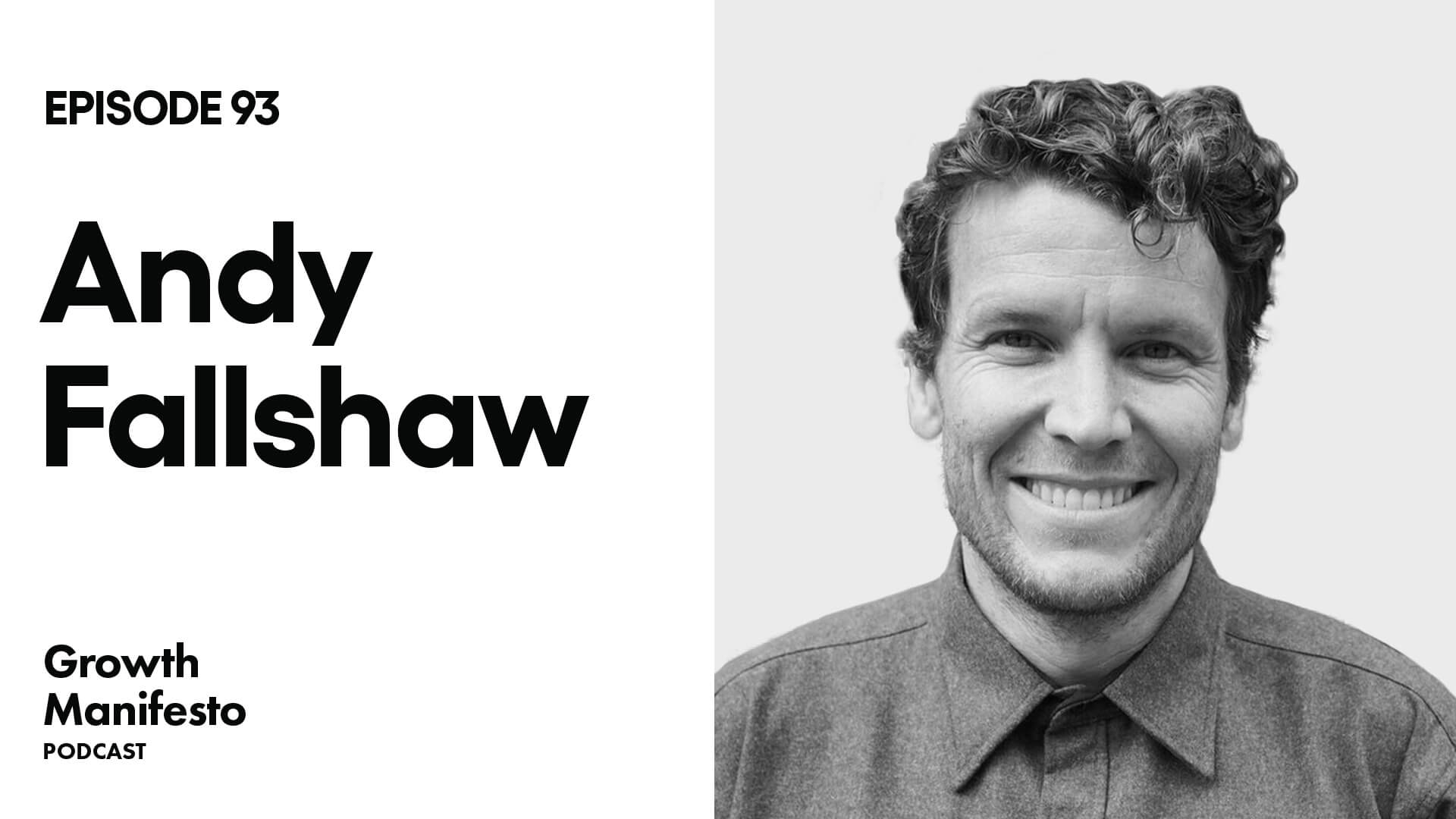


Overview
In this episode we talk with Andy Fallshaw – Co-Founder and CEO at Bellroy, a company that specialises in producing high quality, wallets, bags and accessories – about how they leveraged DTC marketing to build a global accessory brand that’s generated hundreds of millions of dollars in sales.
Key takeaways
- Bellroy's founders built the brand by taking the stairs rather than the elevator, favouring thousands of small decisions over shortcuts.
- Great brands are idea-led and consumer-informed, not simply built by asking customers what they want, Fallshaw argues.
- Bellroy balances growth, profit and impact rather than optimising the business for a single metric.
- Bellroy's first slim wallets grouped rarely used cards into one section, letting the brand cut away leather and bulk.
- On marketplaces such as Amazon, Bellroy limits retailer competition on its listings so price undercutting does not erode the brand experience.
Chapters
About the guest
Transcript
Auto-generated from the episode audio, so expect the odd mis-heard word. Timestamps open the video at that point.
We've always been willing to take the stairs. I think we've always been willing to build the muscle of really understanding things and not looking for one magic bullet to solve it, but knowing that great brands and businesses are built on thousands of small decisions. You're listening to the Growth Manifesto podcast, where we host in-depth interviews with business leaders, authors, industry experts, and entrepreneurs with a singular focus around business growth. At the end of each podcast, we want you to walk away inspired, to think bigger, and to have actionable takeaways you can apply to improve your business.
Each episode is like a masterclass on a key topic, so make sure to browse the episodes to find the topics that are most relevant to your biggest business challenges today. This podcast is brought to you by Web Profits, a digital growth consultancy that helps challenge your brands drive growth in a complex and fragmented digital landscape. You can find out more about Web Profits at webprofits.io. Now, let's get into it. This is Alex Kleanthus and today we're talking with Andy Falshaw, the co-founder and CEO at
Bellroy, which is a company that specializes in producing high quality wallets, accessories and bags, amongst other things. They've sold millions and millions of products about how they scaled up over the last 10, 12 or so like years, I mean, selling hundreds and hundreds of millions of dollars of product. And it's in an industry which you would think it's already been done all this accessory stuff. I'm sure that is something that there's not much opportunity there. But obviously there is. And so part of this conversation is understanding the growth stories, understanding some key points in the journey that they went through and trying to find some hacks into how
they think about scaling a business and kind of on the product side of things. So this is going to be a really interesting conversation also because I own a couple of your products. And so I was like, oh yeah, I like Bellroy. I can definitely talk about them, but let's get into it. And hello and welcome Andy. Hey, it's great to be here. Yeah. Great to have you on. So let's get straight into it. How did you get the idea for Bellroy? The ideas for Bellroy seeded over many years, but myself and my co-founders grew up traveling, adventuring all around the world. And we noticed that when products weren't quite right to help you bring things with you, the whole trip could
be compromised, tarnished, encumbered. And so it was a series of hard won insights around the value of carrying better, which is a term we wanted to label the general category that we wanted to operate within and how powerful that was in encouraging a better, freer life, a life that wasn't as defined by specific worlds or boundaries, but allowed you to do more each day and go more
places and not worry about stress or anxiety, or did you have the right thing with you? And well, you weighed down by it. So it formed over many years of experience. And then I also, you know, previous workplaces, I managed, I designed bags for different brands, I designed furniture and other things overseas. And while I was doing that, I also understood the industry a lot and why perhaps designs weren't as good as they could be. And so co-founders and myself got around and started thinking about what a world with more dissolved barriers and boundaries might
look like and who are the co-founders yeah because like i'm trying to understand the different strengths let's call it yeah so you are in the product side and so what kind of experience are we all yeah that's a great question no that's a great question i'm trying to understand like the chemistry because i'm trying to build a story but it's obviously a really interesting the category is super interesting because it's a phone case it's a wallet it's a bag like it's such a competitive area yeah so i'm just trying to understand the start oh wonderful so the three main co-founders is myself, my brother, Matt, who came from art and history, philosophy and
engineering, and also Lena Calabria, who's also an engineer with deep expertise in supply chain and management consulting and theory. And so the three main co-founders and myself essentially are united by engineering degrees and some form of practice, but then we've each gone off and built our skill set into very different areas. Matt and Lena are incredible in systems, processes, lean supply chains, agile product development. And then I went and spent more time in product design and brand
areas. And so each of us carved the business into three chunks that we each wanted to champion and bring some unique lenses to. And then we were united by this idea. When you understand processes and the sort of engineering side of things, you can understand the nuts and bolts of how things get done day in, day out. And that frees you to then be more creative around the things that you're hoping will keep being done day in, day out. Great. So this is really helpful information because now it's going to frame my other questions, right?
So my question, my question is that, so nobody really had expertise in scaling up a company at the time that you started this company, really. Is that a correct statement or not? because the philosophy engineer, there's a systems process person, and there's a product slash brand specialist. And so how was it like in the beginning? Because you've got a product or the idea for a product. And now you're saying, all right, we think we have something here. Yeah. So what was the next challenge? And how was that overcome? Yeah, the story goes a little deeper
where my brother, Matt and myself grew up in a family of wheel makers. So in an industrial company that injection molds and has metal press shops and all sorts of things. We're making wheels that go under hospital beds and high-end trolleys and things. So we grew up in a making things environment. And thankfully, Matt and Lena met each other at university in their engineering degree. And Lena actually also helped in that family business a bit, really come in and understand supply chain and processes and ways of really unlocking things. And then we each went off and
did other experiences. I worked in Ritkirl, a global surf brand for several years, pursuing design and brand. They worked consulting for global companies, helping them improve supply chain manufacturing systems, all sorts. And then we actually started a few businesses together. It was at a time when we were looking at startup success rates of about 10% in the wider area for high growth businesses. And I don't think any of us were arrogant enough to think that the first idea would be the best idea and everything would go great. So we actually started a whole series
of businesses all on the smell of an oily rag, but we had some software based businesses, some materials handling businesses. We had several that we were trying to grow and build. And Elroy was one of them that was very dear to my heart, especially as I surfed and skied and did various adventures around the world. And so we came together and launched a series of businesses. And then from fairly early on in the journey, we could see that there was something very different about Bellroy.
We could see that the product market fit was resonating in a way that was surprisingly powerful, I think. And we progressively sold or closed or changed some of those other businesses. We merged a couple in to bring all of the sort of dynamic language programmers that we had in one business into Bellroy to help facilitate that online journey. where we're still part of another business that was a partnership with a friend of ours. And then Bellroy was the one that just slowly took over the majority of our attention
as we could see what was happening there. Okay, and thank you for explaining that because I think, especially for the listeners, and I've interviewed a few people and like the first thing that did just worked. It's good that the first thing, which you didn't work, it gives hope. No, we had several things. Yeah, yeah, cool. Yep. And for Bellroy, because obviously it's a product and you have to create the product first before you can sell it, it before you can sell it, but it's going to come pretty soon. How did you approach the launch of this? Was there some product ahead of time or was it like almost the pre-launch approach? Yes. How did you start? Yeah. The start is perhaps not a typical journey. What we actually started with
in 2009, we launched a blog called Carryology and that was based around this insight that we could see out there. There were brands operating in the travel space, the luggage space. There were bag brands that would make some accessories. There were brands making wallets that we didn't really respect enough. And we believed that there was this idea of carry goods, that these are the products you use to carry your things. And that wasn't really a term used to describe this category before. It was skinning it differently to how others were seeing it. And we actually launched
with a community that we wanted to see if we could propagate this idea of carry in the world. And we wanted to see if we could be right at the center of that community as it got foothold and started to grow and develop. And so we launched a blog that we would write about all of the competitors in the space. We would write about what made a backpack better or worse, what some of the major challenges were. It's that blog, Carryology, has grown to be not only the world's first carry blog, but also its most influential. And that blog's thriving. It's very much part of the landscape
we operate in. And that was that if we wanted to see this new categorization, we wanted to be exposing ourselves to the real geeks in the space, the people that think about this more than anyone else that break their standards around what makes for great carry. So in 2009, we launched that. We had friends from design and industry that were writing at night or on the weekend and trying to foster and nurture this space of carry. And then in 2010, we launched our first Bellroy products. And when we looked at that space, we were originally thinking of starting in bags.
But when we looked at the space, we could actually see that wallets were probably the most broken in that space. They were generally licensed off by brands. No one really cared about them or thought hard about them. And was it a time when baggy jeans had become slimmer cuts and silhouettes and the bulging brick in your pocket was not only an eyesore, but also a backsore? And so we thought if we re-engineered wallets from the ground up, we could create slim wallets. And so that term captured what we were shooting for there.
It meant we could start with leather thread lining, not too many components. They were a product that didn't require huge investment the way luggage does or other areas like that. So for not too much investment, we could learn and iterate very quickly in one of the categories that we wanted to position in this space we call carry. And then as we got a foothold there and iterated quickly and learned lessons and made better and better products that resonated more and more, then we could start to broaden the carry scope and start to look at other categories from phone cases to pouches and then on to bags and some of the travel pieces and all the other spots that we really wanted to move into.
So we were starting with the community and the idea of carry trying to build that as a sort of rising tide that would helpfully float all boats. And then our specific project was Belroy. And so just correct me if I'm wrong, because I wasn't aware of the slim wallet kind of history, but I've got nine slim wallets now and I love them. Were you the first ones to create the slim wallet? Or were you one of the first in Australia anyway? who was to do it? See, there were lots of things that were hacks that let people get away with a
wallet. Cut the big fat one in half. No, I'm just kidding. Exactly. No, quite literally, yes. Or people would get plastic bus pass holders and try and utilize those or others would put a rubber band around your back of cards. And even when we were trying to re-engineer wallets from the ground up, there was a real worry where we realized to make a genuinely slimmer wallet, if we designed the cards you didn't use very often to go together, squash together into a section, then that would
let us pull huge chunks of leather and air out from between each card. And we weren't sure if people would go for that with a brand new product where you were meant to store lots of cards together in a sort of storage section. And then you might just have one or two or three cards that you reach for regularly that get their own slot. And that was actually, it was a scary move. We designed several wallets doing this on this new principle. We then designed things like a pull tab that would let you pull them out and get access to that stack of cards and then push it away again. And that was new and unique in the wallet space. And so one of those two. Yeah. So
there was a whole series of steps that felt a little bit scary for us, but they would give you a wallet that had a much smaller footprint in your pocket, way less bulk. And now there are so many brands that have been inspired by those insights and those leaps that have propagated everywhere. But certainly in 2010, no one was talking about slim wallets. I can say that very dearly. There were other things out there that were hacking away, but no one had put that thought and attention the way we had around the world. We've always thought of ourselves as a global
brand. And so we were looking at the whole landscape and we couldn't find what we wanted. We couldn't find the wallets that gave the genuine upgrade to how they lived in your pocket and the experience of them. And that's why we started almost from first principles up to design wallets in very different ways. And so you started with the blog and so you had all this traffic and then created some product and the website. And then how did you make your first sales? Is it just speaking about it actually on the blog? Yeah, so 2010, DTC wasn't really an acronym yet. It was
when we began, we thought we would be a predominantly wholesale based business, which meant we would sell to retailers and retailers would on sell. But we also had a bunch of amazing programmers in house. So of course, we created a website. And the first sales really came from press, we were generating very unique, different looking products. And so we were picked up by the major blogs and gear review sites and those sorts of things early. We were picked up by a number of retailers that saw what we were doing was very different. And that's where we got started. So from the very first day of sales of Bellroy, we were having
customers logging in from the US and Europe and Asia. And so it was international from the very first day, but we were assuming selling through retailers was going to be the major part of our business. But then as we all now know, looking back in hindsight, those early 2010 years were the vanguard of that move to digital first brands and direct to consumer brands. And so because we had programmers in-house, we could build a good website, we could understand how to move product around the world. And we also started to build that real sort of direct to consumer digital
experience. And has it been that kind of focus since the very start now in terms of the distribution, because it's across the world now, then I'm assuming that it's not too many retailers still, is that right? Or is it predominantly a direct to consumer approach? We've always started with what do we think would create the best customer experience. And for us, from the very first evolution of that, we were after trying to let customers transact where they felt most comfortable. And so that meant we weren't just wholesale.
We weren't just direct to consumer online. We were always looking for places that a customer could feel comfortable in assessing and transacting with our product and then getting the support to keep that relationship going. And these days, everyone calls it omni-channel. But back then, it was just show up where the customer wants you and where they feel really comfortable transacting. So these days, our dot-com business is significant. It's translated in many different warehouses, many different languages, many different currencies that ships from many different warehouses.
But we're still in many of the world's great retailers. We have a presence in all sorts of amazing spots. Japanese retailers like Loft or Tokyo Hands or United Arrows. We're in players like David Jones in Australia or Nordstrom in the US. That's still a good chunk of our business. But we're also on marketplaces. And when we went into digital marketplaces, we always wanted to control that experience ourselves as well. So we're not only in Amazon platforms, but Rakuten or Tmall or the great digital marketplaces
of the world and different geographies. And then our dot-com experience, we still try and keep that progressing. We learn so much. We have these direct relationships with customers through it. And so that has also stayed a very significant part of our business. And so how do you control the customer experience in places like the marketplaces? Because obviously it's someone else's website, especially the Lazadas and so on. It's like a whole kind of like infrastructure. It's a whole kind of environment. And how do you actually control the experience?
First off, I'd say you don't control it, you influence it. But there's many steps you can do. So if you go to Amazon from any number of countries, you'll be interacting with a Bellroy control range on there to influence that experience. So we don't want lots of retailers selling on a marketplace. Otherwise, the way they compete is through price competition generally, because it is quite a standard experience that people are interacting with on that. And so that lets us ensure that if someone's buying a Bellroy wallet on Amazon, it should well be provisioned by Bellroy through some form and supported by Bellroy in some form.
So that's one of the ways I think you can influence it. We also spend a lot of time working with the platforms to understand the user experience and understand if there's opportunities to improve how we show up there on images, on descriptions, on video, on all those sorts of things. And then we do a lot of review. We do surveys. We interact with folks doing it and understand their experience. And then we continue to iterate and try and make sure we're moving that towards better. And so I hear you on the part of influencing the experience is ensuring that the post purchase experience is consistent, right?
Because it could have started on, say, for example, the marketplace. But just as long as everything after that is exactly the same, that's just another source. And so I guess it's good to clarify the component of that as well. And also just the price comparison. And if I was to purchase it off that specific seller, that seller would just go, I'm sorry, there's out of stock now or something. And then there's that whole kind of experience like, oh, this sucks. So it's really interesting how you like to be there and to ensure that like as many of the steps which you've confirmed are the right way of doing it, that's the consistent experience after the purchase is done. Is that the best way to explain the thinking?
Yeah, I think that was a really... Trying to really just summarize it. Absolutely. I think that was a great summary. And my background is in product design. And so I think design matters a lot, but I don't for a second think it's all of the picture. It's like the experience someone has on understanding pricing and why it is the way it is, the questions they might want to ask, the support and after sales service they have. All of those things are a huge part of an overall experience, even with a product-driven brand, the way we are.
And so you launched at a time when Facebook ads was the new big thing, right? And so... Oh, before then. Yeah, that came a few years later. Yeah, they came a few years later, but it sounds like you started to gain some strong traction about 2012, 13. Is that right? I mean, 2015, you're one of the fastest growing companies in Australia, the BRW magazine. How much was the Facebook ads, the platform, or how much did that actually help scale the brand, especially like in those early days when it was a lot less competitive and a lot
cheaper and a lot easier to really scale up a brand? Yeah, I think for us, not nearly as much as many of the other direct to consumer brands who came a little bit later, depended on it. I think for us, just as we spoke about always wanting to be where customers wanted us, that even included discovery where customers would look for us. And so I think Facebook and Instagram have been some small part of that as have other digital advertising techniques as has blog and press coverage,
as has great retailers showcasing the product with some extra knowledge where if someone wants to come in store and feel it and handle it, they can often find a great retailer nearby, as does online retailers like Huckbury in the US who have a great catchment of folks that love the offerings. They love the storytelling they have around it. And so when they sell our product, it's not just a vending machine wall that you pick from. It comes with so much storytelling and explanation of why our products look a bit different to others
and helping storytell around some of those innovative features and why it doesn't look like a normal product when you first engage with it. So I think really it's a suite of many things and we've never been too dependent on any one channel to have that customer awareness begin and then let them start to evaluate and validate the product. I guess you've been in an area where you've innovated on something that's existing. And so there's a lot of content out there that speaks about the innovation itself. And I think that seems to have helped you a lot then because it sounds like a lot of brands will find the growth hack or whatever.
It sounds like you have quite a lot of things that are going on right now. And so how do you know the area that's working? But how do you know the area to focus on the most? Yeah. So I think first off, there's a saying inside Bellroy where we take the stairs rather than the elevator. And even as you discuss growth hacks, I think there's a lot of people looking for the elevator to success. And there's almost always other influences that control that elevator, right? You might get lucky and have it shoot up to the top floor, or it might shoot up then down
then get stalled somewhere. And we've always been willing to take the stairs. I think we've always been willing to build the muscle of really understanding things and not looking for one magic bullet to solve it. But knowing that great brands and businesses are built on thousands of small decisions and thousands of iterative improvements through the life of that business. And so I think the first thing I'd say is there's an internal philosophy of doing the work and taking the stairs. You build muscle as you go. As you take more and more stairs, you build more muscle so
you can climb two or three stairs at once rather than one. But I think that approach of taking the stairs is central. And then as you're doing that, you're also building feedback loops throughout the business. So there's so many ways that we look for it. We look at reviews, we interact with field testers and ambassadors using this, we interact with so many different customers, we talk to retailers and distributors and their experience, we watch sales and where are they growing, where are they weaker, what's happening there, we look at returns, we've built feedback
loops through the entire organization. And so it's not one channel that tells us if we're winning or losing, is this moving us towards better? Or is this opaque or slightly illegible and hard to understand? And we need to build deeper feedback loops into this. And I think when you think of that long term journey and taking the stairs, you keep being willing to invest in all those feedback loops, where if you're just looking for the elevator to success, you might not think they're necessary. But I think we've never wanted to be part of a brand that shoots up, then plummets
down. We've always wanted a good, resilient brand and business where we can be learning lessons along the way and making an increasingly compelling and resilient business and brand. So when you're looking for new opportunities to invest in, the assessment criteria for it, because obviously now it's not about just performance only, it's about the brand, it's about the community, it's about the story. So how do you just look at opportunities and say, all right, that's something that we would consider? Yeah, absolutely. There's actually several ways. And in Bellroy, there's no one metric that defines our goals. So we talk about balancing growth, profit, and impact. We don't want a business
that's only going after one of those. So we have been a big corporation since 2015. We care a lot about the net positive of having Bellary in the world and what that's adding to. We believe growth continues to give new opportunities for our crew to develop, to tackle bigger media projects, to really seek personal growth and professional growth as they go. And then we believe profit means that the business will not have to keep chasing new funds and trying to plug the red and being really worried as soon as there's an economic downturn
or a shift in investor sentiment. So we're looking to balance growth, profit and impact. And that means we need many metrics as to what we're going after. So there's some projects that are impact focused that we've been working on for five years and still haven't seen a return from that specific project. But we know it's moving a suite of materials towards something that is genuinely better for the planet. We know it's hard work. It's going to take time. And so we might have a project there that is much more about is it moving us to better chemistry and better approaches to secularity and sustainability.
And then we'll have other projects that are much more about optimizing current business sort of levers and processes. And so some of those are followed in a sort of objective and key result format. It might be quarterly, three month view. And they're sort of ongoing things where you can really see what the obvious next step is for getting that part of the business stronger or realizing an opportunity. And then we also have carryology. If we want to become a truly world-class brand, helping define a category, we need to be at the center of a thought community.
There's many metrics operating at many different timeframes and operating either more growth focused, more profit focused, or more impact focused. And so I think even though it doesn't give you a catchy soundbite, the annoying thing is it's nuanced and it's different according to the part of the business. No, I'm getting that's the style of the reason that you guys are so successful as well, right? It is because you're starting off with a whole different approach to the community. And I think the innovation on the product is super important. I think having an impact on the world is super important.
And I've just got one or two more questions before we wrap it up. I read somewhere, correct me if I'm wrong, because you can't read everything, because you can't believe everything online these days, especially because all the content is just created by who knows who. but it said that you guys stay within your lane and like you've got specific clear boundaries on how far outside of your core kind of focus things are, right? So for example, accessories or bags and so on. Part of the growth has been the fact that the creation of innovative products, right? So it sounds like that's now part of personality of the business, right?
Like he's always trying to push the boundaries. And so how do you think about the product development side of things? Because obviously that's the thing that created the growth. Is that the continued focus? And if so, like how far outside of the core business are you designing? Yeah, so I think I'd even say the product development didn't create the growth. It just created a seed that the growth could happen around. There's brands that have released compelling products and it's never gone anywhere because they never got the storytelling right. They never got the distribution right, the logistics. They never built the business around it to support and foster that.
And so I think the innovative product is only one small part of Bellroy. It's at the end of the day, there are so many things that have to come together and be right to allow that to grow. As I described all of those different feedback loops, they all unearth different opportunities. We think a lot. We have models of consumers. We have models of markets. We have models of shifting zeitgeist in consumer headspace and mindspace and what they're caring about. So there's many ways we do. Some of those are more symmetric projects where it's taking an existing product and iterating it a little.
And some are more asymmetric projects where it's like, hey, there's this moonshot. We want to completely rethink this category or this messaging or this thing. And we have no idea if the world's ready for it, but let's try. And we're not up for building the entire business around those, but we need some of those in the business. We need some kind of moonshots in there to keep us stretching and thinking. And even if we don't nail that, the process of going towards that is probably going to unearth lots of really interesting things. And so again, I wish I could give you this one magic
bullet. I think basically we don't believe in the magic bullets. Yeah, the magic bullet is that there are no magic bullets. Yeah, completely. It's just taking the stairs. It's just really loving the work, really being willing to do this work for a long time and build expertise, having rich feedback loops. And as you do that, opportunities can't help but present. So long as you're paying attention, so long as your eyes are open and you're looking. And so even as you describe swim lanes, like we operate in the carry space, there's push and pull on what's on the
boundaries of it. We don't make fragrances and perfumes and other brands that make wallets often do that feels outside of us. But we also believe each time we have a successful category or message or story or channel that gives us permission to broaden a little more from there. Instead of jumping straight from wallets to bags, we moved from wallets to other things you keep in your pocket, like phones and keys. And then we moved to some pouches and some work accessories. And then each stage gave us almost permission. Once we'd established that as something that credibly
Bellroy could be adding value to, then that gave us permission to move a little bit further and a little bit further. It's all within that carry framing, but there's many things that might not previously have been considered carry, but at the same time, we're evolving what is carry. and trying to work on that and frame even that concept in ways that does resonate and is able to keep evolving as customers evolve how they think about moving through the world. So combination of great product, obviously, that's required, right? Because that obviously helps with all the press, but there's been lots of other ones that have been created that haven't succeeded. And part of the
reason that Bellroy has succeeded is because of the storytelling and because of the community around it and because of the support around the story and kind of the phenomenal determination, spot on phenomenal determination to make sure all the parts that matter to a customer are looked after is the stock available is it in the right warehouse is it able to ship in time is customer support in the right place do the retailers selling the product have the right point of sale the right messaging the right storytelling have they been trained in the points of difference
it's that it is like we we've just never gone after the shortcut we've just always said all the things matter. You've still got to prioritize within that. We don't do everything perfectly. We're still learning and iterating quickly. But how do you look after all of the things that go into creating an experience with a brand and its products or services? That was a natural end of the podcast. But I do have one more question right now about customers, right? How do you stay across what customers actually want? Because obviously, their chain consumer preferences always change.
And so how do you stay across that? Yeah, there's a quote I really love from Denise Lee on that is, great brands are idea-led and consumer-informed. And I think if you're just trying to do consumer-informed, it's the old Henry Ford, if I asked the customers what they want, they would have said faster horses. There's times when you've got to be developing models of the world that sort of go a level meta, understand movement. So when we started Bellroy, we had five insights that drive this.
And it's like the world is changing, like work and play emerging. Customers are expecting more from their brands. So we were looking at these big movements and these big sort of first principles up ways of coming up with insights. And then as we were doing that, we were planning rich feedback loops. So from focus groups to friends carrying to ambassadors and field testers to the carryology testers and amazing audience to the retailers. And so it was both trying to have opinions about a more vibrant future and what that would look like, and then planning the feedback loops to course correct as we went and see what is resonating and what's not. And so having those two move together constantly, I think is the way I'd say is sort of a sort of higher level view of what we're trying to achieve.
That was great. I love challenging conventional thought and conventional process. And the thing I love about your story is that there is no magic bullet. It's the stairs. It's not the elevator. It's creating something that is amazing and having a great story around it and obsessing around customer experience, right? And so these are all things that everyone talks about, but you've done it and you've sold like hundreds and hundreds of millions in the last 12 years and it's across the world. And so I think it's good to hear a story from someone who's done it for over a decade.
Just to reiterate, it doesn't matter the latest Facebook algorithm or TikTok or the pixels not working or whatever. You're like, pixel? What pixel? You can't tell the pixel. Let's make sure the customer's happy. Is the product going out? Is the reviews good? We can't track everything, but we can't track it anyway. So it's fine. And I really just think that's quite refreshing. And it also helps people like, how come my marketing is not working as well? Are you focusing enough on the consumer? Because maybe you're not. And are you establishing a good story around the brand because maybe you're not, you know? And so Andy, thank you so much for coming on the podcast and sharing the story. I congratulate you on all the success. I'm probably going to buy
some more stock after this is because I'm so much more inspired now. So that's been great. For people who want to find the product, how do they find you? And of course the links in the show notes, but just for the audio version. Awesome. Bellroy.com is a great starting point. The newsletter is good. I love the newsletters our team's put out. So if you don't mind signing up to one of those, you'll hear about all the fun things. We often share great retailer successes, other channels there. If you prefer being on a marketplace, most of the great marketplaces around the world are also us. But yeah, thank you, Alex. Thank you for getting... Thanks for listening to the Growth
Manifesto podcast. If you enjoyed the episode, please give us a five-star rating on iTunes. For more episodes, please visit growthmanifesto.com forward slash podcast. And if you need help driving growth for your company, please get in touch with us at webprofits.io.