EntrepreneurshipMarketingEcommerce and DTC
How waterdrop went from $0 to $100M in 6 years with DTC marketing
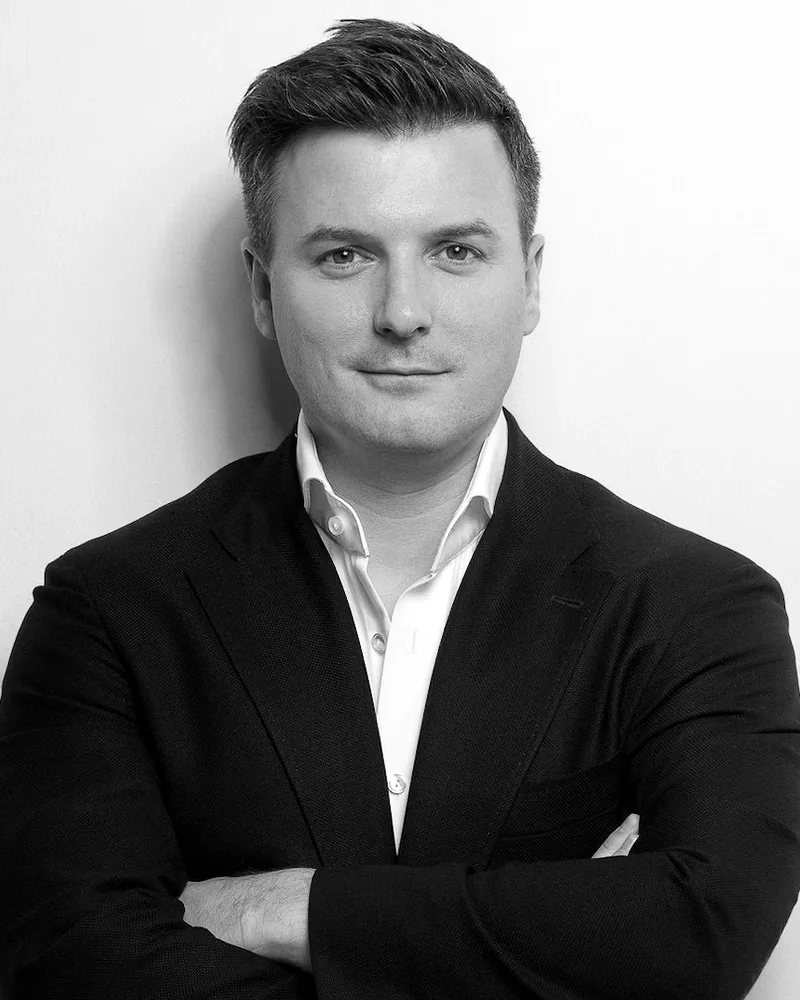
Martin Murray, founder of waterdrop, explains how a failed B2B launch and two years of product R&D led to a $100 million DTC beverage brand.
 with Martin Murray


Overview
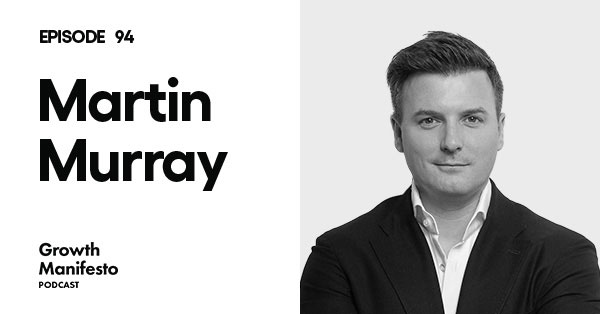
In this episode we talk with Martin Murray – Founder and CEO at waterdrop – about how they went from $0 to $100M in revenue in 13 countries in 6 years, with DTC marketing.
Key takeaways
- Starting a company demands both rational conviction and emotional belief - being too rational alone means an entrepreneur will never succeed.
- Early B2B distribution to companies failed almost completely, so waterdrop pivoted to a street pop-up kiosk to learn directly from customers.
- Facebook ads only worked once product shots included glasses, carafes and bottles so customers understood a water drop was something to drink.
- Retail stores are waterdrop's smallest revenue channel but the most valuable for building trust through face-to-face interaction with customers.
- Scaling into new countries requires balancing centralised head-office control against giving local teams too much autonomy to reinvent the strategy.
Chapters
- Intro: the entrepreneur's dilemma
- What waterdrop makes and why
- Conviction, risk and quitting his job
- Bootstrapping the first two years
- Convincing manufacturers to build the cube
- Failed B2B launch, pivot to D2C
- Building a multi-channel distribution strategy
- Scaling the country operating model
- From $100 million to $1 billion
About the guest
Transcript
Auto-generated from the episode audio, so expect the odd mis-heard word. Timestamps open the video at that point.
Obviously, with business ideas, it's much more easier to shoot them down than to say why it's a good idea. It's always easy to find 10 things that can go wrong, right? If you're too rational as an entrepreneur, you're not going to make it. You have to be a bit of a dreamer, a bit of a naive, because there's too many risks and you have to have the ability to kind of shield that off you. But at the same time, you have to be honest and reflected enough to see the real problems and fix them. You're listening to the Growth Manifesto podcast, where we host in-depth interviews with business
leaders, authors, industry experts, and entrepreneurs, with a singular focus around business growth. At the end of each podcast, we want you to walk away inspired, to think bigger, and to have actionable takeaways you can apply to improve your business. Each episode is like a masterclass on a key topic, so make sure to browse the episodes to find the topics that are most relevant to your biggest business challenges today. This podcast is brought to you by Web Profits, a digital growth consultancy that helps challenge your brands drive growth in a complex and fragmented digital landscape. You can find out more about Web Profits at
webprofits.io. Now, let's get into it. This is Alex Kleanthus, and today we're talking with Martin Murray, the founder and CEO at Waterdrop, about how they went from zero to $100 million in revenue in 13 countries in six years through direct-to-consumer marketing. Hello and welcome, Martin. So nice to be here, Alex. Nice to meet you. It's nice to meet you as well. And you have a pretty interesting story.
It's a manufacturing story. It's a direct-to-consumer story. It's a scaling internationally story. So we're going to talk about all these components and we're going to have the angle of kind of the marketing process and the growth process, right? And some of the challenges along the way. But let's start with, specifically for the people who don't know Waterdrop, what does Waterdrop do? Yes. What are the products that Waterdrop has?
So Waterdrop is a fast growing European, soon to be global consumer brand that has a very clear mission, which is to help people drink more water and reduce plastic bottles and the detrimental impact of sugary drinks in that process. So the core products are little cubes that we made and developed ourselves, hence Waterdrop, because these little cubes you drop into water, they dissolve, and they give your water taste and functionality and replace conventional beverages. That is the
core product. And we've also built an adjacent product portfolio around drinkware, because people have to drink from something, right? And we'd much rather have them drink from sustainable cups and glasses and carafes rather than plastic bottles. And we've also ventured into water filtration, because at the end of the day, we believe taking local water, making it available to the public, and then adding flavor and functionality is much more intelligent, healthy, and sustainable than pre-filling beverages and shipping them around the world.
That's kind of our core thesis and what we do as a company. So basically, you invented, I guess, a square little cube, which you can put into any style of water. Is that correct? That's correct. I mean, I can tell you about the backdrop of the story was literally that I'm an avid water drinker and always been brainstorming with my friends. Why does this industry exist? Like literally, why do we have hundreds of billions of dollars of merchandise, which is essentially sugar, water and plastic bottles?
And the reason is people want taste and functionality. It's very easy. And when we had this idea was in 2015, I was in Singapore at the time studying and we were on a plane, actually. And on a plane, I always order water because I'm an avid water drinker. And we were sitting there kind of thinking about why isn't there a product that we could literally just conveniently drop into water that would give the water a bit of taste, a bit of punch, a bit of functionality. And that idea sparked what later became this business.
Because in essence, there are a few things out there that do similar things, right? There's syrup, there's conventional tablets, there's powder, there's all sorts of things, but nothing really that has the potential to really be global, to change customer behavior, and that has an elegance and a premiumness to it that we envisioned. So we had to develop everything from scratch, like you said. So we had to develop the recipe, compression technology to actually make a cube.
By the way, why a cube? Because we thought it's a beautiful shape. It's the smallest possible shape there is. We call our cubes micro drinks. So we take fruit and plant extracts. We marinate them with a special recipe, compress them into the cube, and then you can drop them into water. They're so small that you can drop them into any kind of bottle. And they also stay at the bottom of the glass when they dissolve. So it's very elegant because it doesn't float around in the water because the water surpasses the shape. So it also looks pretty good.
And it sounded like a good idea. It took us two years to actually develop. So we had to spend a lot of time on R&D to actually make it. But then once we launched on the market later in 2017, it went really quickly because at the end of the day, people, they all want to be more healthy. They all want to drink more water. They all want to cut back on the sugary water drinks. And in most markets, people also don't want to be seen with plastic bottles. anymore. So a lot of these macro trends then eventually helped us grow pretty quickly after
we had the courage to actually make this. So you had the idea to create these little things which you put into water to change the flavor of water and to add some extra things in there, like I say, for example, some vitamins and so on, right? And this is an idea which sounds pretty big. What gave you the courage to step into two years of experimentation and manufacturing,
testing? And I'm sure it wasn't a simple process, right? And so what were some of the, can I say, the inspiration or the optimism that you had? Because it sounds like that would have been a pretty grueling journey those first two years of production? That's a great question. So if I'm honest, I think in hindsight, it was a bit crazy because starting a company
is not rational. And I think that's the first statement to make. That's why there's so few companies, right? because it literally doesn't make any sense. You're up against so many challenges. You have everybody around you who's going to tell you this is not going to work. The probability of actually making it, even if everything goes right, is like minimal, minimal, minimal. So if you can't have all the risks, nobody would ever start anything. Where I came from, I don't come from money,
so it wasn't like we had money and it was easy. I literally had to quit my job. I owed my employer money because I did an MBA and I was supposed to go back. But then I called eventually because I fell in love with this idea and I could just see it. It's hard to describe. I knew both rationally and especially emotionally that this had to exist. And I think you need both because if you're not fully on invested and you're 100% convinced
that you're going to follow through with this, you're not going to make it. Because to be honest with you, it was very tough. People underestimate how tough it is. Everybody thought I was a bit crazy. Everybody told me why it's not going to work. That sometimes made me work even harder, which is fun. But at the end of the day, it's this combination of rational. If you look at the business idea rationally, you're in a huge market, right? You're speaking about hundreds of billions. All the macro trends are in your favor. less plastic bottles, less sugar, more convenience.
You can sell it online, B2C, right? Selling a beverage online is very hard. And shipment costs are too high. Environmental impact doesn't make any sense. So on the PowerPoint slides, it all made a lot of sense. Better unit economics. The emotional part was really like, why isn't anybody doing something about this industry, right? Everybody's talking about back then it was big data and flying to Mars and the beginning of artificial intelligence and all this fancy stuff where at the same time you have an industry where for 70, 80 years,
you've been putting sugar water in plastic bottles and shipping it around the planet. And nobody ever thought about changing that. It's literally so obvious, right? Because it's not a niche market. It's a market that every single one of us touches every day. You have to drink something, right? Most people don't just drink tap water. So those were the kind of the combinations. and then i just got so convinced that i i jumped i burned the ships and um that was one of i forgot who the guy was i think was some famous portuguese captain who who has his first order always you
know demanded his his soldiers more or less to burn the ships because most people also hedged themselves right and they do it as a side gig and they try this and try that and said look i'm gonna quit i'm all in and i don't care if it takes me two years or five years or ten years i'm just just going to make this to at least have a shot of the market deciding. Problem with our idea was, you know, it makes sense in hindsight, but if you have to spend two years in R&D to have the chance to actually show this thing to a real consumer, you don't really know if the idea is any good, right? Because the theory is always start an MVP, build a website, get some traffic,
and then tweak around. And then you see if it works or not, you know, this kind of lean startup approach. We were pretty much the opposite. We were like an iPad. We just developed something and then we told the market we're here. Nobody ever asked for us, but we just had to have that conviction. So in hindsight, I think you need that conviction between a rational insight and an emotional insight. If you only have the one, you're either too naive or you're just too business-minded. I think you need both. And it just made sense to me.
And if you have that conviction that you will make it, no matter how long it takes you, then it doesn't really matter that you have a few speed bumps in the way. There were many speed bumps. So that's kind of how I've been thinking now. And after you hit the market, then it's a different story altogether. It's even more challenging, but also more fun, to be honest. You said something interesting, which I just want to touch on. And this is more from a psychology perspective. Everybody told you the reasons that it wasn't going to work. Everyone told you the problems.
And I think this is a really interesting point because so many entrepreneurs, before they actually achieve their success, everybody is very quick to give them advice, right? Just out of interest, the people who said that it wasn't going to work, what are they saying to you now? Because obviously now it's worth quite a lot of money. um i mean i have a person my personal opinion is that people pay far too much attention to what
other people think and i think as an entrepreneur especially have to learn to just block that out completely so to be frankly i literally don't care what they think now or what they thought then um people generally live their lives too much you know being too much dependent on other people's judgment and then you you realize later that the people that that you were judged by you don't really care about them anyhow you don't really know who they are so i think that's on a general note on a specific note obviously with business ideas it's much more easier to shoot them down
than to say why it's a good idea. It's a natural instinct, especially of smart people or educated people. They think, you know, being intellectual means asking critical questions. So it's much easier to, you know, any business idea in the world, it's always easy to find 10 things that can go wrong, right? I think the art is to be naive enough to try. You have to be naive. If you're too rational as an entrepreneur, you're not going to make it you have to be a bit of a dreamer a bit of a naive because
there's too many risks and you have to have the ability to to kind of shield that off you but at the same time you have to be honest and reflected enough to see the real problems and fix them because an idea or a product is never perfect there's always things to fix so you have to have that core conviction that you're doing the right thing at the same time you have to be open enough to listen to the real feedback. And you said it right. I mean, the amount of unsolicited advice you get is enormous.
You don't even ask for them. People come and tell you. It's like, okay, thank you very much. I don't care. But even people from my closest environment, you know, I came from a very rational job, strategy consulting, you know, studied with a lot of smart people doing an MBA. All of them went back to, you know, well-paying jobs and international careers. and I was doing these weird things. Everybody thought I was a bit crazy. Like, what is this guy doing? He has no money, no product, up against some of the biggest companies in the world. How can that ever work?
So long story short, the art then is to cut through the noise and find the one, two people who can mentor you, who've done it before, who have the same ability to block out the noise, but at the same time, give you real feedback. And that's what I tried doing. So I found one or two early mentors, early advisors who helped me. But the sad truth is you're pretty much alone as an entrepreneur. You fail alone and you succeed together.
You just have to get used to that. If you fail, everybody knew it's going to fail. If you succeed, everybody knew you're going to succeed and they're there as well. There's this nice quote I was here. I think failure is an orphan and success has many fathers. And I think that's very true. But that's what I mean. You have to be naive as an entrepreneur, but not too naive, because you have to know that you buy your own,
at least for the first few years until you build a company and you can share that kind of responsibility. But those are maybe some of the reflections and learnings I had. Yeah. And I think that's a fabulous point around if you talk to the right people, the level of advice and the sophistication of advice and the depth of advice is far more helpful than people who may not have had the success which you're trying to achieve.
So I think that's a super important point. It's hard sometimes because you don't want people to tell you advice and they just give it to you. So I think, you know, having a strong skin and I think success helps that, right? Success helps that because in the beginning, there's so much doubt and you're like, I think there's something here, but you know, I don't really know. And everyone's telling me it's a bad idea, but I think because they're all saying it's bad, I think it's good. You know, there's so much internal dialogue. And then after some success, that dialogue shifts. But thanks for just sharing that. And I think that's a super important part because you've created something that is not just like what you said.
It's not like a simple test. It's not a small spend. It's producing something that will disrupt the beverage industry, which is a pretty huge feat. Now, how did you fund that first kind of two years? Like, was that external investors or was that self-funded? what was the journey there um so i didn't have any serious investment i had like two or three
like angel investors former bosses and professors who who put in a bit of money actually it's it you'd be surprised how little it actually was to start it's quite embarrassing actually but um for the first two years because we were just working and we didn't really have a lot of overhead, there was no expenses. So there's this program in Austria, which is fantastic, that you get kind of like an unemployed money if you start a business for a year. So I lived of like, I think it was like a thousand euros a month or something.
It paid for my rent and then a bit of food. That was literally it. And I think it's also fantastic to go through that kind of period as an entrepreneur, to really cut away everything, cut away all the noise, all the unnecessary expenses, because it makes you focus on what's important. It's always easy to build up overhead and incur certain expenses that you think you need. But in reality, you need very little, especially at the beginning. So I had a few angel investors, very low overhead, and didn't really spend anything. We were just working day and night.
And then we were able to partner with larger companies that believed in us and paid for most of the R&D work. Because, you know, the first two years was really about getting the recipe right and getting the compression technology right, building the first prototypes of the manufacturing. We had to build all the manufacturing ourselves. So now we have two manufacturing plants. We will produce proprietary water drops, but at the beginning, we're nothing. So you had to start really small and build your first mold and then like a small production and then larger and larger.
So it was a combination of a bit of angel money and suppliers that believed in us. And then once we kind of hit the market, we raised a bit of money from those same people. And then we just went from there. So it was not a crazily funded. This is good. It was good. We started very lean and then we got bigger and bigger. And then, of course, the runs got bigger and we attracted more capital and then we expanded globally later on. But those were the beginnings, yeah.
And I'm sure that those angel investors are very happy with their investment now. So I think that's excellent. But from the manufacturer's perspective, right? So this PowerPoint that you created, super important PowerPoint, right? I mean, this is how you got the investors. This is how you got the manufacturing plants. but what made you approach the manufacturers and what was it that kind of had them say yes? And I'm asking these questions because it's good to know the journey for creating this product,
which was two years. And then from 2017 to 2023, it basically increased to $200 million I'm in revenue, right? So I'm just trying to understand that. But yeah, what was the thing that happened that you're like, oh, I'm going to have the chutzpah. I'm going to go for it. I'm going to go for this thing, and I'm just going to see. So I don't think there's a general strategy.
I can just share how I did it. And the beauty of our model was that we blended together different industries that as individual industries didn't really know what we were doing. So specifically, we're kind of a blend from a beverage industry. We were talking about tastes and beverage marketing and hydration, which is beverage industry. but how we produce the product technically had more to do with a pharmaceutical industry because
it was very high quality ingredients at scale compression different machineries so you know a beverage company has no idea how to compress something and a pharmaceutical industry typically doesn't have any idea how to market beverages right why should these so it was culturally um we were connecting dots of different industries and specifically there was there was three parts that I individually had to convince. I mean, one of the general notes is that, you know, as an entrepreneur, especially as a zero to one entrepreneur,
you have to be very good at convincing people because that's at the end of the day. Okay, of course, it helps if you can make nice PowerPoint slides and business plans. I think that's just, you know, the table stakes. Otherwise, nobody's going to give you money. But at the end of the day, you have to be very good at telling your story and convincing people. And the funny part, but our business at the beginning was that there were three parts. There was the recipe part that was very, very difficult. There was the compression part
that was very difficult. So once you take, you know, fruits and plants and you have a powder, getting that into a cube is significantly harder than I thought as well. That's the naivety again, right? Yeah, that's the naivety. Yeah, but you know, you ask the right questions and then you discover that it's hard because nobody has done it, right? And it is hard, but it's solvable. And then the other part is, once you have the cube, how do you package that? So it was three different parts. And at the end of the day, what we de facto did was say that all the other parts are easy,
except your part. And if you tell that to all three, they get it, right? And it was true. It was just, it was hard to convince because if I would have had all of them in a room and said, look, this is really uncertain. This could go wrong. This could go wrong. The kind of the the European what can go wrong mindset, it would have not worked. So what it did is, you know, work with the individual partners said, look, the recipe part we can do because of the following reasons. We need you to do the compression part and the packaging part we can do for the
following reasons. And the packaging guys, we said, look, the cube we can do. And it was real, right? But you also have to be good at convincing them because we're different companies. And then we got them all together and then they, They thankfully made the first prototype with us. It took two years. And that's how we did it in essence. So what's the learning? The learning is, I think, you have to be very, very convinced of what you're doing. You have to be able to deal with the speed bumps.
Literally along that process, I probably heard 50 times from individual parties that this is not going to work the projects over at least 50 times. And we always came up with a new idea why it's going to work the next time. It was very frustrating at times, but we followed through. And I think the other part is to ask the right questions, because oftentimes if you ask a supplier or an engineer, especially if you can do this, they'll say no. And then you ask, why not?
And they said, yeah, because typically we do this and this and that. But could you theoretically do this and that? And if you ask why a few times, very often the eighth for the ninth answer is, yeah, because nobody else has done this before. That's where it gets interesting because then you ask, why not? Yeah, because things are like they are. And then you can start challenging it. Why? Some of these big companies have systems. They've been around for quite a long time.
Then, of course, they're not going to change it. Why should they? It's working. system was working. So those were kind of the things we did during that time. And I think the funniest part is I'm really not a technician. I had to find a lot of people that were significantly smarter than I am to actually understood that. And I was lucky enough to find those guys, like early co-founders and employees in the business who were able to actually understand
what the engineers were saying. I always got like 70% of it, but the remaining 30% was where the magic happened. Yeah, and that was kind of how you go about it, right? So that's not a general answer, but if you're convinced about the goal, we knew we wanted to do this. This is what a water drop looks like. This is the cube. This is the packaging. We just had to find a way to get it done. And so you got it done and then you launched. So what was the first thing that you did at the time that the product launched?
It's been a couple of years now. You spent all this effort. You've created something that they said couldn't be done. You challenged everyone. You challenged everything. You brought together all manufacturers. You asked 100, what's it called, follow-ups. And then you've launched. So now it begins, essentially. So all that work was just to start. So now what did you do? How did you get that first initial traction? That first exciting point. Oh my God, this is actually going to work.
So what was that part? If you can remember, I mean, it's six years ago now, right? I can remember vividly. I mean, you said it. It was two years of really, really hard work, of really a lot of uncertainty to then start. It's not the end. That was literally the beginning. And then things get even more crazy. Um, so, I mean, I think the first thing we did was, I think we had a beer, if I remember. Um, the truth is that a few things changed significantly.
So number one, in all honesty, I can say, you know, the first product we launched really wasn't any good. Why? Because we were so proud that we actually made it, that we didn't have the time or money to do the fine tuning. Like, how does it dissolve? How does it taste? You know, how does it smell? What's the color of the drink? You know, there's so many things you have to fix in a product that you can't fix. So we were so happy that the product exists. We can actually finally touch it and, you know, show it to investors and show it to other people.
This is what you were speaking about for two years. Now I get it. That we were not good at the fine tuning. So what we did is our first assumption was actually because we had no money. We had to be creative around our distribution strategy. and we decided that we would go to companies, give this to big companies because, right, every big company wants people to be healthier and they would buy it from us. They would give it to their staff and then they would rebuy online. That was our assumption, which was very wrong because we tried that for two months.
And then after two months, we literally had, I think we had like two orders or something. It was ridiculous. And from 20 companies we gave it to, And we learned B2B is very, very slow. Companies are significantly more stingy than I thought they would be. And we would have failed completely. So what we did then immediately is to go D2C. We opened a pop-up kiosk in one of the busiest streets. And we worked there from 9 to 6. There were like 5 or 6 team members. And then in the evening, we went to the office for real jobs.
And then we spoke to customers for 2 or 3 months. And then eventually changed everything about the product. Like we asked face to face, what do you think of this? And what we learned was that people were very, very interested in the concept. They really got it. A water drop, really cool, you know, on the go, no packaging, you know, no sugar, fantastic. But the product didn't live up to the expectations. So what did we have to change? And then we changed everything. We changed the pricing, the packaging, the marketing, the flavors, the literally everything. and then we said okay if we did to see then online would be the much better way to go so let's do
online marketing so we start selling online then the first thing is how do you package this thing because if you think of our packaging these 12 packs they're beautiful they're very convenient they're very unique but if you don't know what a water drop is the ads don't really work because what is this you know people is this chewing gum is this dog food like it could be anything and then we learned in in in in paid social that we have to show it sounds so easy in hindsight we have to show glasses carafe bottles next to the ads right back then on facebook we were it was it
was the prime time of of paid social i can remember we were paying like six seven euros for a customer of basket sizes of like 35 40 so the economics were pretty good even if you were really bad like we were at the day. It still worked. The engine, not a very different story, six years later, as you know. But at the end of the day, we tested. So what we did is we ran ads and then we realized they were really bad. We learned how to make good visuals, bad visuals. We realized that we had to show complementary products for people to understand ads as something to drink. And then
we just experimented quite a bit. And that's what we did pretty much two years to optimize our funnels, right? Then it gets more technical. Then you're like, okay, what's upper funnel, mid funnel, and lower funnel? And what is a good conversion rate? Then we switched to Shopify. We had a different system back then. And we got very good at creating ads. And we learned a lot about our customers. We invested heavily into community building. We were smart enough to do that early on. So we really, you know, we did Facebook groups, we got our customers together, we got feedback from
customers, we asked them, hey, do you like this? Do you like this? And customers tell you, like, They feel appreciated if they speak to a real company, not just a bot. And they're quite creative. So we got a lot of ideas from our community. We invented products based on feedback, and we killed some products based on feedback. So those were some of the things we did. And we did that for one or two years until we felt comfortable in our product market fit and comfortable in our distribution strategy. And then we pretty much just replicated the system across Europe.
Then we expanded into a lot of other markets. including Australia now recently and the US, of course. We opened up Southeast Asia and Singapore. So we're all over the place now at the moment, but we're still refining. It's also naive to think that you invent something and that's it, right? All these strategies, especially marketing strategies to change all the time. And the bigger you get to change again, and the more global you get to change again. And now as a last sentence, now the big story for us is multi-channel.
so at the beginning we relied very heavily on on d2c online it was literally 99 and now we we we have at least four big distribution channels so we're also in marketplaces we we run our own stores we have 38 own stores and we also partner with significant retailers um we have fantastic partnerships in Europe with the big grocery guys and drug source guys we just started at Target and Walmart in the US. So at a certain point, you also have to be where your customers are and where your
customers shop. But you also have to be able to do it. And you have to have the brand awareness to do it. So that's a short run through of how we kind of thought about building the brand. I love that. I mean, I've got so many questions that I was going to ask you. And I like how you just kind of answer all my questions in one kind of answer. So this is good because I can go much more deep into certain areas, which is the thing which I'd like to do. So you had the pop-up stores, which allowed you to get kind of feedback and to build the
general, I guess, awareness of the product. How important were the retail stores in scaling up the revenue after you received the feedback? Yeah, because I understand completely the value of that customer feedback. But once you had that feedback, you were scaling online. And so how important was the retail presence to the revenue numbers that you were hitting, you know, $100 million?
So the retail specifically, it's always the smallest channel. So it's not the game changer. It's not that it's from a revenue contribution, the smallest. but in many ways it's the most present and value adding because face-to-face interaction with consumers is much much more powerful than any online interaction that's at least my personal opinion the branding aspect of stores is outstanding we saw in a lot of markets that customers still are a bit skeptical if you're just online but if they see wow you have a
beautiful store or you're listed in the right place that gives a lot of trust to consumers So this multi-channel aspect is important. And quite frankly, the whole experience, not only for team members, but for customers, for community in a store is just outstanding. So from a revenue contribution, to answer your question specifically, it's not the largest because retail stores are quite hard to scale. Even now we have like, call it 40 stores. That's a lot of people. And that's a lot of operations.
that's a lot of negotiation about rent you know and opening and building architects you know you can imagine how much stuff goes on there and so i think it's fantastic that as a beverage company we can operate retail stores right what other beverage company operates their own stores typically doesn't make sense you don't go into a store and buy 17 cans right who does that um so i think it's very unique and we really love our stores they're fantastic but from a revenue or from a scalability, use that word,
of course, D2C is much bigger. Also, of course, the B2B aspect of the business. So it sounds like you started off in the beginning and you had a pop-up store, something small or something cheap just to get the exposure and just to get all the feedback. Then you started scaling. What point did you make the decision to invest in bricks and mortar, like a proper lease, staff, bid outs, you know, because now all of a sudden I could spend
that $100,000, you know, to $300,000 on, you know, marketing. Now I'm spending it on the physical location. So this is like starts to become a decision now. It's like, is this the best time to spend this money? You know, so what point was that? I mean, it's an ongoing discussion. It's still a discussion. Of course it is. Of course it is. That discussion stays.
I think our conviction is that multi-channel, especially for a product like Waterdrop, is essential. Relying too much on one channel is always risky. I mean, look what happened on D2C the last five years. Literally, it's a completely different ballgame than it was five years ago. So many things happened that you couldn't really anticipate, right? You had data privacy, then you had iOS updates, then you had huge inflation during COVID. Everybody was suddenly online. So it changed dramatically the economics.
If you're just D2C, good luck, especially if you're a food and beverage product. You can scale to a certain size, right? You can debate what the number is. You can go to 20 million, 50 million, 100 million, 200 million. But at some point, you have to be where your customers are. You have to be emotionally, but also physically present. And then the discussion becomes, when do you go into what channels? The fact that we can operate our own stores, and bear in mind, most of the stores, it sounds more fancy.
They're like very beautiful design kiosks. So very small space. We put them into highly frequented shopping malls. We design everything ourselves. But it's not like we need a huge flagship store everywhere. it's pretty small because the product is so small and elegant you know one of the the big advantages we have and we love the stores so i think you know from a capital efficiency standpoint they're great and from a brand building standpoint they're great you just have to be very good at operating them because you know now we're like in we're 13 i think it's now like 16 17
countries you're we're operating 40 kiosks in different jurisdictions you know you have a lot of issues with that. You have tax and then this and finding the right people and having the right incentive systems and then negotiating leases, all that kind of stuff. That's quite annoying, call it like that. But it's great. So whenever we find an opportunity for a great store, we do it. So long story short, the same applies to the other channels, right? I mean, it's a constant
discussion around resource allocation value add how does this serve our customers and that's the beauty of being multi-channel that you have different tools that you can apply in a different way in different countries like for instance when you start a country it makes much more sense like in australia now where we're selling online where we're scaling up we're learning about the country we're learning you know what australians are really interested in what not how to serve them then of course we're going to operate our own stores at some point and of course we're going
to find the right partners to be present and in offline retail but the sequence is going you learn you understand you adapt and then you scale the offline because the online allows you to iterate much more the often it has to be pretty you know it's you have to be pretty sure you know once you sign a lease that's it you know once you're listing at a at a partner that's it you can't really iterate them anymore too much. Yeah, sure. And then at what size, not size,
okay, but maybe let's get it a different way. When did the big stores come to you? Because obviously, so you said in the beginning, you tried starting with the companies, but the B2B path is really slow. Now you're in the big department stores. I saw that you signed up with Walmart in the US. You know, this is not the place where somebody starts. So, but at what point, you know, does the opportunity start to come in to you? Or is it always a sales push externally?
Is it always trying to find the partners or the distributors or the shopping centers or whatever and going after them? Great question. I think what happens is that a lot of requests come in very, very early. And I think one of the things to avoid is you have to withstand the temptation of going into B2B too early. Because, you know, objectively, if you take our product, retailers love us because, you know, very little space.
It's a real innovation. They all agree, no more plastic bottles, you know, no sugar. And velocities are good. But if you cannot serve the offline marketing, if you cannot serve the operations, if you don't have the sales force, you're not going to be successful. So the temptation is always very big to sign a deal with somebody. But thank God, in hindsight, we were oftentimes smart enough to wait a bit more because we said, ah, the brand is not established enough. We don't have the sales force. The supply chain doesn't work. If some of these guys says, hey, this product is fantastic, can you deliver me?
And by next week, Tuesday, half past five, X amount of product, you better be able to deliver. It's a different world. So we wanted to be very sure as a brand that we're good enough to be successful. Because those partnerships are real partnerships. It's very professional, but they expect you to deliver. And deliver is velocity and delivering on time. so there's always requests you just have to figure out when you think is the right time and we are now in a position where we have a good feel for when that time is of course there's still
a sales element it's not like you can choose as a brand you know it's very competitive there's always an element of of of selling but now we have the advantage of already starting to be a global brand and having real data from other points of sales around the world. So to answer your question, it's always a sales process, but I would strongly recommend only going into partnerships when you are confident that you can deliver. And I see a lot of products going too fast there and then not living up to expectations.
It's very, very bad if you fail in retail. And the fact that we own our own manufacturing, that we're already a global brand, we have fantastic ambassadors that are behind the brand that obviously helps. So those are like some of the thoughts there. Yeah. Fantastic. Thank you for answering that. Now we just have a few questions that I was trying to make this conversation short, but this is such a good conversation. I've got a few more areas and we will wrap up shortly, but you've expanded to 16 countries now.
Is the playbook the same? Is it exactly the same in every country? And how similar, I guess, is the growth strategy each time that you go into a new country? So the good news is countries are much more similar than they think they are. Sorry, man. That's a funny statement. I love that statement. That's funny. No, it's true.
you know if you ask individual country teams everybody's going to tell you look my country is different you don't understand my country is this my country is that but if you have such a broad topic everybody kind of you know react similar everybody should be drinking more water everybody should be refraining from drinking sugar water everybody agrees you know the detrimental impact of shipping plastic bottles around the planet doesn't make any sense everybody likes convenience everybody likes good taste so there's a lot of things that are the same everybody uses
media in the same way you know it's social media okay it's like there's differences but so it's very very similar I think where where it gets different are in the fine lines like taste profiles you know some markets have just different tastes um some markets prefer yellowish some they're very purplish um funny facts like what's a what's considered a large bottle in Europe it's like a small one in the US I don't know if you look at how our product portfolio has expanded
like we literally have like I'm just looking at one right now we have a 1.9 liter and container so um that was very well in the US for instance like three years ago if you would have asked me said, nobody's going to use this here in Europe. So there's differences, but the broader brush, it's quite similar. And I think one of the interesting things if you scale globally is to figure out what your country operating model is, because there's two mistakes you can make, right?
So the solution is in between those two mistakes. Mistake number one is to be naive, again, as an entrepreneur and think you can run a global business from a headquarter based somewhere in mainland Europe, right? I mean, how are you ever going to be successful if you're sitting in Vienna and telling the US, Australia, and South Africa, and Argentina what to do, right? That's clearly not going to work. The other mistake you can make is to build big country teams in each market and tell them to figure it out and adapt the strategy locally, because what are they going to do? They're going to spend a lot of money, they're
going to build a lot of marketing and they're going to always tell headquarters you guys don't understand my country is different here we need to do everything differently so different packaging different marketing different whatever strategy so you become so heavy and so complex that you won't be able to to scale the business right so you have to be clear with elements that have to be standardized and then you also have to adapt to certain countries to adhere to of course local rules and regulations, but local sales, local marketing, local PR, local customer needs.
And balancing those two mistakes, I think is what we debate a lot and think about a lot, right? Because it's not like we figured it out, right? We're like in 20 countries out of 200, call it. I can't give you any words of wisdom of how to do it. I can just, I've already observed that you have these two mistakes, being head driven and too lean or too country heavy. So that's how we think about it. And the good news for us is we have the macro trends behind us and we have replicable sales channels.
Operating a store in a shopping mall is, in all honesty, pretty similar in Sydney than it is in Vienna, than it is in the US. Selling on a marketplace, pretty similar. Running D2C, also pretty similar. Finding the right retail partners, different. Yes, every retail structure is different. but it's not, you know, it's in a bigger picture, it's quite similar. So to answer your question, those are kind of the nuances
and the sequence of distribution channel is different from market to market. But at the end of the day, it's, you know, we want to become the world's leading hydration brand and drink more water is our global brand statement and that resonates in a lot of markets. and when you're going into a new country when you first started the business the speed in terms of the revenue um the revenue growth was slow now it's hundred million dollars it's growing quick
how patient are you in terms of a new region you know like in terms of i mean terms of the investment and the speed to the minimum point that's exciting for you guys now? Because obviously, there's an impatience, there's a thing, there's an opportunity cost, there's all these different components. How do you assess these opportunities? And again, I'm sure it's a conversation, but is there something which you can share? Because I know
there's going to be people that are listening saying, actually, I could expand overseas. what is the expectation for speed to a point which is exciting i mean i think every entrepreneur that tells you their patient is lying i think the nature of the business um i think the unsatisfying question is it depends i mean the way i look at it is we build countries with entrepreneurs like we partner with local teams
that get it. And I try to work around the local people based on their surroundings, based on their ambition and their preference. If you have a team and you tell them to go faster or slower, you're already micromanaging them and they're not living up to their own kind of expectations. Plus they might really be making a mistake by scaling too fast or too slow in the local market, right? That's what I mean by taking the back seat and trust the teams to make the right decision.
So it doesn't really, there's no general answer. I would categorize markets. A lot of markets are quite similar, but then again, there are markets that are very, very different. Let's take some of the markets where you can speak English, right? It's already relatively easy because you have a website, you can understand it. I can read it. I can even read the comments and I get it. If you go to a place like, I don't know, call it Vietnam or Indonesia or Japan or, you know, another market where you don't understand the language anymore.
That's already, you know, much more difficult to judge. So in short, I would not tell countries, of course, too much what to do. Of course, there's a business plan, there's expectations. But it all comes down to the point where you have a high conviction of product market fit, where the KPIs are right, and then you have to go fast. So it would be naive to go too fast too early. I'd much rather wait for a few months or a year, figure it out. How does this market work?
And once you have a high conviction of knowing how it works, then you have to put your foot on the gas pedal and then accelerate. it. And that's very different in Australia than for instance, also in the US. I mean, maybe one sentence on the US, the US being European is interesting, but also a disadvantage, right? Europeans, big market, but very fragmented. So each market we have to go in Europe is quite painful, different VAT. So sales tax, different language, it should be all harmonized to regulation, you realize it's not really each country has their own kind of funny laws and stuff. So
So it's quite hard to scale. But if you do it, you're also quite agile. And if you go to the US, for instance, again, you cannot be naive. The US is just one gigantic consumer market. The level of competition is huge. Prices are very, very expensive. Even if you spend a lot of money, you're just a drop in the ocean. So the US, for instance, is one of these markets, you either do it properly or you don't. It's not one of these markets where I would go in and lean, you know let's see how it evolves you're just going to burn too much money so unsatisfying
answer probably because not specific but there is a you know some of the markets are easier than others speaking the same language for instance it's quite easy if you don't understand language it's much harder on a general note i would always start slow and then accelerate rather than being too aggressive and growing too quickly because that's just going to screw up quality customer expectation and ultimately burn too much money. One last question. And because you've shared so many learnings along the way, normally I like to ask about the biggest lesson, but how you've
shared so many. You said that you want to be the leading hydration brand in the world. So at the moment, let's say it's a hundred million dollars. You need to get to $1 billion per year in sales. what's your thinking in terms of how you're going to achieve this you know so what is your approach because obviously it is a revenue goal because that's obviously the best predictor in terms of kind of market share and it's already scaled up super quick in the last six years from zero
to 100 million but going from 100 million to 1 billion like in annual sales I mean that's seem well that to me would be the goal i'm you know i'm just assuming right now um so first of all is that the goal and kind of second of all um how are you thinking about the the 10xing of the sales um so you you just set out the goal okay and um well actually that's a goal but it would
seem that this is kind of the it's a naive entrepreneur kind of answer of like well if we got to 100 mil surely we can get to a billion yeah i mean okay a few thoughts on that so first of all a billion is not that much um you look at the size of the market you know some of these big guys without naming them are doing multiples of that so it's not like that would be big even if that's why i asked the question because it seems like a big number for an entrepreneur but it's actually not that big compared to the competitors out there so but it's still 10 times yeah it's i
mean i think that it comes down to a few things um so number one can you scale your supply chain yes we can produce unlimited product and we can even you know set up manufacturing in other markets that's not a problem second is the market big enough clearly yes um does this product appeal to a global audience yes i mean we're still like i said in 20 out of 200 but we're getting there and then i think the fourth part and that's the most interesting one is do you have the ambition
and organizational slash governance skills to turn this into such a big company because that's what at the end of the day comes down to right do you have the product can you scale it yes is the market there yes um but can you build a business out of that you know like the things we discussed um what's the country operating model you know if you overspend and build just too many country teams you're just going to become such a complex jan you're just going to fall asleep if you stay too
lean you're not going to go deep in in some markets you're just going to scratch surface what's the right talent you have to attract and retain what's the right governance what are the right investors you need um that's where at the end of the day becomes interesting because any business after you have the product and product market fit it's all about people in my mind and you know that's where you know fun begins culture ambition talent cultural differences and um so
So yes, I mean, I don't have, we don't have like a specific number in mind. I don't think, you know, sales per se is like the best metric. I think our ambition is to be global. Like there's many, many more markets we're going to go into. Our ambition is to run a great business, but a great business is not just the sales. It's, you know, the, the fun aspect of it, the career opportunities, um, the, the, the talent density, you know, the, the upside for a lot of people. So there's a lot of aspects there. But specifically, yeah, I mean, it's it.
If we can only beat ourselves kind of now, right. You can do the wrong things. But if we succeed, we can do even better than that number you quoted. Yeah, of course. Of course. That's the next step. You know, anyway, look, I'm just very conscious of time. Look, what a fantastic story. I'm sure this is the kind of story that's like that they will talk about at schools, right? To say, you know, cool. So here's another way which you could operate, right? Because I think the old way of scaling a company and to disrupt an industry is the old way, right?
And the new ways, it's a lot more kind of agile. It's a lot more nimble. And there are some core areas which you have to get correct once you get those kind of how you scale it. that's the difference these days. And you seem to have a very interesting, what's it called a business model, a great product. And the fact that you can manufacture unlimited, I mean, that's always a good benefit for those people that are thinking, should I create my own product? Well, if you are going to create it,
see if you can create something that has an unlimited amount of volume. Thank you so much, Martin, for coming on the podcast. If anyone is interested in the product, just search for Waterdrop on Google. It's going to be there. Subscribe to their Facebook, subscribe to their Instagram, subscribe to the community and just start to see and how good this product is. And my favorite one is the Nero because it's purple, which is the color I like. And it's got some caffeine, I believe in it, some caffeine, I believe in it.
But thank you so much, Martin, for coming on the podcast. It's a fantastic conversation. I'm sure the listeners are going to have a ton of insight. So thank you again. You're welcome. Thanks for having me, Alex.