How ChatGPT, Bard (and other A.I.) will affect the future of business
Neil Sahota, an IBM Master Inventor and UN AI advisor, explains how ChatGPT and generative AI are reshaping business, work and trust.
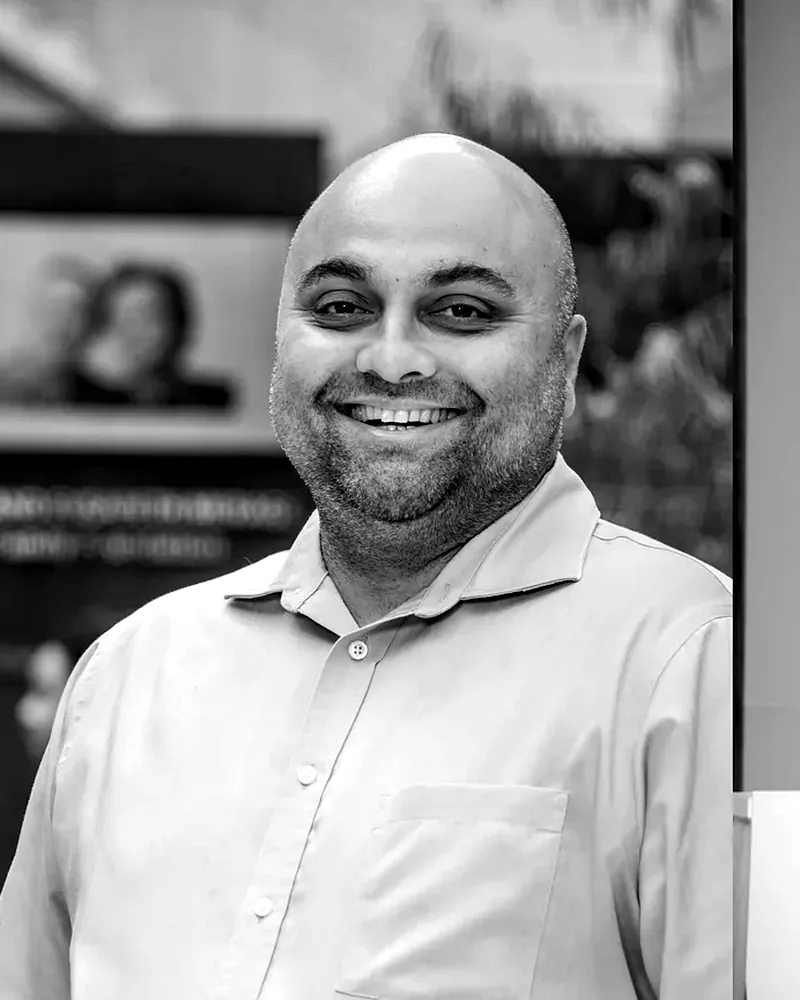 with Neil Sahota
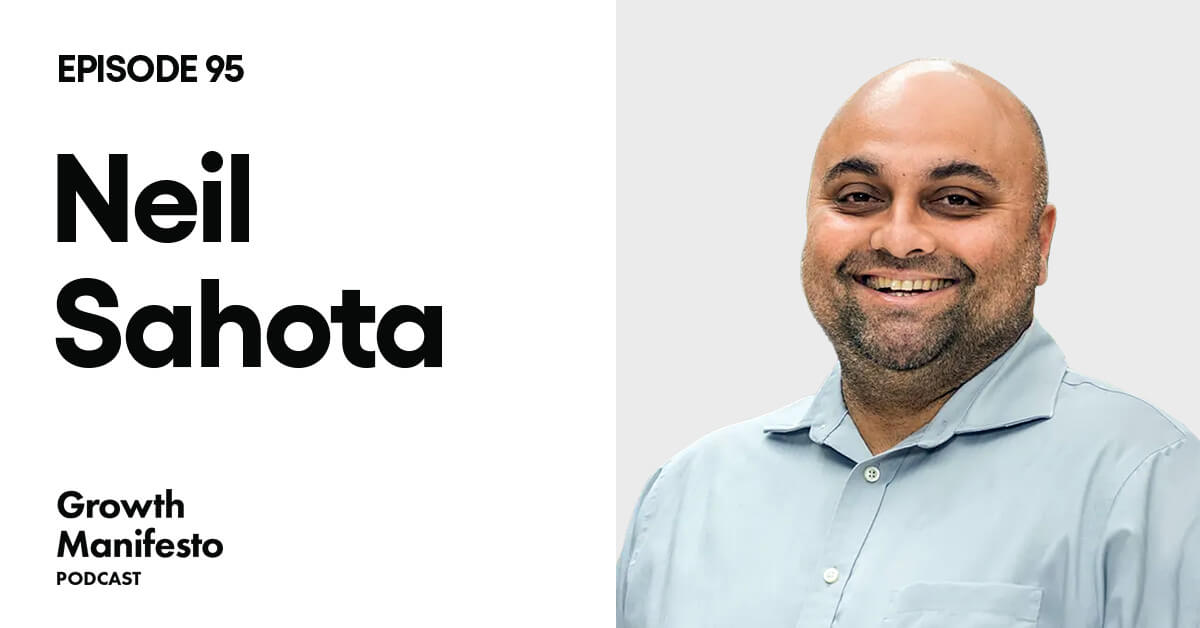


Overview
In this episode we talk with Neil Sahota – IBM Master Inventor, United Nations (UN) Artificial Intelligence (AI) Advisor and author of the book Own the AI Revolution – about how A.I. tools like ChatGPT and Bard will affect the future of business.
Key takeaways
- Generative AI only generates from existing data; it doesn't create anything genuinely new, so first drafts still need human refinement.
- The future is hybrid intelligence, pairing human creativity and intuition with AI's ability to process millions of data points fast.
- Kodak invented the digital camera in 1976 but refused to pursue it to protect its film business, and went bankrupt anyway.
- Deepfake scammers have cloned a daughter's voice from seconds of audio to fake a kidnapping ransom call and extract real money from parents.
- Children should be allowed to embrace ChatGPT and other AI tools as early as possible because starting young builds proficiency for their future careers.
Chapters
About the guest
Transcript
Auto-generated from the episode audio, so expect the odd mis-heard word. Timestamps open the video at that point.
There are several challenges. I know a lot of people are concerned about jobs. Yeah, we all know some jobs are probably going to go away and some new jobs will get created. The point of things like ChatGPT and BART and all this generative AI is about generation or production. It's not actually creating anything, but it's doing something we've asked to do. We call it prompt engineering. So the way you prompt the AI is going to be really critical in actually producing this initial output. And the goal with this is not for ChatGPT to be able to do everything for you.
It definitely can't. There's lots of things people do better, but get you 40% to 70% of the way there on the first kind of rough draft of a resume, an article, research, whatever it may be. You're listening to the Growth Manifesto podcast, where we host in-depth interviews with business leaders, authors, industry experts, and entrepreneurs. with a singular focus around business growth. At the end of each podcast, we want you to walk away inspired, to think bigger, and to have actionable takeaways you can apply to improve your business.
Each episode is like a masterclass on a key topic. So make sure to browse the episodes to find the topics that are most relevant to your biggest business challenges today. This podcast is brought to you by Web Profits, a digital growth consultancy that helps challenge your brand's drive growth in a complex and fragmented digital landscape. You can find out more about Web Profits at webprofits.io. Now, let's get into it. This is Alex Kleanthus, and today we're talking with Neil Sahota.
He's an IBM Master Inventor. He's an Artificial Intelligence Advisor with the United Nations, and he's the author of the book, Own the AI Revolution, which was written four years ago now. And there's a lot of change happened just in the last six months, right? And today we're going to be talking about how these AI tools and software like ChatGPT and BARD and Midjourney and so on are going to affect the future of business. And I'm excited about this one because I think you might know something if you're advising the UN about AI. So I've got some really interesting hard questions and, you know, let's just have the conversation, right?
Look, I think they're probably going to be simple for you, but I'm, you know, I'm pretty basic, I think, compared to you. So let's get straight into it. So people have been making predictions about actually how AI is going to disrupt the world. But it seems that nobody was prepared for ChatGPT. Everyone thought that it was going to be the physical world first. But what it seems to be is the information world. So what has ChatGPT actually just done for society right now? Because it's now front and center and everyone, it seems like everyone is speaking about it.
Yes, what has it done, you know, just for kind of the evolution of AI and the integration of AI across society? Well, Alex, the thing with ChatGPT is I think it's, for lack of a better word, commoditized AI, that we've reached a level where AI can do some of these kind of routine daily tasks for the average person. And I think that's made it real because the holy grail has always been kind of this personalized AI assistant. You know, if you ever watched the show Black Mirror, there's an episode called Wild Christmas where they take your brain engrams
and that's how they create your AI. So the AI knows you because it's really you. We've taken a big step towards that with ChatGPT. But here's the interesting part, maybe a little bit mind-blowing. You know, ChatGPT is part of something we call generative AI. But generative AI has been around for about nine years. So everyone asks like, well, why is it suddenly like, hey, January, ChatGPT exploded. It's just the level of kind of cross-training that the AI has received. Suddenly, everyone can use it for something.
That wasn't true before. And so what's interesting is that all the big tech companies and all the big companies kind of had access to this tool. And now, just like what you said, it's commoditized. So now everyone has access to this tool. And now it is creating challenges that society maybe wasn't prepared for. And so what are some of the challenges which you see as some of the biggest ones in terms of business at the moment
in terms of the commoditization of AI? The biggest challenge, ironically, is we're still locked into automation. We're used to computers being about something faster, cheaper, less errors. AI, we call it third generation computing for good reason. It has a whole new set of capabilities, a whole new tools that most people I know aren't that familiar with. They don't know how to tap into innovation, but there's actually different ways of doing some of this work rather than just trying to automate it.
And that's actually where a lot of businesses struggle. And I know they're looking at their technologists for help. The challenge, though, is a lot of smart tech guys out there, but they often don't know the pain points of a marketing analyst. or a lawyer or a finance guy or a doctor, people understand where to actually apply it. So it's the application. But the application seems to be making a few challenges across established institutions. I know the education is an issue now because, like I just saw it recently,
CHPT passed the bar exam. It passed the medical exam. So it's like it's so smart for things that we take for granted. And I don't think people are prepared for that. And in business, that same thing is applying, right? Like it seems to be disrupting certain types of work. I'm not quite sure if it's certain types of people or certain types of roles, but it's certain types of work. But it seems that like it's causing a lot of concern out there.
It's causing concern from businesses who don't know what to do with it. It's causing concern from people like Sam Altman, Annie Long Musk, who are scared about, you know, the possibility of the end of the world because of AI becomes, what's it called, unleashed and too powerful. And so how should people be thinking about this? It seems like it can be quite overwhelming and daunting. And it also seems like it's not an option to put your head in the sand at the moment.
It feels like if you're the kind of person who puts your head in the sand and goes, oh, it's too hard right now. I don't want to think about this. This is not the time for that. Yeah, so what do you say to these kind of big challenges that everyone is now facing? And look, they're big questions, like I said, right? But yeah, I'd love to know your thoughts. Well, there was a lot to unpack there, Alex. Let me start with your last point about the head in the sand. That's not a solution that's going to work. You know, Italy has banned chance GPT. I don't really know how you enforce that,
but you're essentially leaving a generation or two of people behind. Because again, this is going to be a tool that nearly everyone is using in just a few years. Right. We already know that like the child that gets access to like a smart device at two versus eight, the two year old child is far more cognitively developed and, you know, apt or ready for those jobs of tomorrow than the child that gets at the device at eight. And so stick your head in the sand and hoping for the best, Well, you're essentially, I hate to put it this way, committing suicide.
That's the honest truth of your business. If you're kind of hoping like, well, we'll kind of wait it out. Change, man, it moves so fast today. The impact is so voluminous. It's such a tremendous impact. So quickly, there's no time to recover anymore. I mean, we have to, if you want to put your head in the sand, like I said, you're essentially, you know, sacrificing your business to die. you know rolling back to your earlier questions alex that there are several challenges i know a lot of people are concerned about like jobs and the truth is it's yeah we all know some jobs are
probably going to go away and some new jobs will get created the the point of things like chat gpt and bar and all this generative ai is about generation or production it's not actually creating anything but it's doing something we've asked to do we call it prompt engineering so the way you prompt the AI is going to be really critical in actually producing this initial output. And the goal with this is not for ChatGPT to be able to do everything for you. It definitely can't. There's lots of things people do better, but get you 40% to 70% of the way there on the
first kind of rough draft of a resume, an article, research, whatever it may be. So that's one big thing there. So what we're going to do is become more important about like what questions we ask or how well we can research, for example. Sorry, please, please. No, go ahead. I'll get out. So I've just, there's so many parts to this, right? I'm going to try and structure it so that we can, you know, just go through like a bit of a story with this thing, right?
So you said about the speed of evolution, the speed of innovation. This is the thing I've been seeing, right? Like I got onto chat GPT seven days after it launched on like the 6th of December. I got on there. I think it launched on the 29th of December last year. And immediately I was all encompassed by it and all the content I was looking at online, everything. It seemed like everything was about to change and was changing, right? And six months later, like it feels like things have come so far in such a short time.
But I also note that it's still a small percentage of the world. it hit 100 million users super quick but i don't know who those 100 million are in terms of the demographics i believe they're mostly going to be like the teenagers to the early 20s because the people i speak to that are the experienced professionals the seasoned ones that are the people who run companies or who run what's it called marketing functions and so on they're kind of just looking at it like oh yeah it's all right it's not that good it's all this and so
there seems to be like a discrepancy between like the speed of innovation if you're in it and just the general skepticism of the masses still in really like investing into it right and so what can you say about that speed of innovation that speed of evolution and you know the risk to people that they're not involved in that right like it's hard to catch up later yes how especially especially for experienced people. This is the thing I've seen, right? Experienced people, there's people in like the 30s, 40s, and 50s.
They're not really thinking about this yet. I'm still surprised that I speak to some people and they're like, oh, no, I haven't really used it. Like I used it for a poem or something. You know what I mean? Like what do you say to that kind of speed of evolution and the speed of innovation argument? It's a great question, Alex. I mean, ironically, I actually know a lot of older people. I shouldn't have more older people that use ChatGPT than younger, but that's probably just the space I'm in. I mean, you are like an AI consultant, no, sorry, like advisor to the UN.
I'm sure everyone you're talking to is about it. So this is actually challenge number two here is the expectations. So we expect the machine to somehow just be able to magically do everything it can't. Even ChatGPT needs to be trained to do things. And that's one of the challenges. It's got a lot of cross-training, like you alluded to, which went from 10,000 users to 100 million in like a month. It's over a billion today. There's some infrastructure issues to scale that out. With that aside, you start seeing, like I think it was a New York Times report that came out back in early or mid-January saying,
like, well, I asked ChatGPT which five stocks are going to go up the most this year. And it gave me some gobbledygook. And it's like, of course, because no one ever taught ChatGPT about stocks or investing. It can't do stuff it doesn't know. Every time AI does something new, it's like a child. It has to be taught and that's the challenge. There's a lot of stuff that's been done. I know a friend, he's in his early 50s, he's using ChatGPT for job hunting. He taught ChatGPT his work history, the skill set, and then he just gives ChatGPT the job
description and it generates a resume and cover letter trailer for that position. He's 17 for 17 and getting interviews, right? But he had to make that investment of time and effort to teach Jack Sheep 18. You know, that's like a small thing. That's where I think a lot of businesses are actually struggling because the expectation is it's AI. It should know everything, right? It should just be able to do everything. No. And then Jack Sheep 18 in particular, it doesn't have any data after 2021. You have all these people asking questions about recent stuff, and it's like it doesn't have, it doesn't know.
So it's one of those things. It's a powerful tool. We have to remember tools can only do so much for us. Yeah, and I think that's a great point because people's expectation of what it should do, if it could actually do what they expected, half the population would be out of a job, right? Like if we could just go, hey, could you just do my job for me? Be like, well, it's not really prepared. And I think that's a good thing right now. I think that's an opportunity right now. And I think the gap between the haves and the have-nots is going to accelerate very quickly.
And I think there's a lot of industries that are going to be disrupted because of the speed of innovation right now. And I think it is important that people are part of that innovation. I just want to come back to a point which you said earlier, right? It generates something. It doesn't create something. Can you explain what is the difference between those two things? So generation is really taking a bunch of information, things that you kind of experience something, to essentially produce an output. I actually know that some clinical researchers are doing this. You look at some areas like in immunology,
tons of research papers. I think there's like 5,000, 6,000 that are published every week. It's impossible for any one human to go through all that. This is a great tool to kind of come and say like, hey, I'm looking for research in this area. could you let me know what the latest research clinical trials are that's perfect for like the generative ai go out read all that stuff create the appropriate this is appropriate this is not appropriate create kind of that synthesis okay here's the major trends and let you kind of dive into that right but it's not actually creating any of these insights it's not saying
like oh i just had an epiphany about covid that we all missed for the last you know five years so it can't it can't do that asking to do a first of a kind or something just brand new that doesn't work that's really interesting i think from a marketing perspective i mean there's a lot of conversations around kind of like seo and you know the content for google and things like that and i think this is the one area where the creation versus the generation kind of argument is front
and center because people want to create content, for example, that will rank highly on Google. But now everybody can create a similar kind of version of that content with the right kind of prompts, right? And so how do you stand out? And so then it's like this creation part, right? Instead of trying to generate something that has already been done a hundred other times or a thousand other times, a hundred thousand other times, you actually have to think and be creative. Is this the area where humans and artificial intelligence come together?
Is it like I create in my mind and I get support to generate the things I need? Like, is that kind of how to think about it? That's actually spot on, Alex. We actually call that hybrid intelligence. This is not about natural intelligence versus artificial intelligence. It's actually called hybrid intelligence. It's the pairing of our own human abilities and augmenting that with AI capabilities. There are things that we're much better at, the creative thought, the kind of pie in the sky, intuitive recognition or understanding versus what AI can do for us.
Process millions upon millions of data points and variables much faster than we can ever do. That's where we're really moving towards. You know, people always ask me, and I hate these questions. I'm going to shoot myself in the foot now. Like what the world is going to be like in, you know, 10 years? Because, you know. That wasn't part of my question because I knew it was too far away. I know, but I think in 10 years, it's going to be like everything is going to be like hybrid intelligence. Is that we as people are going to be doing one piece of the work and we have all these AI tools to help us supplement and do that.
We were already seeing with generative AI that, especially in research, a lot of people are no longer having to spend all this time looking at research papers and all this stuff or previous law cases, whatever it might be. You have a tool that's cut that time down by 70%, 80% for them. And now they're free to actually do a much deeper analysis, look for more subtle insights, draw more complex conclusions or do more value-added type of work.
And I think that's really the ultimate goal. It's not about, hey, we're going to go into the Wally world, machines will do everything for us, and we get kind of lazy and fat and all that. I think, ironically, every time we have technological innovations, humans wind up working more, not less. And I think that's the opportunity in front of us, especially with businesses, is that we have a chance to free up our human time to work on more complex problems, more value-add solutions. We're in an economic time that is less than positive, let's call it.
I don't think they've said that there's a recession yet. I think they're just kind of trying to avoid that. But there's wars, there's a pandemic, there's inflation, you know, everywhere. So the costs are high and lots of businesses are looking to cut costs. And this seems like a really kind of obvious way to improve efficiencies and to create the same value or improve the value just with less resources, right? What does that do to the rest of the people just where this has been kind of disrupted, right?
Because it seems like all the admin support, like all the menial jobs that were really important before, right? They were a part of a process. Can be done in a second now with ChatGPT sometimes, right? It's like, you know what I mean? So, and this is, again, this is a bigger question, but because I, you advise the UN, I figured I can ask you these big ones, right? What is the way to think about, you know, where the world is going in terms of the labor side of things for the less skilled, non-creating style jobs?
That's unfortunately a big challenge, Alex. We know that, you know, some jobs will go away or there'll be a lot less work. Like you talk about the admins. It's not like their entire set of work will go away. Some unusual things that AI will never be taught or trained on to do, but that might be 10, 20% of what they do today. So either you've got to train them to do other things or find other work, and some of that will happen. You look at law firms, they're always starting to realize that what lawyers do the first three, four years out of law school, most of that will go away.
that kind of legal research, filing, court documents, that kind of stuff, a lot of that can be done by AI, at least a good chunk of it. So now you need those lawyers to actually do other things, but they can do more value of things like spend more time with clients, think more about key strategy, maybe start learning how to do rainmaking or business development earlier. But there's also a population out there that, again, unfortunately, wound up getting left behind, and that's the worst thing. You look at, like, a 50-year-old taxi driver today. At some point in the near future, autonomous vehicles will be the norm. You don't need a taxi driver anymore. What do you do with that person? They're 50. They probably have a family. You can't say go back to school for six years. That's the big challenge everyone's facing. And the problem is we're so used to being reactive thinkers.
you know going back to we were talking about early kind of in the sand but the one way to help these people is rapidly shrinking right i i was actually speaking a couple weeks ago with a county in california i'll keep them nameless but they were they started kind of looking at some of the numbers and they got freaked out because they're like you know almost two-thirds of our jobs are in hospitality and transportation and those the one those types of jobs are actually ripe for automation. They're like, we actually now have seen scenarios
within the next, you know, four or five years where one million people could be able to work in the span of eight weeks. Like we don't have the resources to pay those benefits, to do the worker retraining, to even process the paperwork they're going to file. And they're like, we never realized how quickly this could happen at the scale it could happen. And so that's the big challenge a lot of us is facing right now that historically something happened something happens something bad starts happening we have time to react to it figure it out course correct get no people ready we're looking at a time now
where things are so rapid so vast that literally in the span of like we saw with chat gpt you can go from 10 000 people impacted to 100 million people impacted what do we do you mentioned before that it went from 10 000 users to 100 million and did you say like it's basically hit the 1 billion mark now yeah they hit a billion users yep what's that six months that's like that's crazy so what does it do to the two right because i mean in terms of actually how i in terms
actually how AI works, the training models actually learn, right? And now there's a billion people and they're all training the AI now, right? Like in some way, right? What does that do to the AI in terms of the speed of its quality outputs? Well, this is the interesting thing. It's not one chat GPT servicing a billion people. it's probably a hundred million or, you know, depending on how many paid users there are versions of chat GPT.
So every, you know, people that are especially paying for it, they have kind of their own version of it so that their own models or own data, they get to keep that. So there's not like one Uber chat GPT, but this is the challenge. We probably would be in a couple of billion if they could scale the infrastructure out faster. But this is, again, goes back to expectation problem. I'm like, hey, so I let Cope do that with ChatGPT. How come when I try it, it doesn't work, right? They have their own private version of it. Two different types of ChatGPTs. I tell people it's like a car.
You own like a Toyota Camry or a Honda Civic. It's not like there's one Camry everyone shares. There's a million Camrys out there. It's the same thing with AI systems. You have your own, essentially, instance. So you have your own instance, but surely they would be connecting the instances in some way. There must be some kind of like a feedback loop, or is that not really how it works? Like I would assume... No, it's not how it works. Otherwise, most businesses wouldn't do it. That's comforting. That's comforting. Most businesses wouldn't use it. They don't want their secret secrets to get out there.
If you're on the public version of ChatGPT, the non-paid one, that's different. You agree that whatever you're doing gets owned by OpenAI. Okay. Okay, so this is such a great conversation because you're the first person that's maybe shed some light, right? I've had so many questions from companies, clients, whatever, saying, if we put information into ChatGPT, is it secure or can they use it? And what you just said was, if you have the paid version, it's secure. yeah if it's if you're paying and it's in the terms and conditions it says that you retain
rights to your data and your models i mean you're paying for a service so it's still your ip that's the key thing free version is like just that's the the training data eventually or the training yeah and that's how they were able to deal with this kind of cross training but think about remember remember the old adage alex if you're if you're not paying for the product you are the product i love that one thank you social media companies that wasn't around um in the beginning of the internet us even um though google was the one it was only when social media started to sell
all of our data that we really were like oh actually hey so we are the product if it's free if it's paid then it's our product that's a really good way to put it so if you're using the free version with sensitive information stop yes stop now okay this might not be something which you can answer but i'm getting answers which i haven't been able to get from other people if i put something into chat gpt the free version can that appeal in somebody else's i guess like information now like if i share some information about myself and i want some
information about that and then someone else searches alex can they find the information i've put into it now or not? I mean, in theory, it depends on how much of it is actually private versus public. But if you're using a free version, it becomes part of ChatGPT's model set data set. I'll just give you an example, Alex. You know, this wasn't any special training, but, you know, recently I was asked to do a fireside chat and the organizers, they actually use ChatGPT to write my intro.
I mean, there's plenty of public information on me, you know, special training. required on that, but it actually was a really nice intro. But then every question they asked me during the fireside chat actually was generated by ChatGPT because they're not experts. They didn't even know what to ask about their industry and AI. Most of the questions were actually really good. And I was kind of impressed. So I did a little bit of research. And the reason I was able to do something like that was that other people have had similar requests. So other people have kind of trained chat gpt free version on how to figure out how to ask kind of like expert
questions and so that kind of all got shared across the board which is why they're able to do that i did use a similar process but i found that my questions were better so i thought though that's pretty good but you know like oftentimes this is the hard part right with chat gpt right it's not going to replace a person who's a domain expert right um you cannot be a domain ex sorry you can't can't use chat GPT to fake it you know what I mean and so and it's usually the second and third questions the first questions are pretty cool I was like yeah they're pretty advanced questions I
guess but if you have something which you're trying to find it's better than just going into chat GPT completely open and hoping that it will make you kind of okay and I guess the best example is that it can take someone who's a beginner maybe get them close to the intermediate level maybe but it's not going to take someone who's intermediate like make him advanced i think like either a person is advanced or not right and if there is advanced this can accelerate their time to value essentially you know it saves all those little steps that like you know that were required
before well that's the whole point it's a rough first draft that's going to get us like 47 of the way there but this is also why prompt engineering has become a challenge for people because better prompts yield better drafts. I have a friend that's actually a VC who's looking at some stuff, some research stuff in the startup world, and asked a question. And it was like, yeah, this is really so-so. And he was asking me about it. I'm like, well, is that the best prompt you can really use? I mean, pretend like you're talking to your grandma.
So he tried a different prompt. He's like, same kind of question. He's like, I got a much better result this time. So he started thinking about it some more. but the different prompt he's like wow that's even better so he's trying to realize it'll never be perfect thankfully he realized that but he's like but the way i phrase things and the way i ask it to refine something is going to be crucial and so it's not about the right keywords anymore it's about the right questions and that's where a lot of people a lot of businesses are actually struggling now unlock some of that value yeah and like i think uh this will take us on to the next
part and this is an example of where I am not very good right um is in the generative imagery right um like the mid journeys and stable diffusion and so on I can use chat GPT because I know something about the things I'm looking at right when I tried to make an image in mid journey it was the most it looked like I didn't know just what it was right and then I sat down with my friend right and he's a videographer he's a photographer he's a video editor he put all the settings of all the cameras he put all the settings of all the things he put all of the
layouts his prompts were like 250 words and it made the most beautiful art and i was like wow like i understood the concept of it it was only when i tried to make an image and then i saw someone who actually understood how images are created and photos are created and like he even selected the lighting right and i was like oh my goodness like i think i said a man who's working on a laptop i was like all right cool you know what i mean i was like i don't know anything about images right and i got the weirdest thing and i was like there's not even a man i can't even see
the laptop and there's no person in there and there's nothing and i was like i don't understand it at all so i think this is a really good um that's a really good example of how if you know something it makes a difference and if you try to create like an image on mid-journey and i think this is something that everybody should try just so they can see how bad the image is right because the quality of that image is going to be the same as the chat gpt outputs if you don't know what you're putting in just think of that ugly image where you're not even getting what you're trying something inside your mind and it's not good right so but to talk about the image side of things
right of course the chat gpt that's the big thing but there's a lot of stuff happening from kind of the image perspective there's a site that's called synthhesia which kind of has people that can just talk right there's also things where you can basically record the voice i think you can record three seconds and then it can just talk right and so now you've got all these the disruptions that we haven't seen yet right like i believe there's going to be a lot of challenges in trust online and how do you know the thing which you're looking at is kind of an actual person or like it's like
an ai and so where do you see that area going because that's a huge area that isn't really here yet like in the same way as chat gpt is you're right it's not here like it's chat gpt but it's actually been around for quite a while um so there's two layers to this the club the the good use is what we call digital twins the bad use is deep fakes so this is actually a marriage between ai and the metaverse the metaverse doesn't mean virtual reality for people the metaverse is just
a virtual world. So digital twins, you have the permission of the people, you replicate an object, a location, a person with some intent to do something, you know, with that, like I said, the permission. We were doing work with farms, like 2016, we could replicate the entire farm, create a digital farm in the virtual world. And we could experiment with AI, we could actually look at different things and say, okay, soil content, predicted climate, predicted prices, types of seas, what we plant, rotated, that kind of stuff.
What's kind of the outlay production, you know, cash crop type of thing. And so it gives you a freedom to experiment. That's the biggest thing. Take some risks and experiment to see what actually works. Very powerful. I believe GE and Rolls-Royce now both use this technology to design jet engines because now you don't have to have a physical space. You don't have to have materials. So if the engine accidentally blows up, no one dies, right? Helpful. So it's on a very large macro scale right now. And I know a lot of actually C-suite and boards, but actually work with some of these big companies.
So they can kind of experiment what to do with their business and their strategies and even the future of work. But the flip side is deepfakes, which is creating this digital twin without the permission of the person with the intent to actually use it for malicious use. And that's the biggest challenge. This stuff, unfortunately, digital twins started around 2015, 2016. Deepfakes started shortly after. And there used to be a – well, let me roll it back for a second.
I'm sure people have seen the deep fake videos with like President Obama and, you know, Lyszynski telling the Ukrainian troops. So now there's a recent Pentagon photo that came out that looked like it was on fire. Right. How do you deal with that? And that's the challenge in that this stuff actually started with the web or an app called Deep Porn, where I think it was in 2018. you know some people realized they could readapt someone's technology and say hey you have a nasty breakup with someone or you don't like somebody there's plenty of photos video out there on all
of us today that we can insert them into a fake pornography video make a fake one what does the average person do it looks a little clunky that kind of stuff but over time people learn that the teach the AI body language mannerisms body you know little ticks on your your face or whatever, your word choice, that it's hard to distinguish. There was a case, Alex, recently, I think, in the States where a woman got a call. This guy said, hey, we kidnapped your daughter. Let me talk to your daughter. And you hear this audio of the daughter on the phone.
It sounds like her. And she thought it was really her. She tried to get a hold of her daughter, see what's going on. But what tipped her off that was a fake was that they went from a million-dollar ransom to like a $50,000 ransom right away. So suddenly that seemed weird. It wasn't anything wrong with the daughter. The fake, deep, fake daughter was saying it was that. Two weeks later, this was tried again. But this time, I guess, learning those lessons, unfortunately, they were able to extract, I think, $48,000 from these parents. So that's really become the big thing is when you talk to someone,
how do you know that? Because even in job hunting now, it's become that you'll get this better, hey, it's an HR person who wants to do a screening, It could be a phone call. It could be a Zoom call, right? It looks like the person, they're stealing information off LinkedIn. So you think you're talking to someone with the company and it's really a scammer trying to get your info. That's kind of scary, isn't it? And I think, you know, like that makes me just never want to answer the phone again. I mean, I already don't answer the phone to be clear, but I just never want to answer because it could be a scammer just recording your voice for three seconds.
Then they're going to call your company and say, hey, this is Alex. Can you please pass all this information? I mean, like bank transfer, go now. you know? And so I already was bad at answering the phone. Now it's terrible answering the phone, but I guess they could just get it from all of the YouTube videos, right? So they don't have to call me anymore. Like if there's something online or your social media, I'm sure they could probably skip your social media. So there's a lot of issues around trust, right? And I think trust is going to be the new kind of currency and proving trust is going to be something that's
really quite interesting. What are some of the things that they are trying out there to just establish some trust you know like because this seems like especially like around like elections and stuff this would seem like a really big issue right and especially the fact that most people they're not across ai you know like if they see something they believe it right so this thing has to happen kind of independent of the general kind of population you know so what do you think is going to be happening in that respect because i think it's going to be the same in business right hey of course i'm talking to a customer or i'm the bank or i'm doing some kind of verification
or whatever it is, right? Like how is it going to be, or what are some of the things that they're working on? I mean, if you can share any. Yeah, I mean, right now it's like vigilance and analysis. So if it's a video, you try to look for weird shadowing on the face or in the background, something like that. If they're saying things that seem a little not like their usual self, it's got to be a warning sign now. So it's kind of that kind of vigilance that's going on. And people say like, especially with politics, could the you know the campaign or staff say that's not our person yeah they could but maybe
the person really said that and it was a bad thing to say so i know that was a deep fake you know oh yeah it's the opposite now that wasn't me that was a deep fake sorry yeah that's the thing people that well can't you train ai to look for deep fakes the problem is deep fakes are ai systems that train against ai systems to fool them so you have to do a deep level of analysis which takes time and you know how quickly things can go viral it's like if it takes you a few hours to do the analysis that 100 billion people may have already seen it. So that's the issue. Right now, we're looking for kind of a, for lack of a better word,
like a blockchain token or something that is like kind of an authenticator, that whenever you publish content, you can put some sort of thing that goes off into the ether and you can trace it back to an indelible record to show that that was really you or not. But that means we're checking everything, right? Detecting video is a little bit easier than audio, and that's a little easier than image. but image is the easiest to fake because it's just a still image, right? And we saw what happened with the Pentagon. It was like a hundred million views in like a day or something like that. You had retweets from really tremendous, trusted people.
It doesn't take much for these things to starburst. A couple more questions and then we're done, which is good. And this one, I hope it's a simple one, but this is a question that we often are being asked right now because I'm quite the innovator and I just run a hundred miles an hour towards something. And then there's a lot of discussions around what about the ethics of information that is not kind of created by you that's already been used externally or with imagery that is kind of taken online and stuff like that because of how the AI actually functions.
It doesn't create. It generates off existing information. so how do you talk about the ethics side of things in terms of because if you were to it seems like if you were to be 100 ethical you wouldn't use AI right because it's someone else's information somewhere but that's not how the world works it's like kind of saying that we should have encyclopedias in the house and we shouldn't be using you know sites like wikipedia right so like How do you think about the ethics side of this conversation?
It's the big challenge. We don't have a universal definition of ethics and morals. There's no baseline for that. It's a very personal, visceral thing. It still gets debated a lot, especially inside the United Nations. What do we do here? Let's look at the creatives, for example. I could get a Dolly 2 and say, create me an image of the Sydney Harbor. It could be something like, hey, can you make that in the style of Andy Warhol? Boom, it does that. I don't like to make it a style of gossip. Boom, it does that. Is that right? I mean, that's where the creative struggle.
So that's the interesting challenge here is that when they retain the rights to their IP and things like that, there is what they call a free right of use for educational purposes. So you see those people like in museums, something copying the painting, that kind of stuff. They're doing that to train themselves, learn. That applies to machines. There's no exception for machines. It's just no one envisions that someone could say, here's a system that can sketch a billion paintings in a day. Right? and learn from that.
That's become the real challenge. I know they're trying to figure out ways to do that. The guy that really started ChatGPT is trying to find a way to help creatives now get compensated for their work. But I also think that some of this is going to change. I think that creatives will become more guarded. I think their work will be not so much trying to produce all these different paintings, but to teach AI systems. I mean, you might see some exclusive agreements with some of these different systems out there. be my guest but that's the challenge we live in i mean what's what's fair game you know alex i'll
ask you this question ask a lot of people this question have you ever seen have you ever seen the documentary uh the social dilemma yes i have okay did you delete your social media after that i mean i'm a marketer so i kind of understood a bit more i was like that's why that's why it's so good oh no i've accepted that i know about 15 years ago the 2009 this is yeah about 15 years ago i was like well if i'm going to be good at facebook i'm walking in to no privacy anymore
i'm going to have to give my data at that point i just gave it up but i knew that they're going to be doing things that i didn't want them to do but i accepted that if i was going to be part of it i need to be in it i couldn't be part of it you know just looking from the outside because i would never understand it right and i think that's the best example i was like yeah like i thought that's like i thought that that's what they were doing maybe i don't want my child to be on it for to you know from quite young you know like of course no tiktok or facebook or anything until i don't know 13 14 i'm not sure for as long as possible right but that was about it i was just
like oh just my kid that was it but for myself i was i couldn't i can't you know i i totally get it. Look, it's an integral part of our lives. It's like the ostrich head in the sand type of thing. But it's funny. Everybody I've asked, I've probably asked several thousand people this question now. Only one person ever said they didn't leave their social media. Everyone's appalled. They shouldn't be doing this. Now you know what's happening. Why don't you stop? And I think that's the big challenge. We like to rail about data, privacy, and security. I think we all agree on
the security part for privacy. We like to talk about it, but I think most people don't actually believe in it. In fact, we know from studies, Shen Z and the millennials don't even understand what data privacy is about because we're used to sharing everything. And I hear people talk, well, they shouldn't do this, they shouldn't do that. I'm like, but do you own a smartphone? You know, your smartphone is like listening to everything you're doing and that's what you're doing. There's probably no such thing as data privacy anymore. And so we talk about some of these technologies like AI, regenerative AI or the metaverse and stuff. And it's like, well,
you can't let this use this we gotta protect that it's everything is kind of free domain right it's we're in like the fourth industrial revolution business models revenue models are all going to radically change if you're still you're trying to protect what you have you're going to get kodak man you know i'm sure most people don't remember kodak but they were the king of film for a hundred years they went bankrupt because they got disrupted by digital cameras you digital cameras started coming in 96 but you know who invented the digital camera alex
canon no no no idea steve sassoon a kodak engineer in 1976 kodak invented it they invented it yeah they've been everything that killed them they invented they had the technology 20 years before anybody else did right could you imagine we all have kodak phones today had they pursued it But they chose not to, right? They're like, it's going to be expensive, very capital, you know, to invest and develop the technology out. Technology gets better faster. They also look at the execs like, we make so much money off of film.
We don't want to disrupt that cash cow, right? We got a good thing going. Why fix something that's not broken? 20 years later, a digital camera comes out. And they're like, well, it's not as good as film. But it's like, it's going to be. And a couple of years later, it was better than film. And that was the end. And now there's no digital cameras anymore. It's all phones. So, I mean, like even the digital cameras got disrupted, all those companies, if they ever made them, just got done by kind of Samsung and Apple. Wait, just one quick side tangent before the last question. And the last one's an easy one, I think, right? But is this kind of what happened with Google Bard?
Because I think there's a lot of people who are in the industry who are kind of frustrated that Google always had this technology, but they were protective of like their ad revenues. And so they just wanted us to search and click and search and click. and now there's chat GPT and now the stock value has gone down in Google, you know, the value of say Microsoft has gone up, you know, but there's a competitor now again, right? Like is this kind of what happened with Google? They were like so protective and then they saw there's a billion users now on chat GPT. Uh-oh. And of course, and now we'll share it?
I think to a degree, not being a Google insider, I can only speculate. Just speculation right now. Thank you for saying that. This is all speculation. This is not facts. I probably used to Google. If I got it wrong, you can let me know. But I think a very similar thing. I think they thought that their search engine was so special, so behemoth, nothing could disrupt it, right? That's not true. Anything can be disrupted. And I don't think it's so much that they had these like language models and generative AI. You know, I think they were looking at other things. as soon as chat GPT caught fire
I think they were like I can't be that good and stuff like that but when they saw the user growth go from 10,000 to 100 million and they realized most people were using it for research they were like hey I don't have to go search for stuff anymore and the light bulb clicked on like oh my god we're toast because they tried to rush through a version of BARD they brought their founders back they did all these things they did a scripted demo is trying to show, hey, Google, you know, and they kind of made a couple of errors during the demo,
even though it was corrected. So that didn't inspire a lot of confidence, but I think they were definitely caught flat-footed. You know, that's, you know, Peter Diamandis, a good buddy of mine always says, you've got to Uber yourself before you get Kodak, which basically means you've got to disrupt yourself before someone disrupts you. So if you're not thinking about that, you've got problems. Because if I remember correctly, back in the day, airbnb before it really got its start took this idea to marriott and marriott just like no one's gonna let strangers in their home you can't rent but can't rent rooms that on real
estate you don't know that's never gonna work and lo and behold what's the biggest hotel chain in the world now yeah airbnb right doesn't own any real estate and i think that's the challenge that you get so sucked into your world you can't see the forest from your trees you want to be cliche but you've been doing things for so long. It's not like you're doing anything wrong. You're doing the same for so long and you've been so successful. It's hard to envision what's going to break that. I think there's also a story of how Google tried to sell to Yahoo for a million dollars
and they said no. That's right. It's like the cycle just keeps happening over and over again. Final question. This is an easier one, hopefully. The parents of children who now have... to grow up in chat GPT land, like, you know, like with all this stuff going on with the future of work and the future of business, you know, so what do you say to parents about how they should be thinking about how much they should let their children be integrated with, you know, chat GPT
and all these AI tools? The good thing, and I know some parents are going to hate me for saying this is you got to, you got to let them embrace it and learn from it. The younger, the better, because this whole thing about prompt engineering, the younger to start, the better they're going to get at it. You know, 10,000 rule, 10,000 hour rule, whatever you want to call it. The better they get, the quicker they get more proficient at that, the better they're going to be able to do in their careers and their lives because it's going to be integrated to everything we do. I mean, smart homes, smart cities, forget about the work even. You're going to have to evolve with that. And it's
not about them not learning stuff anymore. It's a different type of learning. You know, it's funny, Alex a lot of people asking me because you know I teach a class or two at the university from time to time they're like well what are you going to do now with chat GPT I mean your MBA students might be using this and like they probably are I don't care and they're like why don't you care it's like I anticipated this five years ago so I changed how I test for knowledge you know how do you test for knowledge then just quickly how do you test for knowledge then if it's not
based on the traditional way? I have them do presentations with Q&A. So if they have ChatGPT do the research, write some of the copy, whatever, if they don't understand what that stuff is, they understand how it works, the concepts, they can't handle the Q&A. It comes out real quick. So either way, they're forced to learn. Love that. I love that. It's that second and third questions, right? The first answer is cool, but what are you going to say next? Oh, no. I don't have any information. ChatGPT, what's the question? So listen, this went for a bit longer than I was expecting because there's so much good stuff in it.
Thank you so much for coming on the podcast. How do people find out more and connect with you? You can come to my website, which is just my name, www.neilsoda.com. Connect with me on LinkedIn or other social media like Twitter, Instagram and all that. My handle is just neil, at neil, underscore, Sahota. I do publish a weekly newsletter about AI and AI and business and metaverse
of business. You can subscribe to it through LinkedIn, or you can actually see all the articles on my website. And I'll put all the links in the show notes. Neil, thank you so much for coming on the podcast. You've answered questions that I couldn't find on Google or chat. I'll count that a word there, Alex. Thank you. Thank you so much. This has been such a great conversation. I really appreciate it. And there's a lot of value here for the listeners and the viewers. So thank you again for coming on the podcast.
My pleasure. Anytime. Thanks for listening to the Growth Manifesto podcast. If you enjoyed the episode, please give us a five-star rating on iTunes. For more episodes, please visit growthmanifesto.com forward slash podcast. And if you need help driving growth for your company, please get in touch with us at webprofits.io.