Leadership and culturePersonal growth
How to build resilient and thriving teams
Gallup's Jim Harter explains the five elements of workplace wellbeing and why managers, not perks, decide whether teams thrive or burn out.
 with Jim Harter


Overview
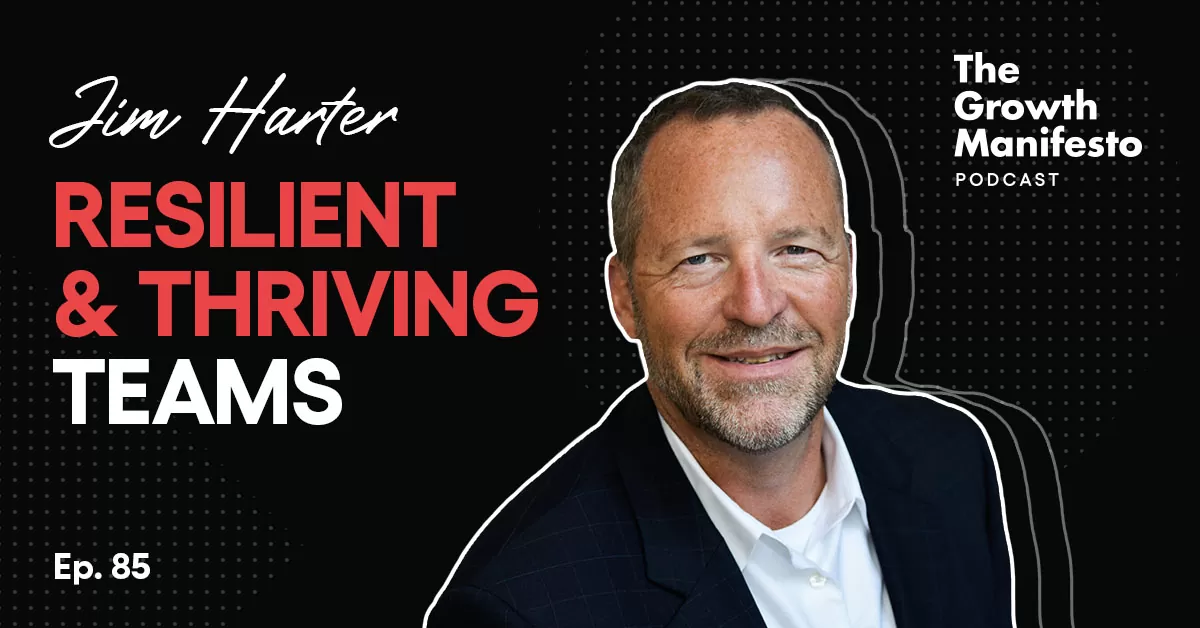
In this episode with talk with Jim Harter – Chief Scientist of Workplace Management and Wellbeing at Gallup, and author of 3 bestselling books – about how to build resilient and thriving teams, which is the focus of his latest book, Wellbeing at Work.
Key takeaways
- Harter argues wellbeing rests on five elements - career, social, physical, financial and community - with career and social being the most foundational.
- Gallup's data shows managers account for about 70% of the variance in team engagement, making them the single biggest lever for wellbeing.
- Thriving is measured on a ladder from 0 to 10, scoring people's present life and their hope for the future, not just current happiness.
- Flow and burnout are both high-challenge states, but flow has few barriers to getting things done while burnout is full of them.
- Perks like latte machines and free lunches will not fix engagement if the underlying culture and manager relationships are not right.
Chapters
About the guest
Transcript
Auto-generated from the episode audio, so expect the odd mis-heard word. Timestamps open the video at that point.
Start by engaging your workforce through your managers. You can get to wellbeing a lot faster if you start with the work-related basics, like again, clarifying expectations, getting people what they need to do their work, recognizing them at the right times, et cetera. You're listening to the Growth Manifesto podcast, where we host in-depth interviews with business leaders, authors, industry experts, and entrepreneurs with a singular focus around business growth. At the end of each podcast, we want you to walk away inspired, to think bigger, and to have actionable takeaways you can apply to improve your business.
Each episode is like a masterclass on a key topic, so make sure to browse the episodes to find the topics that are most relevant to your biggest business challenges today. This podcast is brought to you by Web Profits, a digital growth consultancy that helps challenge your brands drive growth in a complex and fragmented digital landscape. You can find out more about Web Profits at webprofits.io. Now, let's get into it. This is Alex Kleantis, and today we're talking with Jim Harter, who's a Chief Scientist of
Workplace Management and Wellbeing at Gallup, and author of three bestselling books. And today, we'll be talking about how to build resilient and thriving teams, which is the focus of his latest book, which is called Wellbeing at Work, which is a fantastic read. Hello and welcome, Jim. Hey, Alex. Great to be with you today. Yeah, fantastic to talk to you as well. Let's get straight into it. This is a really interesting book because it's based on over 100 million interviews, right? And there's not that many books that are based on that size data. And so first thing is, how do you actually get this data
before we get into like the thinking behind it? Sure. Many people know about Gallup through our polls. They'll think about us as a polling organization, but we also, we conduct global polls. We've got the only true world poll of representative samples of the global population, both people who work and don't work, age 15 plus. But we also do a lot of deep dives into organizations. We have thousands of organizations that we work with where we actually conduct census surveys inside their populations to help them understand their workforce, understand what
people are thinking inside their organization. We really believe that leaders need to know what the followers are thinking if they want to make the right kind of decisions. Not that they need to make every decision that the followers say they should, but they need to be at least informed because when the people in society become disgruntled, not good, you know, bad things happen. When they're engaged and excited about things, then good things happen. And so we need to understand what leads to that. So we conduct studies inside organizations that accumulation is most of the data that you're referring to, but also our polling data
makes up a lot of it. One of the cool things about working at Gallup is that we can do these in-depth studies inside organizations and learn what links to business outcomes, what leads to thriving lives, and then put it on a poll and see what the whole population thinks about that topic. So we kind of go back and forth between those two things, what works inside organizations, and then try to understand what the rest of society is thinking about it. So with so much data, it would seem to me that it would be challenging to figure out what questions
to ask about actually how do we use this data? And so how did you get the idea for this book? Well, this book happened during COVID. COVID is still going on, obviously, but we knew even before COVID hit that there was a real need for a trend toward people seeing that work and the work-life kind of continuum and the work-life intersection was becoming more and more important to people. The younger generation was telling us that we expect our employer to improve our overall lives. And flexible time, flex time at work was the number one desired perk.
Then boom, COVID hit. And suddenly these all kind of became realities even more so. So it became accentuated. We had all this data built up. We just published a study right as COVID was hitting that showed that engagement at work matters even more during tough times. So we got, you know, that ended up being timely. It just happened to be a coincidence that we happened to get it published right then. But we were able to leverage a lot of our resources. We'd already been conducting massive polls, as I mentioned earlier, but we had also been conducting a poll pretty much every day during COVID to try to keep track of things as they
happen. And so we keep abreast of the most timely topics. We have a roundtable of organizations that give us input into the issues they're facing. We watch the media very closely, get interviewed by the media a lot. Of course, we get questions from them. We listen to the organizations we work with and the issues they're facing. And so we get a lot of insights into what theoretically might matter inside organizations. And then we study it and see what really does matter by looking at what elements of work and life link to people thriving in their overall lives and being more productive and less likely to leave their organization and all those kinds of outcomes that are important to people right now.
Yeah. And there has been quite a lot of conversations about the great resignation or the great aspiration, right? With so much transition kind of happening across companies, across organization, across industries, where staffing was very volatile. and it does seem that the context of this book and you know some of the ideas out of this book they came to the fore because all of a sudden it wasn't uh basically just about the one thing yeah like it was a multitude of factors that other team members actually started to consider because all
they had was work and then after work you switch off zoom and then you're at home and then that's that right and so um it seems that you know it seems historically you may have had a job that was okay and it was okay because the social side of things or you know it could have been something else in terms of the corporate ladder but then all of a sudden now we're all at home now it's like it's very focused it's very condensed it's about the individual and there's nothing outside of the
individual quite a lot of times except for the zoom calls right and zoom is not the same as before is it you know it's like changed our business is these days is that a good statement to make is that a correct statement to make i guess yeah well the first thing i said when uh when covet hit one of the first things that besides holy crap this is not a minor thing this is going to last a while was uh thank god for technology you know that did it did change the way we work but it also brought about a couple things i want to say to that it brought about a realization about how much of our
work is independent and how much of it can or can be done independently and how much of it can be done in a collaborative sense in this fashion. I think we saw some gaps between the collaborative part and how we to fill those holes. Your other point about multitude of factors is a really important one to think about. Usually when we see people move from thriving to struggling, which we saw a lot of during COVID, it's not one thing. People are very resilient to one thing going wrong, but it affected us in so many different ways. It affected how we think about our jobs. It affected how we think about our social lives. It affected how we think about
our finances. And there's some insecurities around that during the pandemic. It affected how we think about our physical well-being, of course. I guess that's the obvious one. And then it affected how we interact with our communities. So those are five elements that I just listed off that we have found are generalizable elements to people having a thriving life that were all impacted to some extent. And when that happens, you're going to see well-being change. You're also going to see people reconsider what they think that work-life kind of balance should be or intersection
should be like in an ideal sense. I think people had a real chance to reflect. And that was sort of a buildup. And when COVID hit, there were some furloughs and layoffs. And I've never seen such a dramatic shift. We ask a question, is this a good or a bad time to find a job? I've never seen such a dramatic shift down in terms of a good time, up in terms of a bad time. And then it changed completely several months later, where suddenly people had all these opportunities to find work,
and they acted on them because of this buildup of people had a chance to reflect, to see work a little differently than they had before, and to see what other opportunities are out there too. And that led to, you call it, I think, the great aspiration. Well, it's been called both, right? It's called the great resignation. And then there's the positive spin, which is the great aspiration. We've been kind of referring to it as the great reshuffling because it isn't like a bunch of people just suddenly dropped out of the workforce and quit working.
They found other work that might have paid them the same amount or more that was just different. Maybe they learned that dealing with customers wasn't the right thing for them or whatever. There are some shifts though in people and unemployment rates now are like here in the US are really low. And there's a lot of hiring, but also a lot of job openings. So there's still that big gap where the employee now has some say in the matter. Is it the same in Australia? Yeah. The unemployment, the rate here is extremely low. And especially in the information, the technology roles, it's very low.
It's very hard to find strong talent. And this is where actually having a company, a place where people actually prefer to work at because it hits as many of their, I guess, requirements as possible. And it's not just about money. It's not just about social. It's not just about, you know, a specific thing. It really seems to be that they're looking for something that they can completely, I guess, like completely invest in and to be challenged in and to be around people that are nice, right?
because this is the way that they're going to actually have friendship sometimes right and actually have a social circle so it does seem to to put a lot more pressure on the company on the leadership of the company to create that culture and I do think this is going to be a good conversation just to help organizational leaders kind of think about that like in a bit of a different way or potentially like in a bit more of a holistic way and not just about the one part but just quickly now because there's a couple of definitions which I just want to ask about. The first one is
well-being and the second one is thriving. So could you just quickly explain those? Because I do think it is important to actually have a common kind of understanding on the definitions. Yeah, well-being, think of that as an overarching kind of term for everything that goes into how we experience our lives and how we evaluate our lives. So two parts of well-being. One is we go through our days, we have our experiences, our momentary experiences. We can also sit back and reflect on our life and say, here's where I'm at right now. Am I satisfied with that or not? Both of those parts of our brain are important because they affect how we make different
decisions. But wellbeing overall is how we experience our life and how we reflect on our life. Thriving is a more specific definition within wellbeing that where we ask people, we borrowed a question from a psychologist named Hadley Cantrell. He was at Princeton and decades ago, he developed this scale he put on the ladder. The ladder goes from zero at the bottom to 10 at the top. And the top is the best life possible. The bottom is the worst life possible. And anybody can sit there right now, wherever you're at and think about where am I at
on this ladder right now? And then there's a follow-up that we think is really important. And we ask them where they'll think to be in five years and everybody can sit back and think, well, I can kind of project out a little bit and I can think about where I'm at. That's think about that as hope, right? My hope, the natural state of human beings is to be more hopeful about the future than the present. In fact, when we're tracking this during COVID, people maintain their hope for the future, that the present life dropped, but their hope for the future stayed the same, which is really positive because it'd be a desperate state. When people start dropping
on both of those two elements of that ladder, that's when it becomes pretty desperate. We've seen uprisings in different parts of the world that preceded, even though GDP was going up, it preceded the uprisings or Brexit's another example. So we've been able to track this kind of thing globally. So thriving technically seven or above on the latter present, eight or above in the latter future. That's thriving. And any organization can add that two-part question and figure out, or any individual can do it as well and quickly kind of assess where they're at. We determine that based on empirical data, looking at how that scale relates to various
outcomes for people. Great. And so what we're saying right now is that it is the responsibility or it should be the focus of employers, of leaders in an organization to think of the full wellbeing of their teams, right? And I think this is maybe the biggest shift I've seen since COVID started is before a lot of employers will pay for a job
and just get the job done, right? And now it's like, well, hey, if you want to keep me, I need something that's a lot more than that, right? And so thinking about the full well-being in terms of your teams is critically important. Now, that means that not everybody is going to probably stay because sometimes the role itself is not going to be enough. And so you might actually hit social, the cultural, the physical and all that, but something's missing, right? And so you talked about the five areas.
Are there some that are a lot more important than others in terms of sustaining a high performance, I guess, a culture? Well, the first thing I'd say is if you're suffering in any of those five, the five again are career well-being, social well-being, physical well-being, financial well-being, and community well-being. And if you're suffering in any of those, then it's a pretty desperate state and you need to fix that. So it might be because you're in a high crime area and you're fear for your life, or it It could be because you've got a physical ailment that gives you physical pain on a daily basis that you just can't stand.
Or it could be that your social life is so lonely that you're becoming depressed and so that needs to be taken care of. Or in work, it could be that you just hate your boss and your job and it's bringing you down and it's causing stress and negative states of mind. And you bring that home with you and all that. So if you're suffering any of those, you got to take care of that. All things being equal, though, there are two elements that are more foundational than the rest. When I say foundational, they kind of set you up to be successful in the other three.
The first and most foundational is career well-being. If we think about how much our work affects our overall lives, it affects what we do every day, the interest we have. It affects most of the time we spend outside of sleeping. You know, it's most of the time, if you're in a job right now, even if you're retired, what you do every day, what you say you do is part of your career. And you better be thriving in that if you want to maximize your time. It affects our finances. It affects our social lives. Our work affects our physical well-being.
A lot of data on that. And some of it we've generated ourselves. And it affects our perception of our standing in our community. The second one is social well-being. And it's important because the people in our lives impact and that we spend time with impact how we interpret the rest of our lives and who we share things with. And if we're doing things with other people and we're feeling good about it, we're more likely to maximize the other elements that we're trying to get right. And the good news is if for organizations that are working on employee engagement in the way that we prescribe it, they're already working on career and social well-being.
Those are embedded in that. And that's career and social well-being, again, are foundational to getting the other ones right. They start to create trust. And then if you're in an organization, when you have trust, you can offer people ways to improve their well-being. And they're not going to second guess you or doubt you or think you're just doing this for a program to try to make me feel good. So that's how I think about it from an order standpoint and what our data would suggest from that standpoint. Okay. So the top two are career and social. The other three, the financial well-being, the physical well-being, and the community well-being, how much of that is the responsibility of the employer, the company, the leadership?
Well, I think that if you compare well-being to engagement, engagement is all mostly influenced by what happens at work. It's whether you have clear expectations, a clear role. It's whether you have someone at work who cares about you, who recognizes you when you do good work. The things that everybody wants, your human nature when we come to work, we want to be recognized when we do good work. We want a chance to do what we do best. We want a chance to develop and see a future in the organization. We want a mission that we can connect to that really makes us feel important in the work
we're doing. And we want friends at work too. That's part of our social being. Those are all directly influenced by the manager. Now, the organization and the manager can impact those other three in a couple of ways. One is to provide offerings inside the organization that align with those other three and that people can clearly see here's why they exist. For starters, leaders need to be really clear about why they think well-being is important. People aren't going to know unless you tell them. And so a couple of reasons that I think are really legitimate.
One is that you want to improve the resiliency of your workforce. Just be really open and honest about that. We want a resilient workforce. If times go bad, we need to be resilient. If times are good, we want to thrive and we want to race past the competition if you're in a competitive business. And so that's one. The other is organizations now and going forward need to build a brand, a real culture that attracts the stars. You mentioned earlier, Alex, that it's hard to find stars. You're going to have a really tough time finding stars if you don't have an authentic culture
that gets people what they're looking for in work, which isn't just work. It's also, I want to improve my life. So the statement that leaders make is really important. Second, those offerings that I was talking about that align with the elements, that can be some pretty creative things. And they can come from just listening to people and what's going on in their lives and what kinds of things they need. But the big one is upskilling your managers to have the right kind of conversations. what we would call one meaningful conversation a week. And a meaningful conversation means that you know something about their work, you know something about their strengths individually,
you know something about their life so that you can give them the right kind of feedback that is useful to them. You know something about their goals, you know what goals they've set and what they're trying to achieve and how they're progressing on those. And we can upskill managers to have the right kind of conversations that open the door to first engage them, but then secondly, to say, I know this is going on in your life right now. Here's some resources we have as a company that might help you with that. Or here's another person that's on our team that's going through something similar within confidence, of course.
You've got to maintain confidence in these kinds of things. But I think people too often initially say, well, the organization can't touch this area because it's too sensitive. Well, it is sensitive, but there's a lot of ways that organizations can take a leadership role. They certainly can't. I mean, part of well-being, of course, is there's an innate component, what's thought of as a set point. We all have different set points in terms of how happy we are. But there's a lot of room to move above that set point. And that's where I think organizations can have an effect. They can, again, start with engagement, build some trust, and then upskill your managers
to have open conversations with people about what the organization can do to help them out. It sounds like the lines between professional and personal are starting to get a little bit more blurred in these types of conversations, right? Because now you're trying to understand what's happening to them. personally. What are some example questions? You know, say, for example, look, the one question, which you could ask to find out about something's personal, but that doesn't step the line. Cause I would feel that there's a trepidation for managers to
ask the wrong thing that then HR gets involved or, you know what I mean? Like to try to find that connection, but not to make them uncomfortable. I guess that's part of that process. Like, is there any examples or are there any specific resources that they could look at or anything like that? Well, we did include in Wellbeing at Work, the book you referred to, A Manager Guide, that helps managers have those kinds of conversations. I would also argue, though, that it's not necessarily having the perfect question to ask. The first thing you
want to do is get them what they need as a worker. And then the conversation just happened naturally. They'll probably just open up and share things with you that might be getting in the way of their work. The most natural way to do it is to do it through getting the elements of work right, which means giving them a role that's meaningful, helping them see how they're achieving over time, building what I said earlier, trust, so that they will naturally open up. The other thing that I've found works is to bring peers together and get ideas. Well-being can really grow through peer
networks because people can say, well, this person's on the same level as me, they're going through the same similar things from me, their ideas are legitimate. I don't have this person that's paid more than me telling me how to, you know, how to improve my life. So I think that that's an important element. A third thing I'd mention, Alex, is that to open up these conversations and make them what I'd call less awkward and more natural is to start. The starting point is so important. Start with the individual strengths. We have worked on measurement of
strengths for decades. We have a tool called CliftonStrengths, and it's been used by, you know, millions of 20-some million people. And it's a popular tool because it does give people insights into how they think, what their natural thought patterns are. And we're all different. Anybody that's had multiple kids knows that they come out different. And maybe that's part of the grand design. We can all attribute our own theories to that. But people do come out different, and they think differently. And we're trying to put some words around this person sitting across the room from us.
And we sometimes will say, why can't this person be more like me when maybe they are in some ways they didn't know about, but on another side of it, maybe they're different in a way that complements me. And I can put some language around why they are, who they are. And when we start with an individual strengths, their innate kind of capacity for excellence, we start to remove those barriers. And an employee for a manager can say, this manager knows me in a different way than he or she ever has before. And they also expose their own strengths and maybe some of their own
limitations in a way that it's transparent. And it feels like there's a different starting point here going on. So it would be awkward if, let's say I'm managing you for five years. and suddenly I come to you and I say, so what's going on in your personal life? How's things going? How's your social wellbeing? How's your physical wellbeing doing? You've been running, you've been working out. That'd be pretty awkward.
But it can happen naturally if I say, okay, here's a new starting point I wanna try out. There's this strengths tool and it'll give us some insights into how both of us think. and let's consider that and let's discuss how that affects our work, how we work together. And that starts it going. And then I help you take care of your work, help you use your strengths to affect how you do what you do best every day, to affect how you work with other people and affect how you reach your goals. And then suddenly there is that thing I was calling trust that's developing
and there's just more open conversations and the manager doesn't have to force it. I'm sorry, that's a long answer to your question. No, no, that's a, no, that's got a ton of content in there. That's a lot of great takeaways because that's something that's actually actionable. Whoa, actually actionable. It's actually actionable. But what this is showing is just how important the manager is. And, you know, it's always been important, but now there's for a lot of organizations and, you know, we're going in and out of basically having to stay at home or not,
you know there's all the waves and so now we're home and now we're not home and you know there's all this kind of hybrid environments and so on now the manager is oftentimes the only um i guess like engagement across the company sometimes right because it's on zoom you know like there's not you know the workplace environment you know i can have a look around i can sense the vibe i can have the small little chats and so now the manager is like critically important as part of their engagement and so you know something i always just reflect on is that the company is not the
company you know just for the team the company is the manager you know um and so what can companies provide in terms of training to ensure that kind of the managers are doing it the right way or that there's the right kind of thing i mean as you talk about creating the well-being programs inside of the company right like is that the way in is actually creating some kind of structure is that a way to just kind of ensure there's consistency across experiences because if someone has a great
manager it's like having a great teacher at school all of a sudden you know that class is awesome and then you go to to that class i hate that class because the teacher like you know just wasn't kind of the same right so yeah yes it's like a well-being program set a level of consistency or is it just more training individual or training the managers to just be better managers? Like, you know, what's the way in just to ensure that consistency of experience? Yeah. Well, first you're right on that, you know, the manager is such a critical component here.
And like you said, the manager has always been important. Historically, as explained, 70% of the variance in team engagement is attributable to the manager. And, um, So what organizations can do, I also say it's the manager's job is even more complex now because of everything going on. The managers report more burnout, increasing levels of burnout because of all the things going on. So getting their role right and getting them skilled in a way that they can have the right conversations is first and foremost, I'd say one of the highest priorities of an organization.
so you could have the best well-being program in your organization laid out at the top of the organization and it could be implemented miserably if you don't have managers who are skilled the right way because most things that impact both engagement at work and well-being are situational so when you said can there be a standardized program there can be standardized uh gallup has developed this um we call it a coaching manager journey so um the key to the key to the That whole phrase is journey because you can't assume that one class is going to fix somebody.
And the way that it is standardized, it's also individualized, if that makes any sense. Individualized through the strengths of the person and the people that they manage. So the starting point is get to know the strengths of the people, teach managers how to have the right kind of conversations with knowing their strengths and the strengths of the people they manage. That's one thing. teaching them the science-based concepts of engagement and what actually reliably links to outcomes that they can do something about, like clarifying expectations, getting people recognized for doing good work when it's on a regular basis, and putting people on a developmental
path, helping people see how their work connects to something bigger, how they connect to their coworkers, all these kind of elements of engagement. They can be taught how to maximize those. and then we got to feed into that performance management also so performance management isn't as complex as it might sound it's about three things really it's about helping people set their goals they're aligned with what the organization is trying to get done it's having uh ongoing meaningful conversations at least one a week and it's it's about accountability you know how
knowing how people are doing giving them feedback on it and knowing that one by the way gets forgotten about a lot performance management isn't it's not just about accountability but it's also not just about having a bunch of conversations it's about you know knowing how people are doing giving them feedback on it and in a remote environment that's really important and helping people see how they compare to others and all those kinds of things are important when i said it's a journey it's a journey because i can teach you all this base knowledge about how to do it in a simple way science-based but unless you have a chance to go out and practice
it, to have some example questions to ask people and to practice having what we call a check-in where you're actually sitting down with someone and checking in with them to see how their work is going and listening to them. When managers are taught how to listen, they get incredible insights that they never had before because most of them go into their jobs thinking, my job's to delegate. I'm the manager. I'm in charge of the team. My job is to delegate. But you don't always delegate the right way unless you listen first. And so teaching them the skills of how to listen and
how to leverage the individuality of each person. Again, managers in the best position in the organization to affect the situations of the individuals. A leader might have several thousand people in the organization. There's no way they can do that. They can do it with the people they manage directly and cascade it, but the managers are in the best position to impact the engagement and well-being of the people that they directly manage because a lot of it is knowing the situations, applying principles, but knowing the situations of the
person. And people can be messy too. So it's not an easy job. Well, that's the one thing I always say. I always say, it's hard to learn, say, for example, how to sell or how to market or how to do a specific skill. People management times that by 100 because everyone's different. Everyone's complex. The level which you need to be able to adapt is not just one way. There's not one role. It's not simple. Yes, it's messy, you know,
but that's why it's so valuable, right? Because it is so hard to do, all right? And the companies who get it right, they see the value of that because that's when they get those high performance, high engaged squads or teams, right? You talk about the word resilience a lot, right? So we talked about thriving and well-being, which seem to be on the positive side of things, right? And resilience has a positive spin on it, but it seems to be more from when things are hard, right? So where does resilience fit into this formula or this kind of thinking?
Yeah, it's kind of right in the middle of all of it. If we get those engagement elements right, we know someone's strengths and we help them think about their overall life and how the organization can help them. They have a much higher chance of being resilient overall. but the way I think about it is this. So what's the opposite of resilience? It's probably, could be burnout. Burnout's been a hot topic lately. When you're resilient, you're probably gonna be in flow more often. What Mihaly Csikszentmihalyi coined is flow, which is when you're really engrossed in your work
and you're able to get things in. There's two things in common between burnout and flow and that's high challenge. They're both high challenge states. Flow isn't easy. Well, you're engrossed in something that's challenging. Burnout is challenging. The difference is in a high flow state, you feel like you can get, you don't have a bunch of barriers. You feel like you can actually get done what you're trying to get done. In a burnout state, you've got all these barriers. You've got a high challenge state, but also a lot of things getting in your way to getting
it done. And it wears on people. They want to see that they can get done what they're trying to get done. People come to work wanting to make a difference for the most part. and the managers can either get in their way or remove barriers so they can get their work done. So if an organization is resilient, people are going to know what their role is. They're going to have a manager that supports them in terms of what they're trying to get done. And they're going to get regular feedback on how they're doing. And there's going to be some accountability in there too. The other thing we found that was a really important component of resilience
is whether people can see how their work connects to something bigger. So when we studied organizations that did better during recessions, or at least held their own, or did better during tough times, historically, they scored higher on a question we asked, the mission or purpose of this organization makes me feel my job is important. And you can kind of think about psychologically why it works that way, why people are more resilient. They can see that their work matters. If somebody can't see that their work matters and it's tough times, it's easy to point fingers.
It's easy to feel like a victim in that situation. And so burnout's more likely to happen. So I like kind of that parallel between burnout and flow because they've got that high challenge component to both of them, but they're like opposite feelings. So I'm just going to test the statement. I could be wrong. And if I'm wrong, just let me know I'm wrong. So for flow, it seems that flow is more towards their strengths and burnout is not their strengths. Is that like a good way to think about it? Like if someone is starting to burn out, maybe they're not going towards their strengths or could it be other things?
It can be other things, but that's a big one. That's a really big one. Most people get into jobs that aren't the right fit for them or they just don't have a manager who knows them well enough to be able to adjust their job to their strengths. So when you're doing things, probably the fastest way to burn out is if you're doing something continually that you're not naturally fit to do. An introvert trying to do extroverted things, or you can give all kinds of examples, or someone who's not analytical, trying to do or expected to do analytical things, or someone who's not a great organizer, expected to do organizing things.
It's incredibly frustrating. And what you find out over the years is that some people are just better at that than you, And you can adjust your job over time and give yourself a better chance of getting into flow more regularly. So I think, Alex, yeah, you hit on a big part of it. There are other barriers outside of strengths that can get in the way, too, like organizational resources aren't there or the organization isn't structured in the right way. And you have people competing with you in terms of what you're trying to get done and trying to one up you or whatever. There's a lot of things that can frustrate people because they just can't see the end
point of what they really want to get done. And when people can't see that future part, it gets really frustrating. Let's just say they feel like they're self-actualized and getting done what they really want to get done. But that's a big one. Yeah, yeah. Fantastic. And it would also seem that people's strengths might change. You know, a strength is, well, actually, let me ask that a question. So can a strength change? So for example, I'm strong at this, but I've been doing this now for about five years.
I'm bored with this. I've still have the same strength, but kind of how it's applied. Yeah. Now becoming a bit boring. Is that what happens? But I still have the same strength. Is that, is that correct? Most of what we measure. Yeah. It's, it's a really good discussion point. Most of what we measure as strengths are more innate talents. so we call them strengths are really kind of innate talent think about it as closer to like your personality or the part of you that doesn't change that much over time so personality is a component it's part of that but think of it as more innate what you're describing in terms of
your job or what at least that part of your job think about that as a competency your your ability to have interviews like this is a competency that you build up over time your best chance to improve of competency is to know your strengths and leverage them in new ways over time so that you can reach that end goal of a competency, which competencies are changeable. There's even competencies like your ability to develop others. If I know my strengths, I can do a better job of developing the people around me. I know that even though we have a strength called developer, it's not in my top 10 strengths.
We measure 34, but I develop people by achieving things with them. I've got Achiever. By thinking about them as individuals, I've got individualization is one of them. I've got Relator, which is one of them. I learn with people together. There's different ways of, so it's an example of a competency you can develop, even though it may not seem like that's something that's, if you start with your strengths first, then you can achieve a lot. Some people are going to just be better at certain things than others, just naturally, but you can go a long ways toward a competency if you start with what you naturally do best.
and what's that strength test that you just referred to um there were 34 strengths or something in there where is that available it's it's uh called clifton strengths it's a you can you can get it on gallup.com or we put it in our like that well-being at workbook it's in the back of that book as well there's a code in there if you get that book you can get the code and and get your own measure yeah great and i would highly recommend that people get that book um There's a lot of fantastic insights and applications and thinking in there. Finally, what are the top three big takeaways from the book for people who want to build
a resilient and a thriving organization? Well, I think one thing is to make sure that everything you're aiming at, well-being, to align it with those five elements I listed off. They're well-researched globally. They're reliable. And if you organize what you're trying to get done around those five or even add things in terms of what you're trying to get done to those five, it will make sense to people. Use those five as an organizing structure in your organization so people know why you're doing what you're doing and what you're trying to get done.
Start with the basics. And what I mean by that is start by engaging your workforce through your managers. You can get to well-being a lot faster if you start with the work-related basics like, again, clarifying expectations, getting people what they need to do their work, recognizing them at the right times, et cetera. So those basic fundamentals of engagement are important to get right foundationally. And then you'll have a chance to build some trust and affect your employees. The third thing that I would say is make sure you start at the right place.
Don't assume everybody's the same and start by attempting to engage and build the wellbeing of each person through their strengths. You and I could maybe, based on our strengths, could approach our financial well-being very differently. If you're a developer, your motivation to improve your financial well-being might be to save money so you can give to a charity or give to others. If I have competition, I might want to build my financial strength because I want to compare myself to other people.
So our motivations might be very different in terms of how we approach each of those five elements, depending on what our strengths are. So they can be leveraged not only for engaging people, but also how they uniquely impact their own well-being. And so it isn't like a cookie cutter approach. It's more, let's start with the individual and go there. And then just one other thing I would mention is don't assume that policies, programs, and perks will solve everything. If you don't get the workplace culture right, those things aren't going to matter too much.
I think policies, programs, and perks can be fascinating things. they can benefit people greatly, but they're not going to benefit them much if they don't, if they're skeptical about the leadership and management and don't feel kind of engrossed in their work. So don't expect to just plug those in and, you know, to have the latte machines and the the rock climbing walls and the, those are all great things, but free launches, is people don't want to be treated like they're entitled to stuff that they want.
They want real relationships that work. They want real work that matters. And they, you know, above all, like we said earlier, actually want to improve their lives. And organizations are in a great position to help out with that. And organizations have the biggest responsibility now to do that, you know, because that's what people have, I guess, in their lives, I guess, as the main thing now, you know. But Jim, thank you so much for coming on the podcast and just having such an in-depth conversation. and sharing so much advice about how organizations can create a successful,
thriving, and a resilient team. So thank you so much for sharing. The book's available on Amazon. It's highly recommended. Plus, check out his other books. They're also awesome as well. I've actually checked them all out. So highly recommended. But, Jim, thank you so much for coming on the podcast today. Thank you, Alex. Thanks for the great questions. Thanks for listening to the Growth Manifesto podcast. If you enjoyed the episode, please give us a five-star rating on iTunes. For more episodes, please visit growthmanifesto.com forward slash podcast. And if you need help driving growth for your company,