EntrepreneurshipMarketingLeadership and culture
How Kerwin Rae built an 8-figure business through social media
Kerwin Rae on building an 8-figure business through documentary-style social content, high-performance leadership and self-awareness.
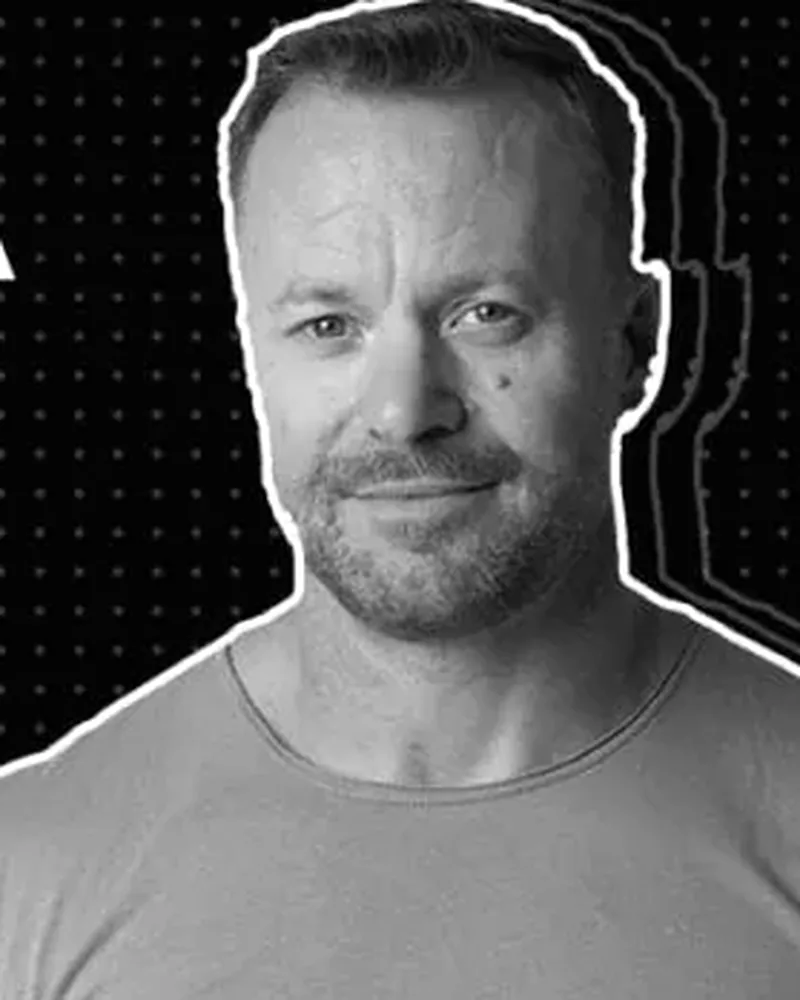 with Kerwin Rae
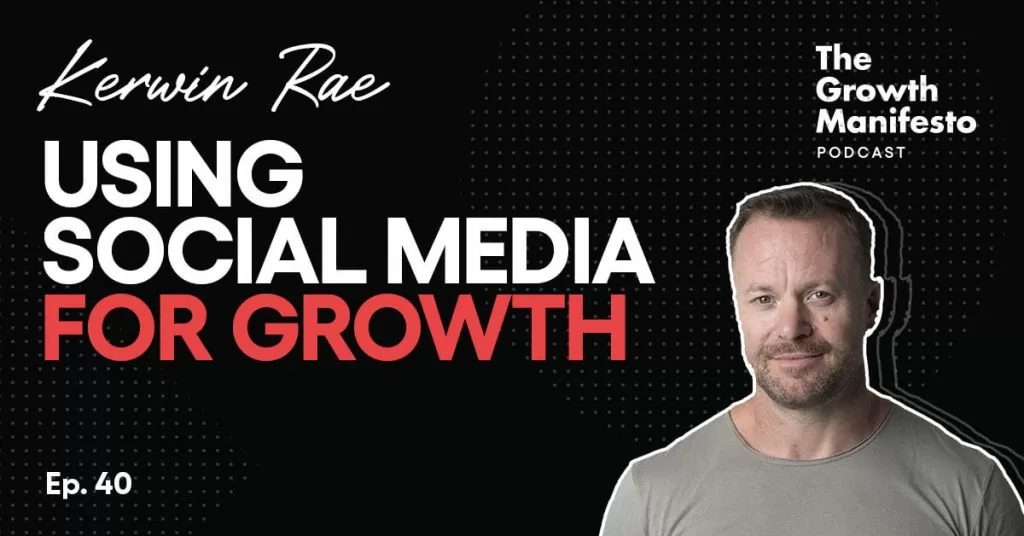


Overview
This episode is a discussion with Kerwin Rae – business strategist, high performance specialist, entrepreneur, and international speaker. We talk about how to drive business growth through social media from somebody that has built a following of more than 1.3 million people on Facebook, plus we touch on entrepreneurship, leadership, professional development and everything in between. This is a fast-paced, high impact episode that I’m sure you’ll enjoy.
Key takeaways
- Content should never sell directly - a call to action only appears every 7 to 15 exposures, since direct pitching feels inappropriate on social media.
- Switching from direct-response ads to utility-first video content cut his cost per lead from $42 down to $1.65.
- Good leadership means self-audit and vulnerability, admitting mistakes publicly to the team rather than hiding behind authority.
- An entrepreneur is someone who gets paid consistently for their work, distinct from a business owner still covering costs.
- Getting completely bored, free of distraction, is what lets a new creative direction surface when someone feels stuck.
Chapters
- Intro: content that saves lives
- Growing up with ADHD and dyslexia
- Entrepreneur versus business owner
- Building a high-performance team culture
- Leading with vulnerability and self-audit
- Blowing up on social media
- Content funnels and the exposure effect
- Personal development as a way of life
- Getting bored to spark creativity
About the guest
Transcript
Auto-generated from the episode audio, so expect the odd mis-heard word. Timestamps open the video at that point.
I get people saying to me at least a couple of times a week, thank you so much for the content. If not for your video, I would not be here. You know, because there are people that literally plan their day to day. I didn't know this was the thing because it's happened so much. I've actually discovered people, you know, when they're feeling in that frame of mind, they'll actually plan it out. And then they'll go and say their goodbyes and, you know, visit everyone's Facebook profiles or whatever. And, you know, I've had that many people that have been in that process. And then a Facebook video pops up, you know, of me solving a problem and they go, shit, you know. And to me, I take that shit pretty seriously because I'm very well aware that there's moms, dads, kids, aunties, uncles, grandparents and grandmas right now that are present in a family unit that wouldn't be there if not for the fact I just bothered to share a piece of content around addiction or dyslexia or mental health or relationships.
You're listening to the Growth Manifesto podcast, a Zoom video series brought to you by Web Profits, a digital growth consultancy that helps global and national businesses attract, acquire, and retain customers through digital marketing. This episode is a discussion with Kerwin Ray, business strategist, high-performance specialist, entrepreneur, and international speaker. We talk about how to drive business growth through social media from someone that has built a following of more than 1.3 million people on Facebook. Plus, we touch on entrepreneurship,
leadership, professional development, and everything in between. This is a fast-paced, high-impact episode that I'm sure you'll enjoy. So, let's get into it. Today, we're talking with Kerwin Ray. He's a business strategist, he's a high-performance specialist, he's an entrepreneur, and he's an international speaker. He's helped over 100,000 companies and businesses across the world in 154 different industries through 11 countries worldwide. He's the host of the Unstoppable podcast. He runs a number of events, including
the Fast Grow Summit and Nail It and Scale It. And he's become one of Australia's most well-known business personalities, all through the power of content, social media, and adding extreme value at scale. Today, we'll be talking about entrepreneurship, social media for business, achieving success, growing a personal brand, and how to drive high performance through personal and professional development. And just quickly before we get started, make sure to go ahead and hit that subscribe button so that you get the latest episodes as soon as they're released. Now let's get into it. Welcome, Kerwin. Alex, honor to be here, mate. You've been a good
friend for a long time and it's always good to catch up and have a chat. Yeah, and we're just having some pre-show chat and there's a lot to cover and we've got a very short time frame. So we're both going to talk fast that's what we said at the very start and we'll try and get through listen faster so we'll try and get through a lot of stuff but we'll just make sure that we'll that we will talk about the good stuff and we'll go into um some detail um across some of your successes because you have a lot of them let's get into it so can we start with some history um
what's been your journey because i'm sure now everyone just sees curwen on cross social media which has got millions of followers and conferences and all that. So, yeah. Look, I get asked that question a lot and I always respond and it's never nice to respond to a question with a question. It depends on where you start. Like, you know, my story is, you know, maybe not unlike some others but very different to other people's perhaps. I was born in Canberra, was brought up by a single mom on a pension. My parents divorced when I was about six months old.
and yeah I guess you could say I grew up in a household that was full of love but there wasn't necessarily what you call a lot of entrepreneurial spirit necessarily but it wasn't until I started to realize that money was a factor. We didn't have a lot and there's a saying that voids breed values and because we didn't have a lot I assumed that was something that was missing from our lives it may have added a little bit more value and so from the moment I worked out I could make money yeah i was game for anything you know washing cars mowing lawns first business was actually
mowing lawns uh washing cars actually and me and my mate got a bucket together and we washed the neighbor's car and he had a steel watch on and we put scratches all over and so our parents doing that and then we you know we grabbed the lawnmower out and didn't ask the parents to do that and then we ran across the driveway hit a stone smashed a giant uh a giant window and then i settled on actually quite interesting uh because i was living in a semi-rural area at the time in townsville selling um manure but because everyone was doing that at the time it was quite a fad it still is but we decided to put it in um garbage bags put it in wheelbarrows and take it door to
door uh and that was actually a raging success in my first six weeks there we made about 360 bucks my me and my mate were about 13 years of age and it was all in the pursuit of making money to go the townsville show wow um and since then yeah look my story is unique i failed every subject from year one to year 12, diagnosed ADHD, dyslexic, the age of seven, eight, undiagnosed SPD on the spectrum. And yeah, I've had a, gosh, there's so many things in my life that I could really go into. I had my first near-death experience at the age of 15, which was actually probably something
important as a part of the journey because I was handed a pretty decent shit sandwich. Not only was I not academically bright in any stretch, I never read a book until the age of 23. I considered the only thing I had was my sporting prowess and it wasn't great but I at least thought I had enough you know potential to be a professional sportsman and then at 15 yeah I fell on a broken bottle cut my nerves tendons and I was told I was going to be disabled and so that in itself created a very foundational journey at a very yeah important stage of life where I learned
fundamentally how to overcome massive obstacle you know and it really did kind of shape where I went to from there and had about 48 different jobs throughout school before I stumbled upon, I guess you could say, entrepreneurship. And like many other people, I failed a few times, had a security company that didn't go so well before I actually started to find my groove. And my groove was in the process of buying, building, selling businesses, but where I really started to thrive was in the area of education. And that's where I guess you could I really paved my way from a motivation or not motivation, more of a purpose-driven perspective
because I worked out very early in my mid-20s. I could make money, but I realized I could make money doing a whole range of things. And there were some things I made money at. I was just miserable. And so after making money, losing money a couple of times, that's quite humbling. You get the opportunity to reflect and go, what were the things that I was doing that I really enjoyed when I was making money? Let's do more of that. And that's how I kind of ended up where I am now. Yeah, right. I mean, that's such a good intro. I mean, you've covered a lot of stuff in just a couple of minutes, mate. So I do appreciate it. I think because I've got like a few talking points. Let's jump to entrepreneurship because you did mention that. And I think that
would be a good next step. To you, what does it mean to be an entrepreneur? Gosh, labels, hey? Labels in there. I know. We've got to go down the path though. Yeah, because there's a lot of people that are quite protective of the term. So you can't call yourself an entrepreneur unless you've got the battle scars to prove it. And I think there's a certain credibility that's required to really kind of put yourself in the realm of an entrepreneur. You know, it's like saying I'm a, because an entrepreneur to me is a professional businessman, right? There's someone who is a professional businessman who has proven, you know, so I can't go out to you and say, and you say, oh, you play tennis. Yeah, I'm a professional tennis player,
Alex, you know, I can't do that because I'm not a professional tennis player. And so, you know, I think there's a lot to be said for giving credit where it's due. And, you know, once you've been in business for a period of time where you've got some runs on the board, you've got some levels of success is you've got you know a level of skill and a base level of base base basic you know fundamental mastery you know i think then you can really start looking at kind of hanging on that mantle i think for a long time i think a lot of people put that that that term up in a mantle you know it's been a long time since i've really cared about what people said or how people labeled me but i do understand like it's a badge and everybody wants to wear it you know but in some
industries sales being a professional sportsman and you know you've got to earn that title yeah right and so what do you call people that have that are starting on that journey but that haven't achieved success or mastery? Well, I think, you know, it depends on where you're on the journey. If you're still early stage, I'd say, you know, you're a business owner. You're an early stage startup. You're a business owner. I don't think there's a – and again, this is getting into the nuances of a distinction between a business owner and an entrepreneur. An entrepreneur is someone that has been able to get paid consistently for their work. They're a professional athlete in the commercial space.
You know, a business owner is someone who can say, well, I have a business. I haven't made any money yet. But I have an ABN, you know, and I'm making some bucks and I'm covering my cost of living, you know. You know, I'm a business owner. And that to me is it's a small distinction. As I said, I don't get into it. But for me, if I was to sit down and create a category, that's how it would be when you're handing out the awards for are you an entrepreneur or not. Yeah, because the reason I ask that is because there's also the entrepreneur's mindset. Yes. Now, the mindset, I mean, you know, we try to hire people that have the entrepreneurial mindset. So, they may not be entrepreneurs, but they have the mindset of an entrepreneur. So, how would you define the mindset of an entrepreneur?
Yeah, look, the mindset of an entrepreneur is very different from the mindset of an employee. The mindset of an entrepreneur is someone who's very value driven. You know, their goal is to deliver as much value as they possibly can in the time that they've got. And I think that's, you know, that's evident in the way, you know, a lot of people, you know, perform. perform and so for me yeah it comes down to your ability to add value your ability to add value and i think there's also a component of ability to take action in the fear of absolutely in the face of failure or something along those lines contrast yeah you know there's a whole gambit
we could go down but in contrast to like an employee an employee is someone who sees time for money you know they see if i give an hour i want to be paid for an hour whereas you know the the entrepreneur mindset or that entrepreneurial mindset, they have to have, they have to be a little bit more long-term. It's not so much about time for money. It's about an outcome, you know? And so whether you play above the line or below the line and employee, employees or most employees or what I call staff play below the line where they're, you know, they're trying to tick boxes. You know, they're starting things, but they're not necessarily following through. When you're playing above the line, you're all about completion. And that to me is the entrepreneurial mindset because as an entrepreneur,
based on the category I just gave it, you know, you're not worth anything unless you can produce something. And so that's, you know, that's a form of measurement of how I would measure it. And so for me, and it's interesting because we look for team members who have that entrepreneurial mindset. And then sometimes we get really upset because they go and start their own business, you know, and I'm sure you've seen this yourself, Alex. What, what, you know, the ultimate in the ultimate talent member, I hate using the word employee or staff, you know, is someone who's had enough experience to realize they don't want to be in business for themselves. Okay. But they realize that they do think like a business owner, you know, and that to me,
I think some people get stuck in that space where they think like a business owner, they're an employee, but they keep trying to do the employee thing, but it's not just, it's just not cut out for their risk profile in some cases. So hiring, well, in my experience, if you have a team of people that have the entrepreneur's mindset and if you can attract them, that's a very powerful team. That's the kind of team that could win championships. How do you attract them as a company? Yeah. So for the leaders out there who want to hire these kinds of people, how would you attract them and what would you do to keep them? Like attracts like, you know, and at the end of
the day, I think when it comes down to talent, the culture is everything because this is one of the things that I've observed about very talented people. In most cases, they're not doing it for an extrinsic factor. They're doing it for an extrinsic factor. They're doing it for something that is intrinsically driven. And so for me, you know, I want to make sure that I align with people that are ideally looking to do things because they want to be better. And that's what mastery is. and mastery is the pursuit of being better. And so for me, when it comes to talent and in this question specifically,
it's how can we assess what good talent is very quickly in the hiring process to ensure that this hasn't been a waste of time. And so for me, in order to get those right people, we have to create an environment that is attractive for them and want to work in. And that's what a culture is. And a good culture is bred by good leadership and performance culture is bred by performance leadership. You know, leadership is a visible trait. It's not a badge, it's a game of visibility. And monkey see, monkey do. And so for me, if you want a high performance team, first of all, you have to create an environment where it's very welcome. But secondly, there needs to be a benchmark and an example that is set by someone, ideally the CEO, who is consistently demonstrating a set of values that are performance-based values.
But it's evident in the way that they talk, the way that they walk, the way that they show up, the way that they complete. And that then becomes the benchmark for us to leverage on and go, well, hang on. you know, because if, if I'm not willing to do something, then that gives someone permission to, you know, essentially take the same position. And so for me, yeah, high performance, high performance environments, you know, in order to create a high performance environment, first of all, it has to be welcome, as I said, and that's an important point because some people, you know, hire really great talent, but then they surround them with toxic people who are threatened by good
talent, who undermine them and sabotage them. And so that to me is, again, it's an aspect of the culture and what's acceptable and what the standards are, which will determine the level of trust and how well people perform. But if you don't have a high performance leader, you're not going to have a high performance team in most cases, unless you have high performance leaders within that team. Jocko Willink said it best, there are no bad teams, there are just bad leaders. Such a good point. And I've got my talking points, but you're making me jump all over the place because there's so many things which I want to ask you right now. Okay, let's say that then you look at your team and your team isn't the team that you want and if we take like jocko's point
that there's no bad teams there's bad leaders that's the first place to start to mirror in the mirror you hired all of them you chose all of them they were all your decisions start with you you know and that's and i i say this about life like if you want to get better at life get to know who you are you know if you want to be a better leader get to know who you are and you know i think when we look in the mirror you know especially with an unbiased unconditional perspective to really look at where our strengths and weaknesses are because right now like the environment that you've got is the environment you've created if you're looking around the environment going oh shit it's my team gosh you know there's only one consistent thing in there
and that's you it's like the person who goes from relationship to relationship to relationship and every time they go to relationship they have the same problems and they come out and they go i just don't understand why i keep attracting that same personality so well you're that person you know you're that you know you're more than 50 of that creation so where do you start when you say all right wow damn it is me yeah what's a place that you can start oh self-audit you know really self-audit and vulnerability because and that's what i've found is really in powerful from a leadership perspective when you can stand in front of your team you go you know guys i fucked up
you know i allowed this standard to prevail i didn't hold this standard i'm human like everyone else and i want to apologize for allowing that standard you know to be accepted as something that is permissible in this environment because it's not and that's my fault you know and i've done that so many times this year because we've had you know some challenges as a live event company and i've can't tell you how many times i've had to take a knee in front of the team said guys my fault you know i accept full responsibility for how we got here um you know we had a restructure recently um you know and i've been burning you know because we took about a 12 million dollar hit this year but we're very well capitalized and so we're quite strong but at some point you know
we got the point was like we're gonna have to restructure you know because as we pivoted to digital digital was tracking incredibly well but it didn't quite you know make the mark of where live was in order to, you know, to make things balanced. And we're like, okay, we're going to have to do a little bit of a restructure. And I said to the team, guys, I'm really sorry, you know, because I've spent the last nine months trying to fucking bust a melon and a nut trying to create sales channels and marketing channels in order to build sales and revenue so that we can match lives. So I didn't have to have this conversation, but we do. And so it's my fault. And so I want to apologize for that, you know, and as a result, we had to let a few people
go and that's never nice. And that's, again, an important aspect of leadership is that important of being able to embrace humility and embrace the challenging things. you know and that for me was a big one and my entire team got to see it you know very publicly you know I didn't hide from that fact at all and again it's it breeds you know what people see it breeds behavior. So many good points in there I think it is interesting when everyone wants to have a company that's all just happiness and the beanbags and everything is good but you know like
in business it's also can be hard sometimes it's also you got to make the harder decisions that's for the greater good and you know how you approach those situations sometimes it's your first time sometimes it's your 10th time but they're never easy and they're always a challenging part and if you're a good leader it becomes easier but it's never easy it's never easy it's become easier and this is the thing like and especially in the environment we're in right now there's a lot of uncertainty and a lot of team members right now a lot of talent members they're feeling everyone's feeling the uncertainty not just the business owners but also the teams as well and they're
looking to the most certain person in the room you know who's got the most certainty if no one's got certainty in the room that you know it seems going to be under it'll undermine the team and they'll be fucked but if you as a leader can just constantly show up you know and as you said anyone can lead on a 28 degree day anybody can lead on you know on anyone can do personal development when life is great you know if there's 28 degrees and there's dolphins on the starboard you know there's 15 knot wind we're cruising baby i can lead this boat anywhere in the world you know but How are you when there's a storm approaching? How are you when it's on top of you?
How are you when it actually escalates to a cyclone? Are you in there hiding in the galley with everyone else? Are you out there charging and strapping, batting down the hatches? And that's what people see. And that will inspire people to perform at levels above and beyond what in most cases they would otherwise because you're the example. It's a visible example. And that shit's inspiring. Yeah. I mean, for me, in those kind of situations, it is like an athletic sport. like your fitness is important your psychology is important the people that are surrounding you
are important sport it is a and that's what a lot of people realize entrepreneurship is a professional sport and every different business is a different discipline of professional sport with what i do there's a level of fitness that i have to have when i'm speaking all the time when i'm doing meetings all the time you know and if i don't have that fitness i don't perform and i can't compete as well you know and i think that's that's a big mental shift for a lot of people because they don't want to see themselves as a an athlete necessarily they want to see i'm just a business owner but if you look at the and i don't know if you've seen the powerful engagement or have you read the book the powerful and of course you have your your fucking book where am i me now what i
love about that book is how it looks at the business athlete and going well hang on when you look at the fact that we are professional athletes in a business context and you compare us to normal athletes how much time do normal athletes spend you know uh training how much time do they spend rest and recovery and how much time do they spend in competition you know it's like three percent of time in competition 70 percent of the time in rest and recovery and the other 30%, 25% of the time, you know, in training. But as business owners, we're in 98% competition, you know, maybe 1% training and half a percent rest and recovery.
And, you know, that's why, you know, the entrepreneurial landscape is littered with casualties from not just physical health but also mental health because it is a duality, you know. And to me, if you approach it like what you're saying, as a professional sports group, there's a psychology to professional entrepreneurship. There's a physiology. There's a biology to performing at a high level as a business owner. And there's a fitness, you know. Great contrast. And just like, and just to wrap up this point as well, just like a professional athlete, surround yourself with the best coaches. Visualize at the times when you're not training, you know.
Like these things are important. If you want to be a tennis great and you're playing with beginners, you're fucked. It doesn't mean you can't play with beginners, but you've got to start playing with someone who can outrun you, someone who can out hit you, someone who can out serve you. because that's only how you're going to hone your reflexes to become faster. And again, another issue, another point we could talk to is why people don't step up because it's comfortable. They don't have to try so hard. And as mammals, that's something that we like to do is fit in. Okay, man, we could spend a whole hour just on leadership. So now let's shift to social media, right?
Because last few years, you've blown up on social media, 1.3 million followers on Facebook, Look, 166,000 plus followers on Instagram, 52,000 subscribers on YouTube. There's TikToks. I'm sure there's Snapchats. I'm sure that's everything. How? What did you do? What was your secret sauce as everyone wants to know? What's your approach? Hard work to become an overnight success. Look, I think, you know, and to give context, we've had now well in excess just on Facebook over half a billion video views since 2016.
Well over 80% of that is organic. So we don't just have followers. Like we have very high levels of engagement, you know, in the millions. And so for me, look, I got lucky. And by lucky, I meant, you know, timing meant timing. There was an intersection of timing and knowledge and experience where, you know, I bumped into a guy called Gary Vaynerchuk, who you know as well. We hired him to come and speak for our K2 elites. He came out and spoke at the back of the room. I hit him up and I was like, oh, hey, Gary. And at that time, I had like 52,000 followers on Facebook, shit engagement.
but I thought I'd kind of like, oh, Gary, look, I'm on social media. And I didn't know as much about Gary at the time and I learned very quickly. And yeah, he spent 15 minutes very kindly just taking me apart and just telling how much my social media sucked. And I went away that Christmas, Christmas 2015. I was like, right, something's got to change. I need to make a serious shift. And I had six weeks off and it was too long, but it was good because I got bored. And I decided, right, social media is going to be it. And so I came back, hired a filmmaker literally the 23rd of January. that relationship didn't work out and then six weeks later I found another guy, Matthias,
who is now still my filmmaker today and I just got a guy just to follow me around with a camera and we initially launched with a piece of content called The Social Experiment which was just a documentary of behind the scenes of me transitioning between a traditional marketing business and a social media marketing business and that became what you'd call a pillar piece of content but where we really started to blow up is when we were taking these documentaries like these you know, 15, 25 minute documentaries and we're taking out 30 minute, 30 second clips and 60 second clips and two minute clips of me, you know, having a charge or dealing with a situation.
And yeah, it just really blew up. And look, I think it resonated for a whole range of reasons. You know, people say, and by the way, gosh, I remember this is back in the days when we're getting like, you know, reach of, you know, 30 million in some cases a week, organic, you know, and that was, you know, going back a while, but it just blew up and it just kept on going and going and going and going and going. And it was really quite humbling. But the only thing I can really put it down to is apart from really good timing is really good quality utility content that was marketed in a very strategic way so that it didn't look like marketing that solved a whole bunch of
people's problems without him having to spend a cent with me that made me endearing. It built trust. It built rapport. And as a result, it created a flood of not just interest and engagement, but also, you know, revenue and sales in the back end. Yeah, right. And your content, you take little snippets also of your conferences as well, of your seminars as well, and you give sneak previews and it's good stuff, right? And so you found there's certain content that performs better,
there's certain lengths or anything? I know my market, you know, and again, my higher end market, you know, is 30 to 55, 1 million to 100 million business. And, you know, outliers at 300 million outliers on the startup, 50-50 male, female, about, you know, close to 90% are in a relationship. And it's about 85% to 87% are in a parenting dynamic. And so this happened totally by accident, by the way. But what I do is I talk about everything I'm doing. You know, I get documented because there's two types of content.
You can create content, sit to camera and talk to it, or documentation where you just have someone follow you, conferences, offices, and that's my style of content. I get captured talking about everything I'm interested in. And so I'm interested in, you know, obviously business, social media, performance, parenting, mindset, spirituality. But it's been amazing the piece of content that has blown up more than anything else is parenting, which is quite interesting. And when you really look at this statistic I'm about to give you, this is going to make you go, what the fuck? 70% of our audience on social media are not entrepreneurs or in business.
You know, and again, let that land. And right now, we have no commercial offering for the general public. We have one that we did five years ago that we're bringing back called The Power to Create, which is going to be for the general public. We'll be launching that again next year. But up until now, we don't. And so, we haven't even really scratched the service of our audience yet. We've only been really servicing a very small segment of our audience. And so, within that, obviously, a lot of entrepreneurs are parents. But the parenting content, it has just gone bananas. And it's helped me identify that, you know, it's not just a lot of entrepreneurs that are wanting to know how to be better parents or better leaders as parents.
But there's also just a lot of people in general that just want to be better, you know, as human beings and create a better generation of humans. Because they've realized that their parents in some way have maybe fucked them up. I mean, I think there's a, oh, I forget the book. There's something along the lines of how to not fuck up your kid or something like that, right? I was telling you about that James Oliver book. It's called They Fuck You Up. Yeah, that's the word. It's a book on parenting. It's called They Fuck You Up. Yeah. And everyone does the best that they can. But one of the things that I'm learning is parenting is becoming a very hot topic,
especially with COVID. But it was just even pre-COVID. We've got about 100 million views just on parenting content. So what do you say then to this discussion, we'll call it, where you should be making content that is for your audience only, stay focused on that, because you seem to be stretching it out. I am, but I'm still making content for my audience. 87% of my high paying clients are parents. But it's parenting content. It's not what you sell them about. This is, oh, let me show you the magic of... Yeah, this is the part which I want to talk about. This is where you want to get to, is it?
Yeah. This is really part of our strategy is we've created multiple verticals of content. So, we've got a business vertical, we've got a meditation, spiritual vertical, we have a health vertical, a parenting vertical, an ADHD and dyslexia, an addiction vertical, mental health vertical, performance vertical. And so, what we've done and your guys, the tacticians out there are going to love this. We've employed a really strategic marketing process whereby we funnel our videos. And so, we advertise a lot of videos, all of our videos, 99% of the videos that we
advertise, there's no call to action. There's no link to a website. It's just a video, utility video. But when someone watches that video, so the top of the funnel video might be on parenting. okay and so that'll capture the people and we go broad not just parents in business i go broad and because i want everyone who likes this to share it because they may not be a business owner but at the top of the funnel i don't really care they will share it in their network they're going to have business owners in their network that's going to add them to the top of the funnel we then retarget those people with content that is a little bit more business orientated okay and then we slowly as we walk down the funnel and you know some of our funnels are between seven
to 30 videos deep, you know, we essentially get the content more pure related towards business. And so, as a result, we get this really segmented qualified audience down the bottom. You know, we might start with a segment, let's say of, I don't know, let's say 5,000. But by the time we get down the bottom, it might only be 250. But the segments that we're starting with right now, like we've got bottom of the funnel campaigns right now where we've got like 49 million people in the audience, you know, at the bottom of the funnel, on one funnel, you know. And so, for us, we just continually roll. We'll have all these different top of funnel hooks that will get people into the funnels
and then we're just constantly putting people through a funnel. But what makes our content or our marketing strategy really, I guess, unique is we're not bombarding people with ad messaging. We're not bombarding people with direct response. We're essentially sequencing where it's roughly every 7 to 15 exposures will drop a call to action in front of them. And here's what I've discovered. If I go direct call to action for a lead gen, I will pay and sometimes more, sometimes less. but let's say on average I was paying about $42 a lead. But as soon as I switched to the utility funnel where I wasn't putting direct response at the top of the funnel,
I was warming people up. I was getting one and two cent views for the first seven to ten videos and then I was getting $1.65 conversion down the bottom. And so that engages this psychology that's called the mirror exposure effect, which is a psychological phenomena whereby people tend to develop a preference for things once they become familiar with them. And in social psychology, it's called the familiarity principle. and you'd know this concept very well. We need to be exposed to a product or service for a brand multiple times before something inside us shifts. It clicks and then we go, I want to actually talk to someone about that. Not buy, talk.
And back in 2005, it was 5.4 exposures. In 2012, it was 12.8 exposures and they predicted by 2019, 20, it was going to be 20 exposures were required to trigger that same level of familiarity. And so in a new age world like this, we've got to ask ourselves a question, how do we market to an audience that in most cases they don't want to be marketed to? Well, you don't market to them. help them you know and you understand that the social environment for marketing is not the traditional environment for marketing the traditional environment for marketing it's culturally acceptable to pitch in the social environment for marketing it's not okay it's
like inviting 50 people to your birthday and 49 show up with presents and one shows up with a fucking sandwich board and brochures and they're trying to sell the other 49 people it's just not socially appropriate okay and this is the challenge that people have they're taking traditional methods and trying to deploy them in a social context and wondering why they're polarizing the audience or they're not getting the sentiment or the traction, you know, that they're really looking for. In a social context, we're mammals, we're collaborators, we like to help people. And that by virtue is what creates attention. Is there some help? Is it going to entertain me, inform me, educate me, make me laugh, make me cry? How's it going to add something to my life right now outside of,
oh, another message, another direct call to action, which after a while, as you know, we just end up turning into banner blindness or resentment. And that's even worse. Imagine having a client see your brand and they're like, oh, I see their fucking ads everywhere. I hate them. Like that's just not the sentiment you want. Yeah. We do a lot of content, but I think we also do a lot of retargeting. And I'm sure that there's lots of companies who'd be like, we're profits because I've been retargeting on Facebook since 2012. So there's teenagers that now have competitive companies now that like, hey, I saw you and
I was just a teenager. I'm like, oh, goodness. I know. Gary, these kids are growing up quickly, mate. So what platform is your favorite platform right now? Facebook. I love Facebook. I'm a Facebook loyalist in many respects. Don't get me wrong. We've done really well on TikTok. We're streaming towards about 300,000 on TikTok. Instagram does well for us, but Facebook just continually performs from an impact perspective and also from an ad perspective.
It gives us the best ROI of any platform on the market, but it also gives us the best exposure of any platform in the market from an organic perspective because we still get really mad organic reach and everyone's saying organic reach is dying and it's not as good as what it used to be you know but I still I still you know look down at my reach and you know I think right you know right now last week we're sitting on around 15 million you know just for the week and so you know there's still reach to be had and I just love the platform because I can literally
get on there and it's just stream after stream after stream of people who are sharing how their life has been impacted in some way, shape or form. And I've received, and this is a really interesting consequence and side effect of content marketing. I have now received in excess of a thousand messages. One I even just got the other day, it was probably down a little bit now, where I get people saying to me on at least a couple of times a week, thank you so much for the content. If not for your video, I would not be here. Because there are people that literally plan their day to day. I didn't know this was the thing because it's happened so much. I've
actually discovered people you know when they're feeling in that frame of mind they'll actually plan it out and then they'll go and say their goodbyes and you know visit everyone's facebook profiles or whatever and you know i've had that many people that have been in that process and then a facebook video pops up you know of me solving a problem and they go shit you know and to me i take that shit pretty seriously because i'm very well well aware that there's mums dads kids aunties uncles grandparents and grandmas right now that are present in a family unit that wouldn't be there if not for the fact I just bothered you know to share a piece of content around addiction
or dyslexia or mental health or relationships and I've seen some of those um streams of comments on some of those videos they're like they get pretty emotional they get pretty it's insane full-on um just to lift it back up again um to more um to marketing um stuff but like is there a length well let's talk about the organic thing right because that organic side of things um like you started and it was already dead i started like i got my growth when organic was apparently
already dead dead right and the thing is it was generally dead for most companies that were doing that non-engaging pretty boring content but what was like how did you get such large organic was it the i think it was the documentation style it was the style of content i showed everybody everything and i don't know have you seen the social experiment like i showed people my fucking divorce like i actually had and you know my ex-wife and you know our families are friends and you know i actually had my ex-wife reaching out to me going okay you have to start pulling some
of this stuff back i'm not comfortable with some of the stuff you're showing you because i i literally said when we signed up for this it's access to all areas i'm not hiding fucking thing a thing and i said that to everyone the team you know my ex-wife and everyone's like yep yep we're all on board and i'm like well that was part of the deal and she's like well no it's at a point now where I'm uncomfortable. And when people get to see you, it's one thing, but it's when they get to learn who you are, it's when they get to see you in a tough situation, it's when they get to see you handle failure or handle success or handle a highly vulnerable situation. They really start to fucking care. And I think that's where we really struck a chord. People look at me and
they go, you just, and I've heard this so many times where people come to me and go, man, you're just so fucking real. You're just so real. And I said, yeah, I am. I'm real flesh and bone, but I just don't care what people think. And as a result, you know, that gives me a liberty of expression that I think inspires a lot of people to go, fuck, you know, I wish I could just, you know, be like that or I am like that and I relate to that. So then what do you, what would you advise to the companies that are earning between say $100 million a year or whatever, right,
that let's say that they're more the $50 to $100 million companies, right, that have staff operations and all that, and they now want to really start to get traction on social media, but they're like, what am I going to do? Just get someone to follow me around all day? How can these larger companies start to kind of produce content that connects? Look, to me it's about finding the narratives. You've got to find the storylines that resonate with the audience and it just so happens my narratives resonate really well with my audience. And so depending on what type of business you are,
I'd be looking within that business to find out where you've got narratives that are playing out naturally that would resonate really well with your clients and then document that. Now, there might be some businesses where we can't document what we do. And I'd say, well, I dare say you probably could. You just got to think a little bit strategically about how you could actually go about that. The challenge is then there's obviously relinquishing the power of a brand. But what is Big Brother? Big Brother, who's Big Brother? How many people are associated with Big Brother.
It's not funny. And I'm not saying you want to become a Big Brother, but what I am saying is there's no reason why you can't have some form of a reality media division or a reality media content production division in any organization where you're just looking at how do we actually capture something that we do that would really resonate well with our audience that translates. And look, I think it'd be hard-pressed to find some businesses that couldn't because we've done this with landscape gardeners, directional drillers, mining companies, seed companies. Like it can be done. You know, it just comes down.
We had one guy who did road surface concrete preparation. And, you know, he was getting business off Snapchat just by, you know, Snapchatting him, you know, grind concrete. So to me, it's about, you know, just first of all being visible to your audience, but then on some level exposing them to a narrative and looking at what those narratives look like. Because, you know, not everyone might be able to go and create some kind of documentation content. You might go, well, we don't have the ability to document anyone, you know, T's and C's and rules and laws. Okay, well, great. And then maybe your strategy needs to be content creation.
You know, my strategy is content documentation. And that works really well for me because I don't have the time to sit in front of a camera. Whereas if, you know, you find yourself at a bypass where you don't have a personality, you don't have a narrative, you go, okay, well, what are some of the problems we can solve for our audience? And let's create really compelling and engaging content that would solve some of those problems. But the most important thing is without trying to sell them something. this is what i want everyone to understand you know because the moment people sniff the sell the moment people sniff the marketing that's what in some cases turns them off and that's why our content works so well because there's just no marketing you know and as a result we wake up
every day to hundreds of messages from all over the different platforms asking from people all over the world asking if we've got something we can sell you know and that's the thing it's a longer play when you're playing the content game as you know alex but it's one in the social environment you don't have a fucking choice and if you try to force it you're going to be that creeper at the bar that keeps rocking up on girls, you know, and, you know, you're trying to take them back to your room on the first line versus, you know, hey, slow down. Let's have a chat. You know, let's go out a couple of times, you know, then maybe let's exchange phone numbers. Who knows?
And, you know, that's the environment we're living in right now. And we have to cater, you know, to that exposure being meted over a period of time and stop trying to go in straight for the kill straight away. Yeah, we've been doing content like that for years and years and years. And it's like you need to kind of separate like in your mind, you're making content, make the very best content you can, forget about selling anything, link it to what you sell if you can, right? But don't try and sell anything and just basically educate or something like that. A part of the reason that we're doing the podcast is because, again,
with the volume of content required, you know, we want to add value. We spend a lot of money on this just to add value. And, you know, we talk about everything as well, right? But again, just it's to invest. And when you stack your channels and stack your exposures, 20 exposures, oh, that's going to take fucking forever. No, it could take like a day and a half. It could take half a day. If you're across all channels or platforms, you're posting on a regular basis plus five to 10 stories a day, you can get to 20 exposures quick smart. It comes down to your ability to produce that content
and distribute that content. But as a really interesting side note, Alex, and you'll probably enjoy this, for the first nine months when we launched our Facebook and our Facebook blew up, we only published one new video per week. Wow. That was it. Wow. I know. Everybody says that. And we went through our – How long were the videos? How long were they? They were the social experiment videos. So they were, let's call it, 8 to 35 minutes long. Wow. And did you do little snippets as well? Like little – Little bits and pieces, but it was only one video a week. One video a week.
And then we built up and then we could obviously repost. Yeah. and now we post I think it's five new just on Facebook five new pieces of content a week but obviously we're rescheduling you know on those other post schedules content you know high performing content from previous posts so any good hacks then just since like you just kind of chucked a little process in there that you just oh yeah by the way we just did that I'm like best ad hack and I say get good organic reach we'll smash your ad strategy you know because Facebook really do want to
create a good user experience you know that we can attest to for the most part. And, you know, when you've got good content that's performing well organically, that almost ensures for Facebook that someone's going to have a much greater probability of a good user experience if they engage with your ad and your product and service. And so we've found, you know, the sentiment off the back of a good content strategy, you know, can take your cost per conversion from $42 down to $1.65, you know. And Facebook's in the business of, yes, they're in the business of making money, but they can only make money if they retain users, you know.
And so to me, it's about how do we play into there? Because people keep saying, you know, organic's dead, but you've only got to look around and see that there's still plenty of organic influencers out there that are doing really well, but their content's just on point. Production value's got higher, you know. Sound value, everything has gotten higher, but at the same time, now we have these little platforms like TikTok popping up, and you've got, you know, 13-year-olds making $1.8 million a deal on endorsements. So it's nuts. Yeah, and I do like the idea of just having some type of a documentary of these larger companies.
I mean, that stuff would be interesting. I'd love to see Coca-Cola, for example. What the hell happens in Coca-Cola? How riveted would you be right now if Australia Post had a fucking documentary? Oh, yeah. As an example, you know, and again, I know that's one that's quite dramatic, but this is what people got to understand. In our content, I show everything. I show the drama. I show the highs. I show those. In fact, Matthias, he's hell-bent on showing people the worst of me because that's what people like the most. They like to see me flawed. They like to see me being human.
And Matthias just loves it because there's plenty of fucking opportunities to show people. But again, it resonates because it's not so much me showing how flawed I am. It's people seeing how I respond to being flawed, you know, and how I deal with being flawed. Yeah, and I think it's also good, like just for those large companies to have practical lawyers that will actually let some stuff go through, you know, because I think everyone will be scared of the legal, you know, like we can't show that because what kind of if, what if that would be the biggest concern? Especially with documentary because we got, you know,
up until last week we had nine editors. And so, you know, we do need to have an oversight, like a legal oversight, and that legal oversight is just a process, you know, making sure, you know, Kerwin's not talking about, you know, psychedelics or cannabis too much or, you know, just really being cautious of some of the things that I am saying because, as you know, I will talk about anything, you know, when it comes to the realms of my experience. There's nothing that I won't go near. and as a result sometimes you know if it's a live one-off that's fine but you know sometimes you just don't want that in perpetuity yeah okay let's jump now because man i've just we can chat that's
for sure personal professional development right is there a difference between personal and professional development and if so what would be the difference look i don't know but if you did want to categorize it you go well personal development is like amateur professional development is like you know you're doing it for commercial gain you know and i guess any form of development is a professional development if it makes you it increases your capacity as an earner you know or a player you know more importantly um but i'm big you know and like you you know we've
invested probably hundreds of thousands if not over a million bucks on stuff but a business will never outgrow the development of the owner you know we're always constantly trying to grow the business in some way and whether it's a scale up or scale down you're still trying to grow something and you know businesses are organic in their ability to grow but like a plant in the garden they need to be tended you know and I think that's an important part of the process is is the tendering part and making time to yeah support the growth. So what are the areas in a professional sense for marketing leaders for business leaders for CEOs founders there comes
a point where you've achieved a certain amount of success and the thing I've seen is that that's where people stop their growth like you know and so how do people get past that point you know just where you like I'm really busy now like like I've like I've studied I've got professional development like I'm making some good income or my business is this I don't have time anymore like how do people professional development yeah for professional development do you know what I I mean, like how do you now- I'm trying to tend the garden and then wondering why it dies.
You know, if you, and this is the thing that I kind of correlate with professional development. It's like going to the gym. It's got to be a way of life. If it's not, if your professional development isn't a way of life strategy, you're already fucked. And I don't mean that to be rude. I mean that because you're already treating it like a prescription medication. You know, for me, performance has to be a way of life because if it's not a way of life, then it's something that you are doing. It's not something you're being. Whereas for me, it's just frankly, the sooner professional development becomes a way of life, the sooner you just get used to the process of growing.
And that's what, you know, as organisms we are here to do, we're here to grow and evolve. And when we limit our potential to do that, you know, we limit our potential to evolve. And to me, that's, you know, ultimately the greatest fulfillment of our purpose is being able to experience as much as we possibly can while we're here in the areas that light us up the most. And I think sometimes when people go, well, I'm just not motivated anymore, you've really got to start looking at, well, what are your motives? What are your values? And you probably get this as well, Alex. People come and go, how do I motivate myself?
What's a good book for motivation? I say, well, that's a fucking stupid question first and foremost. Okay, because if you're looking for a book or a tape or a podcast to motivate you, you're already fucked because you're looking on the outside. Motivation is not an outside job. It's an inside job. And the only way you're going to find what your true motivations are is by getting to know who you are and what your genuine core values are you know because a core value is a motive and when you understand what your motives are you're better able to understand the decisions that you make and you don't think why do i keep making these silly decisions or why am i not motivated to make money when i really should be and everyone else is uh and so for me you know a big part of
the performance game is self-awareness you know and if you don't you will your development will always be limited by what you're aware of as you as of your obstacles or your opportunities because I sometimes mentor people and one of the questions I ask is what do you want and I think like I think that that's a really good question it's like hey I'm not motivated anymore or hey I feel stuck or hey I don't know you know like like I've lost something it's like what do you want and it's such a hard question for people to answer sometimes because you might
find yourself on a path and you're now lost in that path. Earlier on, I thought I wanted money, you know, and ended up on paths where I was making money, but I was fucking miserable, you know? And then when I realized what I really wanted was not to be happy, was to be, to live in harmony and to be happy. You know, then I started aligning with pursuits that, you know, gave me more of that. Yeah. When I was younger, I think maybe the mid twenties and I had like this job and I, you know, we were selling ringtones and love calculators on phones,
killing it, right? Killing it. I think we were selling so much. But then a couple of years in, I think we were the, the light fast 50 were like at the top through these terrible, like it was not value adding to the world. But I had had enough money at that point that it wasn't about the money anymore. And I was so interested that I was like, because up until that point it was all about the money. I was like, I didn't care what it is just as long as I got money. and there comes a point where it's enough and then all of a sudden everything changes, right?
And so it's like what do people do when they're at that point where they've changed or something's changed in their values and they have realized that they're on the wrong path but maybe it's too scary to change paths or maybe just the fear starts to come in. I think step one is suffer. You've got to experience some pain. If you're not going to experience some pain, you're not going to change. And, you know, I think there's a lot of beauty in being lost because it creates great levels of discomfort, but also levels of boredom. And I think sometimes when people are unsure of what to do, they need to literally just completely unplug from the world and go and get bored.
Because it's when we get bored is when we get creative. You know, and this happened with our kids yesterday. The kids were wanting to watch screen. We're like, no, no screen time. You know, go and use your imagination. And there's whinging and bitchy and moaning. And anyway, two minutes later, it was silence. We go outside and, you know, they're playing with cardboard boxes. and they played with cardware boxes for three and a half hours. And, you know, David DeAda, and I'm pretty sure you've probably read The Way of the Superior Man, you know, he talks about a really important phase of life for men. And I would go as far as to say for women as well, you know, when you are unsure of what to do, when you are, you know, lacking in direction to actually do nothing,
like actually dedicate time to doing nothing, you know, void of distraction. Because if, you know, you're in that bored place and you fill your life with distraction, you may not see the thing that is just burgeoning under the surface that when it comes along, you know, if you're looking at every other shiny object there, you might miss that. And that to me plays really well into the boredom, you know, the boredom scenario. We've got to get to a point where we, you know, are bored enough for, you know, whatever is new to come to the surface if that's where you're in, if you're in that stage of life. And I think there's a lot of opportunity for that right now
with everything happening in the world, you know. I think there's a lot of uncertainty. There's a lot of people questioning just where they are and, you know, and there's a lot of opportunity, you know. And sometimes it is hard to take a new step, you know. So I do like your suggestion of just be bored. I find it really hard to sit still. So I wouldn't know what to do. I'm planning on doing this over Christmas because I haven't been bored in so long now. And I'm looking for a creative burst, you know. And so the way I get a creative burst is I unplug and I get completely bored. And I don't, you know, I go, I'm going to buy a caravan.
I'm going to go and fucking sit on a beach somewhere. And yeah, just get so bored that I start thinking about cool shit. and for high performance individuals who just want to get to that next level right what are some ways they can think bigger i don't know if it's necessarily about thinking bigger like for me performance a lot of performance you know yes thinking bigger is important but to me that's a variable that can be managed quite easily the variables that are more difficult to manage when it comes to performance is knowing how to regulate the systems in your body that enable you to perform
at a higher level consistently in situations where people couldn't. So learning how to regulate emotions is critical. Learning how to regulate stress, which are both biological, consequential actions in the body. And one of the things that I've learned that's most important when it comes to performance, the more I can work with an individual and show them how to regulate those systems, just as those two base systems, right? The more performance they're able to achieve as a direct result, the more flow states they're able to achieve as a direct result. Because a lot of people don't realize the impact of stress and emotions when it comes to performance you know
emotions themselves are a filtering mechanism you know they're they're they're they're in a chemical response that starts in the brain and they change the way we filter information in order to maintain the vibration of that emotion so if you're feeling positive you have to ignore all the negative if you're feeling negative you have to ignore all the positive you know and as entrepreneurs we want to be able to see everything i don't want to just be biased in looking at information i don't want to have information bias that's why we've got about a look at everything yeah right yeah right and ah it's a hard part man that's a whole nother discussion listen
i could open a door if i would keep going sorry what's that yeah i was gonna open a big door if i kept going that way yeah yeah i mean i'm sure that you know the doors um and how big they can go let's just finish off with some quick fire questions right um there's a five questions i to ask yeah number one what book has had the biggest impact on your success gosh oh damn that's a tough one oh fundamental thinking garbage yeah i look i know it's cliche
but actually there's another one that really has because it kind of started at a very different journey and it may not necessarily be one that people would expect it's called the holographic universe by malcolm uh malcolm glad not malcolm gladwell malcolm talbott the holographic universe just helps people have an understanding of the fundamentals of how reality is formed and yeah i find the more i understand about reality the more i can play with it Yeah, for sure. For sure. Number two, what's your number one piece of advice for hiring awesome people? Yeah, I guess I'd call it values elicitation. Skills and values elicitation. My job is not a skills elicitation. My job when I interview someone is to find out what their genuine values are. And I do that just by asking questions like, so tell me about you. Where did you grow up? What did you do? What were your hobbies? What do you do in your spare time? What do you do for fun? What lights you up?
because what I'm really looking for when it comes to hiring good talent is people that are aligned with the values of the organization who are going to come in and just naturally kind of flow. And so for me, values elicitation is critical because they're the core fundamentals of motives. They're the core motives, motivations. And if we've got similar motivations, then we're going to move in the same direction. And how do you find values? This is just a quick follow-up question. It's a really simple process. You just ask things like, so what's important to you? like but i i do it contextually so tell me about where you grew up you know um did you play sport
at school did you have any hobbies at school like what did you do for fun when you're at school what about now what do you do for fun now what do you do on the weekends like you know when you're not at work what do you do you know if you had 100 million bucks in the bank what would you spend it on like i just want to find out and i want to ask enough questions to really kind of explore and go what are their genuine values but in most cases it just sounds like a really natural conversation so many times people come out and go oh i didn't feel like an interview i just felt like it was a chat and I was like yeah it was a great chat you know but I realized you're perfect for us or you're not perfect for us you know that's fantastic mate yeah that's great number
three what's your best time management or productivity tip oh schedule it done is probably one of the best ones you know if it's got to get done it's got to be it's got to be in the schedule like my time management and again this might sound really obnoxious but I have I actually have a PA that manages my time for me so I don't even have to think about time management but to me you know without a schedule, without a list, without an objective. Yeah, you basically, if you aim at nothing, you'll hit it with remarkable accuracy every single time. And the way we plan, like because we plan every year, we break it down in the quarter, we break it down in the month
and we break it down in the week and then we break it down in the day. You know, Vern, we follow similar principles to the Rockefeller habits and so as a result, we always have a plan and we always know what to do and there's never a moment where we sit there and go, shit, what do I need to do? You know, there's always a document you can look and go, fuck, there's a to-do or there's a goal or there's a priority. Perfect. Number four, what's the best piece of business advice that you've ever received? That's a really good question. Best piece of business advice I've ever received. Look, the one that keeps popping into my mind is it always takes twice as long and costs 10 times as much. I hear you there, brother.
And that to me is really just advice on perspective of whether you're playing a long game or a short game. But yeah, it's always harder than it looks. Always. Something like that optimistic start when you get into business and you think anything is possible. And I think that's sometimes required because otherwise, why the fuck would you do it? Love it. Love it. And number five, last one. How do you relax after a crazy day in the office? It's interesting. It's changed a lot because now I've repartnered. My new partner, she's got a nine-year-old daughter.
So I've got a very big family vibe going on right now. But the way that I chill out is I spend time with my family. and sometimes it's beautiful quiet and sometimes it's beautiful chaos. But for me, the number one way I chill out and this is going to sound, I don't know, maybe the ladies out there will enjoy this, is when I have my partner in my arms and the more of her skin I can feel, we just neutralize each other. And so the moment I touch her, I just go neutral and I find myself able to chill out very easily. But apart from that, I meditate a lot,
but I normally do that in the early part of the day. And yeah, just play with the kids. That's awesome, Kerwin. And now for the listeners of the podcast, if there was one action that you would like them to take, subscribe somewhere or to go somewhere, what would you like them to do? Yeah, great question. Look, I think the most important thing you could do right now is to take some form of action. The action I would suggest you take is that if on some level something I've said has resonated with you, I'll say this. My information is very good. And if you want to increase your performance, just follow me on Instagram, Facebook, LinkedIn, YouTube,
and my information, my content will come up enough to affect you in some way, whether it be small or large, it will change your life forever. And his content's good stuff. I've looked at it and he's still one of the people I still check out his content. Sounds obnoxious, but I look at our content and I go, we actually do really good content. And again, I hope that doesn't sound arrogant, but I do appreciate good information. That's fantastic information. Kerwin, thank you so much for coming on the podcast today. I made it within time. We didn't get even a fraction of the stuff I wanted to talk about, but I really do appreciate it.
Let's do a follow-up, mate. I want to do a follow-up. Are you sure? Are you up for a follow-up? Yeah, definitely. Get it in the book with Annabelle and we'll do another one. We can dive into some other topics. Yeah, because I've got so many topics, but this has been a good first one. I love talking to you, mate. Mate, this is so awesome. Thanks so much for your time today, Kermit. We'll talk soon. Talk soon, Alex. Thanks, mate. See you, mate. Cheers. Thanks for listening to the Growth Manifesto podcast. If you enjoyed the episode, please give us a five-star rating on iTunes. For more episodes, please visit growthmanifesto.com forward slash podcast.
And if you need help driving growth for your company, please get in touch with us at webprofits.io.