How visual artists can use digital to build a business around their art
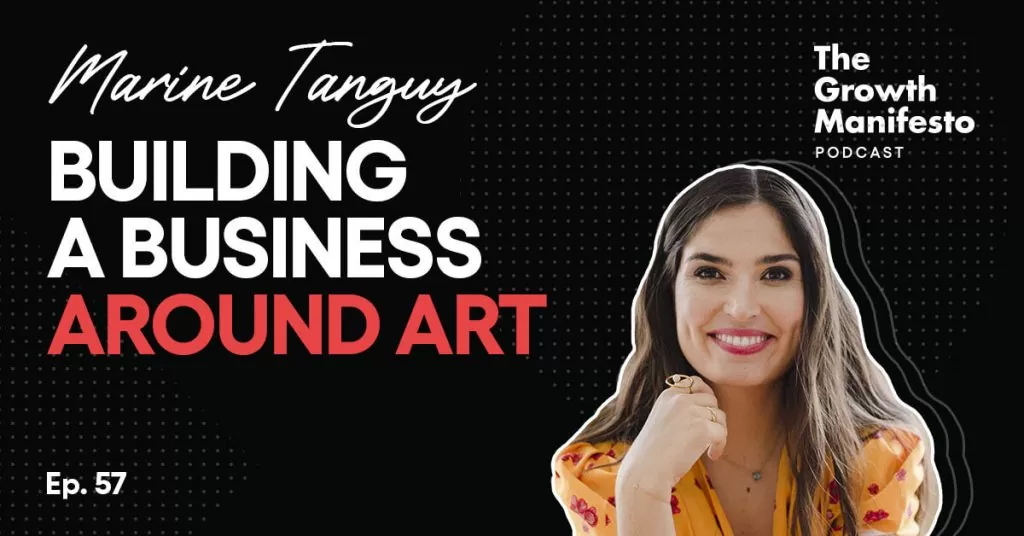
Marine Tanguy, CEO of MTArt Agency, explains how she built the first talent agency for visual artists, backing them financially like a Hollywood agent.
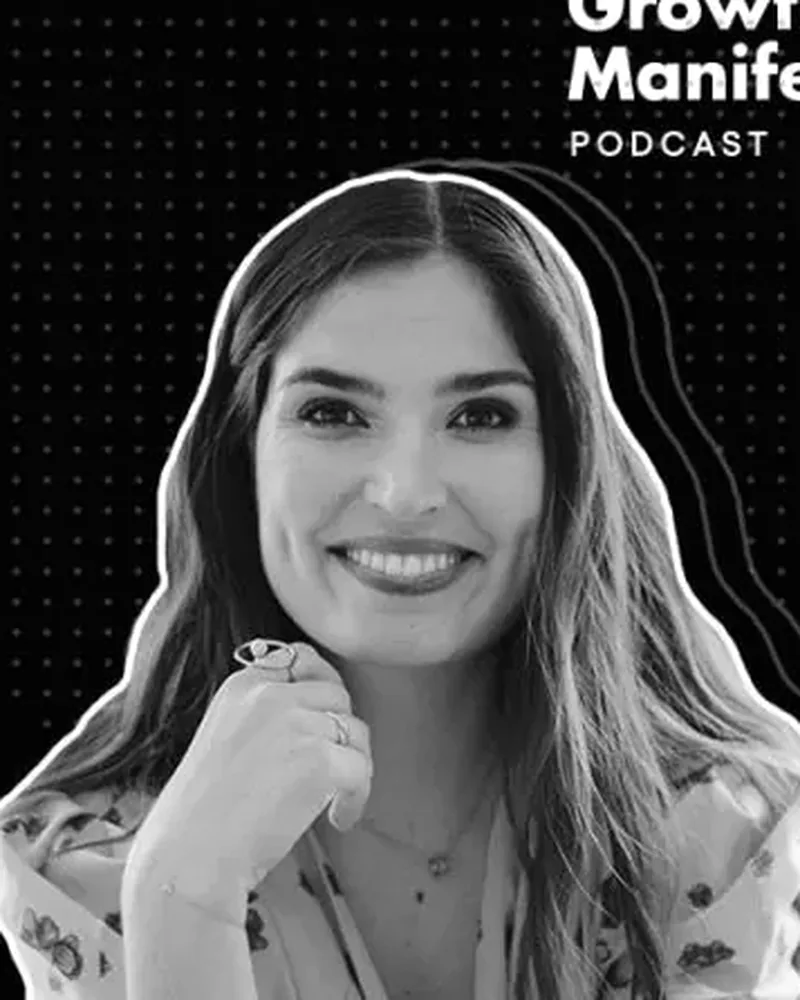 with Marine Tanguy


Overview
This episode is with Marine Tanguy, CEO of MTArt Agency – the first global talent agency for visual artists. Marine was awarded the Forbes 30 under 30 in 2018, was awarded UK entrepreneur of the year for the 2019 NatWest Everywoman Awards, and has delivered two TED Talks: one on how to transform cities with art (2017), and another on how social media visuals affects our minds (2018). In this episode we talk about how visual artists can use the power of digital to build a business around their art.
Key takeaways
- Tanguy built MTArt Agency on the CAA talent-agency model, mentored by a CAA co-founder who told her "I collect brains."
- MTArt gives artists a monthly stipend for studio costs in exchange for one artwork a year, building a corporate collection it can lend out.
- She closed an 800-metre public art project in Paris, backed by 30 companies and the mayor's office, the longest public art painting in the world.
- Method, a Californian company, put three MTArt artists' work on its bottles, which sold out in UK supermarkets within three months.
- MTArt Agency became the first B Corp company in the art world, aiming to make artists financially sustainable rather than reliant on social status.
Chapters
- Intro: spotting talent's inherent drive
- Becoming a double university dropout
- Learning from a CAA co-founder
- Public art deals and brand tie-ups
- The monthly stipend and art collection model
- Marketing strategy for visual artists
- Debunking the starving artist myth
- Defining success for an artist
- Why she recommends Atlas Shrugged
About the guest
Transcript
Auto-generated from the episode audio, so expect the odd mis-heard word. Timestamps open the video at that point.
I think it's interesting because I'm now also, I'm 12 years in, and my friends who are either VCs or in music or film, we always speak about what is the talent that we love and what is the people that we really remember having had a meeting with. And ultimately, they're all very similar types of people. They're just an inherent vision, drive, and almost cohesiveness, even though it might be a unique logic that's only logical to that person. it somehow makes complete sense as you encounter that person um mixed with an enormous amount of
talent and an ambition that you feel like if i'm not getting on that train the train is living anyway so you know i will just be missing out on an incredible ride um and i think most talented people will share that kind of personality and that is the reason why we signed the company saying that we wouldn't invest enough but we invest in artists because i remember that first meeting with all my talents and now we have a selection committee it's not me who's kind of heading this but you see it and and you see it with other talents um it's really like a flame
and it's very romantic to describe it as that but you feel like if you throw you know 10 things in the face of that person they will still be standing um there's a real strength in there you're listening to the growth manifesto podcast where we host in-depth interviews with business leaders, authors, industry experts, and entrepreneurs with a singular focus around business growth. At the end of each podcast, we want you to walk away inspired, to think bigger, and to have actionable takeaways you can apply to improve your business. Each episode is like a masterclass on a key topic, so make sure to browse the episodes
to find the topics that are most relevant to your biggest business challenges today. This podcast is brought to you by Web Profits, a digital growth consultancy that helps challenge your brands drive growth in a complex and fragmented digital landscape. You can find out more about Web Profits at webprofits.io. Now, let's get into it. Today, we're talking with Maureen Tongue, CEO of MT Art Agency, the first talent agency across the globe for visual artists. Maureen was awarded the Forbes 30 Under 30 in 2018. She was awarded the
UK Entrepreneur of the Year for the 2019 NatWest Every Women Awards and has produced two TED Talks, one on how to transform cities with art and another on how social media visuals affect our minds. Today, we'll be talking about how visual artists can use the power of digital to build a business around their art. And just quickly, before we get started, make sure to go ahead and hit that subscribe button so you get the latest episodes as soon as they're released. Welcome, Maureen. How are you? Well, thank you so much for having me. I'm as excited as a Monday evening will be. So thank
you so much. You're going to brighten up my week now. Yeah, that's right. And so just for the listeners, so this is being recorded in Australia. So it's like 7.30 in the morning and Maureen is in France and it's 10.30 at night. So the power of the internet continues, you know, but let's just get straight into it. So why did you choose this specific industry? Because it seems incredibly difficult to break through and to market visual art. I think that's a really good question. Why did I choose it? I think I'm very romantic
about it. I think I was, I don't think I chose it consciously. I think, you know, I've been doing it since I'm 19 years old. I was a young Gary director of Steve Lazarides, discovered Banksy and JR when I was 21. So I'm now 12 years in and I've basically grown into a sector um i think the the why is i am more of a visual person a visual brain that i am a word brain um ironically i relate to the world through visuals i connect to people through
visuals i have a very strong visual memory as well much more than um a word memory and and i felt that therefore that was the way I connected more easily um to any topic that I found interesting and and I wanted to be surrounded by people who used those visuals brilliantly who were very talented in them and and somehow add value to them and and have other people see that so I think that's kind of me relating and connecting to visuals when I was like 10 years
old 15 years old with no idea what that job could be um but I was very driven to visuals I can't really explain why is when I do um any form of IQ test my visual memory is always much higher than anything else I was obviously just a brain that was very shaped towards visuals yeah sure and so you um correct me if I'm wrong but left uni and you ran your own art gallery at the age of 22 is that right so i am a double dropout double dropout sorry i got that right i thought being a single
dropout was way too easy i think i was very principled i still am but i think i've learned to convey principles in ways i can bring everyone together behind it i think when i was younger i didn't really understand how to do that um but i therefore what do you mean by that quickly like principles how? I think I just saw everything in whether I agreed to the idea I would stick to it and if I didn't agree to any form of the idea I would leave um I was very um binary um as a kid
as a teenager as as a young person in her 20s and I didn't like the way um with Sean's now so arrogant but sadly that's the way I was in my early 20s I didn't like the way history of art was taught I thought it was dead um I thought you couldn't really connect with the artist you couldn't really connect with the visuals um and and so I therefore expressed that and and drop out which obviously is very obnoxious um but it kind of shaped me to be an entrepreneur because then I
just I basically went on to do every single thing I felt was the right thing to do and and took enormous risk um on the back of it so I was a young Gary director for Steve Lazaridis when I I was 21 in London. I then got poached by an investor who was based in Los Angeles, who had an advertising company two years on from that, and Hanma and Gary in Los Angeles. And then after having met Michaelowitz, who had built CAA, then therefore decided to drop again on my partnership
to build the first-time agency in the art world. I think it's a mix of ignorance, And it's also a mix of being absolutely non-compromising is the answer. Because I just, you know, every time I had the most incredible opportunities and I was in a very privileged position, but it didn't feel quite right until it felt right, which is the company I've built. And ever since I've been someone that has built foundations, got people to join it and got to scale it.
You know, I've been the opposite personality since I found what I wanted to do. But I think until then, I refused to commit to any ideas that I wasn't fully into. And you started, you chose to start an agency for artists. Why did you choose that specific business? I think, so again, I think the early parts of my 20s, so the first six years into the art world are, you know,
I'm definitely very competitive as a person in IT and, and I wanted, I wanted to understand how the sector was working. So I was striving to get to the top positions to understand how this was turning. But then as I ran this gallery in Beverly Hills and, and as I was starting having not only, you know, a good reputation, a level of sales, a level of everything I would have wanted, it just didn't feel right still. and when Mike Kulovic told me how he built CIA
and I was lucky to therefore start to be mentored by him when I was 23, I was just really interested in how he's so talented as something much more humans in the sector. So the sector sees art as a dead object that is almost this luxury items. It's very much devoted to the creator in some ways. The way he perceived talent in the music, film and acting sectors felt much more fluid. It felt human.
It felt you could extrapolate many things from just a single person. Like your actress was not just doing a top movie. She was also having an amazing brand campaign. She will have a very powerful communication strategy. There was so much more to her than just what she was doing. and I just felt like you could do this with visual artists and and I don't know how much about the talent sector but sportive used to be really underappreciated up until the 80s 90s and
now you know you would never think of a sportive as an underappreciated talent like they are you know people you want to sign people you want to build the carry of and and I felt this was the visual artists I really loved deserve the same thing. And also because I have very strong liberal and left-wing political views, I felt therefore it would help building a new stream of revenues behind talents, which meant that all types of talents could become talents in an
overtly privileged sector. And also that I would help to bring new audiences through bringing new types the revenues to my talent. So it was really kind of very satisfying moment because the economics and the social values just aligned in a way that just, I didn't expect them to make sense because my sector is, you know, very high net was driven and my views are much more left wing. So I never expected them to come hand to hand. And actually the solution fund behind the agency got the
economics and the social values to completely kind of meet and to be the strengths of one another, which felt amazing. And subsequently, we also became the first B Corp company in the art world in the UK on the back of this. I think we continued that stories through that. Okay. And so, I mean, let's jump to the artist side of things because I'm really interested in actually how you market an artist effectively and all the revenue changes and so on. But let's start at the very beginning um how do artists traditionally promote themselves you know
before a company like yourselves i don't have agency for artists um is there you know what or how do artists promote themselves traditionally traditionally it's drastically evolved obviously in the 80s 90s you would be lucky to be exhibited on the wall and that would be the only way you would be perceived in the world because that was the only way someone could interact with your work that if you were displayed on the walls of a gallery on the walls of a museum
yes of course my generation of artists has kind of had it I think in a much better way because suddenly with social media you could tell your story and you could be seen by much larger audiences even if you didn't have access to your wall which meant you could include countries that were before this not included you could include backgrounds that before this were not included so the the communication side i think really kind of change everything and i think not to forget as
well that pr agencies in the sector are very expensive so it's also democratize the excess on how you could tell your own story um which i think is very powerful i think that what we really make a difference is you know we so i look at every artist as a 360 strategy i think every single one of them was something completely different of what the tradition would want so we could pretty tailor it to them but i think to kind of give you major achievements which i nobody else can do in the sector so we closed the sean martin paris which is 800 meters long
um with the effort had 30 companies the mayor of paris and had this 800 meters basically the longest public art painting in the world with our artist safe safe when you had this was 29 just made it to the Forbes 30 or 30 then had this no galleries in the sector could have gotten this and it's a completely new type of deal where you have back to the inspiration of CAA but you have partnerships and packaging behind talents where here you have a media partnership you have 30
companies financing it you have a public um a public um office like the mayor of Paris backing it so we will package very powerful deals which enable suddenly much larger audience but also a much bigger ambition than i think this kind of talents is used to have okay so just to just clarify so before our social media you needed to be up on a gallery right um but but that was the way in predominantly and then probably mostly with instagram it feels um that that kind of opened up
the visual artists um to have um kind of exposure to audiences that they didn't have before but that still doesn't close the loop on actually how they make money from this whole thing does it that's like they're getting an audience um but they're not generally creating um enough revenue to live off oftentimes is that a true statement or is that not a true statement or yes or no i think social media was powerful is again your story was told by other people you couldn't tell your
story in the first place um so that's the game changer and i think even someone like me so 90 of the sector comes from very privileged backgrounds the fact that i don't but i could tell my story and get people to back me is i think an example of what social media can bring in a time like this um the revenue i think is well i agree that audiences don't do everything but in the case of the public art project i gave as an example and you know my first boss was spotted
banksy and jr their audiences became their strengths it became their their worst as well and their values so they can have a khan's festival or cities committing to doing project with them in the case of JR because of the agency that they have. So I think agencies are incredibly powerful. And in all talent sectors, they are really, it's thanks to the agency that the talents have their power as well. Okay. And so you have all the agents and they put together like all these like events and so on.
And so that's another core component, right? And so your approach is taking it to like another level. Like, for example, the project that you did in Paris. Are there other examples of these types of projects where, you know, it puts it together and it creates something which wasn't there before? Yes, I think the way we build them, there's four different arms on how we build them. There's the arms of the traditional arm, which is setting networks, getting museums to back them.
Then you have the communication arms, making sure everyone knows that the next rising star that would just ever be seen as such. The third arm is the public art. So a public art deal can be up to half a million and million plus. So this is not just organizing an event. You know, it is breaking ultimately a partnership with a city, a government or multiple public bodies, which is very financially viable for artists at that level. And that's the reason why we're able to get artists from very prestigious traditional models
because they can't get this anywhere else. and then you have the brand collaborations which were also very new for the past few years where suddenly we did a partnership with the californian company method and over one million projects with three artists and them that we had put on all their bottles sold within just three months in the uk supermarkets so the idea of generally bringing up to the shelves of supermarkets which is completely disrupting because the same artists will be exhibiting at christie's and selling for
thousands of pounds per works so i think i just had and i think it was back to kind of you know i have been raised by a traditional sector professionally to start with so in a sense about six years in the traditional sector so i'm able to have a partnership with christie's which we've had i'm able to understand how collectors work i'm able to develop networks that will back the artists but equally i never wanted to just be in the luxury side of things for them i wanted to make sure we could position mainstream deals, which I believe in the long term will be much
more valuable revenue-wise and reputation-wise than the luxury ones. And that's what's happening because the audiences are much larger because suddenly they become much larger role models, people that you look up to, people that you're inspired by. They are actually much more game-changing for their carriers than just a pure luxury market. And I think from a luxury market perspective, it's a lot more subjective and there's a lot fewer kind of art collectors than there are companies who want to have a cool kind of imagery on some promotion, right?
So, like, it seems like you're disrupting the traditional way that art is distributed, you know? So before it was very exclusive and now it's becoming just more, I guess, accessible to a lot more people. Is that a fair statement? Yeah, I think what I'm excited, I'm not excited about the art world. I'm excited about a visual sector in which the urban realm, the advertising sector belongs to that.
And I want to share for visual talents in that visual sector. I think you right now have never consumed so many visuals in your entire life than in the past 10 years. You consume visuals constantly. They're everywhere. They are on the ads digitally and artists have so few shares of those visuals. The advertising sector knows it's the key to get to your brain. In two seconds, if they use visuals, they will get you to think something much faster than if they speak or if they put a word to it.
And yet, you know, visual artists barely tap any revenue from this. They don't get any shares or any voice really within this sector. And they're still confined to something that's really conservative, a bit broken, because almost two thousand galleries were already making money before COVID. And just outdated and not like a linguist, just outdated as objects in the luxury space. okay um let's jump to the revenue models now right because i'd like to understand um you know how do
artists or how can artists actually make money these days yeah so i think so when i built the business it was essential first we were one of the few business to be profitable from day one and that was essential in a sector where most of my competitors are acquiring social status or are non-regarding to whether or not they're making money and that was the same way in which We therefore wanted our artists to be very sustainable financially. I think, again, the economics for us is very much the vehicle to change.
So they have to be empowered economically, and we have to be doing well economically, because that is what we believe to be also the change within otherwise a sector that's very stuck in. So I think revenue streams is really equal from public art projects to art sales, to brand collaborations, to communication deals. So Delphine Diallo, one of my Brooklyn-based photographer, just got the Chanel No. 5 contract to rethink the impact that Chanel No. 5 had.
So reshaping the idea of the perfume and retaking the idea that I don't know how much you know about Chanel No. 5, but the founder, Gabrielle Chanel, was very disruptive in her time. and she was collaborating with tons of artists when she launched it and kind of going back to those principles. So that would be also bringing that kind of deal. Equally, we booked her on multiple editorial shoots with Candidass at the same time and the Gap Group too. Equally, she had a 12-meter exhibition in central London for 10 months
that was supported and paid for by the Crown Estate and Westminster in central London. she was also on advertising scream in the in the center of los angeles um meanwhile selling art and just recently been seen at um an auction run by ex-susabees and therefore in the art newspaper so that's an example that's all us you know connecting the dots it's a bit like when you go on the website of william morris um they have their name and then this all connected dots
our brains are the same you know you just have a name of an artist and then you just connect dots everywhere and you just make sure that every single person or key person in your network that will be relevant to them is connected and revenue is being derived at every angle of this if that makes sense yeah it does um one of the things um um that i read was that when you take on an artist and you get over 200 applications a month um if i'm correct is that right so very good reading very good research yeah um is that you give them some money every month to be able to to live and
to do art is that correct yeah so the thinking was twofold um i don't have parents who are business people my mom is a primary teacher my life is a sport teacher so i was trying to think how can i build foundations where my business is safe for the years to come and i can do absolutely what I love. Meanwhile, obviously, I have something that I can scale with this. So my thinking was, I need to have somehow a business that is cash flow based, but also asset based, so that I can basically be ultra safe. And as I want to kind of scale. So the cash flow was all
the revenue streams I gave you. The asset that was like, what my artists need is a constant support and a constant financial support. If I find a way through the cash flow to be able to back them every month on their studio and production costs. In exchange, they will give me a work per year. If they dump me after a few years because we've done a great job or because something else happened, which I don't wish for because that's the worst case scenario, but let's say they become major and they dump me, I don't want to be in a position where business-wise, this is something that will impact me.
I want to be in a position where that's only going to be sad emotionally, but professionally, we can celebrate it. And so that's what the value of our corporate collection was built on. So we have 267 works right now that we own from artists we've backed. From artists we have now seen the markets really rising since. So for instance, like an obvious, which were the first AI artwork ever sold at Christie's in 2018 for half a million, we would have a work of this. So we have a collection that basically keeps on growing in terms of value.
And it means that I can resell any of those works to resupport the rest of the artists if something was to go terribly wrong. If not, it means that we just have, you know, an exponential corporate collection that is incredibly valid in the contemporary landscape. And then we can decide next what we want to do with this. Ironically, this has also become a source of revenue, but that was definitely non-planned because we've had loads of people who wanted to borrow from that collection. But that's, this is where...
Who want to borrow the art and who will pay you a rental fee? Yes. So we've had a lot of these inquiries. I don't believe in rental of art as a business because I think the logistics and the admin are too expensive to pull this business forward. Okay. But I think because we own the assets and because we already insure them and therefore the logistics is minimal. Yes. We've actually been able to derive a lot of revenue from it. completely by accident because that was never part of the thinking.
But the UBP, which is one of the few large-scale privately earned bank, for instance, will be borrowing the corporate collection on a regular basis. Oh, great. And so you've created like, what are they called, like a Y Combinator, but for artists, right? They can come, they get paid, they have to give you, it's not a percentage of their company, but it's a piece of art. every year, right? Which is like, it's like an investment and a return thing. It's their time, but then they get to focus on what they do. The two of you are connected a lot more financially
and it seems like a very smart strategy. And obviously this has started a few years ago now. So now you've got 267 pieces of art. So you've been doing this for a while now. Yeah, I think it's, so we've been together, we've been as a company for the past five years. I mean, we've had an exponential growth over the past year, also because I've had three entrepreneurs selling their companies to join me, which has made a huge difference. But yeah, it's like an early stage. I mean, I think we've borrowed CAA as a model,
B Corp because we are definitely left-wing, and the early stage understanding of backing brains, which to an extent CAA does anyway. They back brains. And so I think we're kind of an inspiration from the three angles, but I think early stage VCs definitely see themselves in what we do in terms of how we act, how we recruit, how we back. But ultimately it's about believing in backing people. Like that's just basically just, you know, being confident in spotting the right personality,
spotting the right talent and benefiting from having spotting that person and being trusted for that value as well. Yeah, sure. Oh, that's a super smart strategy. I like smart business models and smart thinking. I think that's extremely smart and very hard to compete against. It feels like a cooking recipe, right? Because it just feels like we put everything in a pot and suddenly it happened and it worked out, which is really nice. Suddenly it happened. Like, you know, just insert about 10 years of extremely hard working grit
and then it suddenly happens. but okay let's just jump now to like the marketing side of things right because I'd really like to understand you know from an artist's perspective like what are some of the things they need to be doing right you know so what does like an artist's marketing strategy look like these days is it a combination of say social media a portfolio site like could you speak about that please yeah so I think you know and you would know that yourself from having a podcast as well it all
depends on really how which audiences you want to be seen by and what story you want to tell and reputation you want to build so they all are building quite a separate reputation um you have many more tools um that you used to have um social media is very important in terms of access to agencies access to potential partners and buyers as well in reality as we all know nothing bits a new york times article like the mainstream press is still incredibly relevant
um and you can have all the social media following in the world if you're not backed by people from your sector you know this could be a stop at some point um from how much you can do from that um i think the like all of the agents and maybe that's the reason i've lost my voice but you spend your life um generally just meeting people um making sure the right stories are heard at the right time by the right journalists and making sure that therefore they will be pitched to those
people the story will be written in the way you want it to be written um and that the artists will therefore start having more credibility i think the i always think how can we give them credibility, visibility and revenue. Marketing is sitting between credibility and visibility. You want to enlarge audiences, but you also want everyone at the top to take them seriously. And you need those. I think it's positive because when I started, social media was very poorly seen.
Anything that was large audiences was actually poorly seen. They were seen as cheapen your brand and speaking to the masses was obviously the very wrong idea, which was still one of the few sectors where you could say that openly without looking discriminatory. And I think obviously now they've realized this was a terrible mistake, which it is. and I think it's already perceived as like you have to do this more, but there's still a form of snobbism on, you know,
if you have to look like you work hard at it, you will still be looked down at from a sector where ultimately most people don't have to look at, well, they don't have to look, they work hard at all because most of them don't have to work very hard. So there's still a difference of background between the guys who have to really hustle and craft and the guys who don't have to do that. And social media is usually used by people who have to hustle because they don't come from the right background and they need the large audiences to support them.
Whereas I think the more privileged background still tends to be slow to get it and kind of be a bit snob about it to that extent still. And I think, I mean, the focus I think for this podcast is more people that are self-made and that like haven't come from, I guess, as a privileged background and have to go through the hard path, you know, the hard kind of hustle path. And so from that perspective, you talk about hustle and you talk about, you know, to get
the audience large enough so the agencies actually care about you because now they've understood that actually that following actually has a lot of relevance these days, depending on how big it is. But there's also the thing where you can't be seen to be pushing too hard because then that would devalue you, right? Like if you're trying to push it too hard. So how do you balance that? I mean, I don't know because I've always been keen as a bunny and tried way too hard. And I'm sure it's been judged upon like for years. I was told I was too ambitious.
I was told so many things, personally as an entrepreneur, obviously not as an artist, that I don't think I care that much about all these things. I'm just, I know the sector will still do, but, you know, the sector is changing drastically as we speak. And I think, you know, I'm just, I'm now at the stage of my life where I would be happily playing all sorts of communication strategies if my artists can get what they want. I don't mind. I really believe in what they do
and I think they deserve it. So my team will be feeling that it doesn't matter. Like, we'll just do it. of course not even as morally compromising but making sure that any communication angle is kind of executed in the way that hustle is looked down on pound I think you know again that's choices I think if you're someone that wants to be seen and praised purely by the traditional market then yes you can't look like you hustle too much is that the future of the sector I'm not sure do you even want to be praised by people who ultimately disdain most people who are like you
is a question i'm not sure i mean i personally you know in some way that you're saying about self-made but i guess i've never really my role models were never people who were part of that as much as i respect them now and work with them i think it's not who i aspire to be either but you do at some point have to make a decision which is because we're building a reputation with who you might, who might love you, who might like you, who might dislike you, but who, and within the guys that might dislike you,
who you need to turn around because it's essential you do, because you need them and who you're okay to just let it go because they might never like you and that's okay as well. So I think that always comes within communication strategy. All my artists are ultimately pushing pretty strong messaging, pretty strong personalities. they're not going to be loved by everyone. I think them understanding that this is most likely the audiences that will help them get there. I think as the sector is slowly changing and more people are integrating it,
it's smarter to just accept that that crowd will push them more than this one. And then we can just work and get as many more people as needs be over time as well. So that over time it evens out to almost everyone backing them, if that makes sense. It does, it does. so maybe we can talk about this part of it because it does link in. I'm trying to understand the artists, right? There's this traditional visual of the starving artist, right? That is just about the art is so creative and, you know, but then everything else is just gone,
right? But that's not actually the case, is it? You know, so what is like an artist these days, you know, so what kind of person or people, it's such a hard question to answer, I'm sure, but How would you describe who are the artists like in the 2020s? What kind of people are they? It's a very, for me, I think the conception you put forward was basically constructed so that patron of the arts could exist. You know, you always need victims so that you can have patrons
and vice versa. They coexist, right? And ultimately, especially in Anglo-Saxon countries, you had an upper class aristocracy who wanted to be seen as patron of the arts if they're equal they can't be patrons because if the person doesn't need them then obviously they can't be saints or saviors right it just defeats the whole Hollywood story about it and so all these stories were created so that it would reflect well on the guys who then save them as
poor artists because if someone is again an equal to you You don't have to be playing that role. My artists are not poor artists. They're smarter than us and they drive us and we're equal in many ways. We're completely a team in the way we work together. And I don't think I'm above them. And I don't think any of my team thinks we're above them. And we don't say them either. We just think we're lucky to be working with someone who's really talented and vice versa. So it's a really clever construction to make sure that you can have almost this hierarchy, like all clever constructions, right, that preserves hierarchy most of the time politically.
So I think in reality, Picasso's, when you read his letters, was incredibly financially savvy. Lila da Vinci, very financially savvy. Michelangelo, very financially savvy. um obviously Andy Wall as we all know it was also a business plan you know so it's it's just not true and it's been demonstrated over time that it was not true the first artworks really were commissioned by the church which acted almost as a business because you even had contracts where
they had to agree upon principles of what the artworks would actually look like um there was like a business kind of consultancy in a way um so I just never believed in the world of this and I think it's, I see it so much as like a construction to make sure that they stay lower. Because the less rights an artist have in our sector, the better. They don't have royalties. Most of the sectors have much better royalties. There's a legal right to have royalties, but no one applies it. There's also, they, you know, they're poorly credited when most of their works are going up.
Like they just have really shit contracts as well. Like it's perfect. the least knowledgeable someone is the lower they are the more you can control them um so if you keep and preserve the idea of poor little artist will do nothing outside of his craft or or her craft then that's perfect because you can manipulate the hell out of that person in reality um i think first of all i don't think anyone can be born out of fresh air um even when you are born out of fresher purely you're still connected to society around you and that incredibly impacts you
and so you cannot i mean art for art's sake which is a philosophy that has majorly influenced the thinking you were pushing forward is actually a french philosophy from the 19th century which was perched by corby the french dropped this philosophy the english kept him um and it's just one of those beautiful philosophical ideological ideas but realistically for you to leave outside the society is literally impossible um unless you just as you know yourself try to be a desert but
even then you might want to build something you might want to be connected like it's just not visible um in its practicalities so i think to then um put it back to the art the art is a response the art the materials everything are being created by the society in which the artist lives in and all of this is conditioned by the place that you're born in so therefore my hope is actually that as now the sector is more open and more international and more diverse that the artists
of that generation will be successful will show that diversity they will be coming from everywhere discussing things that I hope will be very complementary and not have a single way to look at the world because that would show that the world is much more open from the visual sector perspective. So I don't think there will be the same movement in the same way that you had with the Impressionist movement. And I would hope it's an explosion of individualities, cultures, backgrounds, diversities,
ultimately plenty of talents, but very strong, yeah, very strong complementarities in terms of the art as well. Yeah, I'm very happy that you explained that because that's what I thought, but I just wanted to really put it out there because it's still very strong, that, you know, that misconception about kind of the artists of the world, you know, and how they are. But let's just jump quickly to what makes a great artist because, you know, you get hundreds of applications per month, right?
There's thousands and thousands and thousands more out there. Some can break through, others cannot. But before they break through, they need to have something, right? And so what is that something? I think it's interesting because I'm now also, I'm 12 years in, and my friends who are either VCs or in music or film, we always speak about what is the talent that we love and what is the people that we really remember having had a meeting with. and ultimately they're all very similar types of people they're just an inherent vision drive and
almost cohesiveness um even though it might be a unique logic that's only logical to that person it somehow makes complete sense as you encounter that person um mixed with an enormous amount of talent and an ambition that you feel like if i'm not getting on that train the train is leaving anyway so you know i will just be missing out on an incredible ride um and i think most talented people will share that kind of personality it's nice the reason why we signed the company saying
that we wouldn't invest enough we would invest in artists because i remember that first meeting with all my talents and now we have a selection committee it's not me who's kind of heading this but you see it and you see it with other talents. It's really like a flame and it's very romantic to describe it as that, but you feel like if you throw, you know, 10 things in the face of that person, they will still be standing. There's a real strength in the determination that they have.
And that is, as again, being romantic about it, I think that is what's seductive about people because you want to be on a ride with someone that's going to overcome everything and through talent and through being smart and through being inspiring, because I think there's very few reasons to why life is worth living than actually having those great stories. And on the top of this, being on very exciting rides for it. So that's basically what an artist does and you can pick it up. It's really, it's a confidence that's not an arrogance. It's just a real strength to, you know, they're going
to be doing this for the next 40 years. And then you can choose or not to be a part of it, but you know it will happen. Sure. So I like to relate it to things I understand, which are founders of businesses like yourself, you seem extremely determined, you have some talents and through that you're creating something and you, what's the word? You're very determined. I don't think anybody can stop you. And so you look for things like that within your artists and so the artists are like um it's like you're investing in the founders
of a company like this is the best way i like to think about it right like and it's about the people it's not about the idea it's about the people and it's about how determined are they like and how willing are they to go all the way and that they're going to do this regardless if you're involved or not right and that's it and apart from that like everything else is more flexible is that Right. It's more subjective. There's a sentence that Michael Ovid said 10 years ago now that really resonated in me when he said, I collect brains. And I loved when he said this because I always felt like a great collector of brains, obviously alive people, but still.
Obviously alive people. I don't want to feel like any form of morbid, although I'm obviously a very avid reader, but still like actual living people. and I think when he said this it was quite interesting because he said this and I still remember because I was in his house and there was a library and there was a way he was speaking about talents and it was really going on the hunt for the smartest people he could find and it's interesting because I think if you kind of look at these carriers and look at what
CA was able to achieve, one time they were able to win a contract against McCann for Coca-Cola, McCann had the advertising agency had a ridiculously large team they were very small still um and they still want it because the ideas were great the brains were smart and and i think in a room you can always sense this and i have a strong belief in that and i've been in many rooms now where we've been tiny artists have been more you know sometimes younger or sometimes less established than somebody else
all this is changing um but smart and and driven and able to convince the crowd that they can do that um and and it's just quite magical because i think if you believe in the power of brains i think there's just there's value that will stop you from that and i think also it makes life very interesting because you keep on putting brains together and ultimately you see amazing things happen out of then um so i think i have a very it felt very liberating when he said this because
i think i was coming at it when the art world underpays people underpays the interns doesn't recruit brains we lose most of our brains to sectors that pay people better um and we look at artworks as such dead objects that i think when he said this that was just like that's you know i'm willing to pay a team member a high price i'm willing to pay an artist every month because i generally believe that the value is not in the object but it's in the brain and i think that sentence therefore resonated it because it's the opposite it's really back to the
early stage we see is people who believe in backing people and they think the value is more in that than anything else that has been built because you can see that that person could build most things from this. So it's definitely my philosophy. I know, you know, there's all different ways to look at this, but, but it's quite liberating because it has really worked out to be trusting in good brains so far. And I mean, that applies across all industries, across all businesses, you know, if you invest in people, if you invest in living brains, then it is definitely a good
strategy. Now let's talk about, okay, let's say that there's an artist that is listening to this podcast, right? And they're like, Hey, that sounds like me. Hey, I'm determined. Hey, I've got this, I've got that, you know, but what are the things they need to be doing, you know, per day, per week, per month, you know, in terms of their online presence or the digital presence in terms of, you know, establishing themselves to be able to be taken seriously by a company like yourself
that gets hundreds and hundreds of applications. How do people stand out in this very competitive space? I think, well, I think first of all, it's tough, as you know yourself. I think it's definitely difficult to stand out. I think, therefore, the best way to stand out is to be technically as innovative as you can, conceptually have a story that's as unique as you can as well, and then match it with a very good way to approach someone.
When you send your story to, I don't know, like I see artists doing this copy and pasting emails or not really kind of doing a real approach. I think just really sit down and think, I want to join. I may not have everything that's yet required, but I really think this is right. Let me explain why. plus show that this is really the company I want to join. This is the reason why. But it comes on also to the fact that technically and conceptually
just research and make sure that you are truly adding value to a sector. It's a bit like going back to companies, but if 40 companies are already doing the same, you might not be adding much value as you're creating the 41st one. But it's the same with an artist. it's like because we look at portfolios all day, you know, we're really trying to pick people who are bringing something very new. And visually you can always bring things that are new. Conceptually it's the same. So just make sure that you go in depth with that because that is,
the next rising stars are usually always people who add value to their sector, who bring something that's through a different lens, a different angle, a different context that the sector hasn't seen before. And so where do you suggest that they host their portfolio? Is it just on a Squarespace site or on Instagram or like anywhere? It doesn't really matter. Like a website, a custom website. Is there anything which you say, look, I mean, that's all possible, but this is probably going to be the best thing. I don't.
The thing is, I don't think we'll care that much. I think from our end is the answer. So I think if I was a buyer or if I was a potential partner for them, I'm sure very sleek websites and I think Instagram will matter. When it comes to whether or not we want to work with an artist and want to represent a talent, that's just, we don't care. I have some artists who are still only communicating through WhatsApp with me. Like they send everything from invoices, lengthy contracts, to vision through WhatsApp, you know.
and um Jennifer Bistrow is one of our first ones still does everything through uh Facebook Messenger which is so deeply irritating because she's the only one who does this um so I think it's this is not what we're looking for um it's it's we're just really looking as we've because every single application is reviewed is looked at so we're just really looking for someone that could be so unique and yeah, such a discovery, I think, that you really feel, wow, I haven't seen visually
or technically something like this before. This is such a great story. That person's really interesting. We'd love to meet them. Okay. And so what about the number of followers that they have on Instagram? Say, for example, they have half a million followers, you know? Does that have an impact at all? You know, that kind of distribution, that kind of following to say, well, you know, like it's not maybe as groundbreaking as I thought, but you've got a lot of people who love what you do and the engagement's high. So we'll consider it like a bit more, you know, is that a consideration?
Ultimately having good press or having social media will put that person on our radar, but then the rest is still valid. And so we still want to know what personality. So of course, you know, it's like being in the right room. you put yourself on the radar to somebody else, which is great, but you still have to prove you're worse at that point as you're into the room. So I'll never text someone because they've got a great amount of photos
or the right press. I would just really, first of all, I would text them and the team will be feeling the same way, whether we think we can back that person, whether we 300% believe in that person, because it's impossible otherwise to back them. Um, and because I also generally feel there's potential for what they're putting out there. Um, so it's, it's a foot in the door. It's a foot in the door. That's what it gives them. I think it's great to be put. And also, again, it's usually if they have large audiences, I would hope that they're
making a great living out of what they do, which will make me very happy. Whatever the next conversation is. And I think that's fantastic. I think autonomy is really good. But after that, you know, who is going to be relevant or not for the next generation is a side different conversation, which is really what we are excited about. This is who we want to work with. This is who our collectors or partners want to also be working with. And that's a side different conversation.
But when it comes to, I would just be very happy for the artist. I've been in that position many times actually recently where I'm happy the person does well, but I just don't believe they're groundbreaking. And we would either work from time to time on a book, on the book basis or project to project basis. But I would only want to take someone that I'm generally 300% convinced or somebody else on my team is 300% because obviously we've got now a large enough team that if somebody else is really convinced,
they should take that person on board but otherwise it's just it's a waste of time for the talent to us if that person enters and it's just because we think we can make money or they have photos it's all good work you need a real real belief system that you can move um montanes for this person yeah okay and so that's on the one side of it so on the other side um you know what does ultimate success look like? You know, so, you know, so what's your goal, you know, for every artist that would be like,
if we can get them all to that point, you know, and yes, I'm sure that everybody, you know, succeeding on the way up, but that's fantastic. But, you know, so what is like, you know, the ultimate scaling up of an artist, you know, what does that look like? I mean, I think it all depends. Again, they're so different to what they want recently. I mean not what they want but what you want for them let's put it that way not what they want yeah like what do you want for them in terms of like like if they could all say yes Marine like you
do whatever you want to do this is this is the thing which um is the most that we could you know could do you know for you it's interesting because I've never really thought about that question I think the happiest moments I have with my artists is when they when I see how much I inspire those people and when they shift narratives and I get very happy when the artist triggered a new way to look at something and I see people appreciating this so I think I'm probably
historical recognition for them is something that I value very highly and therefore having people just valuing or being inspired by them seeing them as role models in the way as i see them as role models is what i value most um i see money as a vehicle so i'm always very conscious because you know especially as a woman where um you have so few businesses led by women who actually making money you're so few in the sector actually are viable so i've built everything so that money
Otherwise we never have to worry. And ultimately this is going up, but I'm not doing, I'm not building a company for financial reasons. I'm building it because I generally get excited for every single one of them to be inspiring tons of people. And, and yeah, when, when I see other people re-reflecting the way they look at things, thanks to the arts, I get really excited. When I hear about the impact they have on people's life, I get really happy. and ultimately you know it's funny there's a there's a Netflix series that everyone
speak about calls um 10 at the minute and it was created by a French guy it's about to come to the Anglo-Saxon world it's on the rural life of agents and the guy who created it was the agent of pretty much everyone in the film sector in Europe um was saying he works he used to wake up every day with the guilt and anxiety he hadn't done enough for his talents um i wake up with that anxiety because i generally believe i'm working with people who are very talented um so i generally believe that they deserve therefore a very large recognition um so my
i guess my happiness and my wish for them is that it's just to get to that recognition to get to change the things that they wanted to change um and to have people looking up to them as role models that's generally as basic as this. I already get to live it a tiny bit on a daily basis. I'm sure I can't wait for to see it on a much bigger basis, but that's very much the highlights of my job. But that's why I wake up every day with that anxiety
because I think that these are better every time. So we're really talking about impact here because you can get recognition from four people, right? That's recognition, right? But what we're talking about is impacting society, is impacting people en masse, right, to feel something, to think something, to change something, to connect with something. And it seems like how you go about it is flexible per artist, but the options are corporate sponsorship.
I say, for example, the Chanel thing, there's public art, there's the brand that put the art on the product that sold in supermarkets. And so you look for the biggest impact that somebody can have. And is that the best way to put it? Like it's about just looking for how you can get impact for people, you know, because that's where there's. I'm a sucker for great stories and I love good visual stories. And I just, you know, I hope that the visual stories we will get to support would change things over the long term.
But yeah, I mean, the business is completely led so that our sector can change, you know, more progressively. And I think, you know, I'm very lucky that my senior team is made there for three entrepreneurs who decide to separately sell their own companies to join us. and I think that's because I think the vision that we have is that that we have in common of really shifting the way the visual sector goes about representing talents integrating art in all contexts just looking at visual arts or visual language differently and I think again getting
every time the objective financially our way to assert that this change can happen but I think none of us are truly passionate fully on the financial side of things all of us are just on the fact that this can constantly enable more and more shift in in the impact we want to make so and i think that's the reason why i was able to attract people like that um which is really exciting um but yeah it's really fun um it's generally a 40 years commitment to come it just says no it's like all of us feels quite chill about it i think it's now coming on it's a very
long road but but we are at a level i mean not to name drop but i had um i was very lucky last week to start my week with the founder of wpp the ex-founder of wpp samartha sohel and i'm at a stage now where you know i'm listening to great brains um i think the visual sectors could be completely be disrupted and change and be a sector um and now i just want to build the powerful businesses have seen being built, but plug in the Be Corp values
and the shift that's so dear to us and succeed that. And I think the artists that we push are exactly the same. All of them, as they succeed, carry such incredible narratives that not only would they be a success, but they would also be able to bring a narrative that's usually brand new for the sector. So it's really a war of ideas. And I think all of us are much more ideas-led than we are business-led. And in fact, you know, my degree was in philosophy, it wasn't in business.
I also think that having a degree in business is not a guarantee that you'll be successful in business either, just to be clear, you know? I just have it anyway, so I can't, I don't have one. Well, you're the best example of that statement. Just a final question. So if there are some artists at the moment that are listening to you, you know, how do they apply to work with you? If you find at artist plural as a word at mtr.agency, then again, the section committee will review it.
I promise that every single one is being reviewed. And in fact, because all of us are Inbox Zero obsessed senior team. Me too, by the way. Love Inbox Zero. Love it. I'm not sure this is very healthy, but I can't do without an Inbox Zero. I just, I completely value this, because obviously that's the reason why we're on that podcast together because we respond to emails all the time. I still can't make up my mind if I think this is the hardest thing to be, but I am an inbox zero there.
But therefore, I think, as you know yourself, of inbox zero, and my God, yeah, I mean, sorry, all those guys are within five minutes that respond to your email with something to say about it. You would be surprised that the right senior team is actually looking at your email at midnight. So I think just really be careful about this. We don't have a company where juniors are being dispatched to look at stuff. It's a very, you know, the senior team is very involved. And it means that like at midnight, if one of them suddenly has a ping email on top of the selection committee, they might actually look through it.
And so I think you should be thinking of that as your email. Don't do a generate email. Don't do a copy paste. generally built a story that that person um might find relevant at that time of the night i think it's the advice i will be giving i find so many emails to be so yeah just you can see they haven't thought partially about who they're speaking to and and i understand that an artist may not need to do this most of the time but i think when you're trying to obtain something just try as much
as to think, who am I actually speaking to and what are they trying to review when I'm emailing them? Okay, great. Thank you for that. And I think if there are any artists, I mean, this podcast is the best example of why you should work with Maureen. Last point. If there was one thing that you want the listeners to do, a site to visit, a book to buy, something to do, what would you like them to do? That's really nice. I don't want to do anything that's actually commercial. on that point so let me i mean this is incredibly controversial i'm going to say then therefore
because i know this book has got very divisive um praise or not but when i was um building mt art i was reading the famous atlas shrug by ayn rann um which is where my baby is called atlas as well and i think i don't agree to everything that ayn rann said i think it's impossible to do that anyway um but it's a 1200 pages of someone that generally tried to rethink 360 of a political economical and social model that was different super pioneering um and very ambitious and whether
or not you agreed with her i think to just actually read it because most people haven't read it from a to z and see the commitment and see how she constructed it i think if you're in the process of building something, I think it's really helpful because there's no angle she hasn't looked at as she was trying to build it. And I think the point of that is not to be, do I agree or not, that's irrelevant, is almost thinking, you know, can I build a system like this in a way she also built a system like this?
And I think it's one of the few books where someone has aimed to build an entire new system. And of course it's full of flaws because that's always going to be the case. but I've never read a book that was that impactful. And I'm sad that every dinner I go to, people could size it, but haven't read it. So I think the advice is to really read it properly. And then have your hate if you want to have your hate, because I think it will challenge your brain off as you read it.
And even if you then decide to dislike it, it will still make your brain think of things in a different way. Yeah, Enrand. I mean, that book's been used by both sides, but more towards the right in the US. And so people just have just heard that name connected to specific ideologies, which is kind of how the world works. Nobody does any research themselves. Everybody just listens to Facebook headlines and other commentary. And so I think that's a fantastic point. I mean, I've heard of that book. I haven't read it.
So now you've inspired me to read it as well. Definitely. Again, I'm left-wing, so I'm not the right-wing that has been using it on that basis. And I definitely found loads of left-wing points because she left, obviously, Russia to immigrate to the States. There's tons of parts that are integrated. I think it's just more how incredibly ambitious someone can just reimagine a system. And that's the reason it's always entrepreneurs love that because when you're building something,
you have to almost rethink an entire system and you have to understand. And she's the definition of disruption because she's very anti the traditional sector. She's very anti anyone who is, you know, not adding value in that sense. But I think it's, it's in business really interesting because you see also all the resistance and resilience required to disrupt any sector through that. And again, I think this is not to be applied to every parts of life, But I think specifically if you're trying to build something up, she's quite something, I think.
And I think Fontaine's Head, which is much smaller, is usually read instead, which is not good. Atlas Shrug is the only one you actually meant to read, which is much better than Fontaine's Head. Atlas Shrug by Ayn Rand. Maureen, thank you so much for coming on the podcast today. I'm extremely thankful that you've shared how artists can actually create something spectacular in this world. and I am very impressed by the business which you've created between the assets and the revenue models and the VC early stage. Sorry? You've reviewed many,
so that's a real compliment coming from you. Yeah, no, it's really smart. I'm sorry, I'm dying as well. Oh, good, oh, good. But thank you so much for coming on the podcast and we'll talk soon. I hope so. Well, you take care and thank you for having me. Thanks so much. Bye-bye. Thanks for listening to the Growth Manifesto podcast. If you enjoyed the episode, please give us a five-star rating on iTunes. For more episodes, please visit growthmanifesto.com forward slash podcast. And if you need help driving growth for your company, please get in touch with us at webprofits.io.