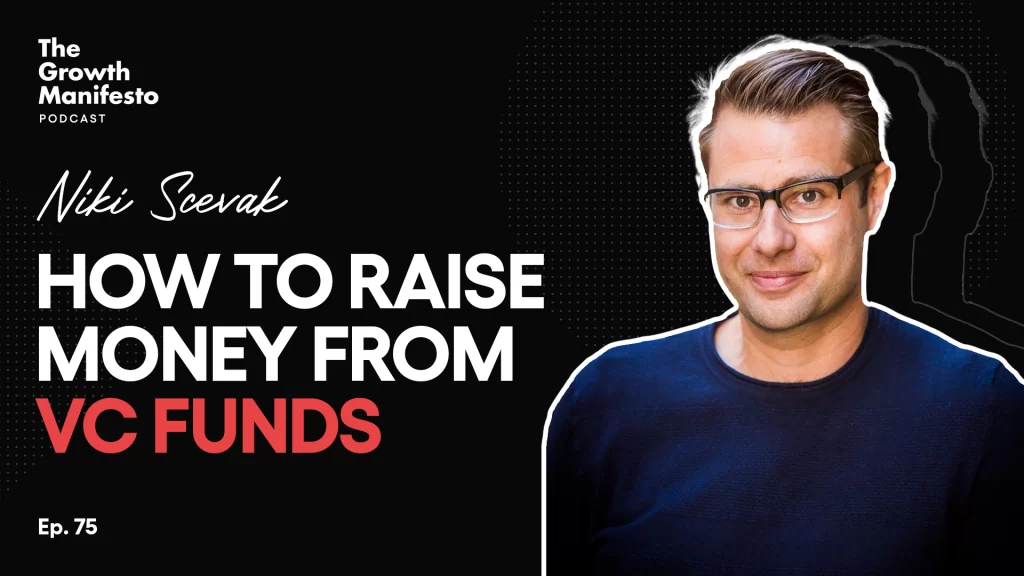
How to raise money from VC funds
Niki Scevak of Blackbird Ventures explains how the fund picks founders, why ambition beats experience, and what matters after a raise closes.
 with Niki Scevak


Overview
This episode is with Niki Scevak – co-founder and partner at Blackbird Ventures, one of Australia’s leading VC funds, turning $1.2B invested since 2013 into a portfolio valued at $10B with investments including Canva, SafetyCulture and Eucalyptus. In this episode we talk about how to raise money from a VC fund with discussions around the VC industry in Australia, Blackbird Ventures’ investment strategy, what they look for in a startup opportunity, how to pitch a VC, and what founders should focus on after they get funded.
Key takeaways
- Ambition acts like a magnet, attracting the best people, investors and partners to a founder's company on favourable terms.
- Blackbird backs the vision behind an idea rather than the idea itself, since ideas built on themes are usually already too late.
- Blackbird invested $250,000 in Canva before it had a product, then put in $270 million as the company grew.
- A founder's second and third meetings should get better than the first, since bad ideas are a facade that falls apart under questioning.
- Naivety helps founders challenge how things are done, while experience mainly matters later when a startup must scale from product to company.
Chapters
- Intro: speed predicts founder success
- Founding Blackbird Ventures in 2012
- How the VC landscape has changed
- Investing $250,000 in Canva pre-revenue
- What Blackbird looks for in founders
- The Canva origin story
- Pitching advice: be yourself
- Focus after raising: product and customers
- Exciting industries for the next decade
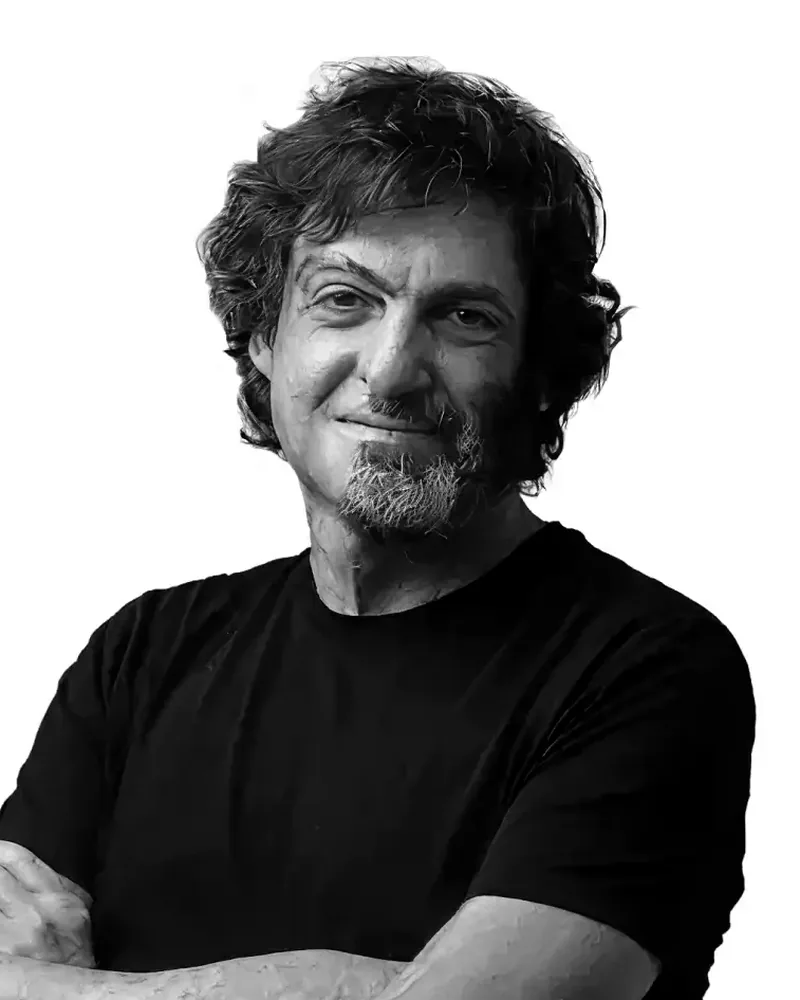
About the guest
Transcript
Auto-generated from the episode audio, so expect the odd mis-heard word. Timestamps open the video at that point.
the best predictor of success is often speed. And so you'd be surprised at the variance in even just, even taking away hours worked, if people just work the same hours, you would be surprised at the variance between some teams and the speed of progress they make and other teams and the speed of progress they don't make. So I think it's paying attention again. In the early days is like the speed and the rate of learning usually predicts the eventual success of the founder and the team as well. You're listening to the Growth Manifesto podcast, where we host in-depth interviews with business
leaders, authors, industry experts, and entrepreneurs, with a singular focus around business growth. At the end of each podcast, we want you to walk away inspired, to think bigger, and to have actionable takeaways you can apply to improve your business. Each episode is like a masterclass on a key topic, so make sure to browse the episodes to find the topics that are most relevant to your biggest business challenges today. This podcast is brought to you by Web Profits, a digital growth consultancy that helps challenge your brands drive growth in a complex and fragmented digital landscape.
You can find out more about Web Profits at webprofits.io. Now, let's get into it. This is Alex Kleanthus, and today we're talking with Nikki Shavak, the co-founder and partner at Blackbird Ventures, which is Australia's top VC funds. They turned $1.2 billion into over $10 billion in less than 10 years with investments including companies like Canva, Safety Culture, and a small company called Eucalyptus, which is
basically everywhere these days. Today, we'll be talking about how to raise money from a VC fund. And just quickly, before we get started, make sure to go ahead, hit that subscribe button so that you get the latest episodes as soon as they're released. Let's get into it. Hey, Nicky, and welcome. Hey, and thank you for having me. Yeah, fantastic. This is going to be a fantastic conversation, especially for all the companies out there that are considering how to raise money and what's that process like and then what happens afterwards, right? Because I think there's a lot of questions
and there's not a lot of answers that are easier to find out there. So I think this is going to be fantastic for people that are looking to raise money, but also I think for companies that are trying to understand actually how they can operate better. And I think quite a lot of times the thinking that kind of the VC funds actually can bring to the table is super valuable across all businesses. So with that being said, let's get into it. And let's start at the very, very beginning, right? How did you get the idea for Blackbird Ventures? Yes. So it was literally a
decade ago. I think it was last week was the exact 10-year anniversary. And back in 2012, I had just prior to that founded Startmate. So Startmate is an accelerator and many of the same concepts and is almost a precursor to Blackbird in that it's based on this idea of the circle of life, people who build technology companies, invest and help the next generation. And Startmate was, as I mentioned, almost the MVP version.
We had 20 or so folks. We found a handful of startups and helped them build their first product, win their first customers, raise capital in Silicon Valley. And that journey in the first two cohorts of Startmate sort of triggered within me that this is what I want to do with my life. This is what I truly love. And I think more than anything else, the people that I got to meet through that StartMate experience, you kind of make friends, a wave of friends at high school, you make a wave of friends at university and you don't make any other waves.
And StartMate was just this wave of friendships that I still count dearly today. And so I teamed up with Rick Baker and Bill Barty and we formed Blackbird. And the idea was to put this community of founders at the heart of what we do and to really lead with this idea that Australia could create these world leading companies. I think entrepreneurship, particularly a decade ago, was very skewed to see some successful idea in the US and make it some version of it in Australia.
and Blackbird was for the opposite type of startup, the startup that is trying to be the best in the world, not the best in Australia, trying to do something that is original and ambitious and unlikely and to support those companies and those founders right at the beginning. And so back in 2012, I would say venture capital was a dirty word in Australia. The last couple of waves have largely failed.
There'd been some exceptions to those rules, but essentially had it done very well. And then also the other embarrassing fact was that Australia had already produced these great, successful global technology businesses like Atlassian, Campaign Monitor, Redbubble, RetailMeNot, Halfprick Studios, so the list goes on. And not one Aussie VC was in those companies. This time was kind of like a paradox of Australian, this community of Australian founders had been rising up, but there was no real institutional venture capital focused on investing in them and focused on bringing them together.
I think the other magic of Silicon Valley is this connectedness to the founders coming together to helping the next generation where even back then you had successful founders, but they weren't necessarily helping the next generation. They were very disparate and disconnected. And so the idea of Blackbird was to bring them together and see if we could create a lot more successful startups with some money and that community. And I do remember those days because I remember all the stories about the fact that the Australian startup, it lacked funding, it lacked sophistication, that investors were a lot more, what was the word, defensive in terms of their investments and not kind of as, I guess, aggressive as some of the Silicon Valley firms.
And so that's a time when you launched, right? And so you launched at a very interesting time because of the examples which you gave, that was the first wave. The second wave are, you know, the companies like the Canva's of the world now that are just huge across the world, right? And so what was it like to launch back in 2012 and 13, like in that kind of environment? It was so hard to get up and running. And so we had 522 meetings to get 97 people to say yes.
And that was our first fund of $29 million. So it's essentially this, if there's founders in the audience, it's essentially this mega angel round that we raised. And we didn't even have the benefit of a vision. We were like, we'll spot other people's visions. And so it's a tougher sell than a specific vision. And the people who did say yes, as I said, largely were technology founders who were investing their own personal capital. But the interest in helping that next generation, I think, is what brought everyone together.
So that was the hard part. The beautiful part was once we had raised the fund, we were like a cup of water in the desert. There weren't any other funds and there weren't any other people, even with this express interest, to say, we love people who are ambitious enough to found a global company from day one to who want to be the best in the world and who want to build these wonderful software companies from Australia. And so it was hard to get up and running once we were, you know, it was obviously the best time to have a venture capital fund investing in global Australian software startups in 2012.
Yeah. And so we're going to get to your investment strategy shortly, but it seems like you created the kind of business that you like to invest in, which is like challenging the space. It's something which has just not been actually tried before and it has all those challenges, but then it has all those opportunities. And we'll get to that shortly. How much has the game changed since 2012 and 13 to where it is today in 2022? Yes, it completely changed. I would say where the ecosystem was a decade ago, we could meet with 200 founders per year and still that would be the 100% of the universe of startups in Australia. We have plenty of free time on a calendar and you look back and it's like, wow, that was a week in the calendar.
Now, I would say we need to meet thousands of founders across Australia and New Zealand per year. Pretty soon, we'll need to meet tens of thousands of founders per year. I would say that from nothing, we now have a healthy local ecosystem of funds. and then I think the biggest thing that has changed is Silicon Valley moved out of Silicon Valley. I think the ideas of Silicon Valley and the approach to company building and the courage
and the ambition is now spread all across the world because of podcasts and because of blog articles and because of entrepreneurs just swapping stories wherever they are in the world. So I think the investor base in Silicon Valley has absolutely turned its sights outwards. It doesn't specifically care about Australia or New Zealand, but it does care about where the best companies in the world get formed. And so that started off, I would say, a decade ago, they were happy to wait a really long time. I think Accel invested in Atlassian 12 years after it's got
started or something like that. And so now, with all of the success that all of the global firms have enjoyed in Australia, they are much more comfortable to invest earlier and earlier. I'd say still the Series A round, the $10 or $15 million round, that tends to be where they get most interested in starting to invest in the companies. And before then, it's still relatively a local market of capital, but even that is changing.
So I think you have a healthy blend of investors, both local and global now. I think you have an ecosystem that is 10 times the size of what it was a decade ago. And then I also think there was a lot of hope a decade ago. Like I hope I could build a company that could get to $100 million a year in revenue. I could hope I could build a company over this long-term horizon and cause the change that I want to. And now I just think people are very aware that these companies just keep on growing, keep on compounding, become the world's largest companies, become, you know, Google is still growing at 30% per year and it's hundreds of billions of dollars in revenue.
And it's just that I think people fully appreciate, particularly software companies, people fully appreciate SaaS and what high quality companies they are and just how humongous they can get. I think $100 million now would be viewed as a small outcome of success versus now you can, I don't know, Salesforce has $25 billion of ARR so you can grow into that. Like it doesn't stop at 100 mil. It doesn't stop at the ITO. These are the best companies in the world. Yeah, great, great. And, you know, that sets up the context for the next questions I'm going to ask, right?
Because it's become a lot more competitive now for startups, right? There's tens of thousands. That's the competitive landscape for not an unlimited amount of funds, right? And so, you know, I think the challenge to raise capital now in Australia is going to be that much more challenging because of the options, you know, for VC funds, angel investors and so on to select, right? So let's jump to your investment strategy, right? because you've made some pretty good investments since you launched the funds with specific companies like Canva and Safety Culture, right?
So what's your approach to choosing companies to invest in? We love to invest in companies right at the beginning. So in the beginning, you don't have a product and you don't have revenue. And so it is about, I think, the vision of the founder, the sense that they are doing their life's work that they want to build a great, not only a great product, but a great company that survives decades and, again, have this grand ambition. I think ambition is this powerful force where both,
obviously, it's a large change in the world that will happen in a large company, but it's a honeypot for the best people to come and work for you. It's a honeypot for the best investors to invest in the best valuation. It's a honeypot for everyone who's doing business with you to say yes to friendly terms and so on. So if you have ambition, it's this almost like this network effect or this gravity effect where you're more likely to succeed the higher ambition that you have versus I think also back a decade ago, Australians suffered from this ambition problem where it was like Australians
are not like Americans and find it hard to declare ambition up front and find it hard to say with a straight face the success that they're aiming for. And so the environment of other successes have brought those barriers down to expressing ambition. But I think in the beginning, you're looking for ambition. You're looking for this special type of person that makes something happen. Again, there's lots of smart people in the world. Most of those smart people talk about smart things versus do smart things. And so you're looking for that rare combination of has that vision and that clarity of thought,
but just goes and does it. Doesn't complain, doesn't complain because they don't have much money, doesn't complain because they don't have much structure, doesn't complain in general. And so I think it's finding those unique characters. And then venture capital is a weird investing industry in that the first investment you make actually in a successful company turns out to be a minuscule amount of your total investment. We first invested $250,000 in Canva before they had revenue, before they had product.
But we've since invested $270 million just into Canberra. And so, again, I think it's having the courage to make that first investment, to begin a relationship with someone right at the beginning. I think investors, whether in Australia or even Silicon Valley, quite frankly, as well, have this kind of like, oh, I'll invest in you after you're successful or after I know everything or after there's all of this uncertainty to be reduced. And I think, again, the way in which we've built Blackbird and hopefully the spirit in which we've built Blackbird is with this courage and with this openness to push boundaries, to go on journeys, to not have all the answers at the beginning.
And again, just to try and again, re-raise ambition and to be part of these special stories that turn into generational companies. And so at the beginning, I think it's vision. It's that sense of the founders doing their life's work and looking to make a big difference at a high level. And then it's always the specific case. It's always the opportunity that they're attacking. I'd say largely also that if you invest right at the beginning, being afraid of themes, people say, oh, this theme is hot this year or this theme is something that we're looking to go after.
Whereas I think if you look at, like if you break down the word theme, theme happens after all the companies have started. So like when Airbnb started their seed round, they weren't saying they were an on-demand economy. The world sort of waits for a few companies like Uber and Airbnb and so on to be successful. Then the world comes up with the term on-demand economy. And then the company that's starting after they hear the theme on-demand economy says they're an on-demand economy startup. So you're kind of investing in the 100th company versus the first or second or third or the original company.
And I think that's always a dangerous aspect of investing in themes is if it has a theme, it means that success has already happened to a group of companies, which usually is quite dangerous. So you like to invest at the idea stage, right? And, you know, I think oftentimes it depends on kind of who you speak with, but some people say that, well, you should have something that's actually started first that has, you know, some insight, some revenue, some opportunity, but you're saying, no, like, you know, what
we want is we want the big ideas and the people who have the perseverance and just a relentless kind of stubbornness that they're going to do it anyway. Right. And so that's what you're looking for. Right. And so when someone has an idea, so obviously that idea has to be really thought out, right? And it has to be something that kind of solves something that maybe hasn't been solved before. And then you're looking at the person themselves. So in terms of the idea side of things, right? How thought out or how complete, you know, does the thinking have to be to be interesting to you, right?
Because it's like, hey, you know, the car sharing thing that became Uber, right? hey, we're going to make an app, and the app's going to be a thing, and then we're going to do all these. Like, it seems so simple, but then the end result, it's changed transportation, right? And so, you know, just for the listeners, like, how thought out, you know, should the idea actually be? Yeah, look, I say we invest in just ideas is to suggest that we are open to anything and there's no minimum bar.
I think that's the key. Obviously, having nothing is not a good thing. Having something is a good thing. So if you do have a product, if you do have revenue, and then you're raising your first capital after those events, then that's obviously better than doing it with nothing. So to clarify on that specific. That's good to clarify, by the way, because this is what I'm here for, right? It's just to make sure that. Yeah. The other thing I would say is that a lot of people, a lot of startups approach fundraising with this kind of bank loan sort of state of mind in terms of like, if I just have these minimum requirements,
will someone invest in me? Like I now qualify for a seed round and so on. It's not quite how it works. Is this the most successful version of this? Does it result in great change to transportation or to whatever the industry might be. And I think in the beginning, if I just boiled it down, product and happy customers. I think if you have a small amount of really, really
happy customers, that is the golden mix. If you have like 10,000 people that don't really use it, or you have a high number of low engaged, that's actually practically nothing. But if you have like five or 10 people that are like just crazy about the product, that is actually like a lot. So this sort of, if you do have something, it's this small amount of really, really happy customers and it's clear that their lives have been changed either at work or in their personal lives, whatever it might be. In terms of an idea, I think one good test of an idea is it's crisply
communicated, but it's sort of as you go deeper, as you ask more questions, the answers almost get better and better. And one sort of test we have when we're getting to know a company is, was the second meeting better than the first meeting? Was the third meeting better? Let's do the meetings get better? Because usually bad ideas are like a facade. Once you ask one question, it's like, oh, there's actually no building behind the front. And then good ideas, like the more you ask, the clearer it becomes that that founder has just thought through
all different sorts of aspects and has all different kinds of opinions and has made all different kinds of trade-offs and almost becomes like in the first meeting, they're saying something at a general level, but the more you go down, the more it's revealed, the more energized they become, the more revealed it's like they've got this inner chip on their shoulder, the more they've got this like really passionate view about these small details. And I think that that's usually the test of whether someone has developed their thinking and developed
a good idea is like the second meeting is better than the first meeting, the third. And like, if you can get to the fourth meeting and you're still blown away by the depth of thinking and so on about the idea, then it's not a facade. It's not just a, you know, whatever pet sitting for the eastern suburbs, you know, on-demand economy, buzzword, buzzword, buzzword, and you're like, well, you know, question, question, question falls away. What it seems like is that the first meeting, there's kind of the high-level idea, and that idea has to have, you know, something behind it,
some interest, right? Then there's going to be the natural questioning of all the assumptions, questioning of all the things, and that's where that second meeting, the third meeting, starts to become a bit more interesting, because it's how they answer the questions. It's how they answer the questions from people that have a lot of experience and that are questioning companies every single day right and to be thought out and it's almost like that process of kind of kind of uh to peel the onion as they say right it's like wow cool and there's some conversations
and i'm sure that all the listeners can tell when they hear an idea like oh yeah what's that idea that sounds thing and then they get an answer like oh and then the more they get answers the more they go wow this is something that's super interesting and so it sounds like that's what's required if you don't have a business that's already basically has a product, has customers, has some revenue, there has to be like a solid kind of thought out plan, but not completely bombarded upfront with all the tech, right? Just start with kind of high level, simple idea that
can change the world, right? And that hasn't basically been done before. Let's jump quickly to the people side of things, right? Because the other part is now the founders themselves, right? What do you look for in a founding team? Well, I think it's, so we talked about that sort of vision. And I always think of like, if you look at the, like some graph of progress, like that's the top right, like that's mapping out where you'd like to end up. What does ultimate success look like? And then I think the other aspect is this bottom left corner where like, how will you
determine progress over the next 18 months? how will you sort of hold yourself to account have you chosen the right goals to focus on have you asked the right question the hard questions up front and attack the hard bits and prove that the hard bits can be overcome do does that person set high standards for themselves and it's almost like you know they're their own worst critic and there's this insatiable sort of competitiveness to them. There's insatiable attention to detail, insatiable attention to
quality in terms of you have to sort of, I know the founder is the hero in the journey, but it's essentially a team that makes the company come true. And so you're looking at how, like, do they have good taste in team? Do they have a good idea as to exactly who they need to hire in the next couple of months? And are they making good decisions on that? And how would they go about the hiring and how would they go about choosing. In the beginning, founders usually are doing it for the first time. Usually, they've never hired anyone. Usually, they've never managed anyone.
It's not so much that management. It's more like they just know exactly what's in their head and they know exactly how they want to get it onto the blank canvas in front of them. And they just need people to kind of help them in that 12 or 18-month first unit of progress. So I think, again, it's this almost like self-critical sense of high quality, sense of uncompromising
perfection, just getting things done and setting the rhythm of the company as well. Like the best predictor of success is often speed. And so you'd be surprised at the variance in even just, even taking away hours worked, if people just work the same hours, you would be surprised at the variance between some teams and the speed of progress they make and other teams and the speed of progress they don't make. So I think it's paying attention again.
In the early days, it's like the speed and the rate of learning usually predicts the eventual success of the founder and the team as well. And so what are your thoughts around the previous experiences and successes of the founders of the founding team, right? Because oftentimes, especially in business, you screw up your first startup, you screw up your second startup, and by the third one, you figured out all the things which you shouldn't do, which you didn't think that there were issues in the beginning.
And now that experience, that kind of helps you to become like a far more sophisticated kind of entrepreneur, right? And so how important is experience? Like when can experience not be as important, I guess, as an indicator? Well, if you were like, hey, how do you create a trillion dollar company? Oh, let's look at all the trillion dollar companies out there. And let's look at who started them. And let's look at their experience at that point in time when they started.
And you get to like, well, Microsoft and Facebook, they didn't even finish university. Google, they just finished university. Steve Jobs had worked, I think, like part-time at Atari and that was it. And then he founded Apple. And so all of these companies are founded by unqualified people with literally like, you know, in most cases, zero business experience, not even working in a job, just like zero leadership, zero hiring, zero everything. And so I would say it's not important from that point of view.
One word that's a very interesting word to me is naivety. People describe naivety with 100% negativity versus naivety leads people to do things and to change the way things work. If you don't have naivety, you're more likely to say, oh, this is the way that things are done, or you're more likely to not even say it out loud. It's subconscious. It's subconscious so you don't decide to do anything different because it's just the way things are done. And so you need almost this fresh naivety to bring about change.
You need sort of the outsiders to bring about change rather than the insiders. So on some industry product level, you need the naivety. On the flip side, experience can be useful. Again, like if you're a startup and just say you build a great product and you have really happy customers and growth takes off because that market timing and growth and so on will happen independently of how good you are as a business person. So just say that starts to happen.
It is like ugly to see a company go from like zero to 100 people to 200 people to 300 people in a couple of years. And the founders are going on this unlikely journey from never, don't have any business experience to becoming an expert on organizational design and processes and resolving people problems and installing leadership layers and building communication structures so that everything gets, every team can get things done at 100 people. everything can get done at 200 people. And in most of those successful cases, I mean, nearly all of
those successful cases, the founders did, you know, scale that vertical learning curve, scale that company building aspect. And actually it's interesting because now you can look back at the archives of something like TechCrunch where in 2006 or seven, people were calling for the resignation or firing of Mark Zuckerberg. He is like inexperienced and get rid of him. And now is like, oh, now he's like a leader and, you know, revered as a CEO and, you know, is probably
going to write a book about how to build a company and, you know, so on and so forth. So it's a terrifying journey. And I think also in terms of like venture capital or investors or advisors or outside help, I think the outside help really helps on the building of the product, but there's kind of two steps. There's building a great product and then there's building a great company. I think There's more horizontal or universal lessons in that second building a great company that, again, it's those prior founders who have succeeded. It's people, advisors, investors, other people around the company.
I think that's where a lot of the help happens and a lot of the help, not in a direct sense, but in an empowering sense of helping that founder go on the journey from founder to CEO and beyond. So that is hopeful for all the startup founders out there who think that they have to have experience or they have to have an existing company, existing product and stuff like that, that you actually don't. But if you don't, you need to bring something pretty strong to the game, right? Because it's the balance, right? It's the ability, but there's a cost to that.
Or it's the product, but there's a cost to that, right? So that's really, really interesting. Just because you spoke about it before, you invested $250,000 into Canva and that was pre, was that pre-product? Yes. Pre-revenue, obviously, because it's not a product, right? And so, because this is kind of like a hopeful conversation for some startup founders that have all this, what's it called, the self-doubt. There's so much kind of internal dialogue, you know. So, what was it about them which you said that's a good idea, you know?
I think the idea was so fresh and unique. And Mel had taught graphic design at university. And usually to be a graphic designer, you had to go to university. Then you were a graphic designer at a company. And then you bought $10,000 a year worth of Adobe products. And sort of like this 1% audience that was the professional designers. And they were the only people to do design. And the idea of Canva being 100% of the people should be able to do great design. And her and Cliff had founded Fusion Books, which was a high school yearbook business that was almost a microcosm of Canva.
It was a specific use case of students and teachers and parents compiling and publishing a yearbook that led to then the sort of foundational insights and the formation of Canva. So it was sort of very clear that that was their life's work. And then I think Canva is also a great example of a good idea such that the idea for Canva was actually so well thought through. It was like a 10-year idea. You could go, you know, I think even Mel had a slide of like, here's what we want to do in 10 years. And it's still relatively, like amazingly, relatively the same 10 years later as to what they actually did.
And so I think that was a case where, to me, when I think good ideas in the sense of how well thought through it was, how opinionated, how many trade-offs were weighed and viewpoints formed, Canva was really one of the great examples of a good idea. And then in terms of just the type of business that we love to invest in at Blackbird, were people all around the world going to use Canva from day one? Yes.
In terms of the monetization was very unclear in the beginning and very unclear even once the product had launched and then they settled on the Canva Pro subscription. but they were always, it's almost this principle, guiding principle within Canva to lead with building out the free product, like almost like build so much value into the free product that then some small portion of that audience will choose to pay them but the choosing to pay sales decision is actually
like so low friction and people just enter their credit card and so on. It's just like spend all your time thinking about how to create a great free product experience for people and allow design to be done by 100% of the world, not 1% of the world. And I think we love those kinds of bottom-up, low-friction sales model or that product-led growth or whatever you want to term it is the kind of business that we do love at Blackbird. Yeah, and that's a really good kind of summary of everything that we just kind of spoke about in terms of the things which you actually look for.
And we touched on all the parts which you spoke about. It seems like there were trade-offs between all the parts, right? because like she was super focused ambitious and all that but also like it was pre-product pre-revenue so then there were other considerations but it was extremely thought out probably the 400th meeting is even better than the first meeting right so so that part is all fantastic and it also seems that there was a timing thing because I remember the first time I heard about Canva was when Facebook ads started to become quite kind of big everyone's trying to create
some ads scalable and you know it just seemed to fit pretty perfectly to the wave that was about to happen so and so they had the vision and they had the need but then there was also a timing thing that kind of just you know um accelerated the whole thing so it's obviously a great investment because like it it basically hit on all the parts which you just explained and i think it's such a good example um just for people to understand but at the time it hadn't been done before at the time you know kind of the social media world was just kind of opening up here and
you know across the world right and all of the sizes and the platforms and all the things and it just shows you that like it's hard to tell the thing that is actually the thing that's going to make a difference um but it's that kind of the vision the thirst the hunger and the and you know the follow-through right yes absolutely and nobody can say even though the social media was sort of just in its early years, it was still very person-centric versus it was still quite foreign to think that business would have a social media presence. And it was still like an unanswered
question as to whether a company should have a blog or not. And so I think that was the environment. And then that was the first wave of inbound marketing, content marketing, businesses communicating with their customers and through social platforms that the company rose. And then And I think in more recent times, it's almost transitioned into this Canva personality or graphical design personality bringing to presentations has been a great success of Canva.
And Canva has kind of infused its own personality into how people create presentations now such that, you know, it's right up there with PowerPoint in terms of the most used presentation software in the world. And presentations are using that once or twice a week or once or twice a day. versus maybe you're updating your YouTube cover picture or your social presence once a month or something like that. So I think that sort of going from a single person use case to a team use case, going from infrequent graphical tasks
to everyday graphical tasks is also part of the sort of almost like second chapter of Canva. Now let's jump to the founder side of things, right? Cool. So the founders or the founding teams or the people who are looking to now say, for example, come to Blackbird, right? What are some of the considerations they need to have in their mind before they come to that first meeting? It'd be great just to share some advice on calls. So here are the things that we've seen that are not good.
And here are the things that are good. Yes. We used to say back a decade ago, this is less common now, but entrepreneurs used to have an exit slide, which is like how most hated turnoff of, it used to be like people have, they would think that investors would like to have an exit slide where in seven years or five years or whatever, they would sell to some big company, they'd name the company Google or whatever, and then they'd name some price to three decimal places and pretend to have some idea about the exit versus,
again, as I said, we're looking for people doing their last work. We're actually looking for people who would say no to those acquisition offers. So again, you're not going to get acquisition offers if you don't do something successful, successfully, usually. But if you are doing something successfully, you will get many acquisition offers. And so to become a $100 billion company, you actually need to say no to the $100 million acquisition offer, the $1 billion acquisition offer, and so on. So I think we're sort of looking for someone doing their last work, both from a sort of positive case and a negative case.
In the positive case, it goes really well. We want that person to build an independent public company over many decades. In the negative case, and usually it's guaranteed the negative case in the beginning when things aren't going well, that life's work gives that founding team the energy or the petrol to get through the hard early stages where it's not quite happening. And it's sort of like more of a up and down period rather than a straight up until the right period. And so I think, you know, again, that sense of the path of the founder to the company and to the idea and why are they doing their life's work.
I think the other misconception in founders is like you have to look like other startups. It's almost like this camouflage sort of instinct where you're like, oh, let's search for a seed round template or let's every slide you're kind of making yourself appear like another startup that you think is what investors want. Whereas I would say investors want something to be unique. They want something to be weird and fresh. And again, they want you to be you.
If it's sort of like camouflaged into all the other, you know, templates and buzzwords, then I would say, at least for us, at least for me personally, that's actually like you have like nearly no chance. If you are yourself, if you are unique and strange and fresh, then you have like a super high chance, particularly with Blackbird and myself personally. if it is unique that that is that is the and also as I said the the more you dive in the more energy
you get the more you learn that that's actually where we are the the the student rather than the teacher as soon as we think that as soon as I think I'm the teacher I'm like well actually you know stop that's a really negative signal if I'm an expert and particularly on a market or a product. And if it's just fresh learning mode of like, Oh my God, like I hadn't thought about like that, or that's a unique way of doing it or that's a unique approach to customer acquisition. If it's student, if I feel like a student, that's a super adrenaline rush moment for me as well.
So I think don't be afraid to be yourself again. You'll only regret your startup journey again. Unfortunately, most startups are failures, but you'll only regret it. Not because it's a failure. you regret it because you didn't do it to your own personality or you didn't do it your way. And so I would say the other observation of lots of universal misconception is people try to camouflage themselves versus be yourself. If you're weird and unique, you have more chance, not less chance. And that's really, really a great point, right? And let me just jump on that
quickly as well, because the thing that comes through is that you're looking for something different that hasn't been done before right and is that very specific to blackbird or because like there's certain their funds that specialize at certain stages right and so that's for blackbird right and so for blackbird it's like that but for other funds it could be that they are part of the next round right and so like is that a consideration um for startups as well saying of course not at this stage so know about the vc um their philosophy their approach their
preference and that's how you approach them. Is that important? Just quickly. Yeah. Well, yes, you've struck on an important point. Like each different investor has their own approach to investing. So I think the other thing people can do is to say, oh, VCs are bad because they said this, like just categorize all VCs as VCs. And sort of, even if you took it to its logical extreme, you could say, oh, there's a bad person, And therefore, all people are bad. Or I hired an employee and they didn't work out.
So I'm never going to hire an employee again because all the employees are bad. And so, again, it's just the same as everything in life. There are good people and there are bad people. And also, every person has their own approach to life. Even for all of the successful people, they've all tended to have success in their own kind of unique ways. And so that's going to skew them to certain ways of doing things or certain things that they appreciate. So, again, I would, in terms of when raising from venture capital firms, there are different firms with different strategies. There are different people with different philosophies we talked about. When we first started in 2012, the Australian VC firms were unimaginative. They were uncourageous.
and so the important thing is to know again or get to know, like when you're raising capital, it's like a sales process. You have to know the customer. You have to know the audience. You have to target the message. You have to understand how they make a decision if you want to give yourself an extra chance of making a sale. Thank you for that answer because that's something which I just wanted just to give some context to. Now for Blackbird specifically, you like people that are individual and that are unique and like their own sense of like weird,
let's call it, right? They don't fit, you know, like into standard kind of not from central casting. Inceptions of things, right? Which is kind of, which can provide people some confidence, right? But then you said that it's a sales process, right? And I just want to just talk about that quickly because oftentimes there are founders that are fantastic at product, right? How important is their presentation in the first meeting, right? Because that's when it's really important, right? But I just want to ask just the importance of that.
Yeah. I mean, look, certainly people who are clear communicators, who have that clarity of thought, who have that ability to articulate a vision, that is a great thing. However, I would say many of the best companies at the beginning did not have that ability. And particularly in Australia and New Zealand, there's more likely to be a lost in translation sort of, oh, that person's not ambitious or that vision isn't exciting. You kind of have to. So it is a sales process, but I also think about it as it's kind of like
people showing you baby photos. Like if you ask them to like turn up and say, okay, you need to, here's 10 different babies and you need to go out and talk to other people about these 10 different babies and you'd be a good evangelizer for how cute these 10 different babies are you're like oh I can't do that but you like you say talk about your own kid and they're like oh yeah like look at you know here's where we went to the zoo here's this beautiful moment we had and it's like it's so natural to talk about their own baby that even if it's you know not cosmetically a great
presentation or cosmetically sort of this laser level of detail, it's still obvious the passion, the love that comes out when they talk about what they're doing and why they're doing it. And that's also, I think, you know, again, the cosmetic kind of storytelling kind of works at the first line of defence, but that's why it's so important to go to the second, third, fourth, Because, again, the bad presenter is unlikely to do well in the first meeting.
But if there's enough glimmers, there's enough spark. By the third or fourth meeting, it's like, again, the shackles are off and the way in which and the more detailed and the more low level in terms of the questions, the more comfortable they are, the more passionate they are, the more articulate they are. So I would say you do figure it out. it may not be pretty in the first 30 minutes, but it's kind of, it does become apparent over time. Yeah. And I think, you know, just like piece of advice I'd give is, you know, practice the
presentation in front of the co-founders, in front of your family, practice it a hundred times so that that first meeting, like that is important. So practice it and it's not perfect, but it's better to practice it and fail than to not practice and fail because at least there's a higher chance of, you know, just in terms of practicing, right? And so just, especially for people that have all the product knowledge, but they maybe are not comfortable presenting, they're going to be impressive on the second and third and fourth meeting, right? And so practice the first one because that's the one where you're the most, the weakest, let's call it.
So just try your hardest, right? The other piece of advice I would say is don't go to investors first in terms of presenting. If you're raising a seed round, just say, I don't know, you're raising a $1 million seed round or $2 million seed round, whatever it might be. First, go to those companies, again, that have nothing to do with whatever market you're going after, that have raised a $1 or $2 million seed round from, I don't know, similar situation. They're in Australia or they're in some other connected sense.
Ask them out for coffee. Normally, no one asks a person who's a five-person company that's raised $1 million. No one asks those founders. Everyone asks Mel from Canva or Scott and Mike from Atlassian. but no one asked the $1 million seed round founder. And then say, I'd love to, you know, we're about to raise a seed round. I'd love to get your advice as to your own experiences in raising a round and who was good to speak to, who, you know, wasn't. And if you'd be open to it, can you rip my presentation to shreds
and give me some negative feedback, always invite negative feedback. And so you go to the coffee and if you get along, again, you're not going to get along, every time, but you probably get along 50% of the time. And if you do get along, usually that person will go, oh, let me introduce you to my own investors or let me introduce you to some people I met in my own fundraising. And so you get feedback on the pitch. You get to warm up on your pitch. You get to get introduced to some promising leads for your seed round. And if you do that, if you do five coffees or 10 coffees, it really sort of sets you up. After you've done
those, you're like in a good rhythm. You've got a bunch of introductions alongside your own meetings and you're sort of ready to launch into the processor. And it would seem also that the founders who raised a couple million dollars, let's say, and it's at the beginning, you know, they've just gone through that process. And so they know how hard that was. So they're more likely to give at that stage. And, you know, a person, you know, like Mel from Canva or Scott from Atlassian, their schedule will be out of control. They're not going to just be like spending time with you just because, right? But there's a much higher chance of just getting the people
that have just started, who have just gone through it, who understand what you're going through and just to reach out because I'm sure there's something around the giving back as well, right? It's like, Hey, I know that was hard and I've just started, but I'm happy to help, you know? So I think that's a fantastic point. So now they've succeeded in their raise, right? And now there's the first investment. What happens after that is because I think everyone's like, cool now i've got my money now i've got to start you know what do you like just because i'm sure
there's a lot right because it's a whole company after that right but you know so like the first six to twelve months you know what kind of are the expectations are from are the investors on that first six to twelve months i i would say once you have raised money the temptation is to do things that don't really matter. They're positive things, but they don't really matter. The only two things that matter are building your product and talking to customers. And as much as
you can concentrate your time into those two activities, the better. Sometimes you'll be tempted in... There are other things like PR or partnerships or, I don't know, whatever else that might be positive down the line, but certainly aren't going to be positive in the next 12 or 18 months that people can sort of fall in love with. People can fall in love with the theatrics of startups, like 30 under 30 lists and going to conferences and winning awards. And again, those are all great for mom and dad to feel like you haven't thrown your life away and your own ego,
but that is doing nothing for your startup. And so I would say that just build product, just talk to customers and anything under those two headings, building out the product team or whatever it might be, getting advice on how to get introduced or how to determine who's a good customer, who's a bad one, how to get advice as to how you should measure your sales outreach and sales cycle and set up the CRM with different events and different stages in the funnel.
And all of these, if it's to do with talking to customers, if it's to do with building product, do those. And I think, again, the people that are just focused on the customers, like it's just so clear. And those are the people that that's the forward predictor of success. And in the early days, you talked about, you know, if you've raised a couple million dollars, you're still building a product stage. But once you reach probably 20 or 50 people, you have to build a great company. So you build a great product, then you build a great company.
When you're building a great company, again, you're thinking at a meta level, you're almost building the product that builds the product. So you're building this environment that attracts the best people, gets them to do their best work and builds a great culture and so on and so forth. And so usually people who are thinking in that sort of building a great company mindset at the early stages, that's always a good... Whereas I think if you're sort of operating in this, you know, window closing kind of mindset of like, hey, I'm doing a, I don't know,
like Groupon succeeds in the US. I'm going to do a daily deal site in Australia and shit, I just need to hire 40 salespeople and yeah, that person will do. And versus the people that are like, you know, run them through three technical interviews, define their cultural values. How do they live up to them? get people's like, just think in this long-term, like it's almost like they're thinking, how is this person going to succeed over five or 10 years at the company? And you're like, but you just need to, you know, you're a handful of people. You just need to see if you are
building. But those long-term kind of built with care versus the hire it. Yeah. That person's kind of good enough and we'll do that. And, you know, it's sort of this one-year mindset, not this 10-year mindset. So how does the choice of the VC firm that they go to actually affect the support that happens after the first investment round, let's call it? Well, I would say no one's going to have magic dust to make you magically successful. So if you don't have a product that people care about or the market timing is not quite right, that there is
nothing that that is just mother nature um uh where i think um uh a vc firm can help um predominantly is in team building um uh so you know whether they run programs or have pools of talent or communities um that that are looking to join startups and and be able to offer them introductions to people that don't read linkedin or seek ads and and and um are comfortable with joining early stage startups and so on. Whether it is building your team,
going on that journey from a founder to a CEO, I think surrounding the founders with other founders and getting folks to swap war stories and walk through decisions. And I think also just the people that tend to learn the quickest of the people most comfortable sharing the bad news. Again, usually like in an investor update, it's like, hey, this thing happened, that's great and great, great, great. And then you can't really do anything with great news. you're like, hey, that's well done and congratulations. But if you share bad news, if you share problems, if you share things that aren't working,
those are the things that people can help you with. And I think investors can help themselves, but investors can help also connect you to other, whether it's portfolio founders or other founders, they know that encountered a similar decision at a similar point in time. And I think sort of the VC as a network switch to other founders is a really valuable role to play. on the growth itself, on the product itself. Again, I would say it has to be that unique personality,
that unique viewpoint, that unique take on how the world should work. That to me should be the province of the founders and the company. And VCs can share stories and frameworks and so on, but I don't think you're going to get too much help in building the product part. you are going to get help in the building the company part i think yeah that's awesome and just on the um problem side of things right because i had this conversation last night it's like cool so everything is going well then are you doing enough then because there should be problems with
growth like because that's literally you know that's the faster you grow the more problems you have and the bigger the problems and what you want are the biggest problems because that's where there can be support like if everything is going well what are you actually doing like how can it go well because it's not a hundred million dollars yet right so it's like um it's just a fantastic if the wheels aren't falling off you're not going fast enough okay fast enough that's that's like mario andretti or something like that like he's got this this um this fantastic quote um final question you know what are the most exciting industries that you're looking at um across the
next three five to ten years it is a tough one as i said with the themes it's it's um it's really tough to predict. I would say that machine vision and AI, again, these are these big words and I'm almost like a little piece of vomit comes in my mouth as I say that, are genuine breakthroughs and genuine leaps forward in technology. And it's not at that level. It's at the level of
how can those trends reimagine products in surgical robotics or healthcare AI or robo-taxis or industrial robotics or whatever it might be. I think the machine vision getting so good and so cheap has opened up all of these problems and all of these markets to be reimagined. So that's quite exciting. I think another sort of, again, generic force, but like foundational force is
biology becoming more like computing. So our understanding of biology is increasing with the assistance of software, but sort of almost the understanding of biology to have it, you know, you can tell it something and it will come back with some result in a predictable fashion, you know, mRNA, genetic sequencing, synthetic biology, these sorts of breakthroughs are going to have, you know,
obviously a huge impact in drugs and therapeutics, but they're going to have breakthroughs in like that's how clean meat is going to come about and cultured meat, and that's biology that will potentially allow people to eat meat at a reasonable cost. The price of beef is out of control, not ruin our planet with all of the land and the food and the water and the methane. And so that being one example, but I think just the almost like computational understanding of biology, I think will set us off
in new different directions and new different products and new different markets. So those will be two. But again, it's the weird and wonderful, it's the cultural change, it's the ideas can come from anywhere. Again, we didn't hear about graphic design for five years after we first invested in Canva. So these lonely ideas tend to be the best ideas. Thank you so much for sharing the journey of a startup founder, you know, just from idea to presenting to raising to post funding and so on.
how can a company or a startup founder or a person who's interested in speaking with Blackbird actually start a conversation with you guys yeah just email me Nikki N-I-K-I at blackbird.vc I would say like this is my job like I'm here to invest in companies it's not embarrassing it's not strange. And so I think like the best, the best emails are ones that have this clarity of thought directness.
Here's what I want to do. Here's why, this unique point of view and communicate that in a couple of sentences. Sometimes it comes across in the buzzword, buzzword, buzzword, three pages. It's hard to describe. And so, you know, you didn't have time to write a short letter, so you wrote a long one or it's like some other like abstract kind of a of like, hey, I'd like to pick your brain or like sort of, you know, to me at least my personality is like just share the dream and share the, you know, unique point of view. And this is what,
you know, we hope for every day is that person to have that ambition and to go on that mission. So, you know, just email. That advice that he just gave is pretty much how you should email any successful person who's busy because they get lots and lots of emails every day. And so I think that's just a fantastic protocol to have in general, right? But listen, thank you so much, Nikki, for coming on the podcast. This has been such a great conversation and thank you for sharing the journey. And we'll talk soon. My pleasure. And thank you.
Thanks for listening to the Growth Manifesto podcast. If you enjoyed the episode, please give us a five-star rating on iTunes. For more episodes, please visit growthmanifesto.com forward slash podcast. And if you need help driving growth for your company, please get in touch with us at webprofits.io.