MarketingLeadership and cultureEntrepreneurship
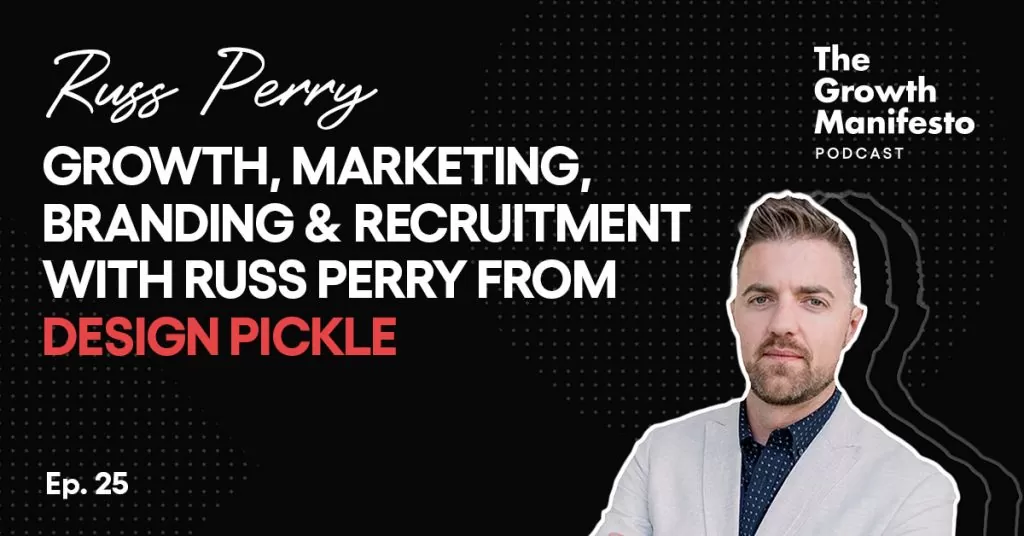
Growth, marketing, branding & recruitment with Russ Perry from Design Pickle
Russ Perry, founder of Design Pickle, explains how in-person marketing, disciplined branding investment and values-based hiring built an eight-figure business.
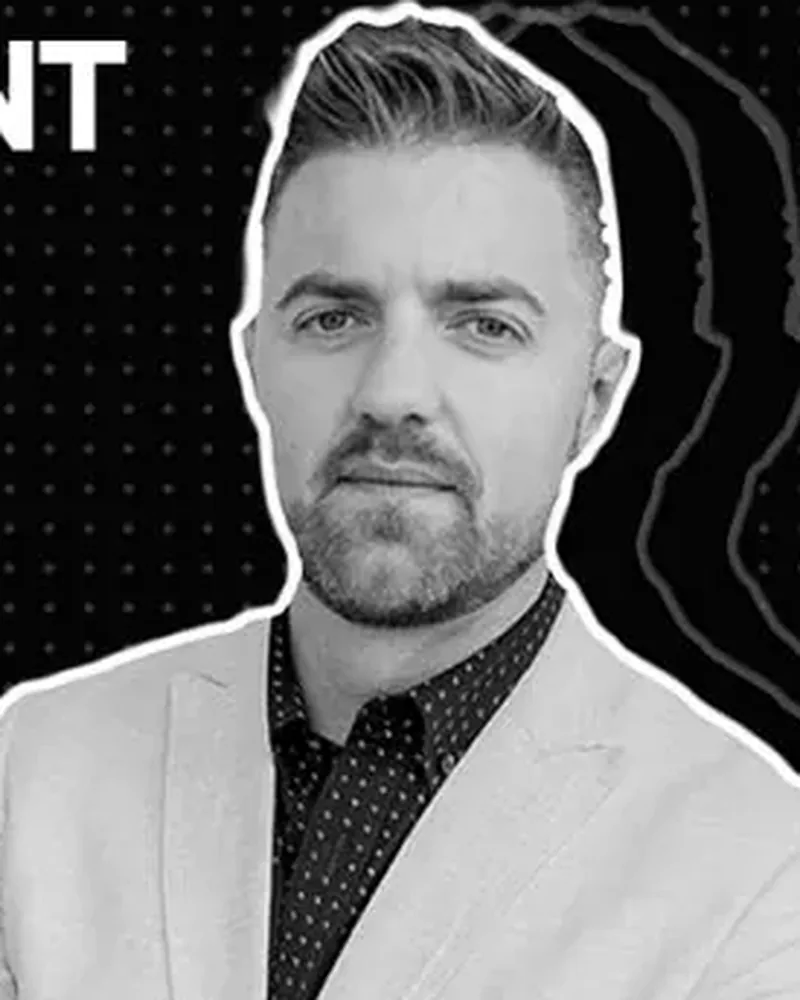 with Russ Perry


Overview
This episode is a discussion with Russ Perry, CEO and founder of Design Pickle – the world’s #1 unlimited graphic design service. We talk about growth, marketing, branding and recruitment (and everything in between).
SHOW NOTES
Key takeaways
- Russ Perry says Design Pickle's early growth came from wearing a pickle costume at events, not online ads, to build genuine in-person connections.
- He argues direct response advertising should never be cut to fund a branding project, since branding is a luxury only once acquisition already works.
- Design Pickle generated about $1.8 million in revenue from LinkedIn ads using plain, specific copy like saving $30,000 a year on design fees.
- Perry deliberately shifted marketing away from his own personal brand toward the company brand, wary of being tied to it if he ever exits.
- Design Pickle filters candidates with open-ended written questions, including one on company values, before any hiring manager gets involved.
Chapters
- Intro: growth without funnels
- Naming the business Design Pickle
- Wearing a pickle costume at events
- Branding as a luxury after acquisition
- Moving from personal brand to company brand
- The 1.8 million dollar LinkedIn campaign
- Hiring for grit and core values
- Why competitors cannot copy the brand
- Time blocking and work life balance
About the guest
Transcript
Auto-generated from the episode audio, so expect the odd mis-heard word. Timestamps open the video at that point.
The less steps we have for someone to just buy and learn and be there, the more success we've had. And that was the key thing about LinkedIn is we were doing our pro product, which just drove to talk to somebody. There wasn't a download this and do this and be here and be here, then get emails for two weeks long. And then we try to do this. It was just like, do you need help? Boom. Here's a hard thing. Might offend some people on your podcast. I'd say to your listeners out there, they don't want to talk on the phone.
They don't have confidence in what they're selling. Period. You're listening to the Growth Manifesto podcast, a Zoom video series brought to you by Web Profits, where we talk about how to drive business and marketing success. This episode is a discussion with Russ Perry, CEO and founder of Design Pickle, the world's number one unlimited graphic design service. We talk about growth, marketing, branding, and recruitment, and everything in between. So let's get into it. Hey Russ, how's it going mate?
It is excellent. Thanks for having me today across the world. Yeah, thanks for being on. So today we're interviewing a man called Russ Perry, who's the founder of a company called Design Pickle. Strange name, strange name, right? But in case you don't know who Design Pickle is, it is a company where you can get the graphic design done at a fraction of the cost of
traditional designers. Yeah. You started this thing back in 2015, right? So five years ago? That's correct. Yeah. We're on our sixth year now. You're in your sixth year now and you're an eight figure business now. Is that right? Yeah, yeah. We've been growing at quite a clip. You know, our model has really focused a lot on giving, you know, access to creativity and design to a lot of businesses who may have not had that opportunity, but it's been quite a growth trajectory for sure.
So I got to start. Why design pickle? Like, how did you come up to that? Just because I'm just interested in that, you know, this is probably not going to be that helpful to our, you know, just to the audience right now, but I'm just really interested. No, there's a really, really specific reason. It has nothing to do with pickles. Although I'm a huge fan of pickles. The reason came actually because my previous business, I had a traditional creative agency, very brick and mortar sales calls. You know, we were always trying to position
ourselves and my company name was horrifically bad for a branding and creative company. We had picked the worst name, which was a mashup of my partner's, like the first half of his businesses, other businesses name. And then the first half of my old businesses name, and we just mashed it together um and the name was full of consonants we had a forward slash in there and you just never could understand what the name was it was possible to talk about and spell correctly it was it was just horrible so when i started it i just wanted something that no one would forget
and like like just was easy to remember and say it and you're almost like did you just say design pickle like really that's what you just said it's like yeah that's it so thankfully the dot-com was available and i picked it and there you go that's how it became about well i i think number one congrats on finding a dot-com that was available that's two actual words i think that's something in itself um but on the other side of it i do remember seeing you um like in your first couple
years um because there was a guy in a pickle suit oh yeah were you were you at well we i was the pickle suit for a brief narrow window of time our very first year okay that was in 2015 if you've seen other people in pickle suits um actually i take that back there were a few more pickle suit occasions that i was a part of but uh it's been a rite of passage for our team to become the pickle Like it's a torch we hand off to different team members, but it works.
And like we get signups from trade shows we did three years ago that people still remember the pickle. They were handed by the pickle guy. Right. And so this is the thing is I don't remember who was in the pickle suit, but I remember there was a pickle suit and there was a guy in a pickle suit and there was something about marketing and design. And so maybe just start with that, right? Like how important do you think that was in your initial success in, you know, just gaining
traction? Because that's what it's all about in the beginning, right? Right. So when we first launched, we didn't really have a plan on our target audience. We didn't really know who was going to buy our service. And the whole business was an experiment because really what we were trying to do is can we create a mathematical model of utilization of graphic design on an average basis and price it in such a way where we're still going to be able to pay our teams, pay ourselves and make some money. The whole thing was an experiment. So marketing for me, I didn't know a single thing about Facebook
advertising, online advertising. The one thing I did know was talking to people and getting in front of people and connecting with people. So we use that strategy both on and offline. The online one was as easy as going to events that we hoped people would buy our services, handing out pickles. And it was a radical success. I mean, it takes a lot of guts to be a grown man dressed as a pickle, but people give you credit and they want to talk. And there are a lot of pickle fans out there, like rabid pickle fans.
So about half the conversations aren't related to your business, but you're just creating a connection anyway. And finally, like five minutes into talking about kosher pickles, they're like, wait, what do you, what do you even do? And you didn't tell them the online connection was in guest blogging and writing. And I did a lot of that initially. And it was borrowing authority from my network and people and colleagues and just said, Hey, I'm launching this business. Here's, here's 10 different angles. I feel like your audience might be helpful.
Could I do that? And that was our whole six months for strategy. we were profitable month one and it probably was in the first year we started doing paid advertising but that's how we got enough cash and confidence to then go after the paid advertising piece yeah right and i think um it's interesting because you weren't afraid to try something that was a bit scary for lots of for a lot for pretty much everyone else in the world right is to dress
up as a pickle or to put yourself out there i guess in a way that gets attention yeah and we looked at ourselves too is like when was the last time you went to an event and a design company was there like never so it was also like what like if i go to a marketing conference i'm going to talk to 30 people who are doing email automation or doing printing or doing whatever but like like true design graphic design so we just thought we're like wow wouldn't it be novel if we actually
talked to people in person and met them in real life and and how to and and like put our brand out there as people because even though we don't consider them competitors the marketplaces are very faceless you know you kind of connect with individuals but like there's no people behind the brand it's just a it's just a transactional engine that's trying to run as big as it can so we wanted to put like I wanted to tell my story I wanted to tell my team story I wanted to put that personal brand out there and we still do that to that today I mean we we haven't been
doing events and we really haven't been doing events with COVID but but we still have that like you can you can talk and connect to somebody like you could call someone and that's that's like a weird thing often in online services and yeah it definitely is and I think um what's interesting is that um it gives people something to connect with which is interesting and it also is really um it's really it's really easy to create a brand around it right and i guess that's kind of one of the things which you've now created and i think i think in this competitive world that we are in
these days it's been like this for now some time but you started at a very competitive time it's become even you know more competitive in that the last six years the brand is really important because otherwise it's just a website that you probably haven't heard of yeah and so from a brand perspective like this is something which is really hard to measure how or what is the impact in your in terms of marketing right and so how do you measure now the brand side of things
compared to the acquisition side of things right because obviously having a brand impacts conversion rates, your cost per leads, like, you know what I mean? It impacts everything. Is there something there internally, which you have that, that you say, well, if we're going to spend on brand, here's how we're going to measure it. So here's the way we look at it. From day one, most of our advertising has been direct response, like buyer services. We have the luxury of doing
that because we are a very easy to understand proposition. Like, hey, Alex, do you need graphic design help? You can answer yes or no without a demo, without me having to go into details. Like, you can self-assess a yes or no decision very easily. So direct response advertising in general works for things where you can, you know, if you have the need or not. The, where marketing comes in is educating people about the need, you know, helping them
remember there's a need, teaching them about a need, then you foster that for a while. And then at some point you can hit them with the direct response. Branding for us is, is getting into the mindsets of people who have the need, but they don't, they're not real clear about like that we exist or if they've discovered us, the brand is about credibility inside of choosing us in their selection pool, in their selection criteria. So we think strong branding
helps with conversion rates. It's helps with your audience targeting and profiling in the sense that they'll say literally, oh, I've heard it. I've seen you. I've heard about you. You're at that event. You're doing this. Or I saw this video. You spoke about this. And so we can't ever tie it to direct CPA, but we know that it moves the things in the right way. And if you're creative about branding, like the pickle guy, it's totally disruptive and
free to have these ideas with branding. And not enough companies take advantage of that. They think branding is about the polished pixel perfect. You know, the typography is like, this is kerning is exact and the colors match. And, you know, no, it's like, no, just go hand out pickles for 10 hours and see what happens. That's branding for you. You started off kind of like as a direct response company. That's how we started off as well. So I completely understand that. And you, you at the same time, we're focusing on the brand side of things.
Yeah. have you changed that approach as you become a larger company and so nowadays there's a lot more revenue there's a lot more the company's a lot larger like it like is it still a direct response company or is there like a larger investment now like in the marketing side of things as what you just said before yeah as we've grown really we just have had the luxury to be strategic about all of those things. So as a smaller company, it was very opportunistic. Okay, here we can now go
do this. Let's do that. Oh, we have a branding. Russ, you can be on podcasts or we're going to do some crazy antic video. Let's do that. Now I actually can like pay people to think about things and we have strategies for that and we're implementing it. But I wouldn't say one is leading the other, they're all interrelated. And again, coming back to our value proposition, it's still very disruptive. The majority of our buyers have never heard of us. And we have to ensure that our
brand connects with them on an emotional level, really because when you're buying a service, even if it's a software, productized service, all the things we call ourselves, the tech-enabled service is the cool one we've been using um there's trust involved like okay i gotta trust i'm i'm and i'm ultimately working with a human a person so i gotta trust person and we try to bridge that trust gap or at least get people closer to it with the branding but the direct response stuff that always will work because you know people are not very good at making decisions
sometimes so we have to haunt them for six months with retargeting and then they'll finally choose to decide to use us when their pain points have gotten so extreme so what do you measure from the brand side of things because i think on the direct response side of things that's pretty easy right yeah totally totally right but from the brand side of things like you said they don't lead each other that's kind of interrelated right um but you're spending money you are spending money on that versus something else how do you know i should keep spending money
on this thing because this is the thing that we've been so many conversations about right cool well this yeah impacts that we've got to get out there we've got to do campaigns we've got to go on podcasts we do all these things that costs how do you assess that success well uh we don't first we don't jeopardize our our direct drivers of growth through advertising we know works so that's first and foremost if there's an organization looking to do a big fancy branding project but they're going to have to cut back on their funnels and their paid acquisition
and the things that they know is working never choose the branding project ever because you're going to starve yourself for what is hopefully going to work and take it away from something which you know is working. So that's my first thing. Branding at a macro scale is a luxury you can only have once your business is running and operating. Branding on a micro scale is what you do when you make sure the visuals are there. You make sure the things are in order. But it's very practical in nature.
When you get onto the offense of branding, it's because you can, whether you have the right team members or budget, because it's very hard to track. And you kind of have to be okay with that money going out into the world and that energy going out into the world. and like like i love branding but like when my when my um you know branding side of the business like my pr team and my creative team and the people are doing their thing i want to be like
what's the roi give me the roi because you're a hardcore marketer dude but like but i know at the end of the day, it's an investment in the longer term. And it works for our clients. And there's a lot of other things you can measure, like customer retention and loyalty and affinity. You can measure things like engagement rates on content you're putting out. You can measure things like who shows up to your webinar on something unrelated to sales. These are actual
measurables related to brand. If you have a strong brand, people are going to show up when you want to talk about whatever, because they care about your company and they want to feel connected to that. So there are those metrics, but as it pertains to sales, you really just have to kind of try to piece it together. And the more precise you are with your branding efforts, the better you can see if there's causality and correlation. A great example is if you are looking to advertise
in a, I think like outdoor advertising is branding. So if I'm going to do non-traditional outdoor advertising and I do it in a way where I know XYZ clients are kind of clients are supposed to see it and engage with it and be involved with it, then do I see that happen in a trailing 90 days or 120 days or whatever. So when your branding becomes very focused and very precise, I'm going to do a direct mail branding thing to pediatric surgeons who only focus on children.
Like that's a random thing. I don't know what you're telling me about. Yeah, I got it. Then you could see. So that's the trade-off. But I do think around engagement, show rate, open rate and all of that there are some pretty practical things to measure but that's more on your you know it's it's hard to track that into just direct sales and it's always and always has been yeah great um yeah that's fantastic because i was gonna ask you actually how you measure it and then like you just answered it so that so you just you read my mind which is great um
can you talk about how your marketing has changed in the last two years versus the first three years or four years yeah here's easy you don't see me anymore inside of it so um we shifted from a ceo brand driven type of company here's what russ is doing here's what i'm here's my story let me write a blog post every week on our journey to a million dollars i did that too like all the startup ceos yeah but like at the end of the day i realized that the company is the
brand and my team members are the brand and our clients are the brand and our designers are the brand and so over the last two years I pulled off I tinkered around with personal branding I had a weird you know kind of phase and go we call it my black phase there we just wouldn't get my these things but ultimately the design pickle brand was what we wanted to build and that's actually been part of my strategy this year even though I'm real behind the ball COVID pushed back my own personal inputs in that where my efforts inside of the branding are to support the CEO story inside
the wrapper of design pickle but not be the guy on the ads not be the person you know at the forefront of it all I mean the I love doing podcasts love telling stories like this but go back three years that I was like in the ads I was doing stuff I was talking to people I was very much doing it all. And I think that's key for the longevity of a company. Because if we wanted to exit tomorrow, and I'm wrapped up in it, I look at a brand like ClickFunnels. And I know this is something that they're working on, you know, Russell Brunson is so much wrapped into the brand
of ClickFunnels, you know, extracting him out of it is going to be take a long time, it's totally possible. But if I'm going to buy a company, or there's something there, you know, personally, I don't want to be on the hook for a lifetime of branding for, for, for a company that I don't own anymore. Yeah. Yeah. Yeah. I got it. I got it. Um, um, and we'll come back to how you actually did that because we're going to be talking about the people side of things soon, because that's a people thing as well. And actually having the right people on the team that can actually help you
execute on that. Right. But just quickly, I saw a case study on LinkedIn about your success in acquiring a bunch of revenue from LinkedIn ads. Yeah. And if I'm correct, they estimated it's 1.8 or so million dollars in revenue. Like if you have kind of had calculated it across the year. This is from LinkedIn ads. Now, I just ask this question only because the whole world talks about Facebook ads,
Instagram ads, search ads, display ads. But LinkedIn ads is like this kind of mystery area where apparently it's too expensive or you don't get conversions or it's for the bigger brands only. And yet you made it work. Right. How did you make it work? It was super simple. we we did direct response advertising and we did messaging that our target audience understood in
one line hire a part-time designer for twelve thousand dollars a year save 30 and i don't know the exact copy but this is an example like save thirty thousand dollars on your graphic design fees. These were lines that our audience and our right buyer would resonate with. If you think about it, someone who's never bought graphic design, they're going to gloss over. Someone who
thinks $12,000 is a lot of money, it's going to gloss over. So there's just tons of pieces to this that just hit it exactly. They're very specific in our copywriting with plain text ads mainly to then get someone into our pipeline and our funnel. We also got a lot of haters on these ads because we have designers like, I'm working on this, don't blah, blah, blah, do this, this. It's engagement ratings,
which actually helped the ads perform better. But yeah, it was again, being very clear with our messaging on a thing that only that audience of our buyer would resonate with. Yeah, that's a fantastic point. And just in that point as well, just because we've seen success with LinkedIn ads as well and very specifically around the text ads. And I say this now, and I know all our competitors are going to go out and start to buy a bunch of text ads because that's what happens. But whatever, this is a podcast to share. That seems to be the undiscovered treasure right now.
Probably after this podcast and become less discovered. Well, it will become a lot more discovered, but really interesting. But it does bring up the point of you really understand your target market, right? The personas which you're trying to go after. And how many have you got like personas that you're trying to target like at any one time? Roughly four or five. And they really are targeting the different types of buyers of creativity. so anywhere from an entrepreneur who's buying it to a cmo who's buying it for their organization
and we and we don't necessarily hone in on the industry uh specifics simply because i could work with any industry it's uh it's all about how they're purchasing our creativity and if they're purchasing creativity because if i tell the etsy mom who's making you know kitten bibs like hey pay five hundred dollars a month for design she's gonna have a heart attack because you know she's never bought she's never bought it so we have to communicate in the correctly
and so then i think that probably would have been a contributor to your linkedin success right because i think i saw in the case study as well that it talked about that your ability to test to change audiences just like that because it's all in the segmentation, right? And so it's probably the one channel where you can actually target ads that way. Is that what you found as well? Well, so yes.
However, here's actually a completely different answer to your question. Not even a question you answered me. It's actually in all of our history of advertising, And this goes against so many like, you know, HubSpot, like for a hundred years that HubSpot's been around. I know it's only like less than 10 or whatever, but it talks about, you know, the funnel, the flywheel, the this, the that, the this, the this, the this, the this. Literally the less steps we have for someone to just buy and learn and be there, the more success we've had.
And that was the key thing about LinkedIn is we were doing our pro product, which just drove to talk to somebody. There wasn't a down, like download this and do this and be here and be here, then get emails for two weeks long. And then we try to do this. It was just like, do you need help? Boom. So like that's what we were doing on LinkedIn. We do it on other platforms too. I don't think that's unique to LinkedIn, but that ends up, I think was a large reason for success. is so much you see the ads on LinkedIn. It's like, it's like download the ultimate five,
the five step guide to understanding the ROI on realtor mortgage hacks. And you're like, whatever, you know? So there's a balance and I get there's different funnel pieces of like nurturing and find it. But I do think the people on LinkedIn, especially if we want to go there, they want solutions for problems today. Like if they're going to talk and connect, they're there for a reason um that's why we found social advertising to be better for the lead nurturing and awareness pieces whereas linkedin was working really well with the direct like let's
talk shop yeah that's a great um that's a great point like this is something which um which i speak about with people all the time about like efficiency versus effectiveness right like you can be super efficient and not have to talk to anybody ever right but you can increase your conversion rate 10 times by jumping on the phone right by just just getting a form and just calling and it's like because you're so scared to jump on a call we're going to make these massive funnels and 68 step processes when one step one call with a follow-up or not right like and that's like
performs way better you know and so it's it's an interesting um conversation because i think especially for marketers we're like obsessed with metrics and funnels and steps and not talking to anyone ever right but it's like it's actually helpful talking isn't that what you'd find as well here's a hard here's a hard thing um might offend some people on your podcast i'd say to your listeners out there they don't want to talk on the phone they don't have confidence in what they're selling period you should be able to talk to anybody and be pumped about it and if you don't
do that it's just because you're not sure yeah yeah that's a great hey that's a great point and that's where sales and marketing have to talk right like you guys are going to talk and you guys have to just get out there and speak to people and i think for marketers this is the thing i found just for myself because at first um i didn't want to open the phone especially because i have a stutter and it was a whole thing and i was like i just don't want to ever talk to anyone ever but the more i spoke to people the better my marketing became because i understood them better I understood I just understood them better and because I understood them better the messages
were simpler I didn't have to do so many steps to convert somebody right because I just got it um and you could disqualify faster too which is also helpful you know oh yeah just like they're not a fit wow I just had 10 conversations that wasn't a fit there's there's something I need to change in the steps before this because I'm like you won't know that if someone's just opening an email like you won't know you're getting thousands of people that are the wrong fit of all they're doing is opening but you could know that in five conversations or one conversation
immediately yeah definitely definitely let's jump just quickly to the people side of things right because you know to have a company of your size um um it's all about the people now right and you mentioned it before about you know um you moved the marketing way from just being about you it's about the brand it's about the team right now there's so many there's so much to talk about on the people side i think so i'll try and keep it focused but let's see how it goes yeah um
what's been your approach to recruiting people that are awesome let's say not the bad challenges that we've all had to have but you know what's been your approach to finding the good people So there's three characteristics we look for aside from the prerequisite of they have experience in what we're looking for. So if you're creative, you have creative experience. If you're a web marketer, we need to have, you know, digital marketing experience. it's um they've they've they've worked hard in their life like there's some crazy hard job they've
had something they've done whether it's volunteer projects um you know religious ministries are always a good sign things that just are uncommonly or just like the world's worst job they did for a year trying to figure it out just this grit and perseverance is super important and we love people who have that and myself and everyone has those stories that work here um the other is the we screen with our core values so we have five core values friendly smart working truth service and
tenacity these core values are our screening process to even talk then to a hiring manager so you you won't even so someone who needs to hire you won't even ever meet them if you don't past the core values filter from our hiring team and that's been extremely powerful to bet and then we just need some some evidence of your success in prior roles like show us show us don't just tell us show us what you've done and and whether that's a sample work or um like we're not going
to talk to referrals because those are always going to be awesome but like actually show us the work, show us the product. And in a couple of occasions, if we think we can't find it, but we really love the people that pass those two tests, we'll do a paid engagement as a contractor, as a test project to find them. But we use that process from everyone from the most entry level to the most senior level at the company and everywhere in between. And it's worked really well. That's awesome. And I'm totally going to take some of those parts of it.
I like the one about grit. That's something that, yeah, like I totally can see that as well. And I've never really known a way to tell before, except when you said, tell us your hardest job. And they're never going to put that on their CV. Because it's like probably the thing that they don't want it, that is not really related to marketing maybe, right? And so now all of a sudden or to whatever is being hired for. So is that? yeah that's like like an interview question right or something like that exactly i want to
do yours mine's super quick i did telemarketing for two weeks in a trailer a mobile trailer selling carpet cleaning services and everyone in the trailer was allowed to smoke cigarettes it was the worst job 100 commission job that was the worst wow job i've had i've had plenty i think I'll name two. So back when I was like 18, 19 or whatever, maybe it was 20 or something like that.
I was a removalist and it was a pay by hour, but there was unlimited hours. So I would work 17 hours a day for seven days a week for like, I did that for two years. And then I was like, I had a sore back and I was like 19 or 20. I was like, wow, I got to get out of this thing. Cause I didn't do so well at school. Like not that I wasn't capable, but I just didn't want to. and then another job after that was and this is back when my stutter was like really really bad I did a telemarketing job on commission only for like it was just I'm just sitting there going why
what the hell am I doing but you know that was and it was hard it was like it was really grueling stuff. Could they smoke? No they couldn't smoke this was that's crazy stuff but that's really good how fast in the interview are you asking that question is that like kind of the first second third questions you know like because like they're not going to be able to find it from the cvs right right so the core value is right up front and we actually have a pretty you know like four or five questions that are open response writing questions and one of those is
hey based on our company core values which i'm paraphrasing which one resonates with you and why i tell the story we don't tell them what the core values are they have to go to our site they have to find them they have to do some research and do a little legwork and then they talk talk about them and you you'll learn a lot i mean i think i think one of the most powerful things i've read so many business books especially on on hiring and open-ended writing questions are the best way to to screen volume of candidates it'll immediately disqualify so many folks who don't even put the effort into that ask so um then the job one is is on the fly like on the spot
because we just we want that answer that's like oh i'm almost embarrassed to tell you this story like what i did but you know we haven't gotten anything too um obscene yet but like i'm sure i'm sure that'll happen eventually yeah but that's but that's a super important point that like the application form to apply for the job has an open-ended question which will filter people out and you know like for you it's about values but it could be anything right it's just something that puts that there because that's how you scan to get to the next part where you want to find
about kind of the grit and then performance and stuff right exactly and a few more you know what is what we ask them personal questions within the realm of legality like what are hobbies or interests you have like talk to us about um you know we give them some hypothetical design pickle situations regardless of the role hey i'm a design pickle client and i need this can you help me and And it forces them to like, you know, we give them a few hints, like here's our knowledge base, here's some things. But they're like, okay, if I really want this job, I'm going to actually have to spend some time, do some research, think of some things.
And that will eliminate 80% of our applications. And then we have the 20% that we'll actually move forward with. Have you ever had the challenge where there weren't enough people that filled out that first stage where like there weren't enough people that completed the application the right way, but you needed people for your growth? And like, have you ever had that? So we won't hire you at all unless they're like, even if we get one person that fills the first stage, we could potentially hire you.
And that has happened. I will say, and as we've matured as a business, the pressure of hiring is there, but we could always wait longer if needed. So earlier years, I do think we made a couple hiring decisions that I would have changed because we like, we're like, let's just hire them. We need the help. And today we won't do that. you know, even if we have, you know, a family or friend or someone we know really, really, really well, we're like, this is so good for you. Go apply for this position. Which is actually
happening right now. Someone, you know, a couple of us know, we're like, dude, go apply for this position. We're still going to make sure we get a bunch of other candidates. Yeah. And we, and we'll, we'll filter it. And if, and, and then if person still rises to the top, great. If not, then we did our job well on the hiring part. And I think this is a fantastic point now for I guess anyone who is listening because right now it's a recruiter's market, but there's so many applications
that your challenge is not going to be finding the people. It's going to be filtering through hundreds, maybe thousands of applications, especially if the role is potentially something that people can do from home, which everyone kind of has to do these days, right? So I think this is a really good process right now. And I'm certainly going to take a few of those parts and kind of just adjust some of us. Because I mean, like I have to go through a bunch of applications. I've got like 2000 applications. I'm like, well, I don't know where to start from. But this is really good. Let's jump quickly.
From a marketing team perspective, who would you say are the like the roles which are critical to have in house? you know, like, you know, so these, and maybe it's like in the beginning, these were the first two, three hires, which are critical. And then as it expanded, then we added these on. Well, I mean, without a doubt, you need a strong project manager in-house. Even if you are super small and you're hiring agencies, you're hiring consultants to augment
your workforce, you still need someone that's not the CEO, that's not the founder, that's managing all of that and that's their job. As you grow, eventually that becomes a marketing manager, marketing director type role, but you have to have that. And anytime, you know, like I remember when I was doing a lot of the management and I was doing 10 other things and these relationships would go sour or the projects would go sour because I wasn't committing enough time to it. So that needs to be what someone wakes up every day and can do is to know and own those relationships.
As we've grown, I do feel like when it comes to paid acquisition, you need someone in-house who can coordinate and understand that really well. And we have a blend of outsourced services that we use and agencies that we use and in-house teams. And it works really well. And when I started paid acquisition, I went and took Facebook advertising courses myself so that I could know, like literally in an old school 2015 ads manager trying to figure everything out and doing watching on Udemy and how to do this and how to do that.
But I did it so that I could manage it and I can hire people around it. So you really want someone in-house that can talk shop and knows these things. That's a trust piece. The other thing, you definitely don't need creativity in-house. You can always just go to Design Pickles. I love it. Copywriting. I feel like copywriting, I haven't, like, I want to find a great contractor system with that, but man, I think copywriting and
writing has to also be done in-house. That to me is something, that's your voice and your brand And if you don't have copywriting in-house, you're going to be really struggling to get things done on time and to your specifications. And on that point as well, like I think that's been the hardest thing I think over the years for me personally anyway is finding people that can write on brand. because then always you, me, like, you know,
like people that have seen you that have been there, especially founders, they care about what it says and how it sounds and stuff like that. So you're always going to be pulled back in unless you've got someone you're like, yeah, she's amazing. You know, she can do the copy. I trust her. She's probably even better than me because she's got more time. She can think about it. She can do more stuff behind it. It's less like quick and it's more thought out. And I will say too, and I'll say this with the disclaimer that we've yet to do this ourselves, but the copywriting needs to be someone's only job. And right now, most of the companies, myself included, copywriting is like five people's jobs and it's, or five people have that job.
and so like it's it's like we're there we're so close to getting there and I and again I don't think everyone can have this this opportunity but I sort of wish I would have done it five years ago like I would have really saved myself a lot of late nights and editing and writing and a ton of other stuff if I had done this sooner and if you think of all the places where you need to write website emails it's social media text posts it's it's everywhere right um thanks for asking that
question um that's really interesting one let's jump quickly what's how do you approach competition what's your thoughts around competition how much do you spend looking at competition and what do you do when people copy you like how do you approach it so old old school russ barry would lose his shit every time a copycat competitor would come up. And here, and here, because they would do dumb things like literally copy our website and forget to change the mail to links. And so all of their inquiries would come to us or just totally steal our work and post
our work on their websites and, or, or name us with, name themselves like sneaky URLs. That's like, so like if you misspelled design pickle, it would go to this one. Like so many things I've seen over the years. Then we just said, you know what? Those aren't our competitors, truthfully. Our competitors are in-house employees and agencies. That's who we compete with because we're going after the people who are spending dollars there. And that's a much larger pie. And so today we just let all our copycats and competitors cannibalize each other's AdWords and do all the things that they do and compete at the bottom.
And there's a couple of brands doing our model that I really respect that have done it with grace and they've taken their own approach. There's actually an Australian brand of Pivotin. I won't name them because I don't want to plug on them. Don't mention them. They're not on this podcast right now. But they're great. And the company that they built, they did it really well. And they did it with a lot of integrity. And so those are the people I want to talk shop and connect with. and I don't get stressed about it because they are innovating in the market share of who's not
using these services infinitely greater than the market share of who is. So, so today, you know, we, we keep it in mind, keep in mind that I'm looking at, I'm looking at who's selling creativity and how do we do it in a more compelling way and who's buying creativity and how do we do it in a more compelling way. And plus we're so far, like anytime a competitor pops up with a flat rate model doing what we're doing, we just sort of giggle because they don't even know like what our 10 year
plan is. And it's like, well, that's nice. Like have fun. I mean, it'll be a nice six figure revenue stream, maybe seven figure revenue stream and they'll do good. But you know, like it's cute. Yeah, no, I got it. And I think this is the part because it's happened to us as well, especially because, you know, we have, we educate the market, you know, we were established back in 2006. So a lot of our competitors, I was teaching back when they were teenagers, you know? And so like, it's really interesting. But I realized that the brand is hard to copy.
You can't just copy the brand. You can copy the words, you can copy the creative, you can copy what we do, but you can't copy our positioning in the minds of our audience, you know? And I think that's what you guys have, right? Is like, like you design pickle now. It's not like that's a weird name. And it's like, that's Design Pickle. Now, I'm sure it's out there, so that's a weird name and it's really interesting because it stands out, but it's hard to compete on brand when they don't have a brand yet. You know, I think that's something that's easy to forget, you know, especially as a direct response marketer who just wants leads,
you know what I mean, in sales. Yeah. Well, it comes back to what we were talking about at the very beginning about branding. That's your ultimate secret weapon. It's our ultimate secret weapon. And look, it doesn't take rocket science to put ads online. It doesn't take rocket science to procure designers and markets and manage a relationship and make a margin on it. But that's not what the business really is. The business is about the experience, the technology, the results, the things that we do. And I love it when people leave
and use a competitor and come back and they're like, that was horrible. Like, sorry, you know. And then at the same time, I love it when people come from a marketplace and they say, man, I don't want to use that anymore. I love it when clients cancel Design Pickle because they're now hiring their full-time designer because their business has grown and they really don't need us anymore. That's what I love to see. And that's what I think is a healthy marketplace. But God forbid, if someone copies our website one more time, I'm going to lose my mind. No, I got it.
And I think somebody copied our website and they did it a little bit better. So I went to our creative and was like, all right, step it up now. And we had, we had a whole, we just changed everything really quickly. Right. Cause it's like, cause I'm that competitive. I'm that competitive as well. Um, as well, but like, it's the same thing as well. Kind of, you know, with us, right? Like, like in the past, like, it was always like, oh, was the agency or in house? Well, it's in house. If you can afford it in house is always going to be better, but you need a bunch of people, not one person in house. There's a few people in house.
There's always space for agencies, but they have their place. Right. And like, you shouldn't be upset if someone's saying, hey, I'm going to hire somebody now because that's what I prefer because that's kind of makes sense. And if it's the same service and they can get it in-house, go for it, right? Just understand that you need a few people, not just one person. But, you know, like we used to be like that, like, oh my God, it's going to go in-house. It's like, well, if you can afford an in-house team that will handle your growth, yeah, hell yeah. That's what all the fastest companies have,
but it's not the cheapest, right? So, you know, so we kind of understand that, you know, we're that stepping stone between having, you know, basically the full in-house team and kind of having kind of like individuals that can handle your parts. But just quickly then, personal side of things. How do you balance family and business life? Well, I actually had a podcast for two years talking about this every week. I don't do it anymore. It's called Good to Be Home. And that was actually our tagline.
how do you balance business and life but you know what i think i think the key is in including your life into your business um there's there's i integrate my life into my business my kids come to the office so i've worked with my wife she consults for the company um everyone is really into pickles in my house and from when they're children children they're like first food is a pickle for it um but you know and and i don't think like this isn't a new concept anymore i
think 10 years ago people were really innovative by it but like there's not really a line anymore and man think about the i mean i'm at my home my kids are waiting for me like like looks like you may be at your house i don't know like it's it's just like yeah yeah we're all at home here too now as well yeah there is no line between that anymore but i like to ensure that um it's it's it's part of it and and like truly integrated and i and i truly and i encourage that part inside of our company like we have our very first design pickle baby on the way a woman
at our our first we've had two team members have kids but it was the guys and their wives had kids We have our first female employee having the baby. I feel like this is my baby too. I feel sort of like I'm having my first child all over again. So that's the vibe we have. And I think that allows us to recruit really well. It also really allows us to enjoy it. So for people, and this is a challenge that a lot of people that haven't worked from home before, I started to face, for people that are now having to work from home
and they're trying to figure out that balance and they've never had to do this before. Are there any tips or anything which you can give that are kind of actionable like on how to stop work and start and you know what I mean? Can I plug a cool thing I created? A little tiny pip. So I'm not doing much online. I'm not on social, but if you go to rustperry.co and opt into my list, I have a daily planner that I've created this for myself and I use it every day.
I print it out every day and I'm a time blocking maniac. And I just am super precise with what I'm going to do. It's basically a combo between a calendar and a checklist. I just mashed it up. So that's my lead opt-in. Don't worry, I'm not doing any retargeting advertising. I rarely email ever. So you can get a copy of that. That's my tip. you know, I do this every morning. I know exactly where I'm going to be, what I'm going to do. And I, and I'm clear on that plan and I wouldn't be able to work from home. I wouldn't be able to
work period. If I wasn't relentless about how I manage my time. That's great. And I have downloaded it. I opted in and I got it and it's, it's great. It's great. The new version. Yeah. Well, I opted it in like this week, you know, cause I was just kind of having a look at all your stuff, you know, it was just like, I was just going into everything and I was like, oh, that's really cool. Because I love productivity hacks. I love them. So like I got it over. So I got it. A couple of quickfire questions, right? If you had to choose just one channel or tactic
to drive success in terms of marketing, what would it be? So which channel would I pick? Yeah. Yeah. So if you just had to pick one channel for growth, what would it be or tactic? I know this is not one we can do right now, but live events. Okay. I want to ask why, but they're quick fire questions. Of course, what book has had the biggest impact on your success? Thou Shall Prosper, which is a finance book
by a Jewish rabbi, Rabbi Daniel Lathan. And it's all about money, money mindset. Great. What's your number one piece of advice for hiring awesome people? Hire with your culture and your values first. How do you relax after a crazy day in the office or home office? How do you relax? I haven't been doing this for probably 10 years and then COVID made me do it it's plain Diablo 3 I've been playing Diablo 3 after like a 10-year hiatus
you're old school me too what's the best piece what's the best business advice that you have ever received the best a business advice that you've ever received? Know your numbers. If you can't be comfortable with the P&L and you don't get excited about modeling finances and you don't want to make profits, then don't be in business. That's a great one. And what do you do for fun?
And this is a question I ask everybody I interview too, by the way, but I just want to know. Yes. Well, I would say travel. However, that's been a pause. It's why I built a global company so I can have a reason to expense trips all around the globe. Right now, it's truthfully doing really fun things with the kids. We're trampoline, we're going camping, just loving that life right now. And I'm not just BSing, like it really has been, it's been good. My, you know, having an online business has been really conducive to that.
Russ, thanks so much for coming on the podcast, man. This has been a really great chat. Check it out. the site is called designpickle.com yeah check it out subscribe and also check out russperry.co been really awesome to have you on the podcast and we'll have all the links in the show notes and hey man have fun with your kids and talk soon man thanks alex take care see you mate bye thanks for listening to the growth manifesto podcast if you enjoyed this episode please
head on over to iTunes and give us a five-star rating. For more episodes, please visit growthmanifesto.com forward slash podcast.