Leadership and cultureStrategy
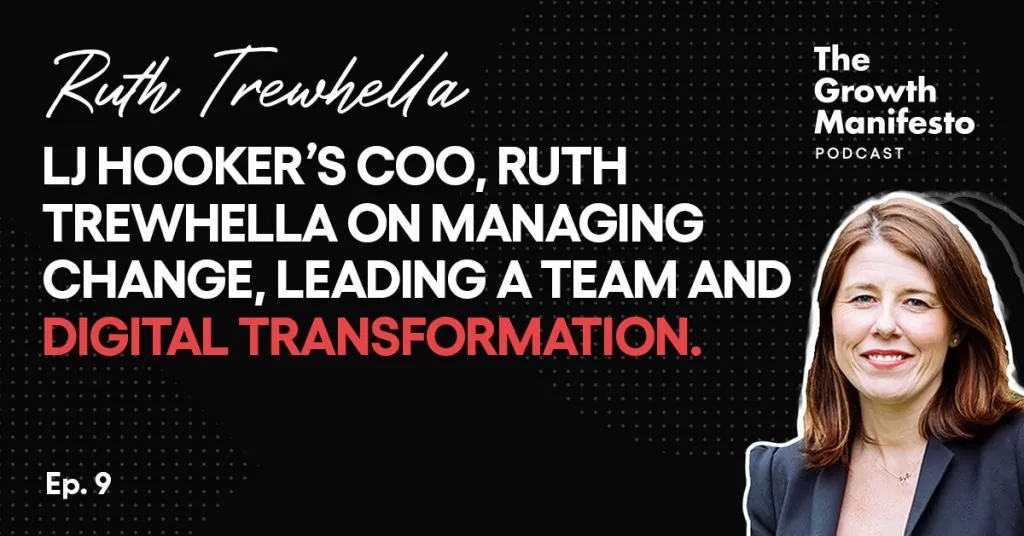
LJ Hooker’s COO, Ruth Trewhella on managing change, leading a team and digital transformation.
Ruth Trewhella, COO of LJ Hooker, explains how she leads change and delegation while driving the digital transformation of a 90-year-old real estate brand.
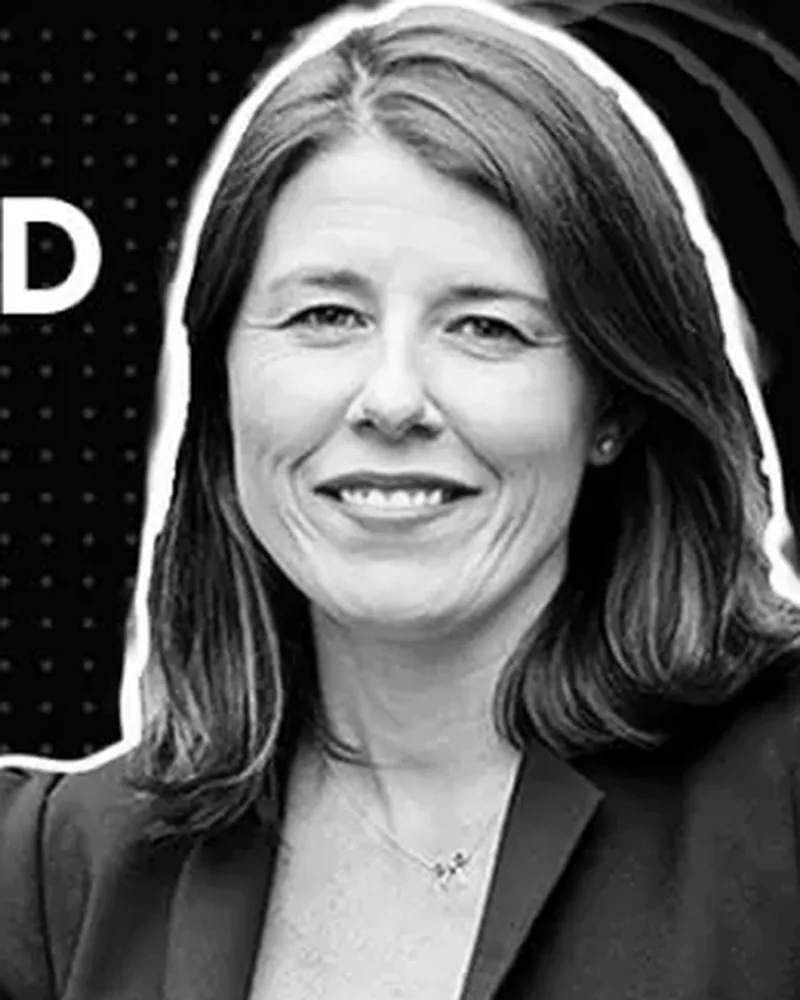 with Ruth Trewhella


Overview
In this episode, we interview Ruth Trewhella. Chief operating officer of LJ Hooker. One of Australia’s best known real estate brand. We talk about managing change, leading a team and what it’s like to manage the digital transformation of a 90-year-old brand with more than 600 offices.
SHOW NOTES
Key takeaways
- At LJ Hooker, Trewhella had to relearn that the real customer is the franchised business owner, not the end consumer buying or selling a house.
- She hires mostly for will rather than formal qualifications, arguing that skill can be trained but the motivation to find answers cannot.
- Two of her senior team members email her every Monday, her fixed work-from-home day, listing exactly what they need from her that week.
- Trewhella prioritises which business processes to fix using a payoff matrix that weighs how easy something is to implement against its impact.
- She says she now spends about 90% of her time leading and enabling her team rather than doing hands-on work herself.
Chapters
- DISC personalities at work and home
- From Irish accountant to backpacker
- Learning to delegate instead of controlling
- Support returning from maternity leave
- Joining LJ Hooker to drive change
- Balancing leader time versus maker time
- Deciding which processes deserve to exist
- Looking for the right mentor
- Reframing conflict as growth not fear
About the guest
Transcript
Auto-generated from the episode audio, so expect the odd mis-heard word. Timestamps open the video at that point.
You're listening to the Growth Manifesto podcast, brought to you by Web Profits, where we share inspiring stories of real people who've succeeded in the marketing and business world. Today, we interview Ruth Truella, Chief Operating Officer of LJ Hooker, Australia's best known real estate brand. We talk about managing change, leading a team, and what it's like to manage the digital transformation of a 90-year-old brand with more than 600 offices. So let's get into it. Where they go, your D or your dominant side's coming out at the moment.
Yeah. Right. Is it serving a purpose? Yeah. All right. Do we have to check in? Or I could say, look, I'm actually being, my S personality's coming out at the moment and I'm not speaking up, I'm not making decisions and I'm asking for too many facts. Yeah. So it's powerful in that way because it's more simple to say a letter or a colour, you're a blue, yellow, green or red. Yeah. And that way the language is already there and it happens there. I mean, I like the one where you say at home it's different. Do you know how common that is? I actually felt really sorry for my husband when I realised that
because it was, yeah, it's always like two, you know, Gemini split personality. Yes, yes. I used to date a Gemini. That's why I asked. She was actually my fiancé. Oh, really? Yeah. It's my partner's a Gemini and how you just explained. Yeah. You? I was like, oh, yeah, it sounds similar. Yeah, multi-personality. How is your relationship going, Alex? It's good, Tony. It's good. It's good. Is it? Now, you're a D on your- I am. Strong D. At home as well, though?
I don't think so, no. I think it's like, I don't know what it is at home. Do you make any decisions at home? Because Alex has just moved in with his partner. Yeah. Not long ago. So this is new. This is fresh. Oh, yeah, I make decisions at home. I just don't try to force them. Kind of anything which I don't really care too much about, you know. So, yeah, sure. Like I could decide on what the rug will be. Wait, that's a big decision. Well, apparently it can be. Well, I mean, apart from that, you know.
No, it's pretty good. But look, in general, I think there's a lot of energy that happens like every day at work and then to go home and, you know, it's kind of you want to switch off. and so I think something happens there where you kind of do the opposite from the day. So it's not always the same personality that's kind of at home that's at the office. Which I think is really healthy though. You don't want to have that same energy or that same persona. I've always been really glad that my husband and I are in two completely different industries and two completely different jobs.
He works for a bank and he often comes home and explains or tries to explain what he's done that day and it means absolutely nothing to me. And it's the same really for him when I come home. And I think it means then that you don't have those, you know, you have heated debates about other things, but not necessarily about work. So it makes it easier to leave it at work. And it's probably more the emotional side of work that you take home, but that's kind of what you want your partner for as opposed to debating whether what the decision that you made that day was the right decision or not.
Yep, nice. Now you are the COO of LJ Hooker. I am. Now prior to that. Yes. Correct me if I'm wrong, an accountant background? Yeah, I'm a management accountant by trade. So, I did a, I'm Irish, obviously, and I did a Bachelor of Arts in International Business and Languages. So, I actually speak five languages, none of which, apart from English, I use on a daily basis. Sorry, which languages quickly? So, English, Irish, which is a legitimate language.
yeah Gaelic, French, German and Spanish. Oh wow. Yeah. They're all the school classes that they have, Spanish, French, German and Japanese they have here. Yeah, Japanese, that's what my daughter does, she does Japanese. And I did that I guess with the hope of maybe going to Europe at some point and kind of operating in a commercial role within the European Union. but then I came to Australia and I had decided before I came here to do an accounting qualification
so I'm a chartered management accountant and I'm so glad that I did do that even though it's not something that really forms part of my role on a daily basis now because A, it made it a lot easier for me to get meaty roles here as a backpacker and second of all because it actually stood to me through all of the roles that I've had because it makes it easier for me to deal with finance because that can often be a relationship, particularly as you get into more senior roles that can be a bit fraught. But because I understand it, I think it makes it a lot easier for me.
Yeah. Why did you decide to leave Ireland? I think it was just the done thing and it still is, to be honest. Everyone would go to Southeast Asia for a couple of months and travel and then come to Australia and then go to South America on the way home. and I just never, never went to South America. I stayed, I stayed here and I got some really good roles. I had some really, really interesting roles when I got here. So one of the first roles I had, my current boss was actually running the business
that I started working for 15 years ago. So it's come full circle and I'm back kind of working with him again. I got to work in a hospital. So I worked at the Matter Hospital in Brisbane and that was, it was really, really interesting but challenging because you were given particular departments to look after from an accounting point of view. And one of the departments was, you know, the morgue. And that was... It's not the same as the departments in corporate life, is it? No, no, trying to cost out the cost of a morgue and, you know, charge it back. And it was, yeah,
it was interesting. But I just felt that there was probably more roles here for me that would allow me to develop my career in a different way. And I stayed, I got permanent residency, became a citizen, then married an Australian and have two kids. So, you know, Australia is home. Beautiful. Because you have had an amazing journey to go from a backpacker to the COO of LJ Hooker, the largest real estate agent company in Australia, over 600 sites. It's been around for 90 years.
Yeah, 91. Yeah. This podcast is going back to Ireland. You know what's going to happen? but it's an amazing job i'd love you to share the journey with alex and i like how did you get to where you are now um i think it was one of the benefits actually of being a backpacker which i didn't realize at the time was you were restricted to working for one company for six months at a time while you're on that one year holiday visa without what that's what it was 15 years ago and i think what that gave me an opportunity to do was realize that i could
switch industries quite quickly. So I've never been someone who's particularly interested in one thing over the other, one industry over the other. It's more about the role. And so that gave me an opportunity to experience different roles in different industries over a very quick period of time. And I was quite lucky to get roles with some household brand names. So one of the first roles I had was with the Trading Post, which still exists in Australia, but was part of the Census and Telstra brand which I ended up staying with in numerous roles kind of for a 10-year period
but there was I worked for News Limited for a while in a contract role, the Matter Hospital and I think what that gave me an opportunity to do then was experience broader roles and when I started to go for more permanent roles once my permanent residency had come through I'd gained probably five years of experience in a one year period. And I still worked in finance roles probably for the first four or five years that I came here. And I got to a point then where
I was kind of sick of providing the advice to those that were running the operation on a day to day basis based on the numbers that I was looking at and just observing what was going on. And I was very lucky then to be given an opportunity through a restructure to take on a role on a secondment basis. And I'd encourage anyone who gets an opportunity to do something, if you're nervous about, you know, doing something that's completely different, secondment is a good way to do it because you've got security to go back, but it gives you a comfortable space within which to kind of try something new. So I did that secondment and then
I was offered that role on a permanent basis. Sorry, what was that role again? So I went from being a management accountant to being a, it's a bit of, a little bit like a project manager but I was given a very a very specific project that kind of um traversed the finance and the operational space and that's when I found um my love for kind of people process technology and how that can actually have a massive impact on the performance of a business
and that role just kind of morphed over time and I mean that's the other benefit of working for a large organization like a census or a telstra is there are always those other opportunities there and if you're prepared to you know go above and beyond put in a bit of discretionary effort i think those organizations are always willing to find something for you yeah because i think just on this point here there's the corporate world can be complex and standing out in the corporate world can be difficult because of the layers you know and so how do you stand out in a
scenario where you're starting kind of not at the bottom but like you're starting out and slowly slowly you're expanding out over time because I speak to lots of people and they all have a lot different opinions on what that experience is like yeah it's that's a bit of a tough one I think because it's worked for you obviously it has I guess I am I've always been very conscious of of how I engage others and I think being a management accountant you're often translating on any accountants you're trying to translate not you're trying to translate financial
information to non-financial users and there's an element of skill and stakeholder management that comes with that and and I think um I've always been ambitious and I've always been driven by my career but never at the detriment of others so um I would always look to work with others to progress my career as opposed to working against others or to compete with others to progress my career, I always put my hand up for more. So if I'm not being challenged at work, that's the signal to me that it's either time to move on
or it's time to take something else on. So I think I was always putting my hand up for more and I can be a bit of a yes person, which has worked for me in terms of being given other opportunities, but also works against me in terms of not, you know, sometimes taking on too much. Your work-life balance might come out sometimes. It's not even work-life balance. It's more that overwhelmed feeling or it's the delegation piece. So, you know, we were talking earlier about me being a Gemini. I'm definitely a perfectionist
in certain aspects of my life, my career being one of them. And I've had to kind of shed that skin somewhat over the last couple of years as I've gone up through the corporate ladder, because the reality is that you cannot continue to own everything at the same level of detail that you've owned it before and actually as a leader I'm not doing the right thing by my team if I'm either doing it for them or not letting them do it the way they want to do it because if the outcome's the same I don't really care how they get to that point and it took me a while to be
comfortable delegating not empowering I was always happy to empower people but it was more the delegation and you know that fear that someone might make a mistake and that might be reflected on me but it just just over time it's just kind of it's it's always there but I've managed to make it work to my advantage as opposed to being you know something that kind of stops me or blocks me. What are some of the ways that you are able to delegate effectively because obviously like
in the beginning you've started, but how have you evolved? Are there some tips for people? I talk a lot about the will and the skill matrix, which is a proven technique in terms of looking at where your teams are or what motivates people. So you can have people on your team that have the skill, but they don't have the will. So it might be just that that's not the right role for them anymore or you haven't figured out the thing that motivates them, and that's not always money. actually in most in a lot of in my experience a lot of it is not about money it's about
you know other things and I just find the thing that people are really comfortable with taking on and then give them full ownership of that still kind of stay involved for a period of time and then gradually over time I just step back and let them own that let them own the failures let them own the risk and then, you know, help them when they do fail to kind of get back up and try something different really, really quickly. But it's different for every person and delegating
comes a lot more naturally to me now, but it takes me a while if I've got new team members to get comfortable doing that. But I think that's natural and that's also part of supporting them in the early days. You know, I'm here to help, but I'm not here to do your job. but I also I'm a firm believer though in never being above what what your team do and never not understanding what your team do because I want my team to see me as someone who will you know get involved when I need to and get get do whatever needs to be done because we're all
one team and but that empowers them to also also make decisions and at the moment you know two of my team members who are running like some of the biggest projects they have a we have an agreement that on a Monday which is my work from home day they will send me an email with what they need from me that week because I trust them implicitly and I empower them to go off and do what they need to do but there's a balance then to you know I occasionally think to myself oh god have I given them enough time this week or do they feel like they can come to me so we now have this process
whereby they'll give me an update on the prior week and then they'll have one section what I need from you and they know that on a Monday as soon as I get that email I drop what I'm doing and I respond so that I'm not blocking them but that gives me the comfort to delegate because I know that if there's an issue it's going to come back via that channel so when they first start um how much time are you spending kind of explaining the things which you the the tasks or the responsibilities kind of that they kind of have to do you know like how much time is being spent
on that support and so on? Probably not enough. And I think that that's okay because I almost look for that as part of the hiring process. So I think over the last couple of years, I very, very rarely look at someone's qualifications in terms of their formal qualifications anymore because, you know, unless you're hiring a surgeon, you obviously want them to be qualified, or you're hiring an accountant legally or lawyers. I think there's so much more need now in the workplace
for people to be able to interact with other people. And I look for that will component because I believe skill can be trained. So if it's a case of them not understanding a specific component, like an on the tools component, then I've got people within my team who can do that. But what I'm looking for is people who have the will will go out and find the information out for themselves because that's a better way than me passing the information verbatim on. If you go and look for it yourself, you get a different take on it
and you get the take you need on it, not the take I think you need on it. Yeah, sure. It's the same approach as what we have here actually and it's the first time I've heard it explained like that so I'm going to use it from now on if that's okay. Of course. You have an amazing passion for human beings and empowering others. I do. You do. Where did that passion come from? I don't actually know. So obviously you guys asked me that question ahead of time to have a bit of a think about, you know, what am I passionate about? And I really struggled to answer it.
And I questioned myself as to why I was struggling to answer it. And should I be able to answer it? Was there something wrong in my life if I couldn't answer it? But I think the reality is that I work full time. My husband works full time. We've got two young kids. and my life is just so busy that trying to be passionate about one thing at any particular time is quite difficult and I have to kind of you know multitask all of the time but when I reflected on it the one thing that has been really important to me over the last five years in particular is
leadership and empowering people and helping them to be the best they can be and the impact that that has not just on the business but on them as individuals challenging people and pushing them out of their comfort zone and I think the reason I am passionate about it is because it makes me feel good when others are succeeding at what they um not so much what they're doing but what they're capable of doing because I think people can fall into roles for long long periods of time and really they fall out of love with those roles but there's not they either don't want to put their
hand up or no one's ever asked them if they want to put their hand up or told them to put their hand up and I just I get I just get a lot of it just makes me feel good and I consulted for a while after 10 years at Telstra and I really missed running a team and it wasn't about managing or telling people what to do it was about having those conversations about encouraging people to be the best that they could be. So I like to describe myself as a generalist.
So, you know, I'm not a specialist in any one thing anymore because my career has kind of gone in so many different directions. But I think I'm good at identifying people who are good at their roles. And I like to then figure out how I can develop them to be great at their roles. So there's that book, Good to Great. That's one of the paths that I like to try and take people on. And And I've recently, I think I always thought I wanted to do an MBA. That was the next thing. I was always quite academic and I've probably missed some of that learning,
you know, with life just getting really busy with kids. But I've actually started to think now that I'd prefer to do something in organisational psychology and the impact that that can have, both on individuals but also on businesses. And, you know, I watched the show Billions and they have a character in that, Wendy, who's this, I think she's a psychologist by trade, but she's like their performance coach. And there's something about the impact that someone like that can have on a business that I'm really, really interested in
and that I get a lot of joy and satisfaction out of seeing people rise to the top. And there's often been people that have worked for me before that I would be more than happy to work for in the future. and not feel like I'd taken a step back but be proud of the fact that I kind of helped them to get there. Yeah, sure. That's a great show, by the way. I actually really like that show. I just started the last – season eight? Is it season eight? And I'm just getting into it, so please don't ruin it. But yeah, it's such a good show and that's such a good role.
It is a really good role. It gets a bit interesting in this series but there's something about that as a role in an organisation because I think the really important roles in organisations are going to start changing over time. You know, you started to see chief customer officer, chief performance officer. You know, these roles are changing, but I think they're all shifting more to getting the best out of the people you have. I'm curious. Was there ever a point in your life
where you either had a mentor or somebody you looked up to that really believed in you at a point in your life where you didn't believe in yourself too much? um yes um after I had my first child I the role that I'd had before I went on maternity leave had actually been outsourced to an external company so I was I was in limbo for the entire time that I was on maternity leave which was quite an uncomfortable place for me to be in because I like to kind of know what's happening and um hello Gemini
and um i have a tendency tendency to catastrophize as well so um i came back to um a different organization to the one that i'd left and there was a new um i think chief digital officer was was her title at the time um who who i guess at that time was it was trying to hire for a role didn't know me but Hards kind of said well look you know Ruth's coming back from maternity leave
we're not sure you know what role she's going to look to to go into and I guess when you return from from maternity leave um it's a very it can be a very challenging time so I knew that I didn't want to be a stay-at-home mum and it's probably taken me so my um my eldest is seven and a half and it's probably taken me a good five six years to be comfortable saying that out loud because you know there's a lot of stigma or there can be a lot of stigma and judgment around that but my children get the best out of me when I'm at work and they have that balance of me because
otherwise I'm not I'm not I'm not um 100% happy and um but when you come back that first time the first day I was back I was like wow this is so good to be back and have you know only have to think about me from nine till five and then the second day I was like why am I here why am I doing this that fast yeah it was it was the weirdest up and down kind of feeling I've ever had and it was I've spoken to a couple of other moms who've returned to work and and some of them
it takes them a month a week you know someone's quick they never get they never feel that way but for me it was just the second day the reality kicked in on the second day and um Kelly my boss at the time and also had three young kids and you know was was catapulting through her career and still is and and she just made me feel like I could do it both I could do both and that I would be okay with doing both and there would be times that I felt guilty and I still have that guilt
sometimes but I just know how to deal with it now and she encouraged me to be the person I had been before I left to still put my hand up to still put in that discretionary effort but to do it on my terms right so to find that work-life balance as it worked for me and she was also someone who led on outcomes which is how I operate I don't really care where you are what time you're working as long as you're delivering on the outcomes and as soon as you're not then we're having a different
conversation but until that point go for gold because people work better I work better in the mornings I'm useless after about you know 3 30 in the afternoon and other people it's the reverse I'm glad we're having this podcast at 3.30. I'm about to move into useless mode. But I think she just, I think that the reason that she made, it worked for me then when I was probably at a low point was because she'd done it. And her career aspirations were probably always going to be higher than mine, my natural career aspirations because I'm very much a self-doubter.
But she just in a very nurturing and empowering way just told me I could do it and and she offered me bigger roles very quickly after that and and that was on merit it wasn't because I was the only person that was on merit and naturally that made me feel like I could still do it um so that's that's probably that that's probably the experience I had then thanks for sharing that because that's a personal journey there and and I guarantee there are a lot of people out there not only females but males as well yeah who will go on on maternity
leave and paternity leave as well and they it's they'd be feeling like that when they come back but like so you're you're a voice of encouragement and inspiration so thank you so much for that I really appreciate that so moving forward now you you come on board to LJ Hooker what two years ago yeah almost two years ago in January yeah what was the reason they brought you on board for so I'd worked with them with our managing director before and I think the real estate industry is probably one of those last industries to kind of go through massive transformation it's you know
it's very traditional um industry um built on relationships um and but ultimately all industries get disrupted in some way shape or form over time and um i was brought on to just look at how the um the the team they had were working in terms of servicing the customer so the interesting thing i guess in a franchising environment is that the customer is the business owner the small business owner it's not the end consumer which was which was it took me a while to kind of get my head
around I was going to say was this the first time you worked with like a franchise right yeah absolutely and it is it's it's fundamentally different to everything that I've I've done before and I think um why um I was brought in was to bring thinking from industries other industries that had gone through digital um disruption so you know I was at um at census when yellow pages started to make the transition from print to digital. Even at News Limited, when I was working as an accountant there, it was like they were trying to make that transition
between making their advertising money out of print to how do we make it out of digital. And I think what they wanted was someone who could come in and look at people, process and technology, which is what I like to think is my speciality and how we could apply that to ensure that we were adding maximum value back to the business owners who'd chosen to work under our brand. And the role just kind of morphed over time, as most of my roles seem to do. And, you know, now we're, you know, we're,
I think we're in a place where the customer is at the centre of everything that we do. And we've gotten rid of a lot of processes that we might have had for a long time, but they weren't necessarily adding value. And it also helps us then to drive change at the business owner level as well. Because if we're prepared to change, you know, we want to make sure that we're changing for the right reasons to help them change, to help their businesses grow. I've got to ask, how do you actually influence change for a business that's been around for 90 years and already had methodologies that are proven and now you're coming in and going, hey guys, we've got to start thinking about changing things and doing that.
I think it's about how you approach it and I'm not a real estate expert but I don't think I need to be to help them just think about what they're doing so a lot of the time they already have the answer they just haven't asked the question or nobody's asked the question why do we do it like this or does this add value to what we do and the great thing is that we're very much an innovative company and we we released a book last year which demonstrated an innovation every year for the 90
years that the company has been around. So there's always been a natural tendency towards innovation. But it's also an iconic brand with a lot of legacy and history, great history, you know, the thank you, Mr. Hooker, the little girl. But the reality is, and this is what I've explained, is that, you know, I didn't grow up here. And I would have a house to sell. So if we're to continue to reference you know stuff from the 80s that's not relevant necessarily to
you know consumers today or sellers today we have to be able to adapt to you know the next generation of buyers and sellers and I think when you look at that there's not really you can't really refute that it's just about how you take people on that journey from thank you Mr Hooker to the next piece. But then it's also about, I think brands are innovating and changing taglines and devices a lot quicker now. As you look at Aldi,
good, different, you know, they've only been using that for maybe a year or so. And then they had another one before that. Commonwealth Bank are doing the same thing. Sometimes it's canned, sometimes it's, so it's about, I think, just think not needing to decide on something today that we have to have for the next 90 years, but looking at how we change that over time. How do you approach something like that with like, it's quite a lot of the franchisees, there's quite a lot to do to transform a business like that. How do you approach something like that? I mean, it seems like a huge challenge, a huge task.
Biggest challenge of my career to date, without a doubt. Massive learnings for me on a personal level and from a professional point of view. because at the end of the day, I'm not out there every day selling real estate and they know a lot more. I think you'd be good, Ruth. I would be absolutely terrible. I have no problem saying that. I couldn't sell anything. That's definitely not my feel. It's the self-doubting that would kill it, wouldn't it? It's like, I'm a self-doubter. You should buy it. But maybe not.
Look, it's a bit overpriced, I'll be honest with you. I think it was about leveraging and involving them and asking them what worked for them and what didn't work for them and using data at the end of the day if you can show people something tangible from a research point of view it's very very hard to refute it or suggest that you're making the wrong decision and I think the biggest change probably that we were trying to
drive is that we are not going to set things in stone for long periods of time because that would not be the right thing to do strategically because technology is advancing so quickly what consumers want and expect is changing so quickly so if you start locking yourself in on strategies for you know two and three years at a time I think you're setting yourself up to fall behind um and a lot of communication um you know I've definitely developed a much much thicker skin in the last two years and that was that was the the personal journey for me was
um I I don't like to disappoint people and I don't like to think that people think I'm making the wrong decision so that self-doubt really kind of came to the fore but um as long as you can deliver results if you can if you say it do it that's a big mantra for me if you're gonna if you're gonna do it if you're gonna say you're gonna do something you've got to do it um and also just being a bit vulnerable and being transparent. And that's like, that's definitely one thing that my team would say about me is that, you know, maybe sometimes I'm a bit too vulnerable or a bit too
transparent, but it makes me human. Yeah. Wow. And so before you said, um, the three parts of people, process and technology is the majority of your time spent on the people part. Yeah. Yeah. It sounds like it. It is. And it's, it's a real challenge for me because, um, um I um I read a book um by someone who I'm actually interviewing next week um called Lorraine Murphy and she wrote a book called Get Remarkably Organized so I hit this point mid last year where I just felt like I wasn't in control of anything so my personal life in terms of
forgetting to send things to school for my daughter or forgetting that something was on and then at work as well I just felt a bit all over the place so I am I read her book um about how to find that it's not about finding balance but about how to just get a bit more organized because I'm one of those people who I can get loads of stuff done but I'm not necessarily doing it in an organized way and I've got a photographic memory which stands to me but as I get older it's not as strong as it used to be but she had a really interesting chapter which really resonated with me
on being a manager versus being a maker now I hate that word manager so leader versus a maker And the reality is that I spend 90% of my time leading and I don't ever want my team to feel like they don't have access to me. But then I wouldn't get any work done because I still have my own work that I have to do. And I do spend most of my time on the people piece, but I work one day a week from home on a Monday. And I actually, when I started at LJ Hooker, I worked four days a week and I only increased to five days in the last kind of six months.
but I kept that Monday blocked out in my diary, you know, Ruth non-working day. And I just, I either do my interest day calls that day from home or I do my work. I do my deep work. I do stuff that I just can't do in the office. But that is, as my team grows, that gets more and more challenging. And it's about being, just ensuring that the people that are in my team know they can come to me whenever they want. but they're also very respectful of my time and that helps.
So it's having that mutual understanding that if you need me, I'm always here, text me, call me. But on a Monday, I'm trying to unblock them and that's what I realised was that by not actually getting my own work done, I'm stopping them from doing their work because the tasks are often back on me. And so there's no point, is there, where you only delegate? or is there i want to get to that point but is that possible or is that just a larger organization
or like a larger team is that where it happens because i've been trying to think about this too i'm like because you need to stop being the bottleneck but you're also the one who's doing the driving that way i think i think personally i would always love maybe five percent still to be something that i have to do like occasionally i'll have to do a spreadsheet and as nerdy as it sounds I'm like today because it's you know it's it's something that and maybe I just get into a different frame of mind when I'm doing it or something that I feel I can own and execute from
start to finish and I definitely need to get to more of a point of delegation and 90% of my time being about enabling others to do what they need to do but there will always be that component of time that is me doing stuff, whether that's me doing stuff for them or it's me briefing them. Because even, you know, the worst thing you can do is kind of give someone half story and say, go off and do that yourself. And I hope that those two minutes I gave you on that thing that's really important means you can deliver on it. So what I'm trying to do is, and I'm really,
really fortunate as well that the team that I have give me lots of feedback. They're very, they're very aware of my not of my moods because I'd like to think I'm not moody but at work anyway at home I am but I'd like are you saying that just in case your husband yeah I hope he doesn't I'd never acknowledge that to his face but I think it's about they seem to be able to sense when I need a bit of space and when I'm kind of head down and
we're actually working collectively together as a team now on how do we help each other and not be so busy and one of the things we've implemented in the last few weeks again off the back of a podcast I listened to was we're not going to say thank you for emails anymore you know because I've got like I think I looked at that I have 25,000 emails across three inboxes that I haven't done anything. Are they unread? I think there's 8,000 unread. I would have so much anxiety because I live on inbox zero. I get there every day. It's very challenging. It's full on,
but now I've got this habit. It hurts if I'm not at zero. Like I get anxiety. You even posted that Alex did this. I love this one. One of your little snippets that you put out there for word profits was him deleting or going through his emails going, and I spend three hours a day just going through my emails and I want to get to zero. And I went, I actually thought you're amazing how do you do this i try and do it three hours hate hate him i'm the same as you i've got like nine million there and but i can't i can't delete them for some reason yeah because here's
something you go back to it right that's what i do yeah and it's you could archive them all i know that's what well that's one of the so this is this podcast yeah that's what archive is don't delete everything it's like in the cloud i think you can tell like your phone to do it automatically but i think one of the interesting things that i that this podcast resonated with me was like those those you know like emails that you send just to be nice but if we all collectively agree that you're not we're not going to thank each other because what like we don't need to then immediately your inbox like goes down by about a third because people just feel like they have to do it
and also um just shoot you know not stupid emails but you know where you see seven people and then someone responds to all and then they respond to all and also just calling out like i and that's why those two emails I get on a Monday, I read them intently because I know that they're asking me to do something. So it's just about shifting. But you all have to agree as a team to do it. Otherwise, it's like- You have to have it in the culture. Yeah, it's very important because it's going to be actually interpreted
a different way where it's- Yeah. Yeah. But you still send the nice emails. Like you don't not send something that says, thanks for that, but like the compliment or the- Yeah, or I'd rather call people out in a public arena, although, you know, different people are motivated in different ways. We have, you know, like a recognition award, which I'm, you know, I'm a big believer in. But I also feel that I hope my team always know just in my interactions with them that I appreciate what they do.
And I feel like if they're confident enough in themselves that they don't need me to be constantly patting them on the back. And it's interesting because I've always struggled with performance reviews when someone's reviewing me, even if they've been amazing. I always struggle more with that because it's a bit hard sometimes to take feedback, even if it is positive. So I've always tried to find the way that people want to receive the feedback. And then, you know, because some people actually don't want to be recognized publicly.
and they just want and the other way I like to recognize people is actually in time off or flexibility right so I've got a lot of people in my team who are working parents both you know male and female or who work in different ways and I like to you know I would never want someone to miss a school concert or to miss an you know something really really important with their kids and I think as long as you're delivering on your outcomes at work and you're doing a great job you know I would encourage people to do that like one of my team emailed me this week and said um
you know I've got two long lunches this week it's two supplier things and I was like go enjoy and you know you don't you don't have to thanks for telling me but you don't have to tell me because you're doing a great job and you deserve to go to these lunches so I think there's other ways you can do it yeah that's great that's great um can you talk about some of the process and technology stuff that happens part of that transformation or is that too sensitive I can Probably just talk about it in general over the last couple of years. I think it's not even about specific technology or specific processes.
It's about being open to looking at both and having a good buy versus build process. So when you have tech teams and in-house dev teams, it can be very easy for them to want to build everything because that's what they do. That's their passion, isn't it? Yeah, that's what they're passionate about, but it's not always the right thing to do. And it's about identifying technology that you should own and build and technology that you should leverage because some technology is going to, you almost want to give someone else
the problem of keeping up with whatever's happening. And I've always had that mentality of, should we buy it or should we build it? And it's been different in different organizations over time. But then I think from a process point of view, it's about um a having processes so lots of the organizations documented processes yeah and i mean you know most of the organizations i've worked in don't have them and i think that's just the reality of being agile being nimble and constantly iterating but there has to be some sense of
normality or operating rhythm or it doesn't have necessarily like sometimes process can almost be like a bit of a dirty word because you get bogged down in writing the process for the sake of writing the process as opposed to just building on a process or iterating a process so um so is there some software that kind of handles the process library or is that like a something that is bought or built or is that just i don't know if i've ever you know i've i've flipped flopped between using digital process stuff and physical process as in like writing things down
and like folders that are just sitting there yeah we use we would have i mean you know traditionally from a real estate perspective for example in lj hooker we would have had a lot of manuals over time that you know from a legislative point of view which over time have obviously morphed into more digital components um but i'm thinking more about those processes that you have from a corporate perspective like from a from a larger organization perspective and making sure that you only have process where process is required that everyone has agreed to it has bought into it and has been part of of building it but also that it's not a set and forget so just because this works today
doesn't mean it's going to work in three months time and and being okay with shifting that um and i think that's one of the you know the ongoing challenges and and that's why i think people process and technology have to kind of work together because if the people don't want to change the process and you don't have the technology or you're not prepared to buy or build the technology then it kind of all falls over. How do you decide which processes are important and which are not just out of interest? I use a lot of payoff matrix and matrices so
what's the highest value sorry what's the easiest to implement that's going to have the biggest impact because you could change you could have a million processes but there's probably only two or three that actually matter and and you know sometimes people need quick wins so it's about identifying those processes that live in that they're easy to implement and they have a big impact and then having a longer term vision around you know massive impact but medium to hard to actually implement so whenever I'm kind of we're floundering or we're like oh there's so much to do
just bring it back two axes on a whiteboard and all agree and debate it and use post-it notes and not everyone agrees and but if you've got uh you know um if you're all clear on what the outcome is then it's a lot easier to do that yeah yeah cool because i know i mean we've got a lot of processes here um the other part around it is keeping up to date like having a process owner and so is there a process owner or is everybody the process owner right now everybody's probably the process owner and some people are better at it than others.
I think some people naturally want to do that and you should give those people that job because they're the best people to do it. I love processes, but I don't want to write them, build them, manage them. How about you, Tony? Do you like processes? No. No. No, that doesn't really turn me on. Well, I really like process because that's how you scale anything. That's how you ensure consistency. But there's a danger of trying to process everything or create a process around everything. Without being just organic and just letting things grow naturally. But at a certain size, you lose quality and efficiency as well.
And then there's problems. Yeah. And I think you should always be looking as well. You don't want people to fatigue in roles based on process. So you want to make sure that there's always an opportunity to either take a step out of a process or add a new step to a process or change the way you're doing it so that there isn't that fatigue. So it's not simple. the people the process and the technology triangle or circle or cycle but i think it's just about i think it genuinely comes back to stakeholder management and you know that's a kind of a phrase that can be bandied around a bit but it's just about how you interact with others and that
goes back to my earlier point about that will versus skill and um you know i do worry a little bit about the um up and coming generations being very very academically focused and then landing in a um in a role and either being too competitive or not knowing how to actually get stuff done through others by influencing others by empowering others as opposed to achieving it all themselves because it's just not it's not physically possible because you become
your own bottleneck and that was probably one of my fears or the moment in which i realized I've kind of I can't if I keep doing everything and trying to lead at the same time I'll be my own bottleneck and I'll never go any go any further that sounds like it's a constant challenge though as the maker and leader yeah it gets um how do you overcome that challenge you know I probably never will and it's possibly part of what makes me good at what I do and maybe I just have to accept that friction that because maybe if i if i let go of of it too much you can become so removed
from it that you're that you're not able to actually have a meaningful conversation with the people who work with you because you're so removed from what you do or what they do yeah sure we've spoken a little bit or a lot about leadership today who's the leader who inspires you and why i don't know that there's necessarily someone that i could pick in the just out there in the, you know. Are you looking for the perfect answer? Yeah, possibly looking for the perfect answer. Let's just go with a leader. A leader definitely was Kelly Broff, who I worked for
at Census. There was something about, she really taught me about leading to outcomes in a way that maybe other leaders hadn't. That ability to be, you know, a working parent and to have a career and that that was okay and that people manage it in different ways and that you can, you know, that that is, that's something that's going to become more the norm. And just her,
she was just, she is incredibly intelligent and incredibly, has so much knowledge and still finds the time somehow to read. So, you know, read so much stuff. So I'm one of those people who you know someone might say oh have you heard about the latest something and i'll be like no like if it's you know i very rarely you know get time to listen to the news or um you know read research or i would much rather listen to podcasts on leadership and and things like that or just
podcasts on you know like one of my guilty pleasures would be watching um you know like the Real Housewives of New York. Of everywhere. Of anywhere. Just because I need, sometimes I just need a bit of escape. You do, you need normality, right? I do. You just need that, like, have a laugh, do whatever, like, we are human beings at the end of the day. Yeah. What are some of the podcasts that you absolutely inspire to? I do quite often listen to, like, Harvard Business Review. I've always found just some of the techniques,
even, that I've used, that where I've never necessarily been formally trained on them, but there's just something about them. Like that skill wheel matrix, probably a podcast I just listened to. And it's just been something that I talk about quite a lot. And that I, when I'm having a moment of going, I've got the right people in the right roles. Is everyone, what's going on? Why is so-and-so disengaged? I just, like, it's literally something you can do on the train. You know, like you just, I just draw the axes and go, right, this is what's happening. What else do I listen to? I listen to, it's called The Way We Work. it's only like five minutes I think
I haven't listened to it for a while are you from Gimlet Media? is that from Gimlet? could be I don't really pay attention yeah but it's more about like really simple ways to change the way you work and they're all practical there's nothing worse than listening to a podcast and going I'm never going to be able to do any of that stuff like get my inbox to zero I've just accepted that that's just not going to happen and one day my computer will just explode and I won't have to think about it because I'll be back to zero that's my hope anyway and then I listen to parenting podcasts when I'm feeling a bit guilty I don't know what I should be doing
is there a good one that you remember? not really I prefer the ones that call it like it is I saw a meme on Instagram about the different types of mums and it has like are you Mary or Jane and I was okay with the fact there was one called Sarah and it was first to organise the mum's night out first there and last to leave I'm okay, that's me I'm happy with that Oh, that's cool. That is really cool. Now, having the successful career that you have had in the corporate world, what importance do you put on mentors?
A lot. And I don't actually have one at the moment. And I'm probably, it's probably a time that I do really need one because this role is one of the biggest roles that I've ever had. And I think also, I kind of thought when my daughter went to school, it got easier, but it doesn't, it actually gets harder because of the homework and the extra work. Are you doing your kid's homework? I'd love to be your kid. It's like, mum, he's a project. No way, no way. You know, and it takes all of my patience to sit there with her and just get her to do it.
But I definitely, the self-doubt, because of the fact that I'm, you know, very cognizant of my own self-doubt, when I've had mentors in my career, it has had a significant impact on me. So I had a, at Census, we had in-house coaches, and they were more, they were coaching sales managers to coach teams, but for the execs, they were our dedicated executive coaches. And I became really good friends actually with one of
them. But I just felt on those days when I was either catastrophizing or not able to kind of get perspective they would um they would give me the kind of the release that I needed in the sense of saying but you can't do all of that and nobody expects you to but at the same time hold me accountable for getting myself into the position that I felt like that um and um I'd still occasionally call um Belinda um when I'm having a moment of just like sheer panic um and
and just getting her to kind of bring me back down to earth. And then when I left Telstra, they had an outplacement program, which I was very lucky to be paired with someone who I really gelled with. So I think the thing with executive coaches is some of them are amazing and some of them just don't work for you. And it's about the individual connection. I agree. I like to say it this way. It's like a chef at a restaurant, right? you might go have a meal and think that chef's amazing you'll go tell a friend to go eat there
and they go i didn't really like it i didn't like and it's the same with a coach a psychologist whatever it may be it's that and you've got to try a few before yeah absolutely but once you gel with it like what's the relationship you've got now like with belinda um well i guess belinda became my friend which made it a bit more difficult and we both left census now i could engage her again if i wanted to professionally but we've probably blurred the lines too much now and then it's not really sensible anymore but then when I left Telstra I did um they had a like an agency that they used when you were transitioning roles and um I was very lucky to be paired with
somebody else um who um happened to be Irish as well and sometimes that actually it breaks down a barrier because there's a familiarity there that there's often that awkwardness at the start Whereas if you can kind of connect on something completely unrelated, it sometimes just breaks that wall down. And so she helped me to kind of transition out of Telstra into another role. But she also acted as an executive coach for an extended period of time, probably for about 18 months. And again, similar to Belinda, it was just those moments where I was like, what?
You know, I don't know what I'm doing anymore or this is too much for me or I can't do this. and bringing me back down and kind of giving me, I wouldn't say coping mechanisms, but making me do some, you know, kind of put the mirror up and ask myself how much of it is self-inflicted and how much of it is kind of based on the situation that I'm in. So it's definitely something that I'm considering again because just that self-doubt piece is probably one of those things
that's always there at the back of my mind. and I'm much better at dealing with that when I am working with an executive coach. It's interesting. I just want to jump in here and ask this one question and this is something I deal with a fair bit and I ask the question, how bad do you allow it to get before you ask for help? I don't think it's got that bad in the last probably 18 months that I've, I think I've only reached out to Belinda once or twice in the last 18 months,
which is probably, I should probably acknowledge myself that I've found a way to deal with it better and to notice it, to acknowledge it, to kind of let it live for a period of time and then to kind of move on from it. And I mean, one of the mantras I often say to my team is, you know, we're not saving babies here. And sometimes that's what I say to myself. Like, even if that self-doubt is here is there it's what's the worst that can happen yeah are you catastrophizing it
and we don't we're not saving babies nobody's going to die if you make the wrong decision thank god nobody's going to die but sometimes you just need that reminder yeah yeah um but i think now what i'm looking for in an exec in a mentor is actually to push me outside of the outside of challenge me because I have a third child definitely not I think one of the areas I still struggle with is conflict
oh really? yeah what aspect of conflict? tends to be with peers or I mean you'd like to think you don't have conflict with your leader but being able to challenge without fear Right. Because really it's, there is a simple strategy you can use. There is, I mean, it's all about intent. If you're going to sit down and you perceive it as conflict with a negative outcome.
Yep. Then that's where the fear is. I know. But if it's a conversation of growth. Yep. Then, or a conversation I'm trying to understand where you're coming from. Yeah. Yeah. And that's a different conversation as well. It's been interesting because we had someone join our business recently who does some mindset coaching or, you know, has coached sales teams. And, you know, she's introduced me. I was probably always aware of it, but reintroduced me to the concept of above the line and below the line thinking. And what can you actually control? And why are you trying to control stuff that you can't control?
Or, you know, every outcome, both good and bad, can have a positive and negative spin depending on how you look at it and how are you looking at it. and that started to make me think a little bit more about that but um yeah I it's one of those things that I've always struggled with and I guess in looking for a mentor right now that's probably the area I would want someone almost setting me weekly tasks and saying this week I want you to go and speak to this person about this because that's probably the only way and it's funny because
I could definitely deal with conflict at home. Yeah, yeah. And I can, you know, I've had to performance manage people in the past and I've had to have really difficult team discussions. But it's just when it comes to… There's some things, yeah, because I'm the same. I am? Yeah, because sometimes… Yeah. Yeah, I used to hate conflict. I hate it. And because of my stutter as well, that conflict would lead to the stuttering and so I would stutter more. And so I just avoided it completely.
And so, but there's this thing which I had heard from a person that worked here actually. There's, what do they call it? Productive friction. Yeah, productive friction. So that there's a positivity like in that friction area. I still hate it. Because you're challenging each other. Because you're challenging each other. And there's a back and forth. and if you avoid it completely, that's when you start to not actually handle the core problem
and then it festers. So you need it but it requires this conflict section, this conflict part and you need to be intentionally stepping into it and I think that's the challenge I have is like life's fine right now. I'm good. Everything is good. I'm intentionally now going to make things less good for me for a short amount of time and I tried the mindset stuff. a positive outcome for a positive outcome and it's difficult it's just difficult for me because when you're in the heat of the moment it's difficult you're dealing with your emotions
and so you're dealing with the fear the doubt the anxiety and everything involved like that but what it is the way i like to categorize it is this i'm either going to make um have this conversation if it's important or if it's attractive i have to work out if it's important or attractive now if it's attractive it'll evoke all joy fear what's attractive meaning that what What does that mean? Attractive will be anything that is going to be short-term pleasure, right? Okay. So short-term pleasure, which is you'll either make an attractive decision because it evokes fear, right? Which means, okay, I'm going to avoid pain, all right?
So the more pleasurable thing to do is don't do it. Don't do it. All right? Yeah. So there's a whole lot of things that will go in. So you look at those emotions there. If I'm going to have a conversation and I'm going to base it on an important decision to have that conversation, it means it's going to ensure my survival and growth. Yeah. And that's more important than anything else. So you're cutting out the emotional set and you're coming from a cognitive point of view. That's why it's so good to have a mentor because there's someone who can remind you about these things because this is not like a natural thought process. But it's not easy in the moment.
No, that's the problem. That's why, you know, if you think about elite athletes, they're fantastic at what they do and they get into whatever arena they're going to get into but they still have to get reminded by their coaches of the basics of how to pass a ball, how to pick up a ball, how to hit a ball and all that. They go back to the absolute. So it's the same thing with yourself. Being a C-level executive is going up there and getting reminded of the stuff. Yeah, and I think that's where, you know, I think there's some really positive things about having a mentor,
but there should almost be a level of being pushed to being uncomfortable for a positive, if that makes sense. And that's, I think, I'm much more cognizant now and I would be very specific when going and looking for a mentor in what I wanted to work with them on. Because it's, I think, you know, if you're not over time as an individual, you know, kind of putting that mirror up and saying, well, what are the gaps? You know, because I, you know, I still have aspirations to grow in my career, but I feel like I'm hitting, I'm not hitting one
of those bottlenecks again, but I could hit a bottleneck if I don't overcome some of this. And that's the point at which you go, right, now it's time to just kill it once and for all. And to learn. It's probably always going to be one of those things I would love to avoid, but I'm not going to be able to avoid it forever. So you go out to find the mentor actively? Like is that a process which you follow? Or like is it just be open to it? And if you find someone that kind of happens organically? Yeah, I think I'm not sure actually how I would go about it right now
because they've tended to fall into my lap. That seems to be how it works. Yeah. but I think I would probably reach out to the last mentor that I worked with just because she knows my history and I would see how that went and then I would probably work with her on whether she was the right person and I think she's the type of mentor that would tell me if she was or she wasn't the right person to actually help me deal with something specific and yeah it's definitely something that's been at the back of my mind for a little bit That's why I asked the question before
Or how long do you have to wait? How bad does it have to get before you actually engage? I think as well, I think you need to be in a headspace that you're going to make the time. Because I think there's a bit of homework involved in it, I think. I'm going to disagree with you. I guess what I mean about that is that there would probably be some self-reflection. Sure. and to do that I would need to give myself the authority
to give myself the time to do that and I'm probably not there right now. It's possibly and I hate to use this phrase but it's possibly a new year thing when I almost feel like I'm just trying to get to Christmas to have a two week break. You know you're a best value when you actually invest the time into yourself to both your family and your team. Yeah, absolutely. And I guess, you know, to your earlier point about like, how bad does it have to get? It's something that I don't feel is at the point now that it's impacting me on a daily or weekly basis.
It's one of those pieces that I want to work on. And, you know, it's a goal. It's finally for me become a goal as opposed to something I've been thinking about. And so now it's about taking that next step and making it happen. but again being cognizant of what I want to spend my time on in the next couple of weeks and I want to spend the time in the next couple of weeks with my family and in that run up to Christmas but
it's definitely something that's on my short-term radar. Fantastic, thank you for sharing that too because there are a lot of people in your position that will actually put everybody else first and sort of like put themselves second. And I think, oh, just, you know, put some more. And I'm so glad that you're going to do this, you know. And you're most probably going to inspire a lot of other people to actually reach out and have that important chat, either get a mentor or even speak to family and friends. Who cares? Just sit down and chat. Yeah, I mean, often as well, I've got a couple of girlfriends
who are in, you know, fairly similar senior roles, but in different organisations and in different industries. And even just having those conversations with them, sometimes just helps because, you know, I think we all think we're going to work in an organisation at some point that there's no politics, there's no, you know, there's no, that the strategy is always 100% clear and we're all executing to that strategy. I just... It doesn't even happen in a one-person organisation.
It's not reality. It doesn't even happen in my head. But I think, you know, often just hearing another person's experience kind of makes, either makes your experience feel worse or actually feel, you know, actually, what am I worrying about? That's a way bigger issue for someone to be thinking about. It's called normalising. Yeah, that's all it is. That's as simple as. Ruth, you have been absolutely amazing. Can I just say, from a young lady that left Ireland and decides to backpack around Australia, was supposed to go to South America, decided not to, fell in love with
Australia, met an Australian man, had a family and you've got the most beautiful career as well. I just want to say congratulations. Thank you. Thank you for making time today to come on the show. No problem. I really enjoyed it. Thanks for having me. Thanks for listening to the Growth Manifesto podcast. If you enjoyed this episode, please head on over to iTunes and give us a five-star rating. For more episodes, please visit growthmanifesto.com forward slash podcast.