EntrepreneurshipMarketingEcommerce and DTC
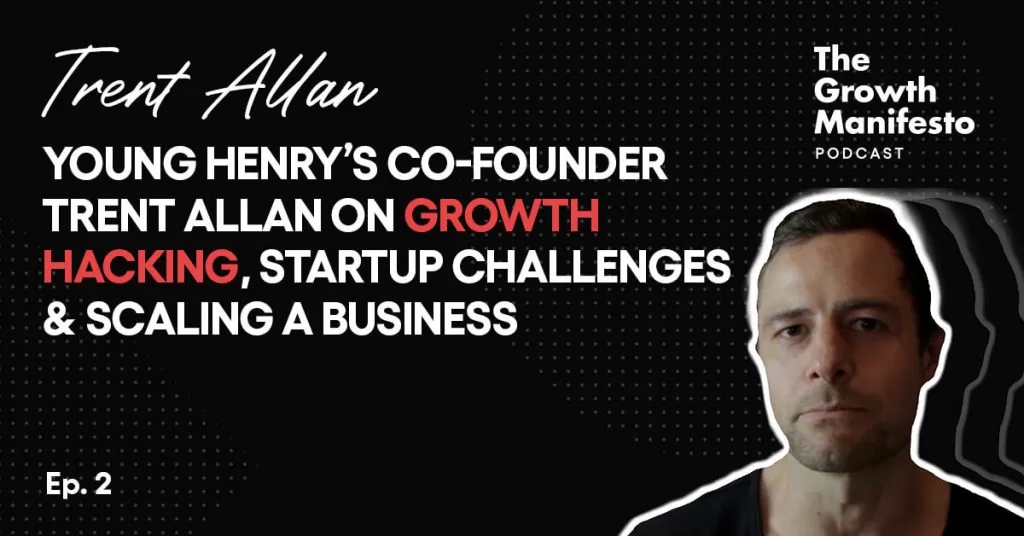
Young Henry’s Co-Founder Trent Allan on Growth Hacking, Startup Challenges & Scaling a Business
Trent Allan traces growth hacking through building Appliances Online, scaling Young Henry's craft beer via collaborations, and a failed US startup.
 with Trent Allan


Overview
In this episode, we interview Trent Allan, co-founder of Young Henry’s, chief marketing officer of Appliances Online and Home Clearance, and serial entrepreneur. We talk about growth hacking, the challenges with startups and how to scale a craft beer brand.
SHOW NOTES
Key takeaways
- A growth hacker differs from a marketer by focusing on data and insight to push a business to extraordinary performance, not routine tasks.
- Timing is almost everything in a startup, and Appliances Online succeeded partly because it launched just as people started trusting online shopping.
- Young Henry's built loyalty by selling its signature Newtown pale ale only within Newtown at first, driving word of mouth through scarcity.
- Collaborating with bands and brands to co-create beers let Young Henry's market through partners instead of spending on paid acquisition.
- Customer experience matters as much as results, because average retail service in Australia falls below the bar customers get overseas.
Chapters
About the guest
Transcript
Auto-generated from the episode audio, so expect the odd mis-heard word. Timestamps open the video at that point.
You're listening to the Growth Manifesto podcast, brought to you by Web Profits, where we share inspiring stories of real people who've succeeded in the marketing and business world. Today, we interview Trent Allen, co-founder of Young Henry's, chief marketing officer of Appliances Online and Home Clearance, and serial entrepreneur. We talk about growth hacking, the challenges with startups, and how to scale a craft beer brand. So let's get into it. Hello and welcome to The Growth Manifesto. I'm really excited today. I've got my good
mate here, Alex Kalanthus. How are you, mate? Good, man. How are you? Good, good. Hey, you know, they say life's all about timing, isn't it? Do they? Yeah. Yeah. Yeah. It's July. What are you going through? Oh, dry July. And I'm really excited today. We've got Trent Allen on today, one of the co-founders of Young Henry's. G'day, Trent. How are you? I'm good. Thanks for having me. Hey, good to have you on board, mate. Now, your profile here is absolutely amazing. You're an entrepreneur. You're a growth hacker. You're actually a public speaker. You're a head of marketing and appliances online, a co-founder of Young Henry's, also working with an organisation called Home Clearance.
There's not much that you haven't done, which is absolutely amazing. So being a growth hacker, I'm really interested. How long have you been doing that for? It depends how you define growth hacking because it is quite a broad term. So how would you define it? Just quickly, just because I think there might be something. Yeah, and I'm going to come clean with you. I don't know what the hell it means. You can cut it a lot of different ways, but the way I define it is finding different ways to grow a business basically. Hacking means how do you grow a business quickly using data, innovation, finding ways to different things to grow a business
but it really depends on the business that you're helping grow in terms of what you would do to growth hack. Some people look at it from a very digital and marketing aspect. Some people look at it in different angles. So how would you define the difference because this is a conversation that we often have here between a marketer and a growth hacker? Because there's certainly overlap, right? But what's the difference? So I think a growth hacker is more involved with data, being able to look at data, trends, that term big data,
being able to see the truth in data. Because there's one thing to have the data there, it's another thing to be able to get insights out of it and figure out what do we do based on what we've seen here. So whereas marketing, you can have some marketing managers who they deal with an agency, they manage a budget, they approve ads. that's where marketing can extend to. So I think a growth hacker is someone that's a bit more involved in the data and a bit more involved in finding new and different ways to actually achieve things in order to achieve the objective for the business. So what about this just as a quick definition of one?
And maybe you agree or don't. It's fine if you don't. I won't be upset. You can tell he's going to be upset, can't you? Don't get this wrong, Trent, whatever you do. I'm not passionate. I'm very passionate. No, no. So like I kind of define it marketing as the stuff that happens on an ongoing basis. That's kind of status quo. Yep. And then the growth tasks are the few things in marketing that can push a company to get extraordinary performance out of those tasks. Not a bad way to put it. Is that a thing?
It's not a bad way, yeah. That's the best disagreement that I've ever heard. I think he agreed. I think that was a total of great things there. Oh, I like it. Yeah, cool. So back to you, Tony. I'm actually really intrigued. So this whole podcast is about growth and inspiring, whether it's business leaders or just leaders in general, to grow and strategies they learn. So I'm interested, we're both really interested in your journey. So where do you want to start? Do you want to start off with Appliances Online, what you did there? Yeah, we can start there. Yeah, go for it. So back in 2006, it's quite a long time ago now, but I went to school with John Whitting,
who was most well-known as Herman. And so I've known him since I was, what, 13 or 14 years old. like coming out of school he eventually had the idea of starting an online business to sell appliances he is part of a family that did that so winning appliances which is a very old business i was gonna say he's a winning appliances yeah yeah so he eventually started that got some money to build a website build it and then called me up about six months after it started to come and help from a web and technology perspective so i came on there and i was there for about the first two
and a half years of that business. So I was the third employee to join the company. Yeah, right. So but 2006, that was really early days for the internet, especially going online with appliances like this is an absurd idea back in those days. It was, it was. I was saying before that the founder of the company that built the website initially claimed that he didn't think it would work because there was one website selling appliances at the time back then in 2006, but it was a very new age business. And so So there was no proof it would work because e-commerce was such a new thing.
I mean, back then SEO literally was creating spammy content, long title tags, all that stuff that used to work in SEO. That's what you did. You basically just created stuff. You could just totally cheat the system by just doing things. Now Google's a lot smarter. You've got to be a bit smarter about the way you do things. But it's changed a lot. But there I learned, I came on as a developer. So when I came on, I had a website. but it was built in a system called Meva Merchant, which probably nobody knows, but that's what was originally built in. I eventually moved them onto a C-sharp platform.
So that was one of my biggest things that I did for them. Just before I left, I decided they needed to move. So I planned, developed and built the new website for them, which is a C-sharp based system that they ran off for the next 10 or so years. So obviously like it's a pretty successful company now. I mean, I was just online like the other day actually and I bought a washing machine because I was like, I just need a washing machine. And I went somewhere and I saw appliances online. I was like, cool. And it was really easy to buy, you know, but that's like. And you bought from them? 13 years later, yeah. Okay, good experience.
Yeah, actually, that was a really great experience. I put in the phone number. I got kind of the text updates. Like it was pretty smooth. I got kind of integration with pretty much everything. So, but I mean, in the beginning days, I'm sure that it wasn't that simple. And so, but how did you get that kind of like initial success? and appliances online? Because obviously it's a startup selling stuff. Yeah, I think in startups timing is not everything, but it's almost everything. A lot of really good businesses have failed
just because they didn't time it properly. They hit a market that was too overcrowded and they just didn't get in there at the right time. So I think John absolutely hit the right timing with the business. It came on board when no one was really doing it. If he'd done it a couple of years earlier, I don't think it would have worked. He could have retried and retried, but I think he hit it right at the point where it was just starting to have the internet and people trusting things on the internet was just about to, was just starting to happen. So I think he timed it really well. He had the support of the existing business within the winning group or winning appliances.
So he had delivery drivers and people that could deliver the appliances. But overall, I think it was just the experience that they provided. The winning group is all about the experience for customers. So every business without the group runs NPS, which is Net Promoter Score. we are we're obsessed over the experience for the customer and so that is the number one goal of of the business that i help run there and the group is to look after the customer so i think part of it was being online hearing that the timing giving the product to the customer being able to deliver it to the customer delivering on promises to the customer and just looking after
the customer and that was a good experience and that's pretty much of course there are other things that go into it hard work and grit and all that other stuff but i think that helped get them on the road and over the next few years it just grew and grew and grew to the point where it is now Australia's largest online appliance retailer and yeah kicking some butt. So for them just start with AdWords and SEO is that what you did like was there some of that spammy stuff which wasn't called spammy stuff back then it was just called a growth hack. Yeah SEO so we worked on SEO from
from the get-go from when I started and that's how I learned so much about it about producing content and working on the product pages and the different keywords and all those kind of thing so there weren't tools like seo moz and the different tools around there there weren't there wasn't much that stuff available but we you could still go to forums and learn what people were doing and and yeah we just we worked on what we thought worked and yeah we we ended up we had a good domain name as well appliances online which really helped it rank as well so yeah did you did you believe it was going to work by the time and i'll go back to uh you know when google first came around as a
search engine and they said it's only a search engine. There's not much in it. It's not going to really last. Yeah, there's already like 15 search engines. Who needs another search engine? That's right. So, yeah, what were your thoughts when you were – When I came on board, I don't think I thought too much about that. I knew that I was there for a job. I was being paid to help grow this business. You're a cool job sounding as well, right? Hey, I'm a marketer on the internet. I'm an internet marketer. That's what they used to call it. Another digital marketer, what they call it these days, which sounds more – it was an internet marketer. But by the time that I was nearing to leave, absolutely.
We were growing. We had 13 or 14 full-time direct staff at that point in time, plus all the support delivery drivers and that kind of thing. So by the time I left, I knew I was like, this business is going to go big. I'll show her of it just because I could see the growth. I was there for the first two or three years. And that was one of the things why it was so hard to leave because I thought if I stay here, I'm the third employee. I could be a big part of this in the future of the business, but the desire to go do my own thing was just too much. Yeah, and let's talk about that because did the challenge almost go away? No, the challenge didn't go away.
We just – the website I talked about building, the website I built for them, I launched it on the last day. I worked for 24 hours straight on my last day to get the site live. So the day that I left, which was a Friday, it went up that morning and I left that day. So there was still a lot to do. The site I just launched and I did support them from a consultancy perspective after that. So I was still doing some work for them. but then slowly moving on to other clients as well. Absolutely. And then you transition into what – it's a natural progression
as far as I'm concerned, Trent, from a business point of view. You go from appliances to craft beer. That's just something straight out of TAFE. That's what they teach you. Yeah, when the opportunity came up, I looked and I was like, I've never done anything like this before. It was just so out there, but it was so cool. Beer, this is awesome. How did you get into it? How did they, did they approach you or what was it? So I was part of a, I forget the company that was doing it, but I was at the time running my business, Zilla, we were an e-commerce web development agency.
And there's this business out there that allowed you to be part of a meetup. So you'd meet with your group every two weeks. You meet at a coffee shop and you discuss business and how things were going. So you'd pay to be in the group and it wasn't, it was a low fee, but it was more so just to talk to other business owners, networking that kind of thing. and Ian Atkins who was the original founder of Young Henry's was in that group and so one day in the group he was showing some plans or talking about the brew that he was creating I got to know him quite well through that group and as he got to know me a bit better he eventually said hey we
need a co-film we need someone to help out from a technology perspective and that's how the opportunity came up and so I kept discussing that with him over the next six or so months which is late 2010 and then by 2011 I'd agree to come on board and help them out. Yeah that's interesting let's just give it a little bit of perspective as well and for people who don't know who young henry's are they're a sydney brewer in newtown and um they are one of the i think the best community-based businesses i've ever seen for pulling community and let's put it into perspective because if we have a look at the craft beer industry it started back in 84 um where we had
people like cooper's parallel come out we had little creatures as well they were the pioneers in the game and they had what was 37 craft brewers open but there was a 50% failure rate between 84 to 2000 so it's a crazy business thing then it starts to get some some traction there and 36 open up 36 craft brewers open up with only a fail rate of 30%. Now when Young Henry's come into the game which is between 2005 and 2013 there was 220 craft beer companies around but
the failure rate was only down to 10% now. So now you're coming into, it was competitive, but it was also, it was still fresh as well. It was because I mean, back then when I walked into a pub, all I would see was the big beers, VB, Carlton. There was just those main brands that you'd always see, but now it's just so different. So it's when you say that, it surprises me because it didn't feel like there was much competition back in the day. There were, there were some craft breweries out there, but it felt like we kind of joined on when it was starting
to kind of get some traction. So would you also say though that like maybe the other companies didn't have a growth hacker like yourself on board so then you couldn't even kind of like see them around? It's like, you know, it's fine having competition but if the competition, if they don't know actually how to market themselves, are they really competition at that point, you know? I think the biggest part of it, I mean, is the product, right? If you have crappy beer or just okay beer, I think at the end of the day, you need to have a really good product.
And I feel that's one of the biggest things you have because the product will help market it. If it's a really good product and the alcohol tastes really, really good, I think you need to start there. So we did have that. We had a great brewer and we started off with a great product. I was quite surprised when it first tasted it. I was like, oh, this is a really good beer. Yeah, the Newtown was the signature product, right? It was the beer that we did that really helped the business, yeah, because it was originally only sold within Newtown. So it started as exclusive to Newtown residents only. So it was only sold to bars within Newtown. You could buy it and take it out of Newtown,
but you had to buy it within Newtown. Oh, really? That's like the Facebook strategy almost, right? Where it's like, of course, it's just that school can have it, you know? So, but now eventually it's available to everyone now. But yeah, that was a real hit because it was, in order to develop that beer, we interviewed a lot of people from Newtown. And ultimately we were from Newtown because that's where we started. but we figured out and knew what people in Newtown like, what taste they like, and so we created a beer just for them. How did you figure out their tastes? Spoke to them.
You spoke to them and said what? Because, like, hey, what kind of beer do you like? I want a raspberry tinged and not too frothy. So just by the way, I don't drink beer, obviously. With those examples, it's obvious. I prefer wine. Sorry, don't judge me heavily or judge me, whatever. I wasn't really part of that process, but from what I understand, I mean, we were based there, so we constantly had people coming into the bar and buying stuff. So Newtown was where we were based, so we were born and bred Newtown. You were in a shed, right?
Is this a warehouse where you started? It's kind of a, yeah, it's a multi-business kind of where there was a yoga studio across from us. There was a bunch of little different businesses, but it's where our houses were. I bet you the yoga studio was happy. We've got a brewery coming in next door. Let's go to yoga as well. So, but yeah, it was a bit of a warehouse area that we were in. So, yeah. So what was your part? Why did they ask you to come on board? They needed technology. So they didn't have, they wanted a website. Well, a website really isn't a big part for a brewery. I mean, who goes to a brewery's website?
It's more. I wouldn't think of it. Yeah. It's more people that are looking to take the beer on board. So if you're a bar and you're looking to sell the beer, you may go and look at their website. But consumers don't, in my opinion, don't really go to beer websites unless there's something that's there for them, like a special offer or something like that. But you need a web presence. And so I was there to build a website. Plus before they knew, they knew there would be other technology requirements. And I remember back at the time, there wasn't much, you know, if you're a business, I don't know, in a lot of different industries,
there's a lot of platforms that are out there and built for you. You can go and get open source software and different software that provides a lot of the functionality. You use that leverage off it. But back then for breweries, there really was nothing out there so we needed something to help manage the business part of running the business so taking orders getting reporting on sales and this is all b2b sales so delivering into bars so we wanted something that we could do all that through so we came with the idea of creating a kind of like own erp system and so i worked on that for about seven months to
plan, develop and build and launch their ERP system, which we called Swish, which was and built via an iPad app. That's why we decided to do it. And so its prime functions were taking orders, reporting on orders, managing deliveries, the delivery schedule, and also signatures for delivery so that we could track that a customer had signed for the delivery. So yeah, that was one of the biggest things I did for them while I was there. And so from like a marketing perspective, I mean, look, what were some of the things that worked at the time? because obviously it starts in a smaller suburb.
It obviously sells somehow, right? And then from there, it expands out, right? And so I'm sure there's a lot of organizations like, hey, look, we've got this awesome product. I'm sure that that beer was great, but of the other 220, I'm sure there were other ones that were pretty awesome too that hadn't achieved the same kind of success and that aren't the Young Henrys now, right? And so how did it go after that point? because obviously something had to happen to get that initial traction, right? Part of the – we did have a – the bar is there in Newtown,
so we had a place for people to go. The word got out there that there was a market brewery there, so it was a lot of word of mouth that initially got us people to come to the brewery. But part of the comm strategy we did included doing collaborations with companies. So the aim of the game was to go to a company or a band, do a collaboration with them, so work with them, develop a beer for them, and then get them to market through that entity or brand or whoever that person is. And that was one of the biggest marketing strategies we had, which really, really worked for the brand. Because you had some iconic bands that you worked with as well.
We did, yeah. So one of the better things that worked for us in terms of a marketing strategy to get them on board and, you know, at their events, they would promote the beer and because it was their beer, they were really happy to promote it and self-promote it. Who were some of the bands that you had? Off the top of my head, I can't remember. so I'm trying to scratch my head as well because I remember when it came out I go geez that's a brilliant idea in the back of my head but I'm like what were the there was they weren't as big as you two there were a couple of big bands that were out there but I just can't remember I can't remember
they will pop up it'll be you know it'll be that 2am thing where you wake up to hang out that's right that was the name but but you have you have done some amazing collaborative projects with others and one recently that I had it's most probably my favorite beer is the offends um hemp beer that came out which is a clothing label because um that was just in the last 12 months and i thought that was a great uh collaborative effort as well where it is and it says here and it says because you really um young henry's is a really community-based sort of organic product
and that's where you grew it and you know what i'm really interested in because i think when people are growing businesses a lot of people think they go how do we get more reach how do And then you guys have gone, let's create loyalty here in this community and spread it that way. So what was the strategy? What was the thinking behind that? In terms of loyalty for the – Yeah, how do you do that? How do you do that with a beer? Let's get some loyalty and some passionate locals around drinking our beer. I think it was the staff that were brought on, the staff that we had there initially,
and a lot of the guys that are still there really did own it. I mean, if you go into the brewery in Young Herons, you'll see that the tattoos, the long hair, the beards. I think going to that brewery is a real, real experience. You walk in, you're treated by it, you experience this wonderful service by the people behind the bar. They know their stuff. They know everything about the beer. I just think it's a great experience going there. So I think a lot of the loyalty was created through friends of friends, people knowing, going there, supporting each other. and we really became Newtown's brewery.
That's the way that kind of – I believe the Newtowners kind of saw it. So I think it was a lot of word of mouth and a lot of just looking after the customer when they came in looking after them, make sure they had a good time, doing events for them. And I think that's how – it's quite simple stuff, but I believe that was what we did really, really well. It's like Instagram these days, but back then, right, with all of the collaborations and, you know, trying to find a way to push that growth without having to spend money on acquisition or anything
like that like you spent or like you invested the time and the resources on partnerships yeah which was like a really smart strategy it seems like right and that's i think what's happening across instagram these days it's gone a bit too far with influencers and so on who are selling kind of everything under the sun yeah but i think that like initial strategy around collab actually can work well if it's strategic. If it's strategic plan and it's executed well, definitely. Yeah. So how long then were you there for? Because you got there in 2011 officially, right?
I was in VOL for around about five years all up. Wow. So you must have seen a fantastic and a fascinating experience. It was an amazing experience being part of it because, again, it's a business that I knew nothing about, creating beer, going and learning about the brewing cycle, the process that went into it, which is way more complicated than I thought it was. These guys are basically, the way I saw it, scientists, like kind of making food, the different temperatures, it's quite, there's a lot that goes into it to make sure that it comes out as the high-quality product you're trying to create.
And how did you scale it? Because obviously, like, cool, so then you get the first traction. Yeah. It comes outside of the main suburb that it starts in. Then all of a sudden there's other challenges of scale, right, of like oh so now we have to be able to supply 400 times the volume of one suburb yeah and i think and adding to that i think that the like because i live in newtown so i'm quite aware with it so i was on board with the young henry's for various but you know you go outside of sydney or you go into other places and it feels like young henry's has just exploded all of a sudden everybody knows
about it you know it's like this overnight success yeah but that's not not at all no at all yeah it's been around for it's like any business i think you look at them um and when you realize how long they've been around like messina is a good example they've been around for a very very very long time that's like 20 or 25 years i think is that how long they've been around for yeah mate don't quote me on that i could be wrong but it's more time than what you think yeah yeah so they've been working so they can imagine what they went through to get there because you think they're like a five-year-old business because when you heard about them yeah when you heard about them all first
had the ice cream so yeah but so in terms of scaling how is that process because um from yeah that's like here's a thousand times more orders yeah exactly it was one of the challenges i know that we had and while i wasn't basically one of the biggest challenges we had was scaling in terms of we had our brewery we had a brewery size and how much we can we can make we also leveraged off other breweries to help make beer for us we give them our recipe and they would make it for us but we found that problem where we'd make so much customers didn't want it and we're like we have
too much beer but then we would make so much and the customers wanted more so we work hard to get taps at bars the tap the bar would agree is to put us on tap then they would make it order and we couldn't fulfill it for them so you end up losing that tap they take you off they put someone else on and it's a battle to try and get back on tap at that bar so it's one of the major i believe every brewery that starts up would have that problem because it's a fine line between how much do you create based on demand it's a whole supply and demand problem right so we definitely did face that and i can't remember what year it was it would have been maybe 2000 it was about a year
or so after we opened in newtown we ended up taking over the space next door which allowed us to expand the brewery and that gave us a lot more ability to like make a lot more beer which i think solved that or made that problem a lot less problematic for us but it's also it's a financial investment now as well because when you're scaling up you're starting to go okay we're doing really really good here like like we're making profit everybody's getting paid and now there's a bit of a demand and now you've got to make that jump of going do we reinvest into the business and scale up yeah do we stay where we are totally it's a it's there's a risk in doing
it right because if you go in the wrong direction it can be it you can be problematic for you so yeah it's a real challenge because we didn't know if craft beer was going to be a fad as well that's the other thing yeah totally because it bind up in america so in america at that stage it was a big thing and it was growing rapidly and i know we follow a lot of what america do if it happens in america there's a good chance that we'll catch on and take it on here i think that's still true to this day so i was confident based on that it happened in america and i'm like i reckon i'm confident what happened here too and we quickly did see that but i don't think that was ever one
of our concerns that it wouldn't work i think we're quite convinced that it would work as long we created a good product, looked after the customer, and that was both, again, customer and the business customer that we were delivering product to. So, yeah. Yeah, so I'm not sure if this is a sensitive question or not, so you don't have to answer it, of course. Answer it, true. Answer it. I'll pay you to answer it. I don't even care what the question is. No, no, no. Like, it's, you know, just coming back to the conversation about scaling, right? Scaling, you need to reinvest profits to fund the expansion.
if it's going to happen organically. Yes, I'm assuming it happened organically. Largely. Yeah, of course, largely. And so therefore there must have been some hard times in that process where you're like, ah, you know. There were some hard times. Yeah, and so how did you get past those hard times? If you can talk about it, and if you can't, fine, we can just chop this section out. Yeah, no, no, and I'll just ask you in a different way. I mean, there were, for me, I had some personal challenges working with them because I came on as a shareholder. or I wasn't paid at all.
So I was there to help grow the business without pay. And that was, it was not a problem at certain points. I ended up working full-time on site at Young Henry's for about six months. And so I devoted myself to them for that period of time to help them get through the period of launching that app for them, the DLP system. And so for me, that was a real tough, challenging time because most of my day went to them. I wasn't getting any income for it. So for me, that was, when I think about struggling, there was that period that trying to get this app off and launched,
hitting every other technical thing that the business had going on, whilst also trying to do this without getting paid for it. So it was a really tough time. But we ended up getting there. We got through that period. I got through that period and the business grew from there. That's a very excellent answer of a non-answer. But I appreciate that. And so then you got out at some point. I did, yeah. So 2015, I think it was. So there's a change in management and I kind of evaluated my options and what I was doing and the business had grown quite a lot
since I joined on and invested in the business and I just thought that it was a good time for me to get out, which I did. Okay. And are you able to talk about that or do you prefer to just move on to the next? Okay, cool. Now, I shouldn't mention this, but there are new owners now at Young Henry's, aren't there? I'm led to believe from 2016. So we took on investment from a family in WA. And so I was at that point in time. Sorry? Was it Beer Farm? No. Was that the concept? The Beer Farm is the new brewery that has been created by Ian Atkins.
So Ian Atkins left Young Henry's. That was around about the time that I left as well. And he went on to start the Beer Farm in WA. Right. Which is a beer farm in WA. I haven't been there yet, but it looks pretty cool. The name's super cool. and so what did you do after because obviously like so that was about the point in time where i the business i created zilla which is a web development agency it kind of went under so i moved over to america to help start a business we i became co-founder of a business called olio
which is a fashion recommendation engine so i started that with two co-founders in sydney we got accepted into a program we pitched we won the pitch and got sent over to live in san Francisco and be mentored by Australians living over there. So, right. So I ended up doing that. And that was in 2015, 16, was it? No, that was earlier. Or was this like, that was like 2013, 14. Yeah. So it was at the point in time where I was still, I was part of young, young Henry's, but I was doing that from over there, but also helping trying to build this business
that failed quite terribly. We ran out of money. We couldn't make it work, but I learned so much from that experience. When I think back about it, it's like, I would never take that away, Even though I lost money in it, I lost time. It really impacted my business because it was running back in Australia, but I wasn't there to drive the business. And so we went through a really tough period. And when that business didn't work out, I had to move back to Australia to try and revive the business, but I couldn't. We ended up going into liquidation. It was quite one of the toughest periods of my life. And so that was the agency which you had.
That was the agency which I had, yeah. And then you went overseas for a software startup. Correct, yeah. And then the thing which you had here kind of fell apart without you a little bit? It did, yeah. My agency, I came back and it was struggling. We had a few stuff quit. I came back on to help revive it. And we won a really big contract that if we won it, it would have changed things, but we lost it. We put a lot into that pitch, I remember. But also, too, my passion just kind of, I'd been doing it for five or six years. My passion just kind of dropped. I was the founder and director of the business, but my role was BDM.
I was a business development manager. So I was full-time sales, going out there, winning pitches. And I was just a bit sick of it. I just was kind of waking up not really that motivated to go to work anymore. Plus we're going through a really tough period and I decided I think I need to kind of give this up and do something else. So, yeah, and it wasn't long after that that I eventually went back to the winning group. So what was your biggest lesson out of all that experience? Yeah, that's what I wanted to ask. Yeah, because like you just said you've learnt so much out of that and I know. Did you not?
Do you like how you tried to skim past that too? I learnt so much. So anyhow, now I'm doing this. It's going really cool. So we're going back to that lesson. Because this is all about growth. That's what this podcast is all about. And just so you know, I've failed so many times in my life on so many things. And those lessons are absolutely the best ones ever. They're often the most expensive and the most painful. And you're thinking at the time, what's going to happen now? You know what I mean? But then the big thing I realized is that you wake up the next day and you still have to pay your taxes. But maybe there's a bit less taxes now.
But the thing is too, Alex, it's a good point. Because the thing is that that stays with you is the lessons learned. Yeah. And that's what it's all about. And then we've spoke about, you know, failing fast and everything like that and, and, and the growth that has. So yeah, we're both really intrigued. Like what were the lessons learned? So it was a really, really tough period for me. I remember one point in time I picked up my laptop and I Googled going, going bankrupt. And it was then that it really hit rock bottom, the situation that I was in. So, but again, And I wouldn't take it away because what I think I learned from it,
well, getting out of it and being able to revive myself, tell myself that I can fix anything. So no matter what problem I'm in or what hole I'm in, if I think about how to get out of it and just work towards it, I can do it. So, and it gave me a lot of confidence that I can do anything moving forward. If I can get out of that, I can do that. I can do that. I can do that. So, but also just being a little bit planned, you know, going over to America was something I wouldn't take away, but I also didn't realize the impact it would have on my business back here in Australia. So, but I mean, I wouldn't take anything back.
I made some mistakes, but I'm just glad that I went forward and tried everything because I learned so much from those experiences. And now that I'm out of it, I'm like, I'm so glad I went through it because it cost me money, but I also learned just a lot about the resilience of getting out of something like that. I spoke to Tony before and he shared with me that there's a book which you love, which is The Hard Thing About Hard Things. Yep, yep. Yeah, so this – Yeah, yeah. Yeah, so this kind of – I mean, his story in that book's out of control,
what he had to go through. Like I think I've had some hard stuff go on, right, generally. But like how interesting is the stuff that he's gone through. So, I mean, is this a time that maybe we can talk about, you know, that psychology or that approach? Yeah, yeah, why not? I think we're there, yeah, yeah, because it's a psychological aspect that not many people talk about. I'll talk about it's been a hard time. It was a hard time because we didn't have enough funds or the pitch didn't go well enough or anything. But I think what we're interested, what happened to you psychologically? What happened to you emotionally? And how did you get it? Because business owners don't really talk about that too much.
No, they don't. That's why you're going to open up and tell us. I'll help you as well, by the way. Well, going here, I think what Ben describes in that book is what a lot of business owners found us go through. He just took the time to detail it and write a book about it. But I think anyone that starts a business, it's a tough battle. You really are putting yourself out there to put yourself through some pain because that's what it is. There's a lot of good in it. I love the fact of going and creating a challenge for myself by starting a business, but you will go through periods where you're like,
what am I doing here? What is going on? Money's not coming in the door. You're to pay people, suppliers, staff, and it can be super, super challenging. And it's like I think, you know, what's interesting, because obviously I have like quite a lot of people around me to have businesses and like most of the time it's hard. Yep. Most of the time the default position's hard and the default position is that there's problems constantly, right? And it's just kind of like how hard are they?
How hard are they? What scale do we put them on? How big are they? Yeah. Right? Like I always talk to people here going, oh my God, I heard some good news, right? Because you don't hear the good news, you hear the challenges, right? Yeah. So it's a life of challenges. And so then what happens is all of a sudden you get some successes and then people start to congratulate you on that and go, oh, you were lucky and stuff like that. It's so easy for you. Yeah, yeah. How did you do this? I don't know any other way of, I guess, life, you know, but it's certainly a journey, right?
It's certainly a journey. Like I'm quite cliche these days because I'm a dad so I can be cliche. Yeah, of course, yes. It's like a journey of self-discovery, right? Because like you kind of have to change the person who you are to be able to become the person that can achieve that success. And nobody starts that way going, I know kind of marketing and sales and accounting and collections and, you know, actually how to create a culture. And there's all these parts that you're just like, whoa,
I didn't think about that. I was almost like just optimistic. When I started my agency Zilla, I knew how to build websites. I built one for appliances online. I'm like, I can create good websites. I know I can do this. So I knew that, but I did not know anything else. I remember looking at a P&L and I was like, what is this? How much is the revenue number? Yeah, cool. I knew the profit, but the balance sheet as well. I did not understand that. So I didn't really know anything about building a business. I knew how to somewhat look after people's stuff. I knew how to pay them on time mostly.
There's money in an account. I can put it into their account. This is going to work well. And you knew what you didn't like from your past job. You're like, oh, I didn't like when that happened at my past job. I'm not going to do that. And I knew how to look after customers, which is the main thing. So I think I knew the main things. I knew how to build websites. I knew how to look after customers. And I knew how to provide an amazing experience for the customers. And so that was the big thing because if I couldn't do that, nothing else would work. But I had that. And then everything else I just learned. I learned the accounting things. I learned the management things. All that stuff I just went through in the day-to-day running of the business.
but I had the core thing that was created, which was the desire, the wanting to do it and the passion to do it. So, yeah, which I think is the big thing. Yeah, for sure. I think you need the passion to get through the difficulties. The hard times. Because it's a lot. And if you're lucky, there's some good times in there as well, right? But I think – Because it's true. Or you can just have a job that's like a self-employed job where it's just like it's you, you've got like kind of – It's like a lifestyle job, which is never that easy to be clear.
And that's kind of the dream. I mean, I started in this space and I was like, this is back in 2001, I started experimenting and I was like, oh my God, I'm going to arbitrage AdWords to sell e-books and I'm going to go traveling. Of course, yes. And I still haven't done that. I've done the traveling, but it's like so not what you think. And I'm not quite sure how many people who are under, say, 30 or 40 even, who go into business actually understand what that means. I think when you're older and you've got some responsibilities, you probably think about things a bit more,
but when you're younger, you're just like, rah. Yeah, but I think it's the perception. I mean, like the perception is if, and this is the beautiful, if you're a business owner, you're rich, right? And it's easy. And you're your own boss. Exactly. So you can sit like your own hours, which are 24 hours a day, seven days a week, no matter where you are. You never stop thinking about your business. you're always thinking about where the next dollar's coming in and there's you know there's there's people that are multi millions like hundreds of millions of dollars and they're still thinking of when the next dollar's coming in you know so that doesn't switch off either
how do i grow my team how do i do everything yeah there's a perception thing there when you look at business you're like they must be doing so well but some of those business you wouldn't know but they're in dire straits they're going from one paycheck to another they're just paying things on time so unless you're in the business you don't really know you're borrowing funds you're doing whatever yeah totally so you see someone driving a ferrari got a big house they could be up to their eyeballs in debt you just don't know right that's not in their instagram caption but what have you learned because like i've got to say something really really nice about you
is that you're a very humble person and um there's no there's no ego there there's a lot of drive there's a lot of passion and you've got a really a really nice level head on you what are some of the key things that you've learned in growing business now and i ask this but you've been in different industries you've been appliances online you've been in craft beer now you've gone back into um uh what is it you had your own business but also you went into another appliances online yeah um that again so you've got a you're quite diverse what's some of the things that you've learned that you can actually transfer into any business whatsoever i think it's all about at the
end of the day every business serves a customer right you the big divisions are business or or end customer yeah so you're usually serving one or both of those types so you're not in business unless you're serving that customer that's ultimately what you're doing at the end of the day so I think that the core thing is that that in my experience that is bigger than anything else is how well do you do that how well do you just look after the customer because I think I've you know I did that talk at web profits about this subject and I'm quite passionate about it but I feel like the average of the customer experience for retail just pick retail as an example in
Australia particularly is below bar I don't think it's good enough really why is that I just don't think it's good enough I think America in my opinion in a lot of way leads the way they've got you know people in say restaurants and that kind of thing work for tips so there's a lot more drive for people in America or stuff in America to look after people but I just think you walk into a lot of retail shops in Australia and staff will do the minimum required to look after you they'll ask if you need anything but they just don't go over and beyond to make sure that you have an amazing experience it's all that heavy energy isn't it so I'm like can I help you totally
do you want something why I think I don't think there's any transactional experience I think no matter if you're going to a convenience store if you're going to a dentist no matter what you are doing you have options to go to different competitors there's always there's so much competition out there so i think whoever you are in whatever industry you are if you can provide an amazing experience for that customer they will come back they will tell people about it and so and there's a lot that goes into that you know you need to have the right software you need to have the right marketing all arms of the business need to be built in and working so that it does
look after the customer but ultimately how do you get your product to the customer what if you're a service-based business how well do you provide that service for the customer and you know a business like web profits or an agency. From my experience, it was all about referrals. You need to look after that customer because they would tell other people about your business. Here's something that we found out the hard way, and this is the same thing, the hard thing about hard things, right? But it's not just about results. We were in the first five to seven or so years, we were just like, cool, it's all about the results.
If we get them growth, they're going to be happy. No. The experience is equally as important, if not even above that, right? Because the results are just the standard, right? That's what they are here for, right? And so they're expecting that, but the experience is why they stay, right? And so it's not the same thing, right? So I think that's, for me, that's the biggest thing. Looking after the customer, I think Amazon have launched in Australia. They've been here for a few years now, but they are growing quite rapidly. And I think it's companies like that
that are raising the bar and saying, hey we can provide a better experience and i think that companies that don't do that especially in the next five to ten years if they don't raise the bar in terms of the experience they're providing they're going to find themselves in trouble yeah i think that's great advice because so many people focus on product okay i will build the best product and i'll miss out the customer service experience and exactly what you're saying alex is you know it's that word of mouth it's like let's get out there and build that positive um experience for the customer which is really really really cool so trent where to now you've had an amazing career you've got you've got the world
in your hands he's had all the beer that he could drink for his life actually i'll give you a quick one just because i'll give you a moment to think i'll give you one on customer service and this is one that i'll put out to you um how would you deal how and this is a loaded question how would you deal if you had a uh somebody um brag about a competitor's product over yours would you still give time and energy to that person or would you dismiss them? So who's the person bragging about that? Yeah, who's the person bragging? Okay, since both of you guys ask.
Because he likes the loaded question. He always does this. He's like, serious tone. Tramp. And do you know what about both of you guys? You both identify that quite quickly, so thank you very much. Well, because we were like, it depends, really. I'll give you this quick story. It's down in Jindabyne and down at a bar and I sit down there and I'm joined by these three other people. they're about 55 60 years old and i sit down with a cooper's pale ale and this gentleman comes up to me goes what are you drinking i said cooper's and he goes oh have you tried the kosciusko pale ale
pale ale now i've been going down the snow since i was four years old during this i was 18 so but when kosciusko pale ale first came out people would throw it down your throat it'll be like you gotta try this beer you gotta try and it tasted terrible i hated it so this guy's going mate just try it and he goes what do you think and i go mate don't start me this beer is bloody terrible you guys been trying to throw it down me throat all the time he goes oh yeah cool what's your name and I go my name's Tony I go what's what's yours he goes oh it's Chuck Chuck Hahn who actually created the beer and what did he say he goes let me get you one on the house and have a taste for 45 minutes I
sipped on this smitty and backpedaled going this is the best beer ever he must have changed the recipe. Was it good or did he shame you into changing your taste? It actually did taste better but the way he handled it was beautiful like there was no there was he wasn't upset he showed that he had no opinion so he goes that's cool just try it again and it was a really good recovery thing. Yeah so I think it is because you can't take things personally right someone's got an opinion they don't like it I think it's an opportunity for you to say okay cool if I can turn this guy around if I can convince him to try all that it's a good product then I can convince someone who's
neutral right so i just think it's a challenge for them to actually turn that person around so and you probably went the first one that um that happened to me i don't know i think it was he was pretty well versed in the whole thing he's like okay cool so go to your quiet place i'll offer him a drink oh it's so true what for you now so i am about to go back into the other side of the world and and go back into doing my own thing again so as of next month i'll be running my own full-time consultancy business.
The plan is just me, so no employees, but helping companies out there with things that I've helped companies with in the past. So digital, technology, marketing, that kind of thing. So yeah, that's where I'm going. I'm super excited about it. I've missed building my own thing and running my own thing. It's been five years back at the winning group. So I'm really excited for this next stage of things. And so what is it going to be specifically? Like, because like that, because... Yeah, who's your customer? Well, could you just explain pretty much the digital sphere? Like marketing and dev and this and that.
It's like pretty much you can do anything. But I'm saying this because if someone is listening, right, and they need someone, right, and they can't come to web profits because, you know. So I can help companies choose an agency. So if they need, for example, a website built, I can help them. If they want to go through an agency, I can help at an agency to say, like, this is who I think you should go through. and because I've built an agency, I've run one, I know the ins and outs of how agencies run, what the prices are, what people should be paying. So I can definitely help and where I want to sit is more high level. So helping people, project management,
get a website up and running, help them find a provider to do that and sit on their side and just look after them the best that they can in achieving the challenge that they have. We have events a lot in the last few years at work in terms of automation and getting the right data and event tracking on board so that you can automate certain things. And so that's another skill that I have and passion that I have, which I know I can help a lot of companies with. Yeah, nice. And so you're going to go out and you just said before, solo this time. Solo, yeah. Was that one of your lessons?
It's like I'm just going to just try and have like a lifestyle thing next time where it's just me, I'm going to just not try to expand. Like is this an expansion thing or is it just like a solopreneur thing? I did. In that period before I went back to the group and I shut down my agency, I ended up doing a bit of consultancy. So I was working by myself, helping companies with similar things, which is my skills. And it went quite well for me during that period of time. I didn't continue with it. So I know it has worked for me in the past. And I just feel like, I know there's a lot of people out there that have done well in solo consultancy businesses.
And I just thought, you know what? I'm going to give this a crack. I think I can do well at it. I think I'm going to really, really enjoy it. And I'm, yeah. So you can do the marketing and the website and you can do the collaborations. obviously. Yeah, I've got experience. So you've got all the parts. Yeah, I've got experience. I've built businesses. I've helped businesses get acquirement. I've been through all stages of life cycles of businesses. So I have, I can look at P&Ls. I can write strategy documents. I'm a good copywriter. I can write copy for ads, although it's not to be. Sounds like we're going to work together basically.
Sounds like we're profits. Hey man, we just need some help. What size business do you want to deal with? I think it'd be medium to large. Okay. Yeah, he doesn't sound cheap. No, no, no, no, no. That's what I was saying. With your level of expertise, I'd be like, geez, if you're doing startups, I'd be amazed. But no. It depends on the startup that's in question. It depends on what stage of the life cycle that startup is at. Funded startups, right. But I'd like to sit more high level, helping with more high level strategic things. So, yeah. Cool.
It's good. Yeah, I love it. Trent, I'm going to wish you all the best. I think a lot of people are going to get a lot of good out of you and make a lot of money and a lot of people happy and a lot of customers happy. So I hope people do get in touch with you. What's the best way to get in touch with you? Good question. Catch me. If you Google my name, a few results should come up. Trent Allen, I got you on LinkedIn. But I would say LinkedIn's the best platform. That's where you'll hear from me most. It's where I post the most. I don't really use Twitter, Facebook, or many other social channels. So I think you want to find me on LinkedIn.
Just search for my name there and yeah. Yeah, okay, cool. And I'm going to ask you two last questions. Bucket list item. Bucket list item. I want to do cat skiing in Canada or somewhere in Northern America. I'm an avid snowboarder. I love snowboarding. I don't do it a lot. Yeah, yeah. But I want to do a cat skiing trip at a lodge, one of those lodges that you actually get taken out to and spend like the week there. Yeah, yeah. So that's one of my bucket list items that I'm looking to do in the next couple of years. And have you skied anywhere like in like thick powder before?
I've been to a teen in France. Thick powder with trees and stuff? Yeah, yeah, yeah. So you're that good of a snowboarder. I'm a bad, yeah. Yeah, because I went on one of those because I got invited to one. I'm not that good. I've done Threadbow and I've done a really bad season in New Zealand. And what happened was that these guys were in the Olympics that I was there with. I didn't know. I didn't do my research and I almost died. So that's why I asked. It's a super dangerous sport, super, super dangerous. It's super good. Look, I think the number one rule with boarding is if you have a smile by the time you get down to the end of the mountain, it's a good day.
It doesn't matter about your ability. He's got to get in there and have fun. They've actually got the same thing over in India as well, where you go out to a hut and then you just get on the skoodoos and bang and do a whole lot of backcountry and stuff like that. So that's another super cool one. Okay, you're going to have a dinner party, Trent. You can invite one person, dead or alive. Who is it and why? I'd say probably Tim Ferriss. Oh, really? I would listen to him on his podcast. I think he's got an amazing podcast. I get a lot from all the people that he interviews.
I think he seems like a super interesting, quirky dude. Yeah, yeah. And, yeah, on the spot question, but I think he'd be pretty good at dinner with. Absolutely. Actually, I just listened to one that he did with Ariana Huffington. Oh, yeah, yeah, yeah. Did you listen to that one? Yeah, I have. I think he's done a couple with her or I'm not sure, but, yeah. Yeah, yeah, that was just it. And he was just absolutely – he's brilliant. He's just got a great way of drawing questions out and – Asking the right questions and, yeah, long-form podcast. Just like Alex said. But he'll make you probably answer the question.
Mate, on my last words, thank you so much for coming on board today, mate. It's been a lot of fun hanging out with you and sharing your life with us, really. So it's been great. No worries. Thanks for having me on. I really enjoyed it. It's gone super quick. Yeah, it feels quick. It's been like we've been here since Thursday. This has been awesome. Thanks so much, Trent. No worries. All right, cheers. Thanks, guys. Thanks for listening to the Growth Manifesto podcast. If you enjoyed this episode, please head on over to iTunes and give us a five-star rating. For more episodes, please visit growthmanifesto.com forward slash podcast.