How to use the power of ‘WE’ to build cohesive, high-performance teams
Laura Kriska, author of The Business of WE, on closing the us-versus-them gap in workplaces through trust, cultural data and deliberate we-building.
 with Laura Kriska


Overview
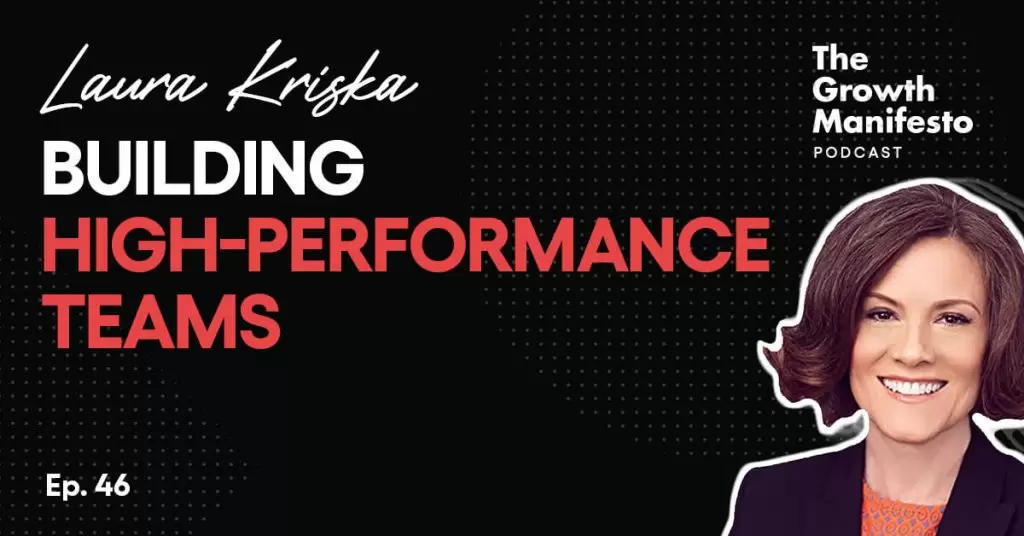
This episode is with Laura Kriska, author of The Business of WE – the proven 3-step process for closing the gap between us & them in your workplace. Laura is an expert on cross-cultural relations with more than thirty years of experience bridging gaps in diverse workplaces. She has worked with Fortune 500 companies on four continents helping them build trust across Us versus Them differences based on nationality, ethnicity, race, religion, age or any factor of identity. We talk about how to build cohesive, high-performance teams, regardless of members’ differences.
Key takeaways
- Us versus them dynamics between departments like sales and marketing weaken a whole organisation even though the real competition sits outside it.
- A 10-question self-assessment scores how integrated someone is with a local culture, and a score below 30% is dangerously low.
- Dolce and Gabbana's patronising videos ahead of its Shanghai fashion show sparked a backlash that got the show cancelled and hurt revenue for years.
- We building means deliberately pushing people slightly outside their comfort zones to bridge a divide, not just organising social events.
- Building a connection across a divide needs both a genuine willingness to connect and an honest look at your own life choices.
Chapters
- Intro: what we building means
- Defining the us versus them divide
- Who gets to be the we
- Homogeneous teams, diverse customers
- A 10-question cultural integration score
- The Dolce and Gabbana China backlash
- Intergroup anxiety and feeling like a them
- The two ingredients of we building
- Free ways to we-build remotely
About the guest
Transcript
Auto-generated from the episode audio, so expect the odd mis-heard word. Timestamps open the video at that point.
We building means we're going to push people slightly outside their comfort zones to deliberately address the us versus them dynamics that we have. So let's say in your organization, marketing and sales don't get along, never have. Well, we're going to build a plan for those people, the human beings in those departments to slowly build up their relationships together. We don't care about their friendships. This is not about kumbaya, everybody, let's be friends.
I don't advocate that. I want we building to occur for better business. You're listening to the Growth Manifesto podcast, a Zoom video series focusing on what it takes to drive growth in today's competitive business environment. Brought to you by Web Profits, a digital growth consultancy that helps companies drive growth through digital marketing. If you like this episode, please do us a favor and share it with at least one person who you think will get value from it. We put a lot of time and effort into putting this content together and would really appreciate it if you could share it. And I know there's a ton of
podcasts out there. So thank you for taking the time to listen to this one today. Now let's get into it. Today, we're talking with Laura Kriska, the author of The Business of We, the proven three-step process for closing the gap between us and them in your workplace. Laura is an expert on cross-cultural relations with more than 30 years of experience in bridging gaps in diverse workplaces. She's worked with Fortune 500 companies on four continents, helping them to build trust across the us versus them divide. Today, we'll be talking about how to build cohesive
high-performance teams regardless of members' differences. And just quickly, before you get started, make sure to go ahead and hit that subscribe button so you get the latest episodes as soon as they're released. Now, let's get into it. Welcome, Laura. Thank you, Alex. I'm glad to be here. Yeah, I'm excited about this conversation. This is one that's, I think, very relevant in the world that we live in today. Let's just get straight into it. What is the us versus them all about? You're a business person. You've been in many organizations. I mean, every single organization I have ever worked in has us versus them dynamics.
Usually, it's related to occupational mandates, sales versus marketing, legal versus HR, engineering versus manufacturing. You know, those are inevitable. They are predictable. But those same type of us versus them dynamics happen based on identity factors. You know, one that used to be much more prominent was men versus women. And that, thankfully, has really narrowed over many decades. But there are there are an endless number of us versus them dynamics that exist in every workplace I have ever been in.
Some of them are necessary, executive versus non-executive, management versus non-management. But the degree to which those gaps exist impact the organization. So even though these us versus them dynamics are inevitable and predictable, and they can exist without causing great damage, it really depends on the organization and how it happens to be handled. So the idea of us versus them cannot be erased or we won't ever cure this.
And I'm not trying to cure this problem. I'm trying to eliminate the damaging impact that divisive us versus them dynamics have. So what is that negative impact? I mean, let's look. The easiest thing I can connect with is sales versus marketing, right? That's like a nice, easy one for all the marketers and salespeople in the world. The leads aren't good enough. Salespeople aren't closing the leads, you know? So can we just talk about the negatives of it at the moment?
You know, so where is that a challenge? So what I have found is that in most organizations, they have the money earning departments and the money using departments. You need marketing to promote your products and you need people to sell those products. and in some organizations, there is this inherent hierarchy that if you're in a money earning position, you're more important. The same thing happened in my very first job in automobile
manufacturing. In the United States, automobile manufacturing, there was a lot of weight put on white collar workers if you had an MBA and people who actually made the car were not viewed as important. They were blue-collar workers. And so when you give this preferential treatment, hierarchical power to one group, sometimes they wield it in such a way that it damages relationships. For example, the way you talk about a different group, the way you give all
kinds of benefits or even income, if you are prioritizing one group so much more than another group, you're really saying this group is way more important. But in actuality, well, sorry, what happens when you prioritize one group so heavily is that they start to think that they're more important and this divide occurs and they begin acting as competitors. I'm sure you have seen organizations, you know, those marketing guys, or can you believe the people, you know,
in such and such a department and they talk about each other as competitors, they behave, they won't share information. They will even sometimes purposely sabotage another person or another group. And this is ridiculous because the real competition is outside. We have plenty of other competition outside, different companies with different names. And what the organization, the people in that organization who are behaving as competitors forget is that the name on the
paycheck or the pay stub is the same. We all have that in common inside an organization, whether it's a financial organization, car manufacturing organization. So anything we are doing to limit the productivity, the trust, the relationship, the communication inside our own organization in between departments makes the whole organization weaker. And that doesn't help, you know, it may help one person or one group temporarily, but fundamentally it's causing the
entire organization to be less competitive. And so we're really talking about the dynamics within the same organization yeah so this us versus them is within the same organization it could be across and it could be across departments it could be across offices it could be across the regions right um but it's kind of internal thing that we're thinking about like is that the best way to frame it at the moment yes i mean it depends on who who is the we so the we so who is the way so because because oftentimes it feels like the way it well you i mean who's
the way? Yeah. Let me ask you that question. I was going to like about to just go into a tirade of having some guesses, but that's why you're here. So let me ask you, who's the way? The we is who you decide the we is going to be. And it's usually up to the leaders to decide who is the we going to be. And again, I'm going to say that traditionally there is a group in the organization that is prioritized. That is the we and everybody else is them. Again, to a degree that needs to happen.
But if you are, if I have an organization and I know you do have an organization, I know that you want engagement. You want everyone to be operating at their best potential and feeling like the goal of the organization is in alignment with their goals as individuals. so that everybody is pulling, if we're going to use like a rowing metaphor, pulling in the same direction. It's so obvious. But in terms of we can be many things.
So in global companies, I tend to work with huge global companies with headquarters. For example, the headquarters might be in Tokyo and they have regional offices all over the place. Well, sometimes the we is limited to Tokyo. So if you're not somebody who has worked there or speak Japanese or travel there, you feel like a marginalized outsider. And again, that's not good for business. So it's really up to the organization to determine who is the we and then how is that expressed?
How do leaders talk about the organization? Where do they put their resources? Where do they spend their time? And that kind of thing. so it really starts with the leadership of a company doesn't it that's where it kind of starts isn't it and it's kind of I think um the most obvious statement of the us versus them is the us is the leadership team and the them is everyone else in the company right and closing that divide kind of um if everybody feels like they are part of the us then they feel more
included. They feel that they're part of the same team and they don't feel so, is the word isolated the right way of thinking about it? Is that? Yes. A different way I would say is that they feel seen, they feel heard by the leadership. And when you feel seen and heard in any circumstance, at a cocktail party, in your family gatherings, being picked for a sports team, when you feel seen, you feel good. We're humans. We want to belong. And certainly the workplace is one of
the most important places outside of our family lives that we want to belong, even if we're just doing a job, right? So many people are just doing a job. Many people have careers. Once you're in leadership, you definitely feel a sense of connection in a way that perhaps that someone just doing a job doesn't, but even people who are just doing a job need to feel some level of connection for the organization to be operating at their peak potential.
And I think that last point that, like I just heard about peak potential is key for an organization because yeah, you can still operate with this in terms of the divide. But the thing I've seen in the companies I've been involved with is that like if people are having a good time and if they feel connected and if they feel that they're part of the same team and if they feel like they're part of the us, they perform better. They're happier. The teamwork is better. There's less friction
between people. There's more collaboration. So the benefits are there to figuring this out. And I just wanted to get that first part out on just why people should care, right? Because because it is about creating the best sports team that can win the championship, right? Absolutely. Yeah. You've nailed that right on the head. That is fundamentally why we building is important in organizations and why it leads to better productivity, more inclusiveness, people feeling safe, welcome. All of those things are good for business.
so so what are the warning signs that this is happening and that's what are some um some places to start and i know that in your book there's a questionnaire there's like a survey thing but you know just for the listeners is what are some of the warning signs that you know some companies may think yeah we are inclusive and we are you know basically all of us are us but then if you would ask maybe their team or their employees or, you know, some people in their organization,
potentially they're not. So what are some warning signs that this is happening? Well, one of the warning signs is just the way people behave on a daily basis, the way they talk about different groups. If you hear them, you know, oh, that accounting department, they never, they, they, you know, that I hear people talking about regional offices. Oh, the New York office, blah, blah, blah. Also where they spend their time in their little off moments. You know,
right now it's hard to see that because many people are still working at home, but during regular times, you know, who people are eating lunch with those are little indicators. When you have social functions who's showing up and who do they spend time with when you have kind of all team meetings, you know, are the same people always together. And, and it, it, if you're looking and this is something leaders should do, you should assume that there are us versus them dynamics and you look for them. Sometimes it's less obvious. Uh, and sometimes
it's pretty obvious. Yeah. And it's, it's, it sounds like it feels like the obvious ones are the big things which are like like extremely obvious but i think what maybe a lot of leaders probably aren't thinking about is the little things like what you've just said you know and i think taking note of the little things and we'll get to all this as well um but i think that's going to be a key key part of it that we don't think about because it's just kind of how we talk how we be you know it's who we choose to hang out with and it's then you know how we make the jokes
you know, and like sometimes the jokes are, they're divisive. They're not inclusive. Right. But let's talk about, you know, what can we do about it? Right. So what, like, how do you, how do you make everybody feel like us? Cause I think that feels like such a big task, you know? So, you know, it's where do companies start? One of the important things is just thinking about your organization, what it looks like, does it reflect the communities that you're working in?
Does it reflect your customer base? So if you have a very homogeneous organization in terms of the big identity factors, right? The big identity factors, there are so many identity factors, but the big ones tend to be things like gender, gender orientation, race, ethnicity, age, religion. So if you have a very, very homogeneous team, but especially your community, your customer base, your business partners are not homogeneous, that is a big indicator.
And you really need to look carefully at that, I think. It's a mistake, in my opinion, to try to operate from a very homogeneous place when you're serving a diverse clientele. This is something I saw a lot with some of my Japanese clients. Japan is a very successful country. They run many organizations that are just, oh, the people are intelligent. They're hardworking. They care so much about doing their best at all times.
However, often when they go outside Japan, these hardworking, intelligent, loyal workers are deeply uncomfortable working with non-Japanese people. And part of the reason goes back to the fact that Japan is 98% Japanese, 98% Japanese for people living in Australia or the United States. It's hard to imagine being in a place that's 98% the same, same face, same language, same history, same religion, kind of, you know, like a lot of things are the same.
And so when you grow up in that environment, it's hard to feel the comfort you need to be successful in the global marketplace today. And so I would see that Japanese executive teams were not making appropriate decisions because they didn't have all the information. For example, they might look at customer needs in Texas, but they didn't have people from, they had hired people in Texas.
They were literally in Texas, but the people making the decisions about a Texas-related product or customer were all Japanese. And, you know, they had some information, but they didn't have the information from people who had the lived experience of being in Texas, of understanding what Texas customers want and the legal and social and, you know, all these various spoken and unspoken rules come into play in those kind of situations. So if you are an organization operating with a very homogeneous group, especially at the top, I think it's important to look at that.
So let's take that, the Japanese example. Yeah. What would have been a different way that they could have done it that would have led to more success in the local market? Well, I spent 20 years working on this problem and I can tell you exactly what I did to help them. Over the years, I would encourage, 20 years ago, I was younger than many of my clients and I would say, you know, maybe you should have more conversations with your local colleagues.
You should go to lunch. I would be very gentle. And then 20 years passed. And then I got mad because I saw that they would say, yes, yes, we should. And they wouldn't take action. And I had a pivotal conversation one day. I was in San Francisco working with a group of Japanese men, professionals, again, highly competent, intelligent, hardworking people. And there was a guy there who had lived in China,
you know, in Japan, you do a lot of rotation to different, especially when you're at the top of the organization, you travel a lot to different locations. And he said, I lived in China for five years. And I said, Oh, when you lived in China, how much of a Japanese life did you lead, you know, like Japanese food, Japanese language people. And he said, 90%. And I thought, huh. And he's, and he immediately started excusing this. He said, you know, with food, you have to be so careful,
you know, suggesting that it might be dangerous to eat Chinese food. And, you know, and I said, and so we're in San Francisco, this beautiful office looking over the city. And I said to myself, and I said, okay, well now you're living here in the United States. How much of a Japanese life are you living now? And he paused 90%. This was a light bulb moment for me. And I recognized that his level of comfort was so, it was, he was so uncomfortable that it didn't matter where he
was going to be. He was taking his Japanese life with him no matter where he went. And I understood very clearly at that moment that I had to help my clients in a different way because I had been suggesting things for many years. And the thing I did was put the fact that they were living in a Japanese life, I put that into data in the form of questions. And then I linked that to their profitability. And as you probably know, almost every Japanese company revenue is growing,
not in Japan, but it's growing in South America, in Europe, every place else other than Japan. And then if you look at their revenue year after year, you would see domestic sales or revenue and global revenue. And the global revenue is climbing and climbing and climbing. And so the people from Japan who were being sent outside needed to be as integrated and knowledgeable about their locations. But if you're living a 90% Japanese life, you're missing a lot of information.
So I developed a tool, which is very close to the self-assessment I have in my book. It was 10 questions in Japanese, asking Japanese colleagues, how much English do you speak every day? If they're living in America, if they're living in Germany, it was how much German are you speaking every day? Who do you have lunch with? Five days a week, how many of those lunches are with people who don't speak Japanese? How often do you spend time in small talk? Where are you getting your news?
What about weekends? And so the series of 10 questions gave them a score from zero to 100%. 100% meant that a person had really integrated, had really invested a lot of face-to-face time in increasingly in-depth interactions. And my premise was that the more that they had spent time with local people, the better prepared they would be to make decisions related to the local marketplace.
And they would probably learn a lot of other good information and they probably have a more enriching life in that place. And so it was this tool, this physical 10 questions, relatively simple. It gave them a number. And then we gave them a plan for how to increase their score. Most of the executives and professionals that I would work with who had arrived within their first six months would score, I would say, 30% or below.
And I called this dangerously low. It's also, by the way, if you're 30% or low on a particular cultural group, you're much more likely to cause the type of damage that results in complaints, in damaging, you know, information to your company reputation or even legal problems. And to higher your score, of course, you're much more likely to avoid those problems. But better than that, you can leverage your cultural data into successful outcomes.
And so what we're really talking about is immersing yourself in the them side of things, right? Is to kind of to understand them at a level that maybe you don't understand before. And this us versus them is like, seems to be about understanding as a first step, you know, kind of putting yourself in their shoes. Absolutely, because you don't need to agree with or like what another cultural's values or data is. But if you don't understand it, you're operating at a deficit. You're operating with a partial data source.
I mean, that's like going into doing a spreadsheet without a decimal point. You know, no salesperson would ever use six months worth of sales data to do predictions for the next year. Right. That would be ridiculous. You'd use a full year sales data to do predictions. So if you're not gathering up data and I say visible and invisible data is essential, then you're not well prepared. You really have no business doing the work with that other culture if you haven't gathered up all that data.
So what happens when this goes wrong? Have you got any examples of companies that have maybe failed in this respect and kind of what happened as a result? Yeah. I mean, there's so many great, great, awful examples. Great, awful examples. The most recent one that I think is really relevant and is in the book is about Dolce & Gabbana. and this luxury brand everybody knows has been very successful and their largest market is in China. Again, one of the largest luxury brand markets in the world. And three years ago now,
2018, they were planning their largest fashion show in their history in Shanghai. Huge event. I don't know, millions and millions of dollars and time being put into this fashion show. And days before the fashion show, they purposely released three videos. These videos were carefully made for the social media to promote the fashion show. And they released these videos. The videos show, they're very short, just a few minutes. They show a beautiful Chinese woman, you know, jewelry, makeup, this beautiful dress.
And she's eating Italian food. There are three videos. In one, she's eating spaghetti, a calzone, and pizza. And she's eating them with chopsticks. And as she's eating it, and you can imagine this is not easy to do, she's having trouble eating the food and a male voiceover is saying kind of, oh, honey, you can't eat that. Oh, you know, it's very patronizing. It was meant to be humorous. But it didn't work. In fact, it had the opposite impact.
The Chinese customer base was furious. They reacted to this. they found it very insulting. And as a result, the fashion show was canceled. Products were burned. Stores had to take their Dolce & Gabbana products off the shelves. And it has continued to have a negative impact on their bottom line. Their revenue has been impacted for years. And this, so I have, I read about this extensively. I thought about this and it,
And I learned that Dolce & Gabbana had been in China for quite a while. So they weren't they were not able to be like newcomers. Oops, you know. Oh, sorry. They had been in China for many years and had clearly had employees and hopefully executives. So I think one of two things happened. Either they had no Chinese representation at the table while they were making these videos, when they were deciding to use these videos. or they did have colleagues that understood the Chinese market,
but those colleagues weren't to listen to because it was an awful decision that had an immediate negative impact that could easily have been avoided. So, I mean, all this could have happened in China, right? And it may have been some expats at the table and Chinese at the table, right? At the same time. And, you know, the expats may have been the us, you know, because they're, you know, connected maybe with head office and them could have been the Chinese. And so what, I mean, it's all theoretical now
because it's happened in the past, but what could they have done differently to really make sure they didn't screw it up so bad? Well, if they had trusting relationships, like really, really deep trusting relationships, not just, you know, acquaintance or colleague level, I believe that they would have listened to those colleagues. They would have been able to defer to somebody who knows more about the market than somebody visiting from Italy. I mean, who made those videos? I don't know. I hope someday there's a detailed report or book about what happened.
But it's the same as Japanese executives trying to make a decision about customers in Texas. Yes, they can know a certain amount. Yes, they have some expertise. But if you're not listening to people with the lived experience, whether that's Houston or Shanghai or whatever the factor is, you're missing data. So I think creating an us in that case would have been. So let's go back in time. And I am a consultant to Dolce & Gabbana. And they say, we're doing this, we have this fashion show. China's a growing market. I would think, I would say, well, who are your top people there? And how well integrated are they in the Chinese culture and Chinese business world?
And I would ask them to take the survey, the us versus them self-assessment. This is a tool that I have in my book. It's also a free tool on my website. Anybody can go there and download this tool. I hope this will be a often used tool for global business people all over the world. And I would say, you know, I would get their top people and I'd say, take the test. It would take them 10 minutes, yes or no questions. And tell me what your score is. And if their score was low, I would say, ooh, you need to do some work.
You know, if your people are not investing time and effort into building trusted relationships with the them, right, the them in that case, it was maybe the Chinese market, the chance for making a mistake is so much higher. You may not make a mistake. We don't know. But if you educate yourself, if you look at cultural data as an important part of doing business in the 21st century, you're much less likely to make these kind of mistakes.
Yeah. And, you know, we, as we're prophets, we expanded into Singapore three or four years ago. We could never understand, like, why? How can they keep saying yes in the meetings and then afterwards it's a no, right? because they don't ask questions if they don't know because it reflects poorly on their status. So you can't ask yes or no questions because it'll be yes, you know, all the time, you know, and there was always like this separate cultural thing
that always happened, right? And if you're Singaporean, you got it. If you were like an expat, you didn't get it, right? And it took us a while to get that difference. And it's like, and no matter what we thought about, you know, how good our marketing services were, if they're not trusting of us to say, well, we're going to listen to you because you're talking to us in a way that we want to be spoken to, right? Then it doesn't work. And so we went through that the hard way because I'm, and I'm sure lots of organizations will
go through this the hard way, but what are some of the things that we could have done to understand the culture better and to build trust with local partners or local potential clients? You know, so what are some of the things that, you know, that we could have done, you know, as an example? Yeah. It's such a great question. And usually people are asking those questions again after. So you'd go into it knowing that there's cultural visible and invisible data.
So I would say anybody in your organization that was going to be engaged with that entity should take the self-assessment on Singapore. And it starts with, do you know any person who identifies with this cultural group? And some of you would have said yes. Some of you would have said no. I think the next question is something like, have you ever had a 20-minute small talk conversation? I mean, these are not hard things. But you live in Sydney, right? Yes. So I'm going to guess there are some people from Singapore or from, you know, that understand Singapore in Sydney and that if you really wanted to, you could use the computer and find people who know way more about Singapore than you do.
And you could have even invited someone. You could have spent two hours, paid somebody a relatively small amount of money to speak to your entire staff about business culture in Singapore, history, just basic information. How do people greet one another? I mean, I know English is an often used language, but the biggest problems I sometimes see, Alex, are when there's this false notion that we're the same. Like we all speak English. Of course, it's not going to be real, right?
Yeah. Wrong. It's not true. It's almost easier when it's like in China or, you know, in Spain where there's clearly a different language. The U.S.-U.K. issue is exactly the same where there's this false notion that, oh, yeah, there's no cultural differences here. So just being aware of this other cultural group that there are differences and recognizing that I don't see those differences. Why don't I see them? Because I've never been exposed to this culture. I've never met somebody. I've never built a trusting relationship with somebody from that culture. So I'm going to do a little homework to learn.
And when I then start to engage with my colleagues, when I start going to travel there, I'm going to avoid those little things, as you were referencing earlier, that might cause somebody some discomfort. And I'm actually I'm going to avoid causing discomfort. And instead, I'm going to create comfort. I'm going to do a thing that they aren't expecting me to do. A very good example of this is saying one word in a different language when you meet someone.
Especially people from the United States are not famous for these kind of gestures. And so when you do it now, it's recognized and appreciated. I've seen it with especially with Americans going to Japan. I insist if I am advising a person who's going to work in Japan, even for one day, I teach them how to say hello or good morning, which is really easy, by the way, because I grew up in the state of Ohio. And the way to say good morning is ohio gozaimasu.
And you can even just say ohio, ohio. But it's just this small gesture that can have an immediate positive impact and carry through the whole business relationship. Yeah. And I think it applies to product and to services. And basically anything where you want to try to connect with that other culture is to really understand them. And I underestimated the importance of it. And then we did hire a culture expert and she did explain all these things.
I'm like, oh my God, that makes so much sense now. I wish, you know, and again, this is why this podcast is awesome, but I wish I had somebody tell me do this first because, you know, we thought that's marketing. This is marketing. Like if we just explain it, they'll get it. But, you know, what we appreciate as candor here in Australia, they don't appreciate in Singapore. And it's actually almost the opposite. It can be seen as rude sometimes. Absolutely. And I think when, especially in your case where, you know,
Australia is the headquarters, right? So there's that us versus them dynamic as well. And it's so, the tendency is to obviously see the headquarters as the power place. So it's especially meaningful when people from the headquarters, when they travel all the way there to engage in these relatively small gestures in order to make that feeling of we. And one of the mistakes I've seen organizations make in the United States is that they're starting a new entity in a different country and they'll bring me in and they'll say, this is very important.
And this initiative, this new office in Hong Kong or Japan or wherever is the most important thing we have on our schedule this year. And I'll say, oh, great. This is exciting. By the way, who are, you know, the three or five most important people in that new office? What are their names? Can't even name a person. They can tell me all day long how important this initiative is, and they don't know the
names of the people. Or they'll go there, and they'll do the business. But then afterward, they go sightseeing or go out with each other. And oh, what fun it is to have an adventure in Tokyo with the guys from the office. But they fail to notice. Obviously, it's fun to do those kinds of adventures. And you should do those adventures. But you also should use some of your time to leverage good relationships, to purposely, deliberately spend time with people who might not speak your language, who might, you know, you might find it's awkward.
I mean, intergroup anxiety, right? This is a researched phenomenon. Intergroup anxiety is a level of discomfort that humans feel when they are with people who are different. And it is the absolute definition of feeling like a them, feeling like an other. And one of the things I've realized in my work is that everyone has felt like a them at some point in their lives. In a moment, I'm going to ask you, Alex, to tell me a time in your life when you have
felt like a them. But it's because all of us have felt like a them that we know how we should be behaving when we have these opportunities. I don't think that all them experiences are equal. I categorize them actually. I categorize them as inconsequential experiences, consequential experiences, and game-changing experiences. So do you have an experience of feeling like an outsider that you would be comfortable sharing?
I mean, from any time in your life? Sure. I mean, I've got personal, I've got professional. I'll go a personal one. I mean, I've had a stutter since I was young. so so I could even I couldn't even speak so for my whole life I was a them you know like and everyone else could speak and I couldn't talk and I was like and I said that felt so that's one side of it on the other side of it you know just working at different companies and having the management just never tell you about the company's success about their health about you know what is the strategy about what is it and you're just kind of they're thinking are they okay is this happening
And so, you know, like with WebProfits now, we're extremely transparent and we want to tell everyone everything. And sometimes it's a lot of information for people that have just started. But I saw what it was like on the other side and I'd rather be on the side of more sharing and kind of, you know, there's more inclusiveness on the direction of the company, the health of the company than otherwise, you know. I mean, it's never perfect, right? Like there's always challenges on both sides, but it's, but it's a lot more productive to
kind of be inclusive with people and to kind of, to pull them into the fold, not to keep them separate for some fear of, I don't know what the fear is that people have of not sharing, you know, or maybe they're going to share this information or, you know, but maybe they're going to do something with it. Or I find that the opposite is better. Yeah. But it's easier not to share. It's easier to hold all the problems and power to yourself. It's easier and more comfortable to just be in your little circle.
And I think that's a big reason why a lot of leaders don't. And especially in the United States, there's a lot of us versus them within about race. It's a very important conversation. It's one of the issues I care most deeply about in relation to us versus them and building a we culture. and in the United States, being white, being part of what I call the home team, it was deeply uncomfortable to talk about this. And it felt really dangerous. It felt very risky.
And there's no penalty not to discuss it. So why discuss it? I mean, that was an old attitude and clearly has been an unsuccessful attitude. The civil rights legislation was passed over 50 years ago, And there has been negligible change. And part of that is this place for white people not to talk about race, not to name race, not to find ways to develop the comfort. So that idea applies like you were talking about. You know, it takes more work for you to be a transparent leader.
I bet you've had to have some uncomfortable conversations. Is that right? Yes, definitely. Because they ask questions. Because if you share, they ask questions. Sometimes those questions are not easy questions and that's okay. But if you're a good leader, you continue to go through it. And what happens is that, I mean, it's our experience of it anyway, is that it builds stronger teams. It builds more trust. like I said though it's it's not perfect but it's way better than the alternative you know and we are very kind of transparent you know that's an important thing for us you know like to really
share um but we've really been talking about cross-cultural things right you know what are some things that companies can do um and this could come back to the race conversation to the gender conversation on kind of how or even just the sales versus marketing conversation right you know just like kind of just separate departments but kind of it's how people identify themselves right but how do you um reduce this us versus them things what are some things that um that
leaders can do to kind of to bring people together better we building expand please Okay, drop the mic. We building. Done. I mean, I want people to understand we building because I really do feel like it's an all-inclusive solution. We building is an all-inclusive solution that manifests itself differently in each organization.
So I'm working with organizations in various groups and issues, but it all fits under the idea of we building. We building is taking action to bridge any us versus them gap that is causing damage. Damage in the form of poor communication, poor relationships, ineffective teamwork, misunderstandings, false notions, stereotypes, all of that. So we building can occur in many, many forms.
I have a lot of ideas. I'm going to tell you some of my specific examples of that, but I'm hearing ideas from readers now all the time about what WeBuilding looks like. WeBuilding can be one person researching on the internet how to say hello in Chinese. That's WeBuilding, but sorry, and using it, actually actively using it. But we building could be Alex deciding, hey, everybody in my organization, we're going to take a trip when COVID is over.
We're going to go on this massive team building trip to Fiji Islands. And we're going to do a week of getting to know each other. And obviously, organizations do that kind of thing. But the we building part means that it's not just social. We building means we're going to push people slightly outside their comfort zones to deliberately address the us versus them dynamics that we have. So let's say in your organization, marketing and sales don't get along, never have.
Well, we're going to build a plan for those people, the human beings in those departments to slowly build up their relationships together. We don't care about their friendships. This is not about kumbaya, everybody, let's be friends. I don't advocate that. I want we building to occur for better business. It's the right thing to do. Yeah, you might become friends with somebody who has a completely different background than you. That's bonus.
That's not the reason we do it. But if you, you know, so we building can be these very expensive, really involved campaigns, or they can be actually a campaign within your organization in the way we talk about things. I do campaigns with organizations that are zero cost, zero cost, because I believe what we really need to build connection with somebody who is them, we need two things.
Number one, we need the genuine willingness to want to build that. So if the salesperson and the marketing person don't see that they need to build a connection and a trusting relationship for the benefit of the whole organization, that's a problem. So if we can help people see that, and we can do that by explaining, here's our competitors. You know, you are not competitors. I use lots of tools and a simulation exercise that is a wonderful tool for helping people see and help them understand that if you genuinely need to want to connect.
So that's number one. And the second factor we need is the ability to look honestly at our life choices. So if I am in marketing and I say, you know, if I take the us versus them assessment and the target group is the sales department and I answer these questions, well, have I ever had lunch with somebody from sales? Do I spend any amount of time? Have I tried to understand what their business mandate is so that I can align what I do a little more successfully? You know, it's that kind of thing.
So we building can be, I think doing it organizationally is great and supporting staff, providing opportunities. We can't force people into we building, but we can set the table and make it really delicious food and we can have our leaders enjoying that and modeling WeBuilding. And what happens, I've seen, is that people get inspired. They see their leaders, they see their colleagues going outside their comfort zone and seeing
success. And then the payoff occurs. Then you get a great business deal because sales and marketing has worked well. or you get a brand new client because the Singaporean office and the Sydney office have this great communication and they're able at midnight in one place to communicate with other people. And because of their trusting relationship, they say, I'll be ready for your call tonight, even though it's Saturday or whatever it is. And they get the job, they get
the business and everybody benefits. So the payoff of we building starts to perpetuate more we building. You said before that there's obviously the expensive one things like the trips and the lunches and, you know, the entertainment side of things where like it's there to build the relationship and to build trust. But you also said there are some free things that, that don't cost anything. You know, what are some examples of some free things that don't cost anything that
companies can do? I've been doing some partnering now that people are virtual where we simply, I usually give a little lecture talking about like why we'll we building is important. And then we ask for volunteers, would you be willing to engage in we building conversations? Usually we do three over a period of time. I provide questions. They're not difficult, but they're just a structure to help people get to know each other.
I wanted to mention something, though, about the social stuff. I just wanted to be really clear because most organizations do invest in social things. But I view we building social events differently so that you purposely deliberately create opportunities where people have to engage with the people they normally don't engage with. And you might even do things that people like, oh, you know, why do we have to have assigned seating or?
Yeah, it's like, that's my buddy. I want to sit with my buddy, you know? Exactly. And so we talk about we building. We set it as a notion, as a kind of intention for the organization, usually for a period of time, six months to a year. Like we building often when there's a new initiative is a great time. There's an American company that's going to be doing something new overseas and they have their own us and them dynamics. But we're using the opportunity of this international location as a reason to build our own connection.
And then you build events, but you expect them to do more than just show up and be social. Got it. I think the we building word, the we building concept, it's very simple to understand. And when you put the word we building in front of lunch or party or whatever, people come into it knowing, oh, I'm going to have to or I'm going to have the chance to, you know, engage with somebody who's outside my usual circle.
And here's the thing. Almost all the professionals that I work with will do it. They'll do it. There are a few people who are cynical or drag their feet, but most professional people happily engage fully wholeheartedly because they're professionals. And it's usually not painful. You know, sometimes there might be discomfort, but they get over that. Well, I'm thinking about the else versus them assessment. This is free.
Anybody can do it. any listener right now can go to my website, lauracrisca.com, and you pick the us versus them self-assessment, and then you pick the other, the them. Again, maybe it's departmental inside the organization. Maybe it's related to an international location, or maybe it's about race or ethnicity or gender or transgender. I think there's so much more, for example, about transgender culture much more awareness today than say when I was starting my career.
And so if I am a leader and I decide transgender culture is the one I'm going to measure myself against and I get a low score, well, then I need to take an action. And almost half of the actions are free actions. So for example, go on the internet and research, read a book. I read a book called A Man Named Carl recently, a wonderful memoir about transition. And I learned stuff from
that book that I just, I wasn't aware of. I don't have, I didn't have that exposure. I didn't have that experience in my life. And so when Elliot Page, an actor, a couple months ago, came out as Elliot Page, as the actor formerly known as Ellen Page, it's like, I understand this. And I understand a little more than I would have otherwise, had I not targeted this cultural group as a group that
I don't know a lot about and started to educate myself on. So it's really about understanding, isn't it? Because as soon as you understand the other person or the them, um, you're so much more patient. Um, you're so much more understanding. Um, and if you're a good person, which most people are, you want to kind of change how you ask because now you get it. And I think it's kind of the getting it that is the effort.
And that's why you say it doesn't cost a lot of money. It's just putting in a bit of intention to kind of understand what the other side is. Like I love your examples before about, have you done small talk? Say for example, if the person is from the sales team, have you ever just done small talk with them? Like, have you any idea just what their day is like? What are some of their challenges that they have to go through? And vice versa, right? It's that it's to bridge the understanding part of it.
You know, like I think, and we don't have, like, let's not go into it, but, you know, the political side of things, like it seemed a couple months ago, like everybody in the US was so, well, it seemed that way. You couldn't talk about the other side, but they're people too. They're smart people. You know, they just have a belief and kind of understanding each other is a first step to these things, right? And there's so many places where there can be a divide. There's so many places, right? And so, but from a company's perspective, if they want to have the most productive teams,
they need to put a bit of effort in, you know, in creating trust and understanding between, you know, whichever two departments, offices have that divide, right? And that's kind of the self-assessment that we spoke about, you know, that intention and so on. But it's getting more complicated now with everything being remote, right? So let's just talk about that for, well, it feels to me, right? Before it was easier to bring people together because they're in the same office, in the same location.
There's certain social constructs that happened because of that, right? Now we're all on Zoom. And so do you have any suggestions on how companies can, at the company level, not at the individual level, but at the company level, start to do some of the we're building stuff, just where everyone's at home, you know what I mean? Or, you know, where everybody is in a different location? I would agree with you that working from home does limit the essential work of building your relationships.
It's just harder. And my premise is that it's face-to-face relationships of increasing depth that lead to the important work of WeBuilding. So I agree with you. And yes, there are things we can do. I was working with a company recently, and I was working with all their new employees, the big bank. And there were about 30 people, and so many of them had never been to the physical building. And I was doing a kind of poll, and I was asking about what it's like to work from home. And many of them said, you know, I feel lonely. I feel isolated. One woman stayed on later and said she just felt completely disconnected to her new boss. It was just an awful way to be starting a new job. And I was advising the company afterwards, and they really had not done many fun virtual activities.
People are Zoomed out. It's tiring to be on Zoom all the time. But in deference to that, they missed an opportunity to really engage people in a fun way. So, and again, this is something companies can do for zero cost. You can engage your employees with fun activities using the resources you already have and using technology. I want to tell you about two pieces of technology that I have found to be game changing during this time.
And I highly recommend organizations plan a very short, like one hour fun event. And part of this is coming from my own experience. You know, I launched a new book on January 12th, just recently. And I didn't have a book party because of the pandemic. And then I realized I'm going to have an online book party. and it turned out to be so much fun. Over 400, almost 500 people signed up to join. We did activities.
It was, I had more people at my virtual book party than would have shown up to a physical book party. Yeah. So the two tools, one tool is a newish one. It's called, have you heard of it? No, but I mean, what do you search for? M-M-H-M-M? M-M. Yeah. Yes, that's what it's really called. It's not a typo. And it is a fun platform that makes your presentations more interactive. And it's just fun. And if you go check it out, you'll see what I mean. You can put different rooms up. You can put yourself looking like you're in a rainstorm or in a radio. It's just it's clever. And it just makes presentations more engaging. The other tool is Mentimeter.
okay familiar with this one no this is great i'm learning new tools i love when i learn new tools it's my favorite thing these two tools i've only learned since the pandemic and they have transformed my virtual presentation life so mentimeter uh oh it's in you based out of europe um is an online polling but it's more than polling you can do games and people use their phones So you can have 100 people in 100 different locations in the world participating on the same quiz or employee engagements, or you can use it for business purposes, or you can use it just for fun.
And so using those tools, you can create quizzes, for example, about your organization, true or false. Alex started the company with this much money in his bank account or so-and-so has a typing speed of such and such, you know, just fun little things. Then another resource is using people in the organization and just doing little videos. You know, all of us are much more functional with
this kind of technology these days, but you could have, you know, top 10 pandemic workspaces, you know, you can have a little contest, send in your picture of, you know, the biggest workspace or the smallest worker, most compromised, you know, you could just have fun with it. And because these, we are each other's colleagues, it's engaging. People want to know, like they want to know, like, like if I said right now, Alex, take a picture of what you're looking out on,
right? If I tell you what I'm looking out on, it's not pretty, but it could be fun to find, you know, a few people who'd be willing to share. So it's endless, the kind of information, you know, it requires a little bit of revealing of yourself, but especially if somebody like you or other leaders in your organization say to your employees, hey, we're having, you know, unfortunately, a one-year pandemic, you know, anniversary party. We're
going to try to make the best of it. You know, some organizations, if it's smaller, they'll send a bottle of champagne to every employee or other organizations have these cooking things and they, send all the ingredients and they cook together. But this type of activity, as I said, you can create it for fun, for free. You need to have a team of people. It takes effort and time, but the payoff is enormous because it's a shared experience that you have instead of seeing each
other every day. So I think every single organization should be hosting virtual, fun, we building experiences now. And again, you can't just be like, Hey, everybody show up at five, you know, you got to put some time and effort into this, but you do it with free resources. Yeah. That's a great point because, you know, because I remember back when the office life was that life and everyone had to be in the office and culture was culture was different i
wouldn't i don't know if it's stronger but like like engagement was stronger because but you see people every day you've got water cooler conversations you know the coffee shop walks and stuff like that you know what i mean and so like it was it was easier to build it but i do like the thinking around you know just doing the virtual kind of engagement um activities you know and i do like um those two topics but we are almost out of time yeah please no please
free giveaways fun games yes where you might have oh like a you know hey how about the business of we as a free tool that was totally i love it i love it if you can see it on my things right there you know, you spend a little bit of money and you can do these wheels. So it's not a competition, right. But it's, you know, just random, somebody's going to win. So that's how you can attract people to join, or I'm going to tell you my very first job and the time I was fired,
you know, you make it enticing. And again, using our stories, our own narratives can really generate excitement. Fantastic. Now I've got a few quick fire questions and then we'll just finish up with how people can get in touch in the book and so on. These are the questions I like to ask everybody on the podcast. And it's just, it's five simple questions. Yeah. Number one, what book has had the biggest impact on your success except for the one that you wrote? What book? Oh, there's so many books, so many books. A book I really found inspiration from is called Loving. It's by Cheryl
Cashen. She is a law professor at Georgetown. And it's about the couple named Loving. There was a movie about them. It was a white man and a black woman who were married in Virginia, and it was outlawed and it was awful. But the book itself is about much more. And Cheryl Cashen talks about cultural dexterity. This is her phrase. And cultural dexterity is this idea of reaching out and branching outside of your normal cultural relationships. And I really,
I love that idea of cultural dexterity. And I feel like we building is encouraging people to do that. Fantastic. Fantastic. Number two, what's your number one piece of advice for hiring awesome people, especially now considering the book that you wrote, right? So it's more complex, but what's your number one piece of advice? I mean, I think it's, okay, here's what I'll say. It's incumbent upon leaders today to look outside of their own cultural tribe when hiring people, because too many of us, us means people in the cultural norm, the cultural dominant norm, tend to default to people who look like us, sound like us, pray like us.
And I believe we are missing important voices, important skills, and important talent when we have such a narrow pool. So looking outside of that, actively, deliberately challenging ourselves to look outside of that norm. Fantastic. Love that one. Number three, what's your best time management or productivity tip? Oh, I don't have any. I'm awful. I am awful. Don't ask me that question. Well, you wrote a book, so you must have had something in play to write a book.
I mean, that's not an easy feat. When I was writing the book, I was very regimented. I rode my bike to a quiet writer's space here in Brooklyn. I got out of my house. I had to do that. I have three children, so I had to get out. I would make my tea, and I would listen to a specific song, and then I would sit down and write. So for me, having that little ritual,
I had little things that I would put, I would give this little, I have this little spray that I would, and kind of really kind of create a space to really focus. When I'm writing, I need that type of clear, open space and time that is created for that purpose. That's fantastic. And that's fantastic for anyone who wants to write a book because there's lots of people who do. Number four, what's the best piece of business advice that you've received? I need more pieces of business advice. I've had a
very small boutique consultancy for many years. And just now is when I'm expanding the business. So I'm in the process of listening to people like you who have been successful in a way that I'm hoping to be with sharing a much broader message. So I, Oh, I'm not doing very well. Best piece of business advice. You're doing great. I love how humble you are. You're so humble. Stop it. Um, number five, um, how do you relax after a crazy day? I'm in the office or the home office
or, you know, wherever you're working. This is the great thing about a family. Um, I have a, on Friday, I will have three teenagers officially. And for better or worse, they force me to engage and get out of my work. It's so easy when you have your own business, when you're so passionate about what you do, it's so easy to put no limits on that. And I, you know, because it's
my book. And because I've, I, I had this idea 10 years ago, 10 years ago, my children were three, five and eight, and it took me, you know, all this time I spent the two past two years writing it. And so now I feel like I, you know, I know I care more about this than anyone. And so I feel like every moment I'm thinking about it and it's exhausting. So my family really helps me, it forces me to disengage with that work. Um, and, um, you know, watching a show at night
is one of the ways that I just check out of my business brain. Yeah. Fantastic. Um, cool. Now just wrapping up, um, the business of way and okay. So there's a few things that were mentioned. The first, the first is the book, the business of way. So where can they buy that? any retailer. You know, Amazon is a place a lot of people buy their books. The publisher, Harper Collins Leadership has a page. So really any, I mean, I'm always in favor of supporting the small business owners and small bookstores. So that's another avenue.
Sure. And you mentioned before the self-assessment and that's available at laurakriska.com and the links in the show notes. And now can people hire you directly as a consultant? If they, you know, just want your fantastic experience and the brain and all that type of jazz to come in on zoom and kind of, you know, help, is that something available to people? And if so, how can they get in touch? It is, it is available. And if they go to my website or they go to info at lauracriska.com, you can send me an email. It is my great wish to inspire a
We building revolution. And I can't do this by myself. I need everybody's help. And I'm eager and available to talk to groups. And being in this virtual world means that I'm talking to people all over the world. And we can do things in a pretty short amount of time. It's also great. I used to be a lot on site and I would travel to different locations and conduct team building experiences. And I love that. And I hope I'll get to go back to that, but I do work with organizations. It,
it is my life's work to inspire leaders everywhere to follow WeBuilding, to be WeBuilders themselves and to get people in their organizations to be WeBuilders. And it's definitely the right time for it, which is now, you know, Laura, thank you so much for coming on the podcast today. This has been such a fantastic chat. I have so many ideas that like, I'm going to pass straight to the team right now, you know, from a selfish perspective. And I'm sure that all the listeners will get a lot of value out of this podcast as well.
So thank you so much for coming on the podcast today. Thank you so much. It's been so great to talk with you today. Awesome. Thanks, Laura. Take care. Thanks for listening to the Growth Manifesto podcast. If you enjoyed the episode, please give us a five-star rating on iTunes. For more episodes, please visit growthmanifesto.com forward slash podcast. And if you need help driving growth for your company, please get in touch with us at webprofits.io.