EntrepreneurshipMarketingPersonal growth
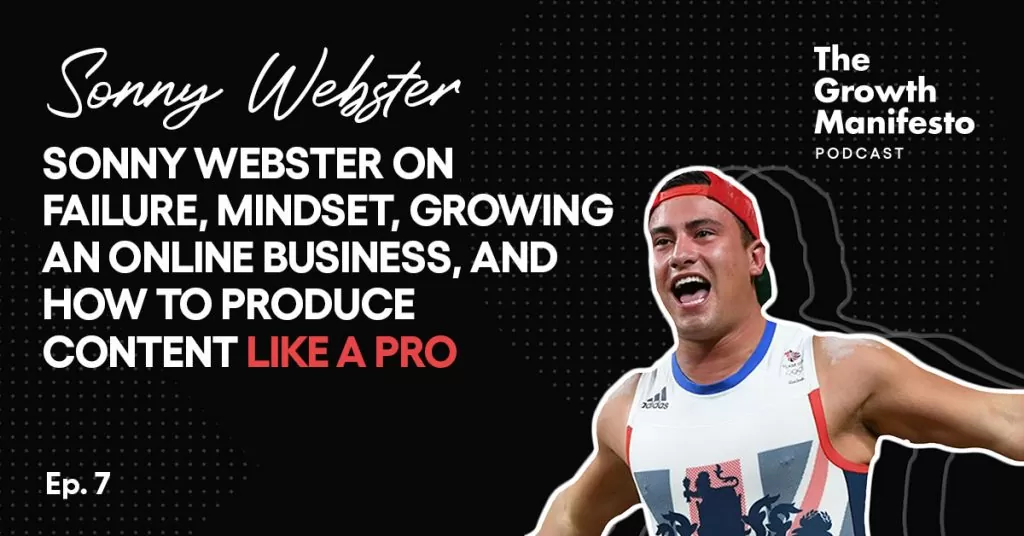
Sonny Webster On Failure, Mindset, Growing an Online Business, and How To Produce Content Like A Pro
Olympic weightlifter Sonny Webster on missing the 2012 Olympics by 1kg, growing to 221,000 Instagram followers, and building an online coaching academy.
 with Sonny Webster


Overview
In this episode we interview Sonny Webster, Olympic weight lifter and Founder of the Sonny Webster Academy – a premium online community for weight lifters, cross fitters and fitness enthusiasts. After competing in the 2016 Rio Olympics, Sonny went on to grow his Instagram following to more than 200,000 followers and then leveraged that to grow a business he can run from anywhere in the world. We talk about failure, mindset, growing an online business, and how to produce content like a pro.
SHOW NOTES
Key takeaways
- A sports psychologist's spider's web analogy showed him that recovery, sleep and nutrition mattered as much as training hours.
- He got comfortable hearing no, from asking a stranger with a Porsche to sponsor him to years of rejected sponsorship letters, and kept asking anyway.
- Deliberately clickbait circus lifting videos, unrelated to real training value, pulled in new followers who then discovered his more technical content.
- Building an email list, something he resisted for years, ended up more valuable than his Instagram following once he started selling training programs online.
- He argues a single Instagram post reaches only around half his followers because of time zones, so reposting the same content is never wasted.
Chapters
- Intro to Sonny Webster
- Discovering weightlifting through detention
- Missing the 2012 Olympics by 1kg
- Cold pitching sponsor Jeff for funding
- Growing Instagram through collaboration
- First online sales process before ClickFunnels
- Building an email list and authentic marketing
- Lifting Dreams charity and what's next
- Redefining what success means
About the guest
Transcript
Auto-generated from the episode audio, so expect the odd mis-heard word. Timestamps open the video at that point.
You're listening to the Growth Manifesto podcast, brought to you by Web Profits, where we share inspiring stories of real people who've succeeded in the marketing and business world. Today we interview Sonny Webster, Olympic weightlifter and founder of the Sonny Webster Academy, a premium online community for weightlifters, crossfitters and fitness enthusiasts. After competing in the 2016 Rio Olympics, Sonny went on to grow his Instagram following to more than 200,000 followers and then leverage that to grow a business he can run from anywhere
in the world. We talk about failure, mindset, growing an online business, and how to produce content like a pro. So let's get into it. Boom. Boom. Boom. Alex. Hey, Tony. How are you? I'm excited. Today, I'm excited. Today, we get to actually interview our first Olympian, um sonny webster this guy i'm really really excited about he was a gold medal winner in 2011 um in the commonwealth youth championships and then he went on and represented great britain
2016 in the rio summer olympics sonny webster how are you mate very well thank you very much having me guys yeah it's good to have you here man now this is the first time i've met you mate alex knows you quite well um you guys have got a bit of a connection there so i i'm going to enjoy getting to know this instagram legend where you've got more followers than i think you know if the Dalai Lama had a following on Instagram. It wouldn't even come close to you, all right? Does he, though? Have you checked? I don't know, but I'm going to check that. I think someone has to check this. Fact check, Adrian, please. Can you put, like, a little thing at the bottom if it does?
No, mate, thank you so much for coming on board. And you were in the 2016 Rio Olympics. And it's amazing. You now get to speak to many Olympians, and you've actually achieved that. So I'd love to know, what was your journey as an athlete going to the Olympics? Yeah, so, I mean, for me, going right back, I guess my first memory of the Olympic Games was being in it as a kid, sat in maths class. And the PE teacher come running into the class and said, look, Sonny, you're going to have to, sorry, not to me, to the teacher. So we're going to have to stop the class for a minute. We need to turn the TV on because there's only one TV in the school.
And all the doors slid open and the rest of the kids come in that were in my school. This was in Reading in the UK. and they flipped the TV on right at the point where David Beckham and Kelly Holmes were jumping up and down, hugging each other. And I was like, what's this? What's this about? And it was just as London had won the bid to host the 2012 Olympic Games. And at the time, like as a kid, I didn't really know much about what the Olympics was, but seeing the excitement, the expression on these guys' faces, I was like, whatever that is, I want to be a part of it.
And I was always a keen golfer as a kid. my dad was massively into golf I've still got videos of me as a kid down the driving range trying to hit balls when I'm about five years old my dad's screaming at me suddenly it's not straight it's not right so I've always been into sport but like I said and after that time at school where we found out what the Olympics was I tried lots of different sports athletic sports and I was kind of as a kid one of those guys that was good at everything but not great at anything you You know, I wasn't an expert at anything.
And we ended up moving from where that school was in Reading down to Devon. And naturally moving school, not knowing anyone. I used to be a bit of a loner. So naturally at lunchtime, I used to go and sit in the weightlifting gym and watch people do weightlifting. And after about two weeks of being sat there watching these kids give weightlifting a go, I got to know a few of them and I started to take the mickey out of them a little bit and be a bit of distraction, I guess, in the class. and the teacher came up to me after two weeks and said,
look, Sonny, you've been here two weeks now, taking the piss out of these kids, giving it a go. Why don't you ever come and go yourself? And I was like, nah, it's not really for me. Miss, I'm a weightlifter. Sorry, I'm a golfer. And she said, right, you've got detention now tomorrow lunchtime. You've got to come have a go. So I was like, damn it. Like two weeks in school, I had my first detention. So the following lunchtime, I went along, and purely because I'd sat and watched weightlifting done wrong and done right for two weeks, I had a pretty good idea of what I need to do. And I ended up beating everyone on my first day.
And like I said, I don't think it was from being like naturally talented. I think it was purely from sitting and watching what I needed to do. And after the first session, the coach turned around to me and said, look, Sonny, you got detention now every lunchtime until you want to be here. And that was how I spent the rest of my lunchtimes in school. Yep. Were you a big kid or a little kid? I was 44 kilos when I started weightlifting. I'm now 94. So I guess I was a smaller kid, short and chubby. Oh, really? And then you started doing it.
When did you actually fall in love with the sport? I guess the thing that's great about Olympic weightlifting is you never complete it. You never win. There's always another kilo to put on the bar. And for me, what I love about the sport weightlifting is it is very individual. and I've always been an individual sports person myself. For me, if you lose, you lose yourself. You've got no one else to blame. And likewise, if you win. And what I love about that type of sport is in terms of what you get out is what you put in.
And the harder you work, the harder, you know, the better your results will be. And I love that because there was definitely times when I played rugby as a kid where, you know, I wanted to get up at 5 a.m. and go to school and train for two hours before school. Other kids didn't. I wanted to spend every lunchtime at school practicing my weightlifting instead of kicking the football around the playground. Other kids didn't. And that enabled me to really be as dedicated as I want to achieve what I wanted to do. So I guess I fell in love with it very quickly. Yeah, nice.
Yeah, yeah, cool. It sounds like you were a bit of a troublemaker. It sounds like you were just sitting there just causing a bit of trouble at the sides there until they pulled you in, huh? Yeah, I was definitely, I guess, to put in a better way, inquisitive as a kid. And I always questioned authority and, you know, always wanted to have a deeper understanding of why I was doing something and what I was doing it for. And after about, I guess, the first sort of two to four months of competing, I got called up to represent Great Britain. So very early on into my career.
Wait a second, how long? After about two to four months, I was competing my first national championships and then was called up to... I like how you say this so casually. Yeah, in the first two to four months, you know, I get a phone call, Great Britain goes, hey, you know what, Sonny, we've been watching you, mate, for the last month or so, maybe a week, three days, mate. You're good enough, you're in. That is amazing. Can I just say that is... You've got kids that have been training all their lives, just like when you start off golf and you start off early. Mate, and you're there. Yeah, well, I mean, weightlifting, it is a very small sport and it was even smaller when I first started.
So there wasn't a massive pool, but I went to these competitions and it was great for me because like I said, I wasn't a very outgoing kid. I was quite shy. And all of a sudden within the school, I was going to these competitions. I was the national champion, the British record holder. And it really boosted my confidence. And if anything, I got a little bit cocky and was then selected to go to my first international championships, which was in Pavia in Italy. and I loved that opportunity that I was going to be able to travel with my sport
and I went there I thought yeah I'm going to win this one too like no problem rocked up I made all my lifts I broke the British records and I finished 22nd out of 23 people what a bit of a all the records yeah and you still finished 22nd yeah and you know for me that was one of the best things that happened to me early on in my career because it made me realize very quickly that it wasn't about being the best in the country or being the best in you know your gym if you were
going to be able to compete on that most like most elite level yeah yeah and that was very grounding for me and I definitely went away from that competition starting to think right now I need to work a lot harder than the rest of these guys it's not about just you know casually going through this being better than the rest of guys in the gym and that was definitely a turning point for me in realizing how hard I needed to work if I was going to get to the Olympic Games yeah the I think there's a difference between, well, it's so important who you compare yourself to, right?
Because that really pushes you so much further. Yesterday I was having a chat with someone and he's the best person in his company for sales. I'm like, that's cool, but are you the best in the world yet? Because he started to relax a bit. He's like, I'm pretty much done now because I'm the best in the company. I'm like, how good's your company, first of all? if you've been doing it for like a year and he's the best. So like I was all about, you know, trying to find the people to compare yourself to. And I think it's such a cool thing that like at such an early age,
you're like, wow, I'm the best in Britain, but I'm the worst in the world. Sorry, second, the second last. Yeah, well, I missed it out there. The only reason why I wasn't last is because the other guy bombed out. So he didn't even make it to. Okay, cool. How old are you at this stage? So I would have been about 15 years old at this stage. No, I would have been younger than that, 13. yeah about 13 years old at this point so you go in there and you you come was it 26th 22nd 22nd sorry sorry 22nd you're a 15 year old your ego was pretty healthy at that point prior to go into
this concert competition you think you're gonna win you can absolutely smash it and then you go in there and you just get your bum handed to you on a platter right how do you crawl out of that who was around you um what went through you because you could have quit at 15 you were yeah like the best thing in britain i think for me i was definitely inspired by being able to travel and see other parts of the world and that was like right i want to i want to do that again i want another go and one thing i really noticed was when i because the you'd go for go away for a week you'd compete one day the rest of the time you're training going in the training halls
and i'd been to like five or six these internationals now done that and sat in the training halls and watched other people train that were kicking my ass all the time and going hang on a minute I'm not doing what they're doing or I'm not doing that exercise or I'm not squatting as much as they are and I went back to my coach and I said look this these guys are kicking my ass I'm not doing the same as them yep why and the coach was a teacher like I said at the time and didn't really like me questioning the authority and we ended up falling out and that
was then a very big sort of point in my career where it was like that was the easy point to give up if I was going to, because there was very few coaches that knew weightlifting and could teach it. And the next nearest place that I could go to train, uh, an elite club was almost three hour drive away. I was 15 years old. So that was out the question. So I was coming up to 15 years old now, end of year six. And it was like college, what am I going to do studying wise? And, um, I ended up finding, I said to my dad, look dad, I want to move to Bristol to go and work with this
weightlifting coach and continue with my weightlifting. My dad was like, hang on a minute, son, you know, you're not going to just move up to Bristol and do weightlifting. So I went away for a couple of weeks and I went on the computer and then ended up finding this, uh, golf academy in, in Bristol. So I was like, you know what, dad, you know, I'll want to go to, don't forget about the weightlifting stuff. I want to go to Bristol to do the golf academy. He knows his story now right yeah and uh he was like um oh okay then well you can go and spend six months
up there see how you get on and then we'll see where it goes from there so off I went 15 years old and moved up to to Bristol to work with his next coach and study alongside um my lifting but I think for me as an academic I was I never liked to study too hard and I did what I needed to do to get through. And I very much played the system. I knew that if I did certain subjects, I'd get more points that would get me into the right college. And I knew if I did this subject,
it was easy. I'd get the most points to get into that university. So it was kind of like a bit of a game that allowed me to continue to continue with my weightlifting career really. And so, so this is now of course age 15, 16, 15, 16. Yeah. And then when did you go to the Olympics? what age uh 22 22 so so what was the part in between if we can have a condensed version of that story you know yeah I mean I'm sure there was like a lot of hard work and probably some
struggles in there yeah definitely so for me uh I after that time I moved and managed to stay in Bristol I missed out on the 2012 I missed out on the 2012 Olympics by one kilo which was you know heartbreaking for me, but I was only 18 at the time. Um, again, it was a, an amazing love learning point for me because one thing I noticed that I would train nine, nine times a week, two, three hours a day. And I knew that no one was working harder than me in, in the gym, but you know,
I never really believed in psychology or having that speaking to someone would actually be able to, you know, help me improve. I was very much in my approach with everything that I've always done it's definitely something that I've learned in business that no I can do this by myself and you know I don't need anyone's help and cut long story short I guess I missed out on that time at the 2012 Olympics I went to see a psychologist start chatting to them and it was really nice having an objective view or someone to look in from the outside because you know we know as like
you know with business you don't see things that are happening so close around you sometimes because it's so close to you someone else looks in spots the most simplest thing you're like why didn't i see that because you're on top of it and this guy pointed out some very key things he was like imagine you're training like a spider's web and each segment of the spider's web is an element of your performance and he said so obviously that segment that's you know with your training is full you can't train any harder you train nine times a week great but he said imagine the other
segments recovery imagine the other segments sleep nutrition all these other areas outside of purely what I was doing in the gym that I wasn't focusing on I wasn't spending enough time on and that really was like a wow moment for me because I was like I had such a short period between that point and my next major competition which was the Commonwealth Games that I was like right I started focusing on these areas I made massive improvements without working any harder in the gym and I was like this is great and after the disappointment of missing out on 2012 I ended up
qualifying then for the Commonwealth Games in 2014 and that was like the next best thing to the Olympics like and it was amazing I went there and ended up finishing fifth and again I was so excited and happy with that but I came away from that competition I was like why did you just go there to just be there I had I didn't say on myself I was good enough to win a medal I just kind of resigned to the fact I was always used to get my ass kicked so it was like 22nd 22nd and I was never really bothered about winning but I didn't go into that competition with the right
approach because had I truly believed that I could have won a medal then I would have but I didn't believe it right that's that's fascinating that yeah and that was a massive change in again in my psychology constantly learning from even you know um what seems like these victories or good days um I was still learning and I think that's definitely something that I've learned throughout my life is you know my favorite saying is the the biggest lessons you learn are when when you lose because when things are going well and when you have great days in the office you go out you
celebrate um you have a good day in the gym you go out and you're like yeah that was great and you're gonna have a party whereas when you have a bad day you go shit you sit down you go where'd that go wrong why wasn't i good today but you don't do that the same way when you have a good day, which is the most important thing, because if you want to replicate that good day, you need to know why it happened. And it's not always easy to explain it, but it was definitely something that from then on, I started being conscious about what was causing me to perform well,
what was causing me to be bad. And, um, I then went on to qualify for the 2016 Olympics. And it was quite a funny story because throughout my career, I've had points in my life, like, Weightlifting wasn't a well-funded sport. And it was very hard to, you know, stay sufficient living, whilst training for a sport that you don't get paid for, you get very little recognition. And where my gym was in Bristol was a really rough, deprived area called St. Paul's.
And I used to train this old church. And like I said, I was living off around 200 pounds, 250 pounds a month, $500 a month at a time. And it wasn't easy. and I walked into the car park of this gym one day and there was this brand new white Porsche 911 Turbo S parked in the car park. And I was like, hang on a minute. This looks completely out of place. Like what's it doing in this shitty gym? And I walked in, I said to my coach, who's in reception, I said, Andy, whose car's that in the car park? And he goes, oh, his name's Jeff.
He's in the main gym. And the gym was a room like this, big gym. And it was like all tall ceilings. And I just opened the door, 16 years old and shouted, who's Jeff and Jeff was on the other end of the room doing bench press and he sat up and he goes I'm Jeff um you know what do you want first thing I said to him was fancy sponsoring me and uh he looked at me a little funny for a minute and he goes well how much is it going to cost and uh I was like well I'm living off like 250 pound a month and you know I need to stay in
a couple more months in Bristol try and qualify for the Olympics I was like well you know um call it 500 500 pounds and then i was like well let's ask him for 600 and i'll get some new trainers like so sure enough i said 600 pounds and he goes um looks at me a bit funny he goes what a month and my jaw hit the floor bearing in mind i've been living off less than half of that i went yeah okay then so you were saying like just like i won off i just needed to stay try and get to olympics and then before you knew it now a couple hours later he came out and goes
what's your bank details lad and uh the money went into my account and that enabled to fund me then going forward to be able to train full-time wow that's amazing and how long did that last for do you know what jeff stopped by i mean you're jeff for me he's like my older brother now and he's been a massive guidance for me not only in life but in business as well um jeff was when he was younger used to race bmx as a kid and his parents never had enough money to send him to america to turn professional so we ended up quitting what he was doing and setting up a
telecoms company and now he's a multi-millionaire and he saw me in a similar situation had a dream of you know going to the olympic games but never had the financial backing the support that i needed to achieve that goal and he was in a position to help so he did and jeff continued to support me all the way up to the olympic games and then flew out to watch me compete in 2016 so he's been a massive part of my journey for sure there would have been an instant connection between you and Jeff straight away I'm imagining just like in Australia BMX racing
isn't that well funded it's not even heard of GMMA exactly there was a lot of things that were likened together yeah right so that was pretty lucky and so you weren't shy for asking that's pretty confident for someone to go out there and we'll get to maybe how that affects the success on Instagram because you're pretty successful on Instagram but we'll get back to that soon but you don't seem to have much, well, like it's a certain kind of person that will kind of smash open the door and go, who's Jeff? Yeah. Fancy sponsoring me.
But do you know what? I had had so many points in my life and I'd written so many letters up to that point asking for support, asking for sponsorship and getting told no so much that you become desensitized to rejection and hearing the words no, that it was like, okay, I'll try again. and I think that was a massive point of it because in my mind then the worst thing he would have said was no yeah yeah so you're also getting fed up as well did you get a point like man stuff this guy's got a Porsche I'm about here with my angle I guess stuff I'm gonna ask I don't care he's
gonna say yes or no and it's gonna be one of the yeah I mean like I said you you're desensitized to it so for me it was like the worst scenario was no and I've never been asked been afraid from that point to ask because that's it if you don't ask you don't get and the worst thing someone's going to say is no and if you're happy you're getting rejected as a no then fine yeah yeah we've had a conversation on this podcast before about that exact thing you know how most people are just scared to ask because they're scared of rejection yeah but the biggest things like in i guess life are really hard which is going to have a lot of struggle and a lot of rejection
so you're going to kind of have to get comfortable yeah hearing hearing no for sure and so i guess is there any advice which you would give to people who are kind of scared to start the journey? Because I remember the first time I started, I was like, oh my God, like, I don't want to ask for stuff. Cause if I say no, like I'm going to be rejected and that's like death. But like, is there anything which you think, or like, is it just a timing thing? Yeah. No, I think it's, yeah, I think it definitely is a, is a passion thing. I, I had a, I had an end goal that I needed to get to and I was going to do that. And it didn't matter
how many times I needed a pinball to get there. It was it. And I think the, I guess my biggest bit of advice with that is accepting rejection, getting good at being told no and understanding that that is just, it's another traffic cone to go around. It's another obstacle. And then you go again. And I think for, for me, it's, it's taking that first step and, you know, getting used to receiving no of simple things, writing letters. I used to not get replies and that was kind of your first thing to not getting a no. Yeah. Complete ignorance. It's like, hello, can I please get a
no at least, you know? Yeah. So I think, yeah, you definitely, you definitely get used to it for sure. And it was definitely a big part of, I guess, me getting to the Olympic games was not accepting that, that no and problem solving. Yeah. I think that's, um, it's a common, there's a couple of common things that I say, like amongst all like entrepreneurs and successful people is that they've gotten comfortable like in hearing the word no um and uh they've gone through a lot of struggle and they've had to kind of overcome that and i think that's kind of combined you know what
i mean so and the third one is that they're all kind of rebellious they always ask why why this thing and why not that way and why are you telling me what to do and what you know that's i think if you're really gonna believe in something and being able to you know replicate you've got to know the why you've got to have the understanding of of to why you're doing something to really believe in it with with whatever you do and you know that's definitely a massive part of it for sure I love it that you were a kid and you actually um you first got introduced to the Olympic Games as a
child watching David Beckham and jumping around and you're going you didn't even know what that was but you go that's what I'm going to do and you achieve it so when you actually became an Olympian did that come as a surprise to you or did you feel like you belonged in that arena I think it's such a difficult thing to describe in words because I've very much just brushed over that journey from A to B. There was points in my career where I was told that if I continue to weight lift, I was going to be in a wheelchair.
You know, I had a whole year off training where I couldn't lift at all because of my back. And there was points where, you know, there was no funding, there was no support. so it's difficult I need support from mum and dad too because dad's going go pick up a golf stick yeah well look at Tiger Woods right it's like you can be the next Tiger yeah well I mean I don't think it's necessarily a point of belonging it was what I needed to do and achieve and qualifying for the Olympics and being there I sat and watched the opening ceremony
of the Olympic Games three times every time thinking one day that's going to be me one day that's going to be me and then to walk out and it be you it's a real like uh you know it gives me goof bumps now to still reflect on it because it's everything I dreamed of and wanted to achieve and I remember walking out onto the platform and weightlifting is a very masculine aggressive sport in nature and I was stood there being called out Sonny Webster, Team GB, the what I always wanted to
the Olympic games and I stood on that platform and I was so close to crying and it was such a weird emotion to experience that moment because it was like all the good bits and all the bad bits throughout my whole career flashed in front of my eyes all those obstacles that we've talked about and it was all worth it and every part of that journey was was a lesson and it was what made me want to be there and made me get there and yeah it was all worth it in the end and you know
I did feel like I'd earned my right to to represent the country and to be there for sure bloody hate you did mate you put in such a hard effort for what you've just told me so then you go on you finish the Olympic Games and now you're a business owner yeah you're actually giving back which is awesome now have you have you used the same strategies same mindset and drive to drive your successful business now? Definitely. I've always had like a business mind in me. I mean, right back from when I was, I guess, 14 years old, just before I moved out.
Like I said, I was a keen golfer and my dad wouldn't keep buying me all these golf clubs. So what I used to do is... Wait a second. Your dad wanted you to play golf and never invested into you. But was going to take all the credit for it. Well, he was definitely involved in the golf. And I don't know. I think with that, I took my approach to my sport very single-mindedly and sort of got on with it. But when I was younger, I used to buy and sell golf clubs on eBay. That was my first business.
Really? So I was always browsing eBay, looking at these golf clubs, and I'd see one that I knew was that was going for a cheaper price than what was actually worth, so I'd buy it. or I'd see someone post the photo of a golf club, but they'd marketed it terribly. The photos were dark. They were grainy. The packaging was shit. So I used to buy it at the cheap price, take it back to my house, use the good camera that I had and the good lighting and the good boxes from the golf shop that I used to play at and repackage it and sell it on for 20 bucks more or 25 more.
And I started to collect up this money I ended up spending nearly $4,000 on a golf set that I'd saved up from £20. Wow, that's amazing. And that was my first business. And then when it comes to, you know, after my career, I guess, there was always going to be a point of, like, how the hell do I make money out of weightlifting? You work so hard to get to the Olympics, right? You get there. Like, you almost cry at the opening ceremony. Like, that all passes.
And so now you've been working your whole life to this point. And then that point that you achieve it, which is fantastic, right? Because there's a lot of people who don't achieve it. But that's something which has been achieved by you now, right? Now what do you do? Like it must have been a challenge to figure out, of course, what's next? Do you know what I mean? How do you say, well, that's what I want to do next? Or you know what I mean? Or, you know, like that psychology behind it. I think it's still scary now. I think, you know, during my time growing up around Jeff and having him support me, he showed me a lifestyle and a life that I wanted as well.
And, you know, he helped me get a car. He helped me get all these things while I was weightlifting. And I never wanted to go backwards. And after that point of competing at the Olympic Games, I came back from it. And I was like, yeah, it was a real down point, really, from the biggest high to your lowest very quickly. And I really lost my love with the sport. I didn't really feel like training. You come back from something like that, it's all, wow, well, it's happening. Then afterwards, no one cares. And they do.
It's sad to hear that. Well, it's on TV. It's the best thing ever. And as soon as it's done. And on your journey to that point, anyone that's cared about you, anyone that's important you haven't got time for because you're so dedicated to your goal and I pushed everyone else my family my friends closest people to me away from me well I needed to achieve that because there was no way anything was being prioritized ahead of my sport and it's a very lonely time after that and it was only through after I guess about three months of partying
having fun after the Olympics. You're like, I'm going to have burgers now. Yeah, exactly. I was like, you know what, what am I going to do now? And my friend invited me, owned a gym and he said, Sonny, would you mind coming down to deliver a seminar to teach these people how to weightlift? And this whole time while I was, you know, before the Olympics or during qualifying for the Olympics, I was also studying at university. Um, I say degree in sports performance of Olympic weightlifting. and I was like okay yeah I guess I can coach and I went along and delivered this seminar and talked
about my journey to the Olympics and then gave these people these technical cues and got paid at the end of all this is good and then you know more gyms started to say suddenly we come do seminars and that became quite popular to the point where I spent the first two years just staying within the UK delivering weightlifting seminars on the weekend one day events and you know I was making sort of like four thousand uh dollars a weekend and this was great because I was only like you know 22 and it was good and then I was like after a while I was like right I'm gonna
travel and start doing these um seminars internationally and this was all through with the building of the Instagram that was enabling me to go to all these places to deliver these seminars and um that was kind of where business sort of was spurred for me I set up my business and then was delivering these seminars that was before I even went online so just because there's a few parts in that story which I think we need to get into yeah sure when um and just for
the people that are listening um so I met you about what was it a year eight months ago six six months ago, I'm not good with time, but six months ago, it feels like much longer. At the time you had 160,000 people following you on Instagram. Today it's 221,000. So that's gone up a lot. But when did that start? Was that the same time as kind of the first seminar or was that after a first few seminars? Because obviously there's a lot of people trying to make Instagram work still, right? But obviously it's happening up for you
and it's continuing to grow. And the thing I know about you as well is that the followers are actual followers. But I mean, how did it start? You know, like what was the timing behind it? Yeah, so I guess, well, to give you an idea, the Olympic Games, I had 6,000 followers when I qualified for the Olympics. After the Olympic Games, I had about 12,000 followers. That's all? Yeah. So the Olympics only gave you 6,000 more followers? Only gave me 6,000 weightlifting. No one cares about weightlifting. so um yeah i guess i've i've had social media since like 2000 and i must have instagram around
2000 and i'd say eight um so i've been always i started with twitter i guess and then went on to instagram as everyone does and was using facebook and i was posting just training videos and i was quite consistent and you know that would be my first massive tip with anyone um that's listening that's trying to grow their Instagram is consistency. It's so important on so many levels, but I was consistently posting and putting up my training stuff. I then dabbled in YouTube a little bit and was posting longer format content of just training, not necessarily educational
based stuff. And then one of the biggest things for me that made the biggest jumps was collaborating. so I would go out of my way to go and coach these people on Instagram that had a load more followers than me so I'd say look let's meet up I'll come to you I'll teach you how to do weight lifting and then we'll make a video and then you know you post it and that started to gain exposure for for me and what I could do coaching wise and then more and more people started to watch me and then I continued to do that with other people and the growth came in that kind of adds credibility
to you without doing anything. Yeah. Just by association. You know, even though that, you know, I might have thought I was the best coach in the world. I could have been the worst. But people were starting to follow me because he said, she said, he said he was good. Yeah. He's hanging out with him, so he must be good. And that was one of the biggest things, I think, to get the growth. And then it definitely becomes a snowball point from that. Yeah, right. And so you heard this after the Olympics, you got 12,000 followers. Yeah. And you do your first training that was basically on the weekend.
Was that from Instagram or was that just a person who you knew that said, hey? Yeah, that was just a person I knew, yeah. Okay. And the second, third, fourth, fifth, like were they all people as well that you knew? That started to then come through Instagram because people were, I was showing on my Instagram that I was doing these seminars. People going, well, I want to do that in my gym. Can you come do my gym? So yeah, it definitely became from that. And the popularity grew through what people saw I was delivering on Instagram. And I'd make a massive point of showing that this was that person when they came to the seminar.
This is them hitting a PB. And people go, well, I want to hit a PB. So they want to come. And then they create the demand. And I had very little competition at the time. I think you still do not have that much competition, right? No, there's probably, you can count on one hand the people that are doing seminars that I do. and so that was straight after the olympics right and that's expanded over the last what was that three years ago now well yeah i think i might have even done my first seminar maybe even before the olympics but with a with a friend so yeah yeah over the yeah the majority of me doing them on my
own and being a figure of doing them globally yeah over the last yeah a couple of years two three years so so uh so what are some of the tips to people um who want to grow their instagram profiles. And I know that, um, you spoke about something before, but like, like if there were three, four, five, six things, I mean, those are things that people are trying. Yeah. Well, I mean, it's so different now and so much harder because for some of the reasons that I'll talk about in a moment, but I'd say, um, for me, consistency, consistently posting, um, being genuine with your content and being unique. So many people try to copy other people's
content because they're doing well and people don't want to see the same thing and one thing that I did to create clickbaity stuff that was going to go viral to get a lot of views was I do like circus I call it circus lifting but I'd lift stupid weight super heavy and people would be like I've never seen that done with a barbell and it would get shared and get light so although that wasn't going to necessarily add any value other than entertainment to the person that was watching it. That became my in. So I'd say with whatever those of you that are listening do for business,
for work, you need to think about a way of making your content clickbaity viral, even if it's nothing to do with what you want to sell someone. So I'll do them the circus thing that gets them into my page. And then they go, Oh, actually this guy goes, knows lots of stuff about actual weightlifting and technical stuff. They watch some of my more sensible stuff that yet it doesn't get the same interaction and the same viewing as the stupid stuff was but then they get sold to on the back end so for me that was kind of like the best way to draw people in I'd say getting the click
very viral unique stuff I think everything nowadays that you put up on Instagram it has to be high res it has to be good resolution you can't get away from you know hiring a videographer it pays although it's that initial outlay it took me a long time to realize that you know spending a few hundred pounds a month on getting high quality videos and getting it edited it it pays in the long run absolutely i've got to say let's just put this in perspective sunny as you have a
look at your instagram stuff and i've seen some of your posts and i've got to say your circus stuff is absolutely amazing you get these i don't know how much weight you've got on there but you've got this barbell on you like it looks like you've got like 120 kilos at least it's on your chest and you pop it up in the air you grab it and you flick it over your head then you catch it like that and there's no hands and then there's like a monster drink with no yeah but that's the thing because no one else was doing it that was my way of gaining making the sport i guess a little bit fun and a little bit sexier and that was the thing with weightlifting it's and i suppose for a lot of
people listening as well what you might do work wise might not be sexy and it might not be the funnest thing weightlifting stereotypically you think guy coming out in lycra big sweaty or ogre lifts a huge weight you can't comprehend from the ukraine yeah and from the ukraine or from the middle east and they walk off and you're like just cool well and there's nothing to relate to but what you've got is you've got quite a good formula because you've got a you've got a background of being an olympian right uh you've turned the shy kid that used to go on detention because they
want to hang out and do weights at first come up and become more confident but now what you've also realized is i'm going to be entertaining i'm going to have some credibility behind me but then you've got some stuff substances well behind you where you've actually got the formula you've got the science of how to do this how to get a pb now claiming that you're going to get a pb because what i like about your your post i actually watched it through when i first watched it not be honest i go who's this clown but you were intriguing enough to go i'm going to keep on watching and by the end of the clip you'd learn something I learned and I actually went to your
website yeah I clicked on through how do you do that because that there's an art in that straight away well yeah and it's definitely something that I've played around with and then gone back to I always put like a clickbaity video at the start of the video so it'll be me doing something silly or putting loads of weights on and people go oh that looks heavy just to get them interested and then I go on to teaching them something interesting. So, um, that was my way of making, you know, weightlifting a little bit more fun, a little bit more interesting, but then selling to
them afterwards or not selling to them, but offering value in the post. Well, it's an instant invite because you actually, uh, on your website, correct me for a moment, you go to a landing page where you get to sign up, um, on the email database, but you also give away some stuff for free. Whereas that first session or something. Yeah. Well, you get a seven day free trial with with my academy but that you know that's something that i've thought about and played with a little bit as well from a friend of mine who runs a very successful online academy similar um he had a free trial i thought okay well i'm confident in my product and what i've got on there people will
improve from they do but the thing that i've noticed is notoriously weightlifters are stingy don't have a lot of money so you know there's people jumping on stealing the stuff and then not paying for it and I think you're going to get an element of that with whatever you do yeah well you're probably quite high in weightlifting no I think you know for me I've always worried about that because when I first started so the first online product that I sold and I didn't have a clue what I was doing but had this pdf
document that had my training on and it was six weeks long and I sort of played on the fact CrossFit's my biggest market and that's who I sell to because they've got more money. It's a much greater, bigger audience. It's huge. Globally, it's huge. You've got F45, you've got CrossFit and all that. Yeah, so I sort of tapped into that market. And I first of all had a six-week strength program that was ideal for CrossFitters to do at the end of the Open. They've sucked at the barbell work during the Open.
I can help you now. Follow this six-week training program. so my sales process was this so they would send me a direct message if they wanted to get the program they'd send me their email address I think received their email address I'd send them email one which would be explaining the product if they want the product they send me back a second email then if they if I get that email I then send them another email that goes right you need to send payment to this paypal account and then once you've sent the payment
send me a screenshot back and then i'll email you the pdf that was my process and i must i was like you know in my in my first sort of cool though you know it was so stupid but i made like maybe 30 000 pounds and i was like i was doing like processing two three hundred emails a day pretty much by myself back and forth back forth like and it was you know it was terrible until you found a shopping cart i didn't know any of this i did not know anything i knew paypal and i knew how to
send a pdf it was i'm gonna question everything but i'm not gonna question screenshotting reply that's gold screenshot paypal everything like that was my confirmation because that was a quicker process than me going in, check the payment, it landed. So that's what I did. And then before actually, so I did that for quite a while and I just had this PDF document that I sold. And then this guy approached me that I was actually getting free food off. He was sending me my meal prep food.
And he said, oh, I've got a friend that, you know, you should maybe speak to. He does ClickFunnels and, you know, I've seen the way you do your, sell your program and I think he can help you and I was like you know what it won't hurt to have a conversation and that's something that I've always done and I think we're sometimes scared to think because of the loss of the time to engage with people that could potentially help us you know whatever he's just trying to sell me something but you know I thought I'll give anyone five ten minutes to see what he could say and he said look Sonny I've seen your program online I think can
help you we use a thing called click funnels up what's click funnel and he said look just give me give me a couple hours and I'll send you an email and he sent me an email to a click funnel where he just sent me a few photos and a bit of text and he sent me this sales landing page of like you know increase your lifts enter your email address here and then it was like all this information I was like wow that's awesome and then he was like yeah and it just just automates everything and I was like what like so I don't have to do the email thing he just no no it just
that takes the payment that sends the program off i was like wow and he's like so have you got an email list and i was like no and i was like and you know what i had a lady called suzanna cole that was big into a property i used to pt um at the time and she was like almost like my my mom if you like she's a very successful um property developer in the uk and she would constantly bash onto me son you need to start collecting these people's email addresses and i was like oh but it's too much hassle what's 20 email addresses gonna do and now look back on it and
think how many people to that point that I'd coached face to face that put it probably easily given me a further 40 pounds after that day and I think you know had I'd had an email list I probably would have made another hundred thousand by now but lesson learned didn't have an email address. So I was like, no, I don't have an email database. So he created me then a page in which I could capture email addresses. And then, so then I was armed with my click funnel that was selling my strength program. And then I was armed with the email database. And he said, look, I'm just
going to let you run with this for three months. I don't want paying a penny. Go away and see how much you made. And I tripled the amount of money that I was making in the first couple of months. I said, mate, this is amazing. I had all this extra hours. I didn't have to do anything. It was easy. So we were just working for free. And he goes, great. So then he was like, we'll build a portal. So then we had the login portal and then started hosting more programs and different things. And it's kind of gone from there. And I've developed more and more different styles of programs and stuff. And this is all through ClickFunnels still, right?
All through ClickFunnels. ClickFunnels, just FYI. Like if you're listening out there, it's about $100 a month American. It just does all of it, you know? Like I think there's a lot of people out there who like think, oh, need a website or website. I got to pay developer. I could do all these things. Click funnels will do it. There's a bit of playing around with it, but it looks pretty sexy. If you know, someone knows what they're doing, that's putting together. And it's definitely like there's so many people out there with huge followings and that could make be making so much money. If they realized they didn't need an app and they just needed someone that
knew how to click funnels and knew how to run ads. It is ridiculous. and I was overwhelmed really with, you know, from making my few thousand pounds a month to what I could make in such a short space of time by, you know, accessing my audience and being able to sell to them, understanding remarketing ads, marketing ads, full stop, and all of these different things that I'll kid you not a year ago, I didn't have my online academy. We started it in two weeks time I would have had my online business a year oh wow cool and so like it's
made a big impact to to your lifestyle I'm assuming because you're in the UK and now you're in Australia you know yeah so it's taken pressure off needing to necessarily travel to the seminars so much like and we definitely make a lot more money on online now but it's been so I guess this first year has been so much learning and having understanding because like I said I was a complete dummy to all of this stuff. Now I understand the importance of, you know, getting an email list and trying to get my emails, email data from people. And we're building a really good list now.
I now send like probably three marketing emails, um, three to five marketing emails a week where, you know, um, there's always a call to action in it, but I'm giving people different lengths, sometimes just value around something that's happened in my day or, you know, a real hyper technical one that people will learn something technically. And that's something that I've learned a lot about too, because I was learning how to email market from my friend who runs a much more general fitness based academy. And he would write really quite funny emails or,
you know, like lifestyle ones. And I was like, cool, I'll do the same. And my audience weren't picking on it like they were for him. And then I started writing more my own style stuff that was very weightlifting based or if you do this, you're going to lift more. And people started engaging and started buying and there's not just like a one set way that's going to suit all and you have got to play to your own audience. So just on, again, so many parts to that, which I want to go into, I'll try and keep
them as possible. But because I've been subscribed to your email list now for a while and you you email yeah three to five times a week and they're all different stories that didn't lead to a call to action but they're all different stories and it's certainly like your voice right like are you writing them personally every single day yeah and it's just like a one-time thing and it's basically like that day are written and sent off yeah for sure i mean you definitely when i'm in the rhythm of doing them like i don't find it hard to write each day but i used to get i've got
terrible grammar and English skills, I'm dyslexic and terrible at spelling. And I was always worried about, you know, what I was writing down. And I was trying to conform to what I thought people needed to hear, which is why I feel like initially people thought it wasn't me writing them because it wasn't in my authentic manner that I speak and deliver video. And once I got over the fact that, you know okay it's all right to write fuck on an email email marketing if that's what you would say
on a podcast it's totally fine if that's what you would say and all of a sudden people were connecting more with my stories and what I was putting out because I was being authentic with the way that I was writing and it's I'm on an email marketing course at the moment that I'm learning you know how to be better at writing emails and it seems a simple thing but I can see my emails are getting better because I'm getting more replies. And I used to actually be like depressed if I'd spent a load of time writing this email and I'd open up my inbox in the morning
and I didn't have one reply or one sale. And it's like so much time into that. Yeah. And that's that pain again, right? That's that pain of, it's not the same as not getting into the Olympics, right? But it's still not pain. It's still, because this is like a thing that a lot of entrepreneurs and business owners they face and they struggle with right like you put all this effort into something and it just does nothing it just sounds you know and it's just constant until you figure something out i'm finding it with youtube at the moment like i've just started working with adam yeah um to develop you know youtube and tap into that market mainly
because we want to run google and uh youtube ads over our own content so we're starting to develop develop like the channel that we've got there and give people more long winded videos. But then I've always found as well with YouTube, the people that make a lot of money on there is because people get to watch you for up to 15, 20 minutes every day and they get to know you as a person. And you always want to spend money with someone that you feel you've got connection with,
or you know, if I turn around asking Alex, I'm selling this t-shirt, he's going, yeah, he's a good guy I'll buy a t-shirt off him you know and you have to kind of create that relationship with your followers as well and YouTube's a um a great way to do it but you know we got Adam on board now doing that yeah sure and so how how many hours a day are you spending on the business side of things because obviously you speak about like you're exercising still but these days two to three hours a day seven times a week or something like that is that right yeah but how much are you spending on the business side of things or are they just connected now
yeah no I still feel like I'm definitely juggling and I think it goes back to something that we mentioned earlier about you feel like you want to constantly be the one doing everything and you've like I put off on doing YouTube for ages because I was like I need it to be perfect I need to be editing it and instead I've gone right Adam I'll do it with you let's do a profit split we've both got skin in the game and you know if it goes well the time that you put into coming to video me and edit it is going to pay you out it's going to pay me out that's taken a shift off
me that's going to make me money with my business partner we've got a profit split as well and you know the harder he works the more money he makes and and likewise so I started finally branching out and giving other people jobs that I didn't need to be doing and I still find that very difficult that I do want to reply to every email in the support whereas like I don't need to be wasting an hour a day replying to support emails when you know now we've got a girl april who will deal with people can't log in you know and it costs us like 150 pound dollars a week or something
like that that is like far cheaper than the value of my time and it took me a long time to get to that i think now i finally got into a routine where i need to train for my sanity and that's really important and that allows me to capture my content my videos for instagram that's going to get people talking and keeping me current and then i say i need to clear the support inbox which probably takes me about 20 minutes i then need to write a email a marketing email which you know
today will be easy i can write about the podcast or you know i could write about my training session earlier so i'll do that right about the podcast but you know there'll be something that lesson or something that i can kind of throw in today around what what we learned or what i went through today that i can still somehow tie back to a call to action so there's definitely a set things that i like to do every day but it kills me down because going back to like what you were saying about comparing yourself yeah to people i still look at other people in my industry that
are doing similar things not necessarily direct like competitors but you go like oh it's 8 a.m and this guy's already got up he's done his live he sent me in his marketing already and his post on instagram you're like oh i just got out of bed so there's definitely that that you shouldn't get too wrapped up into i think you have to have your own routine that fits around your lifestyle so i try and work from my working hours are probably like from i'd say seven until five six and that's included in my training.
And with that spare time, I'll spend time on developing the academy. So developing more content to put online. And that's the thing that I think recently I've been missing out on because you have this great content and after a while people want more. And if you don't give them more, they're bored. They'll go see someone else for that more. Absolutely. I love the Sunny Webster Academy. I love this story. Your story's about perseverance and belief. That's what your business really is. Yeah, for sure. you've believed in yourself, doubted every now, but you've persevered for that goal.
I want to know what's the future for you and your business? I think going forward now, like for me, my biggest goal has always been to leave the sport and the space that I'm in in a better space than I found it. And personal goals of mine was always to make the sport more accessible, fun for people to use as a training tool. So that's a massive goal of mine. um i've now shifted my focus we set up a charity called lifting dreams uh where i'm developing
building gyms in deprived areas so our first project's in may and we're building a gym in sweto for these kids that are currently training in the rubble in an absolutely terrible part of south africa and that's a huge project that's extremely daunting for me because i didn't know the first thing about building a gym in a different country or running a charity full stop. And that's definitely something that I want to venture more in. I want to have, you know, get the academy to a point where we've got thousands of people learning from the content
that we're putting online. Um, I still selfishly love to travel to deliver my seminars to work with people face to face. Um, we're running retreats in Bali where, you know, I take people away, teach them a weight lift but I also show them how to have fun with it as well so we take them out for beers we take them to show them fun things as well so yeah I'm kind of putting my sort of stamp on the space I guess the weight lifting lifting space and yeah who knows where it will go I definitely have other I don't see that being my only revenue stream going forward I want to develop
the um the clothing line alongside what i'm doing with my sport and apparel thing not only just in the sport space as well but in the more like mainstream um stuff and yeah who knows i'm open to investing involved in new projects that excite me but one of the hardest things is is time so yeah i mean i have so many more questions what do you do to manage your time like how do you you know because obviously you've got all these things you're starting to work with other people
you know like you know kind of what are some of the things which you're struggling with or which you're kind of figuring out is the best way to approach your days approach your weeks i think you know the other day when you invited me on the podcast and you sent me a google reminder in the diary and we learned that the hard way i was like damn that's organized and i don't even have like a set diary that you know i follow by i use sometimes my thing on my time management and
if i opened up my laptop now in my bag and you saw what my desktop looked like it is i'm looking at tony right now too yeah but it like i it worries me a bit because i always think i know there's things that i need to do better in terms of managing you know where things are safe the time productivity a calendar um not wasting time scrolling through instagram and um i think that's
definitely something that i need to improve on i just try and set myself one or two key goals for each day and if i achieve that then in their spare time then i'll start something else but just have simple simple goals and that's the same way i approach my training alex like i don't try and go in and do five exercises and rush through them in an hour if i've got one day to achieve one goal and I do it really well and I've executed it, that's probably better than if I go in with this huge list that leaves me five minute gaps in between each thing
and I rush through a load of shit, you know? Can I ask a question? Do you still hang out with Jeff? Yeah, I speak to him every single day. And, you know, I use, he still helps me with all of my finances, my accounts, business planning, everything, you know? So yeah, he's a massive part of, you know, what I do for sure. yeah that's so nice to hear because like normally he mentors come and go but it sounds like Jeff's been there all the way you know from this kid that goes hey who's Jeff give me 500 pounds you know you should have said it was the the 2020 Olympics you were going to 2016 that's what I
would have carried it for yeah well it was meant to be just a 2012 so I got an extra four years out of him but no it's um I think definitely people um should have mentors or should have people that they have even if it's just to to bounce ideas off of from the outside that's i was speaking to alex the other day that's definitely something i want to spend time with speaking to him about because i know there's so much what i'm doing is great and it's growing but there's things that i could do better and it's not getting disheartened by that i think the first
part of it all is recognizing it and then just rather than trying to get everything sorted in one go one thing at a time and is patience and i think i don't know if it's just me but i want everything to be better now and i want i'm super patient aren't i tony i'm like the most patient person look at adrian looking at me going geez what a dude yeah just one more question because um i just because this was one before and this is something which i just want to know as well now um you said before about content creation yeah like and if anyone um like actually has a look at
the profile on Instagram and also on the YouTube channel, but especially on Instagram, you pump out content every single day. You've got 10 to 20 stories. Yeah, at least every day. At least every day and one to two posts. But before you said you want to spend time on production. Yeah. So like are you actively producing everything that goes? As I go, yeah. Yeah. So what does kind of the setup look like? Is it just a camera? Okay, so. what's the setup look like? I've got a really good tip as well, which I want to say before I forget
it. Yeah. Do not be scared to recycle content because you know, that's something if you spend time in creating something that's great and you post out, say I've got 220,000 followers from all over the world. I post it at 6 PM. The people in Australia see it and that's great. And sometimes maybe some people in the UK, but America is sleeping. And therefore that could be maybe 20% of my followers, even more, like say my post reaches half of my following. Great. That's half
your followers. That's a hundred thousand people that haven't seen that post. So I think first of all, never be scared to repost something or reproduce something again. Sometimes my, in terms of my setup of filming my videos for a long time, it was, it was just my phone. Um, I now do have a nice camera and my in producing a video i'll always find a nice well-lit space um audios audio only 70 percent of uh less than 70 percent of sorry let me get this right 70 percent of
instagram is watched without the sound on yeah um but for the longer winded stuff having good audios great so getting a road filmmaker set um spending time uh putting your videos through rev to subtitle that's something i still don't do yet but it's definitely when we're talking about we use that service here too it's great what i need one cent per word yeah but what i need to do to improve the content that i put out well i'd subtitle it if i could make it better um i edit
mainly myself through video leap because the importance of getting it through on your phone yeah i edit on my phone it blows people's minds because i got a fancy laptop nice camera and then i basically take it off my camera put it on my phone in like the highest resolution and then down resident and cut it through on video leap because it's it's quick yeah you know i've i've got final cut pro all these fancy editing softwares that are extremely difficult to yeah use unless you know what you're doing right that for me it's speed and i know a lot of people
will try and keep unity in the content they post. So everything's the same and the colors fit. Do not worry about that because the only person who cares about that is you. Yeah, that's your own OCD. I will mix around fonts, texts, formats in size just to play with it, you know, and it keeps, keeps us guessing then. And, you know, you'll end up capturing someone that wouldn't normally look at your post because they just see something that doesn't look like your post. And, you know, for me it's mixing up not worrying too much um about it so yeah i'd say and personal to
professional because you share a lot of personal stuff as well as professional stuff right and that again you know just this is a conversation i've had with tony right like you know people are just scared to be themselves to show the real stuff you know yeah but i see you've got especially with your stuff you show a lot of kind of like raw authentic personal stuff how many people in the world can relate to lifting 180 kilos above the head? 0.01%. How many people can relate to going to the gym after a weekend on the booze and it's sucking? 60%. Great. Odds are good.
And when you have those relatable things for people to relate to, that's when, like I said at the start, people will start spending money and investing in you because you're approachable and you know you start drawing things that you've got in common with people and then you're not all of a sudden this expert Olympian with all these followers you're a very normal person that has a skill set that can be accessed very easily and that's the kind of approach you want to for me that I try I'm still working on I've got so much so much to learn
that's good and just um just to put everything into context for people how old are you 25 yeah he's 25 years old so that's um that's something but you've managed to achieve what I'm still trying to figure out is kind of how do I make money on autopilot you know from far away and travel you know I still um I've taught Adrian this a few times like that was kind of how I've gotten into this space you know and um I still haven't achieved that thing but I've achieved some other things right yeah but you've achieved something pretty damn awesome you know at a pretty
young age so i mean you've got you know quite a long way to go still you know zigzag but i even still see people that are a year or two years younger than me that probably make you more money and you know that that frustrates you i'm like damn that's what you don't want to compare yourself that's what you don't want to compare yourself to because i was listening to this podcast today this um millionaire and um he didn't start his business until he was 30 so i'm like well shit i've got a bit of a head start i'll probably by the time i get to 30 be in a better position than am now you know how many people are going to be just be hating on you right now just because you've
achieved so much success already at 25 um but yet you still um it's still just the beginning for you and you still feel like you haven't right that's what it sounds like talking to you right now yeah you it's just you enjoying the enjoying the process of learning and not getting frustrated and i'm excited to what what's come next yeah what's success look like for you um i think it's definitely shifted for me now what i deem as success there's different values that i've got now i always used to thought you could deem success by having you know 10 million
in the bank account but you know experience for me now is so much more valuable um than i ever realized um all the time to travel to spend times and share experience more than anything I spent so much of my life traveling and experiencing all these amazing things that I don't want to share it with. So for me now, that's definitely a very important value is I deem a successful trait of something that I'd want. I think, you know, you can only get that if you're successful in your business and it worked for you and make money, make you more money.
So, you know, you get to put energy into the things that excite you and, you know, ultimately giving back now. and changing other people's lives. I was very lucky to have met Jeff and he helped me achieve my dream. Now I want to see if I can do something else and I want to be the one that, you know, help someone else achieve their dream because it doesn't matter how much money you've got. That feeling, I'm sure, is priceless, you know. Awesome, mate. You have been so inspirational to talk to
and I love it that you've given your time today because I know you're a very busy person. You really are. Mate, it's been an absolute pleasure having you on board. So thank you so much. Thank you both. Yeah, thanks. It's been a good chat. Cheers. Thanks for listening to the Growth Manifesto podcast. If you enjoyed this episode, please head on over to iTunes and give us a five-star rating. For more episodes, please visit growthmanifesto.com forward slash podcast.